How Is Dark Spot Laser Treatment Price Set? A Pigmentation Treatment Cost Guide
How laser treatment price for dark spots and pigmentation is shaped by diagnosis, device choice, treatment area, sessions and intervals — and what short-stay visitors to Gangnam should check before booking.
Written by ATTITUDE Clinic Editorial Team
When you start looking into dark spot laser treatment in Gangnam, the first number that catches your eye is the price per session. But even two spots that look alike can differ in what pigment they are and how deep they sit, which changes the device and the number of sessions needed — and the cost follows. This article walks through how the laser treatment price for dark spots and pigmentation is actually put together, and what short-stay visitors should check before booking.
The short answer first
Cost is the outcome of a diagnosis and a plan, not a treatment label. Melasma, freckles and sun spots all start from melanin, but they sit at different depths and have different causes, so the same laser at the same settings can't be used for all of them. Whether the plan targets individual spots one by one, or uses broad, low-energy toning repeated over time, changes the treatment area and the number of sessions — and with them, the cost items. Sun protection and follow-up checks need to be part of the plan for results to hold. That's why the question "how much is it?" comes after "what is my pigment, and what plan do I need?"
Why do different pigments need different plans?
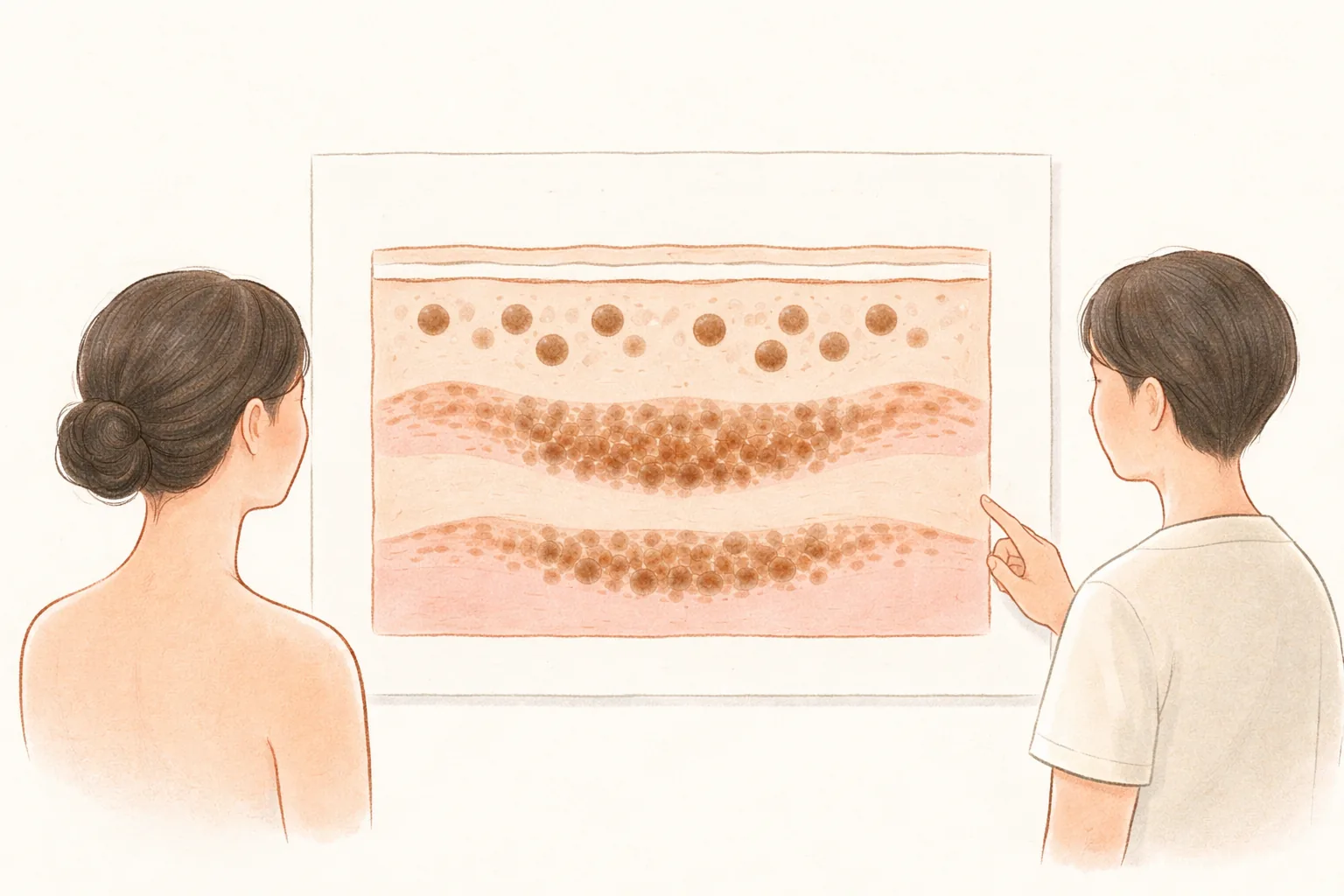
Melasma, freckles and sun spots all start from melanocytes, the cells in the skin that produce pigment. Melanin is produced more when the skin is stimulated by UV, heat, inflammation or hormonal changes, as a way of protecting itself, and when it builds up excessively in one area it shows as a brown spot. Seborrheic keratosis, on the other hand, is a benign lesion in which cells of the epidermis, the outer layer of skin, thicken — so it is different in principle from the start. This distinction is also covered in the ATTITUDE Clinic column (Melasma, freckles, sun spots, seborrheic keratosis — are they all the same?).
There is a common misconception here: that one dark spot laser will resolve every brown patch. In practice, spots sitting shallowly in the epidermis and melasma spread into the dermis are approached differently, and for seborrheic keratosis the raised portion is managed rather than the pigment being broken up. It's not uncommon for melasma and dark spots to overlap on the same face, making them hard to tell apart with the naked eye. That's why confirming which pigment sits at what depth comes before setting a cost.
The first cost item, then, is the diagnosis. Skin condition is documented, the doctor determines the pigment type through examination, and device, energy output, treatment area, number of sessions and intervals all follow from there. If you compare device prices without a diagnosis, the plan can change later and the total amount can shift with it.
Why does the same laser cost different amounts?
A laser is light energy gathered at a single wavelength. When this light reaches the skin, it is absorbed only by specific substances that respond to that wavelength, and converted into heat or impact. Sparing the surrounding normal skin and concentrating energy only on the target is called selective photothermolysis. This is also why lasers that target pigment and lasers that target red blood vessels are different devices (Does laser really thin your skin if you get it often?).
Picosecond lasers used for pigment treatment deliver strong energy in a very short moment — around 1 trillionth of a second — breaking pigment particles into fine fragments. They are designed to limit how far heat spreads into surrounding tissue, so the body gradually clears the broken-down pigment. Erbium YAG lasers that refine the skin surface, or fractional lasers that stimulate skin structure, have different targets, so their use differs even for the same dark spot (Dark spots, redness, scars — can lasers do it all?).
So device choice is not the only item that goes into the cost. Even with the same PicoPlus, whether it's a spot treatment focusing on one point or a toning course repeating low energy over a broad area changes the treatment area. How strong the output is set, whether anesthesia is needed, and whether other treatments are combined on the same day are also items that vary with the plan. Cramming sessions together to fit a short stay can stimulate the skin again before it has recovered, so splitting the plan up tends to reduce the burden.
Table 1 Why does the same laser cost different amounts?
Laser
Target
Concerns it is usually considered for
Factors affecting cost
PicoPlus
Pigment
Dark spots, melasma and other pigment concerns. Melasma is handled cautiously with low-energy toning
Whether spot or full-face toning, sessions and intervals
VBeam
Blood vessels
Redness, facial flushing and other shallow vessels
Treatment area, recovery time due to possible bruising
Erbium YAG
Skin surface
Refining skin texture, improving surface around dead skin and pores, shallow scar texture
Whether a broad surface is treated, time needed for crust care
Whether high output is used, sessions and intervals, downtime
Swipe sideways to see the whole table.
In short Cost divides less by which device is used than by which pigment, over what area, across how many sessions. Once the pigment type and depth are diagnosed, the device, output, sessions and intervals are set, and that plan creates the cost items. Sun protection and follow-up checks also need to be part of the plan for results to hold.
How many sessions, and at what intervals?
Most lasers are not completed in 1 session. The approach is to break pigment down gradually and give the skin time to process it, rather than removing every pigment particle at once. Looking at the sessions and intervals given as common examples in the ATTITUDE Clinic column: dark spots are 1–3 sessions with a picosecond-type laser at 4–8 week intervals, while melasma or widespread pigment is 8–12 or more sessions of low-power picosecond toning, at intervals of at least 1 week. Pores and skin texture are commonly 3–5 sessions with a fractional laser at 4–6 week intervals (Dark spots, redness, scars — can lasers do it all?).
These numbers are common examples only, and vary with pigment depth, skin type and lifestyle factors such as UV exposure. In a state like melasma, where the pigment cells themselves are overactive, repeated low energy reduces irritation better than one strong burst. Trying to erase it strongly in one go can irritate pigment cells and lead to rebound pigmentation that is actually darker (Melasma, freckles, sun spots, seborrheic keratosis — are they all the same?).
With toning, the interval also affects the result. Very frequent toning has been reported in connection with mottled hypopigmented patches, so intervals of at least 1 week are usually kept. As the number of sessions rises, the total cost grows with it, so rather than fixing the number of sessions from the start, it is more realistic to adjust while watching progress (Does laser really thin your skin if you get it often?).
What should short-stay visitors check?
Recovery time after treatment varies widely with the device and output. Removing dark spots with a high-output picosecond laser can produce crusts that remain for about 7–10 days, and high-output fractional treatment can involve swelling, oozing and crusts for 7–14 days. Low-power toning tends to settle with redness and stinging that fade within several hours to the same day (Dark spots, redness, scars — can lasers do it all?).
If your return flight is close, this recovery time has to go into the calculation first. While crusts are present, physical irritation and direct sunlight should be avoided, and sunscreen must be applied carefully. Rather than forcing a high-output treatment into your schedule, a short stay may be better suited to low-power toning or a plan centered on follow-up checks.
When checking costs at consultation, it helps to break down what is included rather than asking only for the total. How the diagnosis and consultation, the device used, the treatment area, the expected sessions and intervals, whether other treatments are combined, and follow-up checks are each set is what makes up the total. These items are confirmed after your skin condition is assessed, so before your visit it helps to have your schedule and skin history ready.
If this sounds like your situation
If a wedding, shoot or similar event is coming up
High-output treatments that produce crusts can involve a longer recovery of 1–2 weeks. It's better to work backward from the event and adjust the treatment type, intensity and start date. A plan with short recovery suits better than one that leaves redness for a long time.
If you are an international visitor on a short stay
If you tell the clinic your return date and outdoor activity plans before your visit, the treatment area can be set with recovery time in mind. Toning, which has short same-day recovery, and spot removal, which produces crusts, have different schedule requirements. If consecutive sessions are needed, discuss the revisit interval as well.
If you want ongoing management
For melasma or widespread pigment, the basic approach is repeated low-power toning over multiple sessions. As sessions increase, the total cost grows, so rather than concentrating them all at once, intervals are adjusted while watching progress. The fact that sun protection is a key way to reduce recurrence is also part of the plan.
If your skin is sensitive or reddens easily
When the skin barrier is weak, even the same output can be a burden. If your skin has felt stinging recently, or skincare products feel more irritating than usual, tell the clinic first at consultation. A decision to lower the intensity or adjust the timing may be needed.
Tell us before your consultation
Recent UV exposure and travel plans, return date
Medications you are taking, and pregnancy or breastfeeding status
Skincare you currently use (retinol, acids, peels, etc.) and when you can stop
Whether previous laser or peeling treatments caused redness, pigmentation or blisters
Unavoidable events such as weddings, shoots or business trips
How ATTITUDE Clinic proceeds
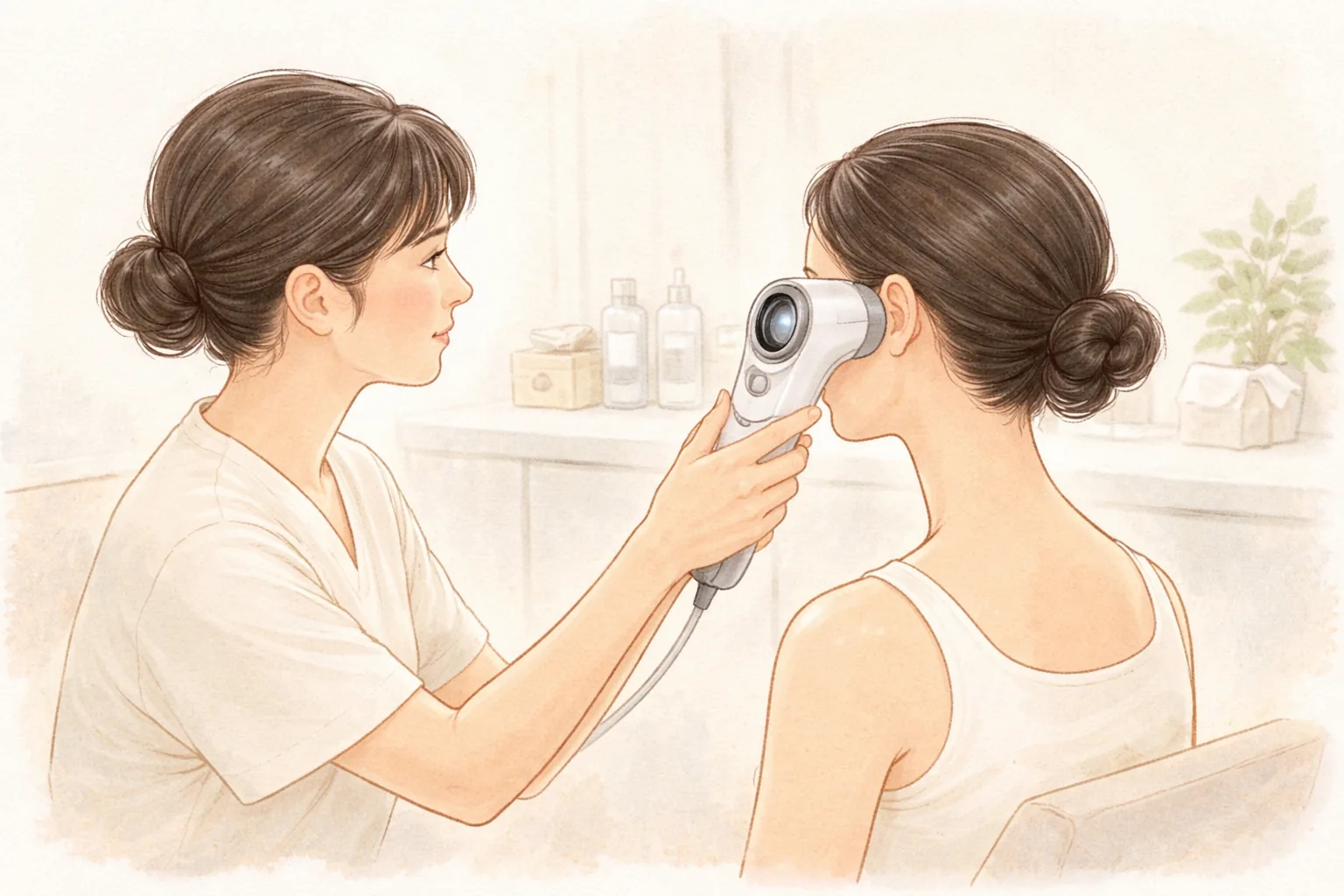
AI skin analysis record — Current skin condition such as pigment, redness, texture and pores is documented and organized. The analysis tool is a recording aid for consultation and does not make a medical diagnosis. Pigment type is determined by the doctor through examination.
Doctor consultation to interpret type and cause — UV exposure, hormonal changes, lifestyle and your concerns are added to the record, and the doctor determines the pigment type through examination and designs the treatment combination. At this stage, the treatment area, sessions, intervals and cost items are organized together.
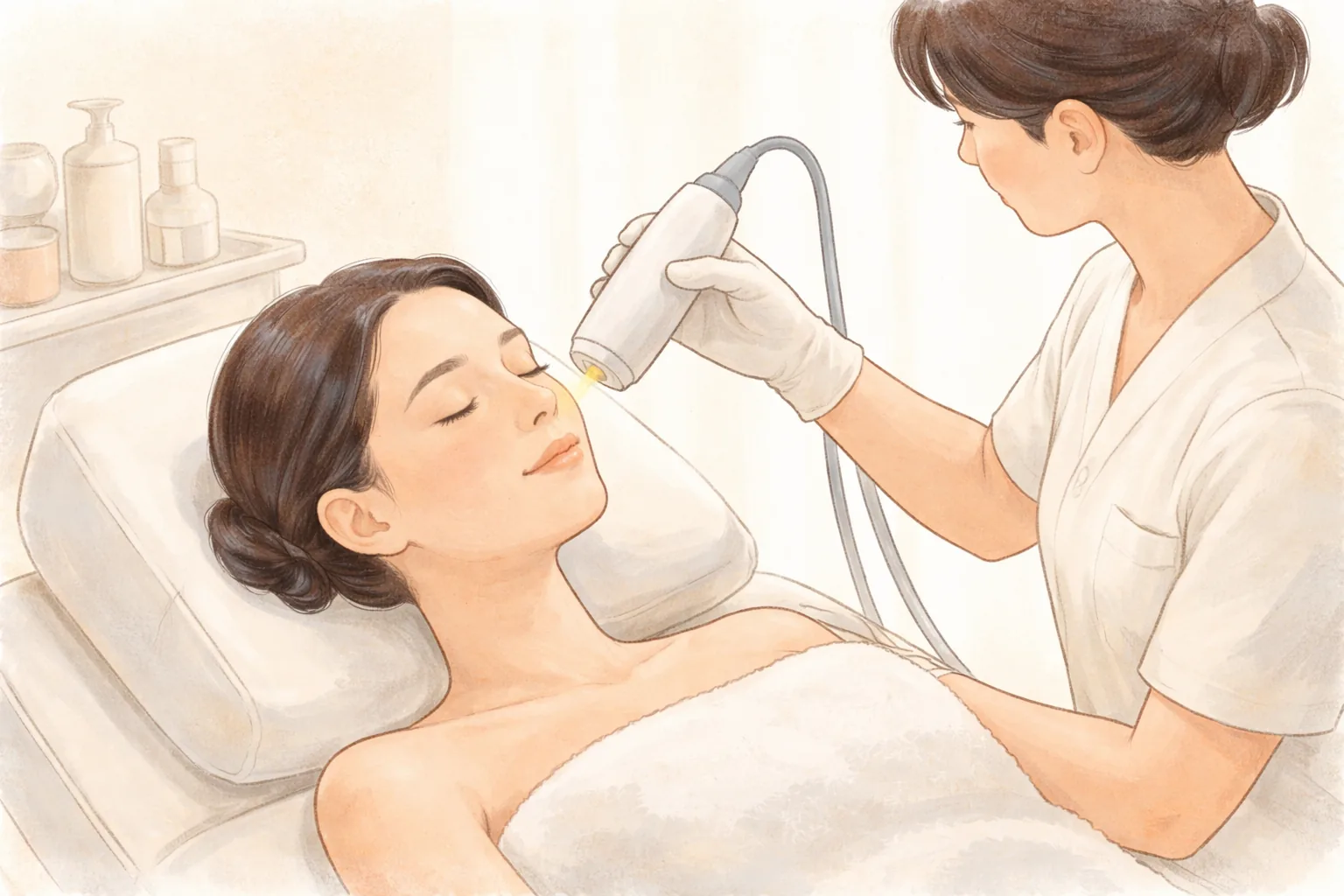
Treatment performed by the doctor — The device suited to the pigment type is selected from the clinic's equipment, and the doctor personally adjusts the intensity and combination. PicoPlus, VBeam, erbium YAG laser and laser toning are among those used.
Recovery and management — After treatment, guidance is given on sun protection, moisturizing and avoiding heat stimulation, and progress is checked. The principle is to decide together what is needed, what is not, and in what order.
The devices guided for pigmentation and dark spots are PicoPlus (pigment), VBeam (vessels), erbium YAG laser (surface) and laser toning (repeated low power). Which device is used in which order is decided after examination (Melasma, freckles, sun spots, seborrheic keratosis — are they all the same?).
Aftercare and side effects
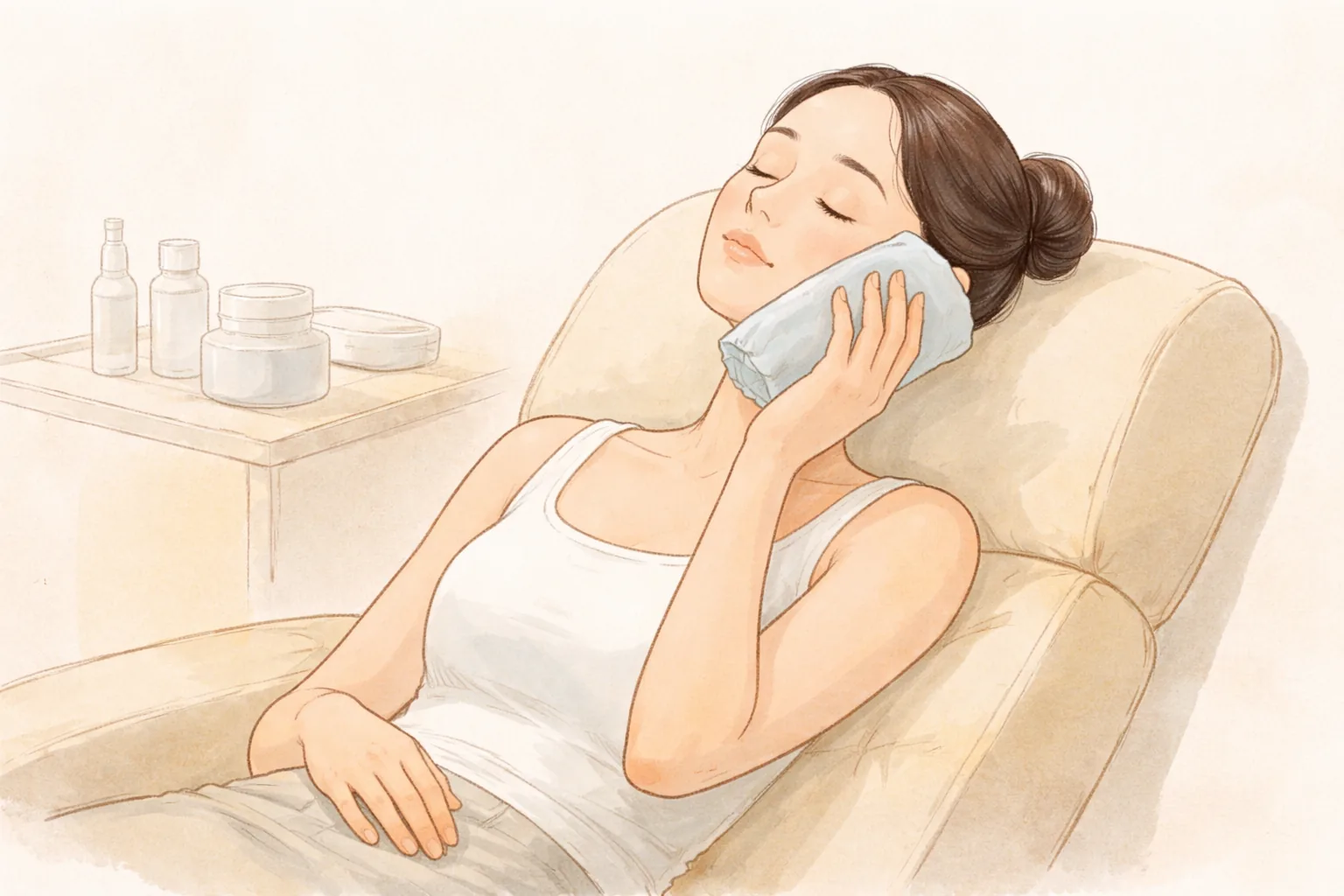
Soothing — If there is redness and heat right after treatment, follow the soothing method you were given. Wash with lukewarm water rather than hot, gently.
Moisturizing — The skin barrier is temporarily weakened, so moisturize sufficiently.
Sun protection — Apply SPF 50+ sunscreen for at least 2 weeks, and reapply about every 2 hours when outdoors.
Checking progress — Leave crusts until they fall off on their own, and if redness or stinging lasts more than 3 days or worsens, visit the clinic to have it checked.
Saunas, jjimjilbangs and intense exercise are best avoided during recovery. When skin temperature rises, blood vessels dilate and pigment cells can become active again, so reducing heat stimulation helps recovery (Dark spots, redness, scars — can lasers do it all?).
Common reactions are redness, swelling, crusts and temporary darkening of pigment in the treated area. Rarely, hypopigmented patches where skin color lightens, blisters or scars can occur, and pigment may rise again over time. Small crusts that form after dark spot laser usually fall off in about 7–10 days (Melasma, freckles, sun spots, seborrheic keratosis — are they all the same?).
If redness or heat lasts longer than expected, or pain worsens, it is safer to visit the clinic and have it checked rather than enduring it. Before treatment, the doctor explains the side effects of the planned laser and settings.
Frequently asked questions
What determines the dark spot laser treatment price for pigmentation?
Cost comes from the treatment plan set after diagnosis. Which pigment sits at what depth, whether it's a spot-focused treatment or broad, repeated toning, which device at what output is used, and how many sessions at what intervals are needed all change the items. Whether other treatments are combined on the same day, and whether anesthesia is needed, also vary with the plan. So rather than comparing totals by device name alone, it's more accurate to confirm the plan and what it includes at consultation. An exact estimate is confirmed after your skin condition and treatment area are set.
Can melasma and dark spots be removed in one go with the same laser?
Melasma and dark spots can look similar on the surface but may differ in depth and cause. Dark spots are often concentrated in the epidermis and respond relatively quickly, but melasma involves overactive pigment cells, so using strong energy in one go can actually darken it. For melasma, the basic approach is low-power toning repeated over multiple sessions, while for dark spots a spot approach targeting individual patches is used. If both are mixed on one face, which to address first is also decided at consultation. Using the same laser at the same settings for both may not be appropriate.
How many sessions of laser toning do I need?
For melasma or widespread pigment, low-power picosecond toning is commonly guided at 8–12 or more sessions with intervals of at least 1 week. Dark spots are commonly 1–3 sessions with a picosecond-type laser at 4–8 week intervals, and for pores and skin texture, fractional laser at 3–5 sessions with 4–6 week intervals is suggested. However, the number of sessions needed varies with pigment depth, skin type and UV exposure, so these numbers are not fixed values. It is safer to adjust intervals while watching progress.
I'm on a short stay — can I fly home right after treatment?
Low-power toning with short recovery tends to make it easy to return to daily life the same day. But high-output treatments that produce crusts, such as dark spot removal, can leave crusts for about 7–10 days, and high-output fractional treatment may require 7–14 days of recovery. Sun protection and moisturizing must continue after you return home, and picking off crusts can leave pigmentation or scars. If your stay is short, calculate recovery time first to decide the treatment type, and if needed, set the revisit interval at consultation.
How should I choose a clinic for pigmentation treatment cost and quality?
Rather than device names or equipment lists, checking a few things helps. Does the clinic first confirm before treatment whether your concern is pigment, vessels or the skin surface? Does it recommend only what is needed, without forcing a fixed number of sessions or intensity? Does it sufficiently explain pain, recovery schedule and aftercare at consultation? And can you have things checked again if discomfort arises? Whether costs are explained using the same item categories also helps your decision.
At a glance
Table 2 At a glance
Item
Key point
First step in setting cost
Determining pigment type and depth by examination
Difference between spot and toning
One-point focus vs broad, repeated low power
How sessions affect the total
Common examples such as 1–3 sessions for dark spots, 8–12 or more for melasma toning
This article offers general health information. It is not a substitute for diagnosis or treatment based on your own condition, so please talk through your situation with a doctor.