Dermal Filler Consultation in Seoul: What to Confirm by Area and Product
How to confirm product name, dosage, area plan, recovery time, cost coverage and red-flag contact rules at a dermal filler consultation, and how to compare domestic and imported fillers on the same criteria.
Written by ATTITUDE Clinic Editorial Team
The questions people ask before dermal fillers are usually the same. Whether to choose a domestic or imported product, how the plan differs for thin areas like the lips or under-eyes, and how long swelling and bruising can still count as normal. This article walks through what to confirm at a consultation depending on the area and the product, the order in which treatment proceeds, and the signals to watch after treatment.
The short answer first
A dermal filler consultation is where you confirm the product name and dosage, the treatment area, recovery time, what the cost includes, and where to call if an unusual symptom appears. Domestic or imported alone does not decide which is better. Whether it's the genuine, approved product suited to that area, and who performs the injection, are the points to check first. The process varies with the filler used, the area and your medical history, so even the same product means different preparation and recovery depending on where on the face it goes. What follows is general guidance; the actual decision is made at the consultation after looking at your skin.(American Academy of Dermatology consultation guide)
What do fillers do in the skin?
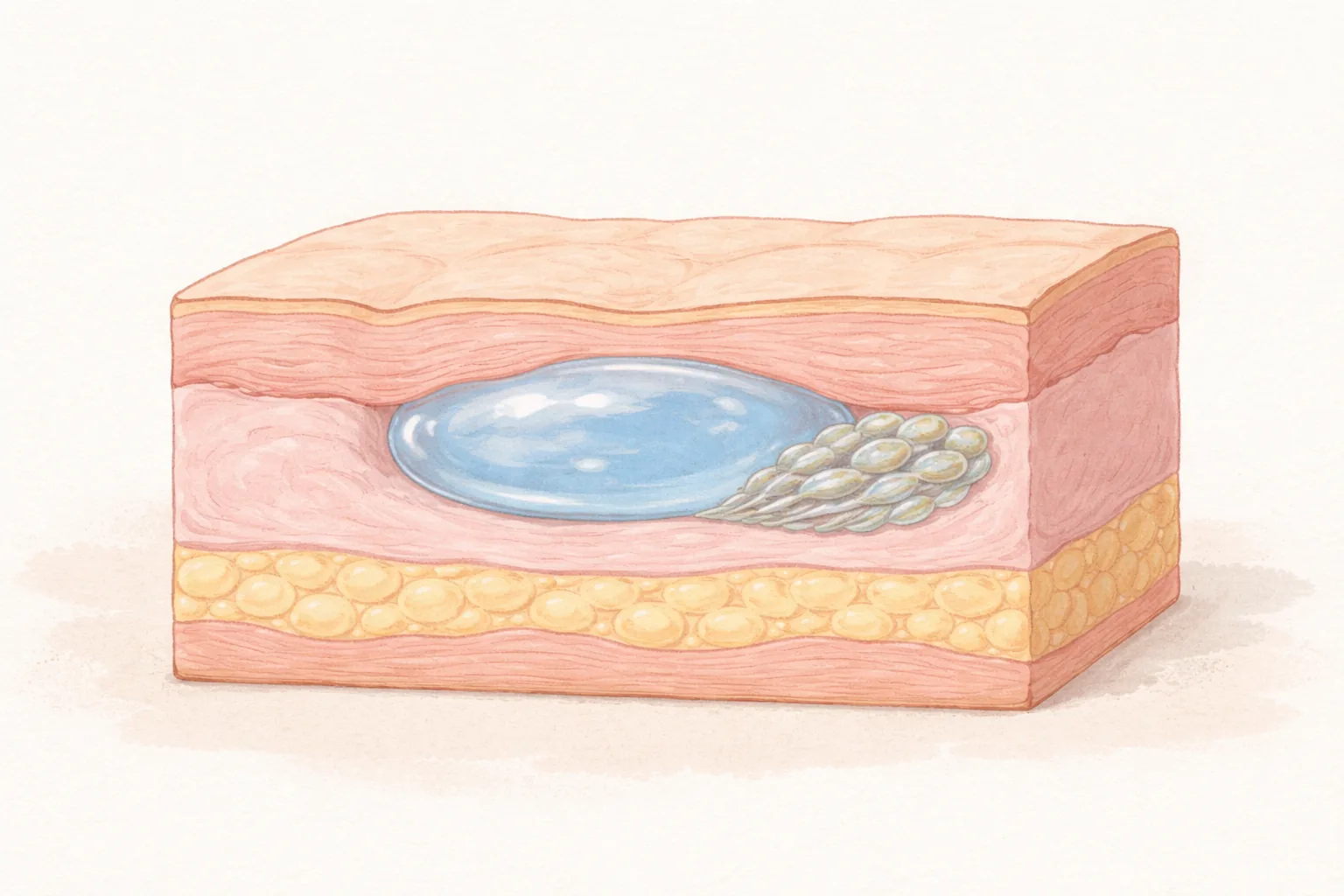
A filler is an injection that adds volume by filling a hollowed area. Because it fills, results usually show immediately, but ingredients that stimulate collagen production need time for the body to respond, so changes appear gradually over several weeks. There are reference tables comparing which fillers show results immediately and which show them weeks later.
So why do some products show up right away and others later? Because filling ingredients create volume on the spot, while ingredients that signal collagen production go through a process of the tissue refilling itself. A ATTITUDE Clinic column also explains that with hyaluronic acid fillers the injected ingredient does the filling and is later broken down and absorbed, while collagen-inducing types appear gradually over several weeks.(Collagen injection column) Duration works differently too. Products that last longer can be harder to reverse, so it's worth asking both how long it lasts and how it can be reversed if a problem arises.
What changes from area to area?
The procedure itself varies with the filler used, the area treated and your medical history. Anesthesia follows the area as well. Hands are usually done without anesthesia, while the lips often use a nerve block. At the moment of injection you may feel stinging or burning, and some products require waiting for allergy test results before treatment.(American Academy of Dermatology filler guide)
The ATTITUDE Clinic price list also separates areas. Lips and neck wrinkles carry an added KRW 50,000 area charge, while under-eyes, temples and forehead carry KRW 100,000.(Treatments and pricing) The fact that this line item exists at all means the plan and the work differ by area. Delicate areas like around the eyes require precise control of volume and depth, and how much goes where is decided by the doctor after examining your skin. For the same reason, a high-movement, highly expressive area like the lips tends to look more natural when filled in stages rather than heavily in one session.
Domestic vs imported: what should you compare?
Judging by nationality alone blurs the picture. What actually matters is the product name, whether it is approved and genuine, the per-session dosage, suitability for the area, and what the cost includes. The ATTITUDE Clinic price list also lists domestic and imported fillers as separate items, splits amounts by area and dosage, and states that all amounts exclude VAT. The listed unit is not a recommended dosage for any individual, so it is more accurate to confirm the actual product and dosage at the consultation.
Whether it can be reversed is another item to ask about. Hyaluronic acid breaks down and is absorbed over time, and if a problem arises there is a way to reverse it with an injection using a dissolving enzyme. The price list has a separate hyalase item. Longer-lasting ingredients are reversed differently, so remembering which product you had and when makes later consultations more concrete.
So how do you compare how long they actually last? General guidance organized by product family is the starting point.
Table 1 Domestic vs imported: what should you compare?
Filler type (general guidance)
When results appear
Commonly cited duration
Hyaluronic acid gel
Immediate
4–12 months
Collagen
Immediate
2–3 months (longer for scar treatment)
Calcium hydroxylapatite
Immediate
6 months–1 year
Poly-L-lactic acid
2–3 weeks
1–3 years
Autologous fat
Immediate
1–3 years (longer for scar treatment)
Swipe sideways to see the whole table.
These values summarize the general table in the American Academy of Dermatology filler guide. They are averages by product family, so even among hyaluronic acids, areas with a lot of facial muscle movement may lose volume faster, and metabolism and lifestyle also play a part.
In short Domestic or imported is only a starting point; what decides the outcome is choosing the product suited to the area and the experience of the injector handling that area. Writing down the product name and dosage, the area plan, what the cost covers and how to make contact at the consultation makes decisions on treatment day far simpler.
If this sounds like your situation
Thin, high-movement areas like the lips
The lips use a different anesthesia approach, and the impression changes greatly with the injected volume. Filling thin lips heavily in one session can look unnatural, and guidance notes that a conservative approach — not overfilling — leads to a natural result. A plan that builds up the shortfall over several sessions is realistic, and after treatment you take care not to knock the lips.
Delicate areas like under-eyes, temples and forehead
Around the eyes, temples and forehead, the skin is thin and bruising shows easily. Volume and depth must be controlled precisely, so at the consultation you hear the plan for which layer gets how much before deciding. If an important event is close, pick the date by first considering how long bruising takes to settle.
Neck wrinkles, where movement and visibility meet
The neck has thin skin and is constantly affected by expression and posture changes. The price list also treats neck wrinkles as a separate area addition, so it is better to confirm volume and the area plan together at the consultation. Neck wrinkles are also influenced by posture and skin elasticity, so care beyond fillers may be needed.
When you are visiting on a short stay
Requesting an appointment and confirming one are different things. It is confirmed only after the clinic calls you back, same-day requests are taken for slots at least 1 hour later, and the last intake is 17:30.(Consultation and booking guide) If your stay is short, it is safer to set the consultation, treatment and follow-up check together from the start.
Tell us before your consultation
Autoimmune conditions, past reactions to tissue-derived products, and other allergies
Medications you take (including blood thinners), supplements, and antibiotic allergies
Pregnancy or breastfeeding
The product name and timing of any previous fillers
Fixed dates such as a wedding, a shoot or travel
Recent sun exposure and current skin troubles
How ATTITUDE Clinic handles it
Request and confirmation — Request on the website and the appointment is confirmed after the clinic calls you back. A request and a confirmation are different, same-day requests are taken for slots at least 1 hour later, and the last intake is 17:30. If your schedule is tight, call instead.
Consultation and skin check — Together you review the change and area you want, previous treatment history, medical history and current medications, allergies, and pregnancy or breastfeeding. At ATTITUDE Clinic, we check your skin condition first at the consultation and then guide you to a suitable treatment. Expected results, risks, alternatives and recovery time are also explained at this stage.
Finalizing the plan — Confirm the product name and dosage, the plan for each area, whether it can be reversed, what the cost covers, and any area additions. The price list states that all amounts exclude VAT, so check the actual amount on the latest official price list.
Treatment and aftercare guidance — After treatment we explain how long to ice the area, when washing and makeup are allowed, how long to avoid exercise and saunas, and how to protect against UV. We also set out the criteria for contacting us if bruising or swelling lasts longer than expected.
The products listed as line items on the price list for this topic are domestic fillers (Domestic HA), imported fillers (Juvéderm, Belotero, Restylane), and hyalase, which breaks down hyaluronic acid.
Aftercare and side effects
Soothing — Right after treatment you may ice the treated area for about 15–20 minutes to reduce redness and swelling. Do not press or rub hard, and unless you have been told to massage, do not touch the treated area for 3 days.
Washing and makeup — Wash your face gently from 4–6 hours afterward, and makeup is possible from the next day. The ATTITUDE Clinic column gives this timing for washing and recommends patting rather than rubbing to reduce irritation.(Collagen injection column)
Sun protection and avoiding heat — Avoid exercise or strenuous activity until the next day, and skip sun exposure and indoor tanning. Also avoid saunas and alcohol on the day itself, and apply sunscreen carefully throughout the recovery period.
Checking progress — Redness, swelling, tenderness and bruising usually settle within 7–14 days. Poly-L-lactic acid fillers are guided for gentle massage for about 5 minutes several times a day for 1–2 weeks as instructed, so do not apply that massage to other products.(American Academy of Dermatology filler guide)
Common reactions are redness, swelling, tenderness and bruising. Rarely, lumps or bumps may be felt, or there may be an overfilled feeling, allergic reaction, skin color change, infection or severe swelling. Reports of these side effects increase greatly when treatment is performed where experience and the right environment are lacking.
There are also signals that mean you should contact us right away rather than wait. Pain that is unusual for you or getting worse, skin at the injection site turning white, mottled, bluish or black, or any change in vision. Also tell the clinic if blisters form at the treated area, if heat or itching continues, or if swelling and pain have not eased for several days.
Frequently asked questions
What is the difference between domestic and imported fillers?
Nationality alone does not mean one is better. At a consultation we check the product name, whether it is approved and whether it is genuine before anything else. Even for the same area, brands differ in how their lines are organized, which changes the options, and price differences come from that. The ATTITUDE Clinic price list shows domestic and imported fillers separately and lists area additions on their own, so noting the actual product name and dosage plus any area addition at the consultation makes comparison easier. For the amount applied, the latest official price list is the accurate source.
How painful is a filler treatment?
Because the anesthesia method differs by area, the sensation differs by area too. Some areas, like the hands, are done without anesthesia, while others, like the lips, often use a nerve block. You may feel stinging or burning during injection, and some products require an allergy test, so treatment waits for the result. Pain level varies with the injection site, the anesthesia method and individual sensitivity, so it is better to say at the consultation if it is hard to tolerate.
When do results show and how long do they last?
Filling ingredients usually show immediately, while collagen-inducing types appear over 2–3 weeks. Duration is guided differently by product family, such as 4–12 months for hyaluronic acid gel and 1–3 years for poly-L-lactic acid. These numbers are general values, so areas with a lot of facial muscle movement may shorten them, and metabolism and lifestyle also have an effect. The timing of a repeat treatment is decided at the consultation based on when signs of aging reappear, and recording how the first treatment progressed makes the next plan more accurate.
How long are swelling and bruising normal, and which symptoms mean I should call right away?
Redness, swelling, tenderness and bruising are common reactions and usually settle within 7–14 days. However, if pain is unusual for you or getting worse, if the injection site turns white, mottled, bluish or black, or if your vision changes, do not wait — seek care right away. Also contact the clinic if swelling, pain or heat continues. Nodules, overfilling, allergic reaction, skin color change, infection and severe swelling are side effects whose reports increase greatly when treatment is received where the environment and experience are lacking. Confirming the contact number and the criteria for coming in before treatment makes decisions faster.
How should I choose where to have a filler consultation?
Rather than a recommendation for a specific clinic, what a consultation answers for you is more useful for deciding. Whether they explain expected results, risks and alternatives; how much experience they have with this skin tone and area; how many sessions are needed and how long recovery takes; and whether they cover preparation, aftercare and cost together — these are the items to check. It is also worth remembering that the consultation itself is a medical act. Filler injection is a medical procedure, and guidance advises against having it done at a place that is not a medical institution. Also look at whether appointments are confirmed only after a call back rather than by request alone.
At a glance
Table 2 At a glance
Item
Key point
Decide at the consultation
Product name, dosage, area plan, what the cost covers, contact method
Domestic vs imported
Genuine/approved status and area suitability matter more than nationality
When results appear
Filling ingredients immediately, collagen-inducing types over 2–3 weeks
Duration (general guidance)
Hyaluronic acid gel 4–12 months, poly-L-lactic acid 1–3 years
Common reactions
Redness, swelling, tenderness, bruising — usually ease within 7–14 days
This article offers general health information. It is not a substitute for diagnosis or treatment based on your own condition, so please talk through your situation with a doctor.