Preparing for Your First Skin Consultation Near Sinsa Station: From Booking to Visit
A step-by-step guide for English-speaking visitors preparing for a first skin consultation near Sinsa Station: what to note before the consultation, the difference between a consultation request and a confirmed appointment, what to check about location and hours, what gets decided at the consultation, and aftercare.
Written by ATTITUDE Clinic Editorial Team
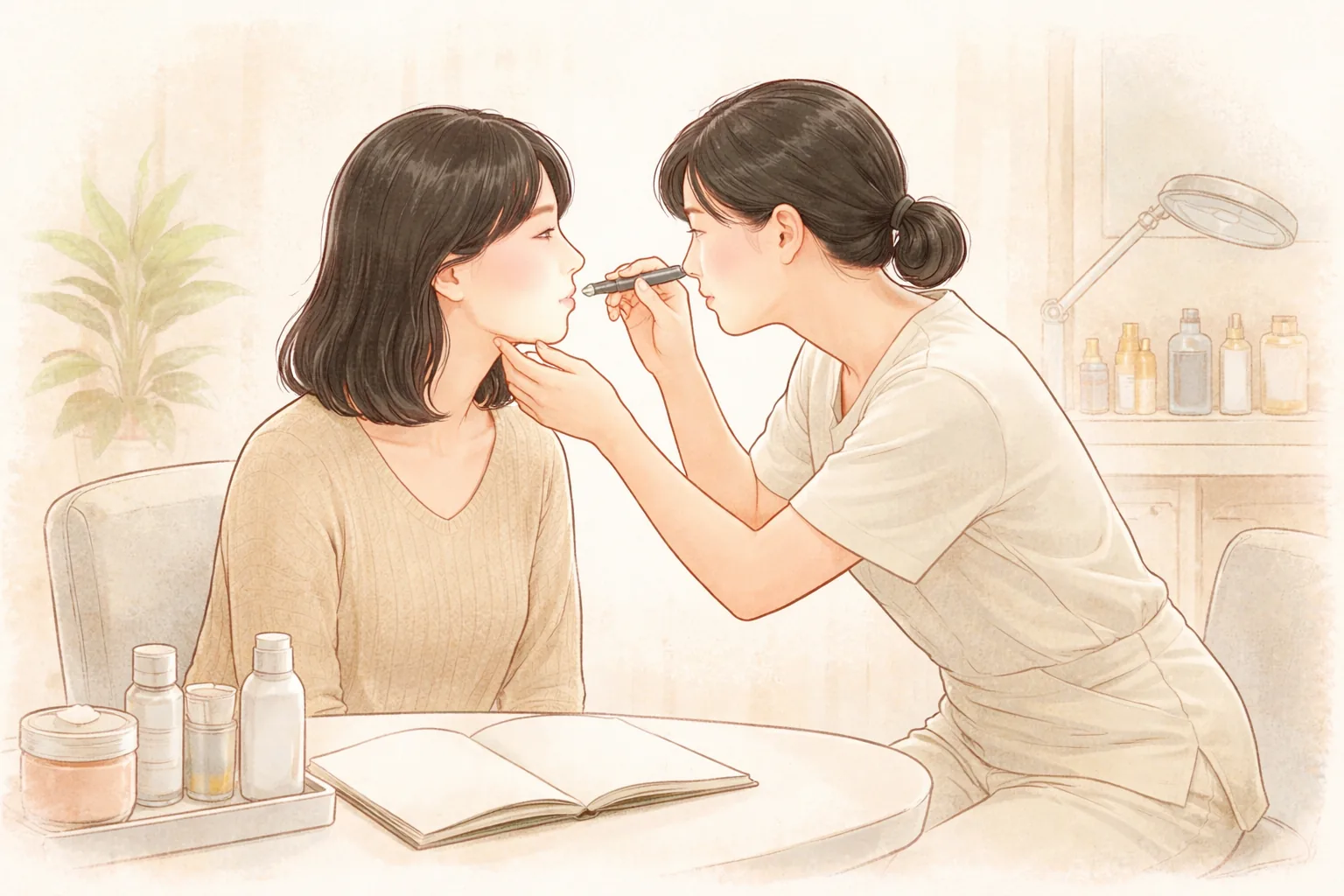
If your first skin consultation is coming up, questions pile up: "where do I start?", "does submitting the website form mean my appointment is booked?", "what am I supposed to say?" This article walks through what to note before the consultation, the difference between a request and a confirmation, and what to check at the consultation, in the order you will visit. By the end, you will know exactly what to jot down today and what to ask.
The short version first
Writing down when your skin concern started, the products you use and medications you take, and any previous procedures and how your skin reacted will make the consultation far more specific. The time you leave on the website is a requested time; the appointment is confirmed after the clinic contacts you to assign a slot. At the consultation, go over the changes you hope for and the limits, risks, alternatives, recovery time, and cost together. Even the same concern takes a different direction depending on your skin condition and schedule, so it helps to treat the first visit as a chance to convey your situation accurately rather than to collect answers.
What should I note down before a first consultation?
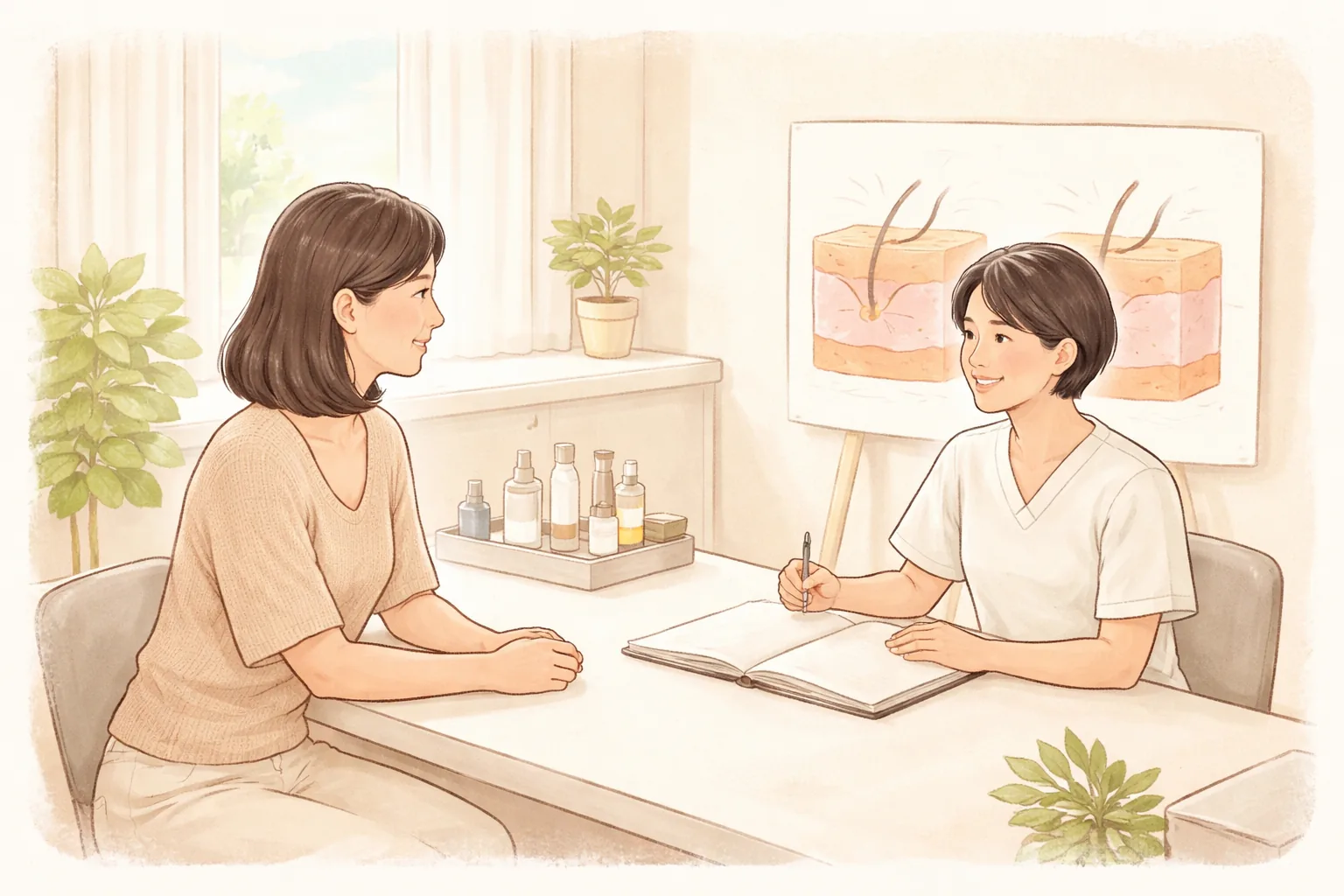
When consultations finish quickly, it usually means no notes were prepared. Just three lines—"since when, where, and how has it changed"—let the conversation move straight to the cause. For timing, basing it on a season or event such as "since last winter" rather than "a few months ago" makes your memory more accurate.
Next come the cosmetics you currently use and the medications you take. Retinol ingredients that affect skin turnover can influence treatment timing and settings, and if you are pregnant, use requires checking with a doctor first (pore column). It also helps to mention supplements, contraceptives, and blood-related medications. Note your history of previous procedures and how your skin reacted then, too. Records such as how long redness lingered, how many days bruising lasted, and when crusts fell off become the baseline for the next plan.
Bringing photos makes explaining easier. Photos are supporting material that describes your condition, though, and do not replace examining your skin in person.
Prepare a list of questions as well. The American Academy of Dermatology's guidance on questions to ask before a cosmetic procedure recommends covering expected results, risks, alternatives, the practitioner's experience with your skin type, the number of sessions and time needed, recovery and return to daily life, preparation and aftercare, and cost. Write these eight items down and fill in the answers one by one, and the consultation becomes far more productive.
Does submitting a request confirm my appointment?
No. The consultation booking guide separates consultation requests from appointment confirmation. What you leave on the website is a requested time, and the appointment is confirmed only after the clinic assigns a consultation slot for that time and contacts you. The same guide notes that same-day requests are accepted for slots at least 1 hour after the current time, with the last intake at 17:30. If your visit is urgent, calling first is the surest way.
Once confirmed, review the address and hours again before you travel. According to the directions guide, the address is 621 Gangnam-daero, Seocho-gu, Seoul, K-TOWER 9th floor, and you are directed toward Sinsa Station Exit 5. Hours are 10:30–19:30 daily. Since information can change, check the latest details once more on the day of your visit; confirming things like walking distance or parking support by inquiry will keep you from getting lost.
What gets decided at the consultation, and what shapes the result?
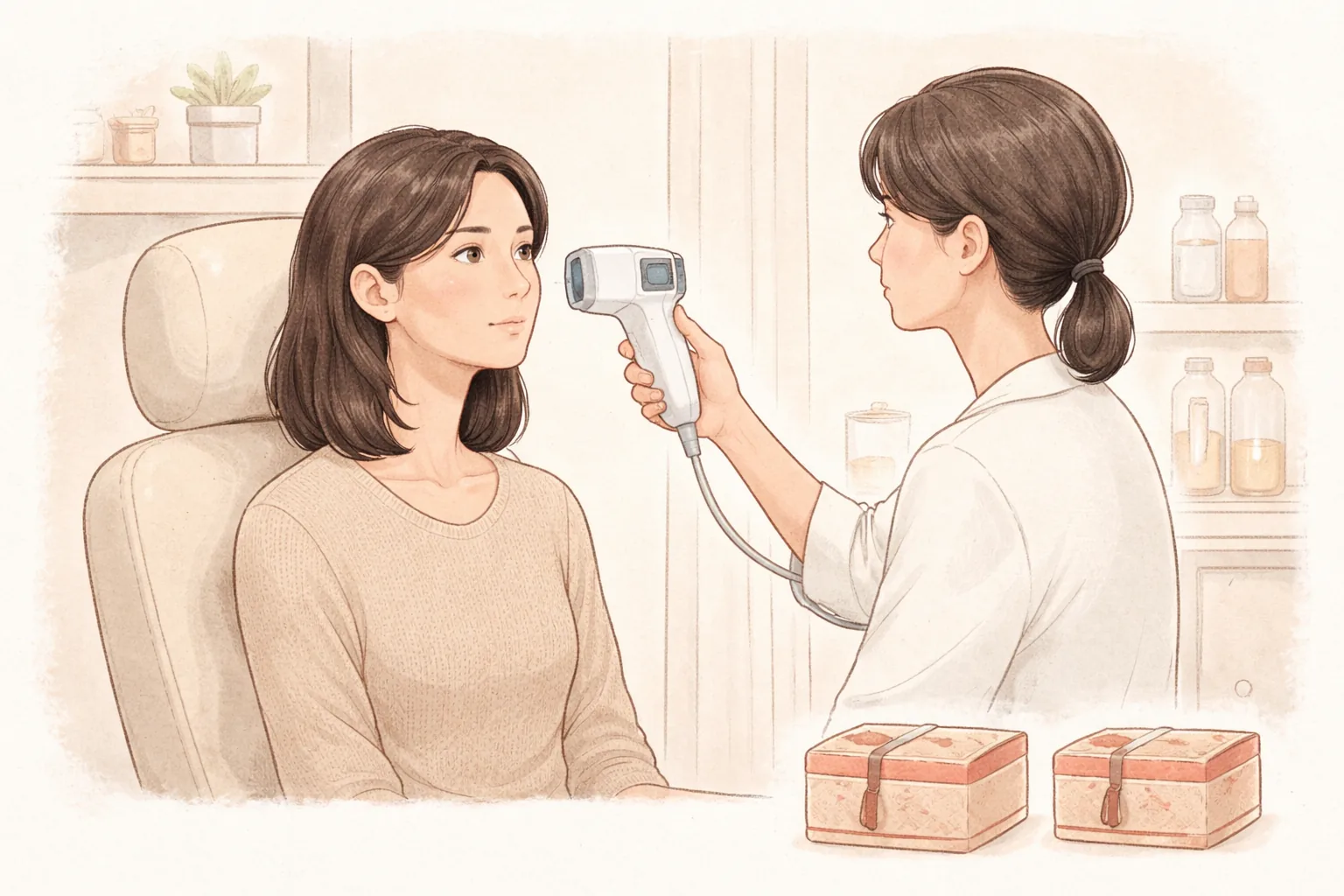
A consultation is not a place to pick a procedure name but a place to sort out the cause of your concern. Something that looks like a spot may come from pigment, while something that looks like redness may come from shallow blood vessels, and the target differs accordingly. Lasers use the principle that light energy gathered at one wavelength is absorbed only by targets that respond to that wavelength. Sparing the surrounding normal skin and concentrating energy on the target is called selective photothermolysis (laser column). Just as light selectively heats pigment, even within the same face the device and settings diverge depending on what you are targeting.
What shapes the result is not the device list but a few conditions: whether the concern comes from pigment or blood vessels, whether your skin is thin and sensitive, how energy and treatment area are set, how much recovery interval is left, and what your schedule and medications look like. Repeating treatments before recovery finishes, or using intensity higher than your skin condition warrants, can leave redness lingering or cause pigmentation. Conversely, treating only as much as needed with proper recovery intervals reduces the burden on your skin (laser column).
So what options will you discuss at the consultation? Because each device targets something different, the starting point of the conversation differs too.
Table 1 What gets decided at the consultation, and what shapes the result?
Category
Target
Concerns it suits
What gets decided together at the consultation
PicoPlus
Pigment
Pigment concerns such as spots and melasma
Energy and intervals, whether to split into lower-energy sessions
VBeam
Shallow blood vessels
Redness, facial flushing
Intensity and area, possibility of bruising
Erbium YAG laser
Skin surface
Skin texture, rough or pore-adjacent texture, shallow scar texture
Recovery time and schedule, crust care
Cleansing and exfoliation
Sebum and dead skin
How much pores temporarily look less prominent
The scope to handle with home care and when to add professional care
Swipe sideways to see the whole table.
In short at the consultation, rather than which device is best, you first sort out whether your concern comes from pigment, blood vessels, surface, or sebum. If the cause is not pinned down to one thing, spacing out priorities rather than doing everything at once is lighter on your skin. Which combination fits depends on your skin condition and schedule, so it is decided at the consultation.
If this sounds like you
When the date is fixed, such as a wedding or a shoot
When a date is fixed, redness or sensitized skin right after a procedure can affect photos and how you feel. The earlier you start relative to the event date, the more options you have in choosing intensity and type. Mentioning the date first at the consultation lets you work backward from it to set the start time (laser column).
If you want ongoing maintenance
Rather than one strong session, maintaining a rhythm that respects your skin's recovery is easier on you. Setting a goal and scheduling only the necessary treatments at the right times makes both schedule and cost easier to predict. The right interval is adjusted as your skin responds.
If your skin is sensitive or flushes easily
If cosmetics sting or your skin has become unusually sensitive, mentioning that first gives a baseline for adjusting settings. Raising intensity when the skin barrier is weakened can leave redness lingering, so postponing is also an option. Very frequent toning has been reported in connection with mottled hypopigmentation, so toning is usually spaced at least 1 week apart.
If you are a short-stay visitor
If your stay is limited, redness or dryness after a procedure can affect the rest of your itinerary. Telling the clinic your return date and upcoming plans lets intensity and type be discussed around them. If there is not enough time for recovery, adjusting the timing is the better choice.
Tell us before the consultation Let us know whether you have had a lot of recent sun exposure, what medications and cosmetics you take or apply, whether your skin has ever been sensitive after a previous procedure, and whether you have events such as a wedding, a shoot, or a business trip. If you are pregnant or planning pregnancy, check the ingredients you use and the possible timing of treatments together. Even for the same treatment, this information changes the timing and settings.
How ATTITUDE Clinic proceeds
AI skin analysis record — Visible conditions such as pigment, redness, texture, and pores are recorded with an analysis tool. This tool records and organizes information and is not a medical diagnosis. Based on the record, the doctor judges the cause of your concern (ATTITUDE Clinic guide).
Direction set through a doctor consultation — Your schedule, pain sensitivity, and skin history are added to the analysis record to decide the type, intensity, and timing of treatment together.
Treatment performed directly by the doctor — If needed, topical anesthesia reduces discomfort, and the doctor performs the treatment directly. Treatments beyond what is necessary are not recommended.
Recovery and care — Follow sun protection and moisturizing for the period you are advised, and check in if any discomfort arises. We keep the same direction under the principles of genuine products, proper dosage, and fair pricing.
The devices most often discussed for this topic are PicoPlus for pigment, VBeam for shallow blood vessels, and Erbium YAG laser for refining the skin surface (laser column). Which device to use in which order is decided from the analysis record and the consultation.
Aftercare and side effects
If your consultation leads to a treatment, here are four things to do in order.
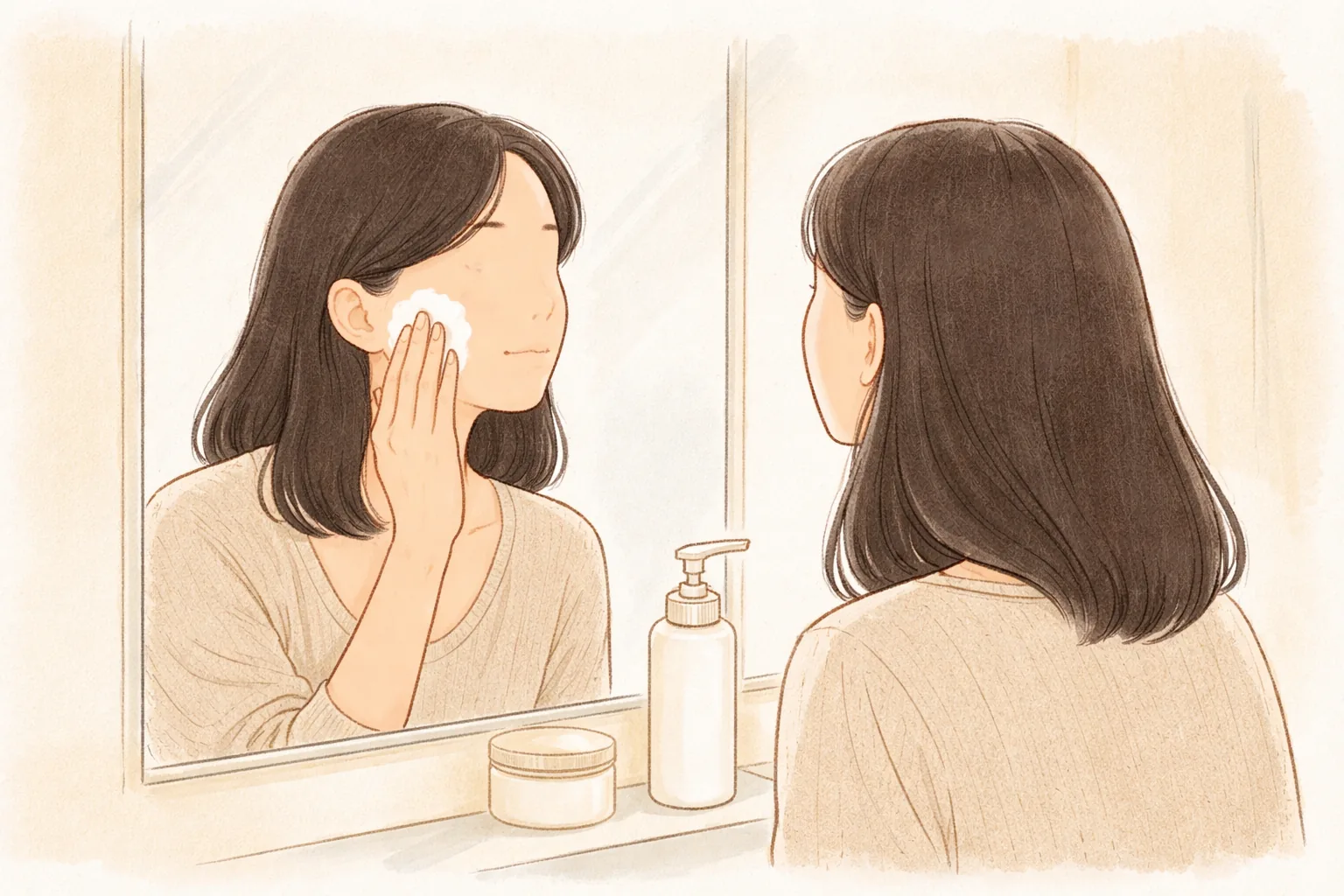
Calming — Right after a treatment, your skin is sensitized. Avoid saunas, strong exfoliation, and irritating scrubs for the period you are advised.
Moisturizing — If dryness lingers, recovery slows. Apply the moisturizer you are advised to use frequently.
Sun protection — This is the part that shapes post-treatment pigmentation. Carry sunscreen when going out and use a hat and parasol as well.
Checking progress — Noting when redness and heat subside and when crusts fall off helps set the intensity for the next session.
Side effects can occur even with appropriate settings. Redness, heat, swelling, and stinging are common, and surface-treating procedures such as pigment spot lasers or Erbium YAG laser can leave thin crusts. If your skin is dark or tanned, temporary pigmentation may occur, and VBeam can cause bruising. After Potenza and Erbium YAG laser, redness, swelling, dot-like marks, dryness, and thin crusts are common and usually settle within a few days to 1 week. Injections such as skin boosters can cause bruising and swelling. Rarely, blisters, hypopigmentation, infection, or scarring may occur, or pigment may return, and injections can cause nodules or allergic reactions (laser column, pore column).
If redness or heat lasts longer than expected or pain worsens, do not endure it—come in to be checked. Before treatment, the doctor explains the side effects of the planned procedure and settings.
Frequently asked questions
Can I walk in for a consultation on the same day without a booking?
The consultation booking guide notes that same-day requests are accepted for slots at least 1 hour after the current time, with the last intake at 17:30. Even after you leave a request, the appointment is confirmed only after the clinic contacts you, so for a same-day visit, calling first to check availability is the surest way. Heading out before confirmation can mean a long wait. Slot assignment depends on the day's appointment schedule.
Can I have just a consultation first?
Yes. This is a consultation to check the cause of your concern, your options, and costs without deciding on a treatment. If you wonder whether your skin concern is related to a medical condition, ask about that too, and you can be guided on how to check. Costs vary by treatment type and area, so ask item by item and check the consultation fee as well. As the AAD's guidance on questions before a cosmetic procedure recommends, asking about risks, alternatives, and recovery time gives you the material to judge before deciding on a treatment.
Which Sinsa Station exit is it, and what should I check before visiting?
The directions guide points to Sinsa Station Exit 5 and 621 Gangnam-daero, Seocho-gu, Seoul, K-TOWER 9th floor. Hours are 10:30–19:30 daily, and since information can change, check the latest details before your visit. Walking distance and parking support conditions are worth confirming by inquiry when planning your route. Checking your confirmed date and time before setting out keeps your day on track.
How do I decide whether multiple treatments on the same day or in summer are okay?
Spacing out priorities rather than doing everything at once is lighter on your skin. Whether multiple treatments can overlap on the same day depends on your skin condition and each procedure's recovery time, so it is decided at the consultation. Summer does not make treatment impossible, but since sun protection after treatment shapes the result, if you have a lot of outdoor plans, tell the clinic in advance to adjust intensity and timing. Recovery speed and reactions vary between individuals depending on skin thickness and condition, so the next plan is set after reviewing progress, even for the same treatment.
What should I look at when choosing where to have a first consultation?
See whether they first check whether your concern comes from pigment, blood vessels, skin surface, or sebum. Also see whether they tell you what you do not need, whether they explain side effects and recovery time, and whether you can be checked if discomfort arises. These processes affect results and safety more than device names or inventory lists. Whether they avoid forcing a set number of sessions at the consultation also helps your judgment.
At a glance
Table 2 At a glance
Item
Key point
Before the consultation
When the concern started, products and medications used, reactions to previous procedures, list of questions
Request vs. confirmation
Request is a preferred time; appointment is confirmed after the clinic contacts you
Same-day request
At least 1 hour after the current time, last intake 17:30
Location and hours
Toward Sinsa Station Exit 5, K-TOWER 9th floor, 10:30–19:30 daily
What to check at the consultation
Expected changes and limits, risks, alternatives, recovery time, cost
Aftercare
Calming, moisturizing, sun protection, checking progress
This article offers general health information. It is not a substitute for diagnosis or treatment based on your own condition, so please talk through your situation with a doctor.