Gangnam Dermatology Price Comparison: 5 Things to Match Before You Compare Listed Prices
How to compare Gangnam dermatology prices on the same basis: treatment and product, area, volume and sessions, VAT included or excluded, extra fees, and the final total.
Written by ATTITUDE Clinic Editorial Team
Finding the same treatment name on two price lists does not mean you can put the amounts side by side right away. The area, volume and number of sessions differ slightly, and clinics vary in whether they add VAT on top or whether consultation or anesthesia fees sit inside the listed price. This article sets out the 5 conditions to line up before comparing amounts, and what to write down during a consultation so you are not confused later.
The short answer
Comparison starts with conditions. First match whether it is the same treatment and product, whether the area, volume and number of sessions are the same, whether VAT is included in or added to the listed price, and whether there are separate charges such as consultation, anesthesia or aftercare. Then write down the total you were quoted at each clinic on the same date, and only then are the numbers sitting in the same place. Even under the same conditions, results vary with skin type, thickness and healing speed, so price alone cannot decide which is better. ATTITUDE Clinic's treatment and price guide likewise separates prices by treatment, product, area, volume and number of sessions, and shows VAT separately (ATTITUDE treatment and pricing guide).
Why do prices differ when the treatment name is the same?
A treatment price is not a single finished figure; it comes out of units. Under the same word "laser," one clinic may treat the whole face and another only part of it, one may quote 1 session and another a package of several, and the product used and how much of it differ. Those combinations create the amount. If the units on the price list differ, you are weighing two different things.
The same happens with devices. Take lifting alone: Ultherapy, Thermage FLX, Shurink Universe and Onda deliver heat or ultrasound differently and stimulate at different depths in the skin. Whether a skin booster or Potenza is added alongside changes the budget you need to prepare (Why do results differ even with the same treatment?). In the end, the amount follows once what is done, where, and at what intensity are settled.
So why are these units so different from clinic to clinic? Because skin thickness, healing speed and previous treatment experience differ from person to person, so the same concern can call for a different combination and sequence. Packages are not wrong in themselves, but it is worth asking why each item is needed and what could be left out.
How do you match area, volume and number of sessions?
Once the treatment name matches, the next thing is scope. Write down separately whether it is the whole face or part of it such as the eye area or cheeks, how much volume 1 session means, and how many sessions at what interval are included. If these three differ, setting the listed amounts side by side tells you nothing.
Write down the name of the device or product used. Even within one family, devices differ in how they deliver energy and at what depth.
Write down the area covered in 1 session. Whole face and part of the face are different treatments even under the same name.
Write down the unit of volume. If the units differ—cc, number of shots, kJ—the numbers cannot be compared directly.
If several sessions are bundled, write down the total number of sessions, the interval, and the conditions under which that bundle applies.
If you have had treatments before, bringing the device and number of shots or kJ, the product and volume, the date, and how your skin responded makes the review at the consultation much easier (Why do results differ even with the same treatment?). The first device, volume or interval may not have suited your skin, and some skin simply responds less to certain types of treatment.
How do VAT and separate fees change the total?
If the price list says VAT is separate, the listed amount is not what you pay. Add items that are not on the list—consultation, anesthesia, aftercare, extra visits—and the real difference grows. Whether these are included varies by clinic, so ask about each item during the consultation and put it into the total you expect to pay.
It also helps to note the date the quoted amount was based on. If it is a promotion or a discount, the eligibility and period come attached, so the same treatment can be quoted differently depending on timing. Keep the estimate you heard before the scope was decided and the amount after the scope was set in separate notes so you do not mix them up later.
Besides cost, what else should you ask about?
The American Academy of Dermatology's patient guidance suggests that a consultation before a cosmetic procedure cover the expected results and risks, alternatives, the practitioner's experience with your skin type, the number of sessions needed and how long they take, recovery and return to daily life, preparation and aftercare, and cost (AAD: questions to ask before a cosmetic procedure). Price is one item on that list, and the decision is easier when you look at it alongside the rest.
Recovery time in particular ties directly into your schedule. Even for the same treatment, the combination you choose changes with how much downtime you can accept, so if you have an important date, mention it first at the consultation.
Table 1 Besides cost, what else should you ask about?
Item to compare
How it appears on a price list
What to match to compare side by side
What to fill in at the consultation
Treatment and product
Treatment name, product name
Whether the device and product are the same
Device and product used, delivery method
Area
Whole face, part of face
Whether the area is the same
The scope covered in 1 session
Volume and sessions
cc, shots, kJ, number of sessions
Whether the unit and total sessions match
Volume per session, total sessions and interval
Tax
VAT shown separately
Whether included or added
The amount added if separate
Separate fees
Not on the list
Which items are included
Consultation, anesthesia, aftercare, extra visits
Swipe sideways to see the whole table.
In short the total you expect to pay after matching the conditions is the basis for comparison. Match the treatment, area, volume and number of sessions first, then add VAT and separate items so the numbers sit in the same place. Writing down the date and scope alongside what you were told at the consultation makes later comparisons far easier.
If this is your situation
When a wedding or a photo shoot is coming up
Recovery overlapping your schedule is a problem. How long redness or swelling takes to settle varies with the type and intensity of the treatment, so give the date first and decide together at the consultation how much buffer to leave. If time is tight, setting priorities beats widening the scope too far.
When you want to compare several clinics
Keeping the conditions on one sheet speeds up the decision. Write the treatment name, area, volume, sessions, whether VAT is included, separate items and the date you were quoted side by side, and leave blank cells blank. A clinic with many blanks simply has conditions not yet settled, which tells you what to ask about next.
When your skin is sensitive or flushes easily
Even for the same treatment, sensitive skin can mean a longer recovery. If redness or irritation lasted a long time after a previous treatment, mention it at the consultation and plan with room to adjust intensity and scope.
When you are visiting for a short stay
A plan split across several sessions may not fit your stay. Say how many days you are here first, then settle what is possible within that window and how follow-up will be handled. Writing the conditions down cuts down on checking the same things twice.
Tell us before your consultation Recent sun exposure, medications you take and active ingredients in your skincare, how your skin responded to previous treatments (how long redness or irritation lasted), and any date you cannot move such as a wedding or a shoot—mention these in advance and we can factor them into the plan.
How ATTITUDE Clinic works
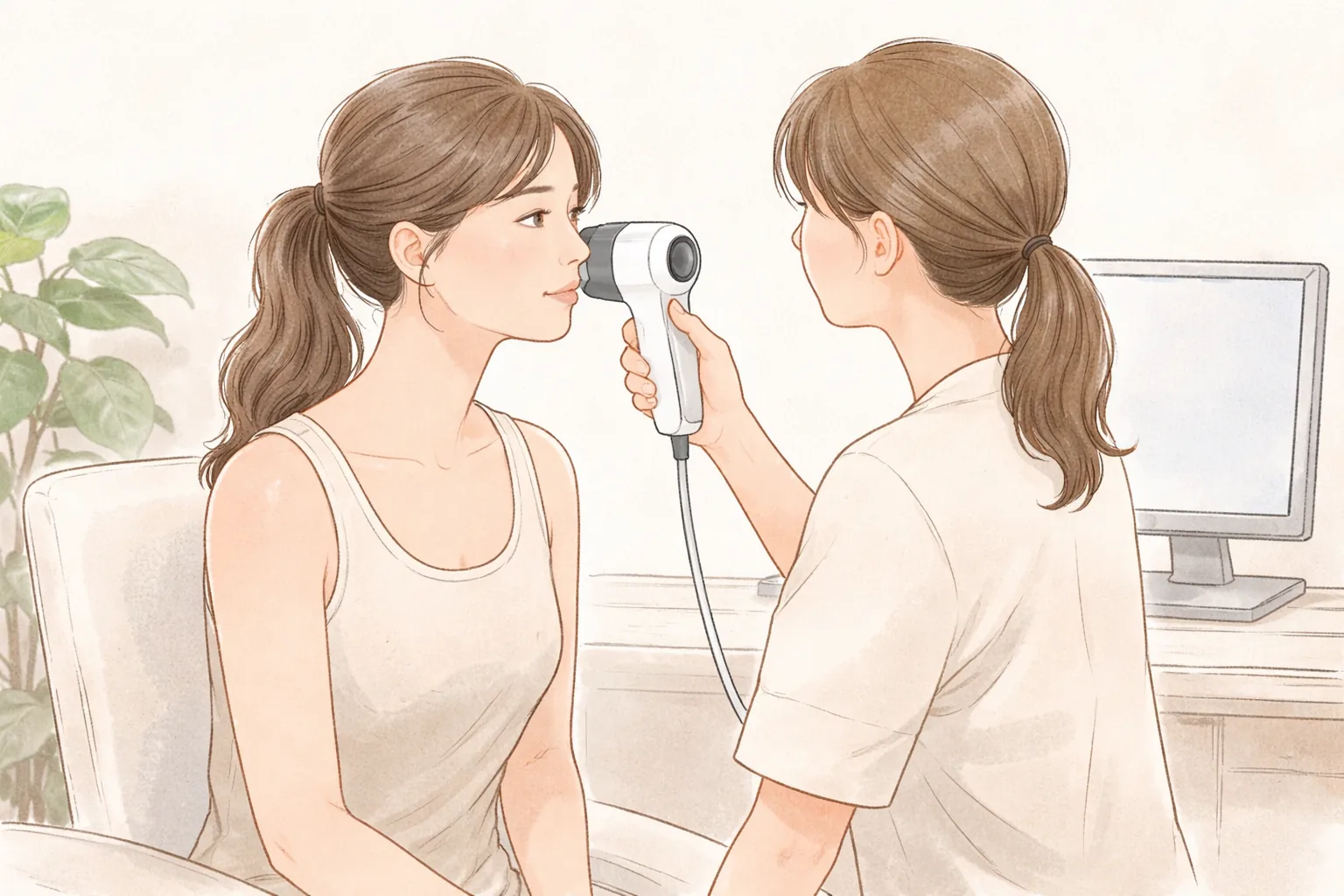
AI skin analysis record — Your skin condition is recorded and organized so you and the doctor look at the same information. This tool records and organizes information to support the consultation; it does not make a medical diagnosis, and the judgment is the director's.
Consultation with the director — Your concerns, daily habits and previous treatment experience are added to the analysis record to decide together what is needed and what is not, which combination and sequence, and at what intensity. Scope and the total you expect to pay are lined up on the same basis here.
Treatment performed by the director — The director personally carries out the plan set at the consultation and adjusts intensity while watching how your skin responds during the treatment, so that planning and execution stay aligned.
The pricing principle is to publish every price by unit and show VAT separately (ATTITUDE treatment and pricing guide). Devices that often come up in consultations on this topic include lifting devices that stimulate deeper layers with heat or ultrasound (Ultherapy, Thermage FLX, Shurink Universe, Onda) and injectable lines such as skin boosters and Potenza, while menus dealing with pigment and facial redness are listed separately too. Which device suits you depends on your skin condition and concerns, and is decided at the consultation.
Aftercare and side effects
After a treatment, aftercare follows this order.
Calming — Skin is sensitive right after a treatment, so avoid hot saunas and strong stimulation and allow time to settle calmly.
Moisturizing — The skin barrier can weaken temporarily, so keep skin hydrated with a gentler moisturizer than usual.
Sun protection — Wear sunscreen when you go out so that pigment changes do not develop.
Checking progress — Watch how redness or swelling subsides, and tell the clinic if anything differs from what you expected.
After lasers, energy devices and injectable treatments, redness, swelling, tenderness when pressed and bruising are common and usually settle within a few days. Rarely, temporary pigment changes where skin becomes darker or lighter, blisters, lumps after injection, burns or scars can occur (Why do results differ even with the same treatment?). Risks tied to the treatment and settings are explained by the director before the procedure.
Do not wait to get in touch if something differs from what you expected, such as pain that does not improve and keeps getting worse. If that happens, it is better to check right away rather than put it off until the next appointment.
Frequently asked questions
If VAT is added separately, which amount should I compare?
Compare the amount you expect to pay, meaning the listed price plus VAT. You also need to add any separately charged items such as consultation or anesthesia fees so the basis is the same. ATTITUDE Clinic's price list shows VAT separately, so the natural order is to confirm the scope at the consultation and then check the total. Even for the same treatment, the total changes if the area or number of sessions differs, so write down the conditions first.
Can I just have a consultation? Is there a consultation fee?
You can have a consultation regardless of whether you go ahead with a treatment, and a consultation does not commit you to one. The AI skin analysis record is also reference material to support the consultation, not a medical diagnosis, and the final decision is yours after the consultation. Whether there is a consultation fee or deposit varies by clinic, so this is something to ask. When you book, it helps to know that a request and a confirmed appointment are different things. A website request is confirmed once the clinic contacts you to verify it (ATTITUDE consultation booking).
Does the listed price include consultation, anesthesia and aftercare?
For anything not written on the price list, it is safer to ask at the consultation and put it into the total. How consultation, anesthesia, aftercare and extra visits are handled differs by clinic. Going through the items one by one at the consultation reduces the chance of a different amount appearing just before payment. Also note separately whether an amount was quoted before the scope was decided or after.
What should I do if a problem comes up after a treatment?
Redness, swelling and bruising usually settle within a few days. But if something differs from what you expected—pain that does not improve and keeps getting worse, blisters, pigment changes—tell the clinic rather than waiting for the next appointment. Following the aftercare instructions given right after the treatment and watching how things progress is the basic approach. The rarer a change is, the more it helps to check it early.
What should I check when choosing a clinic?
First is whether the consultation explains expected results and risks, alternatives, the number of sessions needed, recovery time and aftercare. These are the items the American Academy of Dermatology guidance suggests covering in a consultation (AAD: questions to ask before a cosmetic procedure). Alongside that, look at who performs the treatment, in what units prices are published, and whether the estimate you heard at the consultation and the amount you pay rest on the same basis. You cannot declare one clinic better than another; comparing how specific the explanations are under the same conditions is more realistic.
At a glance
Table 2 At a glance
Item
Key point
Basis for comparison
The total you expect to pay after matching conditions
Match first
Treatment and product, area, volume, sessions
Tax
Whether VAT is included or added
Separate items
Consultation, anesthesia, aftercare, extra visits
Look at together
Expected results, risks, alternatives, recovery time, aftercare
Record of what you were told
Note the amount with the date and the conditions that apply
같은 시술을 받아도 왜 결과는 다를까요?https://theattitudeclinic.com/column/doctor-column/why-results-differ/
This article offers general health information. It is not a substitute for diagnosis or treatment based on your own condition, so please talk through your situation with a doctor.