How to Turn Gangnam Dermatology Reviews Into Consultation Questions
Rather than judging whether Gangnam dermatology reviews are real or guaranteed outcomes, learn how to turn photo conditions, treatment names, areas, timelines, cost terms and aftercare into consultation questions — plus recovery guidelines.
Written by ATTITUDE Clinic Editorial Team
Searching for Gangnam dermatology reviews often brings two thoughts at once: "If I get it done here, will I look like that too?" and "Could this be an ad?" A review is someone's experience, not a record of your skin — so if you simply believe it, or only doubt it, you can easily miss what you should be asking in consultation. This article walks through how to read conditions inside reviews and turn them into consultation questions, the factors that decide the outcome of skin treatments, and preparation and aftercare.
The bottom line first
Reviews are not something to fact-check but material to check conditions against. It's hard to conclude whether something is an ad from a star rating, writing style, or a single photo alone, and even the same sentence only becomes readable when the shooting conditions, treatment area and timeline are written alongside it. The American Academy of Dermatology advises that before a cosmetic procedure, you confirm in consultation the expected results and risks, other options, your clinician's experience with your skin type, the number of sessions and time required, recovery and return to daily life, preparation and aftercare, and costs (AAD guidance). Don't fill in gaps in a review with guesses — turn them into questions on these points and hear the answers directly in consultation.
What should you treat as conditions when reading reviews?
Review sentences usually end with impressions, but attaching conditions to them turns them into questions. After "it was good," look for whether the treatment name and device, the treated area, the number of sessions, when the photo was taken, what the cost included, and aftercare are mentioned. If the conditions are there, you can turn them straight into questions; if they're missing, that's the part you need to fill in during consultation.
Table 1 What should you treat as conditions when reading reviews?
Sentence that stands out in a review
Conditions to check alongside
Question to ask in consultation
The before-and-after photos changed a lot
Lighting, angle, makeup, filters, shooting date, skin condition before treatment
What changes and limits can I expect for my skin?
The results were great
The actual treatment name and device, other treatments done together, treated area
Is the cause of my concern pigment, blood vessels, or the skin surface?
The swelling went down fast
Whether it was right after the treatment or after recovery, the treatment area
Given my schedule, how should I expect the recovery period and return to daily life?
The price was reasonable
Number of sessions, what's included, separate costs, VAT
For the same scope, what is the total and what's included?
The aftercare response was good
How to get in touch, criteria for a follow-up visit
If I'm uncomfortable after treatment, where and when do I get it checked?
It improved in one session
Treatment interval, timeline, skin condition
How are the number of sessions and interval decided for my skin?
Swipe sideways to see the whole table.
In short a review is not evidence of results but a list of conditions. Sentences with conditions can be turned into questions, and sentences missing conditions can be left as items to confirm in consultation without judging yet.
Why do before-and-after photos look so different?
The impression a photo gives isn't created by treatment effect alone. The same face looks different when lighting changes shadows, and skin texture looks different depending on angle, makeup, filters and shooting date. Whether the photo was taken right after the treatment or after redness and swelling settled also makes the before-and-after difference look bigger.
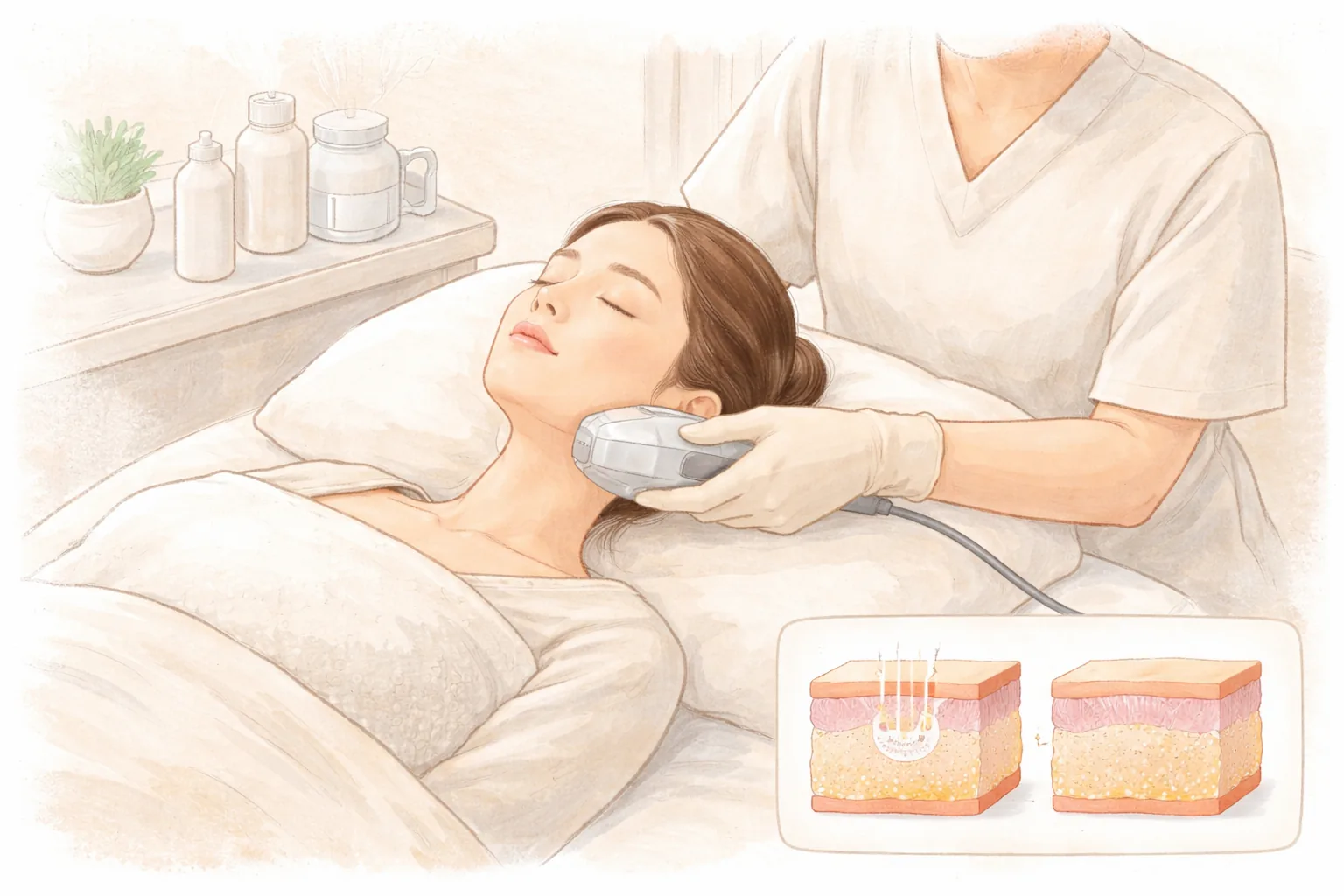
Dermatology lasers deliver light concentrated at a single wavelength (a property corresponding to the color of light) into the skin, so energy is absorbed only by the pigment, blood vessels or water that respond to that wavelength. This principle is called selective photothermolysis (concentrating energy on the target while disturbing surrounding tissue less) (laser column). So it's necessary to distinguish whether what looks different in a photo is the treatment's effect, the shooting conditions, or a natural change over time.
When reading before-and-after photos, first look at the shooting date, whether it was right after the treatment or after recovery, and whether the skin condition before treatment is disclosed. If it's hard to confirm the photos were taken under the same conditions, keep that photo only as a reference for setting expectations, and ask about changes for your own skin in consultation for accuracy.
Why do results differ for the same treatment?
Even treatments with the same name differ by each person's skin type and thickness, their ability to produce new collagen (the component that keeps skin firm), and their regeneration speed. Lifestyle and hormonal status also affect recovery speed. The ATTITUDE Clinic column explains that because of these differences in starting condition, the same lifting and laser treatments differ in perceived results and when they appear (results difference column).
More than the device name, wavelength and energy, treatment scope and treatment interval decide the outcome. Even with the same laser, settings that don't suit the skin increase burden, while settings matched to the condition aim for redness or heat to settle within a few days. On top of this comes the process of adjusting intensity while watching the skin's response during treatment.
So when you see "the same treatment" in a review, it's worth confirming the actual device and settings, the treated area and the number of sessions as questions. The process of deciding together, based on consultation records and examination, what is needed and what isn't, and in what order, is the starting point for reducing differences in results.
How do you move a review's recovery period onto your own schedule?
Recovery periods differ by laser type and intensity, and by treated area. Redness and heat may settle relatively quickly, while treatments that resurface the skin can cause redness, dryness or thin crusting for several days (laser column). That's why it's hard to apply a recovery period written in a review directly to your own schedule.
Treatment intervals aren't set uniformly either. They vary by laser type, purpose and skin condition, and are adjusted while monitoring progress. Pigment toning is usually advised at minimum 1-week intervals, and very frequent toning has been reported in connection with mottled hypopigmentation, so keeping to intervals is safer.
If you have a fixed date like a wedding, a shoot or a trip, it's best to tell the clinic that date first during consultation. Working backward from the schedule lets them adjust the treatment type, intensity and start timing. A treatment you're getting for the first time right before an event is a burden, because redness or sensitized skin can overlap with your schedule.
What else should you confirm in consultation?
There are items that rarely appear in reviews but matter more in consultation. They are the expected results and possible risks, other options, how much experience the clinician has with your skin type and treatment of interest, the number of sessions and time required, recovery and return to daily life, preparation and aftercare, and costs. AAD guidance also recommends confirming these items in consultation (AAD guidance).
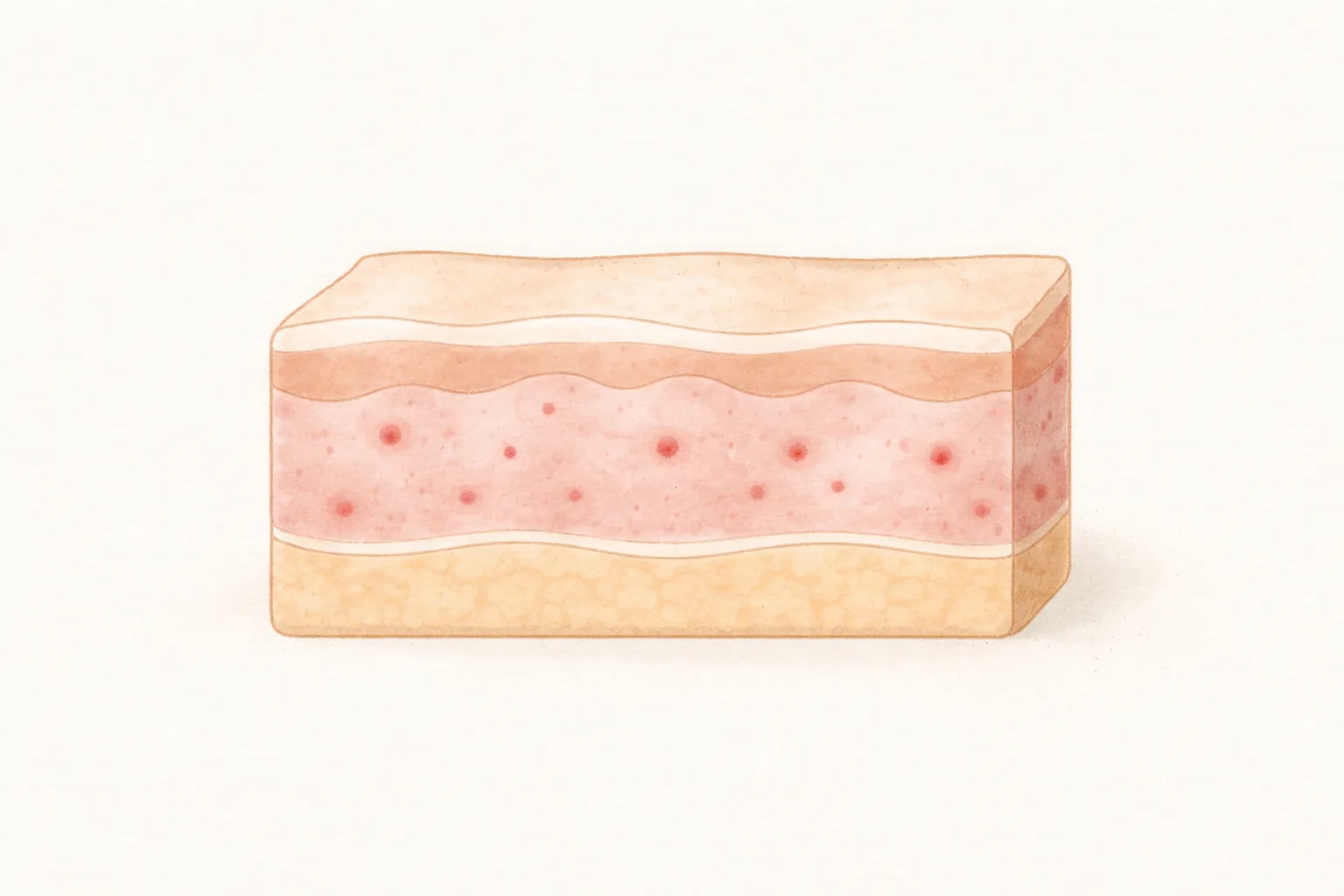
The starting point is not assuming your skin condition is the same as the review writer's. Even for the same concern, the approach differs depending on whether the cause is pigment, blood vessels, or the skin surface. In consultation, first confirm the cause of your concern, then compare suitable treatments and alternatives together.
If this sounds like you
If you have a wedding or a shoot coming up
A treatment you're getting for the first time right before an event can overlap with your important day with redness or sensitized skin. The more leeway you leave from the date, the wider the options you can adjust. Telling the clinic your wedding and shoot dates first during consultation lets them set the timing and intensity with the recovery period in mind.
If you want consistent ongoing care
Rather than going strong all at once, keeping to the intervals your skin needs to recover and managing it periodically puts less burden on the skin. A plan that sets goals and places only the necessary treatments at the right times helps. It's better to set the order according to your skin condition and daily schedule than to copy a treatment you saw in a review.
If your skin is sensitive or prone to redness
You need to check the state of your skin barrier and the cause of the redness first. Even the same intensity can be a burden on sensitive skin, so conservative settings and spaced-out intervals are a necessary decision. If you've had skin become sensitive after a previous treatment, be sure to mention it in consultation.
If you're an overseas visitor on a short stay
If your stay is fixed, redness or dryness right after treatment can affect your travel schedule. Telling the clinic your return date and upcoming plans in advance lets them discuss intensity and type accordingly. If it's hard to secure the time needed for recovery, splitting the treatment scope is also worth considering together.
Tell the clinic before your consultation Please mention in advance your recent sun exposure, medications and cosmetics you take or apply, any experience of skin becoming sensitive after a previous treatment, and fixed dates like weddings, shoots or trips. For the same treatment, the timing and settings differ depending on this information.
How the ATTITUDE Clinic does it
AI skin analysis record — Records hard-to-see conditions like pigment, redness, texture and pores as organized data. The analysis tool records and organizes information to support consultation and does not make a medical diagnosis; the doctor makes the judgment (results difference column).
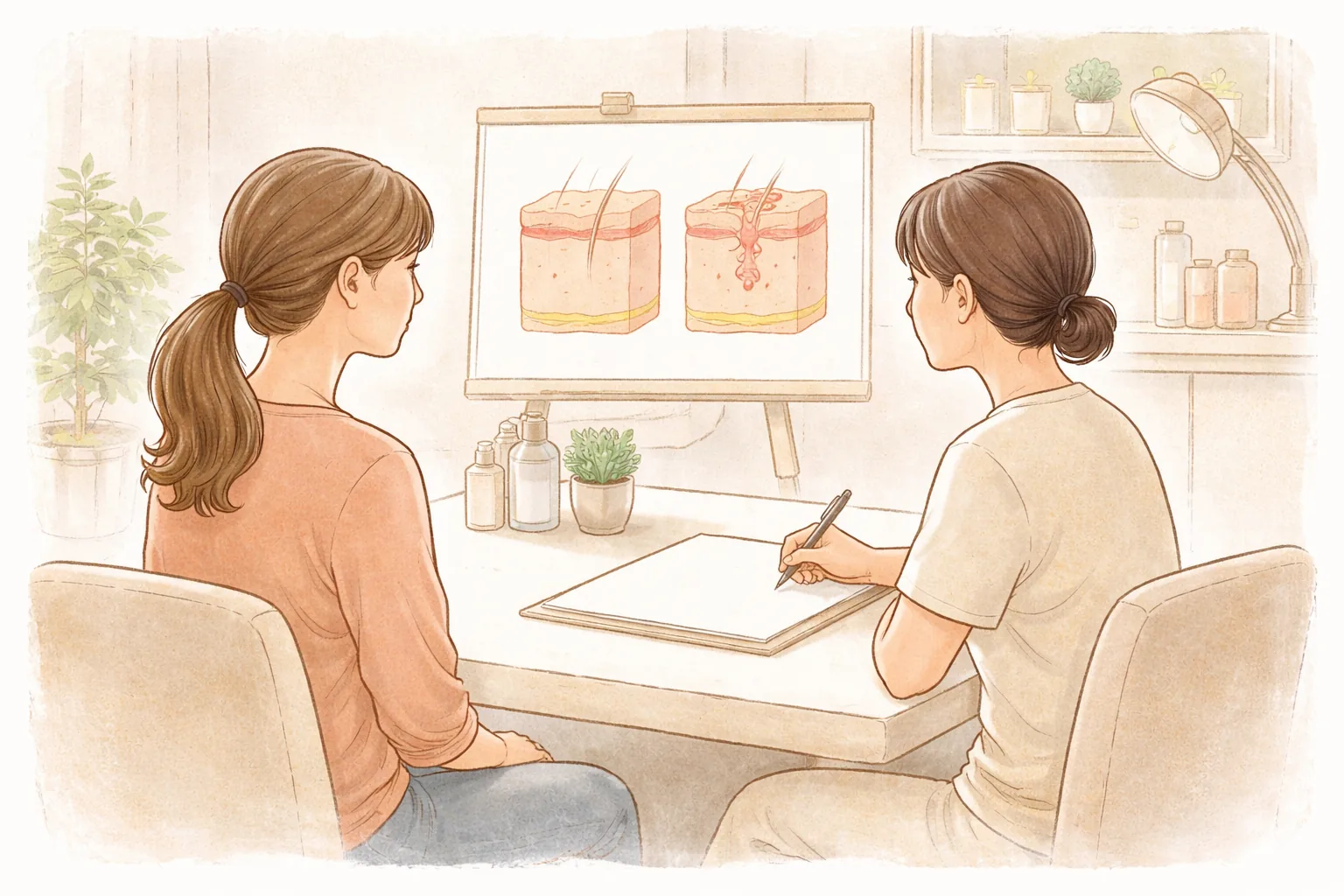
Doctor consultation — Adds your concerns, lifestyle, previous treatment history, schedule and pain sensitivity to the record to decide together the necessary treatments, order, intensity and timing. Questions you had from reviews are also confirmed here.
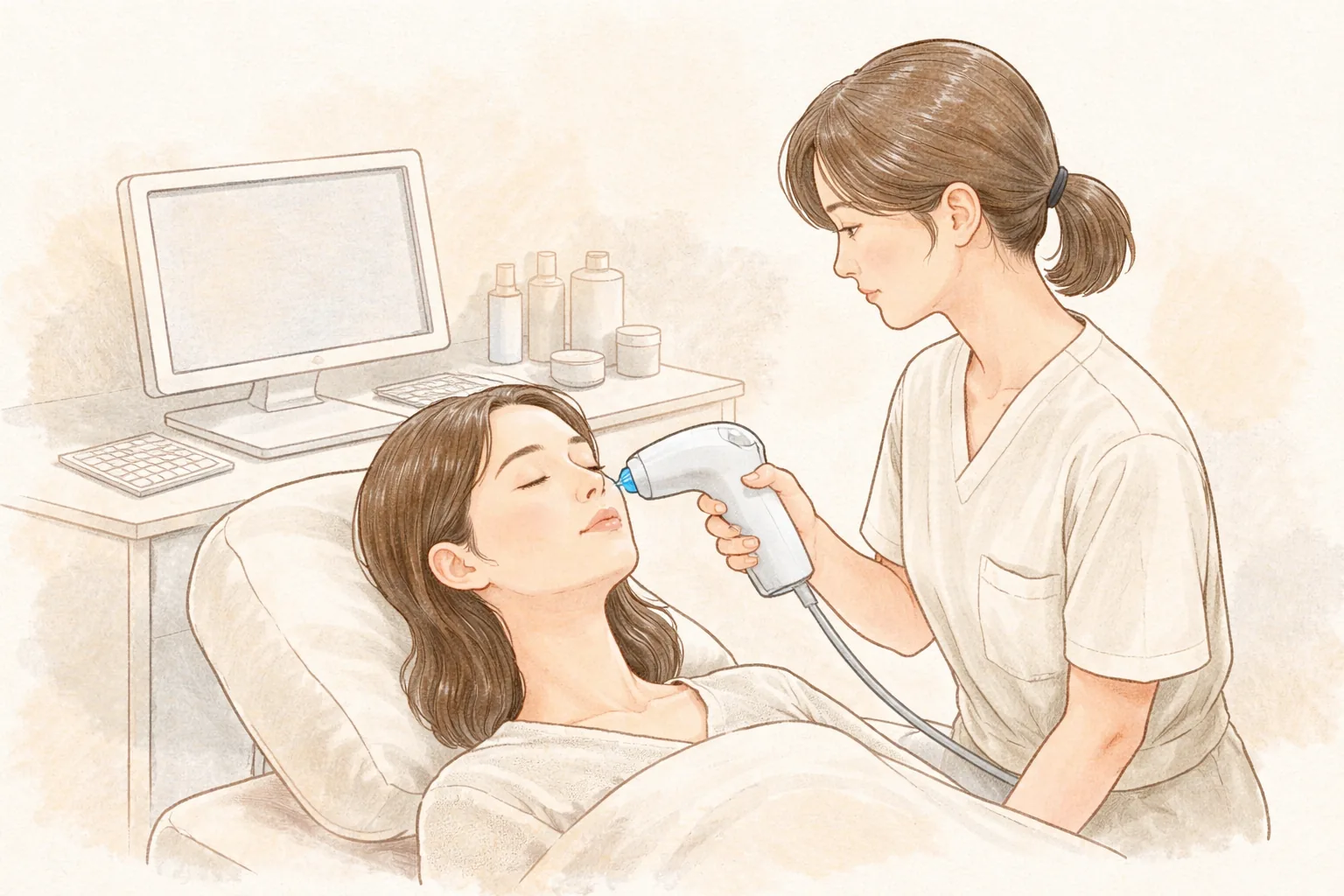
Treatment performed directly by the doctor — The doctor performs the treatment directly according to the plan set in consultation, adjusting intensity while watching the skin's response during the procedure. The principle is not recommending more treatment than necessary.
Recovery and care guidance — Guides you on sun protection and moisturizing after treatment, care to avoid, and when to check again.
The devices used for this topic are divided by target. PicoPlus handles pigment, VBeam handles shallow vessels and redness, and the erbium YAG laser handles the skin surface and texture (laser column). The starting point that decides outcomes is confirming first where your concern comes from, before the device name. The ATTITUDE Clinic follows the principle of genuine products, accurate dosing and fixed pricing, discloses prices by unit, and shows the same prices on every language page.
Aftercare and side effects
After treatment, care proceeds in this order.
Soothing — If there's redness and heat right after treatment, soothe it using the method you were guided on.
Moisturizing — Skin may become temporarily sensitive and dry, so keep up moisturizing.
Sun protection — Pay special attention to sun protection to reduce pigmentation.
Checking progress — If redness or heat lasts longer than expected or pain worsens, don't endure it — come in to get it checked.
Side effects range from common to rare. Redness, heat, swelling and stinging are common and usually settle within a few days. Ablative lasers like pigment lasers and the erbium YAG laser can leave thin crusting, and temporary pigmentation can occur. VBeam can cause bruising. Rarely, blisters, hypopigmentation, infection, scarring, or pigment returning can occur (laser column).
Recovery speed and response differ from person to person, so even the same treatment shows different progress. It's better to avoid irritating exfoliation and scrubs, and saunas, for the period you're guided on. If you notice changes that differ from expectations, don't wait — get them checked, as that's safer.
Frequently asked questions
How do you tell promotional reviews from real experiences?
It's hard to judge whether something is an ad from star ratings or writing style alone. Instead, look at whether the treatment name and area, the number of sessions, the timeline, what the cost included and the aftercare response are written specifically. Whether it emphasizes only one treatment, or whether the writer's skin concern and age range are stated and how similar they are to yours, can also be a reference. For sentences missing conditions, it's safer to hold off judging and turn them into consultation questions.
How should I read before-and-after photos?
First check whether lighting, angle, makeup and filters are the same conditions. Also look at the shooting date and whether it was right after treatment or after recovery. If the skin condition before treatment isn't disclosed, it's hard to expect the same degree of change. Keep photos as a reference for setting expectations, and ask about changes for your own skin in consultation for accuracy.
What should I watch for when looking at cost reviews?
Check how many sessions the amount in the review is for, what's included and what's separate. Also leave VAT inclusion and package composition as questions. Comparing the total and included items for the same scope in consultation lets you gauge the difference between the review's amount and your treatment plan. If only an amount is written and the basis is missing, don't use that number as the basis for your plan — turn it into questions to fill in the conditions and confirm in consultation.
How should I interpret negative reviews?
A negative review's writer may also have a different skin condition and treatment conditions, so it's hard to generalize directly. Look at when, on what area, after which treatment, what change occurred, and how the clinic responded. If the same symptom repeats or lasts a long time, checking with the clinic comes first. Use the changes and duration in your own skin as the standard rather than the review's wording, and if there's a reaction different from usual, it's safer not to endure it and get it checked.
What should I check when choosing a clinic?
Look at whether they first confirm before treatment whether your concern comes from pigment, blood vessels or the skin surface. Whether they recommend only necessary treatments and don't set the number of sessions or intensity unreasonably, and whether they sufficiently explain pain, recovery schedule and precautions, are also criteria. Also look at whether there's a channel to get checked if you're uncomfortable after treatment. A consultation request and a confirmed booking are different; after you request, it's confirmed when you receive the clinic's confirmation contact (consultation guidance).
At a glance
Table 2 At a glance
Item
Key point
Standard for reading reviews
Checking conditions rather than judging authenticity; hard to conclude ad status from ratings and writing style alone
What to look at in photos
Lighting, angle, makeup, filters, shooting date, skin condition before treatment
This article offers general health information. It is not a substitute for diagnosis or treatment based on your own condition, so please talk through your situation with a doctor.