GOURI Skin Booster: How to Check Ingredients and Purpose
How to check GOURI skin booster ingredients, purpose, cost, sessions and dosage, recovery and precautions at your consultation — with official documents, the price list and booking flow.
Written by ATTITUDE Clinic Editorial Team
Search "GOURI" and news about people who share the name tends to come up first. What you actually want to know is what the product is made of, what it is used for, and whether it suits your skin. This article walks through the questions that pin down the ingredients and purpose, the cost and number of sessions, and the recovery and precautions.
The short answer first
A product's ingredients, formulation and approved indications are confirmed in the manufacturer's documents and the product leaflet you see during your consultation, not in search summaries or community posts. American Academy of Dermatology guidance recommends covering expected results and risks, alternatives, the number of sessions and treatment time, recovery and when you can return to daily life, preparation and aftercare, and cost at a cosmetic consultation. Cost is quoted per product unit, and on the ATTITUDE Clinic price list the GOURI 1 vial item is split into regular price and discounted price. All amounts exclude VAT, and how much to inject over how many sessions is decided in the consultation by looking at the area, skin thickness and previous treatment history — not by the price list.
Why does searching "GOURI" mix everything together?
When the name is also a person's name, product documents and news about that person land on the same screen. Add posts that just list neighborhoods, phrases that promise a result, and individual testimonials, and it becomes hard to tell whether the explanation you read describes the product at all. Narrowing the path is simple: search with the product name plus the treatment category, and cross-check manufacturer name, ingredient name, formulation and approved indications against official documents. Testimonials neither guarantee results nor tell you about ingredients.
The same injection does different jobs depending on what goes in
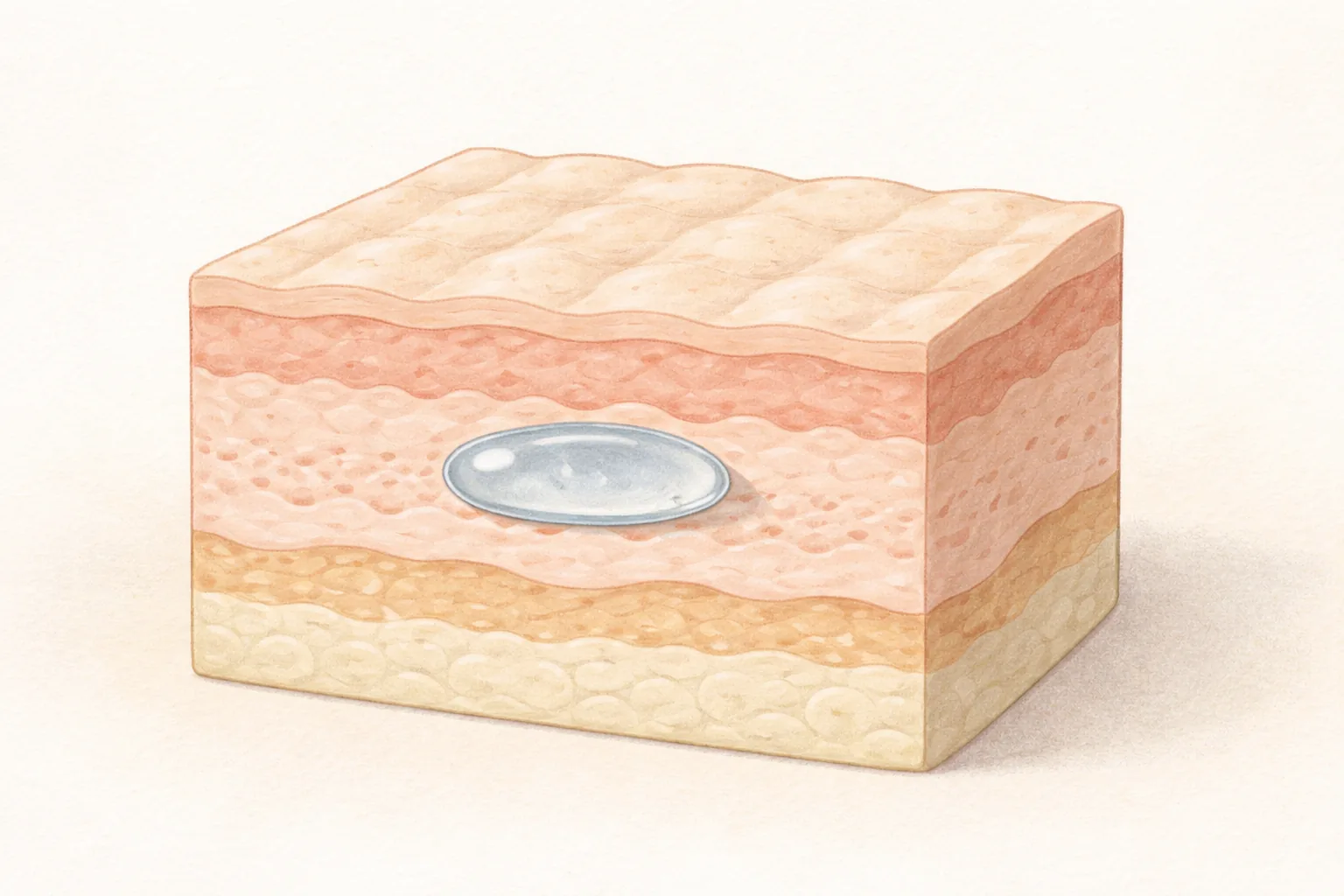
Injectable treatments look similar from the outside, but what goes in, where it goes, and what that substance does in the skin all differ. Borrowing the split from the clinic's collagen injection article, there are broadly two paths. One signals skin cells to build their own collagen; the other directly replenishes the structural material of the skin in the dermis. Even for the same injection, which path it belongs to changes the kind of change you can expect and how long it tends to last.
For a single product, the checklist gets more specific: ingredient name and formulation (liquid, particle, or a powder reconstituted before use), manufacturer, domestic approved indications, and the concern the product targets. These four are most accurately checked during the consultation alongside the product leaflet. Cell- or tissue-derived products differ in source, concentration and purification method from product to product, so it is better to start by confirming which product is being used (exosome article).
It is not accurate to say a liquid formulation is always better or a particle formulation always causes problems. Formulation affects how widely it spreads in the skin, whether the injection site feels raised, and how the treatment is planned. Because it is a substance placed into the skin, allergic or foreign-body reactions can occur, so if you have reacted to tissue-derived products before or have an autoimmune condition, mention it at the consultation first.
How do you set expectations and the point of assessment?
"When will it get better" only has an answer when paired with "what gets better." A method that fills volume immediately and one that changes gradually over time differ from the assessment point onward. After injectable treatments, the course is usually redness and mild swelling on the day, swelling easing over a few days, and then gradual change over several weeks. The plump feeling right afterward may be the product settling or may be some of the swelling, so it is hard to call it change.
That is why setting your assessment criteria before the treatment makes judgment easier: decide in advance when (for example 2 weeks, 4 weeks), under what conditions (photos taken in the same lighting, from the same angle), and what you will look at. At the consultation, it helps to ask for before-and-after photos from cases with a skin type and age range similar to yours. Someone else's result does not predict yours, but it is useful material for gauging what is possible and what is difficult.
How do you check cost, sessions and dosage?
What you can read off a price list and what is decided in the consultation are different things. A price list breaks amounts down by product and unit (1 vial, how many cc), and you need to look at included and excluded items and whether VAT applies to arrive at the actual total. On the ATTITUDE Clinic price list, all amounts are shown excluding VAT. The number next to an item name is the unit that item is built from, not a recommended dose for you.
The variables that set the number of sessions and the interval are the size of the area, skin thickness, how far the concern spreads, previous filler or skin booster history, and how fast you recover. Even for the same product, using it evenly across the whole face and concentrating on a specific area call for different plans. Rather than fixing the number of sessions at the first consultation, it is common to see how the first treatment goes and adjust the next interval from there.
Booking a request and confirming an appointment are not the same. ATTITUDE Clinic confirms an appointment request after the clinic calls you back, same-day requests are taken for slots at least 1 hour later, and the last intake is 17:30. A request alone does not confirm an appointment or guarantee immediate care.
Table 1 How do you check cost, sessions and dosage?
What to check
What to ask at the consultation
Where to check
What the product is
Manufacturer, exact product name, ingredient name and formulation
Manufacturer's official documents, product leaflet at the consultation
Approved indications
What the product is approved for domestically
Approval information, product leaflet
Expected change and limits
What concern it targets, and what is difficult
Consultation with the clinician, treatment cases in similar conditions
Cost and included items
Unit, total, included vs. separate items, VAT
Official price list and the consultation
Sessions and dosage
How many sessions, what interval, what sets the per-session dose
Decided in the consultation
Recovery and precautions
Anesthetic method, pain, downtime, when you return to daily life
Consultation with the clinician
Swipe sideways to see the whole table.
In short check the product's ingredients and approved indications in official documents and the product leaflet at the consultation, and read the price list for per-unit amounts, included vs. separate items, and whether VAT applies. The number of sessions and the dose are not values fixed on the spot — they are decided in the consultation by looking at the area, skin condition and previous treatment history.
If this sounds like you
When a wedding or a shoot date is fixed
Redness and swelling, the common reactions after an injection, settle within a few days, but bruising can take more than 1 week to fade once it appears. If you have a date, count backward from it and book the consultation with room to spare. It is not too late to consult and then postpone the decision.
Sensitive skin that reddens easily
If redness tends to linger after injections, tell the clinic about that history at the consultation. Even for the same product, the approach can adjust the per-session dose and injection depth. For areas with inflammatory acne or infection, it is better to move the timing.
If you have had filler or a skin booster before
Treatment history is core information that changes the plan. Telling them when, where, which product and how much — as far as you remember — helps design the area and dosage. If you cannot recall the product name, your records or photos from then are a clue.
If you are a visitor on a short stay
To fit both consultation and treatment into one visit, confirmation takes a call back, so it is better to send the request at least a day ahead. Booking the follow-up check at the same time lets you continue the thread on your next visit. Keep the treatment day free of heavy plans.
Tell them before the consultation
Recent UV exposure and outdoor activity (vacation, golf, hiking, etc.)
Medications you take (including blood thinners) and active ingredients you apply to the skin (retinol, acids, etc.)
Any experience of prolonged redness, swelling or bruising after previous treatments
Autoimmune conditions, pregnancy and breastfeeding, allergy history
Dates you cannot avoid (wedding, shoot, presentation)
How ATTITUDE Clinic runs it
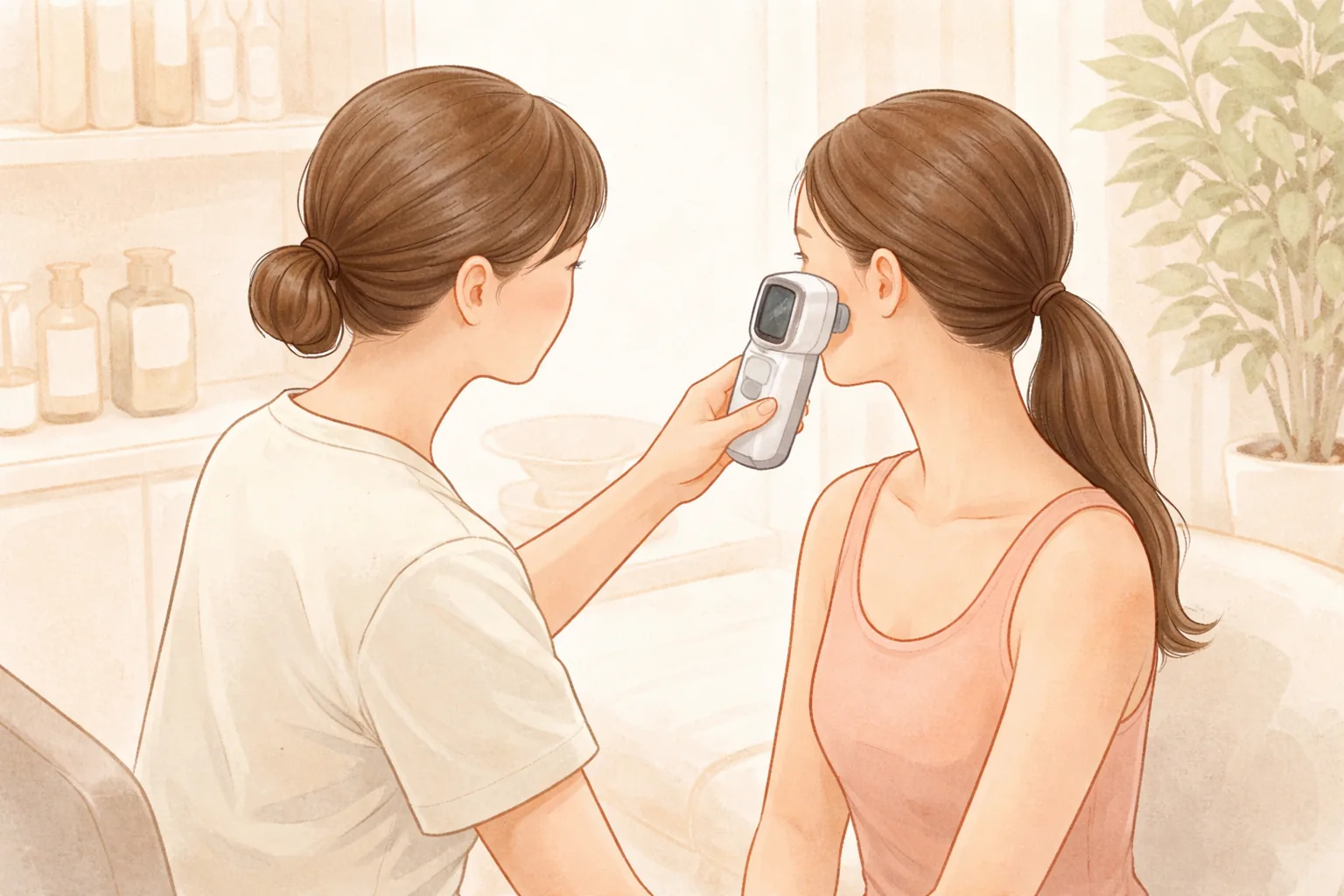
Recording and organizing your skin condition — Photos and a questionnaire capture your current skin condition, the areas of concern, and previous treatment history. This record is not a diagnosis that names a condition; it is material for the consultation and for comparing progress.
Consultation with the doctor — The ingredients and formulation, approved indications, and the changes and limits you can expect are explained. Cost is quoted from the per-unit amounts on the price list, together with included and separate items and whether VAT applies.
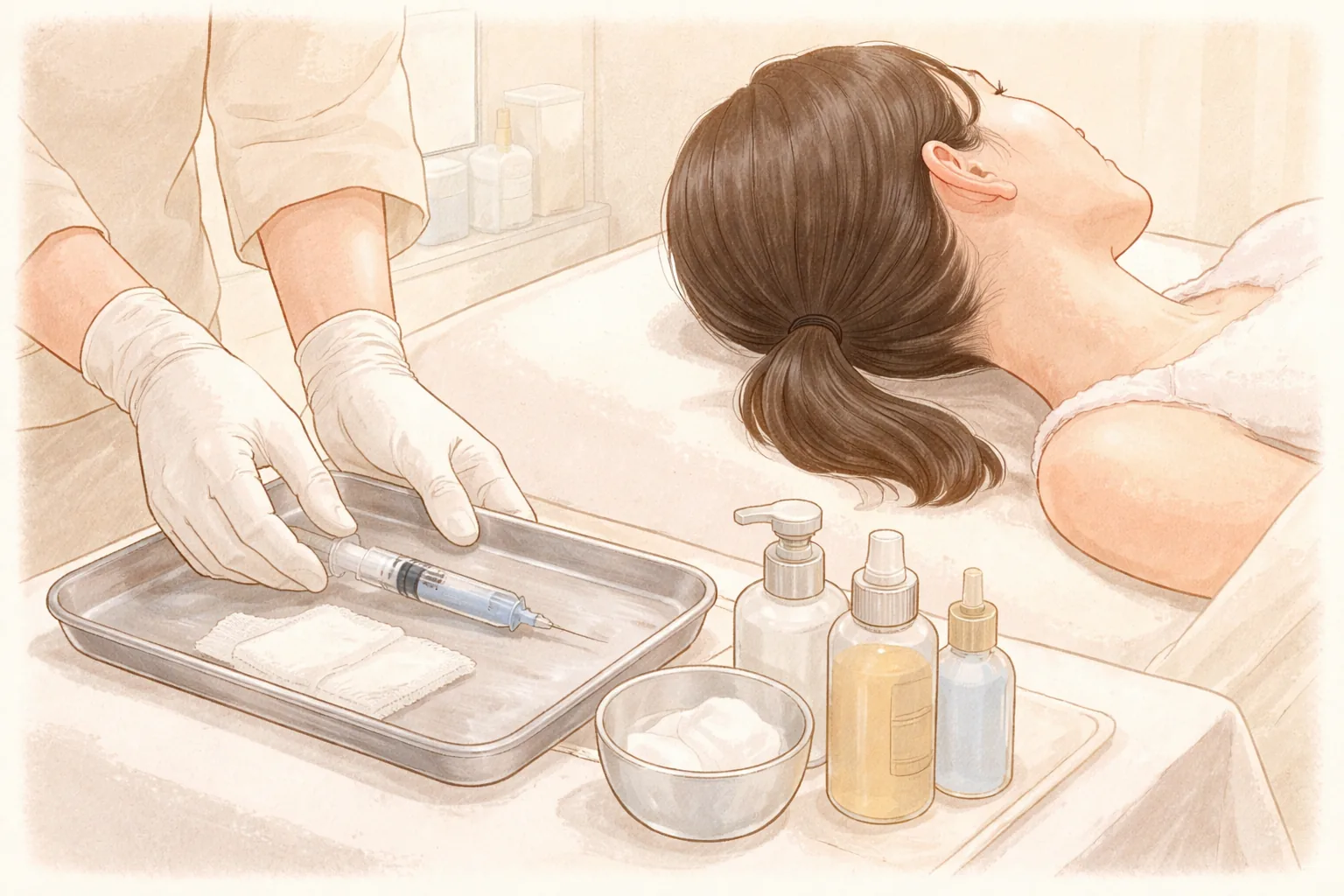
Treatment performed by the doctor — The treatment is performed for the area and dose set at the consultation. The anesthetic method and level of pain are explained beforehand.
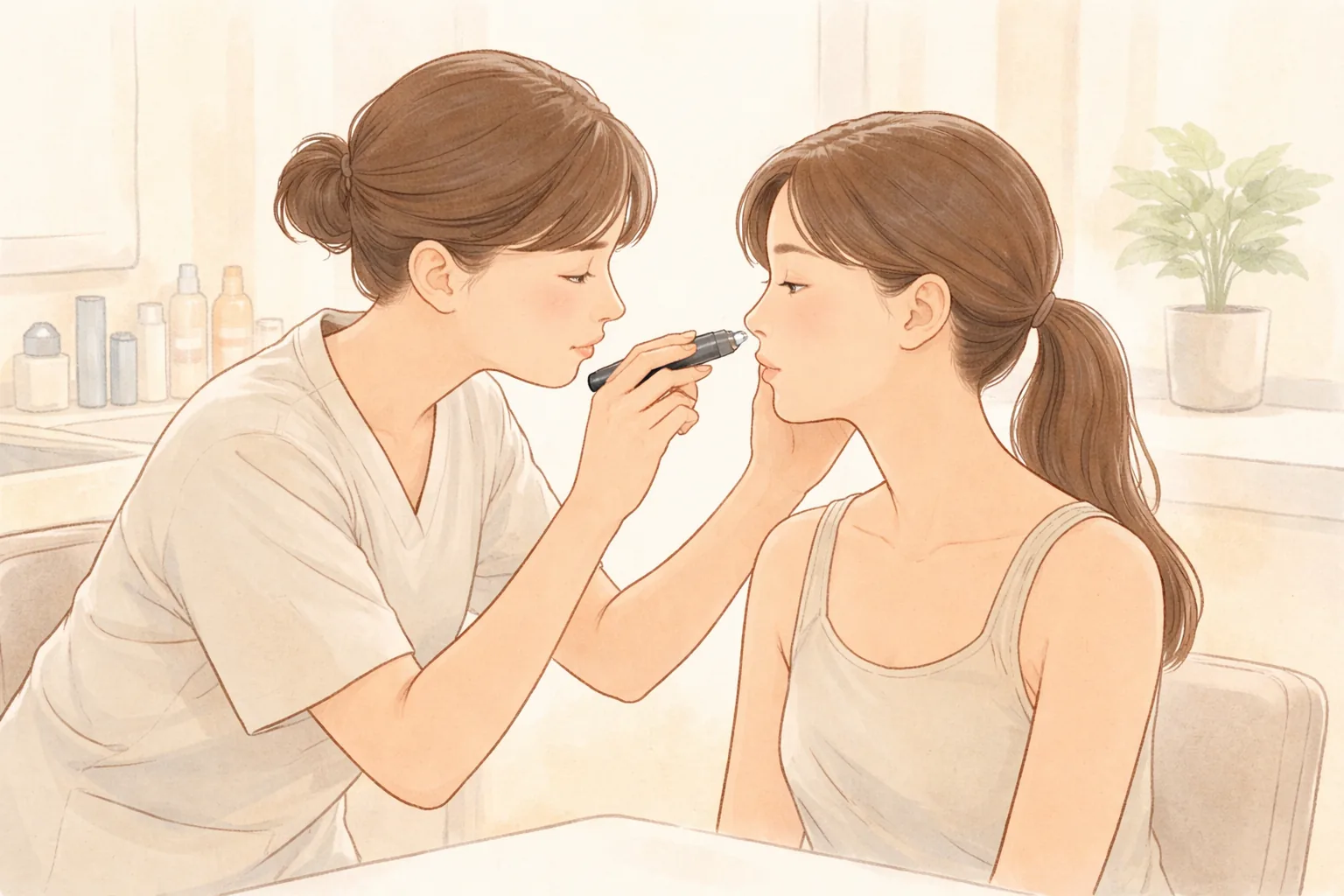
Recovery and follow-up — Your condition right after the treatment is checked, and you are guided on washing, makeup, exercise timing and sun protection. The next plan is set after seeing how things progress.
In the injectable and skin booster area, ATTITUDE Clinic publishes products and units on its price list and guides several products, GOURI included, on the same basis. It works from authentic product, accurate dose and the listed price.
Aftercare and side effects
Guidance after injectable treatments generally follows the same order. This is based on the injectable treatment guidance in the clinic's own article.
Calming — Do not press hard on or massage the injection site. Physical stimulation before the product settles can make the distribution uneven.
Washing and makeup — Wash gently from 4–6 hours afterward, and start makeup the next day.
Moisturizing and sun protection — Keep moisturizing throughout the recovery period and apply sunscreen carefully.
Follow-up — Watch how redness and swelling decrease, and check progress at the point you set in advance. Avoid heavy exercise, saunas and alcohol on the day of treatment.
Common reactions are redness, stinging, swelling, tenderness when pressed, and bruising. The injection site may feel uneven, which mostly eases with time, but tell the clinic if it persists. Rarely, infection, allergic or foreign-body reactions, or small lumps (nodules) can occur. Very rarely, the injected substance can block or damage a blood vessel, so if you have pain that is unusual or getting worse, skin at the injection site turning white or mottled, blue-gray or black, or changes in your vision, do not wait — get care immediately. Also contact the clinic if swelling, pain or fever continues.
It is better to set the follow-up schedule before the treatment. Hearing in advance where normal progress ends and when to make contact makes the recovery period easier to judge.
Frequently asked questions
How is this different from filler?
Filler immediately fills volume in a specific area, while a skin booster is injected into the dermis to draw in moisture or send renewal signals — a different approach. As the clinic's article lays out, hyaluronic acid filler itself fills the space and then breaks down over time, while collagen-related injections either replenish structure or induce collagen production. Which one fits depends on whether your concern is volume or skin texture and elasticity.
When do results show, and how do you judge them?
The plump feeling right after and the change that appears over time are different things. The usual course is swelling easing over a few days and then gradual change over several weeks, with wide individual variation in degree and timing. Comparing photos taken in the same lighting and from the same angle at set points keeps your judgment steady. That is why setting your assessment criteria before the treatment makes judgment easier: decide in advance when (for example 2 weeks, 4 weeks), under what conditions (photos taken in the same lighting, from the same angle), and what you will look at. At the consultation, it helps to ask for before-and-after photos from cases with a skin type and age range similar to yours.
How many sessions, and at what interval?
The number of sessions and the interval are set by the size of the area, skin thickness, previous treatment history and recovery speed. It is common to see how the first treatment goes and adjust the next interval, so booking the follow-up check first is more flexible than fixing a number at the consultation. Even for the same product, the whole face and a specific area call for different plans. Even for the same product, using it evenly across the whole face and concentrating on a specific area call for different plans. Rather than fixing the number of sessions at the first consultation, it is common to see how the first treatment goes and adjust the next interval from there.
How long do bruising and swelling last?
Redness and swelling often settle within a few days, and bruising can take more than 1 week to fade once it appears. On the day of treatment, avoid heavy exercise, saunas and alcohol; wash gently from 4–6 hours afterward and start makeup the next day. Not pressing on or massaging the injection site also helps recovery.
What should you look at when choosing a clinic?
The standard is less about which place is better and more about what they check. Look at whether the consultation explains the product's ingredients and approved indications from documents, whether it separates included and separate items in units and costs, and whether it explains recovery, side effects and when to make contact in plain language. American Academy of Dermatology guidance also recommends asking how often they have performed the treatment and how much experience they have with skin types and age ranges similar to yours.
At a glance
Table 2 At a glance
Item
Key point
Searching
Add the treatment category to the product name and cross-check manufacturer documents
Ingredients and approval
Confirm in the manufacturer's official documents and the product leaflet at the consultation
Purpose
Confirm expected change and limits, and alternatives, at the consultation
Cost
Per-unit amounts on the price list, excluding VAT, with included vs. separate items distinguished
Sessions and dosage
Decided in the consultation by looking at the area, skin thickness and previous history
Recovery
Redness and swelling for a few days, bruising possible for more than 1 week, avoid pressure and massage
This article offers general health information. It is not a substitute for diagnosis or treatment based on your own condition, so please talk through your situation with a doctor.