Healowave Consultation: What to Check First, Starting with Product Classification
A rundown of what to confirm at a Healowave consultation—product classification and ingredients, per-session dose, treatment intervals, what costs cover, and when to call about adverse reactions—and in what order.
Written by ATTITUDE Clinic Editorial Team
Search for Healowave and you will find that prices, treatment intervals, and reviews all differ, leaving you unsure where to start. That is because the same name covers lineups with different purposes, and a different purpose means a different set of things to check. This article walks through what to ask, and in what order, so your decision holds steady during a consultation.
The Bottom Line First
There are five things to sort out at a consultation: which product (item name and approved intended use), what it is made of (ingredients and per-session dose), at what interval and how many sessions (schedule and total number), what the cost includes, and which symptoms warrant a call or a visit. The American Academy of Dermatology advises that an aesthetic consultation is a setting where you are fully briefed on indications, risks, benefits, and alternatives before deciding (AAD consultation guide). A single product name does not determine the ingredient composition, mechanism, or recovery time, so it helps to jot down verbal explanations on the spot.
Why Check Product Classification and Approval Scope First?
The item name is a name that shows what purpose a product has been approved for. Whether it is a biomaterial for tissue repair or something for improving wrinkles in a specific area changes the injection depth and dose design. Asking what product is being used and what it is approved for lets you gauge how far the explanation that follows is backed by evidence.
Within the same brand, products with different purposes are sometimes offered side by side. If you expect the same effect because the names sound similar, your expectations will be off. In your consultation notes, write down the product name, item name, and intended use together, and check whether what you were told matches the product labeling. What to check before the brand name is whether your concern is volume, skin texture and hydration, or elasticity. These three call for different approaches.
On the ATTITUDE Clinic price list, injectable items including Healowave are listed by product and dose unit (treatments and pricing). That said, the item names and dose notations on a price list are units for organizing the list, not the dose recommended for you. Reading the two as one creates misunderstandings before the consultation even begins.
If the Ingredients Are the Same, Is It the Same Treatment?
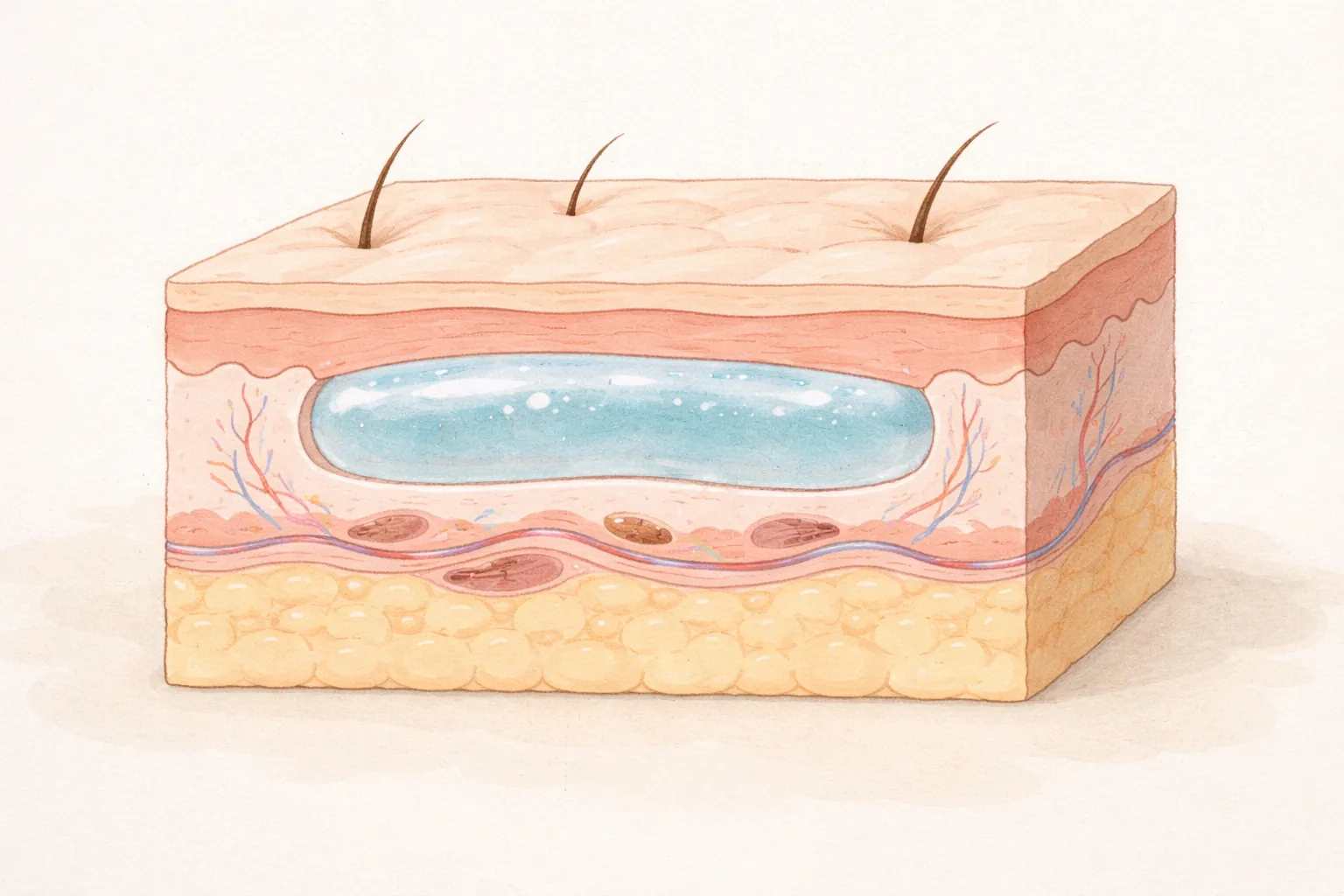
The mere fact that a product contains hyaluronic acid (HA, an ingredient that attracts and holds water) does not put it in the same category as a dermal filler. A hyaluronic acid dermal filler works by having the injected ingredient itself provide filling and then break down and be absorbed over time (collagen injection column). Skin booster lines that induce collagen production, by contrast, help fibroblasts make collagen on their own through cell regeneration signals. Once the stimulation ends, the effect gradually fades. Even for the same injection, what it does inside the skin differs.
So there is more to look at than a single ingredient name. The per-session injection dose (cc) and dose by area, the approved intended use, and whether that ingredient fills, induces, or replenishes. There are also methods that directly replenish the extracellular matrix (ECM, the structure that supports the skin) in the dermis, such as human acellular dermal matrix (hADM), so the goal differs depending on the material injected (collagen injection column).
This is also why the question "if it is hyaluronic acid, isn't it a dermal filler?" comes up so often. Both products involve hyaluronic acid, but their behavior in the skin after injection differs, and so does the way the effect diminishes. In the end, what to confirm at a consultation is not a list of ingredient names but what the product is designed to do in your skin. If that explanation does not match the product labeling, it is worth asking again on the spot.
What Determines the Interval and Number of Sessions?
What sets the interval is not the calendar but the speed at which your skin recovers. Skin thickness, movement in the treatment area, recent treatment history, and healing response all act as variables. The same principle applies to laser consultations. If the intensity is high relative to your skin condition, or sessions are repeated before recovery, it can stress the skin barrier, so the settings and interval are adjusted together (laser column).
Injectable skin boosters usually follow a course of several sessions at set intervals, with maintenance sessions considered afterward. The number depends on skin condition, area, and injection volume (collagen injection column). Check the recommended interval for a specific product against the approved labeling and consultation materials, and also ask why that number was set. Shorter is not better; the key is layering the next stimulation when recovery is complete.
Even within the same face, skin thickness and movement differ by area. There is no reason an area that folds every time you move your mouth should share the same interval as an area that stays still. If you hear the plan divided by area at the consultation and set priorities for which area to start with, scheduling becomes easier.
When and By What Do You Judge the Effect?
Setting the criteria before the treatment makes judgment far easier. The American Academy of Dermatology advises asking at a consultation what results are realistic to expect and requesting before-and-after photos of someone with a similar skin tone and skin type to yours (AAD consultation guide). Taking photos under the same lighting, angle, and distance makes later comparison easier.
For injectable treatments, the immediate feel and the changes that appear over time differ. A feeling of fullness at the injection site is often partly swelling that subsides over a few days, and any change after that tends to appear gradually over a few weeks (collagen injection column). Reading the fullness on the day of treatment as the final result easily leads to mismatched expectations, so it helps to set the check-in point in advance.
When evaluating, it is also better to decide what you will look at. What you notice differs depending on whether it is skin texture, volume, or elasticity. Writing down the day's condition, sleep, and water intake alongside photos makes interpreting changes much easier.
How Do You Compare Pain, Recovery, and Cost?
Pain varies with the type and intensity of the treatment, the area, and individual sensitivity. Injectable treatments sometimes use topical anesthesia to reduce discomfort, and lasers can feel more prickly depending on the area even at the same intensity (laser column). If you confirm anesthesia, treatment time, expected recovery period, and when you can return to daily life at the consultation, your schedule planning becomes far more concrete.
For cost, comparing what is included rather than the total is more accurate. The ATTITUDE Clinic price list divides items by treatment, product, area, dose, and number of sessions, and all amounts are shown excluding VAT (treatments and pricing). Whether consultation fees, anesthesia fees, return visits, aftercare, and additional-area costs are included differs by item, so it helps to confirm in writing at the consultation. Items marked as in preparation are not bookable services, so before booking you should check whether they are currently being performed.
Table 1 How Do You Compare Pain, Recovery, and Cost?
Category
What it does in the skin
Concerns it mainly addresses
What to check at the consultation
Hyaluronic acid dermal filler
The injected ingredient fills and then breaks down and is absorbed
Correcting volume in a specific area
Area and dose, bruising and swelling course
PN·HA skin booster
Induces collagen production and holds moisture
Hydration and skin texture, maintenance
Treatment interval and number of sessions, stimulation response
hADM allogeneic collagen
Directly replenishes the dermal extracellular matrix
Reduced skin thickness and elasticity
History of reactions to tissue-derived products, allergies
Healowave
Classification and mechanism to be confirmed at the consultation
Choosing a goal among volume, hydration, elasticity
In short the axes to confirm at a consultation are not the product name but the classification and ingredients, dose, interval, what costs cover, and how adverse reactions are handled. If you first decide whether your goal is volume, skin texture and hydration, or elasticity, the questions you need to ask narrow naturally.
If This Sounds Like You
If a ceremony or shoot is coming up
If you cram a first-time treatment right before an event, redness or sensitized skin can overlap with that day. If you tell the clinic your date at the consultation, they can work backward from your schedule to adjust timing and intensity (laser column). It is best to get guidance on recovery time before setting the order of appointments.
If you want steady maintenance
Rather than going strong all at once, continuing while respecting recovery intervals puts less strain on the skin (laser column). If you set a target point and total number of sessions and divide priorities by area within that, you can manage cost and schedule together. It also helps to hear in advance the criteria for changing the plan midway.
If your skin is sensitive or flushes easily
If cosmetics sting or your skin has become unusually sensitive, you need to say so before treatment so the settings can be adjusted (laser column). Please also mention any experience of redness lasting a long time after a previous treatment, medications you are taking, and cosmetics you are using. Even for the same treatment, timing and intensity change based on this information.
If you are a short-stay visitor
If your stay is fixed, tell the clinic your return date and next commitments first. Redness or dryness right after treatment can affect your plans, so intensity and type can be discussed to fit your remaining days (laser column). If booking requests are confirmed only after the clinic calls you back, it helps to check the last intake time as well (consultation and booking guide).
Tell the clinic before your consultation your recent UV exposure, medications you are taking (including blood thinners) and cosmetics you are using, any experience of sensitivity or allergic reaction after a previous treatment, whether you are pregnant or breastfeeding, and important dates such as a wedding, shoot, or trip. This information is the basis for deciding timing, settings, and product selection.
How ATTITUDE Clinic Handles This
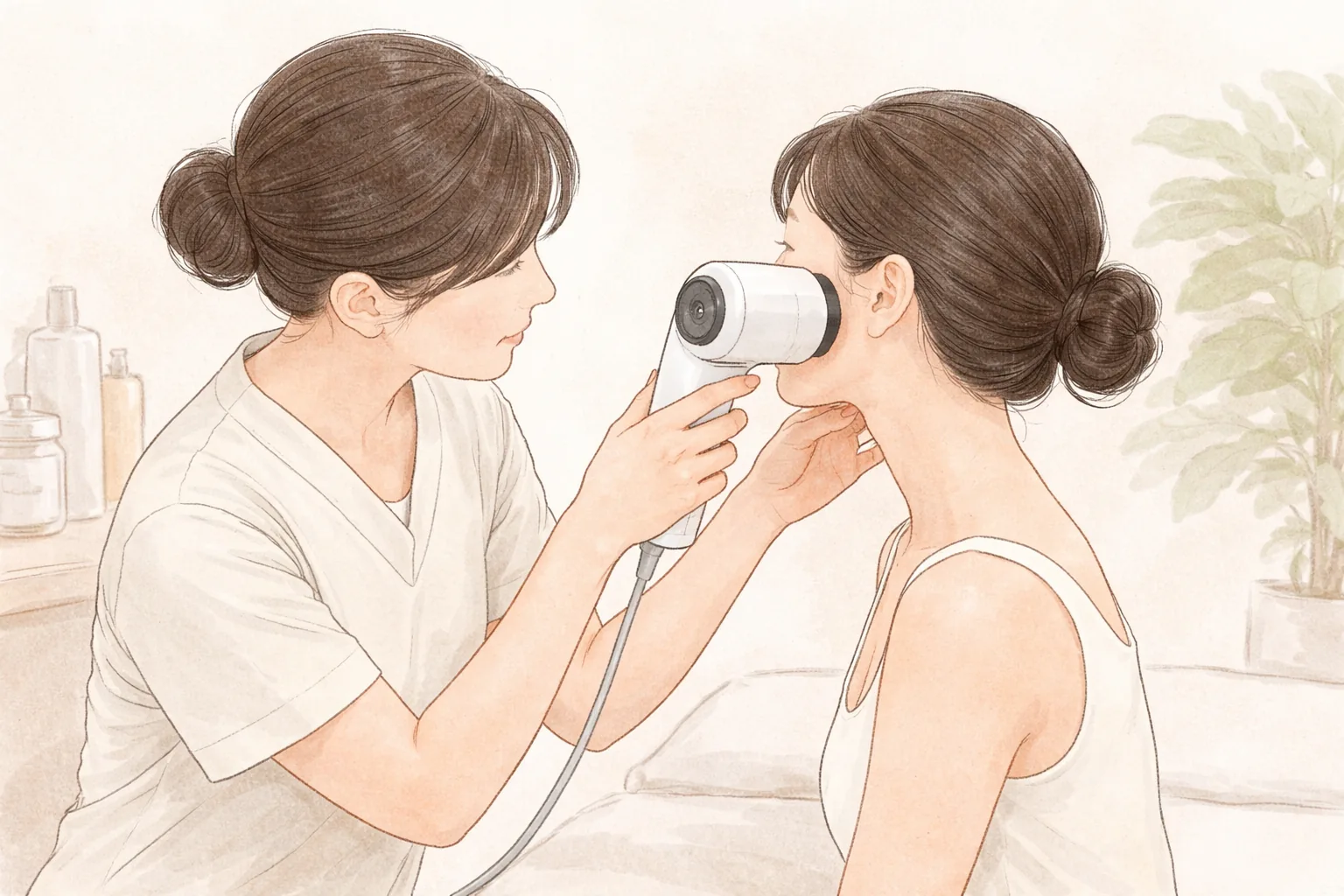
AI skin analysis record, the current skin condition—pigmentation, redness, texture, pores—is recorded with an analysis tool. This record organizes information to support the consultation and is not a medical diagnosis.
Treatment direction set in a doctor consultation, the analysis record plus your schedule, pain sensitivity, treatment history, and medications are used to decide the treatment type, intensity, and timing together. This is also where they explain which product is used for what purpose and how the per-session dose and interval are set.
Treatment performed by the doctor, topical anesthesia is used as needed to reduce discomfort, and the doctor performs the treatment directly. Treatments beyond what is needed are not recommended.
Recovery and aftercare guidance, you are told post-treatment precautions, when to check progress, and when to contact the clinic. Everything proceeds within the scope guided by the principles of genuine products, accurate dosing, and set prices.
The equipment and products ATTITUDE Clinic uses for this topic are laser lines (PicoPlus, VBeam, erbium YAG laser) and injectable lines (hyaluronic acid dermal filler, PN·HA skin booster, hADM allogeneic collagen, Healowave) (laser column, treatments and pricing). Which combination fits is decided after checking the cause of your concern and your skin condition.
Aftercare and Side Effects
Soothing, do not press hard on or massage the injection site. Giving physical stimulation before the product settles can make its distribution uneven (collagen injection column).
Moisturizing, the skin is temporarily sensitive after treatment, so hydration helps. It is best to avoid saunas, vigorous exercise, and alcohol on the day itself.
Sun protection, apply sunscreen carefully throughout the recovery period. Avoid exfoliation or harsh scrubs for the period you are told.
Progress check, wash your face gently after the time you are told, and makeup is possible from the next day. Check progress with photos at the agreed point.
Common reactions are redness, prickling, swelling, tenderness when pressed, and bruising. More rarely, infection, allergic reaction, foreign body reaction, or small lumps (nodules) can occur (collagen injection column). If swelling, pain, or heat persists, contact the clinic.
There are also signals you should not wait on. If you have pain that is different from usual or steadily worsening, if the skin at the injection site turns white, mottled, bluish-gray, or black, or if you notice changes in vision, you should seek care right away (collagen injection column). Hearing these criteria before treatment speeds up your judgment.
Frequently Asked Questions
What is the difference between Healowave and dermal filler?
If you see the two as the same thing, the consultation goes off track. A hyaluronic acid dermal filler works by having the injected ingredient itself provide filling and then break down and be absorbed, while skin booster lines that induce collagen production help the skin make collagen on its own (collagen injection column). Healowave's classification and mechanism are items to confirm in the product labeling and consultation materials, so it helps to ask about the item name, intended use, and per-session dose together. The options differ depending on whether your goal is correcting volume in a specific area or skin texture and hydration.
How are the treatment interval and number of sessions decided?
Rather than following a fixed number as is, they are set based on the speed at which your skin recovers. Skin thickness and area, recent treatment history, and healing response govern the interval. Injectable skin boosters usually follow a course of several sessions at set intervals, with maintenance sessions considered afterward, and the number depends on skin condition, area, and injection volume (collagen injection column). Check the recommended interval for a specific product in the approved labeling and consultation materials, and also ask what basis that number was set on. Repeating sessions before recovery is complete only increases the strain on your skin.
How much pain and recovery time should I expect?
Pain varies with the type and intensity of the treatment, the area, and individual sensitivity. Injectable treatments sometimes use topical anesthesia to reduce discomfort, and lasers can feel more prickly depending on the area even at the same intensity (laser column). A feeling of fullness at the injection site is often partly swelling that subsides over a few days, and if bruising occurs it can take more than 1 week to fade (collagen injection column). If you have a wedding, shoot, or business trip, tell the clinic the date in advance. They can work backward from your schedule to adjust the timing and intensity of treatment.
What if nodules or swelling last a long time?
A bumpy feeling at the injection site may remain for a while, and it is a change that appears while the product settles (collagen injection column). That said, if the foreign-body sensation continues, do not wait—tell the clinic and get it checked. Rarely, infection, allergic reaction, or nodules can occur. If you have pain that is different from usual or steadily worsening, a change in skin color at the injection site, or changes in vision, you should seek care right away. Contact the clinic if swelling, pain, or heat persists, too. Setting criteria before treatment for which symptoms warrant a call and which warrant a visit speeds up your judgment.
What should I check when choosing a clinic?
There is something to look at before the equipment list. Start by checking whether the clinic identifies where your concern comes from before treatment, and whether it recommends only the treatments you need (laser column). According to the American Academy of Dermatology guide, you should confirm at the consultation the practitioner's experience and qualifications and how many people with a similar skin tone and age range to yours they have treated (AAD consultation guide). It also helps to see whether they fully explain pain, recovery schedule, and precautions, and whether you can get checked there if you have discomfort after treatment. Knowing in advance whether booking requests are confirmed only after the clinic calls you back makes scheduling easier (consultation and booking guide).
At a Glance
Table 2 At a Glance
Item
Key point
Check first
Item name and approved intended use
Ingredients and dose
Per-session dose and dose by area, and the role in the skin, over the ingredient name
Interval
Based not on the calendar but on the speed at which your skin recovers
Evaluation
Agree on the check-in point and photo conditions before treatment
Cost
What is included rather than the total, plus VAT and additional-cost conditions
Adverse reactions
Distinguish symptoms that warrant a call from those that warrant an immediate visit
This article offers general health information. It is not a substitute for diagnosis or treatment based on your own condition, so please talk through your situation with a doctor.