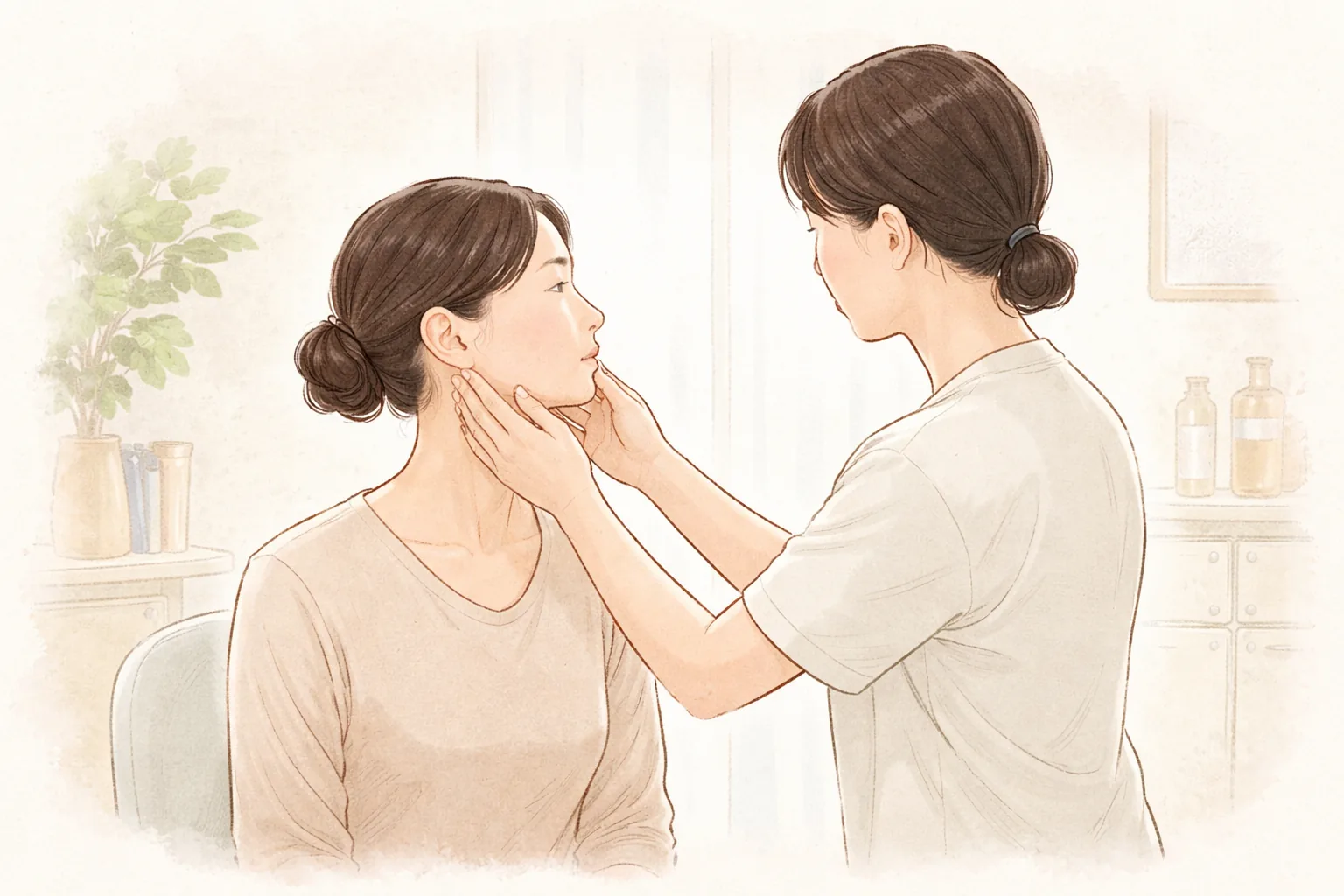
Jaw Botox: Why Muscles and Units Determine Your Results and How Long They Last
Jaw Botox targets specific muscles in the chin, jawline, and temple. Learn when effects appear, how long they last, why units differ by product, and how to prepare.
Written by ATTITUDE Clinic Editorial Team
A jaw that looks wide, a chin that looks bumpy even when you're not smiling, and tension in the jaw when you close your mouth are three different concerns. Yet searching for "jaw botox" often mixes them together. This article explains what botulinum toxin actually targets in the jaw area, when effects appear and what determines how long they last, and what to know before and after treatment.
The bottom line first
Botulinum toxin is an injection that reduces nerve signals to muscles so they move less. In the jaw area, the concern being addressed depends on whether the chin muscle, the muscles forming the jawline, or the chewing muscles are targeted. Effects usually begin at 2–4 days after injection, peak around 10 days, and gradually return to baseline over several months. What determines your result is not a single number of "units for the jaw" but which muscle is treated, with which product, and at what intervals.
What does jaw botox actually do in the jaw?
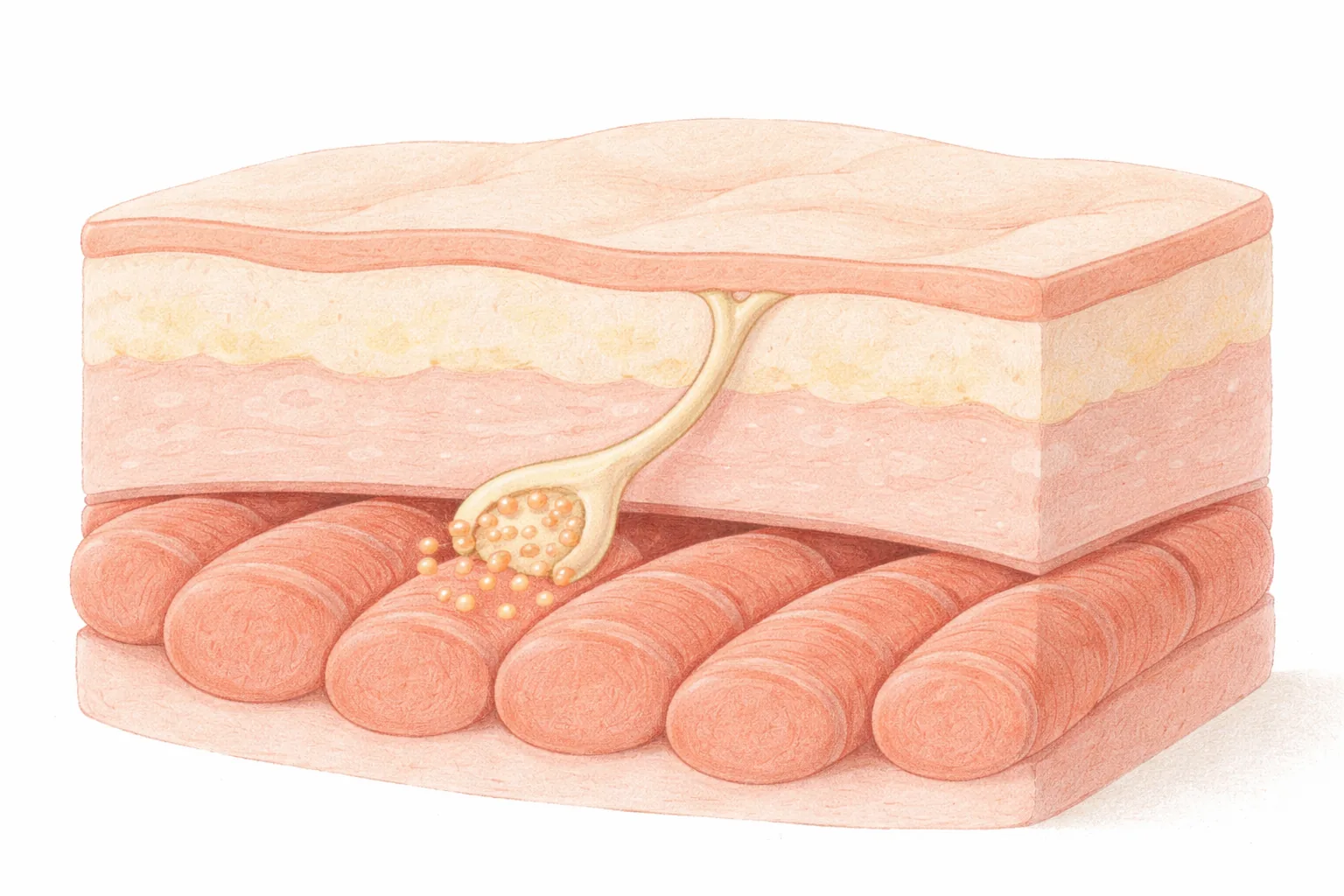
Botulinum toxin is a drug derived from a neurotoxin produced by the bacterium Clostridium botulinum. For a muscle to contract, the nerve ending must release acetylcholine (a neurotransmitter that carries the signal for muscles to move), and botulinum toxin works by blocking the pathway through which this signal is released (DermNet). Cleveland Clinic explains the same principle briefly as "blocking nerve signals to the muscle so it cannot contract" (Cleveland Clinic). When signals are reduced, the muscle exerts less force, and wrinkles or contours created by the muscle in the skin above are also softened.
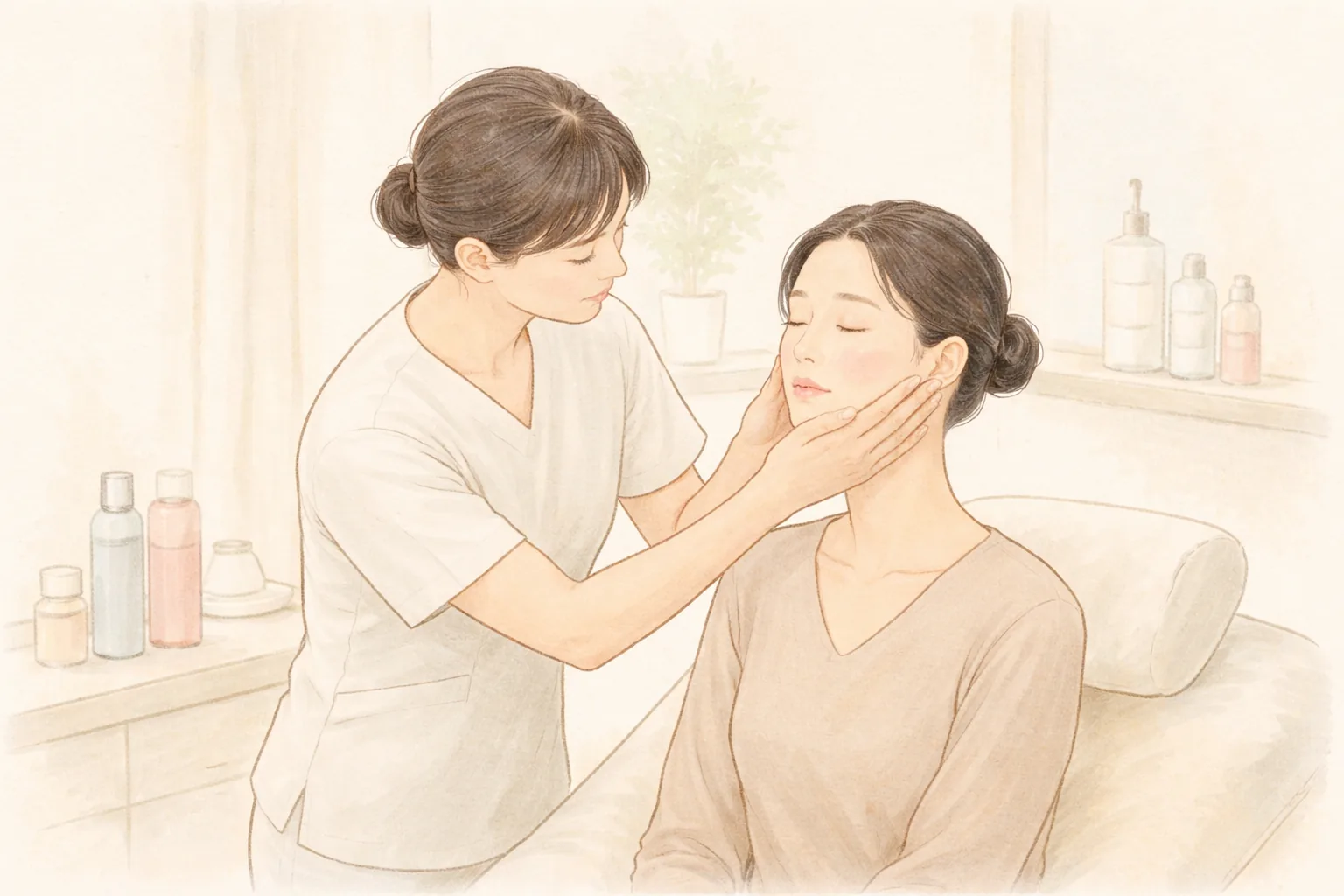
Not all jaws are the same. A cobblestone chin that dimples when you tense the chin is caused by movement of the chin muscle, while an angular jawline involves the volume of the chewing muscles. Cleveland Clinic's list of facial areas treatable with botulinum toxin includes the chin and jawline, and notes it is also used to relieve jaw pain (Cleveland Clinic). Because the same jaw can look different depending on which muscle is reduced and by how much, deciding the injection points determines half the result.
One thing worth noting: the approved indications for the leading botulinum toxin product distributed in the US are glabellar lines, crow's feet, forehead lines, and platysma bands in the neck (DailyMed). The jaw muscles are not on that list. This means jaw injections are off-label use, which is why this area needs to be designed by someone who knows the muscles and anatomy. The same product information warns that serious adverse reactions have been reported when administered for unapproved uses.
When do effects appear and how long do they last?
Muscle weakening begins at 2–4 days after injection and peaks around 10 days (DermNet). This means it builds up over several days, not "immediately after." So judging results by looking in the mirror the day after treatment is too early. Conversely, if there is no change at all after 2 weeks, that is when dosage or injection location should be reviewed.
Effects are not permanent. As nerve endings grow new branches, the nerve and muscle reconnect after about 3 months (DermNet). Cleveland Clinic advises that effects typically last 3–4 months and recommends retreatment around that time (Cleveland Clinic). However, with repeated injections the muscle gradually atrophies, so the needed interval may slowly lengthen after the second treatment (DermNet). This runs counter to the idea that "the more often you get it, the more often you need it."
Duration varies from person to person. Even with the same dose, muscle size and habits differ, and frequently used muscles like the jaw tend to recover faster. So it is more realistic to time the next treatment by watching for when the muscle starts exerting force again rather than fixing a date on the calendar.
Why do the same 50 units give different results and prices?
Botulinum toxin units are standardized differently for each product. There is no internationally unified unit, so 1 unit of product A is not equivalent to 1 unit of product B. Between Botox and Dysport, an approximate conversion of 1:2.5–1:5 is used, and between Botox and Xeomin, 1:1 (DermNet). Product information also states that potency units cannot be compared or converted between products (DailyMed). So comparing "how much for how many units" side by side is not actually a comparison.
Looking at ATTITUDE Clinic's treatment and price guide, botulinum toxin is listed at 50U across several products including Neuronox, Coretox, Xeomin, and Allergan BOTOX, and wrinkle botox is listed by area such as glabellar, forehead, crow's feet and under-eye, and nasolabial folds. Areas like the brow lift, nasal alae, mouth corners, gummy smile, and cobblestone chin, as well as salivary glands, temporalis, temples, and cheeks, are listed as separate items (Treatment and Price Guide). The structure is that even at the same 50U, the quoted price varies by product and area design.
So what should you look at when comparing quotes? You need to check the product name, dosage, and injection area together to compare two quotes on the same scale. If the unit number is larger but the product differs, they may not be targeting the same amount.
How are pain, anesthesia, and pre-treatment preparation handled?
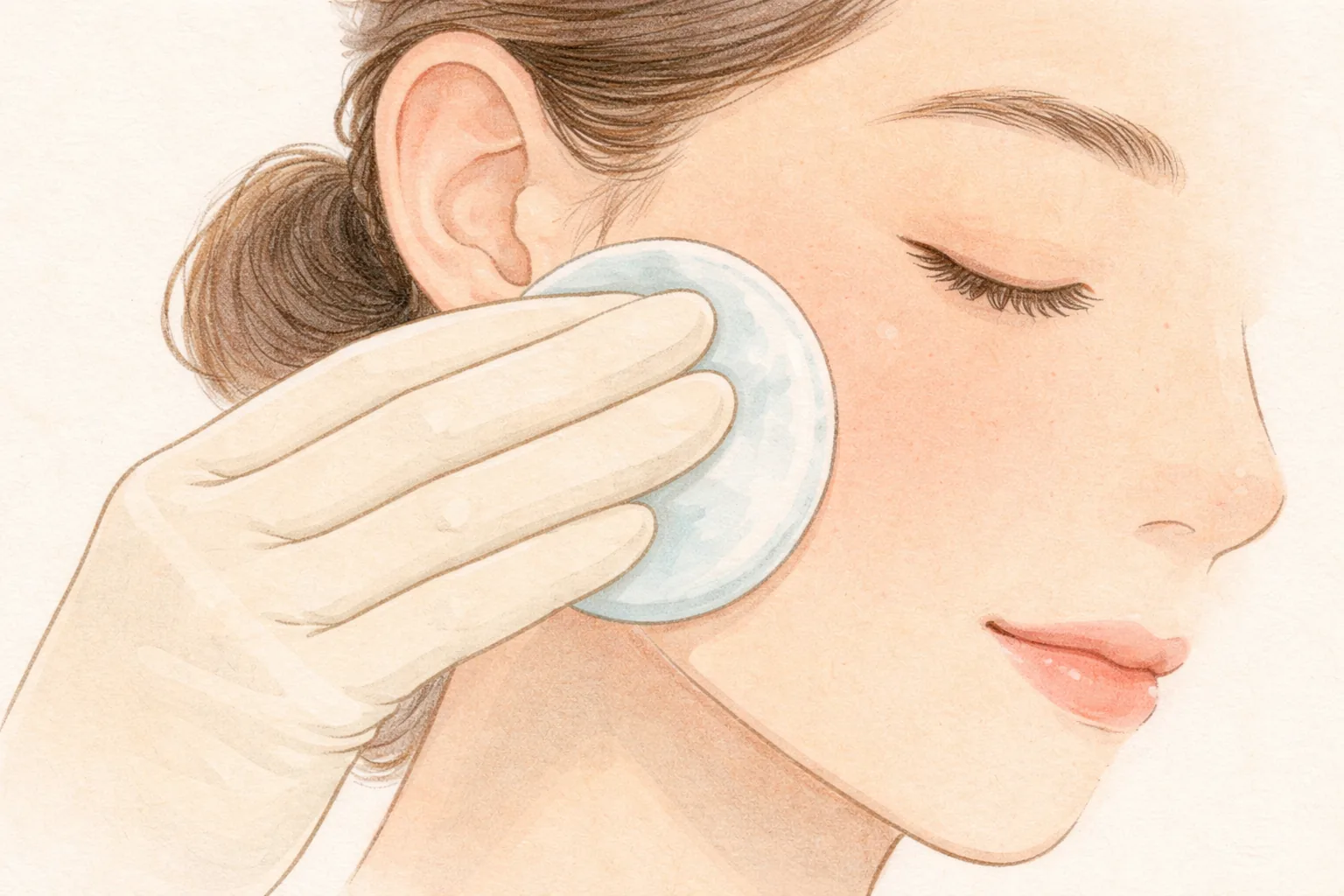
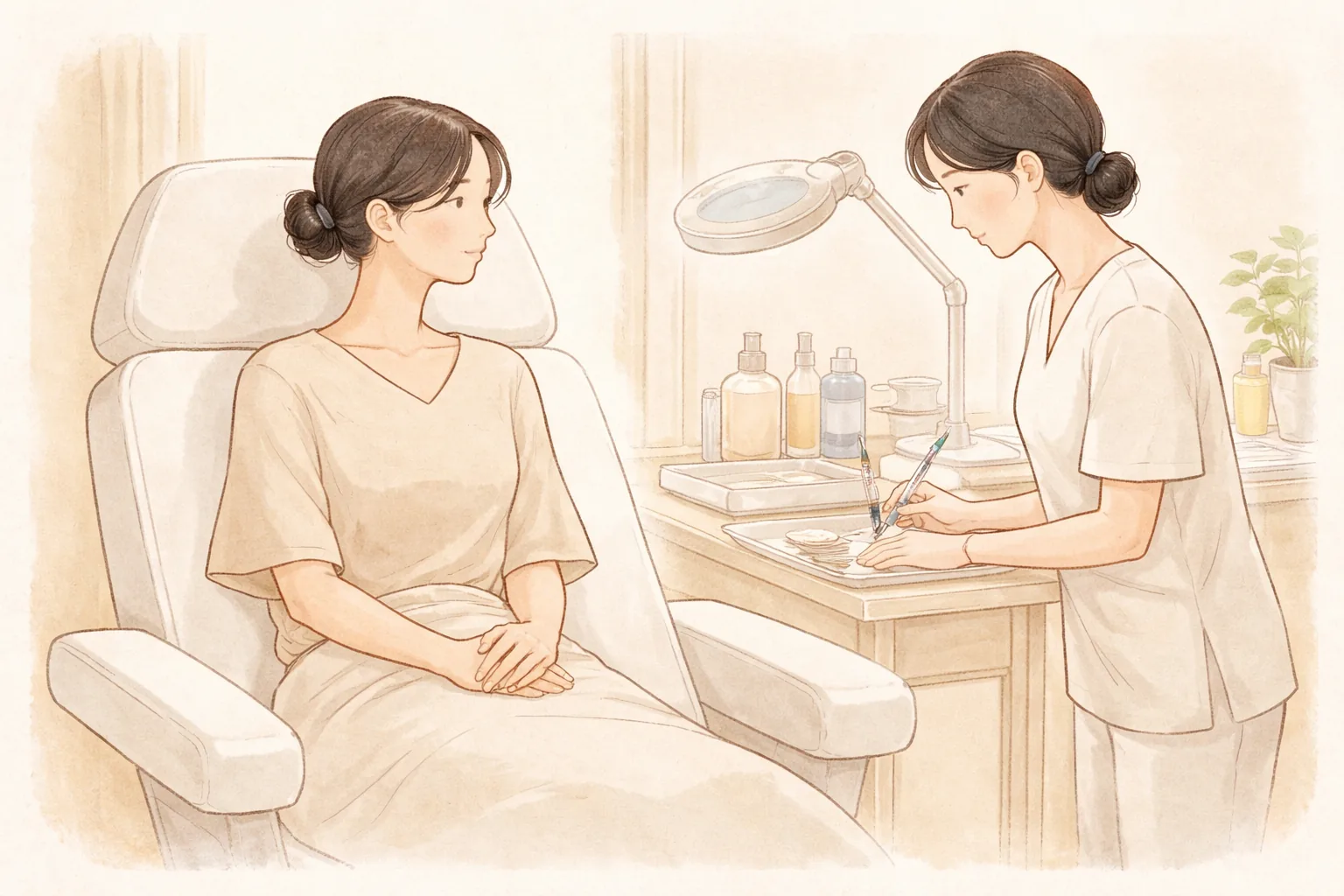
Injections use a fine needle, discomfort is usually a mild pinch, and it is over quickly. Cleveland Clinic advises that a topical anesthetic can be applied first (Cleveland Clinic). The jaw area has thicker muscle and relatively firm skin, so the same needle feels different depending on the area.
The most important preparation is telling your clinician about all medications and supplements you are taking. Anticoagulants like warfarin and ibuprofen-class anti-inflammatories increase the likelihood of bruising at the injection site, and alcohol also affects redness and bruising. Cleveland Clinic advises against drinking alcohol 24 hours before treatment (Cleveland Clinic). If you have had long sun exposure recently from outdoor activities, mention that too.
Drug allergy history is also checked. Botulinum toxin is not administered if there has been a hypersensitivity reaction to any component or if there is an infection at the injection site (DailyMed).
Table 1 How are pain, anesthesia, and pre-treatment preparation handled?
Area
Targeted muscle
Related concern
What to check in consultation
Glabellar
Muscle that furrows between the brows
Vertical lines between brows
Eyelid droop, expression preservation
Forehead
Muscle that raises the forehead
Horizontal forehead lines
Brow droop, headache
Crow's feet
Muscle encircling the eye
Fine lines when smiling
Eye-area swelling, spread sideways
Chin
Muscle that tenses the chin
Cobblestone chin
Off-label range, dosage
Jawline·temple
Chewing muscles, temple muscles
Jawline contour, temple volume
Off-label range, anatomy
Swipe sideways to see the whole table.
In summary The result of jaw botox is determined more by which muscle is targeted than by "how many units." Because unit standards differ by product, comparing numbers without product names is meaningless, and jaw muscles are off-label, so design by someone who knows the anatomy is especially important.
If this applies to you
Before a shoot or important event
It takes around 10 days for effects to build, and bruising or swelling may linger for 1–2 days. Planning with a buffer of at least 2 weeks before your event is more comfortable. If it is more urgent than that, the first step is a consultation to adjust dosage and areas to reduce swelling and bruising.
If you have habits that tense the jaw
If you clench your teeth during the day or push your jaw forward, the same dose feels different. Telling us which moments tend to tense your jaw helps determine injection points.
Sensitive or easily flushed skin
If your skin tends to retain injection marks and redness, we look at pre- and post-care together with scheduling intervals. If you take anticoagulants or anti-inflammatories, bruising may increase, so it is best to let us know in advance.
Visitors on a short stay
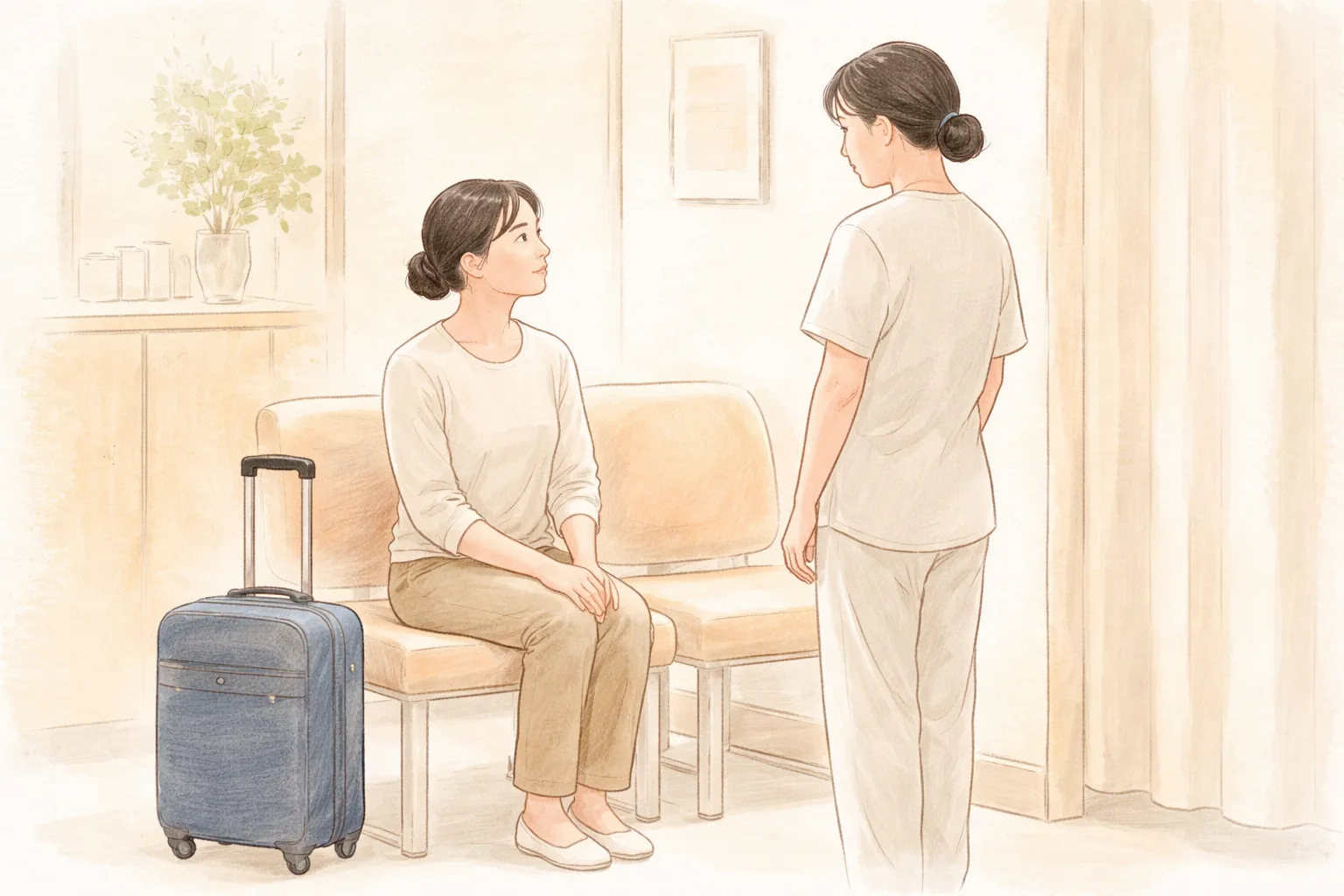
Because it takes several days for effects to build, it is hard to check progress if your return flight is soon. In the pre-treatment consultation, it is safer to decide in advance what changes to look for and when, and where to contact if a problem arises.
Tell us before your consultation Sun exposure and outdoor activity in the last 2 weeks, medications and supplements you take (especially anticoagulants, anti-inflammatories), use of topical retinol or acid products, the product, dosage, and date of previous botulinum toxin treatments and how you responded, any allergy history to botulinum toxin or related ingredients, and any fixed-date events such as shoots or interviews.
How ATTITUDE Clinic proceeds
AI skin analysis record — Skin condition is recorded and organized so you and the doctor see the same information. This tool records and organizes information only; it does not make a medical diagnosis, and judgment is made by the doctor (Why do results differ even with the same treatment?).
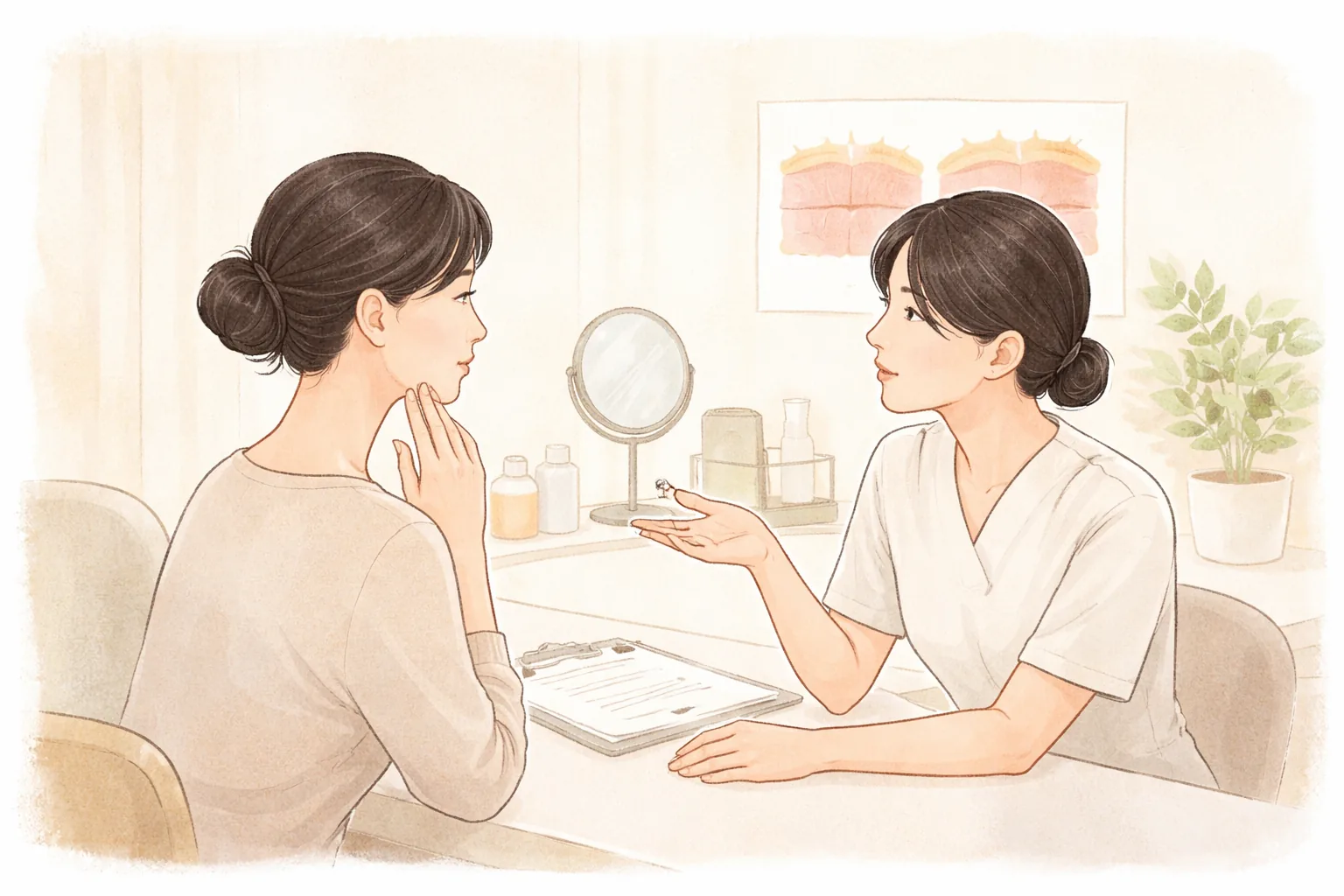
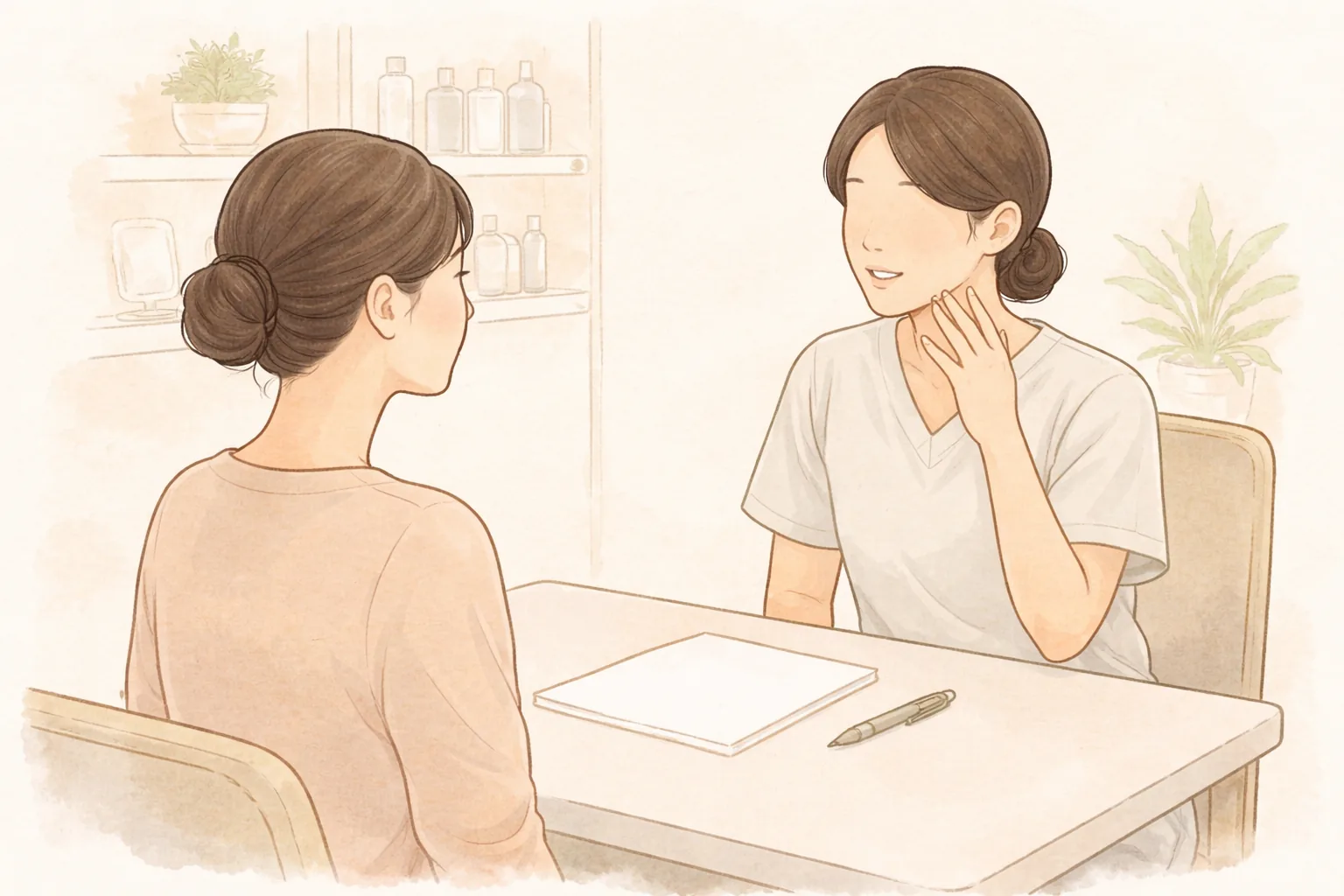
Doctor consultation — To the analysis record we add your jaw-tensing habits, the product and dosage of previous treatments, and your recovery time buffer to decide together which muscle to reduce by how much and which product to use (Why do results differ even with the same treatment?).
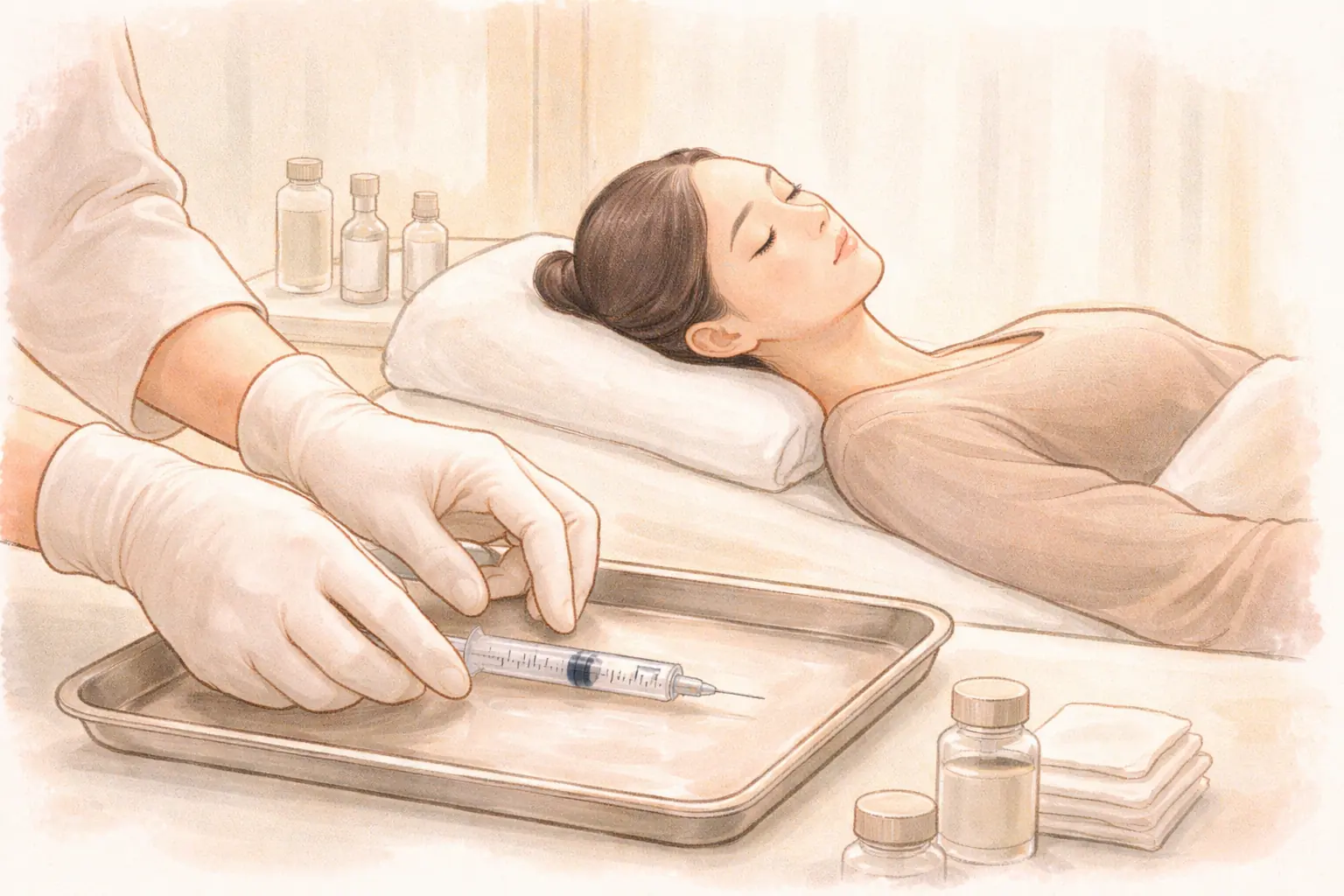
Doctor-performed treatment — The doctor performs the treatment according to the plan set in consultation and adjusts points and amounts while observing muscle response during the procedure (Why do results differ even with the same treatment?).
Recovery and follow-up — We explain post-treatment precautions and, a few days later, check how much the muscle has relaxed and whether left-right balance is even. Results cannot be promised, and if needed, we adjust the next interval together.
The injectable products used for this topic include Neuronox, Coretox, Xeomin, and Allergan BOTOX, and the guidance varies by area and dosage (Treatment and Price Guide). ATTITUDE Clinic discloses prices by unit and follows the principle of deciding together in consultation what is needed and what is not.
Post-treatment care and side effects
Don't rub — For 12 hours after treatment, do not rub or press the injection site (Cleveland Clinic).
Maintain position — For 3–4 hours, do not lie down; stay seated or standing (Cleveland Clinic).
Avoid strenuous activity — For 24 hours, avoid strenuous exercise. It is best to postpone facial massage and high-temperature saunas for the same period (Cleveland Clinic).
Check progress — Within 2 weeks, check how much the muscle has relaxed and whether left-right balance is even, and if something is off, discuss whether micro-adjustment is needed.
The most common reactions are pain, swelling, redness, and bruising at the injection site. They are usually mild and settle within 1–2 days. Headache, neck pain, and an upset feeling may also appear, and temporary eyelid droop is reported (Cleveland Clinic). In glabellar line clinical trials, eyelid droop was reported at 3%, and in forehead lines, headache at 9% and brow droop at 2% (DailyMed). Because the jaw area is not an approved area, these frequencies cannot be directly applied.
There is something rare but important. Botulinum toxin products can cause symptoms far from the injection site, and difficulty swallowing or breathing can be life-threatening. Such symptoms have been reported from several hours to several weeks after injection (DailyMed). If speaking, swallowing, or breathing becomes difficult, do not wait—seek medical care immediately. If eyelid droop or left-right asymmetry persists beyond 2 weeks, it is better to postpone the next treatment and confirm the cause through medical evaluation.
Frequently asked questions
Jaw botox—when do effects appear?
Muscle relaxation begins 2–4 days after injection and is most pronounced around 10 days (DermNet). So it is difficult to judge results from the day of treatment or the next day. It is more realistic to compare at the 2-week mark by making an expression that tenses your jaw. If there is still little change at that point, we re-check dosage or injection location.
How many months until retreatment?
Effects typically last 3–4 months and retreatment is recommended around that time (Cleveland Clinic). With repeated injections, muscle gradually atrophies and the needed interval may lengthen (DermNet). Rather than fixing a date on the calendar, it is better to base timing on when the muscle starts exerting force again.
Can repeated injections cause resistance?
After repeated injections, a change is observed in which muscle gradually shrinks during the reconnection of nerve and muscle, lengthening the interval (DermNet). If effects suddenly become shorter, you should review records of which product, dosage, and interval you had previously. Because unit standards differ by product, comparing numbers without records makes it hard to identify the cause (DailyMed). In consultation, we decide based on those records whether to change product or interval.
How much does it hurt, and is anesthesia used?
Injections use a fine needle, discomfort is usually a mild pinch, and it is over quickly (Cleveland Clinic). A topical anesthetic can be applied first, so if injections are a concern, tell us in consultation. However, anesthesia does not reduce post-treatment bruising or swelling.
What should I check when choosing a clinic?
The first criterion is whether they explain the product name, dosage, and injection area together. Because unit standards differ by product, numbers alone cannot be compared (DermNet). It is also worth checking whether they explain before treatment that jaw muscles are an off-label range and that serious adverse reaction cases have been reported for unapproved uses (DailyMed). Also ask in advance who performs the consultation and treatment, and where to contact if an adverse reaction occurs.
At a glance
Table 2 At a glance
Item
Key point
Mechanism
Blocks acetylcholine release at nerve endings to reduce muscle contraction
Targeted areas
Concerns differ by chin muscle, jawline chewing muscles, temple muscles, etc.
Onset
Begins at 2–4 days, most pronounced around 10 days
Duration
Average 3–4 months; interval may lengthen with repeated treatment
Cautions
Jaw muscles are off-label, and units are not interchangeable between products
After treatment
Don't rub for 12 hours, don't lie down for 3–4 hours, avoid strenuous exercise for 24 hours
This article offers general health information. It is not a substitute for diagnosis or treatment based on your own condition, so please talk through your situation with a doctor.