Juvelook results: when they start and how long they last
A clear guide to when Juvelook results appear and what decides how long they last. We cover the difference between filling and collagen-stimulating types, the early window when judging is premature, and what to check at your consultation.
Written by ATTITUDE Clinic Editorial Team
The question that comes up most before Juvelook is "when will I see a change?" Stories from friends range from 2 weeks to two or three months, so it is hard to know which to use as a benchmark. This article walks through what sets the timeline, what decides how long results last, and what to check before and after treatment.
The short answer first
The timeline depends on how the product works. Ingredients that fill the area on the spot show a change from the day of treatment, while types that stimulate your skin to build its own collagen take time. According to the American Academy of Dermatology filler guide, poly-L-lactic acid results appear 2–3 weeks later, while hyaluronic acid gel, collagen, calcium hydroxylapatite, and your own fat appear immediately. Juvelook is an injectable listed on the ATTITUDE Clinic treatments and pricing page under skin boosters in three lines: Skin, Volume, and Eye. So the answer depends on which type its composition is closer to, and how quickly your skin rebuilds collagen.
When do Juvelook results start to show?
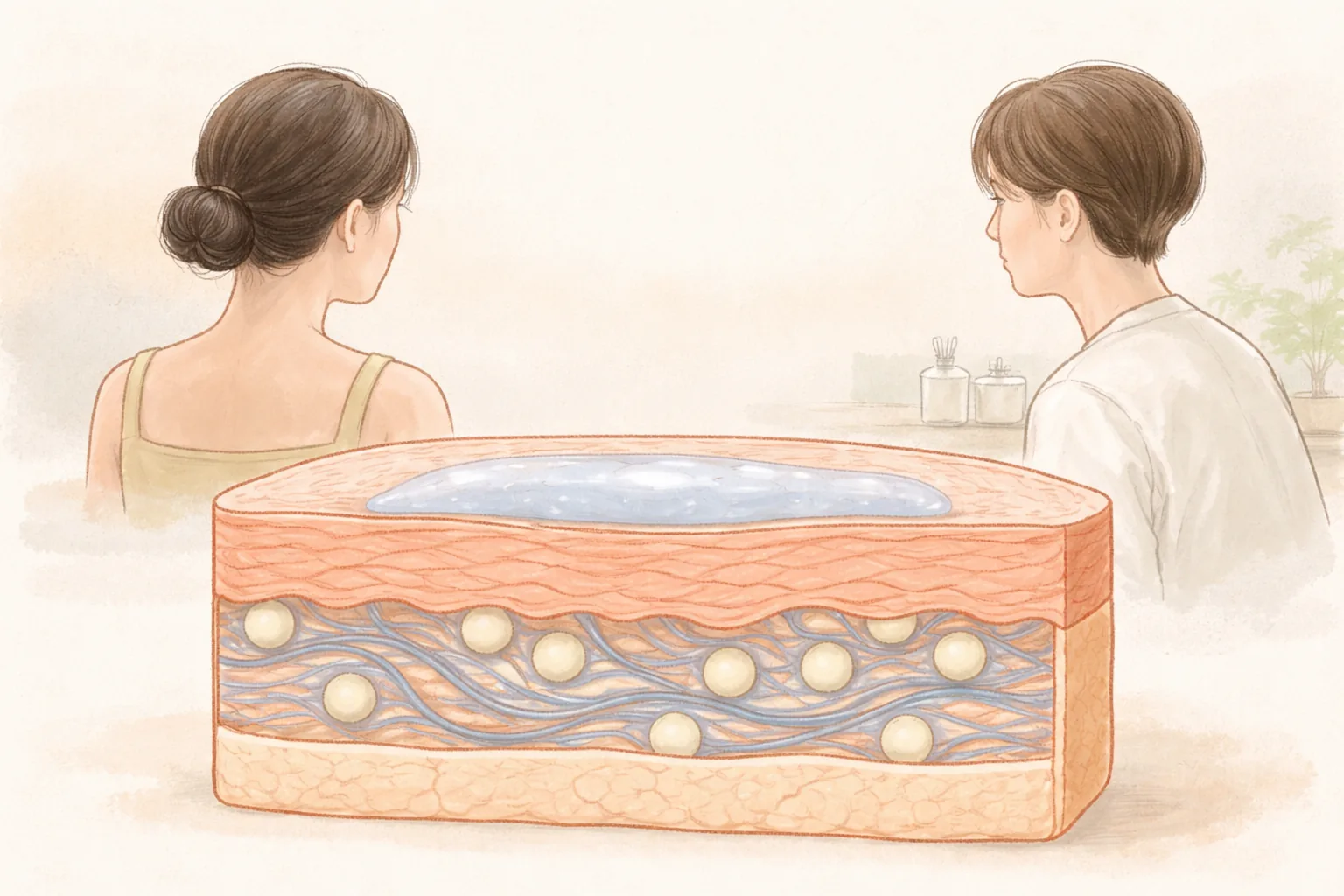
There are two clocks in injectable products that create change. One runs from the moment it is placed, the other runs once your skin begins to respond. Types that put a water-holding substance such as hyaluronic acid gel directly into the skin use the first clock. Collagen-stimulating types use the second, and the AAD material notes that poly-L-lactic acid results appear 2–3 weeks later.
So why does the timeline vary so much from person to person? Because the speed and amount of new collagen production differ with age, lifestyle habits, and hormonal status. An ATTITUDE Clinic column explains that this is why the timing of results can differ even for the same treatment. Same product, same dose, yet one person sees texture settle at 2 weeks while another only notices after about two months.
The first few days after treatment are not a judging window. Redness, swelling, tenderness when pressed, and bruising are common and usually settle within days. Because the recovery response at the injection marks mixes with the treatment effect, calculating your results at this point makes you judge too late or too early. The ATTITUDE Clinic column also notes that cases where results were judged too early are sometimes revisited.
Where you set your baseline matters too. "It should show within 2 weeks of injection" fits filling types. Applying that same standard to a collagen-stimulating type leaves you disappointed before it has risen, or missing the change as it passes. So before treatment it is worth confirming which type it is and when to expect the first change.
Why 2 weeks for some and two months for others?
No single factor sets the timeline. First is whether the product fills or stimulates. Second is skin thickness and structure: thin or thick skin, and how dense the underlying tissue is, change how the same stimulation is received. Third is regeneration speed. Fourth is session spacing and count: results build across sessions, so how you set the interval creates the rhythm of the outcome.
Table 1 Why 2 weeks for some and two months for others?
Factor that sets the timeline
How it works
Where to check
How the product works
Filling types immediately, stimulating types from a few weeks later
Confirm composition and type at consultation
Skin thickness and structure
Denser tissue receives the same stimulation differently
AI skin analysis records and examination
Regeneration speed
Collagen production speed and amount vary with age, lifestyle habits, hormones
Intake interview and progress records
Session count and spacing
Creates the rhythm in which results build
Set order and spacing at consultation
Swipe sideways to see the whole table.
Previous treatment history adds to this. Which device and how many shots, which product and how many cc, and when, on the same area, all change this plan. ATTITUDE Clinic reviews the device, product, dose, date, and response of previous treatments together. Even with the same concern of "loss of firmness," which product to use first, at what intensity, and whether to combine with other treatments depends on the person's concerns, recovery time available, and skin sensitivity.
In short — The starting point of Juvelook results is set by the product type and your skin's regeneration speed. The first few days after treatment mix in recovery responses, so hold off judging, and watching progress with 2–3 weeks as a baseline is realistic.
Does Juvelook Volume show differently from Skin?
On the price list, Juvelook is guided by purpose in separate lines. Skin comes in 4cc and 8cc, Volume in 1cc, 4cc, and 8cc, and Eye in 1-vial units. The units differ under the same name because the area and purpose differ, and which line at what amount is decided at consultation.
If you expect volume that fills immediately, the type may be different. In the AAD guide, types such as hyaluronic acid gel or calcium hydroxylapatite are classified as showing results immediately. Collagen-stimulating types take time as volume settles gradually. So rather than concluding "Volume line means faster and longer," it is more accurate to first sort out whether what your face needs now is immediate filling or letting it rise on its own.
The feel of the change differs too. Filling types make that day's change clear but follow a course of absorption over time, while stimulating types follow a course where density rises over weeks after the initial hydration settles. Which lasts longer is determined by the product, dose, area, and the skin care that follows, so it is something to confirm at consultation.
What sets how long results last?
Duration is set by two overlapping periods: how long the injected ingredient holds its place, and how long the collagen made by that stimulation remains. The first is governed by the product and dose, the second by skin condition and lifestyle habits. An ATTITUDE Clinic column also notes that the timing of results and how long they last can differ with individual skin condition, lifestyle habits, and the product used.
That is why pinning it to a number of months is difficult. Even with the same product, how sessions are stacked and spaced changes how long results persist, and the next interval can only be set by reviewing previous treatment records together. Injectable products can differ in manufacturer, concentration, and purification method even under the same name, so which product is used is also something to confirm at consultation.
One more thing to ask in advance: whether the product has a way to be reversed if a problem occurs. Whether a reversal method exists differs by product, and this information is more accurately confirmed at consultation than in advertising copy. Setting a dose and interval your skin can handle now, rather than aiming for a long duration, makes results more stable.
If this is your situation
A ceremony or shoot is a few weeks away
Divide the types by the time remaining. Immediately visible types and types that need weeks have different preparation points, and bruising and swelling being common responses should go into the schedule. If you tell us your important date at consultation, we work backward from it to set the possible range.
You want steady management
The rhythm of stacked sessions matters more than a single result. Setting how to space intervals, how many sessions to look at, and how to maintain afterward at the first consultation keeps your judgment steady.
Sensitive or easily reddened skin
Redness and swelling are common responses, but if redness lasts long or is stronger than expected, intensity and dose are revisited. If you have a history of reacting to cosmetics or medications, telling us in advance is safer.
A visitor on a short stay
We first discuss how to place analysis, consultation, and treatment within a short schedule, and how much recovery time to allow. If a next session is needed, we plan with the timing of your next visit in view.
Tell us before your consultation — Recent UV exposure (travel, outdoor activity), medications you take and active skincare ingredients, the device, product, dose, and date of previous treatments and your response at the time, pregnancy or breastfeeding and autoimmune conditions, infection or inflammatory acne at the treatment area, and important dates you must avoid.
How ATTITUDE Clinic proceeds
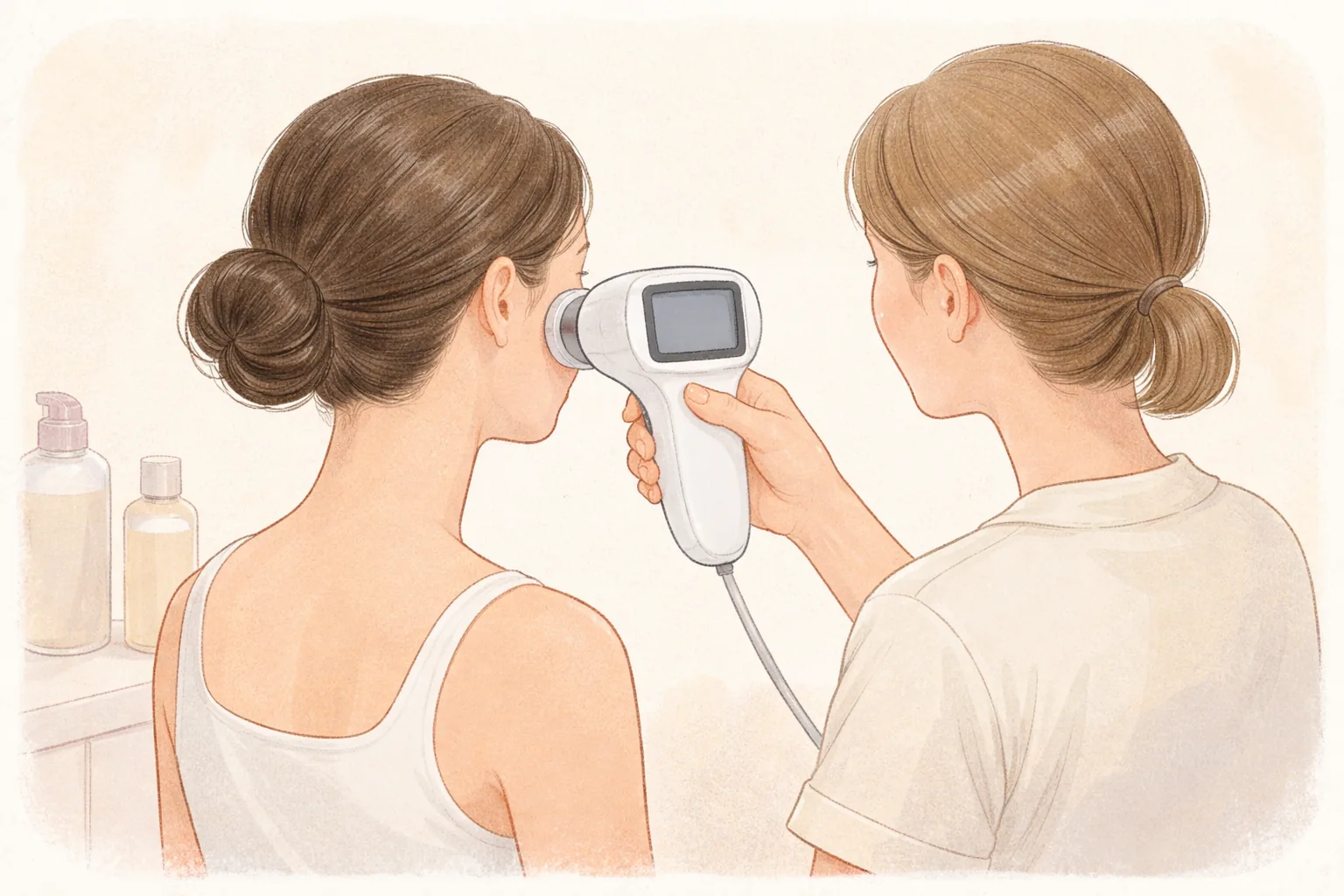
AI skin analysis records — Your skin condition is recorded and organized so you and the doctor look at the same information. The analysis tool only organizes information and does not make a medical diagnosis; the judgment is the director's.
Director consultation — Your concerns, lifestyle habits, and previous treatment experience are added to the analysis records to decide which line, at what dose, in what order and interval. Which of Juvelook Skin, Volume, or Eye fits is also decided at this stage.
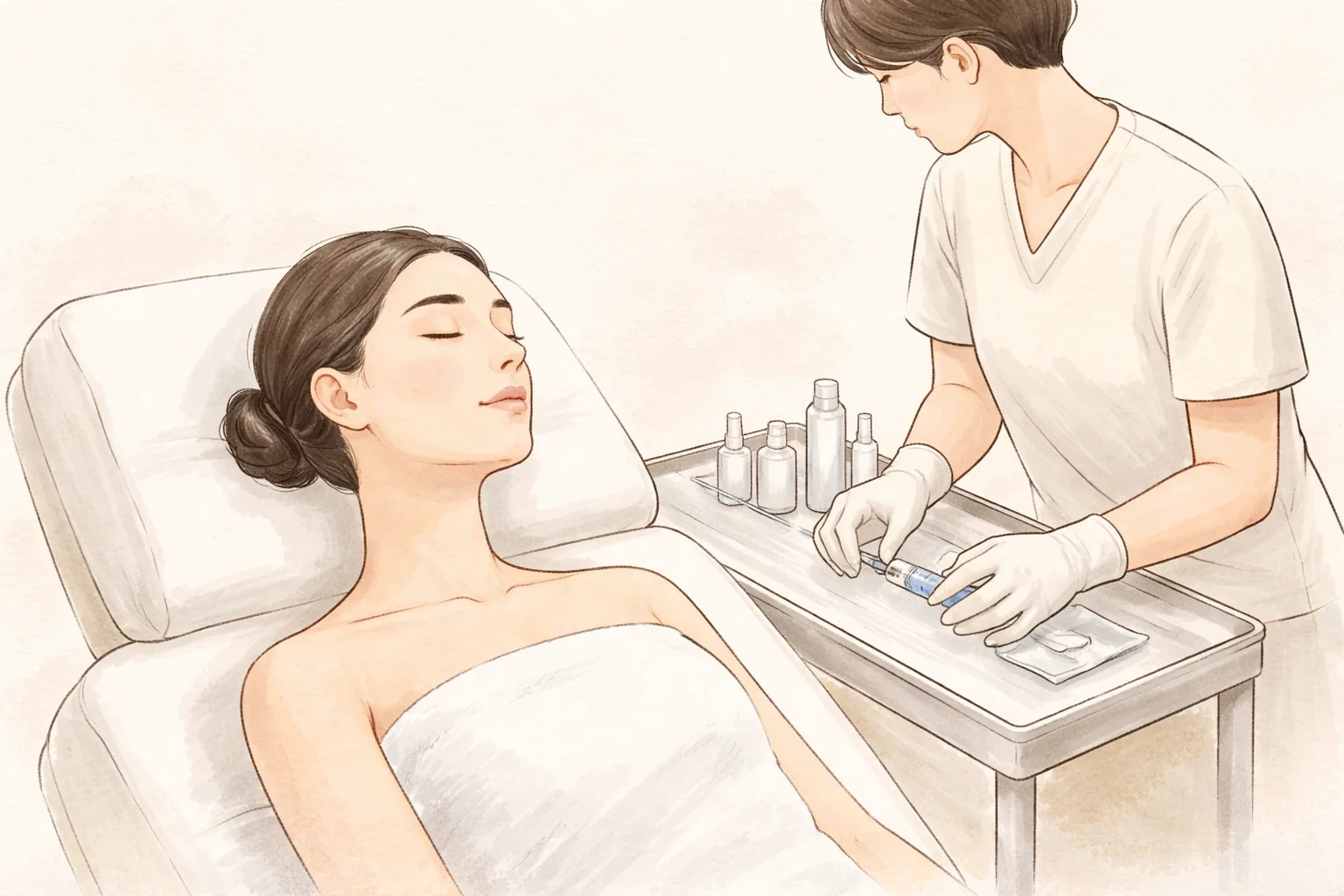
Treatment performed by the director — The director personally performs the plan set at consultation and adjusts intensity while watching your skin's response during treatment.
Recovery and aftercare guidance — We guide you on aftercare and the schedule for your next session. Because the plan should differ by person even with the same analysis results, our principle is to decide together what is needed now and what is not, rather than using fixed packages.
Injectable products viewed alongside this topic are published with their units on the treatments and pricing page. Juvelook Skin 4cc and 8cc, Juvelook Volume 1cc, 4cc, and 8cc, Eye Juvelook 1 vial, and skin booster lines such as Rejuran Healer, HB, S, and Eye, Sculptra, Re2O, SKINVIVE, Radius, and Gouri are guided under the same section. All amounts exclude VAT, side effects may occur so a doctor consultation before treatment is required, and individual diagnosis and plans are decided by medical staff during the course of care.
Aftercare and side effects
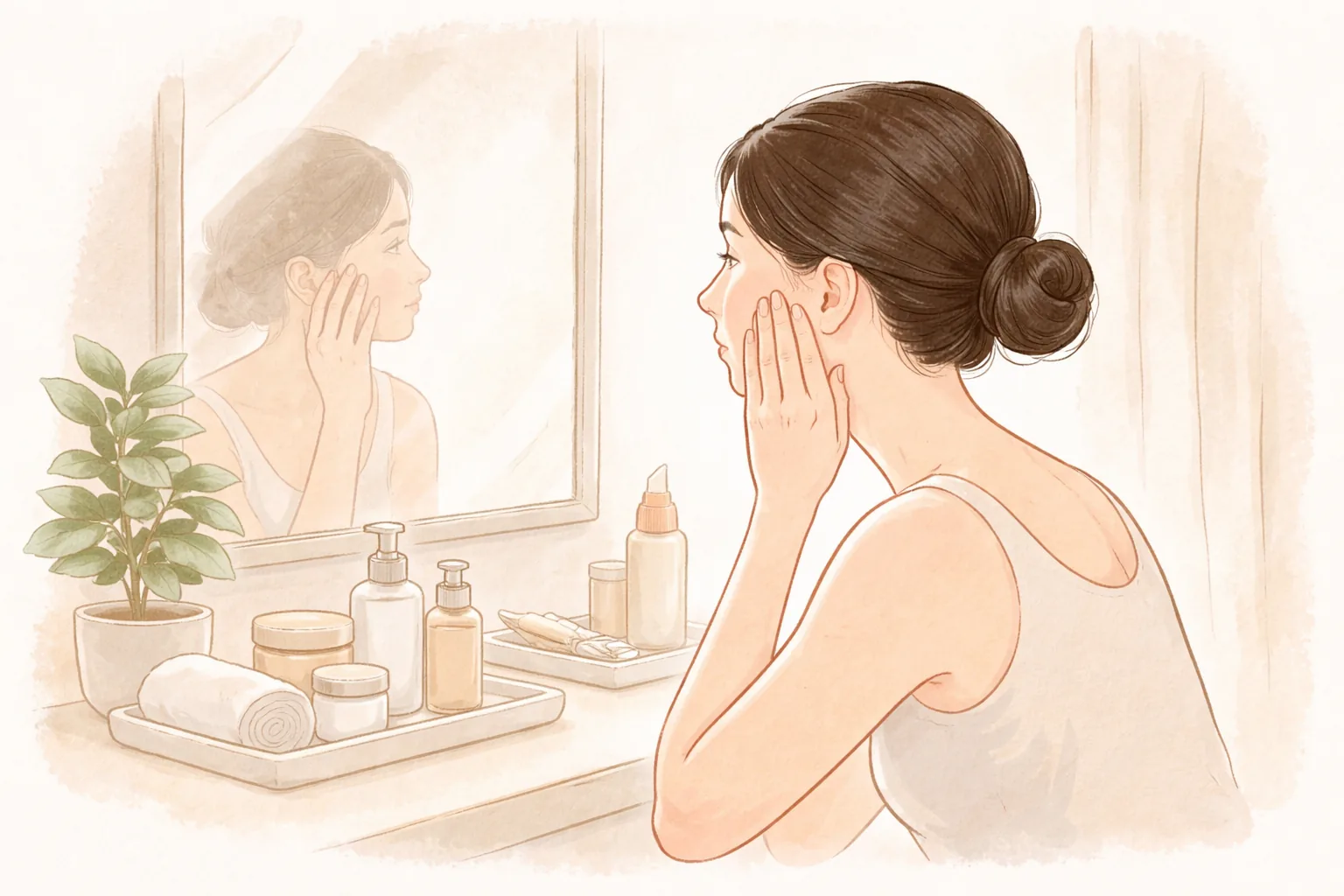
Check whether to massage — The AAD guide advises gently massaging the treated area for 1–2 weeks, several times a day, for about 5 minutes at a time for poly-L-lactic acid fillers. Whether this applies differs by product, so follow the method and duration guided at consultation.
Watch redness, swelling, bruising — After treatment, redness, swelling, tenderness when pressed, and bruising are common and usually settle within days.
Manage your recovery environment — During recovery, adjust schedules that bring heat and irritation to the skin, and keep hydration and sun protection as basics. When each becomes possible differs by treatment area and intensity, so it is guided at consultation.
Check progress — Recording when changes appear and how they hold gives you a baseline for setting the next session interval.
Side effects are viewed from the common ones. Redness, swelling, tenderness, and bruising are common and usually settle within days. Rarely, temporary darkening or lightening of the skin, blisters, lumps after injection, burns, or scars can occur. If there is a change different from what you expected, such as pain that does not improve and keeps worsening, it needs to be checked rather than waited out. The more cosmetic the issue, the more a quick check widens your options.
Frequently asked questions
What is the difference between Juvelook Skin and Volume?
On the price list, Skin is guided at 4cc and 8cc, Volume at 1cc, 4cc, and 8cc, and Eye at 1 vial. The units differ under the same name because the purpose and area differ. Which line fits your face now is decided by looking at skin thickness, the degree of hollowing, and the change you want together. If you state your goal at consultation, you receive a suggested line and dose to match. The two lines are sometimes planned together on the same day, so order and spacing are decided at consultation.
When do Juvelook results start to show?
It depends on whether the product fills or stimulates. Filling types from the day of treatment, stimulating types rise over a few weeks. The AAD guide notes that poly-L-lactic acid results appear 2–3 weeks later. The first few days after treatment mix redness and swelling, so they are not treated as a judging window. The first progress check is best done together between 2–4 weeks after treatment.
How long do results last?
It is difficult to pin to a number of months. It is set by the overlap of how long the injected ingredient holds its place and how long the collagen made remains, plus skin condition, lifestyle habits, and session count and spacing. So rather than pre-setting the next treatment by date, deciding after watching progress is more stable. Setting a dose you can handle preserves results better than aiming for a long duration.
Compared with Rejuran, which should I choose?
Both sit in the same skin booster section, but their composition and purpose differ. On the price list too, Rejuran Healer, HB, S, and Eye and Juvelook Skin, Volume, and Eye are guided in different units. Rather than which is better, the choice differs by whether your concern now is texture, density, or hollowing. Combinations using both products together are also judged at consultation to match the goal. Either way, since the timing of results and the course of duration differ, it is better not to compare them on the same standard.
What should I check when choosing a clinic?
First, look at who does the consultation and treatment. ATTITUDE Clinic keeps the flow of AI skin analysis records, director consultation, and treatment performed by the director. Next, it helps to check whether the product name, dose, and unit price are disclosed. Finally, whether they review previous treatment records and explain which ingredient type it is and roughly when the first change will come also helps your judgment.
At a glance
Table 2 At a glance
Item
Key point
Timing of results
Filling types immediately, stimulating types from a few weeks later (poly-L-lactic acid types 2–3 weeks)
Factors that set timing
Product type, skin thickness and regeneration speed, age, lifestyle habits, hormones, session count and spacing
Line composition
Juvelook Skin 4cc and 8cc, Volume 1cc, 4cc, and 8cc, Eye 1 vial (per price list)
Duration
Difficult to pin to a number of months; skin condition, lifestyle habits, product, and spacing act together
After treatment
Check whether to massage, watch redness, swelling, bruising, hydrate and protect from UV, record progress
When to check
Contact immediately if there is a change different from expected, such as a lump you can feel or pain that keeps worsening
This article offers general health information. It is not a substitute for diagnosis or treatment based on your own condition, so please talk through your situation with a doctor.