Laser Toning for Face Redness: How Many Sessions and How Often?
A practical guide to laser toning for facial redness: the session counts and intervals commonly suggested, what actually determines them, and what to check before and after treatment.
Written by ATTITUDE Clinic Editorial Team
When your face flushes often, it's hard to tell whether it's just sensitive skin or true facial redness — and the moment you walk into a clinic, the question "how many sessions will I need?" follows right behind. This article walks through why redness treatment is spread across multiple sessions, what actually determines the session count and intervals, and what to prepare for and watch before and after treatment.
The short answer first
Facial redness isn't something resolved in a single session. When vascular lasers are used, 3–5 sessions at 4–6 week intervals are commonly cited — but these are just common examples, and the real numbers depend on where the redness is coming from and how quickly your skin settles after treatment. That's why, rather than fixing "how many sessions" up front, the usual approach is to proceed in stages and watch how the skin responds. According to American Academy of Dermatology guidance, the goal of laser treatment is to reduce red discoloration and bring the skin tone closer to its original state.
Why isn't redness treatment finished in one go?
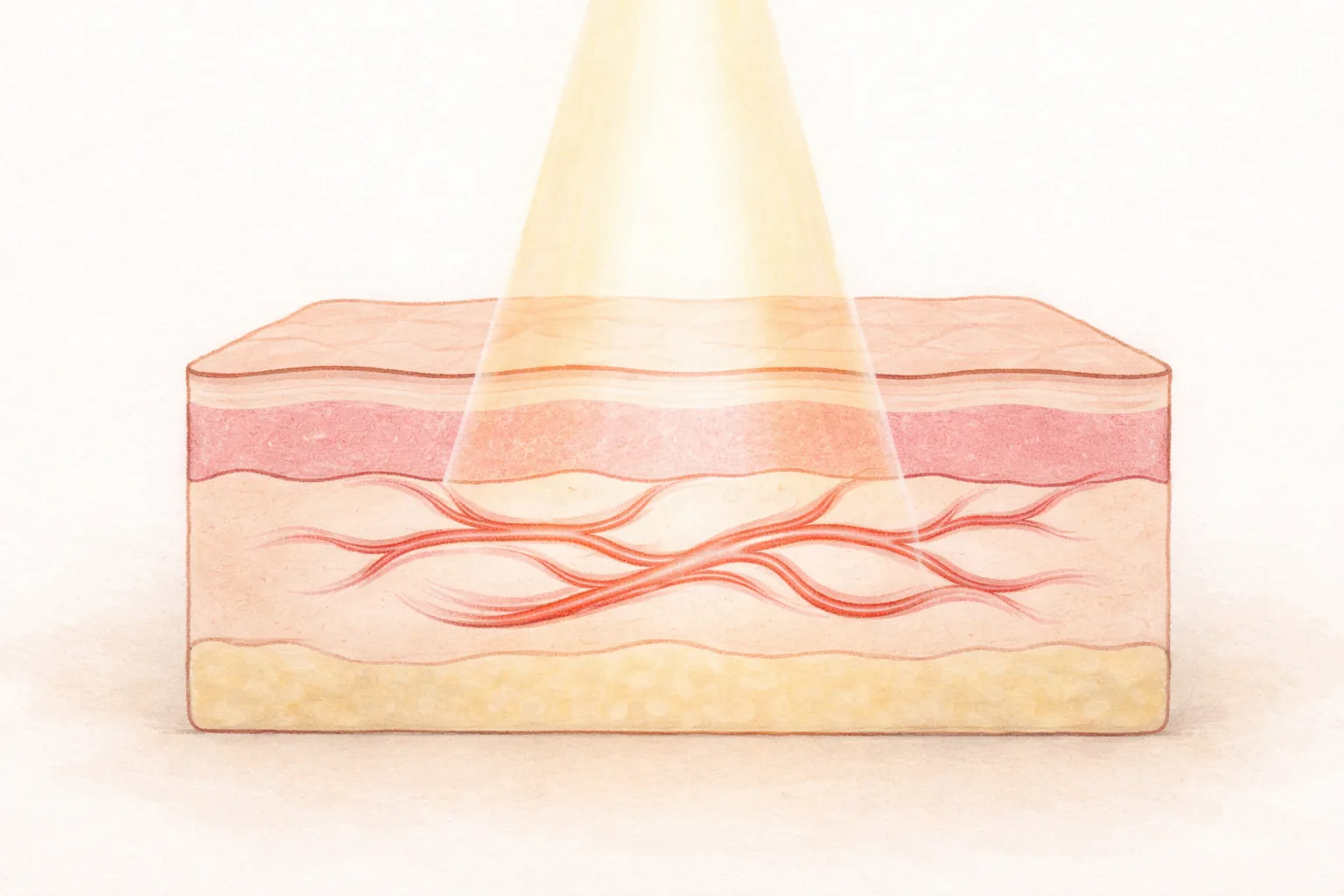
Facial redness is a condition where blood vessels near the skin surface dilate, letting red light show through. Vascular lasers take advantage of the fact that oxygen-carrying hemoglobin inside blood vessels absorbs certain wavelengths of light well. The light isn't designed to heat just anywhere — energy is concentrated on the target, a principle called selective photothermolysis (targeting the intended structure while sparing surrounding tissue).
However, treating dilated vessels too aggressively in one pass puts more strain on surrounding tissue. So energy is delivered in divided doses, with time in between for the skin to settle. A ATTITUDE Clinic column also notes that vascular concerns call for vascular laser wavelengths absorbed by oxygen-carrying hemoglobin, and that picosecond lasers have almost no effect on vascular concerns. Different targets mean different devices.
For the same reason, going hard and frequent with lasers doesn't speed up results. Whether a laser is the right choice depends less on the device name and more on who it's applied to, with what settings, and how often. Setting intensity so that redness and heat settle within a few days is the baseline.
Different causes mean different session counts
Facial redness can look similar but stem from different underlying conditions. If it's superficial vessel dilation (tiny capillaries showing near the surface), vascular lasers can be expected to reduce it, but for sensitivity or rosacea (酒皶), where the skin's own reactivity is high, laser effects may be limited. That's why which laser and how many sessions is decided during consultation.
So does frequent facial flushing always mean rosacea? No. The American Academy of Dermatology notes that rosacea is diagnosed by directly examining the skin and eyes, and because symptoms come and go, both the pattern of symptoms and history are reviewed together. Tests to rule out other conditions that cause facial color changes, such as lupus, are sometimes needed, and a skin biopsy may be done if a rare granulomatous type is suspected.
Rosacea symptoms aren't uniform either. According to AAD skin care tips for rosacea, central facial redness and swelling, stinging or burning sensations, and increased oiliness can appear together, and alcohol is a commonly cited trigger. Sometimes the intensity of redness and the level of discomfort don't match, so what's active and how much is assessed first.
What determines the interval?
Interval matters as much as session count. Adjusting wavelength, energy, treatment area, and interval to the skin's condition is key — repeating before recovery is complete can make the skin barrier sensitive and leave redness lingering longer. A column on lasers and the skin barrier notes that very frequent toning has been reported in association with mottled hypopigmentation, so toning usually leaves at least a 1-week interval.
Intensity and session count can trade off against each other. The American Academy of Dermatology mentions intense pulsed light (IPL) for redness treatment, explaining that it's gentler on the skin than lasers but requires more sessions. Which approach fits — gentle and divided over many sessions, or fewer but stronger — depends on skin thickness, sensitivity, and schedule.
Other factors affect the interval too. During active inflammation, strong treatments may be postponed or intensity lowered, and if your lifestyle involves a lot of UV exposure, timing is adjusted with pigmentation risk in mind. Whether redness lingers for days after treatment or skincare products sting is also a signal for setting the next interval.
There are also approaches used alongside lasers. According to AAD guidance, brimonidine gel or oxymetazoline cream narrows blood vessels under the skin, temporarily reducing redness and persistent color changes — best results appear 3–6 hours after application, then gradually return to baseline. Daily use for 1 year or more may help lower overall color intensity, so whether to combine these with laser sessions is something to decide in consultation.
Table 1 What determines the interval?
Approach
Target
Suited concern
Common post-treatment reaction
Vascular laser (Vbeam 532nm)
Wavelength absorbed by oxygen-carrying hemoglobin
Redness, shallow vessels
Redness and swelling for a few days; if bruising occurs, 1–2 weeks to fade
Genesis toning (1064nm)
Tone and anti-aging management using 1064nm laser
Skin tone and texture management
Heat sensation and temporary redness at the treated area
Picosecond laser
Selectively breaks down melanin pigment
Spots and pigmentation
Temporary redness; thin crusts depending on intensity
Intense pulsed light (IPL)
Redness and skin texture
Redness from flushing
Gentler than lasers but requires more sessions
Swipe sideways to see the whole table.
In summary the device used depends on whether redness comes from vessels or pigment, and even with the same device, skin strain varies with intensity and interval. So rather than fixating on "how many sessions," the order matters: first identify what's causing the redness in your skin right now. If multiple causes overlap, prioritize rather than doing everything at once.
If this applies to you
If a wedding or photo shoot is coming up
Work backward from the date to set the treatment type, intensity, and start timing. Some treatments settle redness and heat relatively quickly, while resurfacing treatments may leave redness and dryness for several days. Let the clinic know your important date first so a plan can be made avoiding excessive intensity.
If you want ongoing management
Rather than going strong once, respecting recovery intervals and managing periodically is easier on the skin. A plan that sets goals and schedules only the needed treatments at the right time helps. Adjust the next session interval based on how things progress.
If your skin is sensitive or flushes easily
If skincare products sting or your skin has become unusually sensitive, be sure to mention it before treatment. During active inflammation, intensity can be lowered or timing split, and home care products are reviewed as well. Avoiding potential irritants like alcohol, fragrance, and exfoliating ingredients, and maintaining moisturizing and sun protection, is the foundation.
If you want a consultation during a short stay
A short stay makes many sessions difficult. In that case, prioritize one or two things in your current state and adjust toward shorter downtime. It's best to receive guidance so follow-up care can continue where you live.
Tell us before your consultation
Recent UV exposure and outdoor activity level
Medications you're taking, skincare products you use, and irritating products like exfoliants
Any past experience where redness or pigment changes lingered after treatment
Dates to avoid downtime, such as weddings, photo shoots, or travel
How ATTITUDE Clinic proceeds
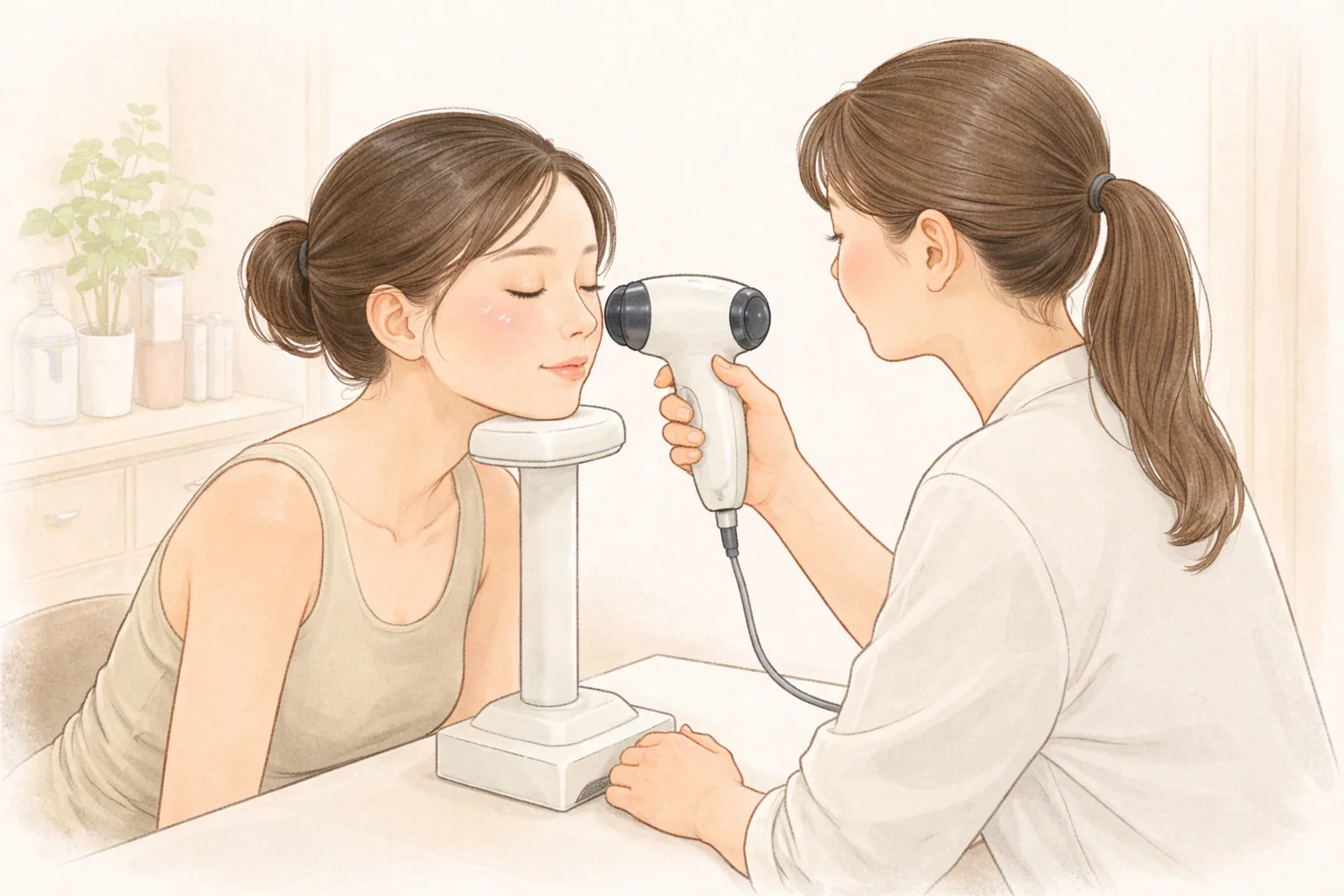
AI skin analysis record — Records and organizes current skin condition including pigment, redness, texture, and pores to support consultation. The analysis tool only records and organizes information and is not a medical diagnosis; judgment is made by the doctor through examination.
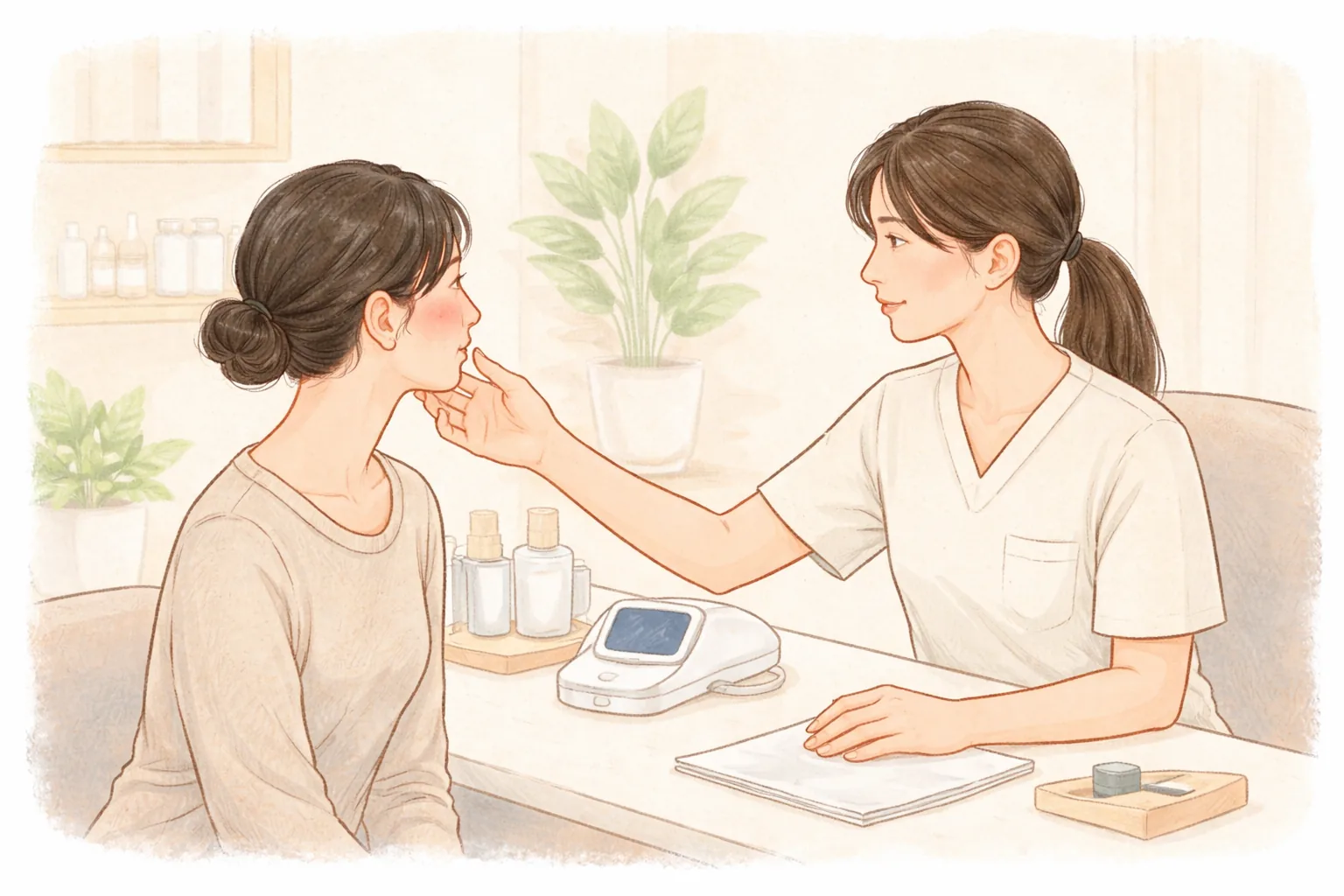
Doctor consultation — Adds UV exposure, medications, recent skincare products, and important dates to the analysis record to determine the cause and priority of redness. The treatment combination differs depending on what's causing the redness.
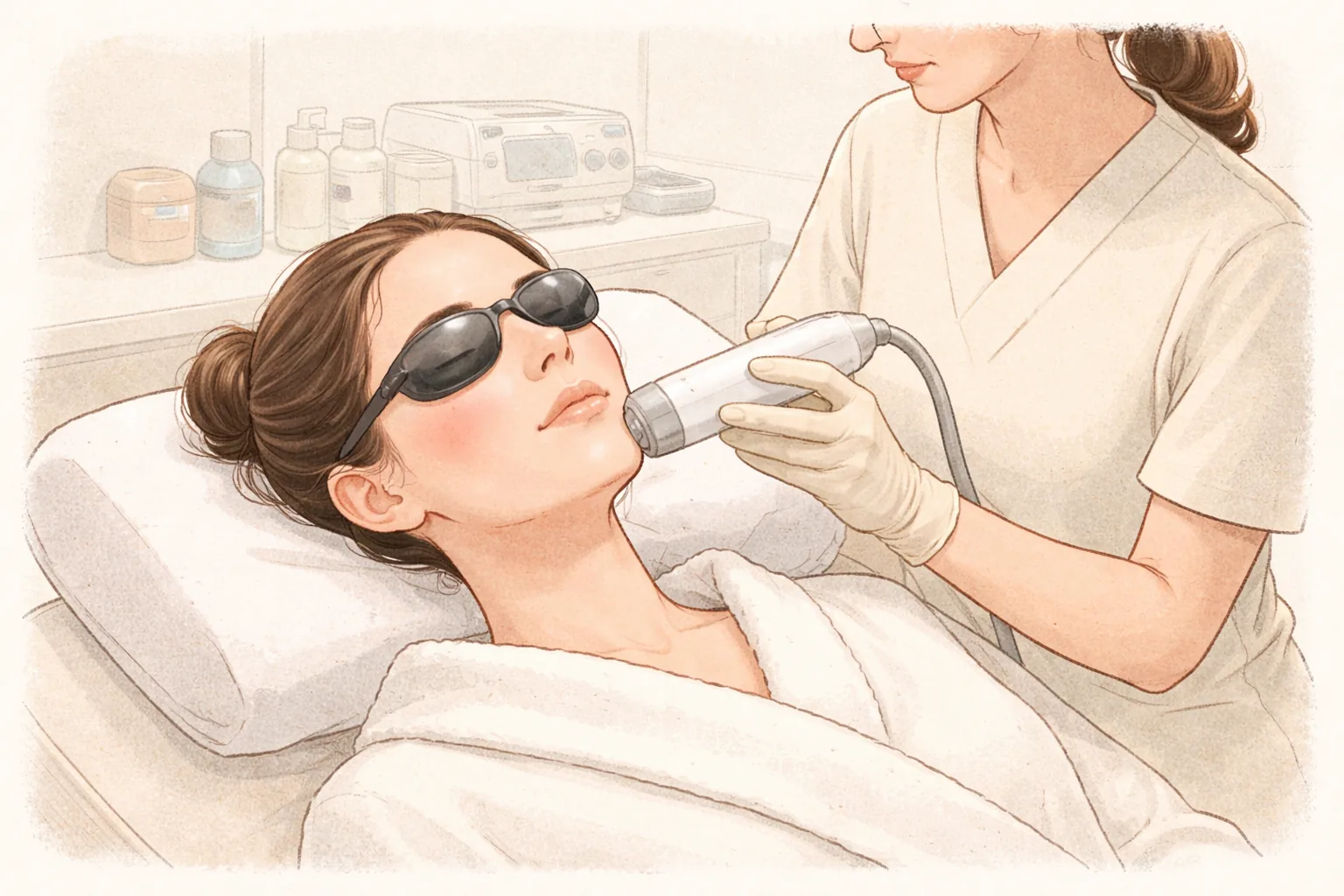
Treatment by the doctor — The doctor selects the appropriate device from those available, including Vbeam (532nm vascular laser), Genesis toning, and Pico toning, and adjusts intensity and interval.
Recovery and management — Checks post-treatment response and adjusts the next session interval. The principle is to do only as much as needed, with genuine products, correct dosage, and fair pricing.
As can be seen on the ATTITUDE Clinic treatment guide, devices are chosen to match the concern — for redness and shallow vessels, the 532nm vascular laser Vbeam; for tone and texture management, Genesis toning. Rather than sticking to one device, the choice is made to fit the skin's condition.
Post-treatment care and side effects
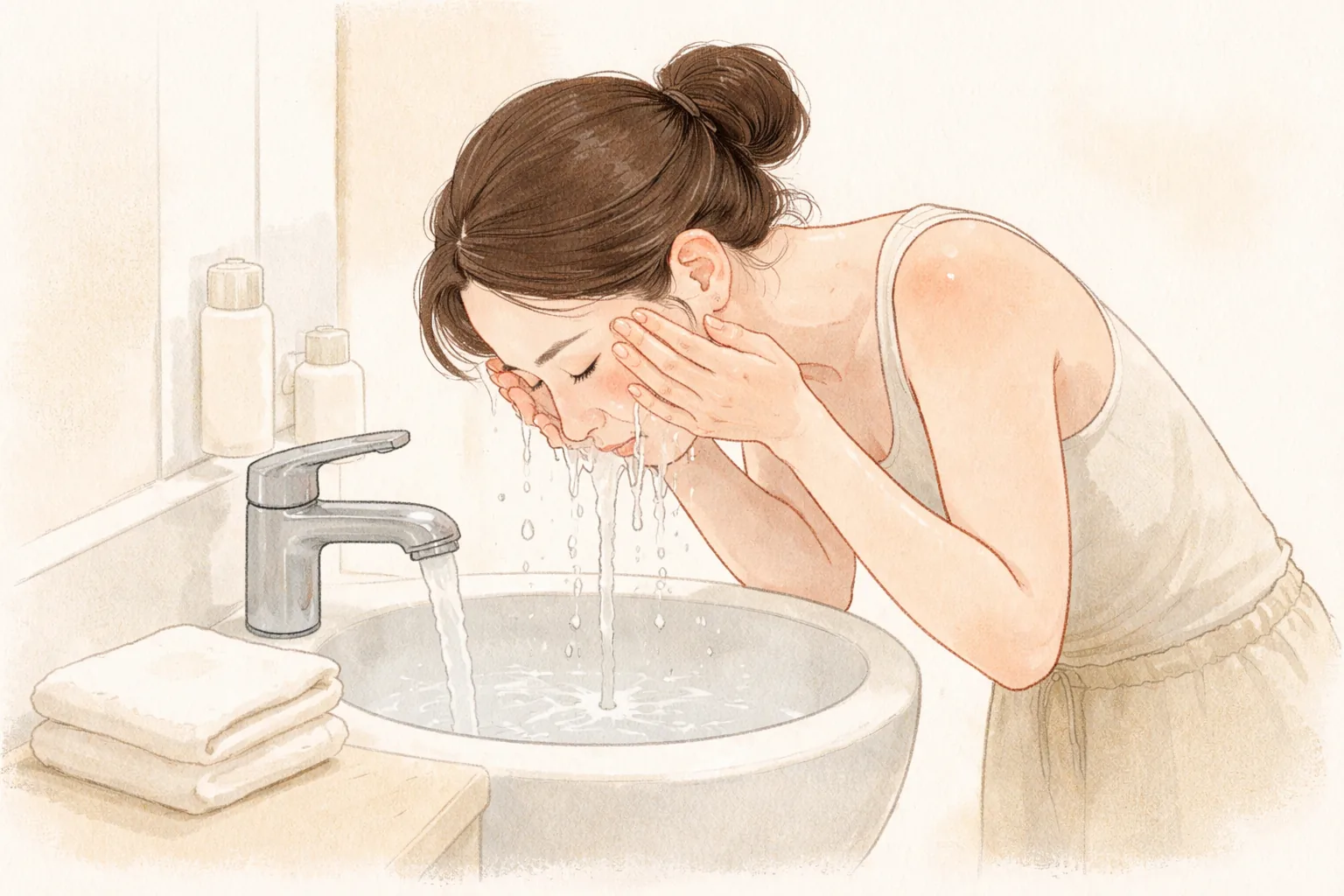
Soothing — Right after treatment, heat and redness remain. Wash gently with lukewarm water without rubbing, and soothe as instructed. Avoid saunas, jjimjilbangs, and intense exercise for the instructed period.
Moisturizing — Maintain moisture while the skin is sensitive. Moisturize daily after cleansing, and avoid irritating ingredients when skin feels tight or stings.
Sun protection — The key to preventing pigmentation. Apply a broad-spectrum, water-resistant sunscreen with SPF 30 or higher; products containing zinc oxide or titanium dioxide are suitable. After pigment treatments, reapplying carefully for at least 2 weeks is recommended.
Progress check — Monitor changes in redness, swelling, bruising, and crusts, and set the next session interval. Don't pick at crusts; let them fall off on their own.
Common reactions include redness, swelling, stinging, and thin crusts, and bruising may occur after vascular lasers. After pigment treatments, the treated area may temporarily darken. Rarely, hypopigmentation (lighter skin color), blisters, or scars can occur, and pigment may return over time.
If redness or stinging lasts more than 3 days or suddenly worsens, it's better to get it checked rather than wait. The same goes for blisters or oozing, or if the treated area swells and pain increases. Even if you want to move up the next session, it's safer to set it after the skin response has settled.
Frequently asked questions
How many laser toning sessions are needed for facial redness?
When vascular lasers are used for vascular concerns, 3–5 sessions at 4–6 week intervals are commonly cited examples. But these numbers are examples, and the response varies depending on whether it's superficial vessel dilation or redness from sensitivity or rosacea. Rather than fixing session counts in advance, the usual approach is to check the response every 2–3 sessions and adjust the plan. Dividing treatment while respecting recovery intervals is easier on the skin than one or two strong sessions.
Does frequent facial redness always mean rosacea?
No. Other conditions can cause facial color changes, so diagnosis is made by examining the skin and eyes and reviewing symptom patterns and history together. If redness repeatedly appears with temperature changes or tension, a vascular response is considered first, but if small bumps and inflammation recur or burning is prominent, other angles are needed. Tests may be used to rule out other causes when necessary.
How can I tell if my facial redness is rosacea or something else?
It's difficult to distinguish at home by color or location alone. If redness recurs in the center of the face with swelling or stinging, rosacea may be considered, but conditions like seborrheic dermatitis or acne can look similarly red. Recording when, from what trigger, and how long redness occurs helps during consultation. Judgment is made through examination.
How long should intervals between sessions be?
Low-intensity repeated treatments like toning usually leave at least a 1-week interval, and vascular lasers are cited at 4–6 weeks. The fact that frequent toning has been reported in association with hypopigmentation is also a reason to allow generous intervals. The exact interval depends on treatment intensity and how quickly the skin settles, and is set based on the previous session's response. Shorter intervals don't mean faster results.
How do I choose a good place for redness treatment?
Look at the order of consultation rather than the device list. Criteria include: whether they first check whether your concern comes from vessels, pigment, or the surface; whether they recommend only needed treatments and don't lock in session counts and intensity up front; and whether they fully explain pain, recovery schedule, and post-treatment precautions. It's also good to check whether you can get follow-up if you have discomfort after treatment.
This article offers general health information. It is not a substitute for diagnosis or treatment based on your own condition, so please talk through your situation with a doctor.