Mole Removal Korea: Is the Mole on Your Lip Safe to Remove?
Mole removal in Korea — how to judge whether a lip mole should be removed, why lips are different, what excision, shaving and biopsy each do, aftercare and what to do if it grows back.
Written by ATTITUDE Clinic Editorial Team
A mole in the middle of your lip or sitting on the lip line catches your eye in the mirror several times a day. You notice it while talking, while eating, in every photo. Once you actually decide to do something about it, the questions arrive all at once: "Is a lip mole riskier to remove?", "Will it leave a scar?", "Isn't lasering it off simple?" This article walks through how to judge whether a lip mole should be removed, what is different because it sits on the lip, and what to keep watching until it has healed.
The short answer first
The principle is the same for a mole on the lip. Most moles need no treatment, and the cases where a doctor recommends removal are when the mole has changed or is a new suspicious lesion, or when its position or shape bothers you and you want it removed for cosmetic reasons (NIH moles fact sheet, AAD moles: diagnosis and treatment). Because the lip is constantly moving and highly visible, how the site heals and what mark it leaves matters even for a mole of the same size. So with a lip mole, the first decision is not "do we remove it" but "what is this lesion, and how deep and by which method should it be handled."
Is a mole on the lip just something you can remove?
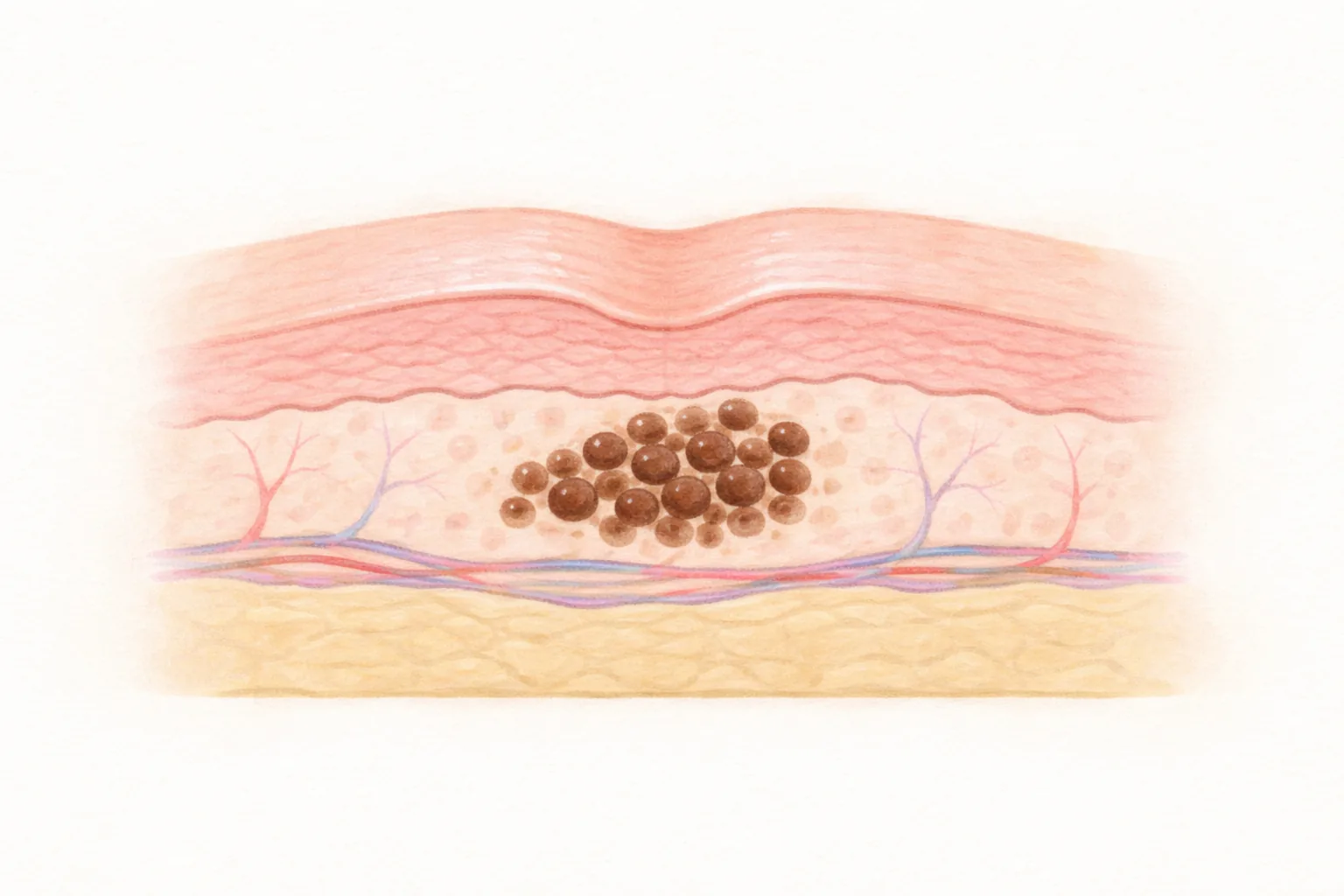
A mole is a lesion formed where melanin-producing cells gather in one spot. Adults usually have around 10–40 moles, and it is rare for an ordinary mole to turn into melanoma, the most serious form of skin cancer (NIH moles fact sheet). It is also worth remembering that melanoma more often arises in skin that looks normal rather than from an existing mole.
So change matters more than "it's small, so it should be fine." The NIH advises watching for whether the color has changed; whether the shape, texture or height has changed; whether the surface is dry or flaky; whether it has become firm or bumpy; and whether it itches, bleeds or oozes (same source). If you see these changes in a lip mole, it is better to have it examined than to dismiss it as a cosmetic issue.
One more point: not every lesion on the lip is a mole. It may be a faintly spreading patch of pigment, or a red or purple lesion made of blood vessels. They can look similar on the surface, but if the cause differs, the way it is handled differs. In the ATTITUDE Clinic treatment guide, pigment is listed under Pico toning and Pico spot removal, while facial redness and vascular lesions are listed separately under Vbeam (treatments and pricing). Which category a lip lesion belongs to cannot be settled by eye alone — it goes through an in-clinic assessment.
And one more. Trying to remove a mole at home is dangerous. The AAD explains that cutting or shaving off a mole yourself can leave part of the cancer cells behind to spread if cancer was present inside the mole, causes scarring, and raises the risk of infection (AAD moles: diagnosis and treatment). Over-the-counter mole removal products can also leave scars and delay a skin cancer diagnosis, according to the US Food and Drug Administration (FDA) (same source).
How it's removed — why excision, shaving and biopsy are considered together
There is more than one way to remove a mole. Cleveland Clinic describes two main categories. One is surgical excision: after anesthesia, the mole is cut out with a scalpel and sutured if needed. Depending on the type of mole, a margin of normal skin around it is taken along with it so that abnormal cells are not left behind. The other is shave excision, where the mole is sliced off thinly, like shaving (Cleveland Clinic mole removal).
The difference between the two lies less in appearance than in whether the tissue can be examined. With either excision or shaving, the removed tissue is examined under a microscope by a trained physician to check for cancer cells (AAD moles: diagnosis and treatment). However, tissue obtained by shaving cannot be used to assess deep tumor margins or to distinguish the type of skin cancer (Cleveland Clinic mole removal). So if a mole looks suspicious, the approach is not to shave it thin and stop there, but to use a method that allows the tissue to be examined fully.
How about anesthesia? A topical numbing cream may be used, or an injection may be given at the treatment site, and sometimes both are used together. Once anesthesia takes effect, the procedure itself is quick and the pain is not significant (Cleveland Clinic mole removal). The lip is a sensitive area, so anesthesia matters especially here, and the general explanation is that with sufficient anesthesia it is tolerable.
Here one more condition specific to the lip comes in. Depending on whether the lesion is pigmented or vascular, the category of device used differs, and on a thin area like the lip, the same intensity may feel different. Which method is right is decided by looking at the lesion, not by choosing from a name alone.
Where results diverge because it's the lip
The reasons results differ even for the same mole removal come down to three things: skin condition itself differs from person to person; even with the same condition, the plan must be drawn up differently; and in the actual procedure, intensity and adjustment diverge. In an ATTITUDE Clinic column as well, it is explained that skin type, thickness and healing speed differ from person to person, and that even with the same analysis result, the combination, order and intensity must be set differently (why results differ even with the same treatment). A lip mole does not fall outside this framework.
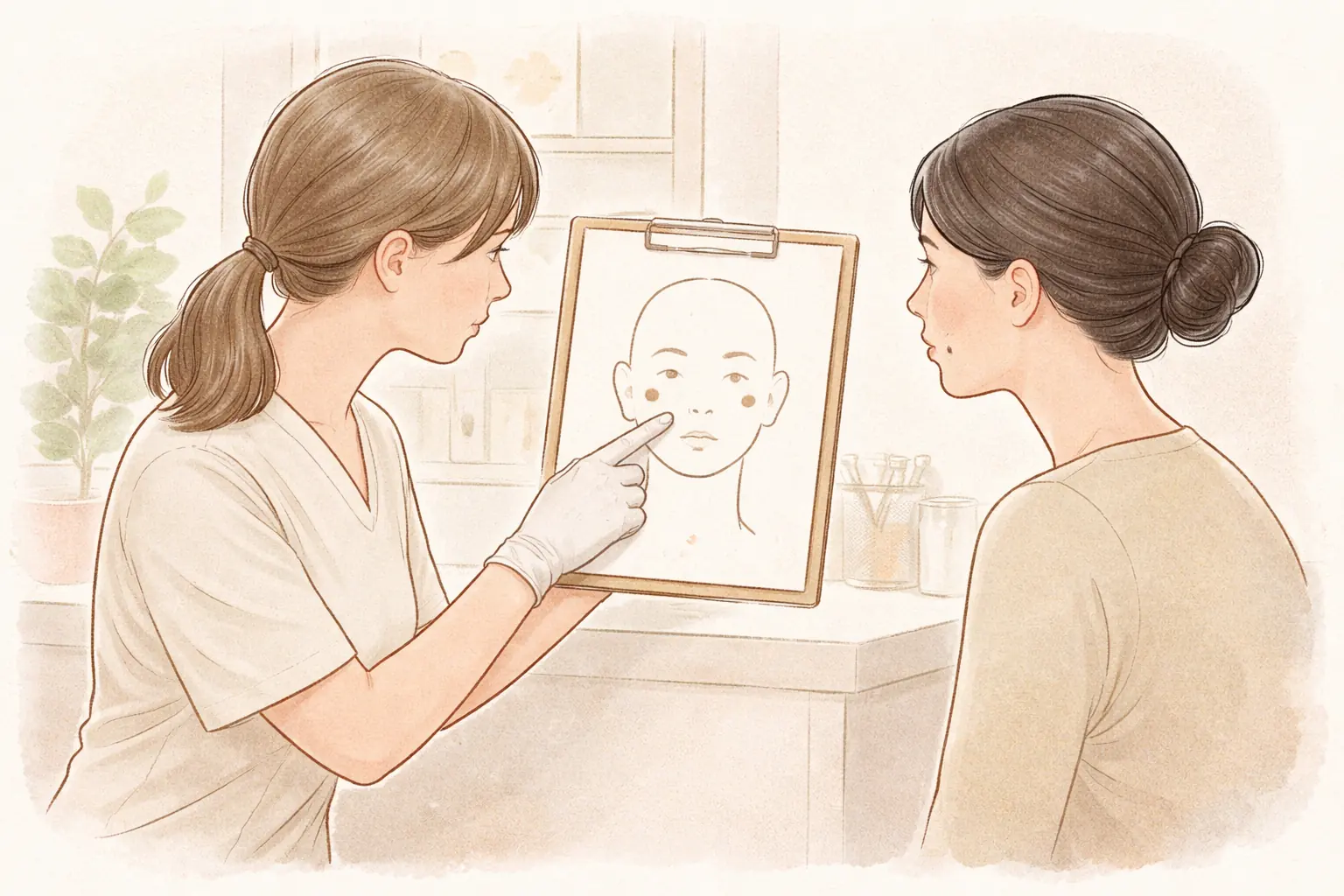
On the lip, position matters especially. In the consultation, we check whether it straddles the lip line, where it sits when the mouth is closed, and whether it touches the mucosa on the inside of the lip. Depending on this position, the extent of removal and the contour after healing can differ, so it is always an item we cover during consultation.
Another factor is movement. The lip is a spot that keeps moving while you talk, eat and make expressions, so stimulation is easily repeated even while it heals. Care that protects the wound without picking off the scab by force affects the result. The AAD clearly names scarring as a risk of mole removal (AAD moles: diagnosis and treatment). It is good to know that the possibility of scarring cannot be eliminated entirely.
The depth and size of the mole also drive the choice of method. For deeper lesions, an approach that only treats the surface may not be appropriate, and the extent of removal differs with size. These factors are decided in the consultation after seeing the skin directly.
Recovery and scheduling — how much should you allow?
For a few days after the procedure, there may be a stinging or burning sensation at the site (Cleveland Clinic mole removal). It usually ends with a single visit, but occasionally a second visit is needed (AAD moles: diagnosis and treatment). After mole removal, the skin heals over time, and the speed of healing varies with the site, size and individual healing capacity.
Table 1 Recovery and scheduling — how much should you allow?
Approach
What it does
When it is considered
What to check
Surgical excision
After anesthesia, the mole and a margin of surrounding normal skin are cut out together and sutured if needed
Larger or deeper moles, suspicious lesions
Removed tissue is examined under a microscope to check for cancer cells
Shave excision
Sliced off thinly, like shaving
When the mole is close to the surface and a sample for examination is needed
Cannot be used to assess deep margins or distinguish the type of skin cancer
Pigment laser approach
A laser aimed at pigment (Pico toning, Pico spot removal, etc.)
When the lesion has been assessed as pigmented
Vascular lesions are considered under a different category (Vbeam)
Biopsy first
Confirming the nature of the lesion before removal
When color and shape are irregular or it has changed recently
Do not erase it with a laser before the result is confirmed
Swipe sideways to see the whole table.
In short a lip mole hinges on "what this lesion is" rather than "how to remove it." For a suspicious mole, confirming with a test comes first, and if it is confirmed as a pigmented lesion, the laser category is considered. Position, size and care during healing determine the final mark.
If this sounds like your situation
When a ceremony or a shoot is a few weeks away
A lip mole stands out especially in photos, so it is a spot you want to take care of before a scheduled event. However, for a few days after the procedure, stinging or redness may remain, and since the lip keeps moving, healing takes time. If you have a fixed date, tell us first, and it is better to plan with some margin than to push everything through in one go.
If your lips crack often or are on the sensitive side
When the lips are cracked and chapped, wound care becomes more difficult. In this case, along with the timing of mole removal, the condition of the lips themselves needs to be considered. The treatment guide also lists moisturizing and regenerative injection items under the lip area, but what to do, when, and in what order is decided after seeing the healing state (treatments and pricing).
If you want to take care of it during a short stay from overseas
If your stay is short, aftercare becomes more of an issue than the day of the procedure. Deciding in advance on the care needed during healing and the timing of a follow-up visit, and scheduling one check before departure, puts your mind at ease.
If you have several moles and want to set an order
If there are several moles around the lip, it is better to set priorities rather than treat them all at once. Confirm suspicious lesions first, then plan by dividing visible spots from spots that heal easily. The extent and order are decided in the consultation.
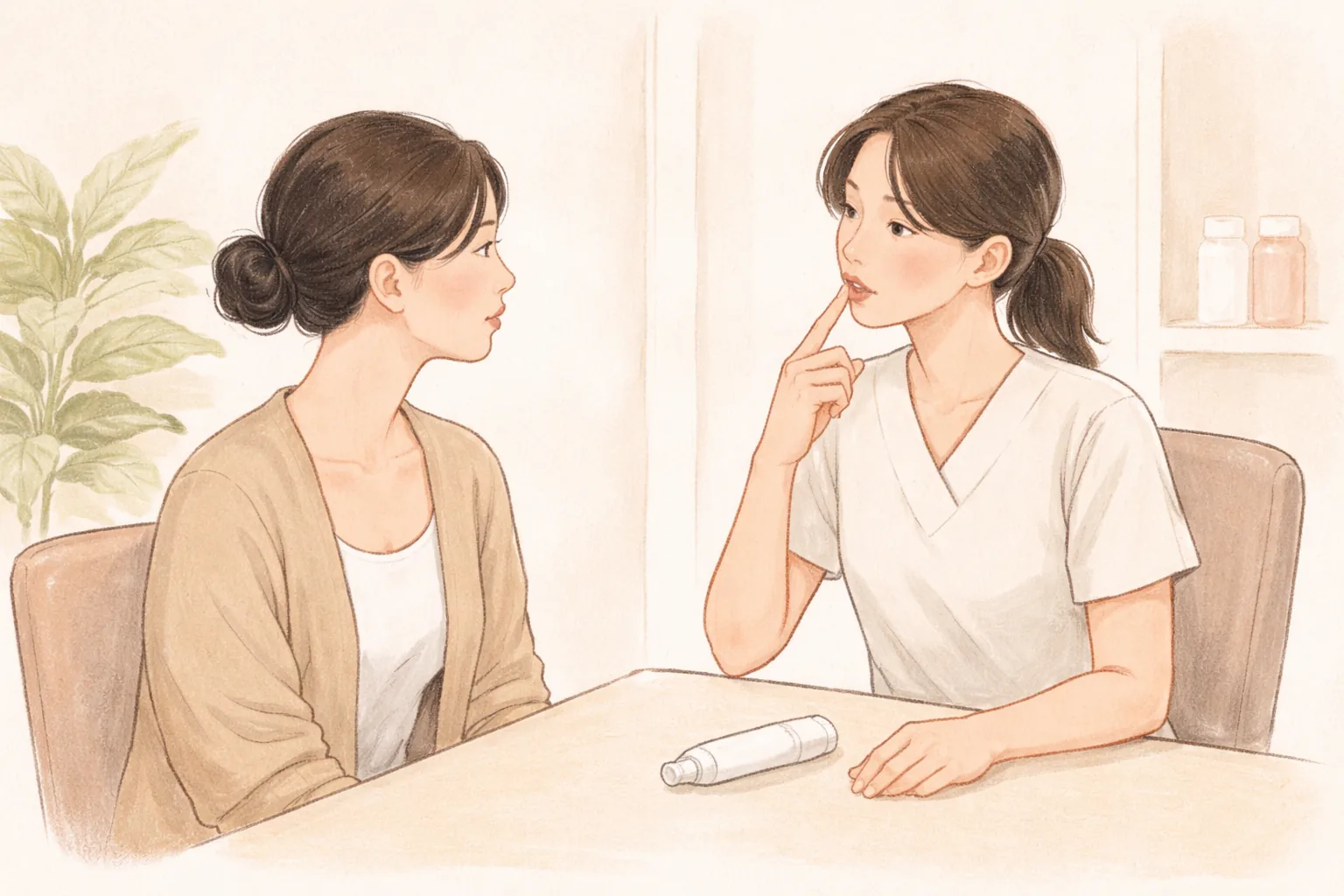
Please tell us before your consultation Recent sun exposure and outdoor activity, medications you are taking and products you apply to the skin (retinol, acid ingredients, etc.), reactions you had after previous mole or pigment treatments, periods when your lips cracked or blistered, and fixed dates such as ceremonies or shoots — telling us these helps us build the plan.
How ATTITUDE Clinic proceeds
AI skin analysis record — Your skin condition is recorded and organized so that you and the doctor look at the same information. The analysis tool is a reference for recording and organizing information and does not make a medical diagnosis.
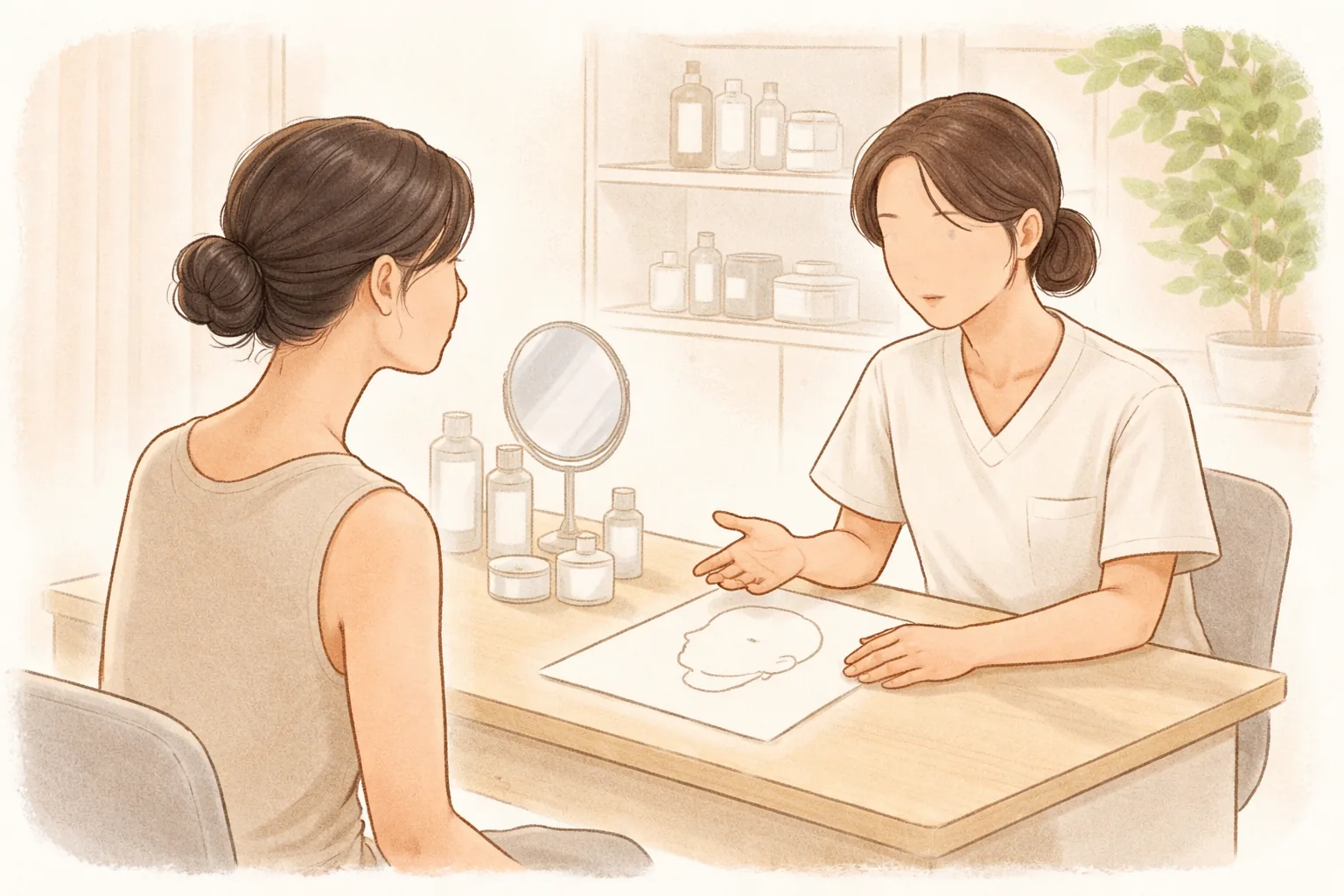
Doctor consultation — Your concerns, lifestyle habits and previous treatment experience are added to the analysis record, and the nature of the lesion, the extent of removal, the order and the intensity are decided together. What is needed and what is not is also sorted out here.
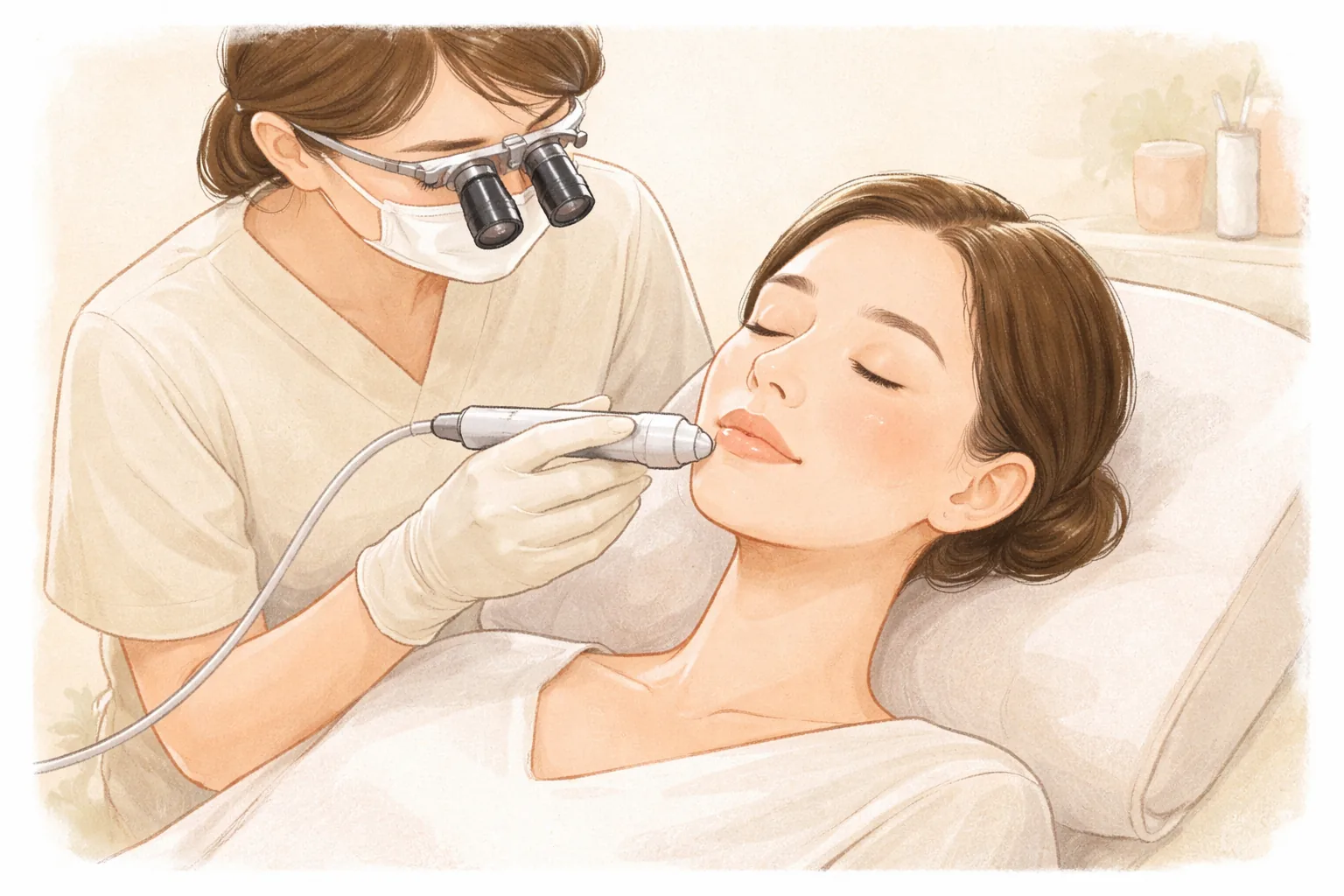
Procedure performed by the doctor — The doctor personally performs the procedure according to the plan set in the consultation, adjusting while watching the skin's response during treatment. This is so the design and the execution do not diverge.
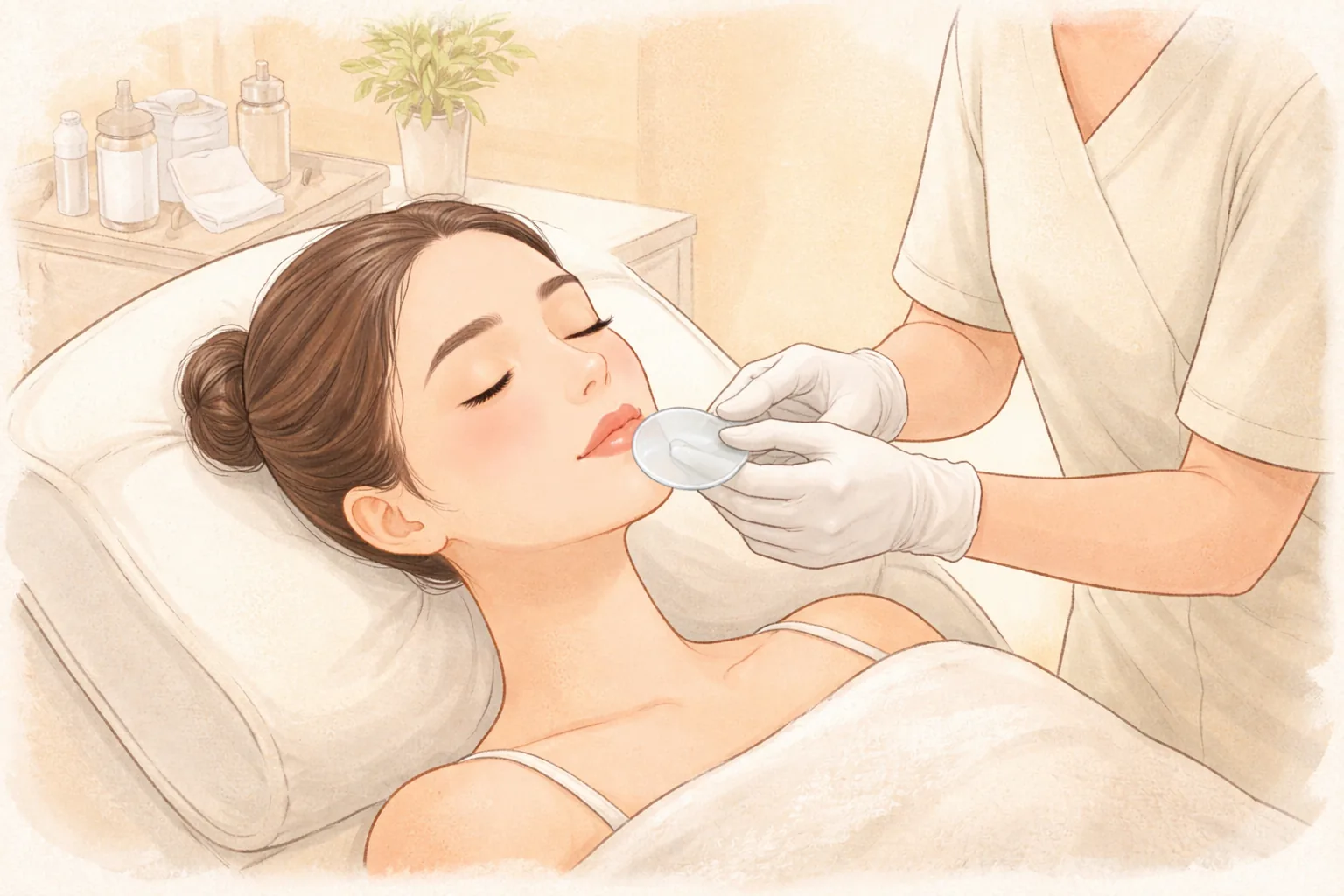
Recovery and care — We guide you on care during healing and the timing of a follow-up visit, and check your progress.
Which category fits a lip lesion depends on the assessment result. If it is a pigmented lesion, a pigment laser such as Pico toning or Pico spot removal is considered; if it is a vascular lesion, the Vbeam direction is considered. Mole removal items are also listed in the treatment guide (treatments and pricing). What is needed and what is not is decided together with the doctor, and the doctor personally handles everything from consultation to procedure (why results differ even with the same treatment).
Aftercare and side effects
Soothing — Right after the procedure, start by soothing the site without rubbing or touching it. Redness and swelling usually subside within a few days.
Moisturizing — Keeping the wound from drying out is the basics during healing. Do not pick off the scab by force.
Sun protection — Continuing sun protection after healing so that pigment does not remain is standard care.
Progress check — Watch the healing shape and color changes, and if anything differs from expectations, confirm it in a consultation.
Common reactions are redness and swelling, tenderness when pressed, and bruising, which usually subside within a few days. A stinging or burning sensation may continue for a few days right after the procedure (Cleveland Clinic mole removal). Rarely, there may be pigment changes where the skin temporarily darkens or lightens, blisters, lumps, burns or scarring (why results differ even with the same treatment).
There are times to check rather than wait. The AAD advises that if a mole grows back in the spot where it was removed, you should see a dermatologist immediately, because it can be a sign of melanoma (AAD moles: diagnosis and treatment). If the color, shape or height changes, or it becomes firm, itchy or oozes, that is also a reason for a consultation (NIH moles fact sheet). If there are changes you did not expect, such as pain that does not improve and gradually worsens, it is also better to check right away (why results differ even with the same treatment).
Frequently asked questions
Can I just remove a mole on my lip?
Most moles themselves need no treatment. Removal is considered when a mole has changed or is newly appeared and suspicious, when it catches on clothing or objects and is uncomfortable, or when you want it gone because of its position or shape (AAD moles: diagnosis and treatment). Being on the lip does not change the principle, but because it is a visible and constantly moving spot, the extent of removal and the healing process are watched more carefully. Since the approach differs depending on whether it is a pigmented or vascular lesion, assessment comes first.
Will removing a mole leave a scar?
The AAD clearly names scarring as a risk of mole removal (AAD moles: diagnosis and treatment). No method can be said to leave no trace at all, and the depth and size of the lesion, its position, and how it was removed determine the mark that remains. Because the lip moves a lot, stimulation is easily repeated while it heals, so care that protects the wound without picking off the scab matters.
How is anesthesia done, and is it very painful?
A topical numbing cream may be used, or an injection may be given at the treatment site, and sometimes both are used together. Once anesthesia takes effect, the procedure finishes quickly and the pain is not significant, and for a few days after the procedure there may be a stinging or burning sensation (Cleveland Clinic mole removal). Because the lip is a sensitive area, we go through the step of confirming that anesthesia is sufficient.
What should I do if the mole comes back?
If a mole grows back, the AAD advises seeing a dermatologist immediately, because it can be a sign of melanoma (AAD moles: diagnosis and treatment). A mole that has come back may be due to a remaining root, or it may be a newly appeared lesion, so it is not distinguished by eye but confirmed in a consultation. If signs such as color, shape or height changes, itching or oozing are present as well, you should act sooner (NIH moles fact sheet).
Where should I have mole removal done in Korea?
There are a few things to check. Whether a doctor who looks at the skin directly and judges the nature of the lesion conducts the consultation, whether there is a system that can examine the removed tissue, and whether they explain why this method is used and the plan for after it heals. The AAD explains that a trained physician removes the mole and examines the removed tissue under a microscope (AAD moles: diagnosis and treatment). Cost varies with the size and depth of the mole, the method and the number of sessions, and in the ATTITUDE Clinic treatment guide, mole removal is also organized by size (treatments and pricing). The final decision is yours, made through the consultation (why results differ even with the same treatment).
At a glance
Table 2 At a glance
Item
Key points
When removal is needed
When a mole has changed or is newly appeared and suspicious, uncomfortable, or removed for cosmetic reasons
What to check first
Whether it is pigmented or vascular, depth and size, its positional relationship to the lip line
This article offers general health information. It is not a substitute for diagnosis or treatment based on your own condition, so please talk through your situation with a doctor.