Pico Laser and Pico Toning for Pigmentation: What Home Care Can and Can't Do
How far whitening creams and sunscreen can fade dark spots, and what to confirm at a clinic depending on whether your pigmentation is melasma, freckles or sun spots. Pico laser and pico toning benefits are covered for readers in Gangnam, Seoul.
Written by ATTITUDE Clinic Editorial Team
"If I keep using whitening cream, will my dark spots really disappear?" "Can sunscreen alone fade melasma?" Once pigmentation becomes a concern, most people start by looking for something they can do at home. This article walks through how far whitening products and sun protection actually work, and which parts need to be checked at a clinic.
The short answer first
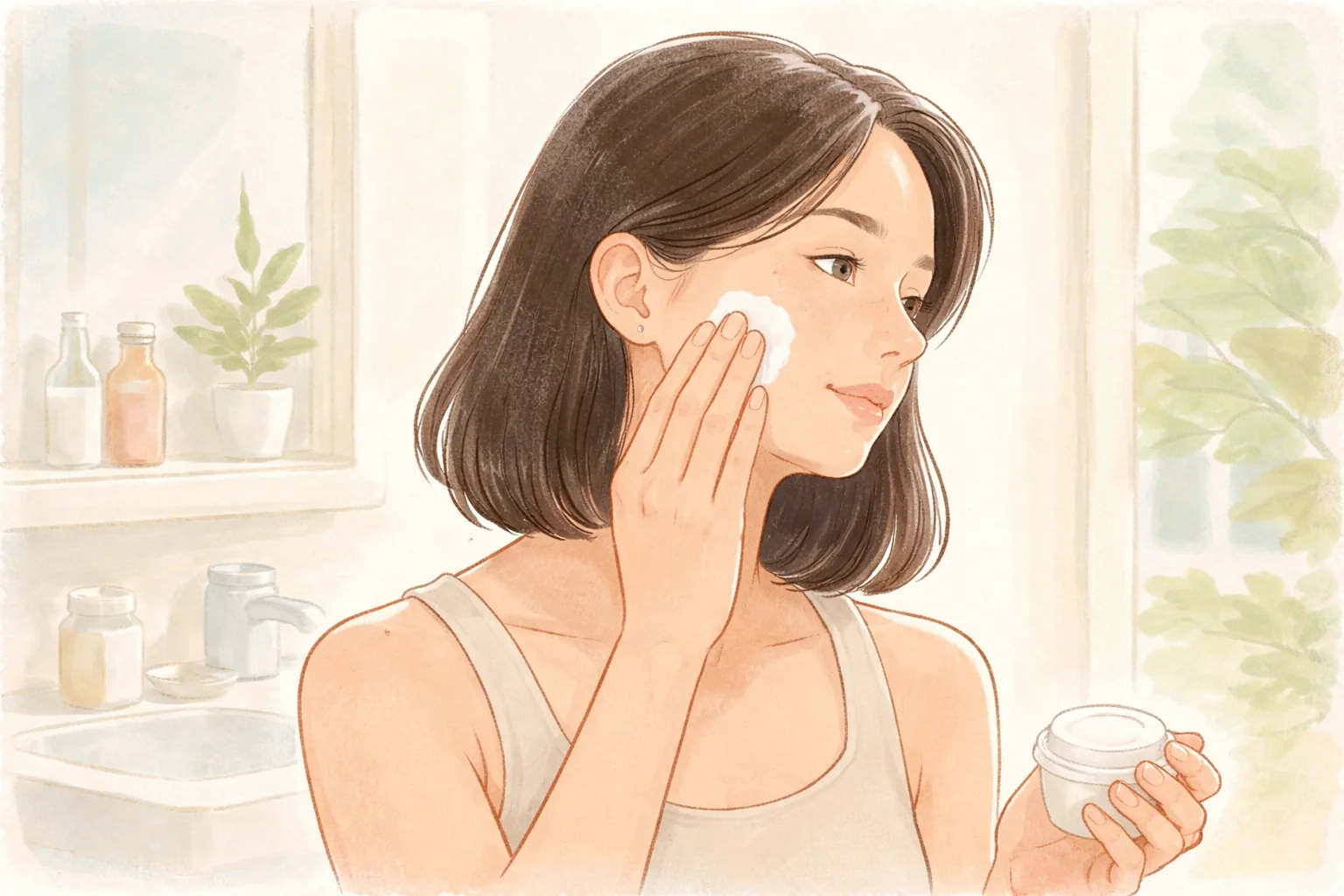
Home care is less about removing pigment and more about reducing new pigment from surfacing and keeping your skin barrier stable. Sunscreen is a key way to lower pigment from coming back, and cutting down on habits that irritate the skin helps too. On the other hand, how deep the pigment sits and whether it is melasma or a spot is hard to judge at home. So home care and a clinic visit are not competing — they are a sequence of roles.
Can whitening cream really erase dark spots?
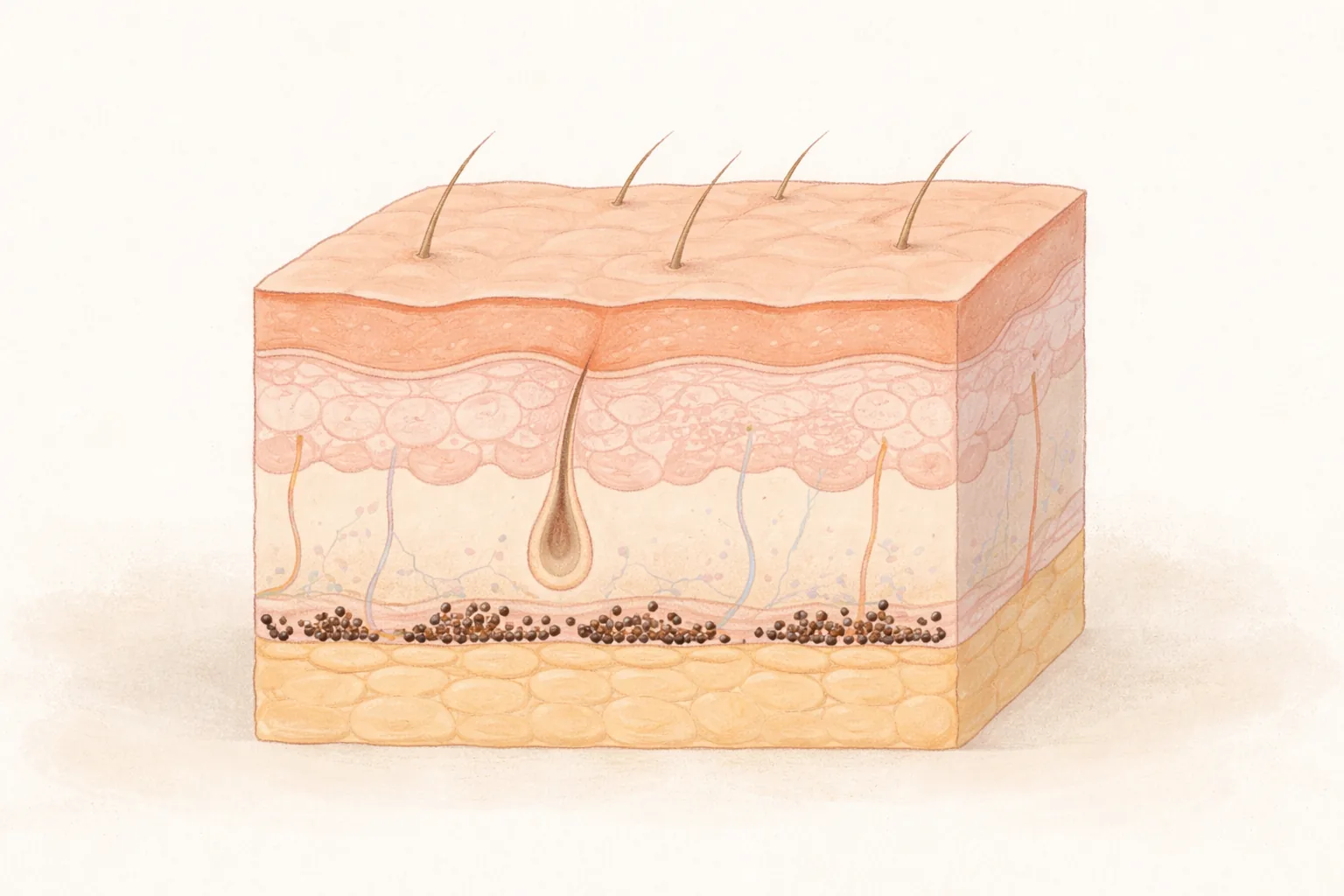
Pigmentation happens when melanin builds up excessively in the skin. Melanin is the pigment that gives color to skin, hair and eyes, and in skin it is produced by melanocytes in the basal layer — the deepest layer of the epidermis — and spread to nearby cells. MSD Manuals This process responds to various triggers such as UV, inflammation, medications and hormonal changes. MSD Manuals That is why the same trigger produces different amounts and patterns of melanin in different people, and why some develop melasma while others accumulate spots. Melasma, freckles, spots and seborrheic keratosis column
Whitening products you apply at home mainly help tidy up the surface condition of the skin. But depending on which layer the pigment sits in, what you can do at home and what needs clinical care are divided. Melasma, freckles, spots and seborrheic keratosis column Pigment that has settled into the dermis is hard to reach with topicals alone, and melasma — where the pigment cells themselves are overactive — tends to return quickly unless the underlying causes are managed at the same time. Melasma, freckles, spots and seborrheic keratosis column
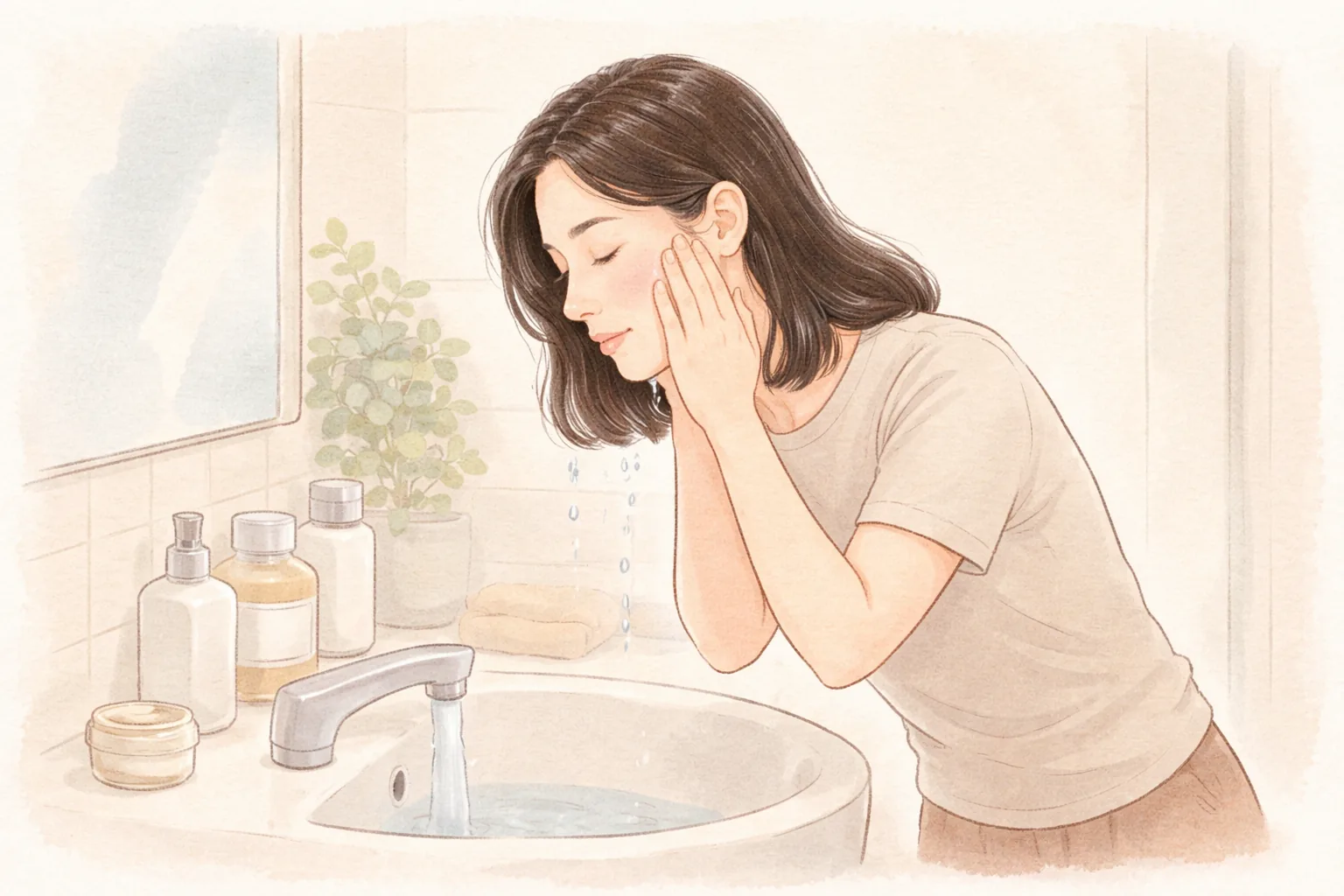
So the most reliable things you can do at home are reduce UV exposure and avoid triggers that create inflammation, such as friction or aggressive exfoliation. Inflammation itself is one of the causes of hyperpigmentation. MSD Manuals
Why is sunscreen the center of home care?
The American Academy of Dermatology advises blocking sun through shade, clothing and sunscreen when managing age spots and dark marks. AAD guide UV is a major trigger that stimulates melanocytes to produce more pigment, so preventing new pigment from surfacing is where consistent home care pays off more than trying to fade existing pigment. Melasma, freckles, spots and seborrheic keratosis column
Sunscreen is not a one-time morning application. If you spend a lot of time outdoors, reapplying about every 2 hours is recommended, and during recovery after a procedure, applying SPF 50+ carefully for at least 2 weeks is advised. Spots, redness and scars laser column Even indoors, if you sit by a window for long periods or have outdoor plans, it is best to think of sun protection as an all-day routine.
Another important point is heat. Activities that raise skin temperature — saunas, jjimjilbang, intense exercise — are best avoided during recovery. When skin temperature rises, blood vessels dilate and pigment cells can be reactivated. Spots, redness and scars laser column Reducing heat is part of home care too.
How should melasma and spots be viewed differently at home?
"Spots" is not one diagnosis but an umbrella term for various brown marks on the face. It includes melasma, freckles, solar lentigines, post-inflammatory hyperpigmentation and seborrheic keratosis — lesions with different causes and depths. Melasma, freckles, spots and seborrheic keratosis column So before looking for a "cream for spots," it helps to know which type yours is closer to.
Melasma is a state where pigment cells are overactive due to a combination of hormones, UV and heat. Its borders tend to be unclear and spread widely, and it is classified into epidermal, dermal and mixed types. Melasma, freckles, spots and seborrheic keratosis column Freckles have a strong genetic component and show a repeating pattern of darkening with UV exposure and fading with protection. Spots (solar lentigines) are marks caused by cumulative UV and aging, often with relatively clear borders concentrated in the epidermis. Seborrheic keratosis is a benign lesion where cells in the outer skin layer thicken, and color is a secondary feature. Melasma, freckles, spots and seborrheic keratosis column
What home care can mainly address is the condition of the epidermis, sun protection and reducing irritation. Melasma that has spread into the dermis, or pigment cells that are overactive, are hard to solve with topicals alone, and blasting them with strong energy can actually darken the pigment. Melasma, freckles, spots and seborrheic keratosis column So if melasma is suspected, it is safer to have the type and depth checked at a clinic rather than treating it aggressively at home.
Table 1 How should melasma and spots be viewed differently at home?
Pigment type
Main layer it sits in
What you can do at home
What to check at a clinic
Melasma (epidermal)
Basal layer of epidermis
Sun protection, reducing irritation
Whether a low-energy repeated approach is suitable
Melasma (dermal/mixed)
Epidermis to dermis
Managing underlying causes
Combined approach and intervals
Freckles
Basal layer of epidermis
Sun protection
Likelihood and timing of recurrence
Spots (solar lentigines)
Basal layer of epidermis
Sun protection
Whether individual spots need treatment
Seborrheic keratosis
Epidermis (thickened outer layer)
Avoiding irritation
Removal method
Swipe sideways to see the whole table.
In summary home care is strongest at preventing new pigment from surfacing, centered on sun protection and reducing irritation. Because the needed approach differs depending on how deep the pigment sits and whether it is melasma or a spot, the parts where no amount of consistent topical care can reach should be checked at a clinic — that is the right order.
Why do results differ even with the same whitening product?
There is no single cause of pigmentation. Inflammatory conditions, medications or substances, skin with a history of inflammation such as atopic dermatitis or psoriasis, sun exposure, and rarely cancer are cited as causes of hyperpigmentation. MSD Manuals If the cause is inflammation, calming it first matters; if the cause is UV, protection comes first; if it is medication-related, the medication you take needs to be reviewed. MSD Manuals This is why the same whitening product gives different results.
Another factor is depth. Pigment shallow in the epidermis and pigment spread into the dermis are approached differently even in laser treatment. Melasma, freckles, spots and seborrheic keratosis column If topical home care mainly reaches the epidermis, dermal pigment may need a different kind of help.
The state of your skin barrier also affects results. If skin becomes sensitive or redness lingers, pigment can surface more easily; conversely, a stable barrier makes management easier. Laser and skin barrier column If redness or stinging lasts a long time, it is better to focus first on soothing and moisturizing.
New or growing moles, or moles that change shape or color, itch or bleed should be checked for skin cancer before any cosmetic procedure. Some skin cancers can look like ordinary brown marks. Melasma, freckles, spots and seborrheic keratosis column
If this applies to you
Before an event or shoot
If your event is 2–4 weeks away, it is better to stabilize your skin with sun protection and moisturizing than to go for a high-power procedure. Procedures that form scabs can take about 7–10 days to recover Spots, redness and scars laser column, so when the date is close, it is best to choose the type and intensity of the procedure by counting backward from your schedule. At home, it is safer not to suddenly start a new exfoliating product.
If you want consistent management
At home, apply sunscreen every day and build the habit of reapplying every 2 hours outdoors. Spots, redness and scars laser column Use whitening products slowly, checking whether your skin tolerates them, and pause if stinging or redness appears. At a clinic, first identify the pigment type and depth, then set the order of needed care. Melasma, freckles, spots and seborrheic keratosis column
Sensitive or redness-prone skin
When skin is sensitive, strong exfoliation or friction can worsen inflammation and darken pigment. MSD Manuals In this case, soothe and moisturize first, and do not start several new whitening ingredients at once. During consultation, be sure to mention if your skin has reacted sensitively after a previous procedure — it helps with adjusting settings. Laser and skin barrier column
International visitors on a short stay
If your stay is short, you may prioritize low-energy repeated care or sun protection education over procedures with a long recovery. Spots, redness and scars laser column However, it is difficult to decide on a procedure based on schedule alone without an examination to identify the pigment type. Letting the clinic know your length of stay and return date helps align procedure intervals. Laser and skin barrier column
Please tell us before your consultation
Whether you have had a lot of recent UV exposure
Medications you take or cosmetics you use (exfoliants, retinol, etc.)
Any past experience of sensitive skin after laser or peeling
Important events such as weddings, shoots, trips or business trips
How ATTITUDE Clinic handles this
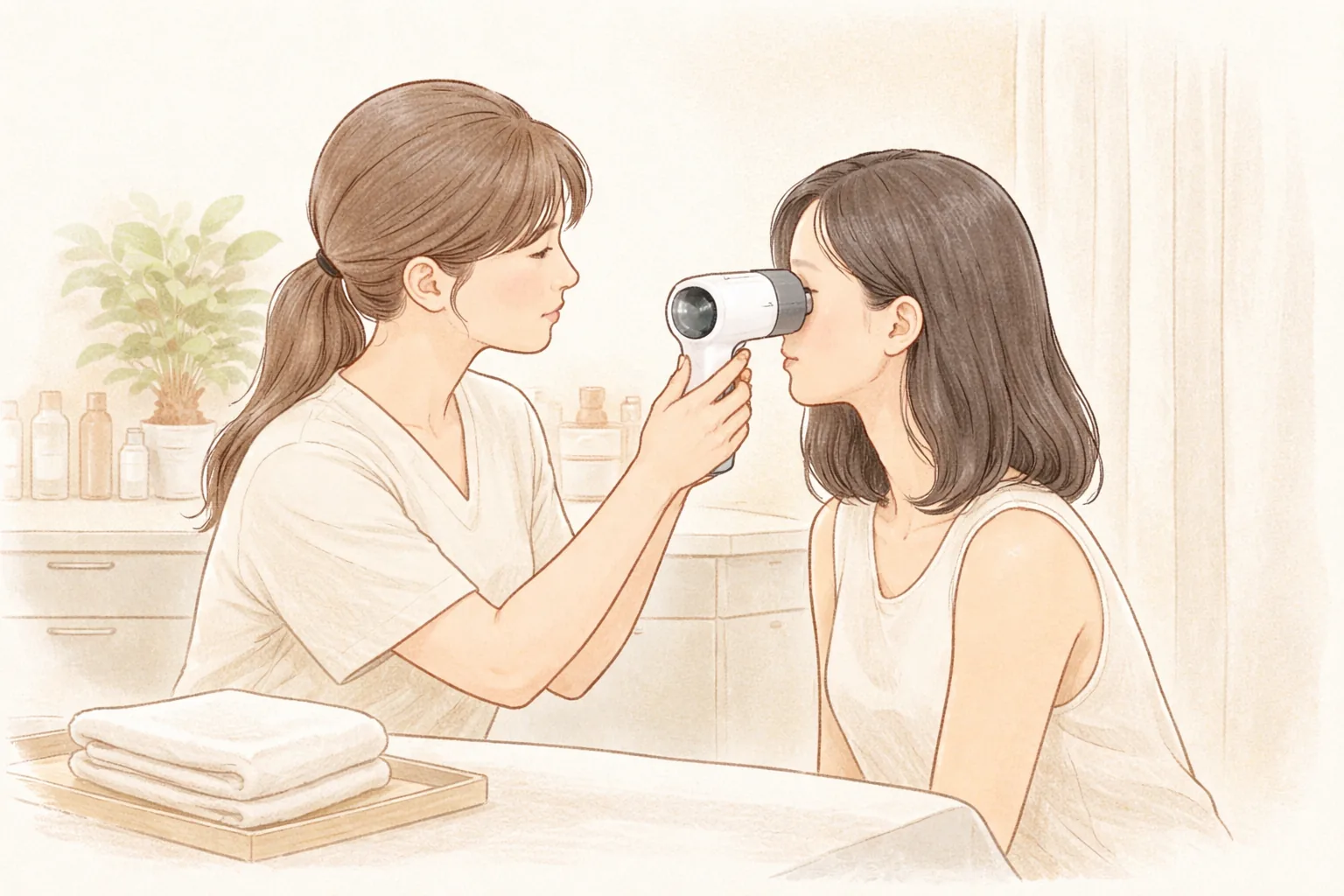
AI skin analysis record — We record and organize your skin condition to support the consultation. This record is not a medical diagnosis, and the pigment type is judged by the doctor through examination. Melasma, freckles, spots and seborrheic keratosis column
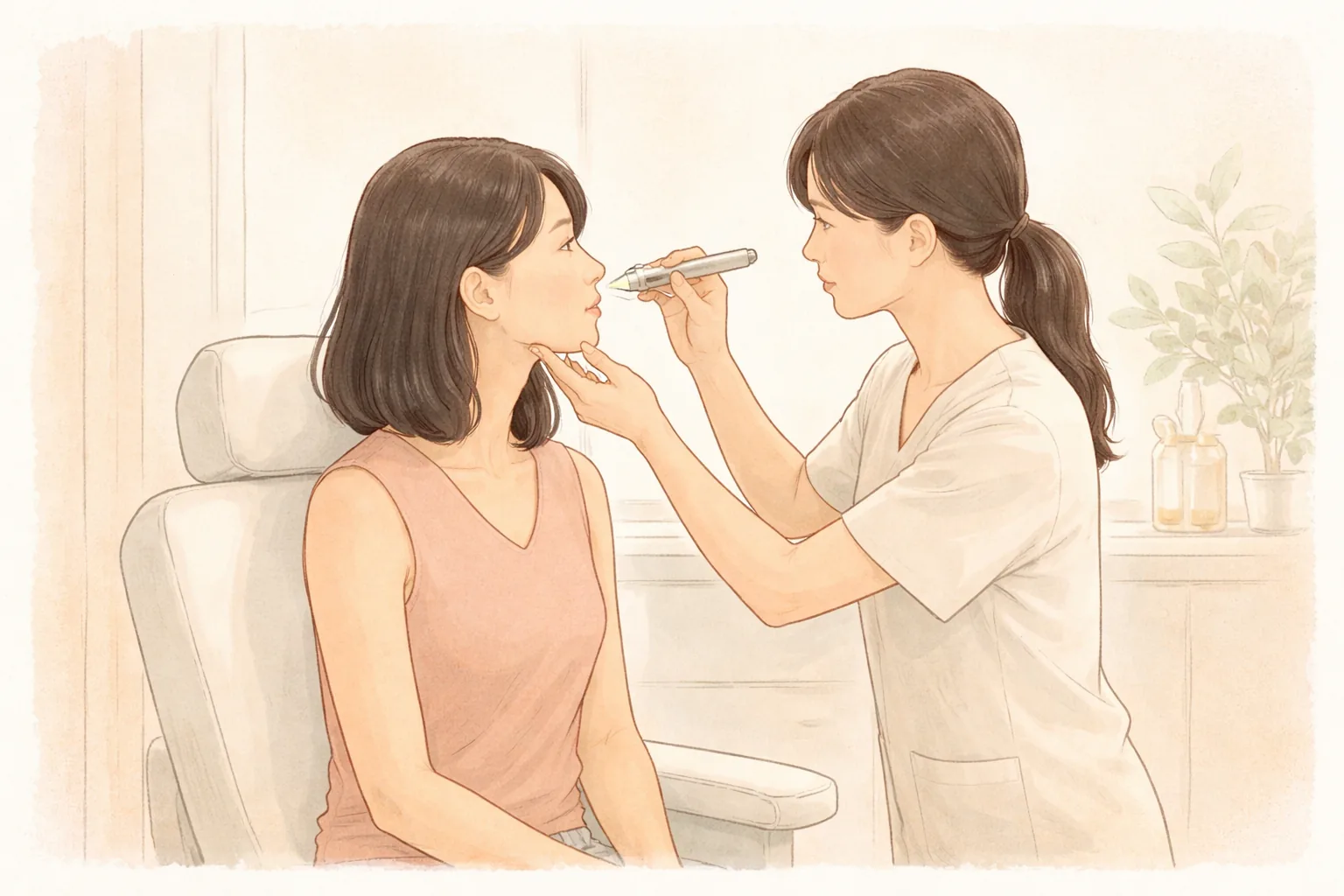
Doctor consultation to interpret type and cause — Adding your UV exposure, hormonal changes, lifestyle and concerns to the analysis record, the doctor interprets the pigment type and cause and designs a treatment combination. Melasma, freckles, spots and seborrheic keratosis column
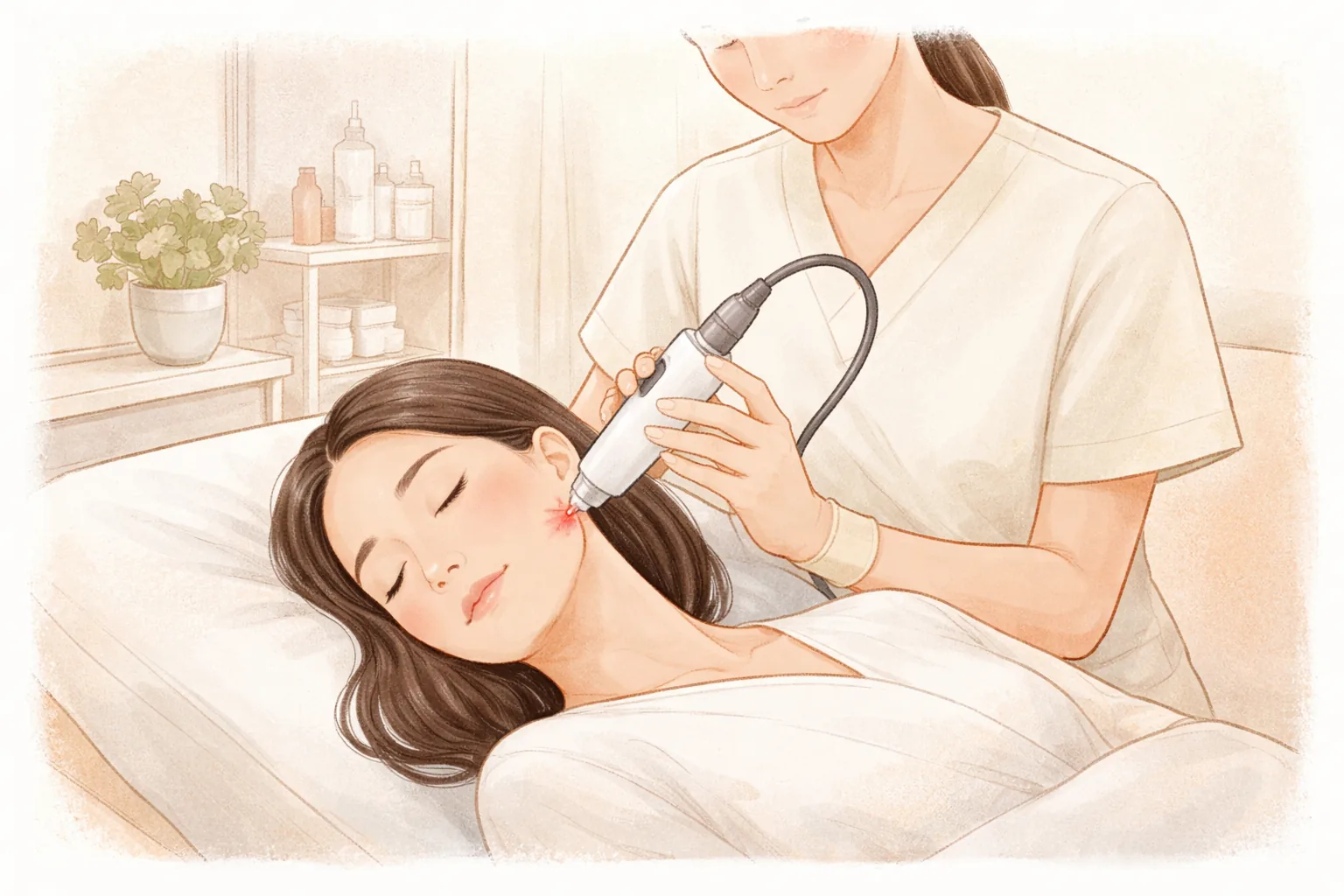
Procedure performed directly by the doctor — Among our devices including PicoPlus, Vbeam and erbium YAG laser, the doctor selects the one suited to your pigment type and adjusts intensity and combination directly. Melasma, freckles, spots and seborrheic keratosis column
Recovery and aftercare guidance — We guide you on sun protection, moisturizing and the period to avoid heat after the procedure, and check your progress. Spots, redness and scars laser column
Aftercare and side effects
Soothing — Right after the procedure, redness or heat may appear, so wash gently with lukewarm water and avoid friction.
Moisturizing — The skin barrier is temporarily weakened, so moisturize sufficiently.
Checking progress — If redness or stinging lasts more than 3 days or suddenly worsens, do not endure it — visit the clinic for a check. Spots, redness and scars laser column
Commonly, redness, swelling, scabs and temporary darkening of pigment at the treated area may appear. Rarely, hypopigmentation, blisters or scarring can occur, and pigment may return over time. Spots, redness and scars laser column Do not pick at scabs — let them fall off on their own. Spots, redness and scars laser column If redness or stinging lasts longer than expected or pain worsens, it is better to visit the clinic rather than wait.
Frequently asked questions
Will whitening cream make my dark spots disappear?
Whitening cream is used to tidy up the surface condition of the skin, but if pigment has settled into the dermis or the pigment cells are overactive as in melasma, it is hard to remove with topicals alone. Melasma, freckles, spots and seborrheic keratosis column The most reliable things you can do at home are sun protection and reducing irritation. AAD guideMSD Manuals When using whitening products, it is better to start one at a time, checking for stinging or redness. And if a mole is new or growing, a medical check comes before cosmetic products. Melasma, freckles, spots and seborrheic keratosis column
Strong exfoliation may look like it strips away part of the epidermis, but if it creates inflammation in the skin it can actually worsen pigmentation. MSD Manuals Skin with melasma or post-inflammatory hyperpigmentation is especially sensitive to irritation, so it is better to avoid aggressive scrubs or peels. Melasma, freckles, spots and seborrheic keratosis column At home, keep gentle cleansing, moisturizing and sun protection as your basics, and decide on exfoliation after checking your skin condition.
I think I have a mix of pigment types — can I still manage at home?
How do I choose a clinic that is good at pigment treatment?
More important than device names or inventory is whether they check what type of pigment you have and how deep it sits before treatment. Laser and skin barrier column It is also worth checking whether the consultation asks about UV exposure, medications you take and past sensitivity after procedures, and explains procedure intervals and recovery time. Laser and skin barrier column Another point is whether you can return for a check when something feels off after the procedure. Laser and skin barrier column Rather than a promise to "remove it in one go," a clinic that explains why a certain intensity and interval were chosen may suit your skin better.
At a glance
Table 2 At a glance
Item
Key point
Center of home care
Sun protection and reducing irritation
Identifying pigment type
Melasma, freckles, spots and seborrheic keratosis differ in depth and cause, so approaches differ
Factors that decide results
Type and depth of pigment, cause, skin barrier condition
Feature of melasma
Pigment cells are overactive — strong stimulation backfires, low-energy repetition is the basic approach
What to check at a clinic
Pigment type judged by doctor examination after AI skin analysis record (the analysis tool is not a diagnosis)
Key points after procedure
Do not pick scabs, protect from UV, moisturize, avoid heat
This article offers general health information. It is not a substitute for diagnosis or treatment based on your own condition, so please talk through your situation with a doctor.