Pico Laser vs Laser Toning: What's the Difference?
How pico laser and conventional laser toning differ in the way they target pigment, the factors that decide results, common session counts and intervals, aftercare and side effects.
Written by ATTITUDE Clinic Editorial Team
Search for ways to clear melasma and dark spots and the words "pico toning" and "laser toning" almost always come up together. The names are similar enough that they can look like the same treatment with a different machine name, and neither tells you which one actually suits your face. This article walks through how the two treatments differ in what they do inside the skin, what decides the result, and what first-time visitors in Korea should prepare.
The short answer first
Both are toning treatments that aim light at pigment, but the energy stays in the skin for a different length of time. Picosecond lasers use very short bursts of light around 1 trillionth of a second, while conventional laser toning uses much longer pulses measured in nanoseconds. That difference in time affects how much heat spreads to surrounding tissue and how the pigment is broken apart. So neither is definitively better; the right approach depends on which layer the pigment sits in, how deep it goes, and how much irritation your skin can tolerate.
What does toning actually do inside the skin?
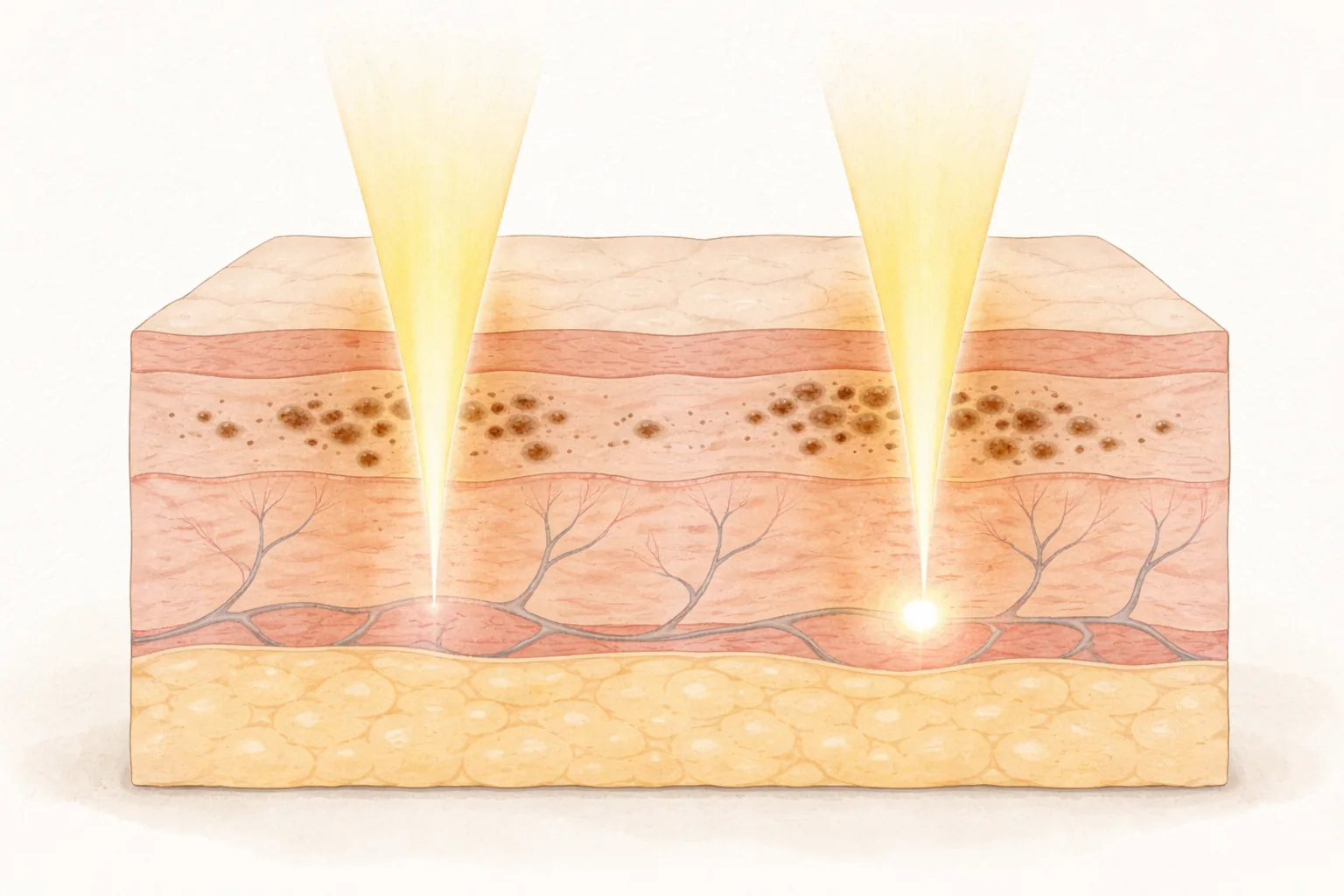
Most of the brown patches you see as melasma and dark spots start with melanin pigment. Melanin absorbs light of certain wavelengths especially well, and lasers make use of this property. Even with the same light, the result depends on which substance absorbs it, so a laser targeting pigment and a laser targeting red blood vessels differ from the wavelength onward. This principle is called selective photothermolysis (targeting energy at the target while leaving surrounding normal skin less affected). A ATTITUDE Clinic column also starts by noting that each laser has a different target.
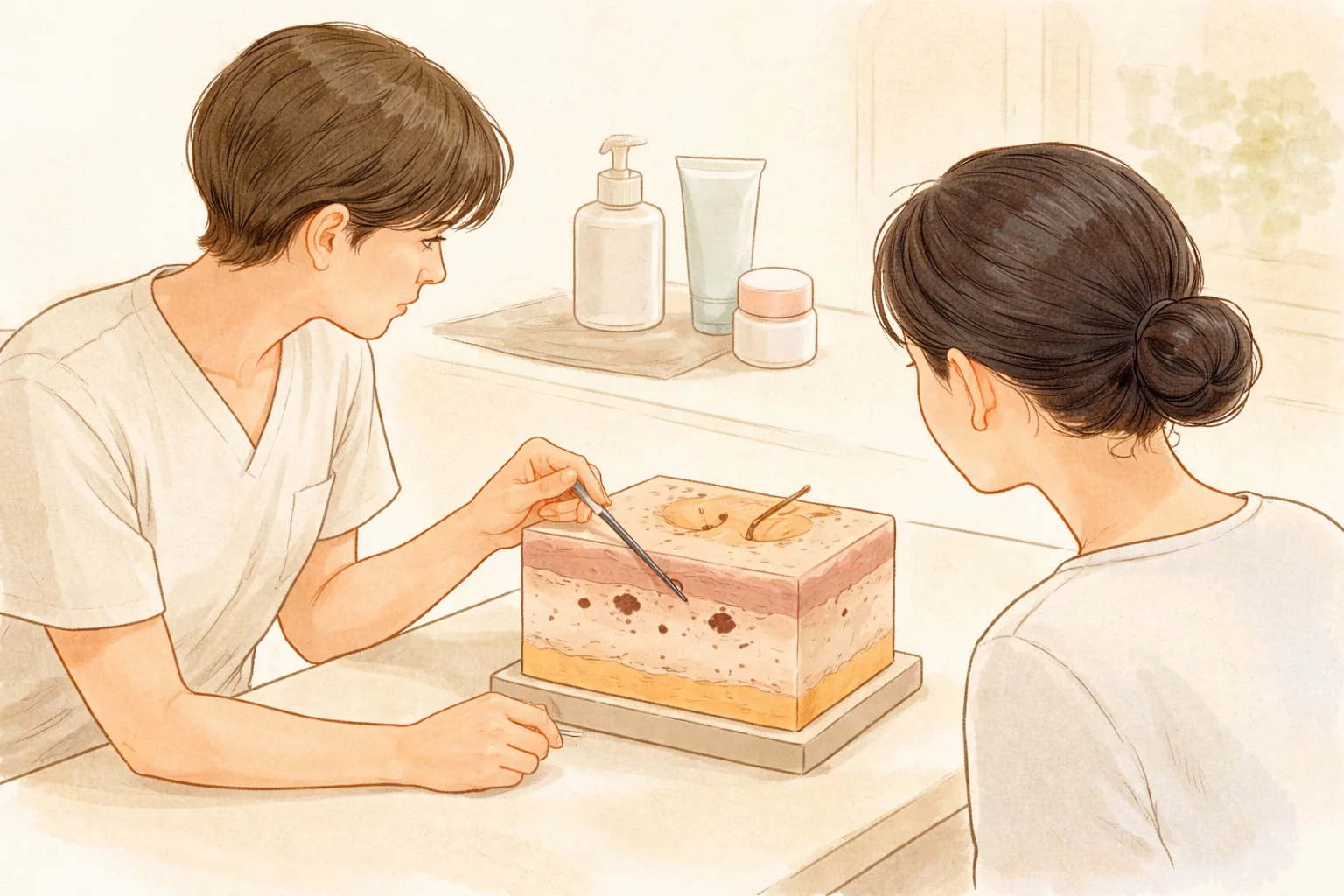
Different wavelengths also reach different depths in the skin. A wavelength that stays in the shallow layers can more easily approach spots gathered near the epidermis, while a deeper-reaching wavelength targets pigment spread into the dermis. So even pigment on the same face may call for a different laser depending on which layer it sits in. A guide to pigment types also explains that the approach and the chance of recurrence differ depending on the layer where the pigment sits.
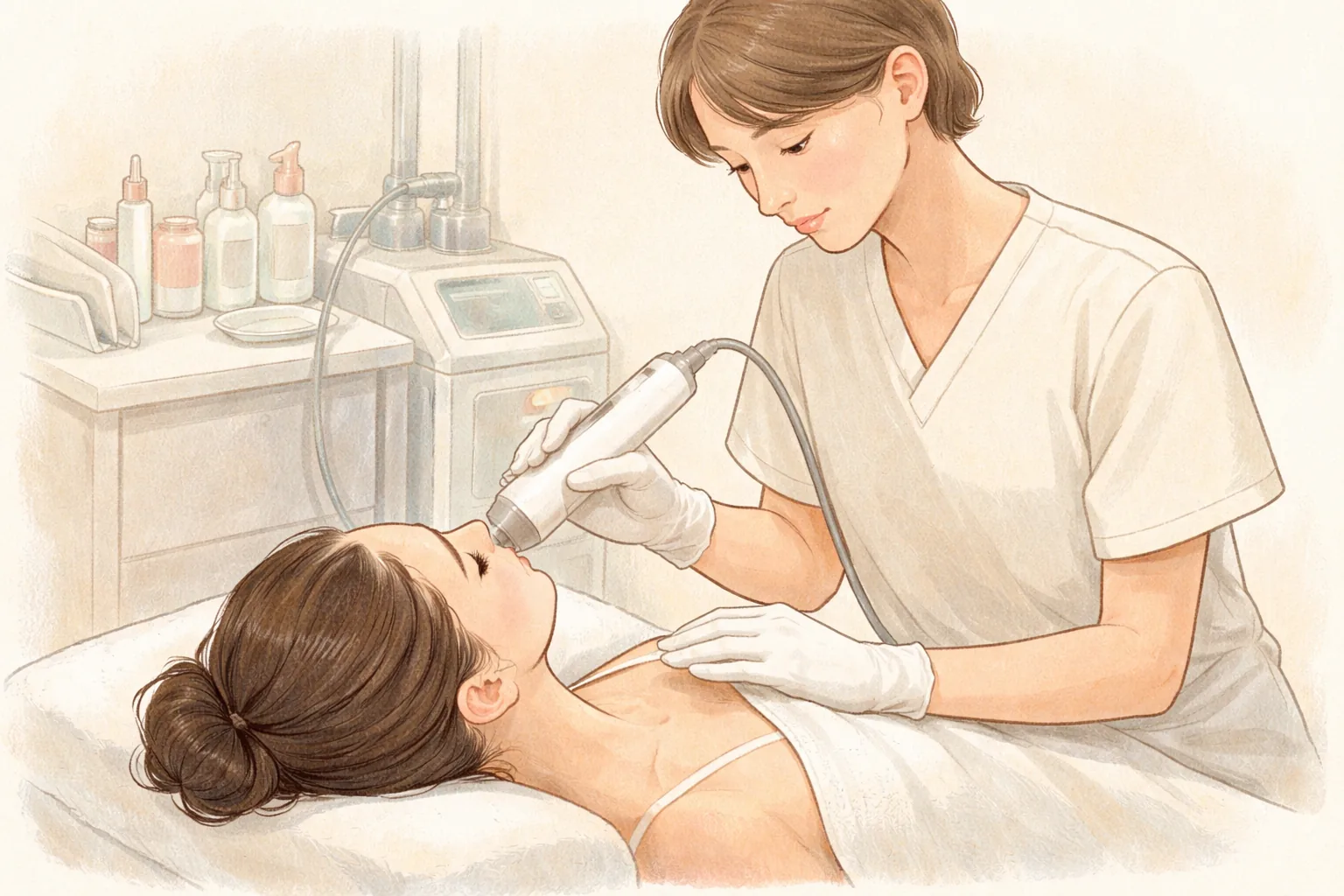
Picosecond lasers deliver this light in a very short burst. The shorter the time the light is on and off, the less chance heat has to spread to the surroundings, and the more finely the pigment particles are broken up. Finely broken pigment is gradually processed and cleared by the body, so rather than peeling off on the surface, the color tends to fade from within. A comparison of picosecond and fractional lasers covers the same principle.
So why does the phrase "it burns the skin" follow these treatments around? Lasers are heat-based treatments, so if the intensity is too high for your skin condition, or if sessions are repeated without a recovery period, they can lead to burns or hyperpigmentation. The issue is less the name "laser" and more who is treated with what intensity and how often.
Picosecond vs nanosecond: what does the difference actually produce?
The word "pico toning" sounds like the name of a new machine, but in practice it often refers to shooting a picosecond laser repeatedly at low power for pigment. Even with the same pico device, raising the energy to target individual spots in one go changes the approach and lengthens downtime. This is why the nature of a treatment is not decided by the machine name alone.
The advantage of picosecond is clear. It spreads relatively less heat to the surroundings and acts in a way that breaks pigment into finer particles. Still, it is hard to say picosecond is always superior to nanosecond. Nanosecond lasers can be more effective for certain targets, so the result depends on which concern is treated on which skin at which power. Because advertising tends to emphasize power or speed, pico can sound like a higher concept that replaces nano, but the two are tools chosen according to the target and skin condition.
Melasma calls for particular caution. In melasma, the cells that produce melanin are themselves overactive, so raising the intensity to clear it quickly can irritate the pigment cells and cause rebound hyperpigmentation that actually darkens the area. That is why melasma is approached with low energy over multiple sessions rather than one strong session, which reduces irritation. An article on the difference between melasma and dark spots also notes that strong energy can backfire.
What decides the result?
The biggest variable is how deep the pigment sits. Dark spots and freckles gathered near the epidermis with clear borders tend to respond relatively quickly to lasers. Melasma spread into the dermis, on the other hand, requires a different design of wavelength range and intensity, and managing the underlying cause has to go along with it. That is why two brown patches that look similar on the surface are hard to treat with the same settings.
Wavelength, energy, pulse duration and treatment interval also divide the results. Even at the same wavelength, how the intensity is set and how often it is repeated changes the burden on the skin. Add UV exposure or lifestyle habits, and the course can differ even when you start from the same conditions. The fact that collagen declines at different rates in different people also leads to differences in recovery and results. AAD guidance also explains that the rate of collagen decline varies from person to person.
How much irritation your skin can tolerate cannot be ignored either. If cosmetics usually feel stinging or redness lingers, then even the same treatment needs a different intensity and interval. That is why confirming the pigment type comes first before treatment.
How many sessions, at what intervals?
Lasers usually do not finish in one session. That is because the approach is not to remove all the pigment particles at once but to break them up in stages and give the body time to process them. A common example summarized in the column shows dark spots treated with the picosecond family for 1–3 sessions at 4–8 week intervals, while melasma or widespread pigment is treated with low-power toning for 8–12 or more sessions at intervals of at least 1 week. Pores and skin texture are often handled with fractional laser for 3–5 sessions at 4–6 week intervals. These numbers are only common examples and vary with the depth of the pigment and skin condition.
There is a reason for spacing sessions. Very frequent toning has been reported in connection with mottled hypopigmentation, so toning is usually spaced at least 1 week apart. An article on lasers and the skin barrier also explains that repeating treatments before recovery is complete, or using intensity too high for the skin, can weaken the barrier.
Downtime also varies widely by treatment. Low-power picosecond toning tends to settle within a few hours to the same day for redness and stinging, while raising the intensity to target dark spots leaves crusts that take about 7–10 days to fall off. Fractional laser can leave redness and a sandpaper-like texture for 3–5 days, or up to 7–14 days if the intensity is raised.
Table 1 How many sessions, at what intervals?
Treatment / device
Target
Concerns it suits
Points to note
Pico toning (PicoPlus 1064nm)
Pigment
Melasma, dark spots, dull skin tone
Repeated at low power; 8 or more sessions is a common example for melasma
Genesis toning (V-Laser Genesis 1064nm)
Pigment and shallow vessels
Pigment with redness, complexion care
For vessel concerns, the vascular laser family is the default over the picosecond family
Pico spot (Pico Spot 532nm)
Shallow epidermal pigment
Clearly bordered dark spots, freckles
Targets individual spots; crusts last 7–10 days
Erbium fractional
Skin surface structure
Pores, skin texture, shallow scars
Induces regeneration after micro-injury; downtime is longer
Swipe sideways to see the whole table.
In short even on the same face, dark spots and melasma sit at different depths, and redness is a different target altogether. So rather than deciding first whether "pico is better or nano is better," the order is to check which layer your pigment sits in. When several causes overlap, splitting the priorities rather than doing everything at once reduces the burden on the skin.
In these situations
When a wedding or photo shoot is a few weeks away
If you schedule a first-time treatment right before a wedding, redness or sensitized skin can overlap with your schedule. Working backward from the date lets you adjust the treatment type, intensity and start timing, which widens your options. If you tell us the wedding date first during consultation, we can plan around it.
When you want to manage tone steadily
Instead of one strong session, managing at intervals your skin can recover from is less of a burden. It is better to set a goal and place only the necessary treatments at the right times. Toning is set at intervals of at least 1 week.
If your skin is sensitive or reddens easily
If redness is present too, pigment and vessels have to be approached separately. Superficial vessel dilation can be reduced with vascular lasers, but redness caused by high skin reactivity itself may respond only limitedly to lasers. The plan changes depending on which cause is at play. An article covering redness and pigment together also explains that the approach changes with the cause.
For overseas visitors on a short stay
If your stay is fixed, redness or dryness right after treatment can affect your travel schedule. If you tell us your return date and next commitments in advance, we can discuss intensity and type accordingly. For plans requiring multiple sessions, it is more realistic to decide up front how far you will get within your stay.
Before your consultation, please tell us your recent UV exposure (travel, outdoor activities, tanning), the skin products you are currently using and any medications you take, treatments you have had before and how your skin responded, and any commitments you cannot avoid such as a wedding or photo shoot. Hormonal changes or unusually sensitized skin also affect the plan.
How ATTITUDE Clinic proceeds
AI skin analysis record — Your skin condition is organized into photos and records as the starting point for consultation. This tool only records and organizes your condition and does not make a medical diagnosis; the doctor judges the pigment type by examination.
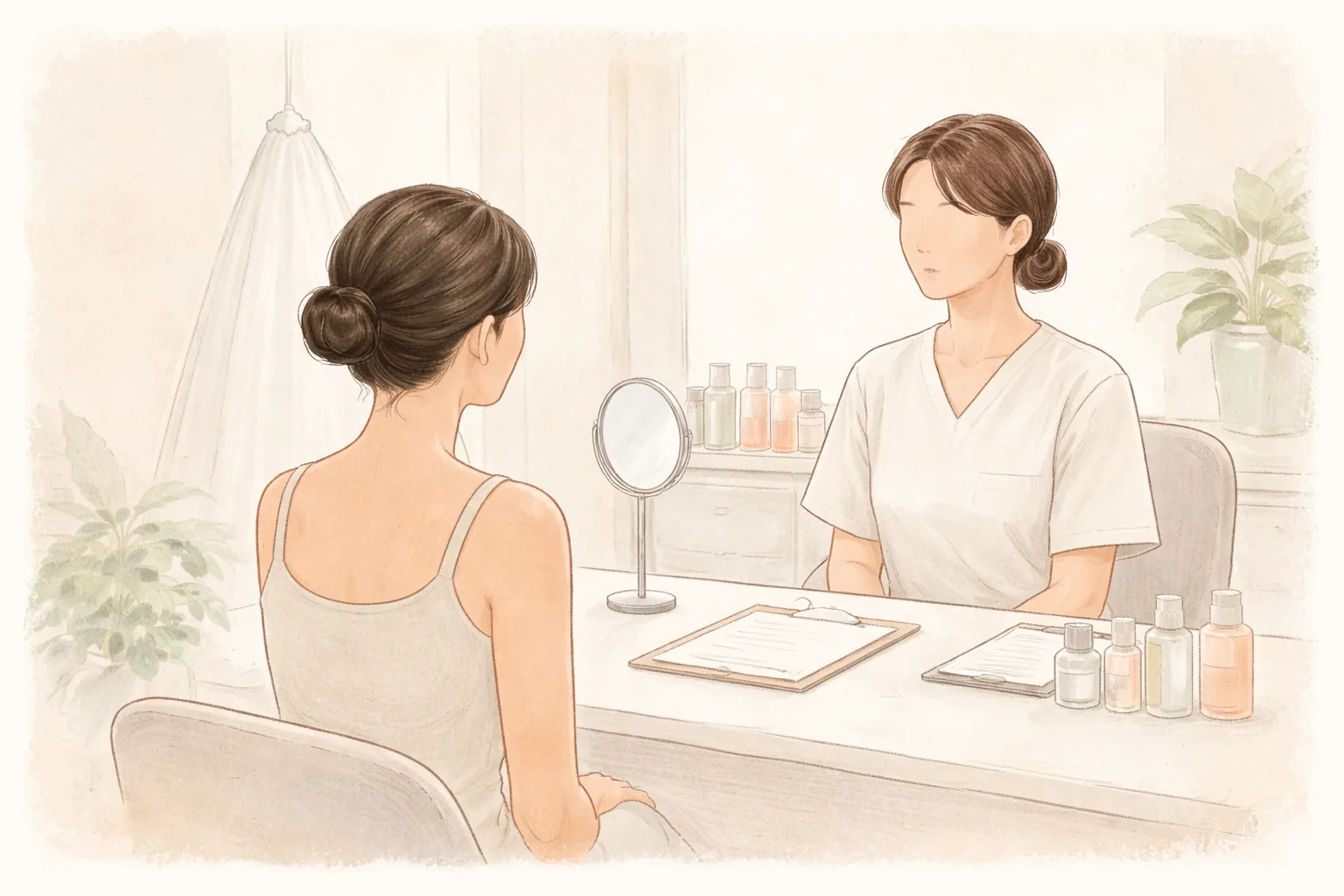
Doctor consultation and pigment type assessment — Lifestyle factors such as UV exposure and hormonal changes, along with your concerns, are added to the analysis record, and the doctor directly checks which pigment sits at which depth. On that judgment, a plan is made for which devices to use in what order.
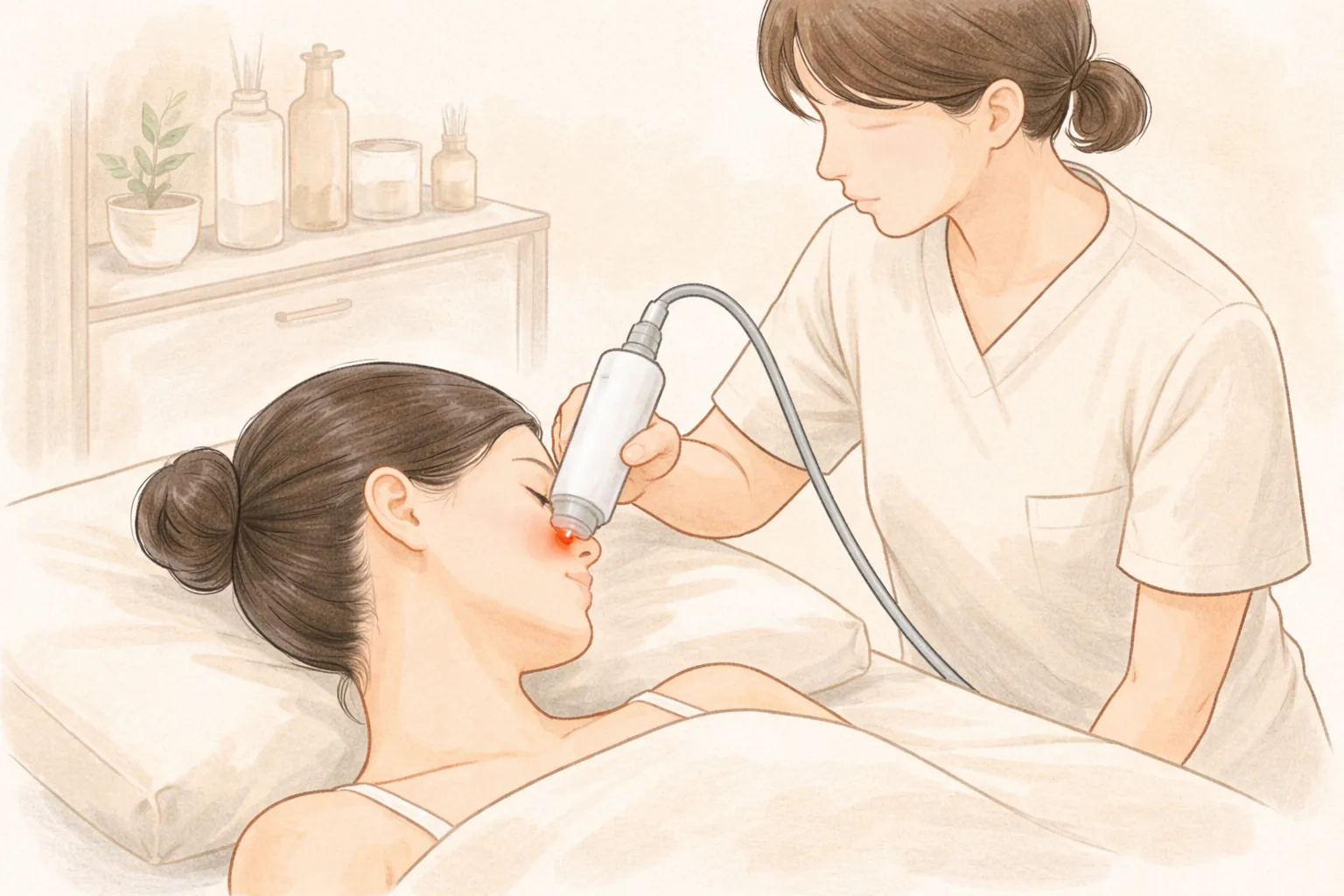
Treatment performed by the doctor — From the options listed in the ATTITUDE Clinic treatment guide — pico toning (PicoPlus, Lutronic 1064nm), Genesis toning (V-Laser Genesis 1064nm), pico spot (Pico Spot 532nm), Vbeam (532nm), and erbium fractional — the device suited to your pigment type is selected, and the doctor personally adjusts the intensity and combination.
Recovery and follow-up management — Soothing, moisturizing and UV protection are advised right after treatment, and the interval to the next session is adjusted based on your progress. Devices and products are guided based on genuine, correct quantities, and the principle is not to recommend more sessions than necessary.
Aftercare and side effects
Soothing — Right after treatment the skin temperature is elevated and redness and stinging remain. Receive cool soothing care, and that day wipe gently with lukewarm water rather than hot.
Moisturizing — Flaking or tightness is common, so apply a low-irritation moisturizer often. During recovery, it is better to avoid exfoliating products, saunas, jjimjilbang and intense exercise for 1–2 weeks.
UV protection — Right after treatment the skin's defenses are weakened, making it especially sensitive to UV. Apply SPF 50+ sunscreen for at least 2 weeks, and reapply about every 2 hours outdoors. If pigmentation develops during this period, color that had faded can come back. Aftercare guidance emphasizes the same points.
Checking progress — The interval to the next session is adjusted based on recovery speed. If redness or stinging lasts more than 3 days or suddenly worsens, contact us first rather than waiting for the next appointment.
Starting with the common reactions, redness, swelling, stinging and heat appear right after treatment and usually settle within 1–3 days. Crusts may form after higher-intensity treatments, and small crusts after spot laser usually fall off on their own in 7–10 days. Do not pick at crusts; leave them alone. The treated area may temporarily darken. Rarely, hypopigmentation, blisters or scars can occur, and pigment can reappear over time.
There are times when it is better to check in rather than wait for the next appointment. When redness or stinging lasts more than 3 days or suddenly worsens, when blisters or oozing appear, or when the skin under a crust opens or pain increases.
Frequently asked questions
Which is more effective, laser toning or pico toning?
Neither is definitively superior. The right approach depends on how deep the pigment sits, how much your skin can tolerate, and how wavelength and energy are combined. Picosecond acts with less heat damage and breaks pigment into finer particles, but nanosecond lasers can be more effective for certain targets. So rather than choosing by machine name first, the order is to confirm the pigment type and then make a plan. This is also why results differ even for the same melasma: its distribution and depth vary from person to person.
Can I have Genesis toning and pico toning together?
Pigment in Korean skin often overlaps across the epidermis and dermis, so pico toning, which targets pigment, is sometimes combined with Genesis toning, which addresses redness and complexion together. However, using two devices on the same day can increase irritation, so intensity and order are decided in consultation. If redness is prominent, separating pigment and vessels comes first. Which combination suits you is decided after checking your skin condition.
How many sessions and at what intervals?
Dark spots are commonly treated with the picosecond family for 1–3 sessions at 4–8 week intervals, while melasma or widely spread pigment is commonly treated with low-power toning for 8–12 or more sessions at intervals of at least 1 week. However, the number of sessions needed varies with pigment depth, lifestyle habits and UV exposure. If UV exposure continues and pigment deepens, the same result takes more sessions, so when you start also affects the outcome. It is safer to confirm your skin condition at the first consultation and then set the number and interval.
How much pain and recovery is involved?
Low-power picosecond toning is often felt as a sting like a rubber band lightly snapping the skin, and redness and heat tend to settle within a few hours to the same day. Raising the intensity to target dark spots leaves crusts that take about 7–10 days, and fractional laser can leave redness and a sandpaper-like texture for 3–5 days. Differences are large depending on laser type, intensity, area and individual sensitivity.
If it is my first time at a clinic, what should I check?
More important than the device list is whether they first confirm whether your concern comes from pigment or from vessels. Other points to look at are whether they recommend only the necessary treatments and do not lock you into a set number of sessions, and whether they sufficiently explain pain, recovery schedule and aftercare precautions during consultation. It also helps to check whether you can get in touch if discomfort arises after treatment. An article on what to check in a laser consultation is also useful.
At a glance
Table 2 At a glance
Item
Key point
What the two share
Toning that aims light at pigment, based on selective photothermolysis that leaves surrounding tissue less affected
Biggest difference
How long energy stays in the skin: picosecond (1 trillionth of a second) vs nanosecond
What decides results
Pigment depth and type, wavelength and energy, treatment interval, UV exposure
Common session examples
Dark spots 1–3 sessions (4–8 weeks), melasma low-power toning 8–12 or more sessions (at least 1 week apart)
Common downtime
Low-power toning a few hours to same day, spot removal crusts 7–10 days
Aftercare essentials
Do not pick crusts, SPF 50+ sunscreen for at least 2 weeks
This article offers general health information. It is not a substitute for diagnosis or treatment based on your own condition, so please talk through your situation with a doctor.