Pores and Skin Texture: Can You Really Choose a Treatment From Photos Alone?
Pore and skin texture treatments can't be chosen from photos alone. Learn how doctors separate oil, laxity, and scar causes, which device family targets what, typical session counts, downtime, and what to confirm in a consultation at a Gangnam, Seoul clinic.
Written by ATTITUDE Clinic Editorial Team
Many people take several photos of their pores and skin texture and wonder whether showing just those photos is enough to decide on a treatment. But the same skin looks completely different depending on lighting, angle, and editing, and the approach changes depending on whether oil is the cause or loss of firmness is the cause. This article walks through how causes are separated, what treatments can realistically do, and what to confirm at a consultation, step by step.
The bottom line first
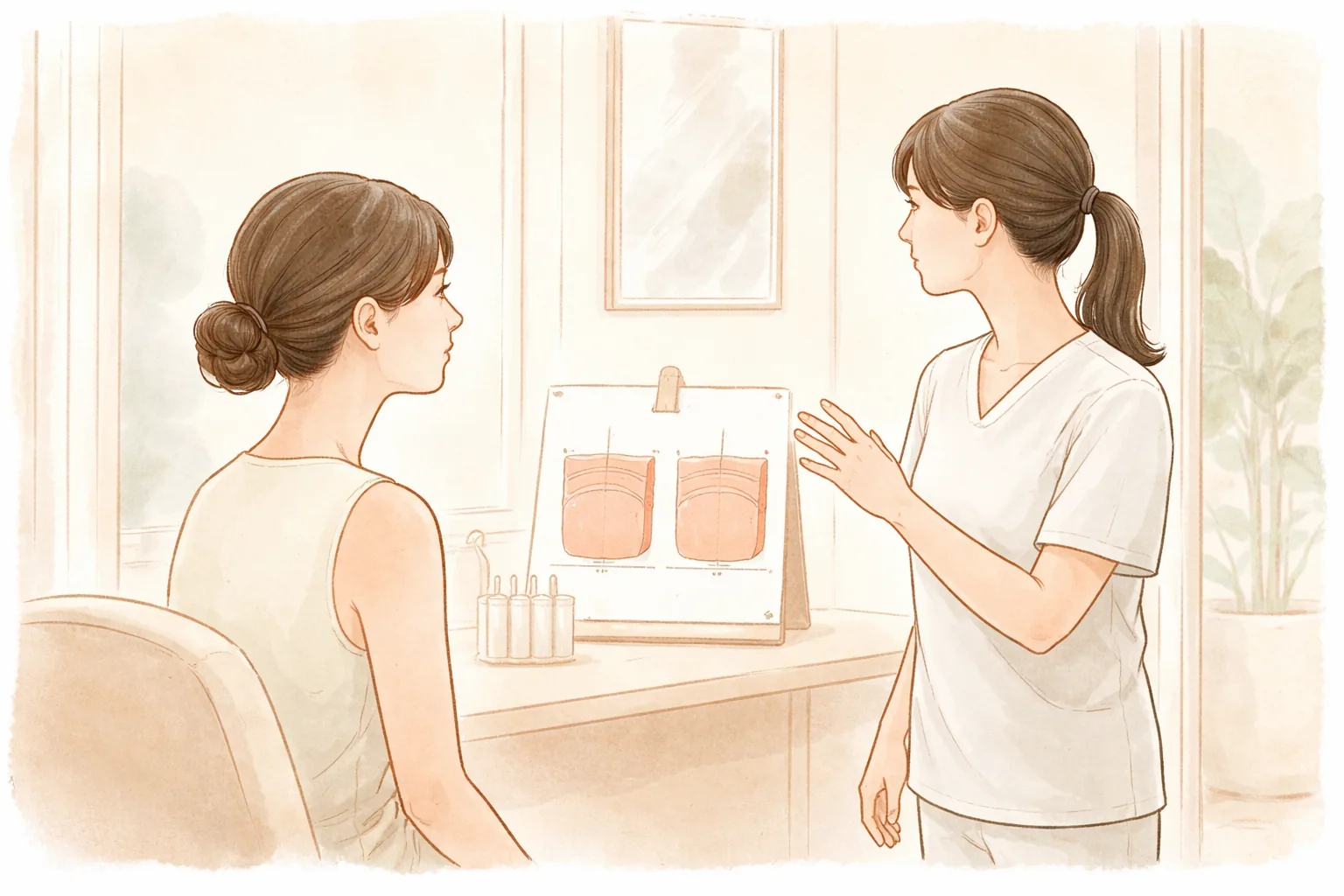
Photos are useful for preparing for a consultation, but they're not enough to decide on a treatment. The reasons pores look prominent break down into excess oil, loss of firmness, and pore-wall damage from repeated inflammation, and because these three can overlap in the same area, a single still image can't separate them. Pores themselves are a structure your skin already has, so eliminating them can't be the goal; the goal is to make them look less noticeable. That's why treatment direction is set during an in-person evaluation, not from photos, and the right order is to confirm indications, risks, alternatives, the number of sessions needed, downtime, and cost together at the consultation.
Why do pores and skin texture become more noticeable?
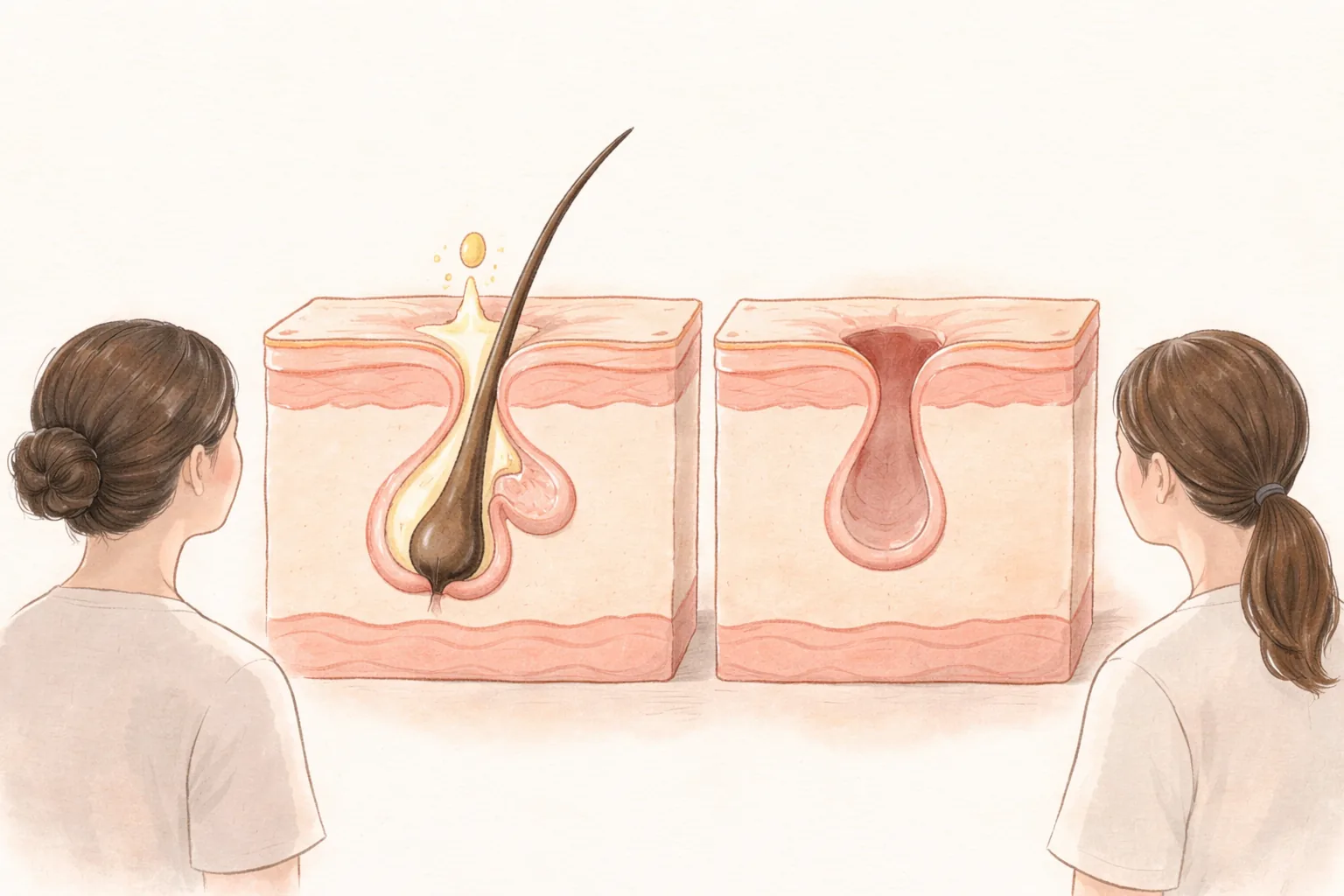
A pore is the passage through which hair and sebum travel out of the skin. Sebum produced in the sebaceous gland passes through this passage to the surface and forms a thin protective film over the skin, so pores aren't a problem to be eliminated but a structure that's meant to be there. As explained in the ATTITUDE Clinic column, pores themselves are a normal structure, and the issue is the state in which they appear noticeably enlarged.
The reasons they look enlarged fall into three main groups. When sebum secretion increases, the opening physically stretches to push that sebum out. As collagen and firmness decrease with age, the skin around the pore sags and creates shadows, making the opening look larger. When the dermis is repeatedly injured by acne or forceful extractions, the pore wall remains irregular even after healing.
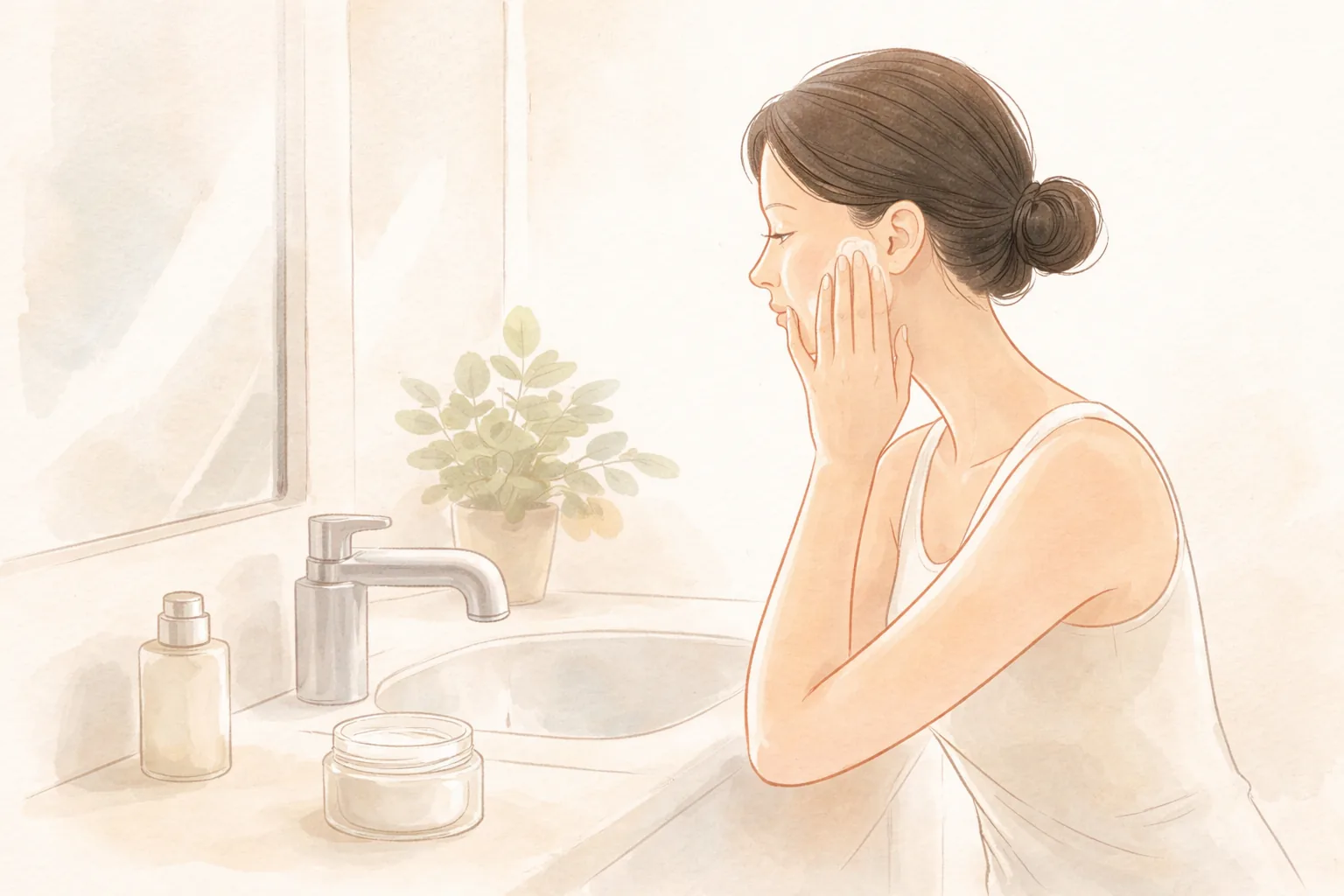
There's one common misunderstanding here. The expectation is that applying a pore-minimizing cream will return pores to their original size, but cosmetics can help up to the point of managing sebum and dead skin cells to make pores look temporarily less noticeable, yet they can't reverse an already stretched pore wall or sagging tissue. So why does skin look briefly better after applying such products? Because as surface oil and dead skin cells are cleared, the way light reflects changes. The structure itself hasn't changed.
What decides the result is the type and degree of the cause, skin thickness, collagen status, and sun exposure habits. Even with the same treatment, different conditions produce a different visible degree of change.
How are oil, scars, and firmness separated?
During an evaluation, shape and location are looked at together. Round pores spreading widely across the nose and T-zone are often primarily an oil secretion issue, while pores that stretch vertically on the cheeks often have loss of collagen and firmness in the background. Where the pore wall is irregular in an area with a history of acne or extractions, it's viewed as a state with an added scar component. Sometimes innate skin thickness and pore density are the cause, making pores noticeable regardless of age, and a combined type where two or more of these overlap is common.
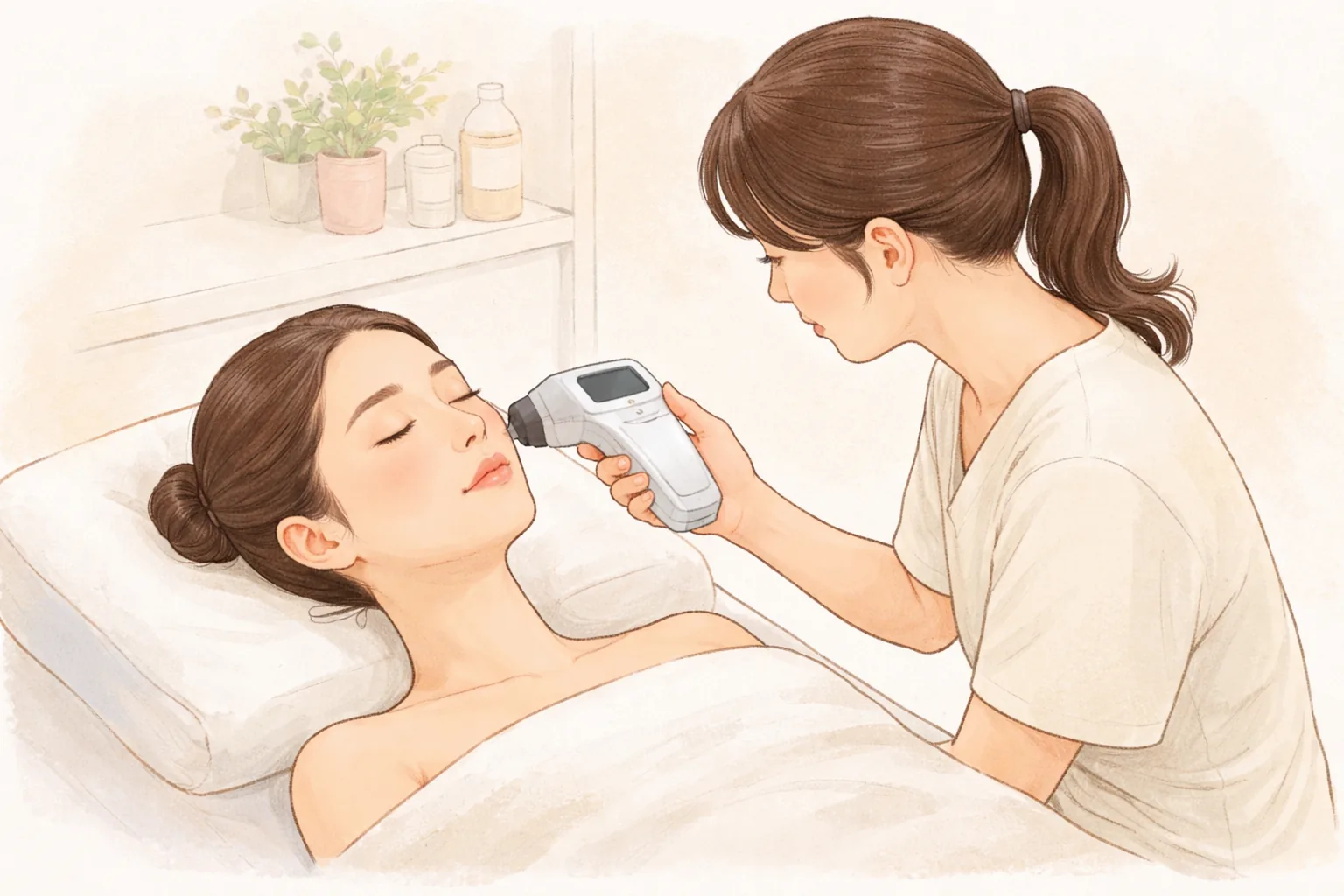
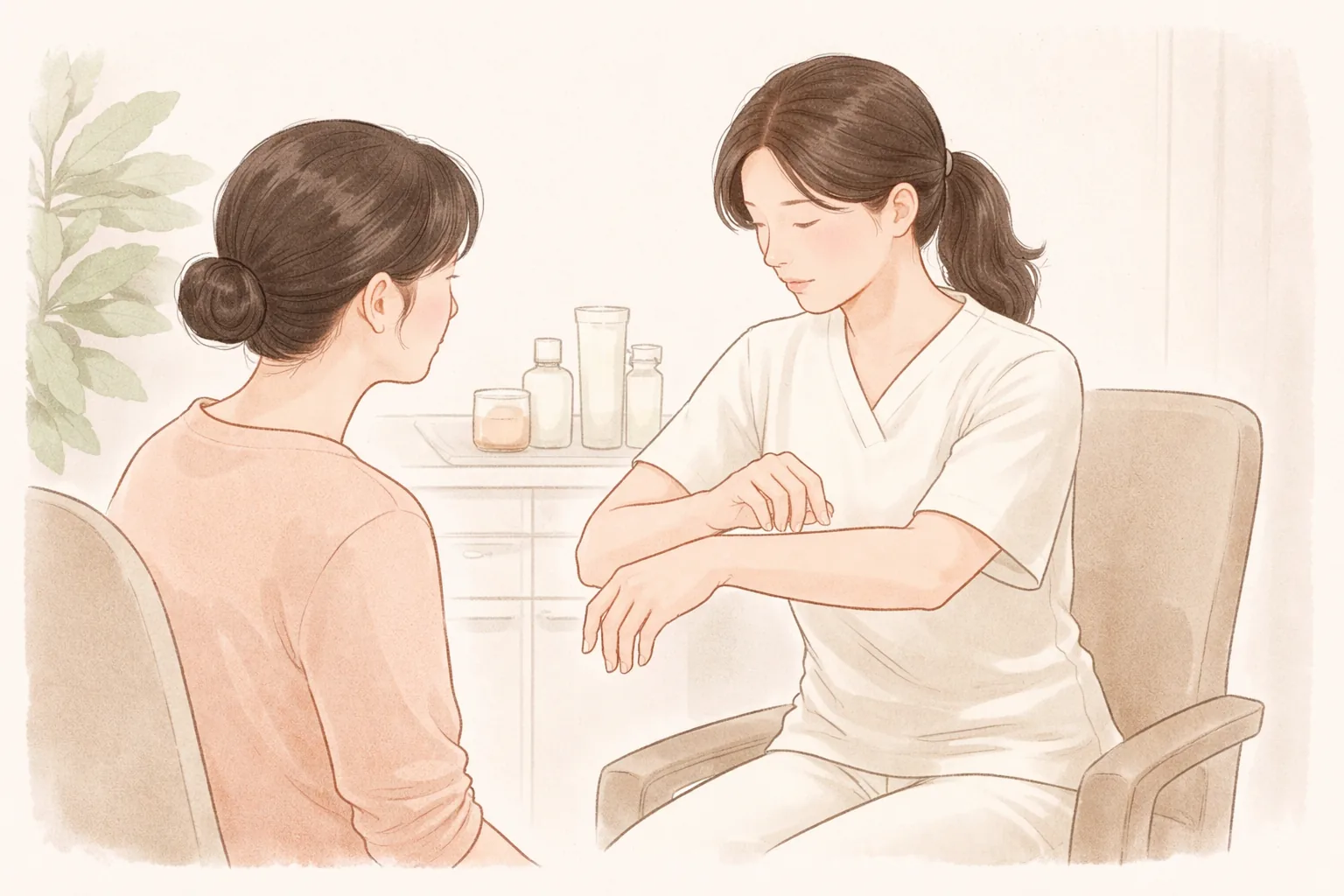
What matters is that it's hard to determine the cause from the shape seen in a mirror alone. Even in the same T-zone, the management direction differs depending on whether it's the oil type or the genetic type. That's why at a consultation, the skin is examined directly rather than from photos, and sebum secretion, firmness, and the degree of pore-wall damage are checked separately.
Acne scars split even more clearly by type. According to American Academy of Dermatology materials, deep, narrow pitted scars like icepick scars and wide, undulating scars like rolling scars are not treated the same way, and a plan is made considering the type and number of scars, age, skin tone, and budget. AAD acne scar treatment
Another fork in the road is timing. If acne is still breaking out, controlling the acne comes before scar treatment, and the usual flow is to start scar treatment after inflammation has calmed. That's because starting with aggressive treatments while acne is active can let inflammation create new scars.
Which treatment targets what?
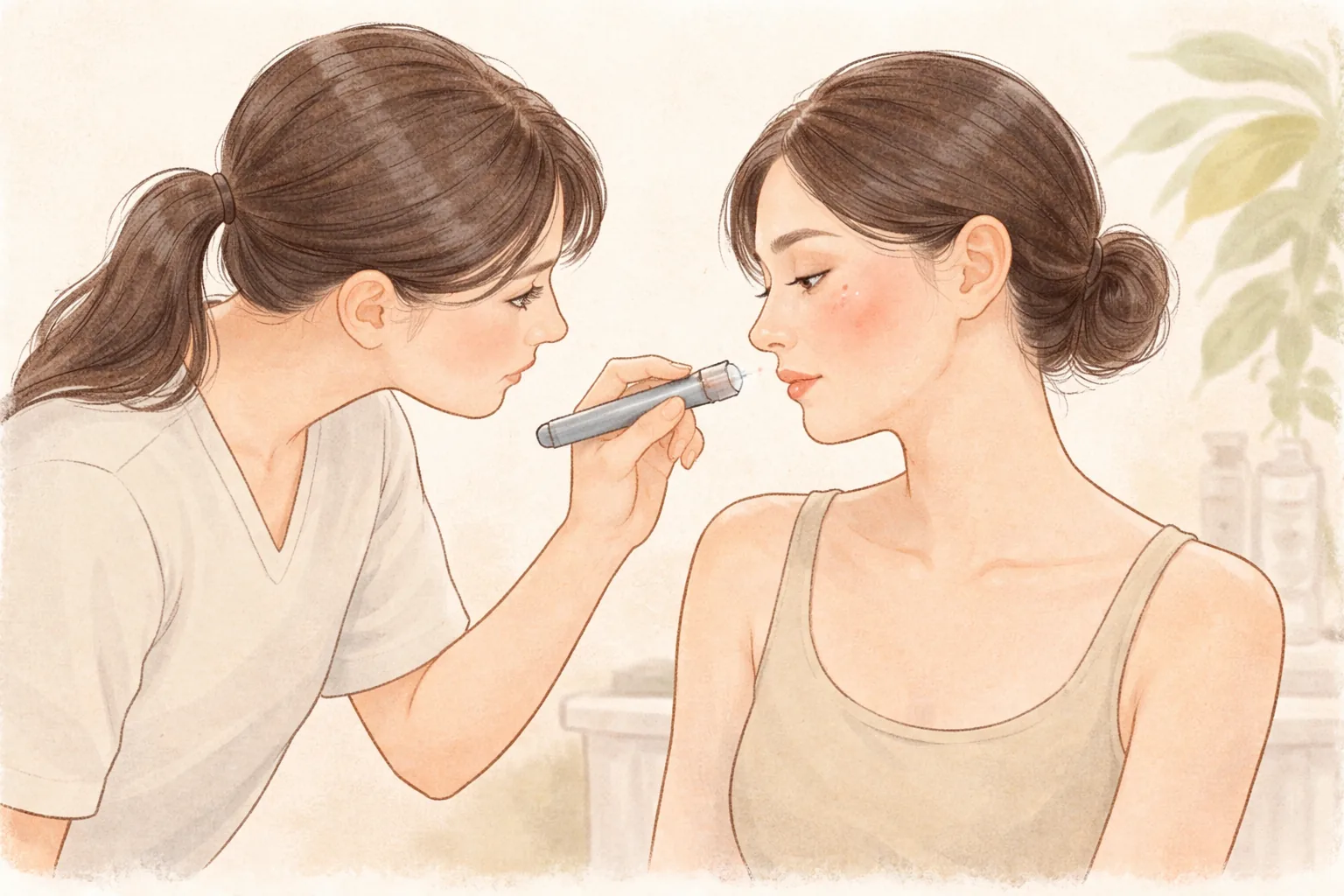
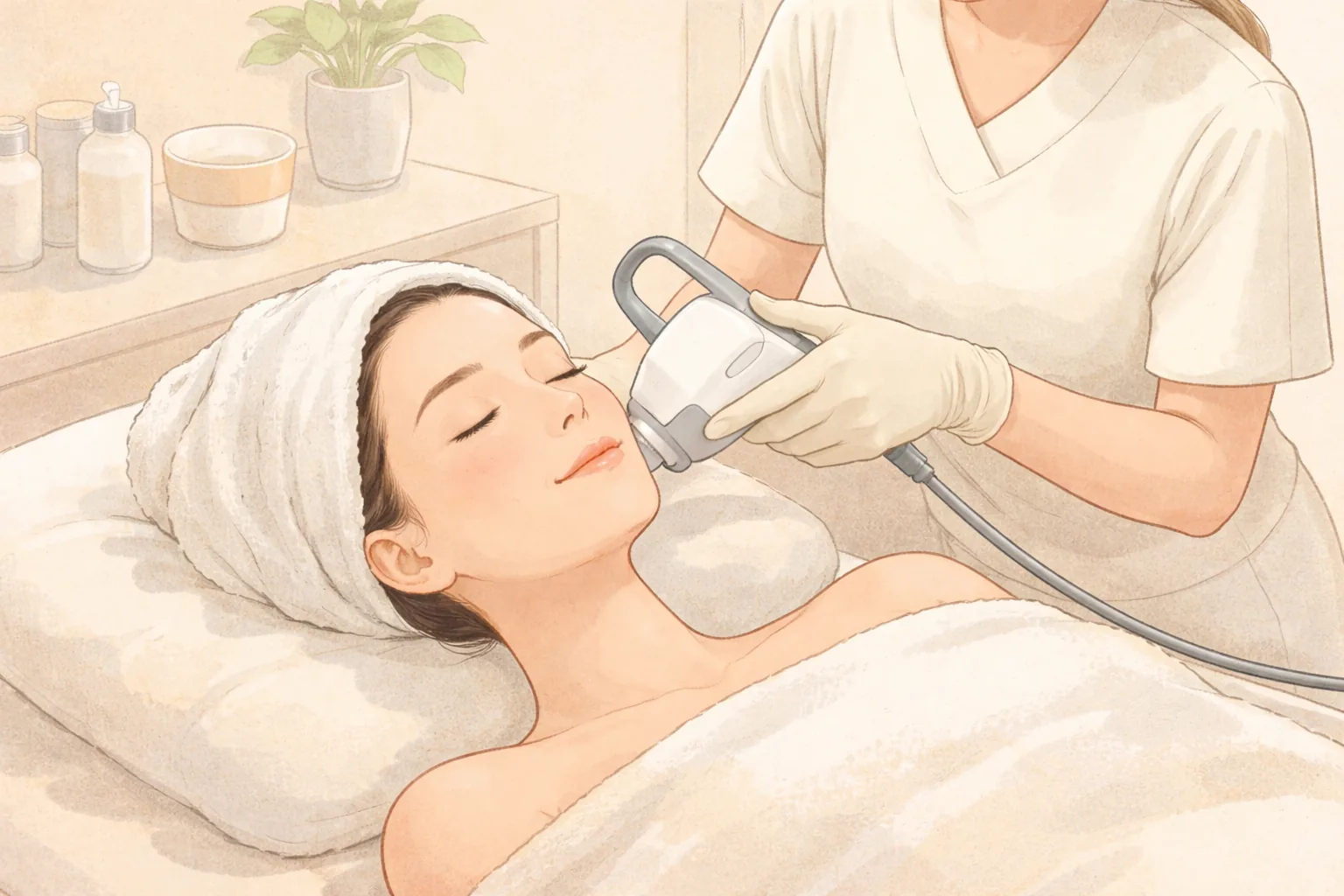
What a treatment targets matters more than its name. The family that selectively breaks down pigment, the family that induces regeneration through micro-injury, the family that delivers radiofrequency to the dermis, and the family that targets blood vessels each address different problems. As explained in the ATTITUDE Clinic column, a picosecond laser (a laser that fires light in pulses as short as one trillionth of a second to selectively break down pigment) selectively breaks down pigment cells, while a fractional laser (a laser that creates micro-injury only in very fine column-shaped zones rather than the entire skin surface) uses that stimulation to induce regeneration.
Table 1 Which treatment targets what?
Category
What it targets
Concerns it suits
Common post-treatment reactions
Picosecond family (Pico toning, etc.)
Selectively breaks down melanin pigment
Spots, hyperpigmentation, skin tone
Low power: redness from a few hours to the same day; high power: scabs for about 7–10 days
Fractional laser (erbium fractional, etc.)
Induces collagen regeneration through micro-injury
Pores, skin texture, acne scars
Redness and sandpaper-like texture for 3–5 days; 7–14 days at higher power
RF microneedling (Potenza)
Delivers radiofrequency heat to the dermis via fine needles
Pores, scars, skin texture
Redness, swelling, and thin scabs at the treated area for a few days
Vascular laser family (Vbeam, etc.)
Uses wavelengths absorbed by oxygen-carrying hemoglobin
Facial redness, red vessels
Redness and swelling for a few days; bruising for 1–2 weeks if it occurs
Swipe sideways to see the whole table.
The durations in the table are common examples and vary with pigment depth, skin type, and sun exposure habits.
In summary, pores and skin texture aren't a problem that one device can finish off. First separate whether the oil axis, the firmness axis, or the scar axis is central, then choose the matching family — that order decides the result.
How many sessions, at what intervals, and what about downtime?
Session counts are set differently depending on the concern. Looking at the ranges the ATTITUDE Clinic column gives as common examples, pores and skin texture are seen as 3–5 sessions of fractional laser at 4–6 week intervals, and acne scars as 4–6 sessions at higher power at 4–8 week intervals. Spots are commonly 1–3 sessions at 4–8 week intervals, and broad, deep pigment like melasma is split into 8–12 or more sessions of low-power toning at intervals of at least 1 week. These numbers are common examples, and the actual number of sessions and intervals are set after examining your skin condition.
Because it takes time for new collagen to be made and settle into place, changes are observed between sessions rather than judging right after a single treatment. If intervals are pushed too short, stimulation overlaps before recovery is complete and the risk of hyperpigmentation rises; if spaced too far apart, the response doesn't carry over.
Downtime varies widely with the family used and the power. Low-power toning is at the level where makeup is possible the same day, while high-power treatments that form scabs can make going out uncomfortable for about 7–14 days. If you have an important date, tell the clinic that date first, and it's better not to place treatments with long downtime right around it. For cost, items are divided by treatment and product, area, and volume, and amounts are quoted VAT excluded, so confirm the total and what's included or excluded at the consultation. Treatments and pricing
What should you confirm at a consultation?
The American Academy of Dermatology advises that when preparing for a cosmetic procedure, a consultation is needed in which you're given information about indications, risks, benefits, and alternatives. It also recommends asking your doctor how long they've been performing the procedure, how many patients with skin tones and ages similar to yours they've treated, what results you can realistically expect, what the risks are, the time required and the number of sessions needed to reach the goal, whether anesthesia is used, the typical recovery period, and the cost. AAD consultation guidance
Translated to our clinic's standards, there's more to confirm. The criteria for judging are whether the consultation explains the causes by separating them first, whether it tells you which treatments you don't currently need, and how far it goes in explaining side effects and downtime. If you look at before-and-after photos, also check whether the cases have skin tones and types similar to yours.
Cost is hard to compare by treatment name alone. Even with the same name, it varies with area, volume, and combination, so it's more accurate to ask at the consultation which combination is planned for how many sessions and confirm the total.
If this sounds like your situation
When a ceremony or photo shoot is a few weeks away
Treatments that form scabs or cause long-lasting redness shouldn't be placed right before the date. Divide them into low-power toning or calming care with short downtime, and it's safer to push structural treatments to after the date. Plan with at least 2 weeks of buffer.
When you want ongoing management
Sebum secretion and aging continue, so it doesn't end with one treatment. Keep 4–6 week intervals as the baseline, continue the sessions, and maintain sun protection and exfoliation care in daily life.
When your skin is sensitive or flushes easily
Skin with redness can react differently to lasers, so first check whether the cause of redness is superficial vessel dilation or skin reactivity. During highly reactive periods, lower the power or start with calming care first.
When you're a visitor on a short stay
Treatments with long downtime may not fit your travel schedule. If you tell the clinic your length of stay and return date first, you can decide together what's possible within that time and what to continue on your next visit.
Tell the clinic before your consultation Strong sun exposure and travel plans within the last 2 weeks, pregnancy and breastfeeding status, medications you're taking (acne treatments, anticoagulants, etc.), acne medications and retinol or acid skincare used in the last 2 years, any experience of hyperpigmentation or scarring after past procedures, and dates you absolutely must keep, such as a wedding or photo shoot — sharing these makes the plan far more accurate.
How ATTITUDE Clinic handles this
AI skin analysis record — Your pores and skin condition are photographed and kept as a record. This record is a tool that organizes information to support the consultation, and is not a medical diagnosis.
Director consultation to interpret causes — Skin condition, lifestyle habits, medications, and schedule are added to the analysis record to judge whether oil, firmness, or scars are central, and to set the management direction.
Treatment performed directly by the director — The treatment matching your type and cause is performed directly by the director. Our principle is not to recommend more sessions or higher intensity than needed.
Recovery and aftercare guidance — We explain the immediate post-treatment reaction, aftercare methods, and the timing of the next session, and record your progress.
Treatments combine the picosecond family (Pico toning and others for pigment purposes), fractional laser (erbium fractional), RF microneedling (Potenza), vascular laser (Vbeam), Genesis toning, and others to match your concern. Which combination is right is decided during the evaluation. Treatments and pricing
Aftercare and side effects
Calming — Heat sensation and redness may remain on the day of treatment, so avoid saunas, jjimjilbangs, and intense exercise for 1–2 weeks.
Moisturizing — Dryness tends to develop, so apply moisturizing cream frequently.
Sun protection — During recovery the skin's barrier is weakened, making hyperpigmentation more likely. Apply SPF 50+ sunscreen for at least 2 weeks and reapply every 2 hours outdoors.
Checking progress — Don't peel scabs off with your hands; let them fall off on their own, and contact the clinic if redness or stinging lasts more than 3 days or suddenly worsens.
Common reactions are redness, swelling, dot-like marks, dryness, and thin scabs, and they usually subside within a few days to 1 week. Temporary hyperpigmentation or breakouts can occur, and rarely burns, infection, or scarring can occur. Injections such as skin boosters commonly cause bruising and swelling, and rarely nodules, infection, or allergic reactions. Before treatment, the director explains the side effects of the recommended procedure. ATTITUDE Clinic column
Situations where you should contact the clinic without waiting are when redness and stinging last more than 3 days or worsen, when blisters or oozing develop, when the treated area keeps swelling and you feel feverish, or when a new mark appears where a scab was removed.
Frequently asked questions
Do pores disappear completely with treatment?
No. Pores are a normal structure through which sebum and hair emerge, so eliminating them can't be the goal. The purpose of treatment is to regulate sebum secretion and help collagen regenerate so pores look less noticeable. That's why setting expectations as "managing them to be less visible" rather than "removing them" reduces the gap with actual results. The number and baseline size of pores have a large genetic component, and there are limits there.
How many pore treatments do I need?
It depends on the concern. For pores and skin texture, 3–5 sessions at 4–6 week intervals, and for acne scars, 4–6 sessions at higher power at 4–8 week intervals, are common examples. Broad pigment like melasma is split into 8–12 or more sessions of low-power toning. Because intervals and session counts are adjusted after seeing the response to the first session, we check progress at each session rather than fixing the total number from the start.
Can I get scar treatment while acne is still breaking out?
If acne is active, controlling the acne often comes first. Because repeated inflammation can create new scars in treated areas, the usual flow is to calm the inflammation and maintain acne treatment before starting scar treatment. Acne medications used in the last 2 years must be disclosed at the consultation. Undergoing certain scar treatments while on some medications, or right after stopping them, can cause unwanted reactions.
Can cosmetics alone change skin texture?
They help with managing sebum and dead skin cells. Cleansing, exfoliation care, and ingredients like retinol support turnover, and pore-minimizing products create a temporary tightening effect. However, an already stretched pore wall or pores sagging from lost firmness are hard to change noticeably with cosmetics alone. If you're pregnant, consult a doctor before using retinol products.
What should I look at when choosing a clinic?
It's hard to choose by treatment name or price alone. You can check whether the consultation explains the causes by separating them first, whether it tells you which treatments you don't currently need, whether it explains side effects and downtime in specific terms, and whether it records the same area to compare changes. It's also worth asking how long the doctor has performed this procedure and how many patients with skin tones and ages similar to yours they've treated. A booking request and a confirmed appointment are different, and the booking is confirmed after you receive the clinic's confirmation contact. Consultation booking
At a glance
Table 2 At a glance
Item
Key point
Role of photos
Preparation material for consultation. Not enough as a basis for deciding treatment
Causes of enlargement
Excess oil, loss of firmness, pore-wall damage from repeated inflammation
Type separation
Oil type, sagging type, scar type, genetic type, and combined types where these overlap are common
Treatment selection
The family is decided by whether it targets pigment, structure, oil, or vessels
Sessions and intervals
Differ by concern. Common examples are 3–5 sessions at 4–6 weeks
Key aftercare
Don't peel scabs, protect from UV for 2 weeks, and avoid heat stimulation
This article offers general health information. It is not a substitute for diagnosis or treatment based on your own condition, so please talk through your situation with a doctor.