Potenza Types Explained: How to Choose the Right Tip and Settings
N-tip and pumping-tip builds, exosome add-ons and what shapes Potenza microneedling results. Here's how tips differ, what to check before and after, and how schedules are set.
Written by ATTITUDE Clinic Editorial Team
If you've been researching enlarged pores and acne scars, you've probably noticed that every clinic describes “Potenza” a little differently. What separates an N-tip from a pumping tip, and how should you decide which one you need? This article walks through what Potenza actually does in the skin, how the tips differ, what determines your results, and what to watch before and after treatment.
The short answer first
Potenza is an RF microneedling device that delivers radiofrequency energy into the dermis — the layer beneath the surface where collagen and firmness are built — through very fine needles. Tips divide into builds centered on RF delivery and builds that add a topical ingredient program (ATTITUDE Clinic treatments and pricing). So the order isn't “which tip is better” but “is my concern pores and scars, or skin texture and condition?” Even with the same device, needle depth, energy, treatment area and the interval until your next session all shape the outcome, and how soon you notice a change depends on your skin type and its renewal speed. Tip protocols vary by clinic, so it's safer to confirm in consultation which tip is used and to what depth and intensity.
What does Potenza actually do inside the skin?
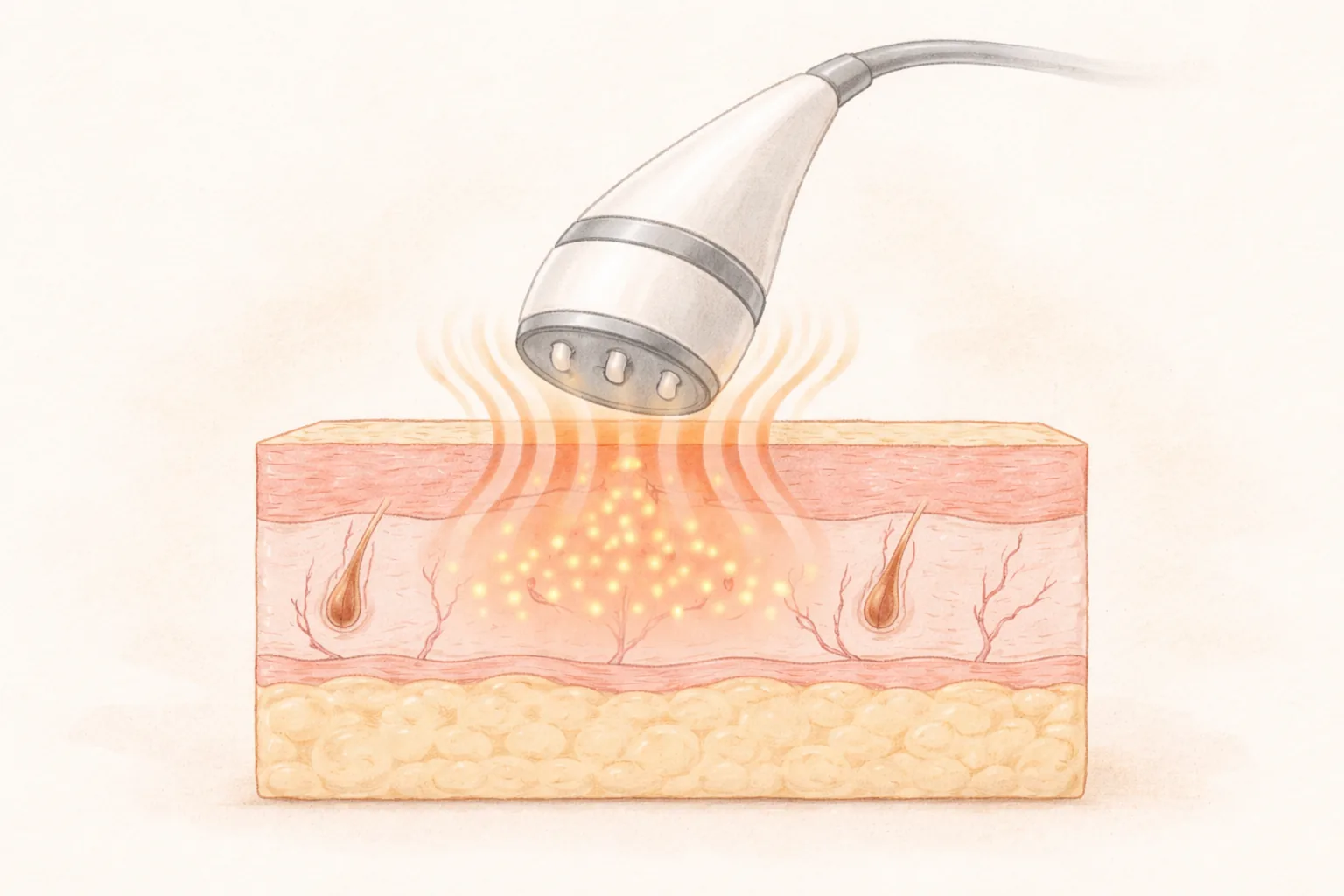
The backbone of Potenza is microneedling — creating tiny channels in the skin with very fine needles. Radiofrequency (RF, energy that uses electrical current to heat tissue) is layered on top, generating heat at the depth the needles reach. Rather than stripping the surface, it creates heat stimulation inside the skin to prompt a collagen renewal response, and that's as far as the treatment goes: stimulating renewal.
According to the American Academy of Dermatology, RF microneedling is described as microneedling plus heat and can be used across skin tones (AAD). The same page notes that more research is needed on whether people with a range of skin tones and larger groups see the same results, and points out that collagen loss rates differ from person to person. In other words, your own skin ultimately decides how large and how fast the response is.
So why does it have the reputation of being a painful, red treatment? Because needles pass through the skin and heat is applied at the same time, redness and warmth are a natural part of the process. After Potenza, redness, swelling, pinpoint marks, dryness and thin crusting are common and usually settle within a few days to 1 week (ATTITUDE Clinic column). Whether those reactions stay within that range — or whether you repeat treatment before recovery is done — is what separates comfortable from overloaded skin.
How do N-tips and pumping tips differ?
ATTITUDE Clinic's treatments and pricing page lists Potenza under N-tip, pumping tip (standalone) and pumping tip (with exosomes). The N-tip delivers RF directly into the dermis with fine needles to help improve pores and scars, while the pumping tip adds a topical ingredient program. Whether a program includes an add-on ingredient such as exosomes, or is done standalone, changes the program described and the price (VAT excluded).
“So isn't the more expensive tip the better one?” is a question I hear often. Tips aren't tiers — they're different purposes. If pores and scars are your main concern, a build centered on RF delivery is reviewed first; if you also want to manage texture and condition, a build with an add-on ingredient program becomes an option. An add-on ingredient can't be assumed to deliver the same result for every skin type just because of its name, so it's worth asking in consultation which ingredient is used and why.
One more thing: choosing a tip isn't the end of it. Even with the same tip, needle depth, energy level and treatment area change how much stimulation your skin receives. So in consultation, asking “which depth and which intensity” alongside “which tip” helps you judge.
Table 1 How do N-tips and pumping tips differ?
Category
Build
Mainly targets
Suited to
Potenza N-tip
Fine needles + RF
Delivers RF directly into the dermis to help improve pores and scars
When pores and acne scars are the main concern
Potenza pumping tip (standalone)
Fine needles + RF
Focused on RF delivery
When you want to manage texture and condition too
Potenza pumping tip (with exosomes)
Pumping tip + add-on ingredient program
RF delivery plus an ingredient program
When recovery and condition management are also considered
Erbium fractional
Micro-peeling (thinly resurfacing the surface)
Refining surface texture, improving around flakes and pores
When rough texture or shallow scar texture is also a concern
Swipe sideways to see the whole table.
In short even with the same Potenza, the target shifts depending on the tip and the add-on build. The order isn't picking a tip — it's identifying the cause of your concern first, then matching depth, intensity and interval.
Why do results differ with the same Potenza?
Three things overlap. First, everyone starts from a different skin state. Skin thickness, collagen-building capacity and renewal speed differ from person to person, and AAD material also explains that collagen loss rates vary by individual. Second, the same analysis should still lead to different plans. What to do first and which combination to pursue depends on your concerns and how much recovery time you have (ATTITUDE Clinic column). Third, interval matters. Repeating treatment before recovery finishes, or using intensity beyond what your skin can handle, can burden the skin barrier and leave redness lasting longer (ATTITUDE Clinic column).
That's why adjusting the interval by watching recovery matters more than a number of “how many sessions it takes.” Your next appointment is set based on how quickly redness settles, how much flaking appears and how long your skin stays sensitive. If you have records of previous treatments, reviewing the device, dosage and how your skin responded helps build the next plan.
Pores and scars: which concern comes first?
Pores are a structure your skin already has, and looking enlarged isn't caused by just one thing. There's the oil type, where excess sebum stretches the opening; the sagging type, where lost firmness pulls it downward; and the scar type, where acne and extraction damage the pore wall — and these often overlap (ATTITUDE Clinic column). Treatments that stimulate collagen renewal, like Potenza, tend to be considered for the sagging and scar types, while oil control is also needed when sebum is the main cause.
Setting expectations accurately here is what separates satisfaction from disappointment. Erasing pores completely is difficult; the goal is making them less noticeable. Cosmetics help with sebum and flake management but have limits for pores that are already stretched or enlarged by lost firmness. Scars differ too: whether a mark is red or brown discoloration or a depressed scar changes the approach, so even scars with the same name need their state checked first.
If this sounds like your situation
A ceremony or shoot is coming up
A first treatment right before a ceremony can mean redness or sensitivity overlapping your event. Starting with more buffer before the date widens your options for adjusting intensity and interval. Tell the clinic your schedule at consultation and the plan can be built around it.
You want ongoing management
Managing with recovery intervals kept intact puts less strain on the skin than going hard in one session. A plan that sets a goal and places only the needed treatments at the right times matters. If hitting a session count becomes the goal itself, your skin can't keep up.
Your skin is sensitive or flushes easily
Starting at lower energy and needle depth and adjusting based on response is one approach. Telling the clinic about recent UV exposure, medications you take or apply, and past experiences of sensitivity after treatment lets them factor it into the settings.
You're a visitor on a short stay
If your stay is fixed, redness and dryness right after treatment can affect your plans. Sharing your return date and next commitments in advance lets the clinic advise on intensity and type accordingly. It's also worth checking whether recovery care can be completed locally.
Please tell us before consultation
Let us know whether you've had a lot of recent UV exposure, which medications or topicals you use (including retinols and exfoliating ingredients), whether your skin has been sensitive after past treatments, and whether you have a fixed date such as a ceremony or shoot. The same treatment shifts in timing and settings based on this information.
How ATTITUDE Clinic runs it
AI skin analysis record — Current skin state such as pores, redness, texture and pigmentation is recorded with an analysis tool. The tool only records and organizes information and is not a medical diagnosis; the doctor uses the record to judge the cause of your concern.
Doctor consultation — Your schedule, pain sensitivity and treatment history are added to the analysis record to decide together which tip, at what depth and intensity, and in what order. What's needed and what isn't gets sorted out here.
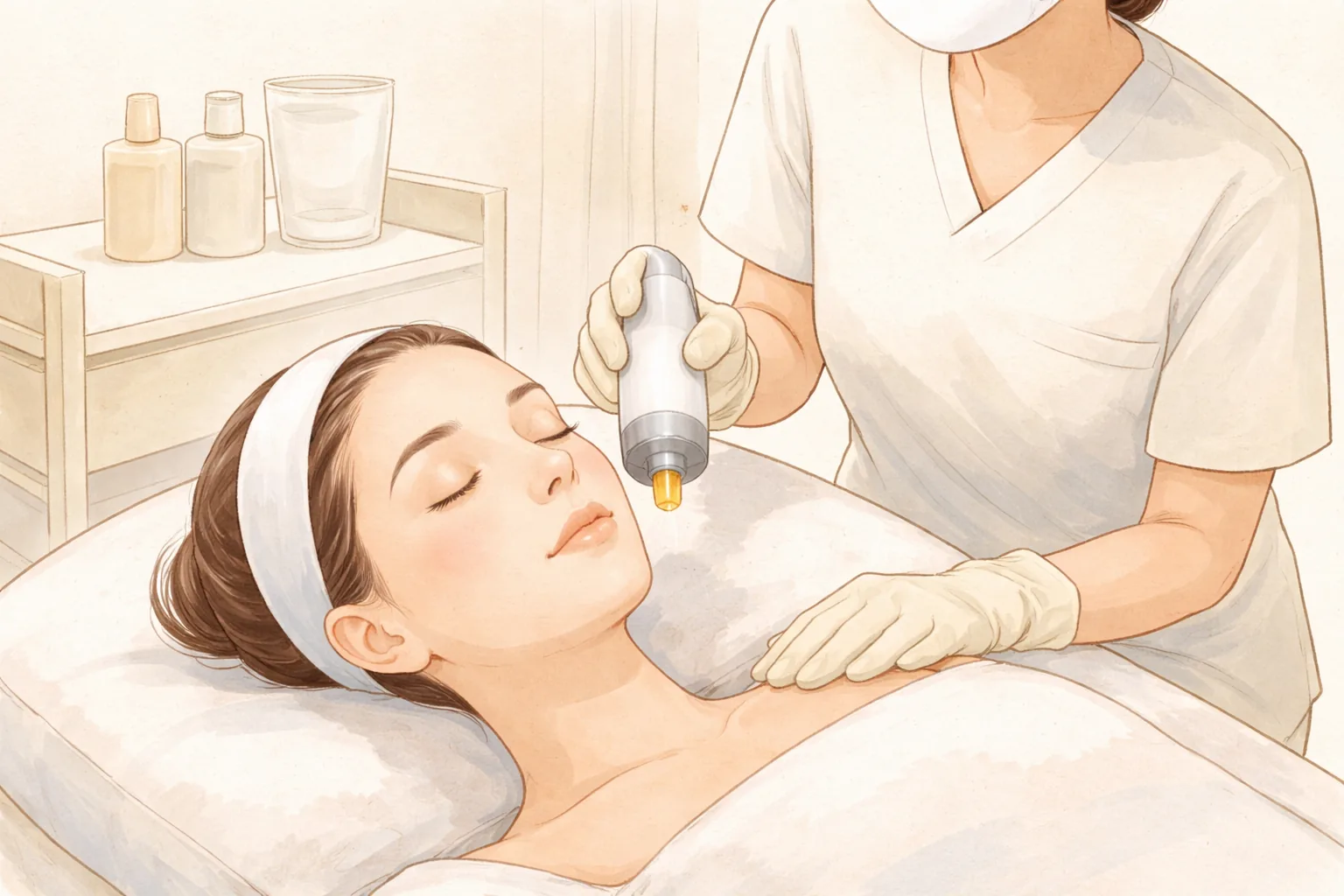
Treatment performed by the doctor — Topical anesthesia is used as needed to reduce discomfort, and the doctor performs the treatment according to the plan set in consultation. Intensity is adjusted during the session based on your skin's response.
Recovery and aftercare — Recovery is checked after treatment and the next schedule and aftercare methods are explained. ATTITUDE Clinic works on the principle of genuine products, accurate dosing and fair pricing, and does not recommend more sessions than necessary.
The device used for this topic is Potenza (Jeisys), and if texture or shallow scar texture is also a concern, a surface treatment such as erbium YAG laser may be reviewed in combination. Erbium YAG laser is used to refine surface texture and address the area around flakes and pores and shallow scar texture. Which device is used in which order depends on the cause of your concern and how much recovery time you have.
Aftercare and side effects
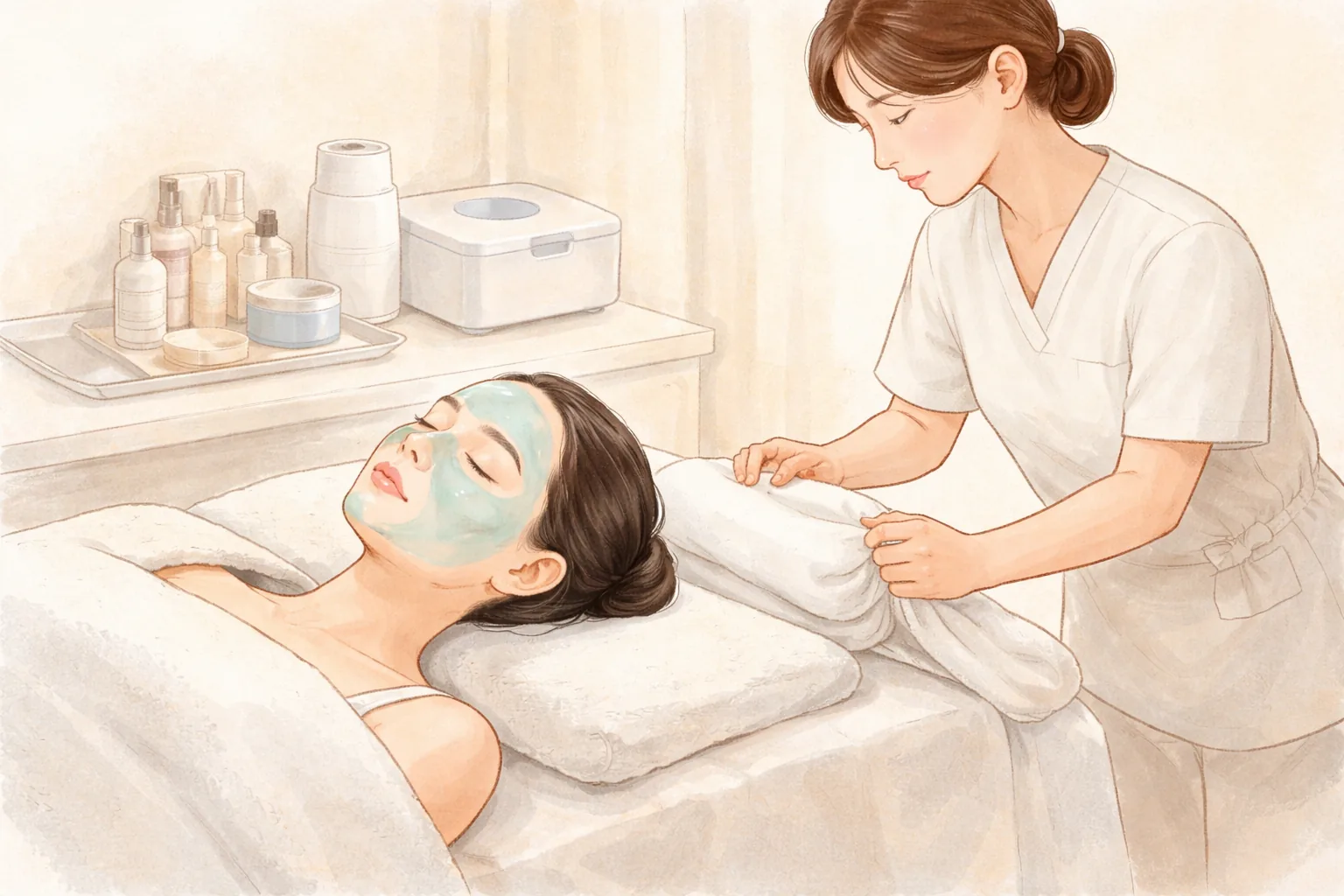
Soothing — Redness and warmth remain right after treatment. Soothe the skin as instructed, and avoid saunas, strong exfoliation and harsh scrubs for the period you're advised.
Moisturizing — If dryness lingers, skin can become sensitive easily, so keep up moisturizing.
Sun protection — Skin is temporarily sensitive after treatment, making sun protection especially important.
Progress check — Set the next appointment by watching how quickly redness and flaking settle.
After Potenza or erbium YAG laser, redness, swelling, pinpoint marks, dryness and thin crusting are common and usually settle within a few days to 1 week. Temporary pigmentation or breakouts can occur, and rarely burns, infection or scarring can occur. Before treatment, the doctor explains the side effects of the planned procedure and settings. If redness or warmth lasts longer than expected or pain worsens, don't push through it — come in to be checked.
Frequently asked questions
Which tips does Potenza use, and how do N-tips and pumping tips differ?
The biggest difference is what they target. The N-tip delivers RF directly into the dermis with fine needles to help improve pores and scars, while the pumping tip is described as adding a topical ingredient program. Whether an add-on ingredient such as exosomes is included, or the treatment is done standalone, changes the program build. So rather than comparing tip names, it's better to decide first whether your concern is pores and scars or skin texture and condition. Even with the same tip, needle depth and energy level change the stimulation, so check depth and intensity in consultation too. It also helps to remember that tip protocols vary by clinic.
When do Potenza microneedling results start to show, and how long do they last?
Potenza works by prompting a collagen renewal response, so it tends to be felt gradually over weeks rather than changing dramatically in days. Collagen loss rates differ by person, and skin thickness and renewal speed differ too, so the timing of noticeable change is hard to state uniformly. One way to check is reviewing before-and-after photos alongside progress records together. Duration also depends on your skin state, treatment depth and interval, so setting goals and schedule together in consultation is more realistic.
When can I wash my face and wear makeup after treatment?
Skin is temporarily sensitive right after treatment, so the doctor advises on when to wash and apply makeup based on treatment intensity and recovery state. During this period, the basics are avoiding saunas, strong exfoliation and harsh scrubs, and keeping up moisturizing and sun protection. If cosmetics sting or your skin feels unusually sensitive, don't push through it — let the clinic know. It's also best to come in if redness lasts longer than expected or pain worsens.
Do I have to combine it with a skin booster? How are treatment intervals set?
Because there are builds that add a topical ingredient program, a combined program can be considered — but it isn't mandatory. If pores and scars are the main concern, starting with an RF-delivery-centered build makes sense; if texture and condition management is also needed, a combined build is reviewed. Intervals are adjusted by watching how quickly recovery finishes, since repeating before recovery can burden the skin barrier. If you have treatment history, bringing the device, dosage and how your skin responded helps build the next plan.
What should I check when choosing a clinic for Potenza?
What gets checked before starting affects results and safety more than the treatment name. You can look at which tip is used at what depth and intensity, whether the clinic tells you what isn't needed, whether side effects and recovery time are explained, and whether the treatment follows the plan discussed in consultation. Whether they review previous treatment records is also worth checking. Even with the same treatment, response and how soon you notice a change differ with skin type and renewal speed, so a clinic that explains these differences helps your decision.
At a glance
Table 2 At a glance
Item
Key point
How Potenza works
Fine needles deliver RF into the dermis to prompt a collagen renewal response
How tips differ
Builds split into RF-delivery-centered and builds with an added topical ingredient program
How to choose
Not by tip tier, but by the cause of your concern (pores/scars vs. texture/condition)
What shapes results
Needle depth, energy level, treatment area, intervals that respect recovery, individual renewal speed
Aftercare
In order: soothing, moisturizing, sun protection, progress check
Common reactions
Redness, swelling, dryness and thin crusting settle within a few days to 1 week
This article offers general health information. It is not a substitute for diagnosis or treatment based on your own condition, so please talk through your situation with a doctor.