Potenza vs Fractional Laser: How Your Consultation Differs for Pores and Scars
How Potenza RF microneedling and fractional laser work, what your consultation covers for different pore and scar types, downtime and aftercare including washing and makeup, plus side effects—drawing on American Academy of Dermatology guidance and ATTITUDE Clinic resources.
Written by ATTITUDE Clinic Editorial Team
The names Potenza and fractional laser tend to come up together the moment you start worrying about pores or scars. If you have typed both words into a search bar side by side, you probably still have two questions left: "which one is better," and "what should I ask first at a consultation?" This article walks through how the two approaches differ in what they do inside the skin, and how to line up treatment type, treatment area, and recovery guidance at a consultation.
The short answer first
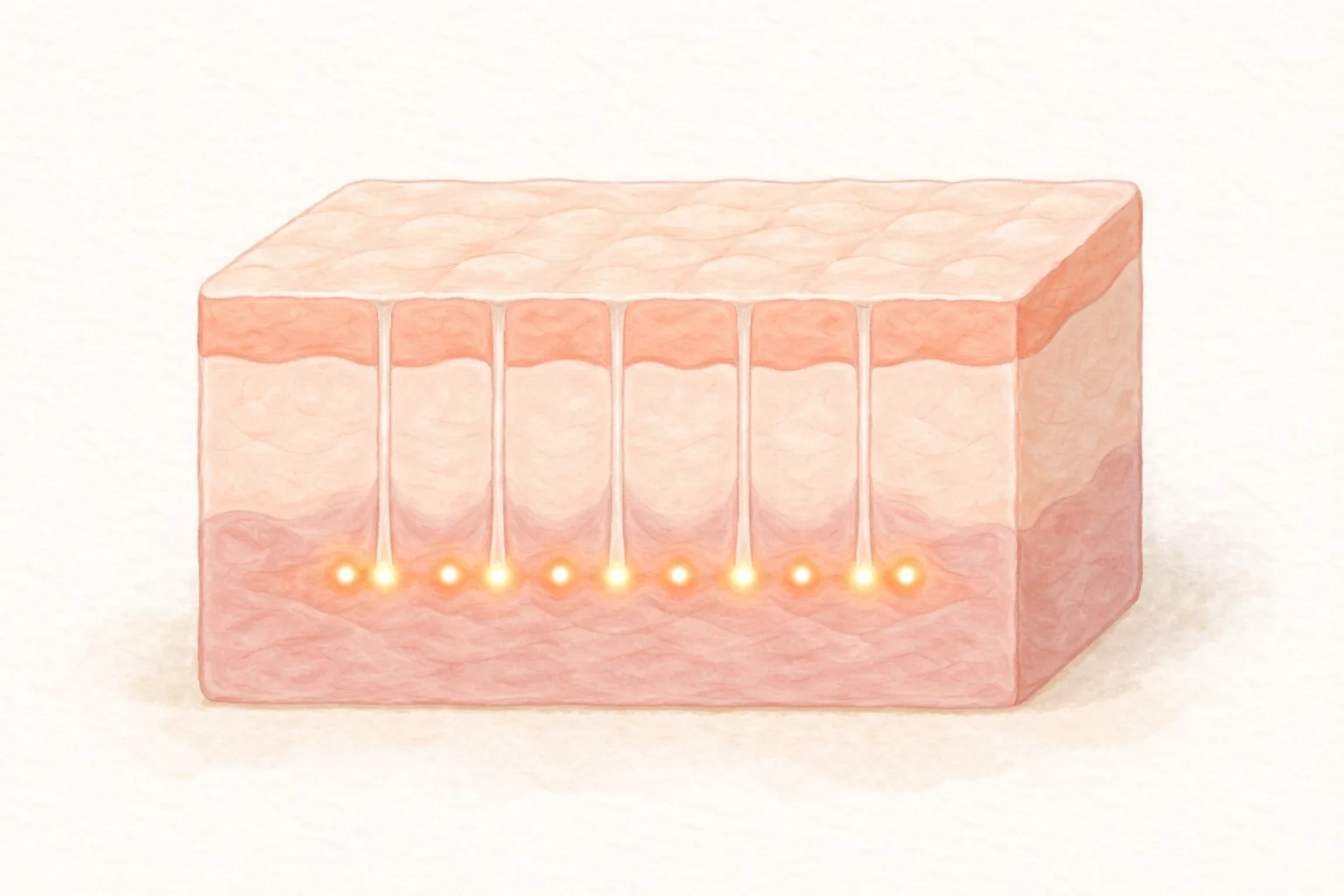
Neither one can be declared better. Potenza is RF microneedling: fine needles enter the skin and deliver radiofrequency (energy that generates heat via electrical current) at the needle tip. Fractional laser, the Fraxel-type family, does not treat the whole surface—it creates micro-injuries in thin column shapes to trigger the skin's own repair. What decides the choice is not the device name but your goal. Whether you want to address oil production, elasticity, and the floor of a scar together, or whether you want to refine surface texture, changes which items get priority in your consultation. Recovery time and when you can wash and wear makeup are determined by the method actually used, its intensity, and the treatment area. Even with the same device, skin thickness, scar depth, and healing speed differ between people, so results and recovery times vary.
What does Potenza do inside the skin?
Microneedling, the foundation of Potenza, is a medical procedure in which tiny needles puncture the skin. According to the American Academy of Dermatology, this stimulation triggers the body's collagen production, which is why it is also called "collagen induction therapy," and it is considered in clinical care for concerns such as acne scars, large pores, and skin texture (AAD microneedling guide). Potenza layers radiofrequency on top of this. Heat travels down the paths the needles have made, and that heat contracts collagen fibers, creating both the firmness felt right after treatment and the renewal response over the following weeks.
Because of the name, it is easy to assume "the needles go inside, so the surface is not touched at all," but the actual response is a little different. ATTITUDE Clinic's column notes that after Potenza, redness, swelling, dot-shaped needle marks, dryness, and thin crusts are common and usually settle within a few days to 1 week (pore column). In other words, surface damage is kept relatively low while the deeper layers are stimulated—and for that reason, surface marks may still be visible the next day.
Even with the same Potenza, which tip is used changes the outcome. ATTITUDE Clinic's treatment guide lists the N tip and the pumping tip as separate items (treatments and pricing). Different tips mean different needle depths and different spread of energy, so at a consultation it is more practical to clarify the tip type and depth settings than the device name.
What is different about the fractional laser family?
Fractional laser does not burn the entire surface; it stimulates tissue in very thin column shapes. It works like a sieve—energy is delivered into only some of the holes while the rest is left intact, so the undamaged surrounding cells receive renewal signals and fill in with new collagen. ATTITUDE Clinic's column explains that lasers do two main things to the skin. One is selective photothermolysis, which targets only pigment cells and breaks them down (concentrating energy on the target pigment while touching the surroundings less). The other is this micro-injury followed by renewal (laser column).
That is why the fractional family is mainly used for concerns where the structure itself has changed, such as pores, scars, and skin texture. Erbium fractional is part of this family too, and ATTITUDE Clinic's treatment guide lists erbium fractional as a separate item from Potenza. Even within the same family, though, the experience varies greatly with output. In the laser column's downtime table, low-output fractional is listed as redness and sandpaper-like texture for 3–5 days, while high-output involves swelling, oozing, and crusts for 7–14 days.
The idea that "one laser session will fix it" is another common misconception. Most lasers are not completed in 1 session. It takes time for new collagen to form and for tissue to settle, and for pigment it is safer to break it down gradually and let the body process it rather than remove it all at once. The same column notes that for pores and skin texture, fractional laser is commonly planned at 3–5 sessions with 4–6 week intervals, adding that this is just a common example—the actual number of sessions and intervals depend on pigment depth, skin type, and sun exposure habits.
Pores or scars—which fits better?
First, you need to break down why widened pores look the way they do. ATTITUDE Clinic's pore column describes the causes as oil-type, sagging-type, scar-type, genetic-type, and combined-type. The round, widened pores on the nose and T-zone are often oil-driven, while pores that stretch vertically on the cheeks are based on reduced collagen and elasticity, and areas where acne was squeezed by hand or inflamed repeatedly remain as scar-type with irregular pore walls. If oil is the cause, the approach focuses on managing oil; if elasticity is the cause, the focus is on boosting collagen renewal.
Scars need another layer of breakdown. Sunken scars are hard to fully fill with fractional laser alone, so methods to fill the floor or release adhesions beneath the scar may be combined. Raised scars, on the other hand, may do better with a different approach than laser. The same column organizes it this way. So "Potenza or fractional" comes second to "what type are my pores and scars?" Skip that judgment, and you may go through multiple sessions simply changing treatment names without gaining much.
Pain and recovery—how do washing and makeup compare?
The American Academy of Dermatology states that microneedling tends to have less downtime. Right after treatment, redness or a darker tone depending on your skin type may appear; stinging or swelling like a sunburn fades within a few days to 1 week; and makeup should wait 24 hours (AAD microneedling guide). That guidance, however, describes microneedling in general—devices that add heat may produce a different response.
The fractional family varies widely with output. As noted earlier, downtime splits between 3–5 days for low output and 7–14 days for high output, and for treatments that form crusts, not picking at them by hand is the core of recovery. The crust is a cover while the skin builds new tissue underneath; pulling it off can damage the new tissue and leave pigmentation. After treatment, apply SPF 50+ sunscreen for at least 2 weeks and reapply every two hours outdoors, and it helps recovery to postpone saunas, jjimjilbang, and intense exercise for 1–2 weeks.
When you can wash is determined by the treatment area and intensity, not the device. A day when high output was used on the whole face and a day when low output was used only around the nose cannot share the same guidance. At a consultation, it is better to get it in writing: how many days after treatment you can resume washing and makeup, which cream to apply and from when, and how long to avoid heat stimulation.
Table 1 Pain and recovery—how do washing and makeup compare?
Category
What it does to the skin
Concerns it mainly targets
Common recovery example
Potenza (RF microneedling)
Fine needles enter the dermis and deliver radiofrequency
Pores, acne scars, elasticity
Redness, swelling, dot marks for a few days to 1 week
Erbium fractional (fractional laser)
Thin column-shaped micro-injuries trigger renewal
Pores, scars, skin texture
Low output 3–5 days, high output 7–14 days
Picosecond toning
Selectively breaks down pigment into fine particles
Spots, pigmentation
Low output from a few hours to same day, high output about 7–10 days
Vascular laser (Vbeam 532nm)
Targets red blood vessels
Facial redness, red vessels
Redness and swelling for a few days, bruising 1–2 weeks if it occurs
Swipe sideways to see the whole table.
In summary Potenza and fractional laser are not competitors so much as tools that touch different layers. To warm the deeper layers and address elasticity, oil, and the floor of a scar together, Potenza becomes the center of the consultation; to refine surface texture and smooth scar borders, the fractional family does. The recovery times in the table vary greatly with intensity and area, so it is safer to set your schedule after deciding which combination will be used on which area.
If this sounds like your situation
When a ceremony or photo shoot is a few weeks away
High-output treatments that form crusts carry a recovery window of 7–14 days, so overlapping with your schedule is a problem. Discuss options with shorter redness and swelling, or a low-output focus, and leave at least a few weeks of buffer rather than the day before the shoot. Even treatments known for short downtime can bring up redness on the day itself, so it is best to avoid cramming them in right before an important day.
Skin with recurring acne and heavy oil
Pores caused by oil come back quickly if only the surface is refined. Ask about approaches that also address the sebaceous glands, and during the stage when red marks remain after acne has just settled, pay particular attention to sun protection. If red marks are exposed to UV, the pigment can set in darker.
Sensitive or easily flushed skin
If sensitivity or flushing (skin that reddens easily and heats up) is your baseline, it is better to avoid high-stimulation combinations. Tell your clinician at the consultation how often you flush and your history of reactions to cosmetics, and intensity and area can be adjusted downward. If redness is also present, discuss how to combine lasers that address pigment or vessels.
Short-stay international visitors
If your stay is short, high-output treatments with long recovery clash with your schedule. It is better to consult with your wash and makeup resumption dates and your flight schedule on the table, and to decide in advance how you will report your progress after returning home. Bookings are not confirmed by request alone—they are confirmed after the clinic's confirmation contact, so if your visit dates are set, it is safer to request early (consultation and booking).
Please tell us before your consultation It is much easier to plan if you tell us in advance: whether you have had long UV exposure recently, whether you are sunburned, whether you are taking acne medication such as isotretinoin, whether you are using exfoliating ingredients such as retinol or tretinoin, whether redness or pigmentation lasted a long time after previous treatments, whether you have a keloid tendency, immune suppression, or a history of radiation therapy, and when your next important commitment is.
How ATTITUDE Clinic proceeds
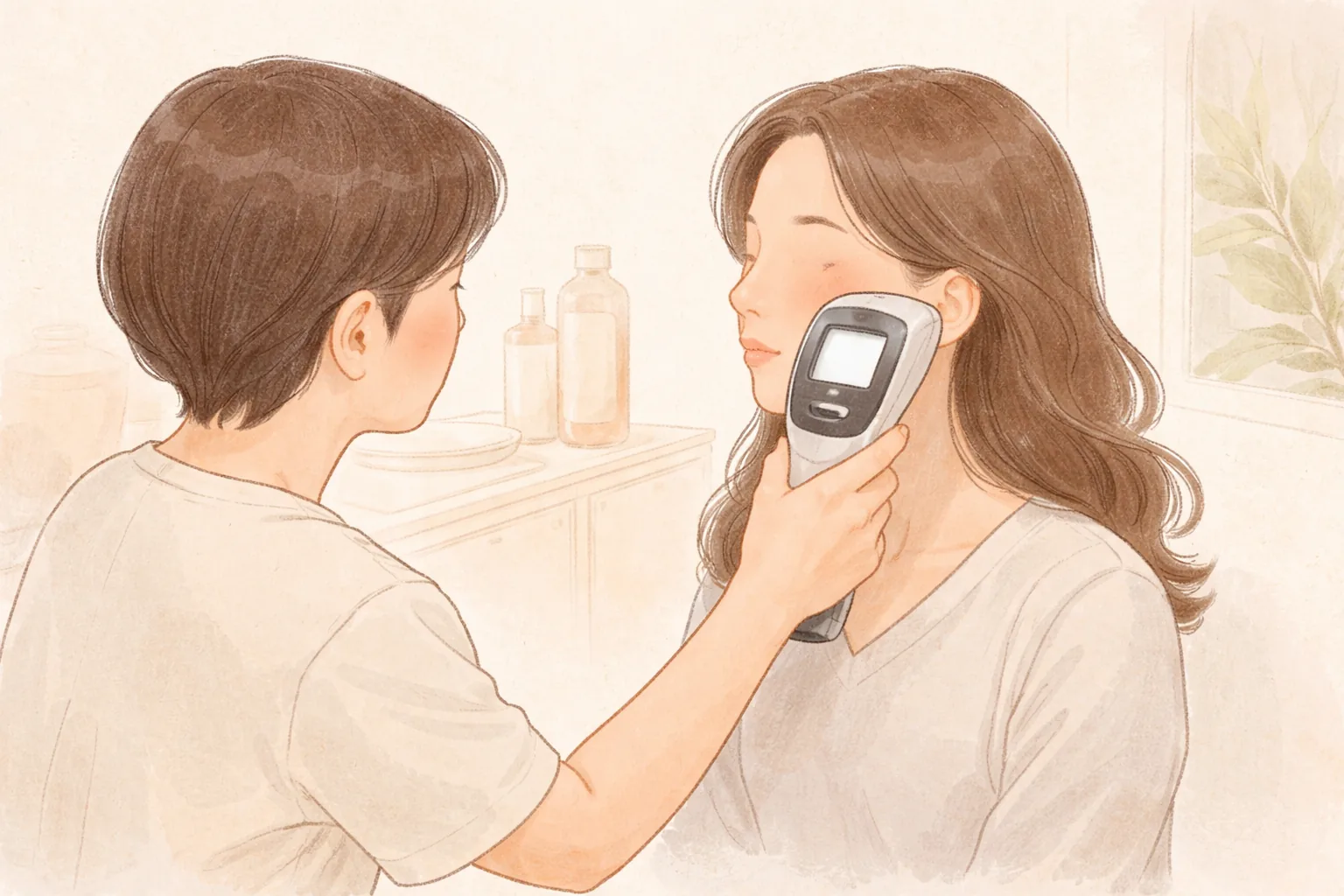
AI skin analysis record: Pores, scars, pigment, and elasticity are recorded with an analysis tool. This tool organizes information to support the consultation and is not a medical diagnosis; interpreting the record is the director's role.
Director consultation: Skin condition, lifestyle habits, medications, and reactions to past treatments are added to the record to judge the cause. At this stage, we settle what to center—Potenza or fractional—whether to address pigment or redness together, and which treatments are not necessary right now.
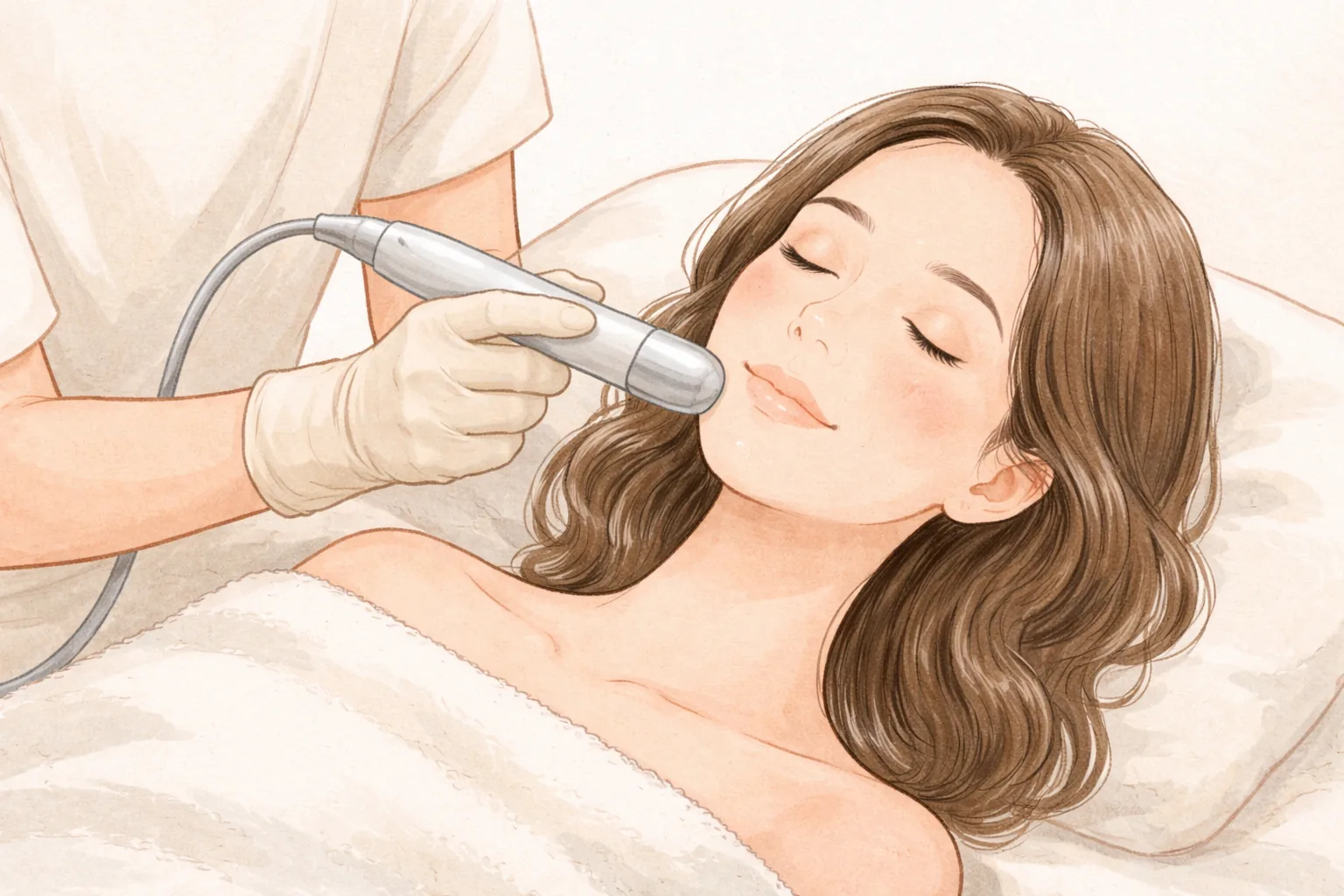
Treatment performed by the director: The director personally performs the treatment with the agreed combination and intensity. Rather than raising the number of sessions or intensity more than needed to rush results, ATTITUDE Clinic's approach is to proceed only as much as needed with a method matched to your type and cause.
Recovery and care: We finish with soothing care right after treatment, and guide you on when to resume washing and makeup, sun protection, and the interval until your next session. Based on your skin's response, the next intensity and area are adjusted.
The devices used for this topic are those listed in the treatment guide. Potenza is divided into the N tip and the pumping tip, and for the fractional family, erbium fractional is used. If pigment overlaps, items such as Pico toning are reviewed together at the consultation; if red vessels overlap, 532nm Vbeam is reviewed as well. For soothing care, items such as LDM and AquaPeel may be used. The price list shows a separate amount for each item, VAT is not included, and the principle is to guide with authentic products at full quantity and list price (treatments and pricing).
Aftercare and side effects
Soothing: Right after treatment, redness, heat, and swelling may appear. Wash by pressing lightly with lukewarm water rather than rubbing, and start with the soothing care guided by the clinic.
Moisturizing: Apply a recovery cream in thin layers several times. If flaking or crusts form, do not touch them—leave them as they are—and postpone scrubs or exfoliating products for 1–2 weeks.
Sun protection: For at least 2 weeks after treatment, apply SPF 50+ sunscreen and reapply every two hours outdoors. Avoid saunas, jjimjilbang, intense exercise, and alcohol for 1–2 weeks.
Progress check: If redness or stinging lasts more than 3 days or worsens, do not wait—contact the clinic. The same applies if pigment darkens or oozing appears beneath a crust.
Looking at side effects from the most common: redness, swelling, dot-shaped marks, dryness, and thin crusts are reactions that settle within a few days to 1 week. Temporary pigmentation or breakouts can also occur. If injections such as skin boosters are combined, bruising and swelling can occur, and rarely nodules, infection, or allergic reactions have been reported. More rarely, burns, infection, or scars can occur. The American Academy of Dermatology advises that receiving microneedling where there is not sufficient medical training and understanding of the skin increases the risk of infection, scarring, and long-lasting pigment changes.
Frequently asked questions
Between Potenza and fractional laser, which is better for pores?
There is no single correct answer—it depends on why your pores look enlarged. Oil-type pores on the nose and T-zone are centered on approaches that address the sebaceous glands, while sagging-type pores that stretch vertically on the cheeks are centered on boosting collagen renewal. Scar-type pores are a state where the pore walls themselves have become irregular, requiring management over more sessions than other types. On the same face, causes differ by area, so the two methods may be divided. At a consultation, it is better to first ask which type your pores are and what the basis for that judgment is, rather than the treatment name.
Is "Fraxel" a device name or a treatment method?
Today the word is widely used as a general term for the fractional laser approach, which creates micro-injuries in only part of the skin. So saying "I had fractional laser" alone does not tell you which wavelength and output were used on which area and how much. At a consultation, it is far more accurate to specify wavelength, output, treatment area, and expected number of sessions instead of the treatment name. Even within the same method, downtime splits between 3–5 days and 7–14 days depending on output, and that difference directly affects your daily schedule.
How many sessions and at what intervals?
ATTITUDE Clinic's column notes that for pores and skin texture, fractional laser is commonly planned at 3–5 sessions with 4–6 week intervals. This is a common example, and the number of sessions and intervals depend on pigment depth, skin type, and sun exposure habits. Because new collagen takes time to form, shortening the interval too much makes recovery periods overlap and actually adds burden. Results also tend to appear gradually over several weeks rather than right after treatment, and for microneedling in general, the American Academy of Dermatology explains that improvement begins to show within a few weeks and full results take several months (AAD microneedling guide). Collagen production speed and pigment response differ from person to person, so even with the same plan, when you feel the change varies.
How many days of downtime, and when can I wash and wear makeup?
It depends on the device and intensity. With Potenza, redness, swelling, and dot-shaped marks commonly settle within a few days to 1 week; fractional low output is 3–5 days and high output 7–14 days. Low-output picosecond toning is a few hours to same day, and high output is about 7–10 days. For microneedling in general, the American Academy of Dermatology advises waiting 24 hours for makeup, but devices that add heat may produce a different response, so it is better to receive guidance based on that device. When you can wash also depends on the area and intensity, so it helps to get the right-after-treatment guidance in writing.
What should I look at when choosing a clinic?
Because the practitioner's skill greatly influences results, the starting point is asking how many times they have performed the treatment and whether they have experience with your skin tone and skin condition. The American Academy of Dermatology also recommends confirming at a consultation the expected results, risks, alternatives, the number of sessions and time required, recovery and return to daily life, preparation and aftercare, and cost (AAD consultation guide). It also helps to see whether the clinic explains how it divides Potenza and fractional laser by criteria, and whether it tells you which treatments are not necessary right now. When asking about expected results, it is useful to check whether you can see cases with a skin tone similar to yours.
At a glance
Table 2 At a glance
Item
Key point
Potenza
RF microneedling that delivers radiofrequency to the dermis via fine needles; tip type divides outcomes
Fractional laser
Thin column-shaped micro-injuries trigger renewal; recovery varies greatly with output
Selection criteria
Pore type (oil, sagging, scar) and scar shape over device name
Common recovery example
Potenza a few days to 1 week; fractional low output 3–5 days, high output 7–14 days
Sessions and intervals
For pores and skin texture, 3–5 sessions at 4–6 week intervals is a common example; the actual plan is decided at consultation
Core of care
Do not pick crusts, protect from UV, avoid heat stimulation
This article offers general health information. It is not a substitute for diagnosis or treatment based on your own condition, so please talk through your situation with a doctor.