

Search for Re2O and prices and reviews are what you see first. But once you sit down in the consultation room, it is hard to know whether to start with the ingredient or with the pain. This article lays out what to check in a Re2O consultation, in what order, and what to watch for after the procedure.
The short version first
A Re2O consultation is not a place to memorize ingredient names. It is a place to confirm which product is used in which dosage unit, who performs the consultation and the procedure, how many sessions are planned at what intervals, how to get in touch about recovery and adverse reactions, and what the cost includes. The American Academy of Dermatology advises asking about expected results and risks, alternatives, the practitioner's experience, the number of sessions and time required, recovery, preparation and aftercare, and cost (AAD guidance). ATTITUDE Clinic's column describes Re2O not as a way to induce collagen production but as directly replenishing the extracellular matrix structure in the dermis (collagen injection column). The consultation starts with asking, in one sitting, both what goes in and who will put it in, according to what plan.
What does Re2O do in the skin?
The key ingredient is hADM (human Acellular Dermal Matrix). It is described as a product made by removing the cellular components that could trigger an immune response from donated human skin tissue, leaving behind the ECM (extracellular matrix, the structure that fills the space between cells and supports the skin). This ECM contains collagen, elastin, and hyaluronic acid.
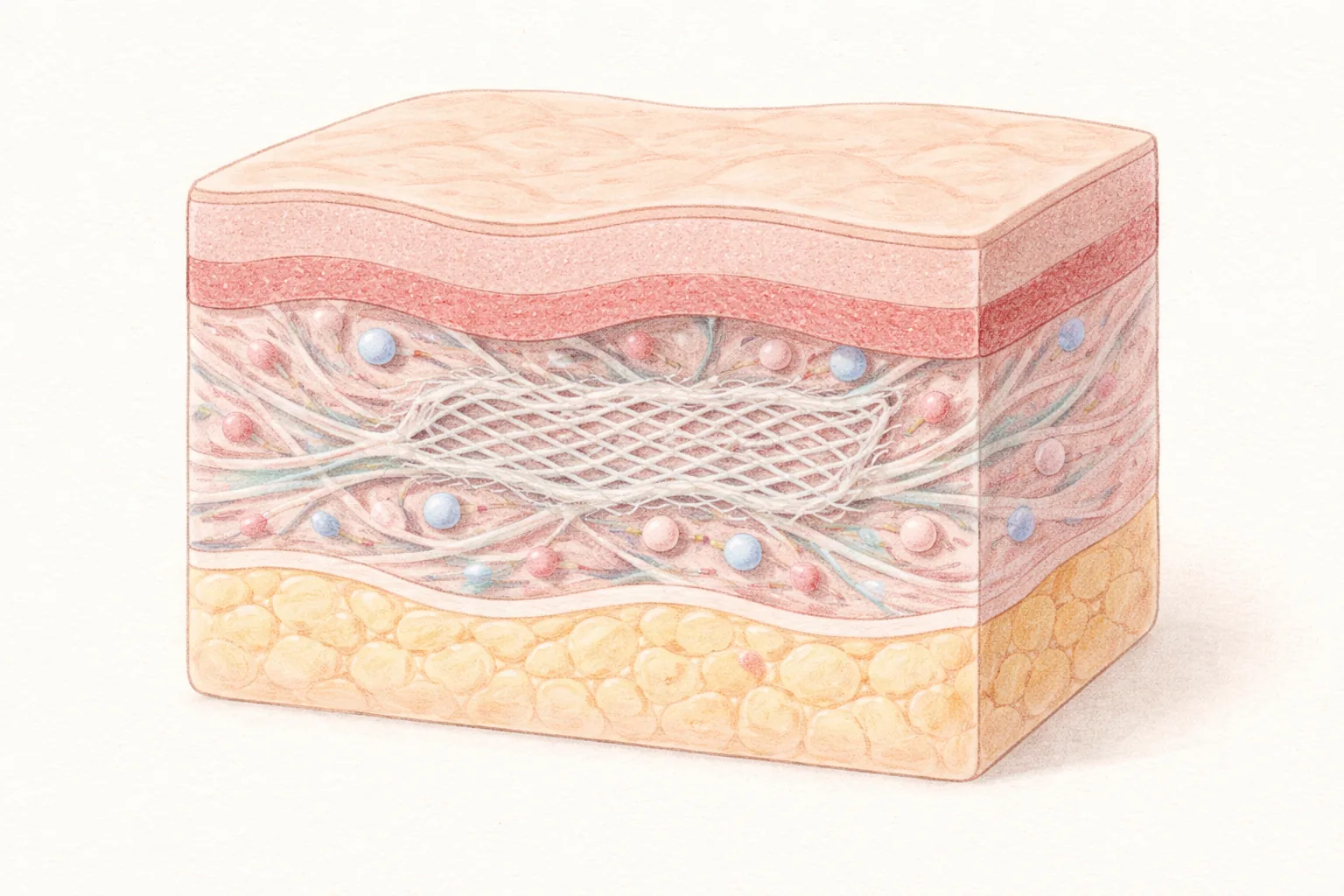
The point where it diverges from existing skin boosters is what it does. PN (polynucleotide) and HA (hyaluronic acid) types stimulate cells to make collagen on their own and attract moisture, while Re2O fills the depleted structure itself into the dermis. The injected material does not literally become your collagen; rather, a scaffold is placed so that cells grow into it and new collagen formation is supported.
There is a common misunderstanding here. It is easy to read the firm, thick feeling right after the procedure as the result, but according to the column, that sensation is partly swelling and subsides over a few days. Any change appears gradually over several weeks, and the degree varies from person to person. How much remains and how long it lasts is still an area where research is ongoing, so rather than hearing a specific number of months as if it were fixed, it is more realistic to decide at what point and by what measure you will judge.
Pain and nodules — what should you ask in the consultation?
Pain varies with the anesthesia method, the skin thickness at the injection site, and the amount injected. So rather than asking "does it hurt," it helps more to ask which anesthesia is used and for how many minutes, whether the intensity can be adjusted during the procedure, and whether you will be told not to press or massage the injection site. Re2O involves a process in which the injected material settles, so strong pressure or massage is avoided.
Reactions that may appear after the procedure are usually within a predictable range. Redness and stinging last from several hours to the same day, temporary volume and swelling last 1–3 days, and if bruising occurs it can take 1 week or more to fade. A bumpy feeling at the injection site is also a common course while the material settles, and if it persists, it is right to let the clinic know.
Nodules (a phenomenon where the injected product clumps in one place) are a reaction that can occur rarely. In the consultation, it is good to go over which product is used in which dosage unit, at what depth and in what pattern it is distributed, and whether you have had other skin boosters or dermal fillers before. ATTITUDE Clinic's column explains that the more delicate the area, such as around the eyes, the more precisely the injection amount and depth must be adjusted (collagen injection column).
The American Academy of Dermatology advises that all medical and surgical procedures carry risks and that the practitioner's technique and experience greatly influence the outcome (AAD guidance). So rather than stopping at asking whether side effects exist, it is more practical to confirm which reactions have been reported in this area and how they are handled if they appear.
How many sessions, at what intervals — and what do you judge the effect by?
Re2O is usually planned as several sessions, and the number varies with skin condition, area, and the amount injected. After that, maintenance sessions are considered together. Taking intervals and total session counts straight from someone else's review may not fit your skin, so it is better to hear the reasoning behind the plan in the consultation and set a midpoint check-in.
The effect is viewed in stages. The firm feeling right after the procedure is partly swelling; the first few days are the period when that swelling subsides; the weeks after that are the period for watching changes in elasticity and skin texture. Remembering these three stages as one lump makes it easy to judge too early. Keeping photos under the same lighting and angle makes comparison much easier.
The American Academy of Dermatology recommends confirming the number of sessions needed, the procedure time, the recovery period, and preparation and aftercare methods in the consultation (AAD guidance). How long results are maintained varies greatly between individuals, so rather than remembering a number heard in the consultation as a promise, it is safer to adjust while watching your progress.
| Category | What it does in the skin | Concerns it suits | What to look at in the consultation |
|---|---|---|---|
| Re2O (hADM) | Directly replenishes the ECM structure in the dermis and remains as a scaffold | Skin that feels thinner and less elastic | Product name, dosage unit, area and depth, planned number of sessions |
| PN·HA skin booster | Uses cell regeneration signals to induce collagen production and attracts moisture | When you want to manage hydration and skin texture often | Whether it is measured in cc, maintenance interval |
| Exosome | An adjunct that delivers regeneration signals between cells | Recovery care after laser or microneedling | Which product, whether alone or combined |
| Potenza (RF microneedling) | Delivers radiofrequency into the dermis via fine needles | Pores and scars | Tip type, intensity, recovery period |
Swipe sideways to see the whole table.
In summary The axes to confirm in the consultation are the product and dosage unit, the practitioner and their experience, the number of sessions and intervals, recovery and how adverse reactions are handled, and what the cost includes. Re2O directly replenishes structure, while skin boosters and exosomes stimulate cells or send signals — the purpose is different. Which one suits you depends on whether your concern is hydration and texture, or skin thickness and elasticity.
If this sounds like your situation

If a wedding or a shoot is a few months away
It is better to leave room to adjust the plan based on how you recover. Redness and swelling are usually within several hours to 3 days, but bruising can take 1 week or more to fade, so it is better to start earlier rather than right before the event. Knowing that the firm feeling right after the procedure is swelling can reduce unnecessary worry about photos.

If you want to manage it consistently
This is not a one-and-done treatment; it is common to plan several sessions and then consider maintenance sessions together. If you set the initial plan and maintenance interval together in the consultation, it becomes easier to book the next appointment. Basic habits like sun protection and moisturizing also affect how long changes last.

If your skin is sensitive or prone to redness
If you have an autoimmune condition, have ever reacted to a tissue-derived product, or have other allergies, you must tell the clinic before the procedure. This is because foreign body reactions or allergic reactions can occur. Medications you are taking, especially blood thinners, and whether you are pregnant or breastfeeding, should also be mentioned in the same conversation.

If you are a visitor on a short stay
Washing your face lightly is generally possible from 4–6 hours after the procedure, and makeup from the next day, so if this overlaps with your return trip, it is better to leave some margin. Keeping a record of which product was used in what amount, along with the product name and procedure date, helps when explaining your progress in another region. Because booking involves separate request and confirmation steps, receiving the clinic's confirmation contact keeps your schedule from shifting (consultation booking guide).
Please tell us before your consultation Recent sun exposure and outdoor activity; medications you are taking (including blood thinners); autoimmune conditions and any history of reaction to tissue-derived products; allergies to cosmetics or medications; pregnancy or breastfeeding; active ingredients in your usual skincare; the timing and history of any previous dermal filler or skin booster treatments; and any unavoidable events such as a wedding or a shoot.
How ATTITUDE Clinic handles this

Skin assessment and intake — We look at the current thickness, elasticity, and dryness of your skin, and also check your treatment history, medications, allergies, and whether you have an autoimmune condition. Records organized with analysis tools are material for gathering information needed for the consultation, and do not replace a diagnosis themselves.
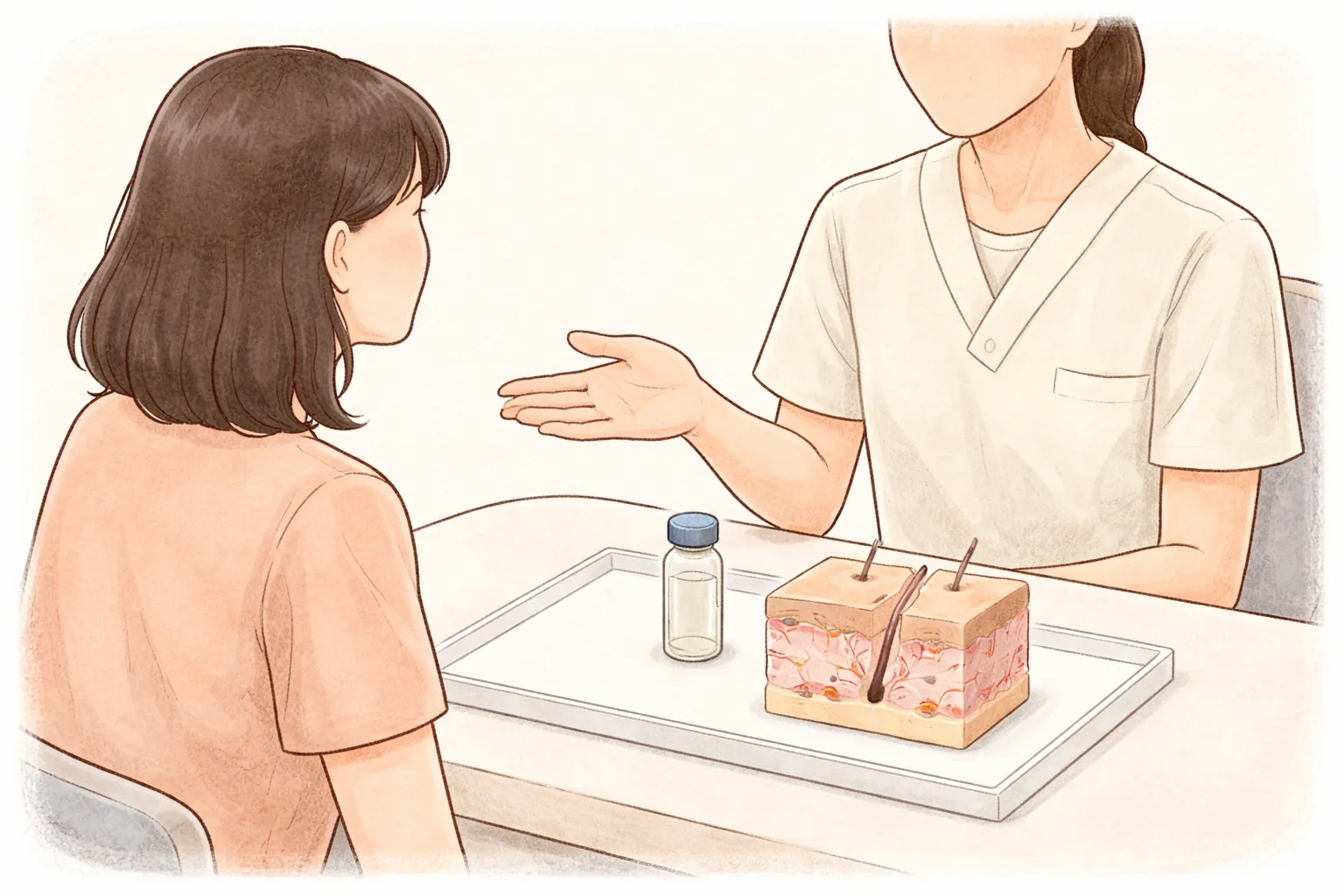
Planning consultation — We explain in person which product will be used in which dosage unit, how many sessions at what intervals are planned, and what level of pain and recovery to expect. If hydration is the goal, we guide you toward a skin booster; if skin thickness and elasticity are the concern, we consider Re2O first — matching the direction of your concern (collagen injection column).
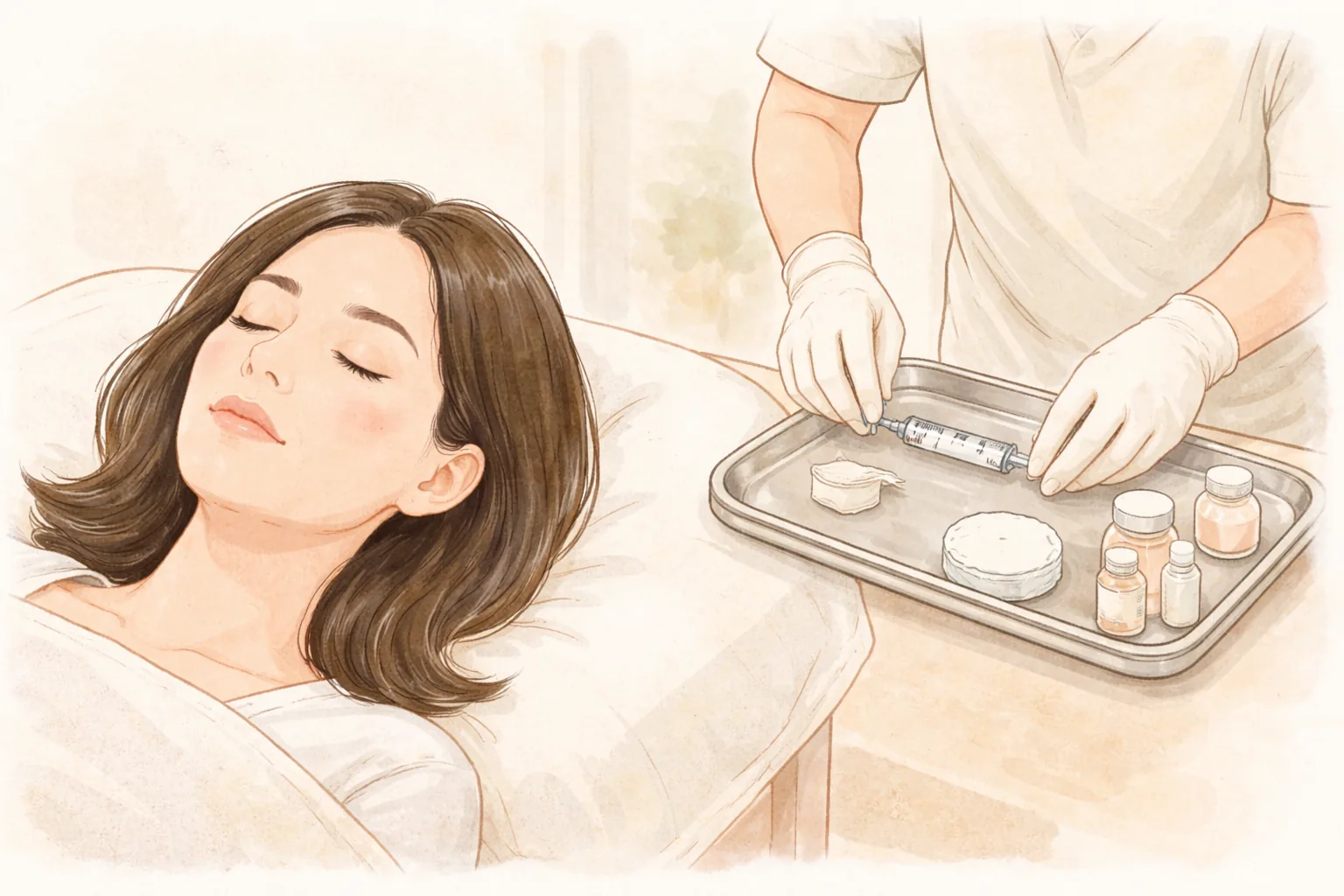
Procedure by the doctor — The procedure is performed according to the area and depth decided in the consultation, and you are told not to press hard or massage right after injection. For delicate areas such as around the eyes, the amount and depth are adjusted more precisely.

Recovery check and records — We observe redness, swelling, bruising, and the feel of the injection site in chronological order, and record the product used, the amount, and the next plan. This step also covers where and how to get in touch if an adverse reaction occurs.
ATTITUDE Clinic's treatment menu lists Re2O (Elravie Re2O) along with Rejuran Healer and HB, Juvelook Skin and Volume, Potenza, and exosomes, each with different units and compositions (treatments and pricing). Which item fits your concern is decided after looking at your skin condition.
Aftercare and side effects

Avoid pressure — On the day of the procedure, do not press hard or massage the injection site. Applying physical stimulation before the material has settled into the dermis can make its distribution uneven.

Washing and makeup — Wash your face lightly from 4–6 hours afterward, and start makeup the next day. It is better to avoid intense exercise, alcohol, and saunas on the same day.

Sun protection and moisturizing — Reapply sunscreen carefully throughout the recovery period, and keep the skin moisturized so it does not become dry.

Checking progress — Watch whether redness, swelling, bruising, and the bumpy feeling at the injection site decrease over time. If they do not decrease and continue, do not wait until your next appointment — let the clinic know.
Common reactions are redness, stinging, swelling, tenderness when pressed, and bruising. More rarely, infection, allergic or foreign body reactions, or small lumps (nodules) can occur. Although rare, the injected product can block or damage blood vessels, so if you have pain that is unusual or worsening, or if the skin at the injection site turns white, mottled, bluish-gray, or black, or if your vision changes, you should seek care immediately without waiting. If swelling, pain, or warmth persists, contact the clinic as well (collagen injection column).
Frequently asked questions
How is it different from a skin booster like Rejuran?
A skin booster stimulates cells to make collagen on their own and attracts moisture, while Re2O directly fills in the ECM structure in the dermis. So if hydration and frequent maintenance are the goal, a skin booster is efficient; if thinning skin or a loss of elasticity is the main concern, Re2O is considered first. The two are not competitors but options that can be combined in a set order. Exosomes are used differently from both, as an adjunct that sends regeneration signals between cells (exosome column). Which one suits you is decided in the consultation after looking at your skin condition.
Does it hurt a lot? How is anesthesia handled?
Pain varies with the anesthesia method, the skin thickness at the injection site, and the amount injected. In the consultation, you can ask which anesthesia is used and for how many minutes, whether the intensity can be adjusted during the procedure, and which areas may be pressed afterward. Redness and stinging from several hours to the same day, and swelling for about 1–3 days, is the usual course. If bruising occurs, it can take 1 week or more to fade, so if you have plans, it is better to leave margin on either side.
When do results show, and how many sessions at what intervals?
Re2O is usually planned as several sessions with maintenance sessions considered afterward, and the number varies with skin condition, area, and amount. The firm feeling right after the procedure is partly swelling, and after that swelling subsides, changes appear gradually over several weeks. How long results are maintained varies greatly between individuals and long-term data is still limited, so setting observation points and measures in the consultation and comparing photos taken under the same conditions helps your judgment. Intervals and session counts are adjusted as your progress is reviewed.
I am worried about nodules or side effects. What should I check?
Nodules are a reaction that can occur rarely, and common reactions are redness, stinging, swelling, tenderness when pressed, and bruising. In the consultation, confirm the product and dosage unit used, the injection depth and pattern, and your previous treatment history, and write down in sentences which symptoms mean you should contact the clinic and which mean you should seek care immediately. Autoimmune conditions, any history of reaction to tissue-derived products, allergies, medications you are taking, and pregnancy or breastfeeding should be mentioned in advance.
What should I look at when choosing where to have it done, and how do I check the cost?
The American Academy of Dermatology advises that results are greatly influenced by the practitioner's technique and experience, and recommends confirming expected results and risks, alternatives, practitioner experience, the number of sessions needed, recovery, and cost in the consultation (AAD guidance). So it is better to first confirm who performs the consultation and the procedure, and how much experience they have with that procedure. Rather than comparing numbers alone, look at how the product, area, dosage unit, and session composition are broken down, and where items such as VAT, anesthesia, and follow-up visits are included. ATTITUDE Clinic's price list is divided by treatment, product, area, dosage, and number of sessions, all amounts are shown with VAT excluded, and Re2O is listed as a per-vial item (treatments and pricing). The latest amounts and the actual plan for use are best confirmed in the consultation.
At a glance
| Item | Key point |
|---|---|
| Key ingredient | hADM (human Acellular Dermal Matrix) — an ECM structure containing collagen, elastin, and hyaluronic acid |
| Difference from skin boosters | Not a way to induce collagen production, but direct replenishment of the ECM structure into the dermis |
| Onset of effect | The firm feeling right after is partly swelling; any change appears gradually over several weeks |
| Sessions and intervals | Usually planned as several sessions, with maintenance sessions afterward — the number is decided by skin condition, area, and amount |
| Downtime | Redness and stinging from several hours to the same day, swelling 1–3 days, bruising can take 1 week or more |
| Consultation checklist | Product and dosage unit, practitioner, basis for the plan, recovery and contact criteria, what the cost includes |