Re2O and Juvelook work differently in the skin. Compare the structural replacement approach with the purpose-divided Juvelook lineup — skin, volume and eye — and see what determines Juvelook results, how to plan around a short stay in Seoul, and aftercare.
Written by ATTITUDE Clinic Editorial Team
Re2O (Elravie Re2O) and Juvelook get mentioned side by side so often that they sound like the same kind of treatment, but what you actually decide in the consultation room is far more specific. What makes the two different, do you have to pick just one, and can it fit into a short stay in Korea? This article goes through the difference in what each treatment does in the skin, the conditions that decide Juvelook results, and what to settle first if your schedule is tight.
The short answer first
Re2O (Elravie Re2O) is human-derived acellular dermal matrix (hADM) placed into the dermis to replace the skin's own scaffold, while Juvelook is presented as a skin booster lineup divided by purpose and volume — skin, volume and eye. The two aren't ranked against each other; the choice comes down to what your skin is lacking right now. Results depend on which product is used, how much, and at what depth, along with your skin condition. If your stay is short, though, the days you can give to recovery matter more than the treatment name. When effects appear and how long they last vary from person to person, so the plan is set after your skin is examined in consultation.
Re2O replaces the scaffold; Juvelook is a lineup divided by purpose
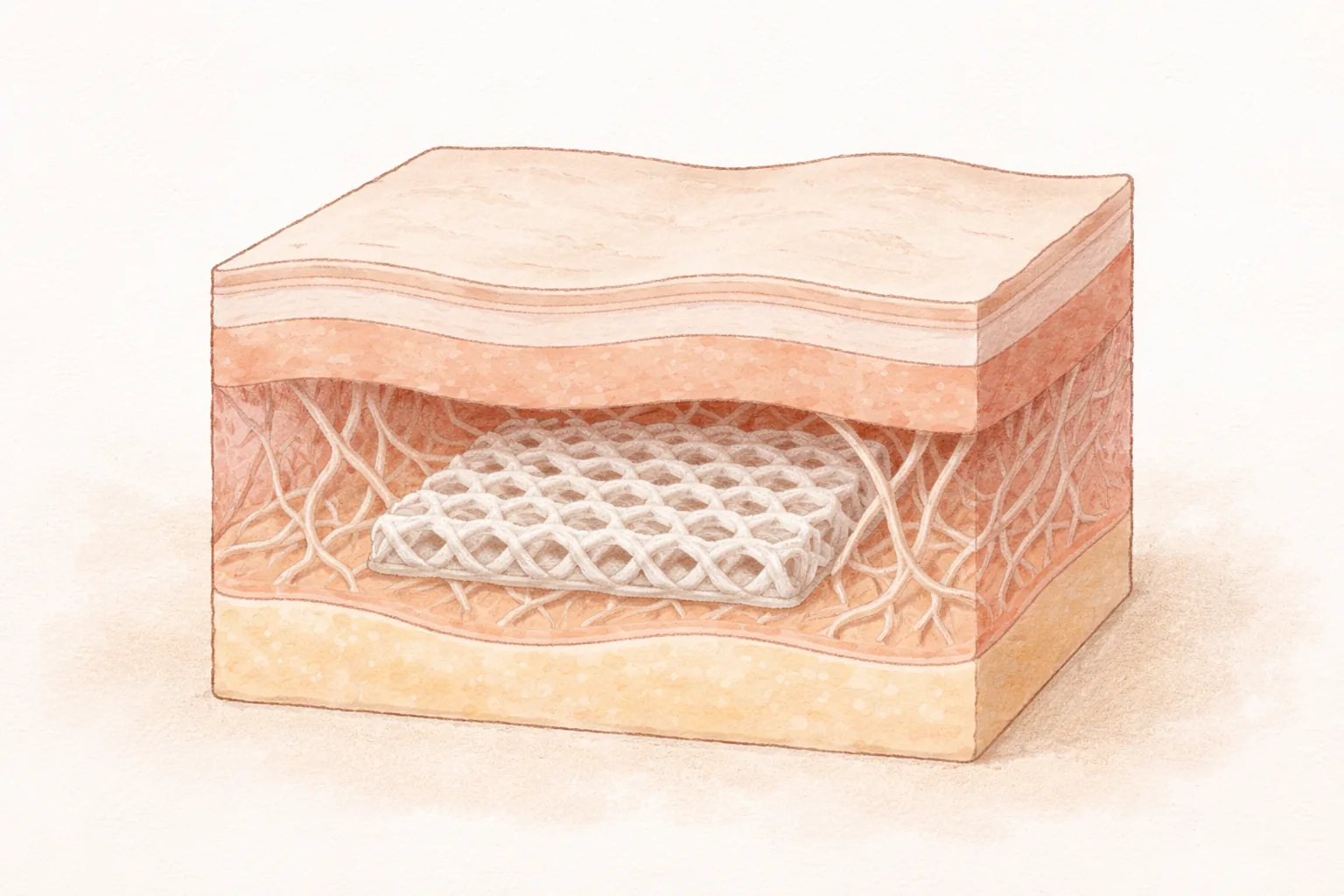
According to ATTITUDE Clinic's collagen injection column, the key ingredient in Re2O is hADM — human-derived acellular dermal matrix. It's made from donated human skin tissue with the cellular components that could trigger an immune response removed, leaving the extracellular matrix (ECM, the scaffold that fills the space between cells) such as collagen, elastin and hyaluronic acid. Think of it as the steel frame of a building. As we age, that frame decreases, so skin thins and sags — Re2O belongs to the group that puts the scaffold back in directly. According to the manufacturer's description, it acts as a support in the dermis and may help new collagen form. How much remains and how long it lasts, however, is still an area under study.
On the other side are approaches that induce collagen production. In the same column, PN-based products are described as activating cell regeneration signals so fibroblasts make collagen on their own, while hyaluronic acid pulls moisture into the skin for volume and hydration. Because this stimulates the skin's own production capacity, the effect gradually fades once the stimulation ends. So the first question to ask in consultation boils down to this: "Does this treatment induce collagen production, or does it replace the scaffold?"
Within that distinction, Juvelook is better understood as a lineup than as a single product. On ATTITUDE Clinic's treatment and price page, Juvelook appears under skin boosters divided into skin, volume and eye, with volumes shown in units such as 4cc and 8cc. Rejuran Healer, SKINVIVE by Juvéderm, Belotero Revive, Gouri and Hilo Wave are listed in the same section. Products differ in origin, concentration and purification method, and so does what they do in the skin — which is why the starting point in consultation is to confirm the product name together with the volume.
Where the idea that "collagen goes in and stacks up right away" goes wrong
The most common misunderstanding is thinking that injected collagen immediately becomes your own skin's collagen. The progress notes in the collagen injection column say the plump feeling right after treatment is partly swelling and settles over several days. Taking that feeling as the result sets you up for disappointment. If there is a change, it appears gradually over the following weeks, and how much shows varies widely between individuals.
The phrase "human-derived ingredient" also needs a slightly different reading. hADM is made from donated skin with cellular components removed to lower the potential for immune reactions while leaving the structural proteins — but allergic or foreign-body reactions can still occur, so it can't be called completely risk-free. That's why you must mention any autoimmune condition or past reaction to tissue-derived products before treatment.
Thinking of Re2O as a filler is another common misunderstanding. In the same column, hyaluronic acid fillers are described as filling in the injected area and then breaking down and being absorbed over time, while Re2O targets the skin's own texture and elasticity. If your main concern is filling hollow cheeks, the approach is different.
Five conditions that decide Juvelook results
First, which product is used. Origin, concentration and purification method differ by product, and even a treatment with the same name can differ in safety and outcome depending on which product is used.
Second, which area and at what depth it's placed. The collagen injection column notes that it can be applied across the face — cheeks, forehead, temples, under the eyes, neck — but delicate areas like around the eyes require precise control of injection amount and depth. Where and how much to apply is decided by the doctor after examining your skin.
Third, your skin condition. The choice splits depending on whether your main concern is thinning skin or a strong loss of elasticity, or whether hydration is the main goal. The same column also explains that if hydration and frequent maintenance are the goal, PN and HA-based skin boosters are the cost-efficient option.
Fourth, the number of sessions and the interval. PN and HA-based products are usually given a few times at 2–4 week intervals, followed by maintenance sessions. Re2O is usually planned as a few sessions, and how long it lasts varies widely between individuals with long-term data still limited.
Fifth, aftercare. Basic habits such as sun protection and hydration affect how long changes are maintained.
If your stay is short, what should you settle first?
The downtime notes in the collagen injection column say redness and stinging at the treated area last a few hours to the same day, temporary volume and mild swelling 1–3 days, and bruising can take more than 1 week to fade if it appears. A bumpy feeling at the injection site can remain for a while as the product settles, and if it persists you let the clinic know. Washing your face gently is possible from 4–6 hours after, and makeup from the next day. If you have an event where your skin will be seen as it is — a wedding or a shoot — it's more comfortable to count backward from that date and set the treatment day.
If your stay is short, you'll also decide whether to treat several areas at once or divide them across visits. Dividing areas lowers the recovery burden but adds visits; treating at once fits within your stay but means more area to look after. Either way, the doctor decides after a pre-treatment consultation and skin examination.
Table 1 If your stay is short, what should you settle first?
Category
What it does in the skin
Concerns it's usually discussed with
Common course after treatment
Re2O (Elravie Re2O)
Directly replaces the dermal extracellular matrix with human-derived hADM, acting as a scaffold
Feelings of thinning skin and lost elasticity, skin texture
The plump feeling right after is partly swelling and settles over several days; redness and swelling 1–3 days
Juvelook lineup
Skin boosters divided by purpose and volume — skin, volume and eye
Product choice varies with area and goal
Course by product and area is explained in consultation
PN and HA-based skin boosters (Rejuran Healer and others)
Activate cell regeneration signals to induce collagen production; HA pulls in moisture
Maintaining hydration and skin texture steadily
Usually a few sessions at 2–4 week intervals, then maintenance
Signaling substances secreted by cells, applied right after treatments that open the surface
Supportive goal of aiding post-treatment recovery
Mostly stays on the surface after treatments that don't open the skin
Swipe sideways to see the whole table.
In short Re2O replaces the skin's scaffold, and Juvelook is a skin booster lineup divided by purpose and volume — they aren't treatments competing in the same slot. So rather than "which is better," sorting out first whether your skin lacks scaffold right now or whether hydration and texture are the issue makes for a shorter consultation.
If this sounds like you
When a wedding or shoot is a few weeks away
Redness and swelling at the treated area usually settle in 1–3 days, but bruising can last more than 1 week, so it's better to leave a buffer between the treatment day and an important date. Makeup is possible from the next day, so if a shoot is right around the corner, adjusting the date matters more than the treatment type. If your schedule is tight, dividing areas instead of treating several at once is another option decided in consultation.
When you visit only once or twice a year
PN and HA-based products are often planned as a few sessions at 2–4 week intervals, which can be hard to fit into a short visit. Re2O is also usually planned as a few sessions, so it helps to settle in consultation how many sessions are possible within your stay and how to manage until your next visit. Basic care like sun protection and moisturizing also matters in the intervals between visits.
When your skin is thin and flushes easily
If a feeling of thinning skin is the main concern, the structural replacement approach is considered first. But if your skin stays red for a long time, it's better to split the intensity and scope, and that judgment is made after examining your skin in person. If you've had another treatment or laser irritation recently, mention that timing too.
When injectable treatments feel daunting because it's your first time
Injection marks such as bruising and embossing can occur with any injectable treatment (American Academy of Dermatology filler guide). If it's your first time, starting with a small area and seeing how you respond before planning the next step lowers the burden. Pain varies with injection depth and the skin thickness of the area more than with the energy or product.
Tell us before your consultation Recent sun exposure and travel plans, medications you're taking (including blood thinners), autoimmune conditions and any history of reactions to tissue-derived products, allergies, pregnancy or breastfeeding, active ingredients you're using on your skin, and fixed dates such as weddings or shoots.
How ATTITUDE Clinic proceeds
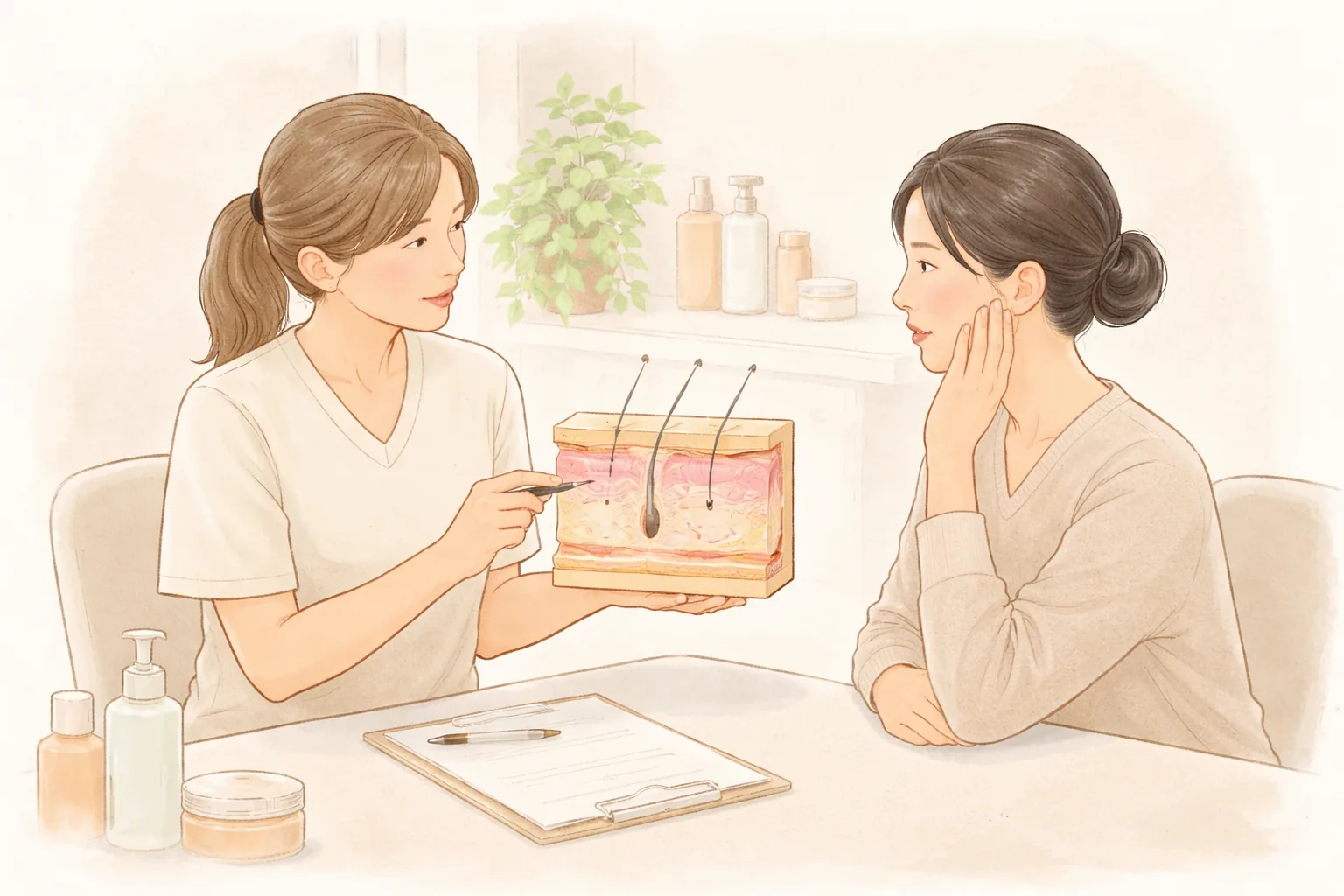
Consultation and skin examination — We first check for autoimmune conditions, history of reactions to tissue-derived products, medications, allergies, and pregnancy or breastfeeding. We also look at skin thickness, elasticity and dry areas.
Doctor consultation — The doctor examines your skin and decides which product goes into which area, how much, and across how many sessions. The proposal differs depending on whether your goal is hydration or scaffold replacement.
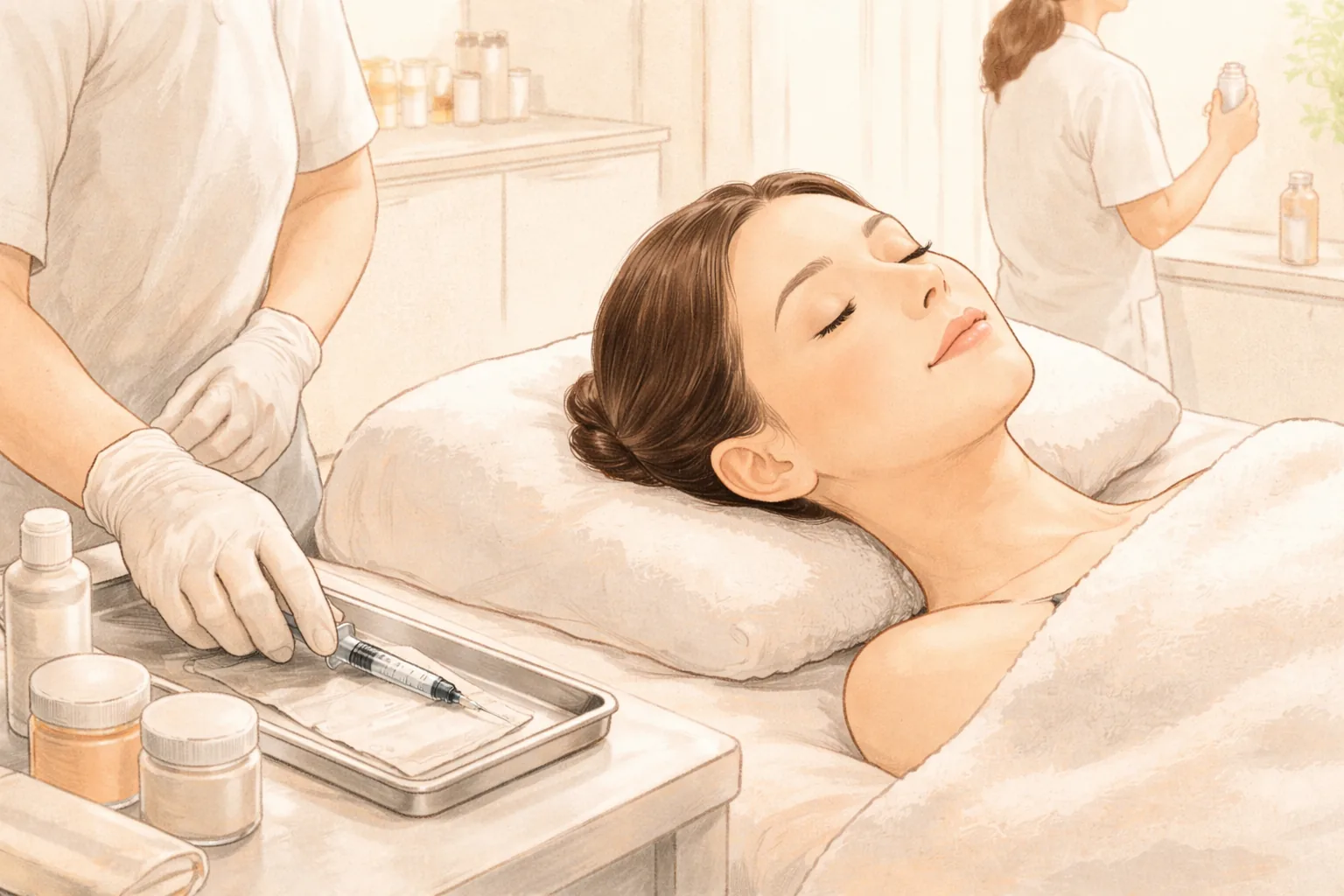
Treatment — Individual diagnosis and treatment plans are decided and performed by the medical team during the visit. The product, volume and injection depth follow what was agreed in advance.
Recovery and aftercare guidance — We explain when you can wash and apply makeup, sun protection, and activities to avoid, and we check your progress. Products used for this topic listed in the treatment guide include Re2O (Elravie Re2O), Juvelook skin, volume and eye, Rejuran Healer, SKINVIVE by Juvéderm, Belotero Revive, Gouri and Hilo Wave.
Aftercare and side effects
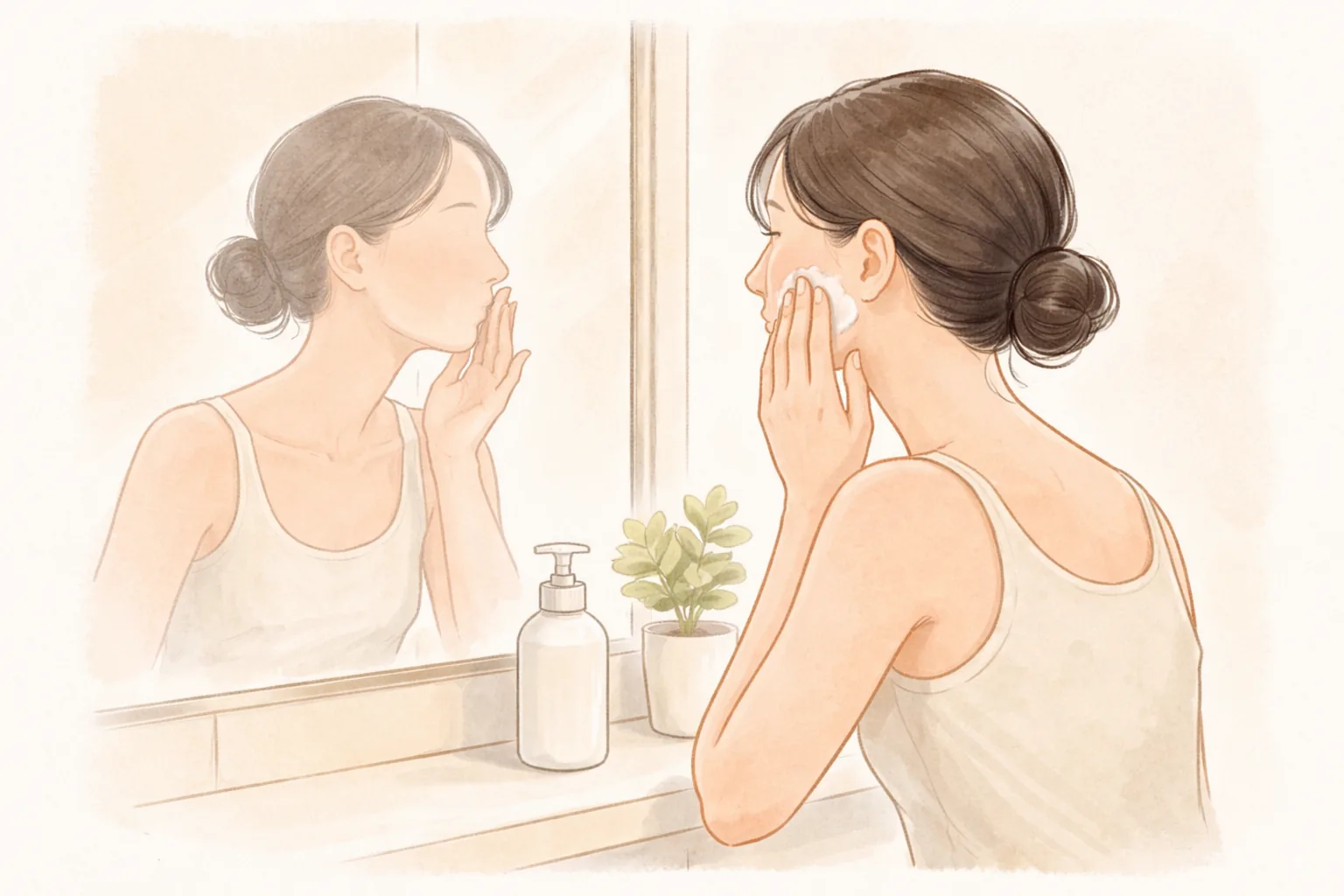
Minimize irritation — Don't press hard on or massage the injection site. Physical stimulation before the product settles can make its distribution uneven. Avoid intense exercise, alcohol and saunas on the day of treatment.
Washing and makeup — Wash gently from 4–6 hours after, and start makeup the next day.
Moisturizing and sun protection — Apply sunscreen carefully throughout the recovery period. Keep up hydration too.
Check your progress — If a bumpy feeling continues for a while, or swelling, pain or heat persists, let the clinic know.
Common reactions are redness, stinging, swelling, tenderness when pressed, and bruising. Less commonly, infection, allergic or foreign-body reactions, or small lumps (nodules) can occur. Rarely, the injected product can block or damage blood vessels, so if you have pain that is unusual or getting worse, if the skin at the injection site turns white, mottled, gray-blue or black, or if your vision changes, don't wait — get medical care right away. These are situations to contact the clinic immediately, not to wait for your next appointment.
FAQ
How do Re2O and Juvelook differ in ingredients?
Re2O is human-derived acellular dermal matrix (hADM), which directly replaces the dermal extracellular matrix scaffold including collagen, elastin and hyaluronic acid. Juvelook is presented under skin boosters as a lineup divided into skin, volume and eye, so the right product depends on the area and goal you're concerned about. Rather than comparing the two names by a single ingredient, it's more accurate to confirm the exact product name, volume and injection depth in consultation. Even with the same name, which product is used affects results and safety.
When do effects show and how long does Juvelook last?
With Re2O, the plump feeling right after treatment is partly swelling that settles over several days; if there is a change, it appears gradually over weeks, and how much varies widely between individuals. PN and HA-based products usually follow a course of a few sessions at 2–4 week intervals, then maintenance. How long Re2O lasts varies widely between individuals and long-term data is still limited, so the plan is set in consultation based on your skin condition. Habits like sun protection and hydration also affect how long changes persist.
How much pain and swelling should I expect?
Redness and stinging last a few hours to the same day, temporary volume and mild swelling 1–3 days, and bruising can take more than 1 week to fade if it appears. Pain varies with injection depth and the skin thickness of the area more than with the product type, and for the same area, a larger injected volume means more burden. Delicate areas such as around the eyes require precise control of volume and depth, so the scope is set first in consultation. A bumpy feeling at the injection site can remain for a while as the product settles.
What should I compare prices on?
In ATTITUDE Clinic's treatment guide, Juvelook is listed by volume unit — skin 4cc and 8cc, volume 1cc, 4cc and 8cc — and Re2O by the 1-vial unit. So rather than comparing the total, the starting point is which product and how much volume are used. Even for the same area, the plan differs with injection depth, scope and any combined treatments, so a quote is set after your skin is examined in consultation.
What should I check when choosing a clinic?
Start with three things: who performs the consultation, which product is used, and whether a pre-treatment consultation is done. Whether they answer clearly when you ask about the product name and volume, and whether they check for autoimmune conditions, medications and allergy history, are also judging criteria. It also helps to see whether they explain how to get in touch if an adverse reaction occurs and when to return. The American Academy of Dermatology filler guide also advises confirming suitability and whether a treatment can be done safely in consultation before deciding.
At a glance
Table 2 At a glance
Item
Key point
Re2O's approach
Directly replaces the dermal extracellular matrix with hADM (human-derived acellular dermal matrix)
Juvelook's approach
Skin booster lineup divided by purpose and volume — skin, volume and eye
What decides results
Product and volume, injection area and depth, skin condition, number of sessions and intervals, aftercare
Common course after treatment
Redness and stinging a few hours to same day, swelling 1–3 days, bruising possible for more than 1 week
Scheduling
Calculate recovery days first, then set the treatment day and decide whether to divide areas
Tell us in advance
Autoimmune conditions, history of reactions to tissue-derived products, medications, pregnancy or breastfeeding, fixed dates
This article offers general health information. It is not a substitute for diagnosis or treatment based on your own condition, so please talk through your situation with a doctor.