Rosacea and Dark Spots Together: How Do You Decide the Order of Diagnosis and Treatment?
When redness and dark spots overlap on the same face, how do you decide what to treat first? Here's how medication and lasers divide the work, how strength and intervals are chosen, what to tell your doctor before consultation, and aftercare.
Written by ATTITUDE Clinic Editorial Team
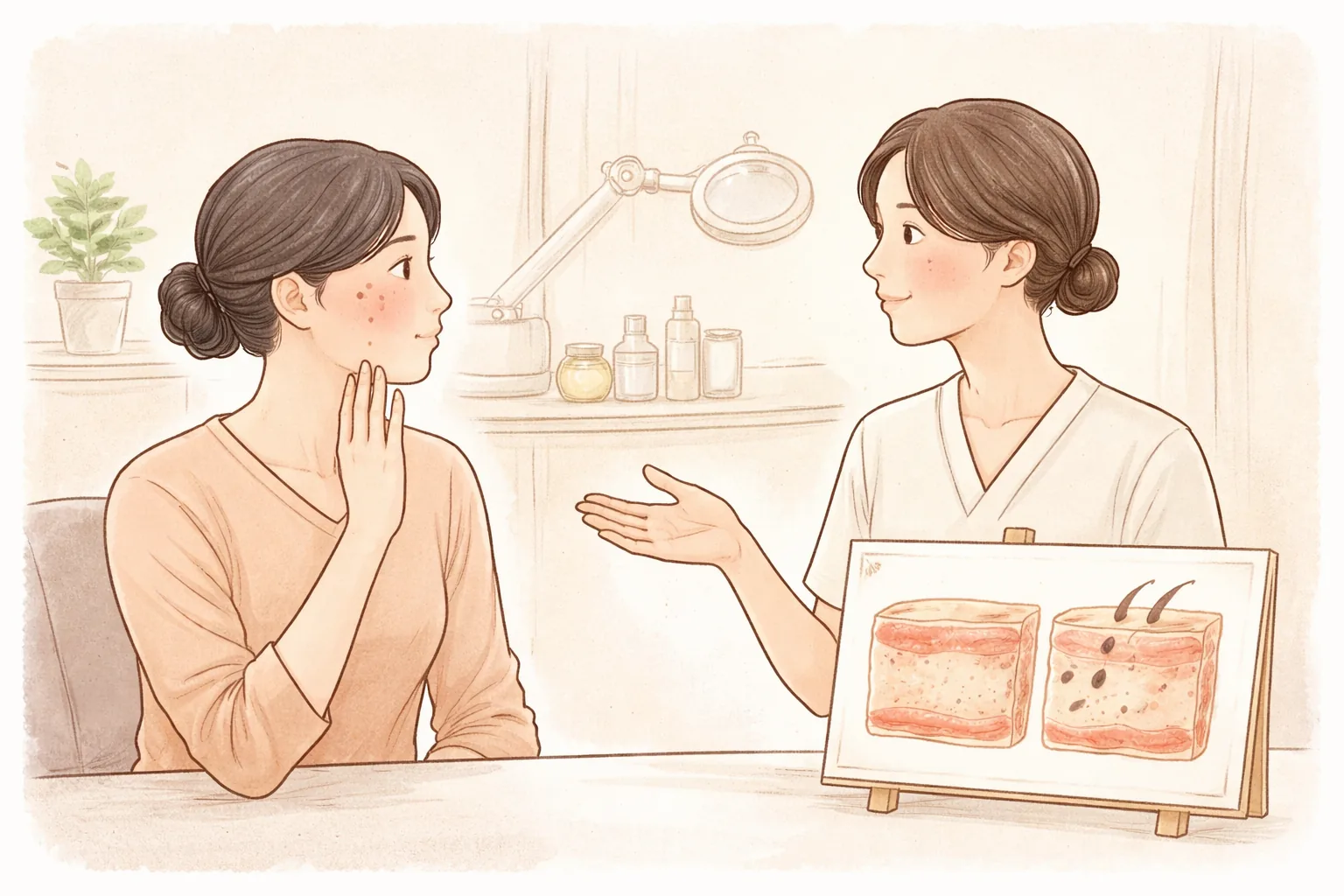
When your face flushes at the slightest warmth and brown patches are mixed in on your cheeks, it's hard to know where to start. Should you calm the redness first, or clear the pigment first? Should you use medication or lasers? This article walks through what criteria guide that decision, and in what order.
The short answer first
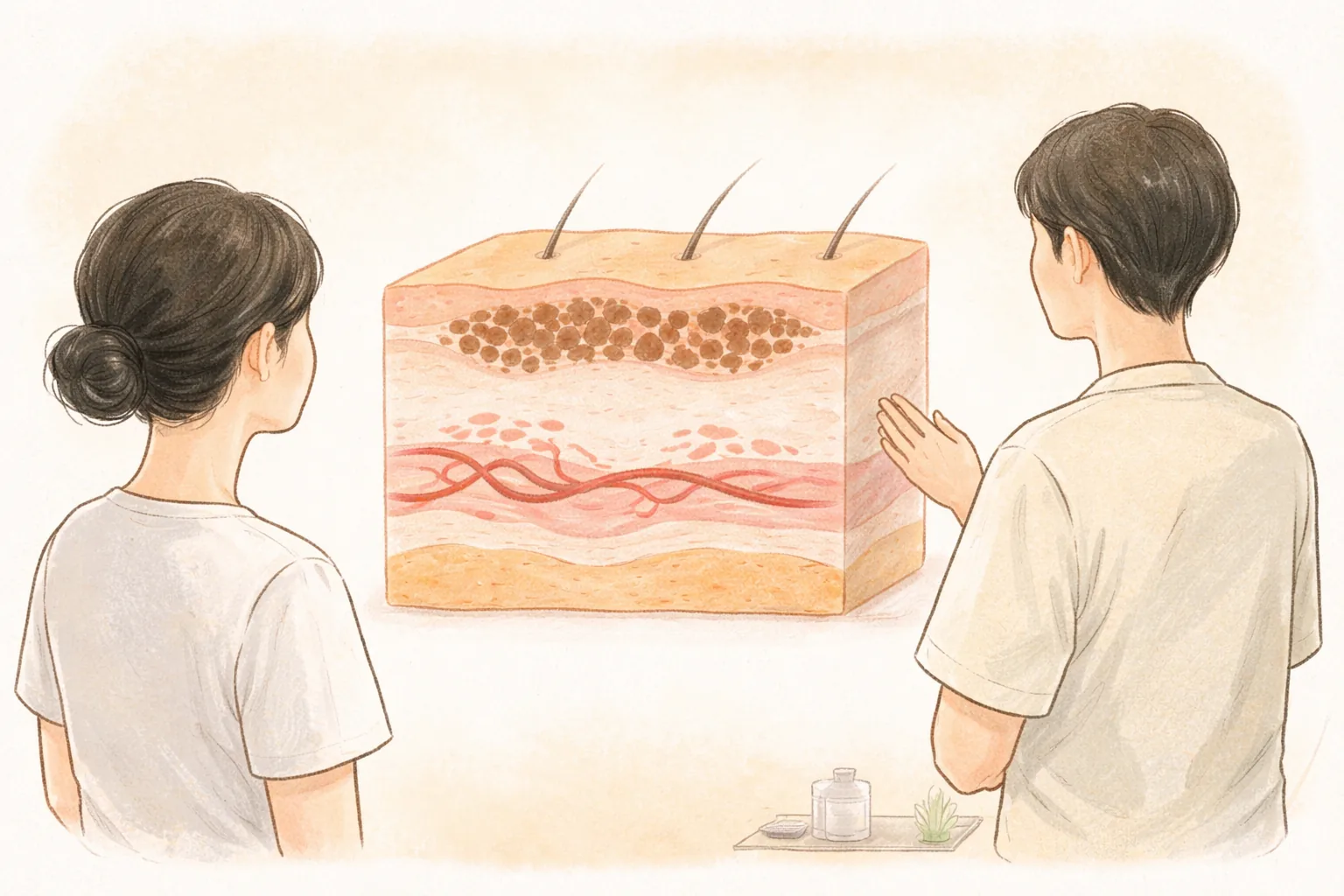
Redness and brown pigment arise in different layers and from different causes. Redness comes from dilated blood vessels and inflammatory reactions beneath the skin, while dark spots form as melanin pigment accumulates. So pressing on both with the same device at the same intensity doesn't fit well. The American Academy of Dermatology also notes that a rosacea treatment plan includes medication, skin care, and avoiding triggers, with laser and light therapy used as part of that plan (AAD on lasers and lights for rosacea). The first step isn't choosing a procedure name — it's checking whether vascular redness or pigment stands out more on your face right now, and how sensitive your skin is to irritation.
Why are redness and dark spots different problems?
Facial redness happens because small blood vessels beneath the skin widen, and the amount of blood passing through them increases. Vessels respond to heat, irritation, and inflammatory signals by widening and narrowing, and when that regulation isn't smooth, redness lingers. The AAD notes that rosacea can cause visible blood vessels, skin thickening, and persistent redness (AAD on laser and light therapy).
Dark spots are a different story. When UV, heat, inflammation, and hormonal changes stimulate melanin-producing cells, more pigment is made, and as it builds up in the epidermis or dermis, it appears brown. This is why, under the same amount of sun, some people develop melasma while others accumulate dark spots (ATTITUDE Clinic column — melasma, freckles, dark spots, and age spots).
So why do they overlap in the same area? Inflammation is one factor that stimulates pigment cells. That's why pigment tends to settle in skin that has become red and sensitive — and if you treat only the pigment aggressively while leaving redness alone, the irritation can bring the pigment back and results return to square one.
How do you tell fleeting flushing from continuously red skin?
Even under the single word "rosacea," there are different categories. Whether it's a reaction that flares up briefly and subsides, or a state where redness persists most of the day, determines what you're actually targeting. If it's superficial vessel dilation — visible capillaries near the skin surface — vascular lasers can reduce them, but for sensitive skin or rosacea driven by high skin reactivity itself, laser effect may be limited (ATTITUDE Clinic column — dark spots, redness, scars, and lasers).
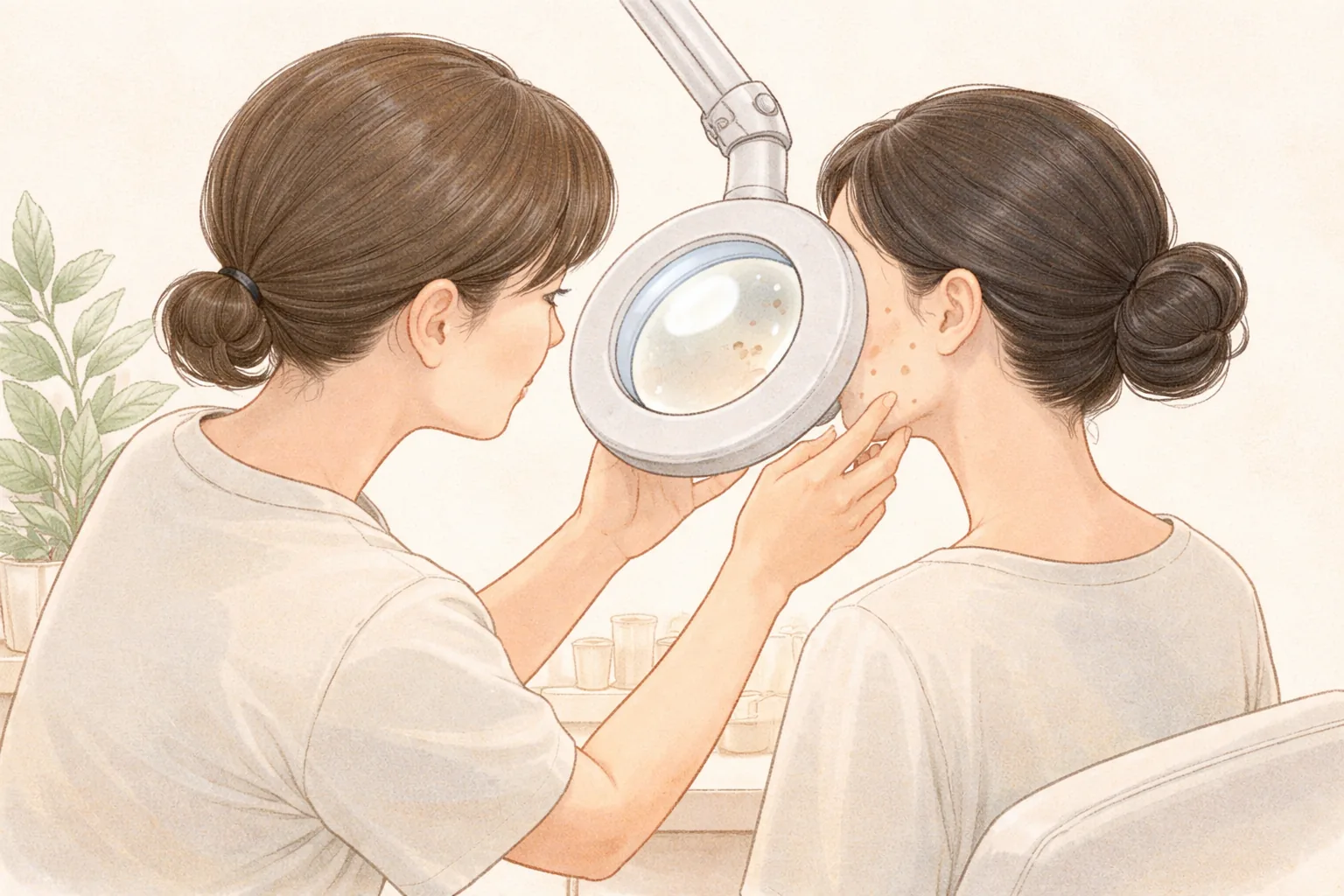
During consultation, we look at when redness appears and how long it lasts, whether there's a left-right difference, whether visible capillaries are present, and whether flaking or dryness accompanies it. Writing down what triggers your redness for about 2 weeks makes it much clearer which irritants wake up your skin. Don't diagnose yourself with rosacea just because your face is red, and don't stop any medication on your own. The type and dose of medication should be decided by a clinician who reviews your history and skin condition.
How do medication and lasers divide the work?
Medication is mainly used to lower the skin's overall reactivity, while lasers are mainly used for structural changes — visible vessels or thickened skin. According to the AAD, a rosacea treatment plan consists of medication, skin care suited to rosacea, and avoiding triggers, and when visible vessels or skin thickening are present, laser and light therapy is often added to the plan (same guide).
Medication that reduces redness can reduce or clear redness for up to 12 hours, but it tends to return after that time. Laser figures are worth noting too. For visible vessels, a 50–75% reduction was reported after 1–3 sessions, with some showing 100% reduction. In contrast, a few small studies targeting persistent redness observed about 20% reduction, and since devices and assessment times differ across studies, more research is needed. Treatment intervals are usually 3–4 weeks, and vascular treatment results tend to last about 3–5 years — though rather than treated vessels returning, new vessels may form (same guide).
The principle for pigment is separate. Light absorbs differently depending on color and wavelength, and melanin selectively absorbs specific wavelengths. Using this property to break up only the pigment is called selective photothermolysis. Conversely, for concerns where skin structure itself has changed — pores or scars — a fractional approach is used, delivering fine column-like micro-stimulation to guide the skin to regenerate on its own. These two approaches aren't opposing concepts; they're sometimes combined on the same day, and sometimes only one is focused on depending on the concern.
When pigment is mixed in, how are strength and order decided?
The most common misconception here is this: "If you fire the laser harder, the pigment disappears faster." For melasma, the result can be closer to the opposite. Melasma is a state where the pigment-producing cells themselves are overactive, so using strong energy at once can stimulate the pigment cells and cause a rebound where it darkens further. That's why melasma is basically approached with lower intensity, adjusted gradually over multiple sessions (ATTITUDE Clinic column — melasma, freckles, dark spots, and age spots).
If borders are blurry and spread widely and symmetrically on both cheeks, melasma is more likely, but it's hard to distinguish precisely by eye. It's also common for small, sharply bordered spots and melasma to overlap in the same area. Which pigment it is and at what depth is something determined by examination. It also helps to remember that the wavelengths used for vascular concerns and pigment concerns are different. Pico toning has almost no improvement effect on vascular concerns, so choosing the wrong device can mean more sessions with slow change (ATTITUDE Clinic column — dark spots, redness, scars, and lasers).
Table 1 When pigment is mixed in, how are strength and order decided?
Category
Main target
Suited concerns
Decided in consultation
Pico toning (PicoPlus 1064nm)
Repeatedly moderating melanin pigment at low energy
Widely spread melasma, pigmentation
Output and sessions, interval (at least 1 week), concurrent care
Pico spot (532nm pico spot)
Individual pigment spots with clear borders
Dark spots, freckles
Range and output per spot, UV exposure considerations
Vbeam (532nm vascular laser)
Targets vessels at the wavelength absorbed by oxygen-carrying hemoglobin
Vascular redness, red capillaries
Whether redness is vascular, output, possibility of bruising
Genesis toning (1064nm)
Skin tone and anti-aging direction management
Dullness, maintenance
Whether to repeat and the range
Erbium fractional
Epidermal and dermal structural remodeling
Pores, scars, skin texture
Output and tolerated downtime
Swipe sideways to see the whole table.
In summary redness and dark spots involve different tissues, so rather than finishing one in a set order, it's better to check whether vascular redness or pigment stands out more on your skin right now, and how sensitive it is to irritation, then decide the combination. Sometimes both are done on the same day, and sometimes timing is split after observing recovery response.
If this situation applies to you
When a ceremony or photo shoot is a few weeks away
If the date is close, high-output procedures with long downtime are a burden. Spot lasers that form crusts take about 7–10 days for the crusts to fall off, and vascular lasers cause redness and swelling for a few days, with bruising taking 1–2 weeks to fade if it occurs (ATTITUDE Clinic column — dark spots, redness, scars, and lasers). It's better to mention your schedule first and discuss the intensity and timing that fit within it.
When pigment you've been managing steadily looks darker again
If you interpret the darkening simply as "not enough intensity," the next plan is also likely to go wrong. We re-check whether melasma and dark spots were mixed from the start, whether deep pigment was also present, and how much redness and heat occurred during recovery. Whether UV exposure has increased is also something to check.
When your skin is sensitive and flushes easily
If you raise intensity based only on how dark the pigment is, redness, dryness, and stinging can linger. For sensitive skin, we adjust toward reducing the range and intervals of pigment treatment and including components that support recovery. Please also tell us during consultation about any exfoliating products or retinoids you've recently used.
When planning consultation and treatment together during a short stay
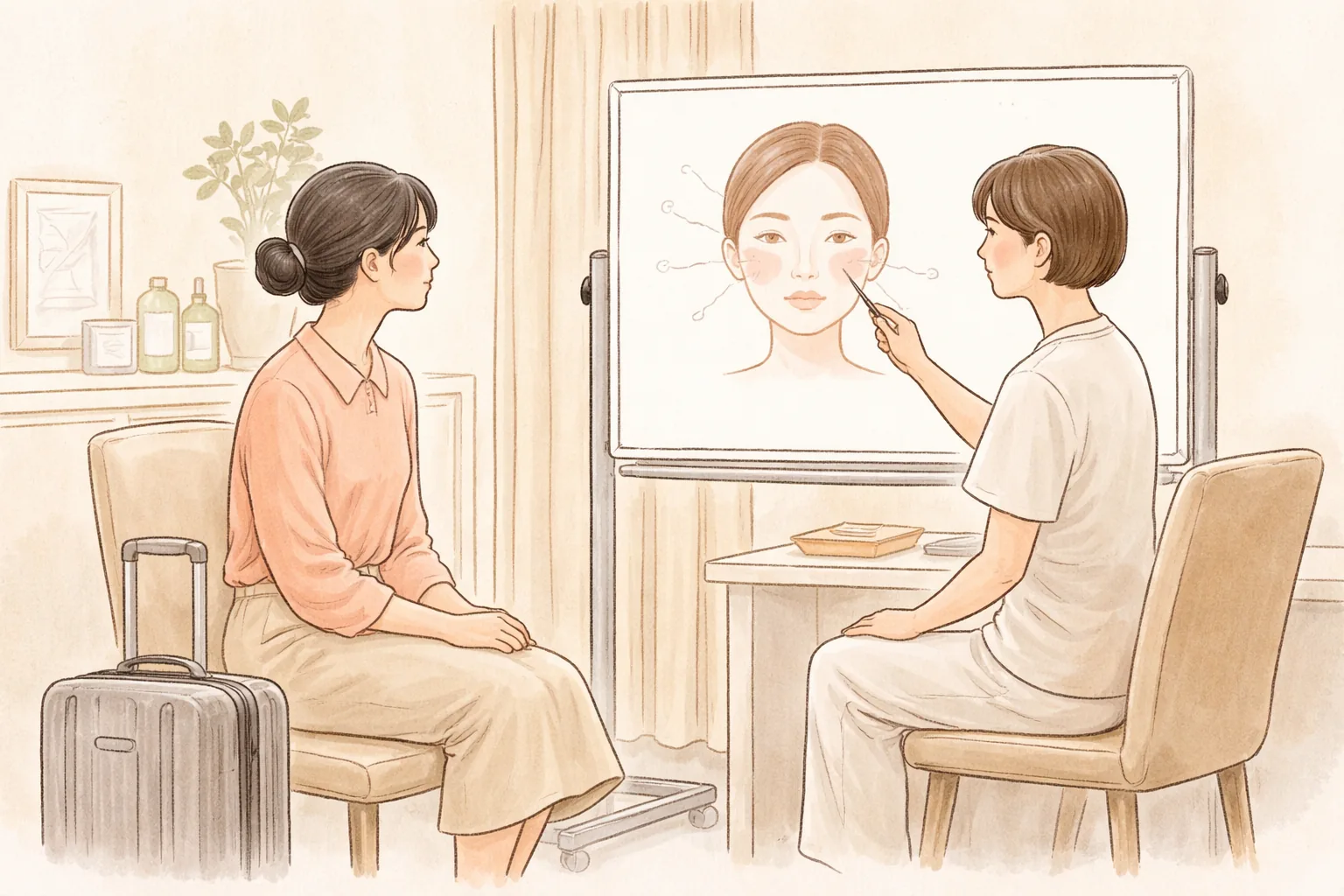
If your stay is short, procedures with long recovery are hard to choose. Consultation requests and confirmed bookings are different — after a request, the clinic confirms via a follow-up contact — so it's better to inquire with some buffer (ATTITUDE Clinic consultation and booking guide). It's realistic to start with short-downtime care and plan the next visit together.
Please tell us before consultation Your recent UV exposure and outdoor activity, medications you're taking (warfarin, isotretinoin, aspirin, etc.), history of cold sores or photosensitivity, tendency to bruise easily, number of previous toning/laser sessions and any redness, heat, or pigment changes afterward, and important events like ceremonies or photo shoots. The AAD also advises telling your clinician about medications, other conditions, sensitivity to light, and expected results during laser and light consultation (AAD on laser and light therapy).
How ATTITUDE Clinic proceeds
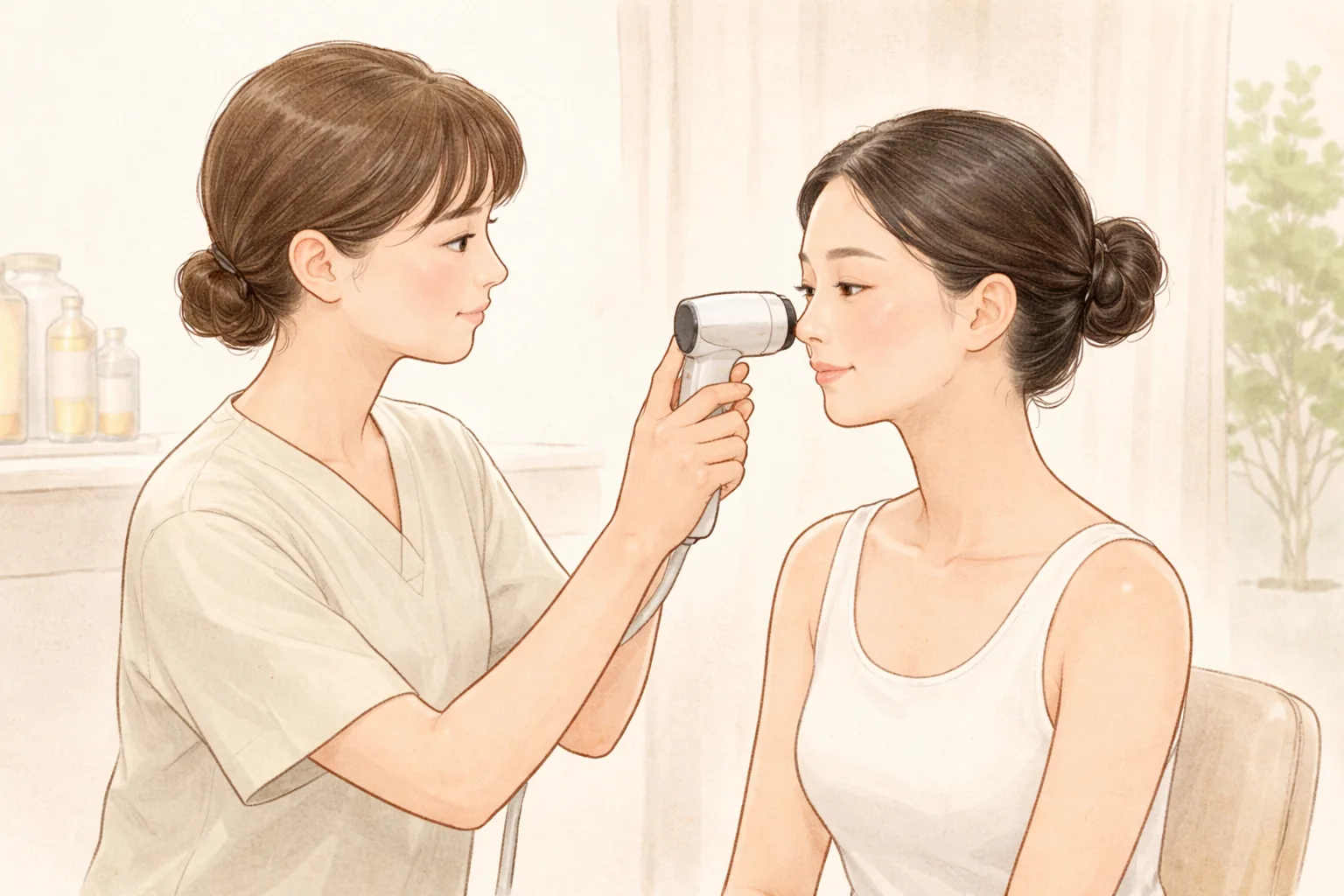
AI skin analysis record: Records brown areas, red areas, and skin texture across the face under consistent conditions to support consultation. It's a tool that organizes and shows records, not a device that makes a medical diagnosis.
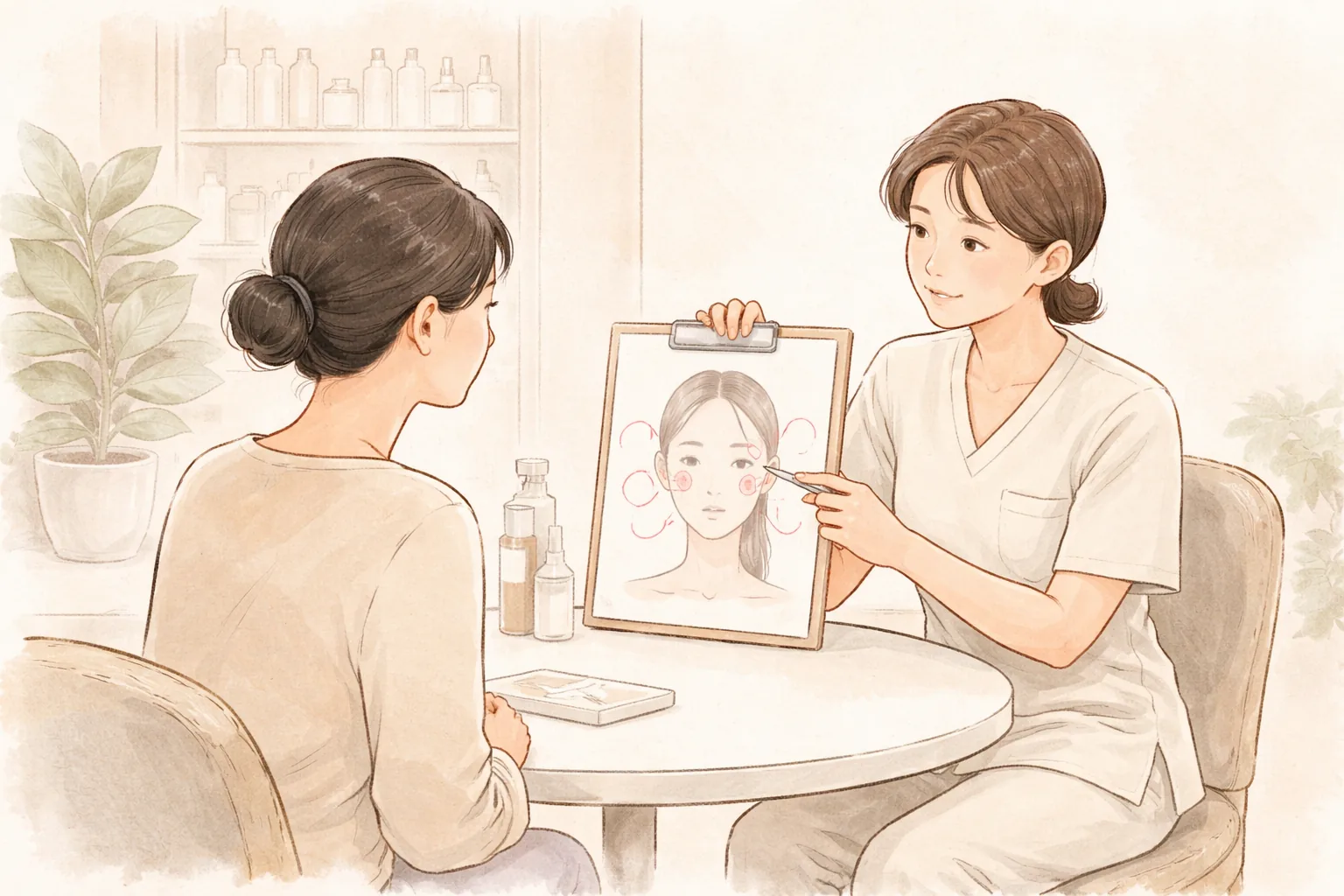
Director consultation: Adding UV exposure, medications, previous treatment responses, and lifestyle rhythm to the analysis record, the director judges pigment type and the nature of redness through examination, and designs the treatment combination and order.
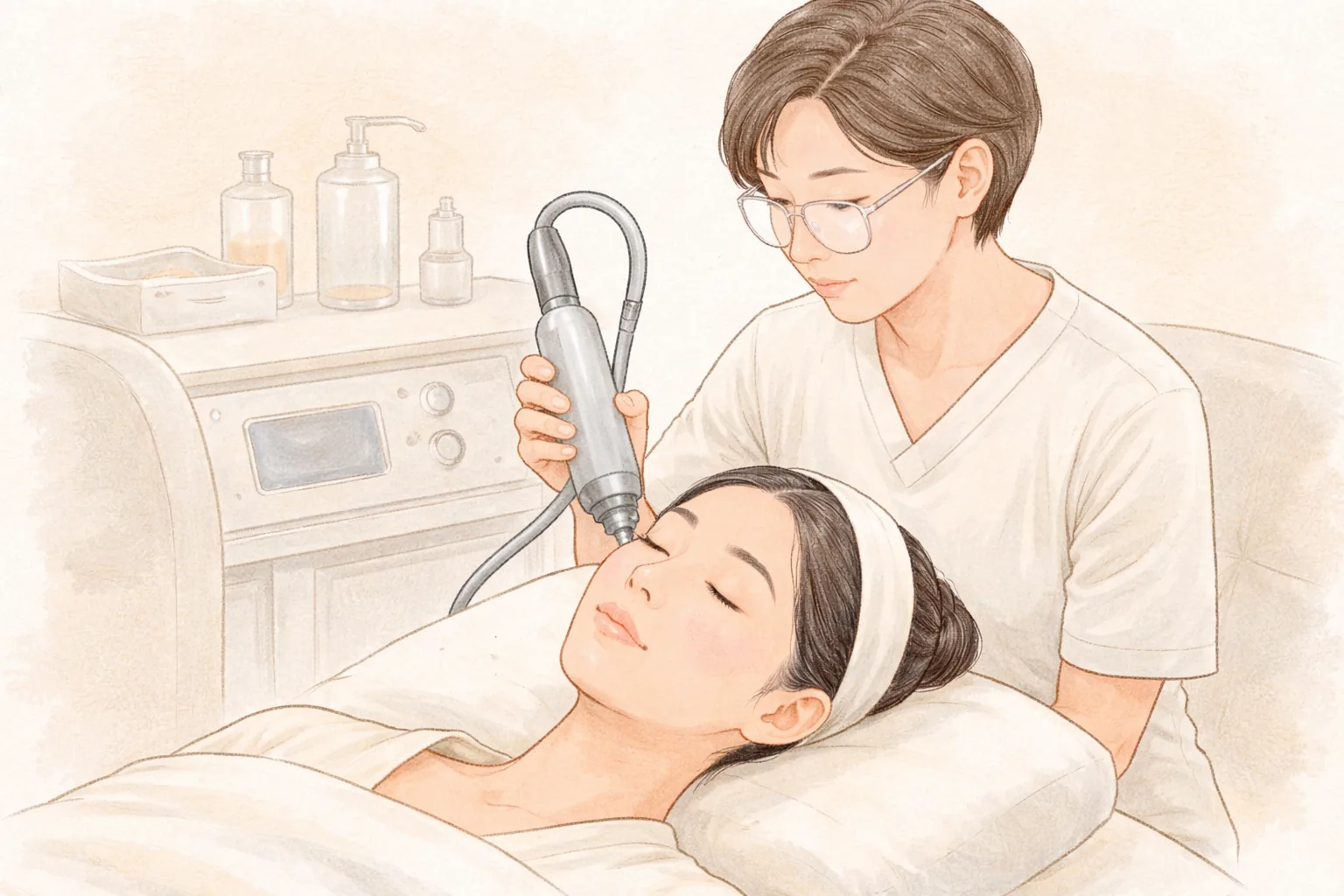
Director-performed treatment: Among devices on hand — PicoPlus, Vbeam, erbium YAG laser, and others — the director selects the one suited to your concern and adjusts intensity and combination directly.
Recovery and care: After treatment, redness, heat, and pigment response are checked, and the next intensity and interval are re-decided. The price list is divided by procedure, dose, and session unit, and all amounts are shown VAT-exclusive (procedures and pricing guide).
Aftercare and side effects
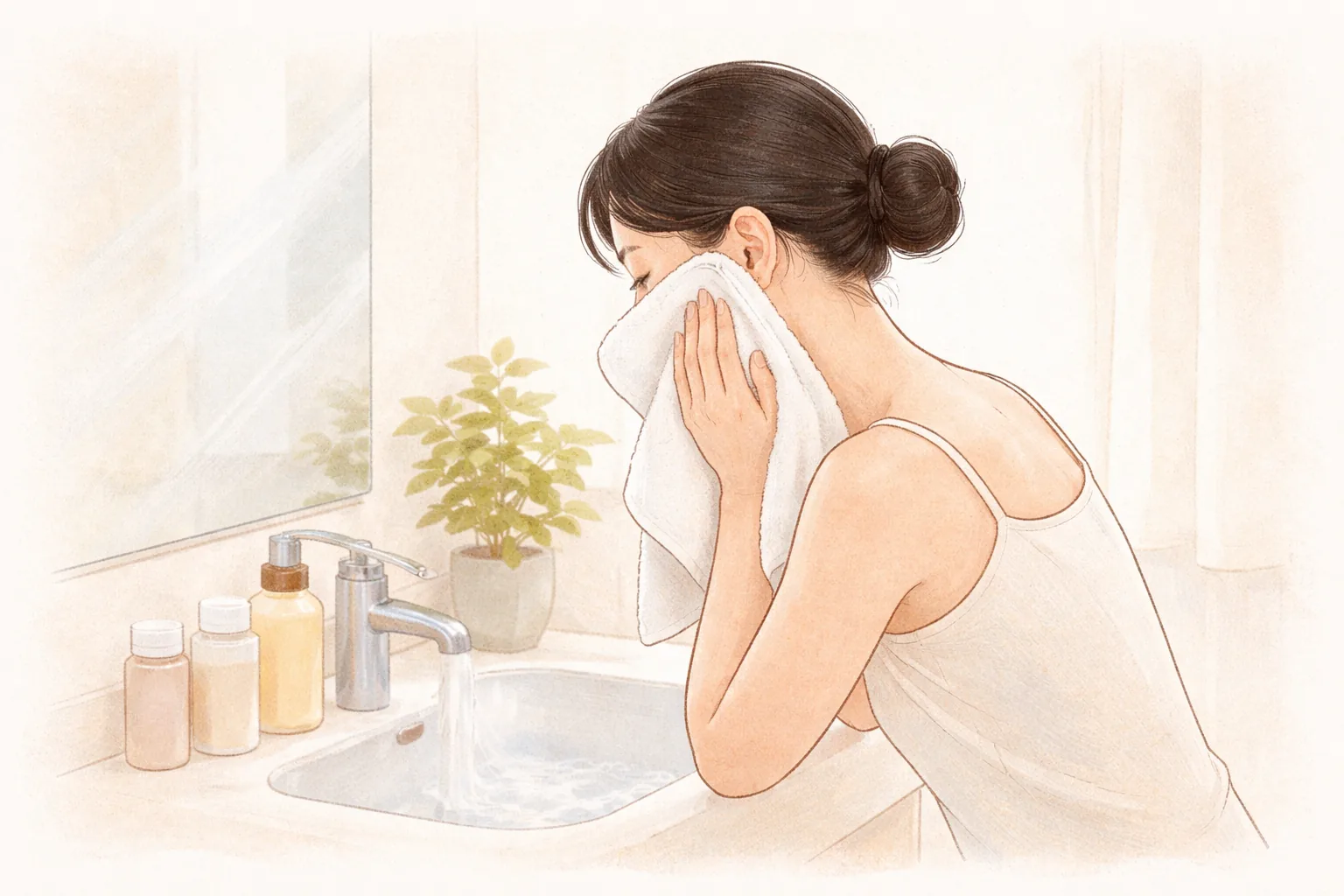
Soothing: Redness right after treatment is common and usually subsides within 2 weeks. Wash with lukewarm water rather than hot, and pat — don't rub.
Moisturizing: If dryness lasts long, redness and stinging also last longer, so fill the barrier with a low-irritation moisturizer.
UV protection: Skin in recovery has a weakened barrier. Apply SPF 50+ sunscreen for at least 2 weeks, reapplying every 2 hours outdoors. Avoid saunas, jjimjilbangs, and intense exercise for 1–2 weeks.
Check progress: If redness and stinging last more than 3 days or suddenly worsen, postpone the next session and contact us first. The same applies if crusts last longer than expected.
Common reactions are redness, swelling, crusts, and temporary darkening of pigment at the treated area. Small crusts after spot lasers usually fall off on their own within 7–10 days, but picking them off damages the newly forming skin and can leave pigmentation or scars. Rarely, hypopigmented spots, blisters, or scars occur, and pigment can rise again over time (ATTITUDE Clinic column — dark spots, redness, scars, and lasers). Some people feel tightness, itching, or pain during treatment; redness tends to fade within 2 weeks, and purple or red spots over 1–2 weeks, with scarring rare in experienced hands, according to the AAD. Sun protection is both care that supports recovery and a way to prevent scars (same guide).
Frequently asked questions
If I have rosacea and dark spots together, what do I treat first?
There's no fixed order — it depends on what stands out more on examination. If visible vessels are prominent, we address the vascular side first; if sharply bordered pigment lesions stand out, we start centered on those lesions. Conversely, if your skin reddens easily and heat lingers, we lower pigment intensity and watch recovery together. The two can be combined on the same day, or split by timing. Either way, we decide after checking pigment type and depth, the nature of redness, and previous treatment response at the first consultation.
Will lasers completely remove redness?
Degree and duration vary. For visible vessels, a 50–75% reduction was reported after 1–3 sessions, with some showing 100% reduction. However, small studies targeting persistent redness observed about 20% reduction, and devices differ across studies, so more research is needed. Even if treated vessels don't return, new vessels can form, so results are hard to call permanent (AAD on lasers and lights for rosacea). Expectations themselves differ depending on whether the cause of redness is vascular or skin reactivity.
How many sessions, and at what intervals?
For redness and vascular concerns, 3–5 sessions at 4–6 week intervals is a commonly cited example. For dark spots, 1–3 sessions at 4–8 weeks; for melasma and widespread pigment, 8–12 or more sessions at least 1 week apart; for pores and skin texture, 3–5 sessions at 4–6 weeks are examples (ATTITUDE Clinic column — dark spots, redness, scars, and lasers). These figures are just common examples and vary with pigment depth, skin type, and UV exposure. If redness and heat last long after treatment, we adjust by lengthening the interval to the next session.
How do I check cost and what's included?
The price list separates items by procedure, product, area, and session unit, and all amounts are shown VAT-exclusive (procedures and pricing guide). In consultation, asking which items are included in your plan and how far anesthesia or aftercare is covered makes it easier to gauge the real burden. The AAD also recommends confirming the number of sessions needed, recovery period, and cost during cosmetic consultation (AAD on asking questions before cosmetic procedures).
What should I check when choosing a clinic?
Results depend heavily on the experience of the person performing the procedure. Check how much they've handled that procedure, whether they've treated patients of your skin type and age group, and how they explain risks and alternatives. The AAD advises confirming expected results and risks, alternatives, recovery period, preparation and aftercare, and cost at the pre-procedure consultation (AAD on asking questions before cosmetic procedures). How they distinguish and explain pigment versus redness in consultation also helps your judgment. Specific decisions and treatment suitability vary with skin condition, so individual response differences are most accurately confirmed in a clinical visit.
At a glance
Table 2 At a glance
Item
Key point
Difference between redness and pigment
Redness is vessels and inflammation, dark spots are melanin pigment — different layers and causes
Criteria for deciding order
Which stands out more — vascular redness or pigment — and how sensitive to irritation
Role of medication vs. lasers
Medication moderates reactivity, lasers handle visible vessels and structural change
Intensity and intervals
Melasma: low energy repeated; next intensity and interval adjusted by recovery response
Recovery care
Don't pick crusts, SPF 50+ for at least 2 weeks, avoid heat stimulation
Before consultation
Medications, cold sore/photosensitivity/bruising, previous treatment response, important dates
This article offers general health information. It is not a substitute for diagnosis or treatment based on your own condition, so please talk through your situation with a doctor.