Sculptra Consultation: What to Check From Nodules to Aftercare
A Sculptra consultation guide for international patients in Gangnam, Seoul — covering nodules, massage instructions, when results appear, session count and dosage, cost, and when to contact the clinic during recovery.
Written by ATTITUDE Clinic Editorial Team
Once you start looking into Sculptra, three things usually come along at once: worry about whether nodules will form, curiosity about when results will show, and feeling unsure about what to ask during a consultation. This article walks through nodules and massage, when to evaluate results, session count and dosage, cost, and when to contact the clinic about pain and recovery — in the order these questions come up in a consultation.
The short answer first
Sculptra is an injectable treatment that places poly-L-lactic acid (PLLA) deep in the skin to stimulate the skin to produce its own collagen. Unlike hyaluronic acid fillers that fill immediately, results appear gradually — so it is better to decide in the consultation when and by what criteria results will be evaluated. According to the AAD filler guide, PLLA fillers should be massaged gently for about 5 minutes several times a day for 1–2 weeks, and results appear from 2–3 weeks and tend to last 1–3 years (AAD filler guide). The heart of the consultation is therefore the aftercare instructions including massage, the planned number of sessions and intervals, the evaluation point, what is included in the cost, and which symptoms during recovery warrant contacting the clinic. How quickly results appear and how long they last vary with each person's collagen response and skin condition, so rather than copying the numbers from general resources onto your own schedule, it is more realistic to confirm your own plan in the consultation.
Nodules and massage: what should you check in the consultation?
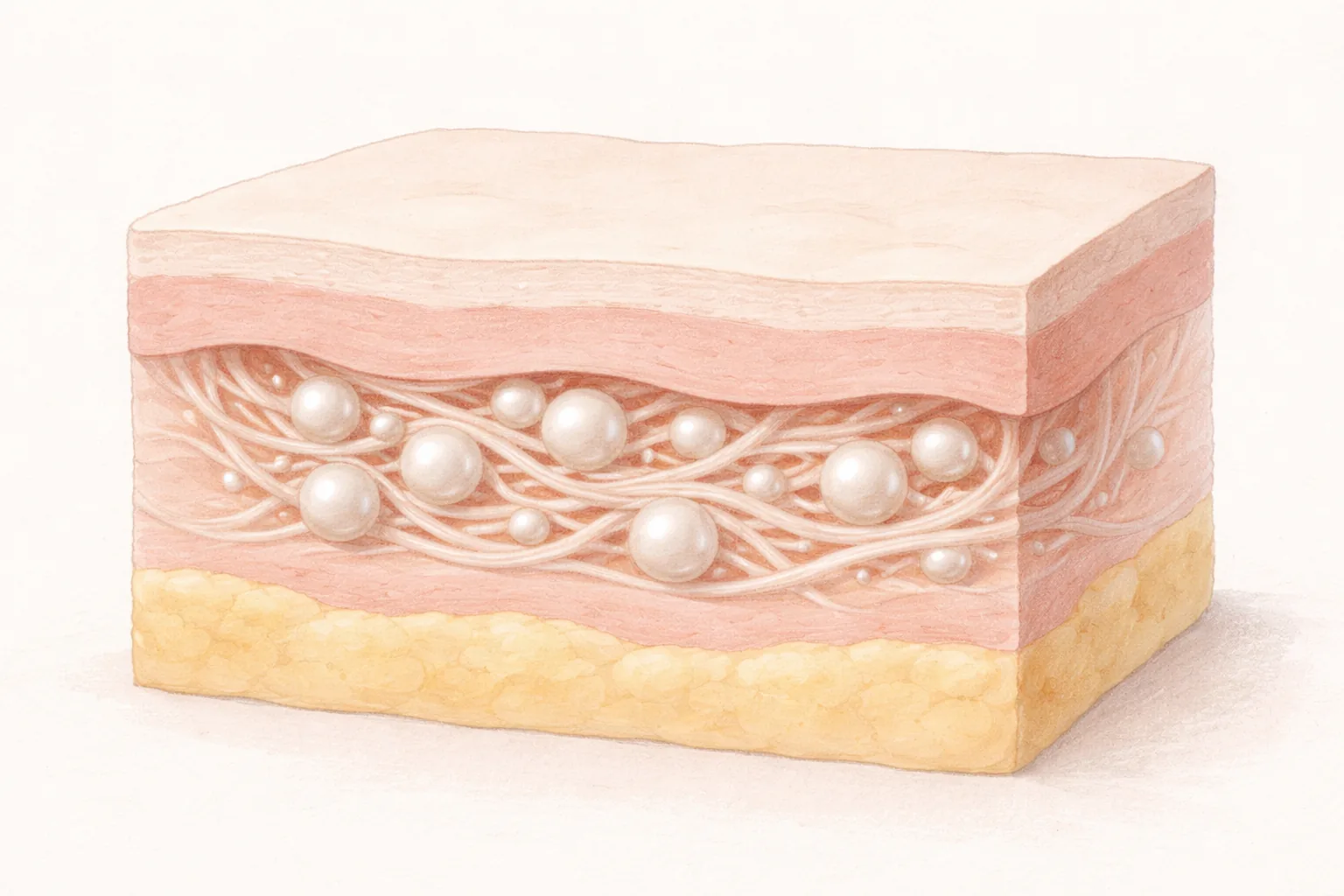
Nodules are areas where the injected material clumps together and can be felt — one of the side effects reported with filler treatments. According to the AAD filler guide, serious side effects such as lumps and bumps are reported more often when treatments are performed in settings without sufficient medical training and experience (AAD filler guide). Nodules are less a matter of unavoidable fate and more a matter of who injects, in what manner, and how aftercare is handled — the risk shifts with these factors.
So why is massage emphasized for PLLA? Because PLLA does not settle into place right after injection; instead, new collagen builds up around it over time. According to the AAD guide, PLLA fillers specifically should be massaged gently for about 5 minutes several times a day for 1–2 weeks (AAD filler guide). Treatments without massage instructions sometimes advise the opposite — not touching the treated area for 3 days — so it is best to first confirm whether your treatment includes massage and, if so, when and how to do it.
In the consultation, it is also worth asking how nodules will be handled if they appear. Asking about the threshold for contacting the clinic regardless of timing, when observation is sufficient versus when an in-clinic check is needed, and what management options exist if necessary will ease anxiety after the treatment.
When do results appear, and how are they evaluated?
PLLA filler results do not appear right after injection but during the process of collagen building up. According to the AAD filler guide, PLLA filler results appear from 2–3 weeks and last about 1–3 years (AAD filler guide). This contrasts with hyaluronic acid gel or calcium hydroxylapatite fillers, which produce immediate results.
Table 1 When do results appear, and how are they evaluated?
Ingredient
When results appear
Approximate duration
Hyaluronic acid gel
Immediately
4–12 months
Calcium hydroxylapatite
Immediately
6 months–1 year
Poly-L-lactic acid (PLLA)
2–3 weeks
1–3 years
Collagen
Immediately
2–3 months
Swipe sideways to see the whole table.
The timeframes in the table are the general ranges listed in the AAD filler guide, and actual progress varies with the injection site and individual skin condition (AAD filler guide).
In short Sculptra is a treatment where success is hard to judge from the volume on the day of the procedure alone. If you decide on an interim evaluation point and a photo documentation method during the consultation and compare changes at that point, you can read the results much more accurately.
When evaluating, it is better to compare photos taken under the same conditions — with lighting, angle, and expression matched as closely as possible. Dividing items into what you see (hollowing of the cheeks, shadows around the nasolabial area) and what you feel (lumps when touching) makes it easier to tell where changes are coming from. The AAD recommends asking in the consultation what results are realistically achievable and requesting before-and-after photos of patients the practitioner has treated, while checking whether the cases shown match your skin type and skin tone (AAD consultation guide).
How many sessions, and at what intervals? What shapes the plan?
Session count and dosage start from your facial condition, not from a product's standard value. The AAD explains that a dermatologist can judge whether a treatment can achieve the desired result based on skin condition, age, and health status, and recommends asking whether the practitioner has experience treating people with similar skin tone, skin type, and age group, since responses differ from person to person (AAD consultation guide). This is why the degree and location of hollowing, skin thickness, expression habits, and previous treatment history all feed into the plan.
When building a plan, it is better to lay out the total number of sessions, visit intervals, interim evaluation point, and criteria for adding or stopping — all at once. According to the AAD guide, you should confirm in the consultation how many sessions are needed to reach the target result, how long each session takes, and whether anesthesia is required (AAD consultation guide). The same resource also notes that with temporary fillers, re-treatment can be considered when signs of aging reappear (AAD filler guide).
Cost varies with dosage and number of sessions, so it is better to confirm the structure of the total in the consultation. ATTITUDE Clinic's treatment and price guide lists Sculptra at KRW 1,200,000 regular price and KRW 630,000 discounted per 1 vial, with all amounts excluding VAT (ATTITUDE Clinic treatment and price guide). The unit on the price list is a product packaging unit, not a recommended dosage for any individual — how many vials and which areas to treat are decided during the consultation.
Pain and recovery: how should post-treatment contact criteria be set?
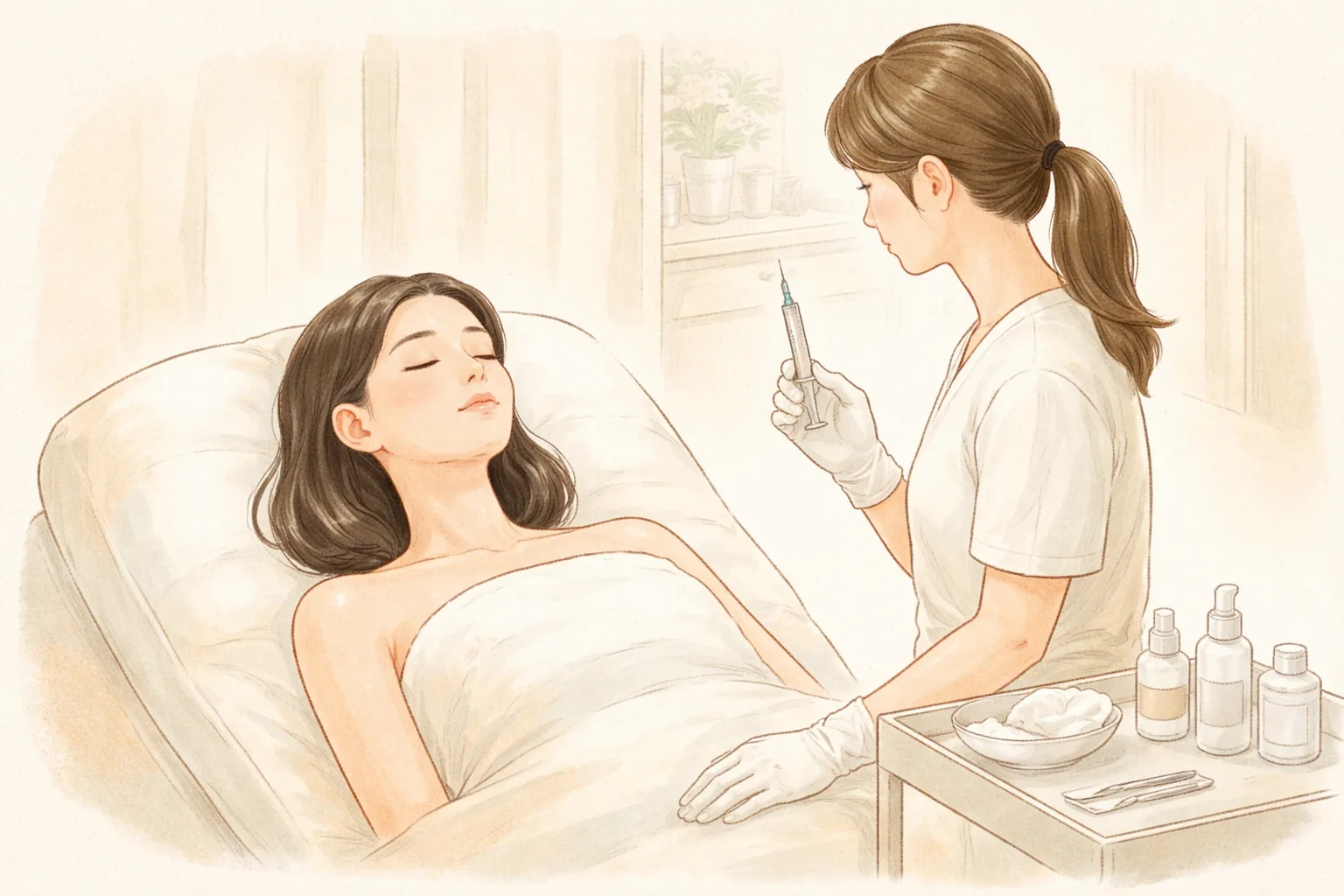
Filler injection is a medical procedure, and you may feel stinging or burning during the injection. According to the AAD filler guide, most filler treatments take about 15–30 minutes and are done in a single visit, and whether numbing cream or a pain-blocking injection is needed depends on the product and the area (AAD filler guide). Pain is the combined result of product type, injection depth, area, and individual sensitivity, so setting criteria in the consultation for adjusting the anesthesia method and strength is helpful.
Recovery time also varies by treatment and individual. According to the same guide, redness, swelling, tenderness, and sometimes bruising can occur after treatment and usually subside within 7–14 days, and most fillers do not significantly disrupt daily life (AAD filler guide). However, the instruction not to touch the treated area for 3 days does not apply when massage is prescribed as with PLLA, so judgments should be based on the instructions for your own treatment.
It is better to set contact criteria in advance. If redness and swelling last longer than expected or worsen, if a lump can be felt, or if warmth and pain increase together, the principle is to contact the clinic that performed the treatment without waiting. According to the AAD guide, such serious side effects are reported more often when treatments are performed in settings without sufficient medical training and experience (AAD filler guide).
If this sounds like your situation
If you have a wedding or photo shoot coming up
PLLA results appear gradually from 2–3 weeks, so starting right before an event can overlap with your schedule. Work backward from the date, set the start timing and interim evaluation point in the consultation, and confirm together how to handle the recovery period. The AAD also recommends asking in the consultation when you can return to daily activities (AAD consultation guide).
If you want to maintain results with consistent care
The guidance that PLLA filler results tend to last about 1–3 years is useful when planning the next treatment timing (AAD filler guide). After treatment, the ATTITUDE Clinic column explains that basic habits like sun protection and hydration affect how long changes are maintained (ATTITUDE Clinic column).
If your skin is sensitive or prone to redness
Recent sun exposure, medications you are taking, or past experiences of skin sensitivity after previous treatments are all information that changes the plan. The ATTITUDE Clinic column notes that even the same treatment may have different timing and settings depending on this information (ATTITUDE Clinic column).
If you are an international visitor on a short stay
If your stay is fixed, the number of visits and recovery periods need to be matched first. Confirming in the consultation the total number of visits, the interval between each visit, and how progress will be checked after you return home keeps your schedule stable. Consultation requests are confirmed after the clinic contacts you, so it is better to apply with some buffer (ATTITUDE Clinic consultation booking).
Please tell us before your consultation It helps us build your plan if you let us know in advance whether you have had a lot of recent sun exposure, any medications or skincare products you are taking or applying, any past experiences of skin sensitivity after previous treatments, any unavoidable events like a wedding or photo shoot, whether you are pregnant or breastfeeding, and whether you have ever had an allergic reaction (ATTITUDE Clinic column).
How ATTITUDE Clinic handles this
AI skin analysis record: Your current skin condition — pigment, redness, texture, pores, and more — is recorded with an analysis tool, and the doctor uses that record to judge the cause of your concerns. The analysis tool records and organizes information to support the consultation; it is not a medical diagnosis (ATTITUDE Clinic column).
Consultation with the doctor to design the direction: Your schedule, pain sensitivity, and skin history are added to the analysis record to decide the treatment type, intensity, and timing together. In a Sculptra consultation, the area and dosage, visit intervals, interim evaluation point, and massage instructions are settled here.
Treatment performed directly by the doctor: Discomfort is reduced with topical anesthesia as needed, and the doctor performs the treatment directly — no treatment beyond what is necessary is recommended. Considering the guidance that side effects such as nodules and bumps depend on the practitioner's training and experience, who performs the treatment is also part of the plan.
Recovery and aftercare: We operate on the principles of authentic products, accurate dosing, and standard pricing, checking your progress after treatment and adjusting the next plan. ATTITUDE Clinic's price list separates collagen-related products such as Sculptra, Juvelook Volume, Re2O, and Radiesse by their respective units (ATTITUDE Clinic treatment and price guide).
Post-treatment care and side effects
After treatment, it is best to follow the care instructions in the order given.
Massage: PLLA is massaged gently for about 5 minutes several times a day for 1–2 weeks. Do not press hard — following the instructed method and frequency helps distribute the product evenly (AAD filler guide).
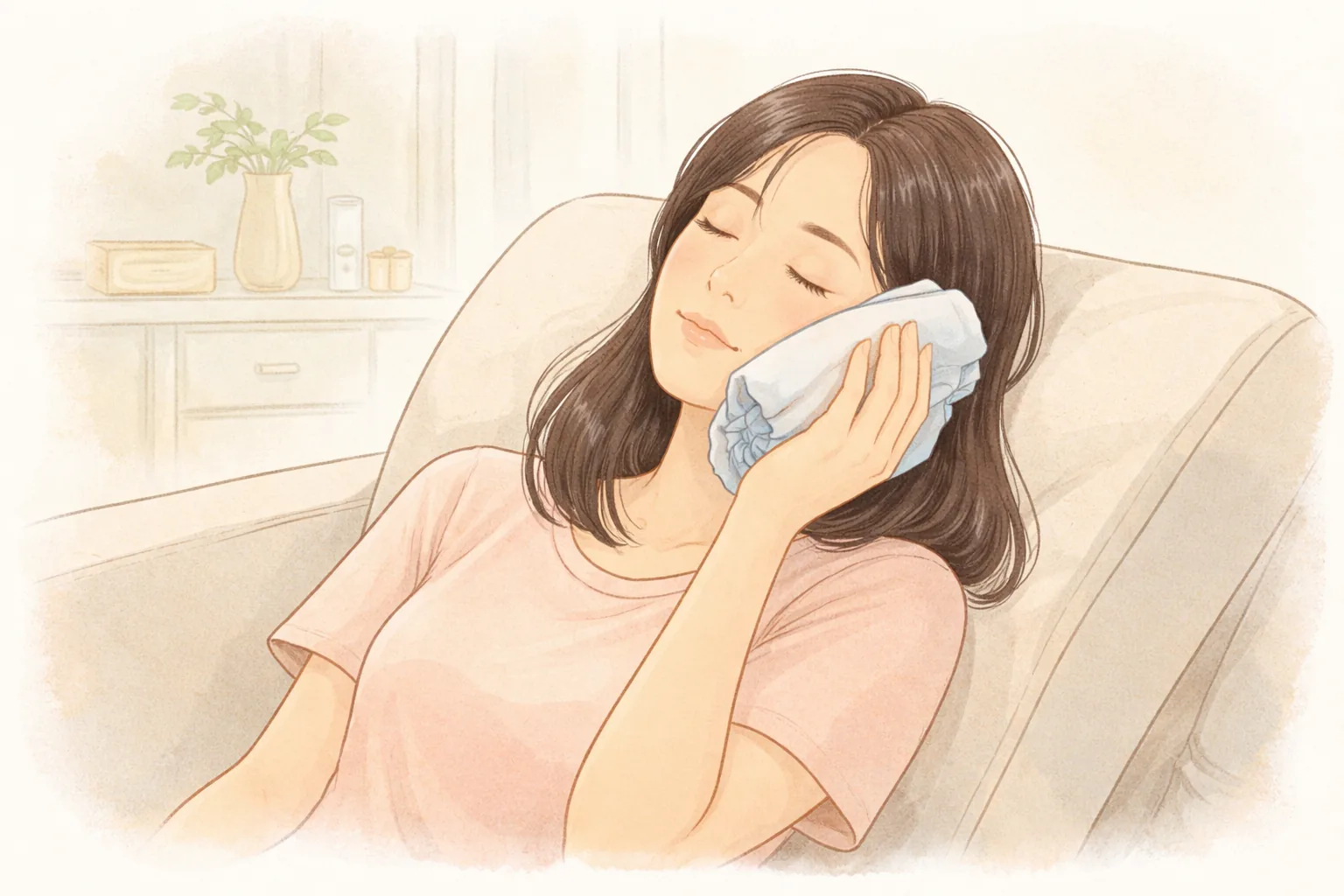
Soothing and cold compresses: Icing for about 15–20 minutes may be recommended right after treatment to reduce redness and swelling (AAD filler guide).
Sun protection and rest: Postpone strenuous exercise until the next day and avoid ultraviolet light and indoor tanning. It is best to apply sunscreen throughout the recovery period (AAD filler guide).
Progress check: Check changes at the planned evaluation point, and if symptoms exceed the expected range, contact the clinic rather than waiting.
Common reactions are redness, swelling, tenderness, and sometimes bruising, usually subsiding within 7–14 days. Rarely, lumps, bumps, overfilling, infection, severe swelling, skin color changes, and allergic reactions are reported, and these reactions are reported more often when treatments are performed in settings without sufficient medical training and experience (AAD filler guide).
If symptoms last longer than expected or worsen, it is better to have them checked rather than waiting until your next appointment. In particular, if a lump can be felt, if pain and warmth increase together, or if skin color changes noticeably, the principle is to contact the clinic right away.
Frequently asked questions
When do Sculptra results appear, and how long do they last?
According to the AAD filler guide, PLLA filler results appear from 2–3 weeks and last about 1–3 years (AAD filler guide). Swelling and volume right after treatment are different from the changes from collagen building up, so it is better not to judge by how things look on the day. The interim evaluation point is set by the treating clinician according to your plan, and comparing photos taken under the same conditions makes changes easier to read. Duration varies with individual collagen response and lifestyle habits, so we recommend confirming your plan's evaluation point and next treatment timing in the consultation.
What should I check about nodules in the consultation?
First confirm the massage method, when to start, how many times a day, and for how long. The AAD advises massaging PLLA fillers gently for about 5 minutes several times a day for 1–2 weeks (AAD filler guide). It is good to ask how nodules will be checked if they can be felt and when to contact the clinic, distinguishing between cases where observation is sufficient and cases where an in-clinic check is needed. According to the same resource, side effects such as lumps and bumps are reported more often in settings without sufficient medical training and experience.
How much pain and recovery time should I expect?
You may feel stinging or burning during injection, and the anesthesia method varies with the product and area. Most filler treatments take about 15–30 minutes and are done in a single visit, and redness, swelling, tenderness, and bruising usually subside within 7–14 days (AAD filler guide). Recovery speed and return to daily activities vary by individual and area, so if you have an important event, it is better to give the date in the consultation and work backward from it.
How do I check the price and what's included?
ATTITUDE Clinic's treatment and price guide lists Sculptra at KRW 1,200,000 regular price and KRW 630,000 discounted per 1 vial, with all amounts excluding VAT (ATTITUDE Clinic treatment and price guide). The unit on the price list is a packaging unit, so the total varies with how many vials and which areas are planned. The AAD also recommends asking about treatment costs in the consultation (AAD consultation guide). In the consultation, it is better to also confirm whether anesthesia, aftercare, and follow-up visits are included in the cost, and under what conditions extra costs arise.
What should I check when choosing a clinic?
Start by looking at the practitioner's experience and how specific the consultation is. The AAD recommends checking how often the practitioner performs the treatment and whether they have experience treating people with similar skin tone, skin type, and age group, since results depend heavily on the practitioner's skill and experience (AAD consultation guide). Whether the consultation covered expected results and risks, alternatives, the number of sessions needed, recovery time, and cost is also a criterion. Look as well at whether post-treatment instructions like massage are explained in detail, and whether you can get checked if an adverse reaction occurs.
At a glance
Table 2 At a glance
Item
Key point
Nature of treatment
Injectable treatment that places poly-L-lactic acid (PLLA) to stimulate collagen production
Results appear
Gradually from 2–3 weeks; duration advised as about 1–3 years
Massage
For PLLA, gently about 5 minutes several times a day for 1–2 weeks
Common reactions
Redness, swelling, tenderness, bruising are common and usually improve within 7–14 days
Watch-for reactions
Lumps, bumps, infection, severe swelling, etc. are rarely reported
Cost check
Confirm the per-vial amount, VAT exclusion, and what's included in the consultation
This article offers general health information. It is not a substitute for diagnosis or treatment based on your own condition, so please talk through your situation with a doctor.