How Long Do Skin Boosters Last? SKINVIVE Results Timeline
When SKINVIVE results appear and what determines how long they last. We cover how fast hyaluronic acid skin boosters show, skin factors that shape outcomes, how they differ from water-glow injections and volumizing fillers, and aftercare.
Written by ATTITUDE Clinic Editorial Team
Many people ask after getting SKINVIVE, "When will I start to see a difference?" and "How long does one session last?" The two questions share the same root: the same factors decide how fast the change rises and how fast it fades. In this article, we look at what determines when results appear and how long they last, and how to time your next session.
The short answer first
SKINVIVE is a hyaluronic acid skin booster that delivers moisture and regenerative ingredients directly into the skin's foundation. When results show depends on the ingredient — the American Academy of Dermatology filler guide notes that hyaluronic acid gel types show results on the immediate end, while poly-L-lactic acid takes 2–3 weeks. SKINVIVE belongs to the faster group, so you can expect moisture within days and smoother texture over a few weeks. How long it lasts isn't pinned to a date. It varies with skin condition, lifestyle habits, and the product used, so judging after a few days is too early — watching in weeks is more accurate.
What does SKINVIVE do inside the skin?
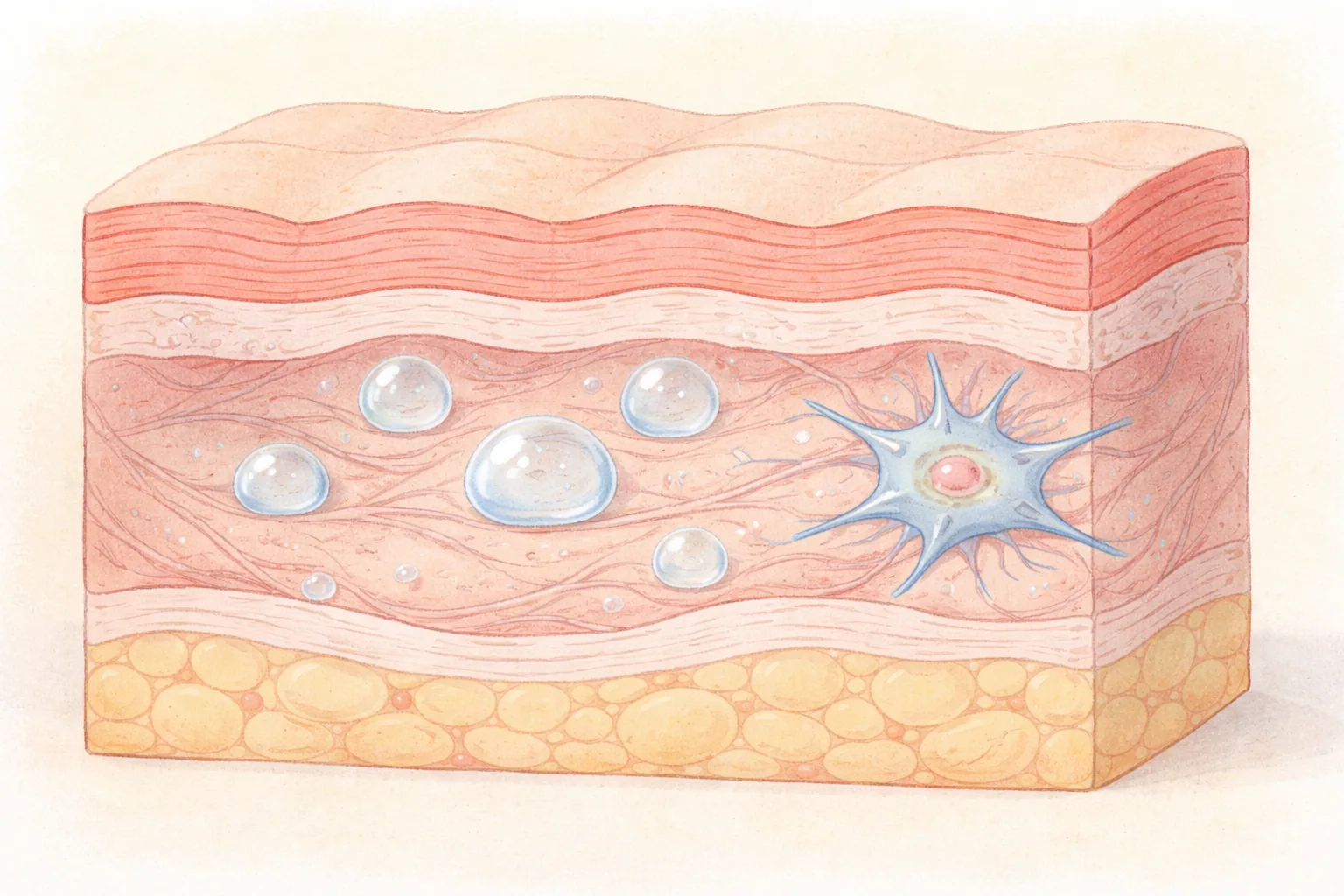
Skin boosters supply moisture or regenerative ingredients directly into the skin's foundation or stimulate fibroblasts (the skin cells that make collagen). The ATTITUDE Clinic column describes skin boosters this way, and the treatment guide lists SKINVIVE under skin boosters that deliver directly into the skin's foundation.
When hyaluronic acid (HA, an ingredient that attracts and holds water) settles in the dermis (the thick layer that supports the skin), the moisture environment around it changes. The visible change is usually smoother texture and softened fine lines. The goal differs from fillers, which add volume and change facial contours.
It's easy to think, "A shot should show something right after, shouldn't it?" Volume fillers often do, but skin boosters change the skin's foundation rather than adding bulge, so the way results show is different. What the injection targets changes what you expect and when you check.
When do results start to show?
The timing of visible results varies by ingredient. The American Academy of Dermatology filler guide distinguishes collagen, hyaluronic acid gel, calcium hydroxylapatite, and fat as showing results immediately, while poly-L-lactic acid takes 2–3 weeks. Under the same name "filler," ingredients do different things in the skin, so timing splits this way.
SKINVIVE is hyaluronic acid, so it's on the fast side, but when you feel it depends on how well your skin holds water and how fast it regenerates. Skin that has been dry for a long time may get moisture back first, with texture changes following — the order can split. That's why judging in the mirror on day two is too early.
So why such a range? The time for the injected ingredient to settle, the time for surrounding tissue to respond, and the time for skin to regain its own water-holding power are all different. Since these move together, it's better to see the felt timing as a range, not a point.
What determines how long skin boosters last?
The ATTITUDE Clinic column notes that when results appear and how long they last can differ based on individual skin condition, lifestyle habits, and the product used. Why is explained in a post on why results differ even with the same treatment: skin type, skin thickness and structure, and the rate of new collagen production vary by person.
The treated area's characteristics add to this. On the face, thin, mobile areas and thick, static areas feel different even with the same amount. Lifestyle factors like UV exposure, sleep, and smoking also affect how fast skin recovers and maintains.
So rather than memorizing a number of months, observing when your own skin starts to fade helps your next plan. How long results last is better seen as a gently sloping curve than a value that suddenly ends on a certain day.
How is SKINVIVE different from water-glow injections and Re2O?
The treatment guide lists SKINVIVE, Belotero Revive, and water-glow injections all under skin boosters, divided by product and dosage unit. They're all in the moisture family, but which product is used affects how it stays in the skin and when you feel it — that's why products are chosen in consultation.
Meanwhile, the ATTITUDE Clinic column explains Re2O, which replenishes skin structures (ECM) like collagen and elastin in the dermis, and exosomes, which send regenerative signals to cells, separately from skin boosters. The approach itself differs, so it's less about which is better and more about what your skin needs now.
Table 1 How is SKINVIVE different from water-glow injections and Re2O?
Category
What it does in the skin
Concerns it suits
What to check
HA skin booster (SKINVIVE, Belotero Revive)
Delivers moisture and regenerative ingredients directly into the dermis
Dryness from within, fine lines, rough texture
When you feel it and how long it lasts vary with skin condition and lifestyle
hADM family (Re2O)
Replenishes structures (ECM) like collagen and elastin in the dermis
Support of the skin structure itself
Confirm in consultation what is being replenished
Exosome
Sends regenerative signals to cells
Recovery support after laser or microneedling
No fixed data yet on when results show or repeat cycles
Volume filler (American Academy of Dermatology guide)
Fills wrinkle areas
Wrinkles, volume
Results usually appear immediately
Swipe sideways to see the whole table.
In summary When you feel SKINVIVE and how long it lasts are decided together by the product ingredient and your skin's water-holding power. By ingredient, it's on the fast side, but judging over weeks rather than days is more accurate. For how long it lasts, observing how it fades on your own skin and setting the next visit is more realistic than a number.
If this sounds like you
When a ceremony or photo shoot is a few weeks away
Since when you feel it can range from days to weeks, if you're timing it to an event, book the consultation with some buffer. Planning a first-time treatment right before an event means matching the date without knowing how your skin will respond. If you've had it before, telling us when you felt it and how it faded helps set the interval.
When you want ongoing care, not just once
Recording when you feel the first session and how it fades makes it easier to set the next timing. The interval isn't a fixed value — it varies with skin condition and lifestyle, so it's set together in consultation. You can't say that repeating at short intervals creates cumulative effects, and it's better to consider the time your skin needs to finish responding.
When your skin is sensitive or prone to redness
Redness or swelling after injection is common and usually subsides within a few days. But sensitive skin can react longer, so consultation to adjust amount and intensity is needed. If you've had redness that lasted long after a previous treatment, tell us first in consultation.
For international visitors on a short stay
If your stay is short, you need to calculate timing and recovery together. If you have an important event within a few days, we adjust by moving the treatment earlier or lowering intensity. If follow-up after returning home is difficult, telling us lets us set the care plan differently.
Tell us before your consultation Let us know about recent UV exposure (vacation, outdoor activities), medications you're taking and topical ingredients (retinol, acids, etc.), reactions after previous treatments, and fixed dates like ceremonies or photo shoots. If you're pregnant or breastfeeding, have an autoimmune condition, or have ever reacted to cosmetics or medications, tell us in advance so we can decide together whether and how to proceed.
How ATTITUDE Clinic proceeds
AI skin analysis record — We record and organize your skin condition so you and the doctor look at the same information. The analysis tool only records and organizes information and does not make a medical diagnosis; the director makes the judgment.
Director consultation — We add your concerns, lifestyle habits, and previous treatment experience to the analysis record to decide which product to use and at what interval. We sort out what's needed and what isn't.
Treatment by the director — The director performs according to the plan set in consultation, adjusting amount and intensity based on skin response during the treatment.
Related to this topic, the treatment guide lists under skin boosters: SKINVIVE (Allergan), Belotero Revive (Merz), Rejuran, Juvelook Skin, Re2O, Sculptra, Radiesse, Gouri, and Hilo Wave. Prices are disclosed per unit, are the same on every language page, and VAT is separate.
Aftercare and side effects
Soothing — On the day of treatment, don't rub or press the area and let swelling settle. Avoid saunas or intense exercise that raises body temperature significantly.
Moisturizing — Keeping skin in a water-holding state helps protect results. Strong exfoliation or scrubs should wait until the treated area stabilizes.
Sun protection — Apply sunscreen generously when going out. UV exposure is a factor affecting how fast skin recovers and maintains.
Checking progress — Don't judge after a few days; watch changes in weeks. If common reactions last longer than expected or new changes appear, don't wait — come in and check.
After injection, redness, swelling, tenderness when pressed, and bruising are common and usually subside within a few days. Rarely, temporary pigment darkening or lightening, blisters, lumps after injection, burns, or scars can occur. How long any reaction lasts depends on the treatment method, settings, and individual healing, and individual risk factors are explained in the pre-treatment consultation. If you have changes that don't match expectations — like pain that isn't improving and keeps worsening — it's better to check right away rather than wait for the next appointment.
Frequently asked questions
When do SKINVIVE results start to show?
Hyaluronic acid is on the fast end, so some people feel moisture change right after treatment or within a few days. Texture changes follow depending on how well your skin holds water and how fast it regenerates. The American Academy of Dermatology guide also distinguishes ingredients that show immediately from those taking 2–3 weeks, so judging on day two is too early. Look in the mirror over at least a few weeks and record how it feels then — it makes setting the interval easier at your next consultation.
How long do skin boosters last, and when should I book the next session?
Rather than memorizing a set number of months, watching how it fades on your own skin is more accurate. When results appear and how long they last can differ with skin condition, lifestyle habits, and the product used. Even if moisture remains, if texture is roughening faster, it's better to reset the interval in consultation. Shorter intervals aren't better — we set them considering the time your skin needs to finish responding.
How is this different from water-glow injections or volume fillers?
In the treatment guide, SKINVIVE, Belotero Revive, and water-glow injections are all grouped under skin boosters and divided by product and dosage unit. Even in the same moisture family, how it stays in the skin and when you feel it differs by product. Volume fillers fill wrinkle areas and usually show results immediately, while SKINVIVE targets the skin's moisture environment, not bulge. So even compared on the same day, what you expect is different.
How much bruising or swelling should I expect?
Redness, swelling, tenderness, and bruising are common after injection and usually subside within a few days. Rubbing or massaging the treated area hard can prolong swelling, so avoid it until it stabilizes. Rarely, reactions like pigment changes or lumps after injection can occur, and in such cases risk factors are checked in advance in consultation. If redness or pain lasts longer than expected, it's safer to come in and check rather than leave it.
What should I check when choosing a clinic?
It's good to first check whether they disclose the unit and dosage — which product and how many cc. Whether the same doctor handles consultation and treatment, and how they review previous treatment records and skin condition, also affect results. If they use a skin analysis tool, see whether they explain that the record is reference material, not a diagnosis. Whether they explain side effects and recovery time first, and whether they sort out what's needed versus not, are also criteria. We can't say a particular clinic is best — look at whether they explain a plan that fits your concerns.
At a glance
Table 2 At a glance
Item
Key point
When results appear
Hyaluronic acid is on the fast side; felt timing ranges from days to weeks depending on skin condition and regeneration speed
How long it lasts
Not a fixed date — skin condition, lifestyle habits, and product decide together
This article offers general health information. It is not a substitute for diagnosis or treatment based on your own condition, so please talk through your situation with a doctor.