SKINVIVE vs Re2O: What to Check Before Your Skin Booster Consultation
Comparing SKINVIVE and Re2O? This guide covers ingredients, approved areas, when results show, session counts and costs, plus how to handle nodules, bruising, and vascular warning signs at a Gangnam clinic.
Written by ATTITUDE Clinic Editorial Team
SKINVIVE and Re2O — the names sound similar, so "what's the difference between the two?" is a question we hear often. Some people also delay consulting because they've searched terms like nodules or necrosis and gotten scared. In this article, instead of ranking the two products by name, we'll walk through the order in which to check ingredients, approved scope, when to expect results, cost, and how to handle adverse reactions at your consultation.
The bottom line first
Both are injectables consulted as skin boosters that are injected into the dermis to address hydration and skin texture, but the ingredients, approved treatment areas, and intended purposes must be checked separately for each product. So rather than "which one is better," deciding first what you want to address in your skin makes the outcome easier to gauge. When results appear and how long they last also differ by product and area. Mild reactions like swelling or bruising usually settle within 1–2 weeks, but if you feel a nodule or pain worsens, or if your skin color or vision changes, do not wait — get checked.
Below, we'll go through the order of checks one by one.
What do skin boosters do in the skin?
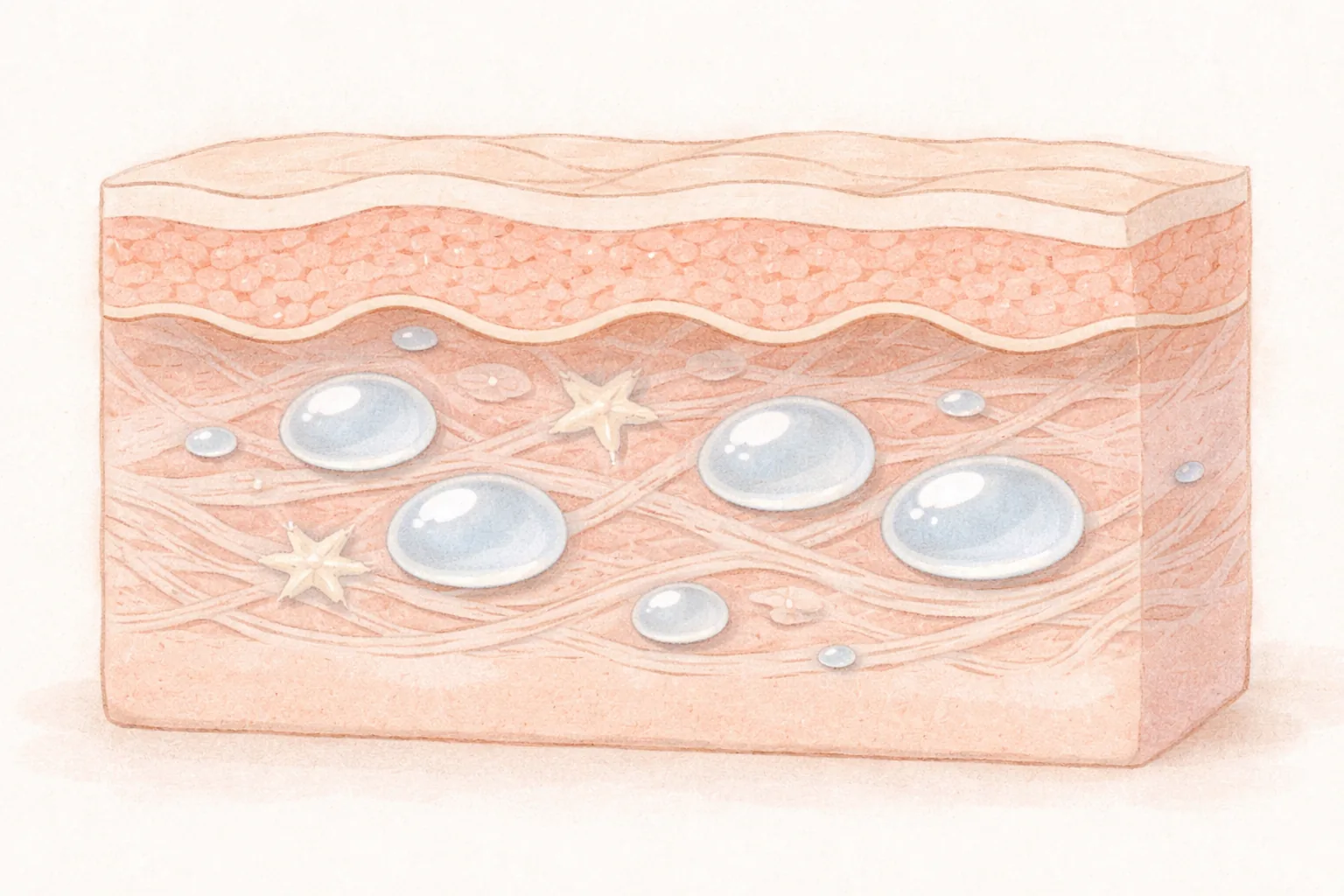
Even a single injection works in different ways. When hyaluronic acid (HA, a substance that attracts and holds water) is injected, moisture stays within the dermis and the skin feels plumped from within. On the other hand, there is a family like PN (polynucleotide) or PDRN (polydeoxyribonucleotide) that sends regeneration signals to cells, helping fibroblasts produce collagen on their own. In the ATTITUDE Clinic column (Collagen injections: do they build up in the skin right away?), these two approaches are distinguished as 'induction' and 'replenishment.' Products made of collagen, elastin, and hyaluronic acid that directly fill in the extracellular matrix (ECM, the structural support of the skin) also fall into this category.
So why do some products show results quickly while others take weeks? It depends on whether what you inject fills volume on the spot or goes through a process the skin does itself. According to the American Academy of Dermatology (What to check at a filler consultation and after treatment), hyaluronic acid gel results appear almost immediately, while poly-L-lactic acid, which induces collagen production, takes 2–3 weeks. This table is general guidance for injectable treatments, so it cannot be directly applied to the onset time of individual products like SKINVIVE or Re2O. At your consultation, it's more accurate to ask about timing based on the actual product you'll use.
One more thing. Even among injections, fillers are closer to filling sunken areas, while skin boosters are closer to addressing the skin's foundation and hydration itself. Filling and texture have different goals, so if you want both at once, you'll plan by setting priorities.
SKINVIVE vs Re2O — what should you compare at the consultation?
The most common misunderstanding is thinking "if it's called a skin booster injection, they're all similar." In reality, each product's ingredients and concentration, approved treatment areas, and intended purpose are registered separately. According to the American Academy of Dermatology (Questions to ask at a cosmetic procedure consultation), at a pre-procedure consultation you should be given enough information about indications, risks, benefits, and alternatives before deciding, and the practitioner selects the procedure considering your medical history, and you can see before-and-after records of cases similar to your skin type or age group. This means that even within the same category name, it's not the same procedure.
At the consultation, the first step is to check the product name and manufacturer, ingredients and concentration, approved treatment area, and injection depth. Also ask whether the area you want is within that product's approved scope. It's also good to mention at this point whether you've ever reacted sensitively to past injectable treatments, whether you're pregnant or breastfeeding, any medications you're taking, and whether there's inflammation or infection at the injection site.
Factors determining results aren't just the product name. At what depth, how much, and at what intervals also matter. Even the same product varies in experience and results depending on the injection design, so discussing at the consultation how many cc and at what intervals you plan helps keep your schedule stable after treatment.
Nodules and swelling — how long should you watch?
Swelling and bruising right after injection are mostly expected. According to AAD materials, redness, swelling, tenderness, and sometimes bruising can appear after injection, and these reactions usually disappear within 7–14 days. In the ATTITUDE Clinic column on hyaluronic acid products, it's also noted that the injection site may feel bumpy for a while, and if this feeling persists, you should inform the clinic. These are changes that occur while the product settles, and often resolve over time.
A nodule (a hard lump you can feel) is viewed a bit differently. If the injection depth is too shallow or it clumps in one area, it can remain as a lump, and rarely, foreign body reaction or infection can be the cause. The same material also warns that reports of serious side effects like lumps, overcorrection, and infection increase greatly when procedures are done in non-medical settings or by people with insufficient injection experience. So rather than the clinic's name, you first look at who, where, and with which product.
Why do stories about necrosis or vision changes come up?
Blood vessels run densely through the face, and some of them connect to the eyes and brain. Rarely, if the injected product blocks or damages a blood vessel, skin necrosis or vision problems can occur. In the ATTITUDE Clinic column, it's advised that if there's pain that's unusual or worsening, if the skin at the injection site turns white, mottled, grayish-blue, or black, or if there's a change in vision, don't wait — get medical attention immediately. It's rare, but delayed response makes outcomes worse, so knowing the contact route in advance becomes a safety net.
That's why at the consultation, it's good to confirm where and until when you should contact if something goes wrong. Even after you've gone home post-treatment, ask whether you can reach the practitioner, and what happens at night or on holidays.
From when do results show, and what should you use as the standard?
The timing of seeing results depends on how the injected ingredient works. Products that fill volume on the spot show results immediately, while products that go through the skin's collagen-making process show gradual changes over several weeks. Hyaluronic acid and regeneration-signal skin boosters are usually planned for several sessions at 2–4 week intervals, with maintenance treatments considered afterward. However, the degree and timing vary greatly by skin condition and area.
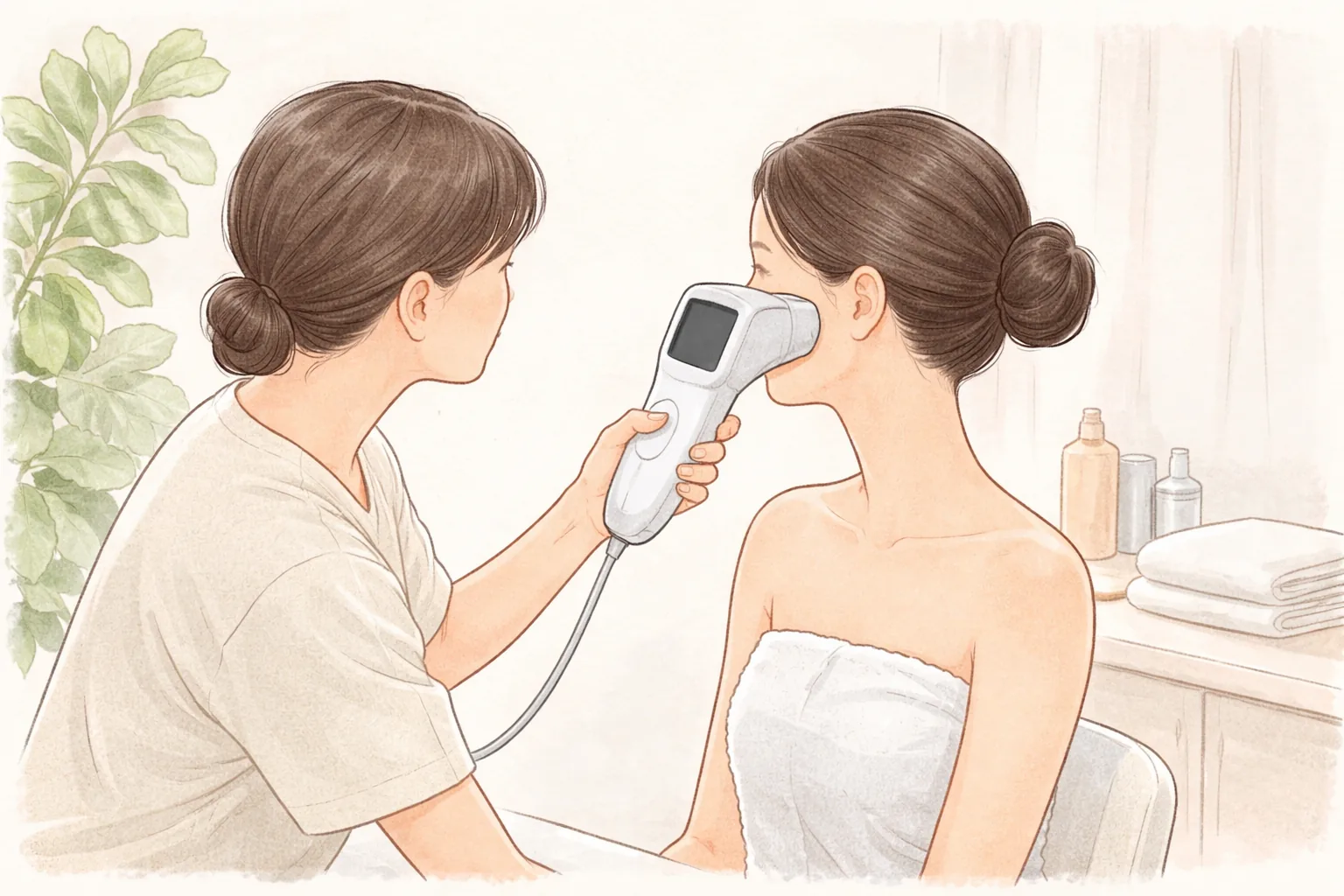
Setting evaluation criteria makes judgment easier. Take photos under the same lighting and same angle, and compare at the time points decided at your consultation. ATTITUDE Clinic records conditions like pigmentation, redness, texture, and pores with AI skin analysis, then the director sets the direction at the consultation. The analysis tool records and organizes information to assist the consultation and is not a medical diagnosis itself (Does getting lasers often make skin thinner — is it true?).
Cost and number of sessions are also items to confirm with numbers at the consultation. The AAD recommends checking treatment time and required number of sessions, recovery period, and cost at the consultation. The ATTITUDE Clinic price list (Treatments and pricing information) breaks down items by treatment, product, volume, and number of sessions, and amounts are listed excluding VAT. The displayed units are just items based on one bottle of product, not a recommended dosage for an individual, so how many cc over how many sessions for your face is decided during the consultation. Whether consultation fees, anesthesia fees, and aftercare are included can be asked directly before booking.
Table 1 From when do results show, and what should you use as the standard?
Category
What it does in the skin
Main concerns it targets
What to check at consultation
Hyaluronic acid skin booster (listed on the price list as SKINVIVE, Re2O, etc.)
Holds moisture in the dermis to support the skin from within
Internal dryness, dullness, skin texture
The actual product's ingredients and approved area, injection depth and volume
PN·PDRN family (Rejuran, salmon DNA injection, etc.)
Induces collagen production via cell regeneration signals
Elasticity, skin texture, trouble marks
How many sessions at what intervals are planned
Collagen replenishment type (Re2O, etc.)
Replenishes the extracellular matrix structure itself into the dermis
Thinning skin, lost elasticity
Autoimmune disease and history of reaction to tissue-derived products
Filler (general guidance)
Fills sunken areas to create volume
Volume loss, wrinkles
Injector's experience, whether allergy testing is needed
Swipe sideways to see the whole table.
In summary Just as much as which product you use, what determines results is at what depth, how much, and at what intervals it's injected. If you note down the product name and ingredients, approved area, number of sessions and intervals, and cost numerically at your consultation, and confirm the contact route for adverse reactions, your judgment won't waver after treatment. Since the timing of seeing results differs by product, it's good to set a plan in advance to compare under the same conditions.
If this applies to you
If you have a wedding or photo shoot coming up
Right after injection, swelling, bruising, and a slightly raised feeling can occur, which is a burden if it overlaps with your schedule. If you tell us the date first, we calculate backward from that day to adjust the treatment timing and intensity. If it's your first time with a product, it's safer to allow leeway, check how it goes once, then fit it to your schedule.
If you want ongoing management
Rather than injecting a lot at once, planning while keeping recovery intervals is less taxing on the skin. Deciding at the consultation how many sessions at what intervals, and at what cycle to maintain afterward, means you won't have to start from scratch each time.
If your skin is sensitive or prone to redness
Skin that reddens easily may show more pronounced reactions right after treatment than usual. Let us know in advance if you've recently had irritating exfoliation or laser treatment, or if cosmetics have felt stinging. Even with the same product, the intensity and intervals are set differently.
If you're a visitor with a short stay
If your stay is fixed, tell us your return date and next schedule. We'll plan by calculating together the time needed for recovery and when you could return. Online booking is separate from confirmation (Consultation booking), so the schedule is confirmed after you receive the clinic's confirmation contact.
Please tell us before your consultation
Recent level of UV exposure
Medications you're taking (including anticoagulants such as aspirin) and skincare ingredients you're using
Past sensitive experiences after treatments, allergies or hypersensitivity reactions to injectables
Pregnancy or breastfeeding status
Fixed dates such as weddings, photo shoots, or business trips
How ATTITUDE Clinic proceeds
AI skin analysis record — Current conditions such as pigmentation, redness, texture, and pores are recorded with an analysis tool. This record is material to assist the consultation and is not a medical diagnosis itself.
Director consultation — Adding your schedule, pain sensitivity, and skin history to the analysis record, the treatment type, intensity, and timing are decided together. The product to use, volume, number of sessions, and intervals are also organized here.
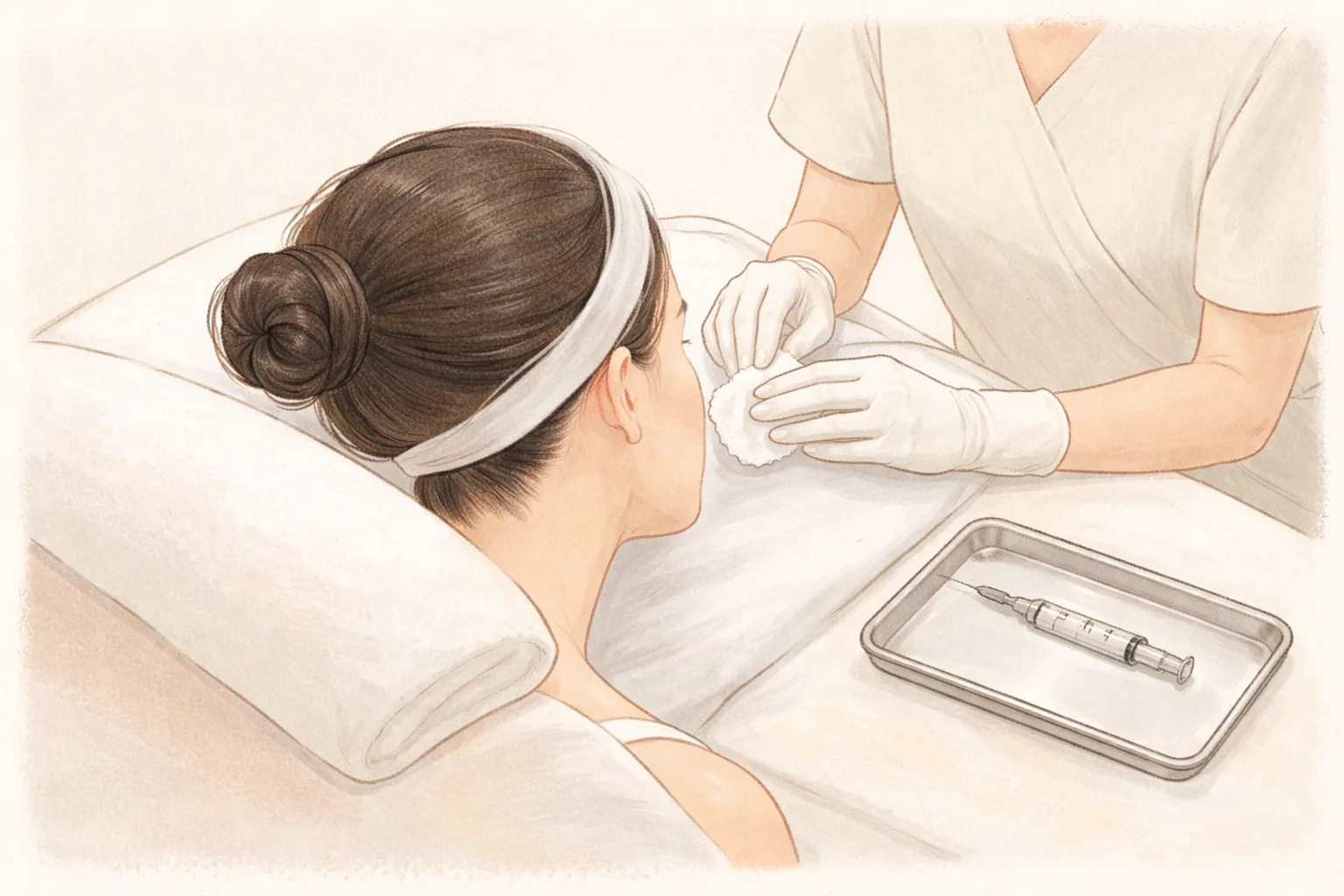
Treatment performed by the director — If needed, topical anesthesia reduces discomfort, and the director performs the treatment. Not recommending more treatment than necessary is the principle.
Recovery and aftercare check — Post-treatment precautions and contact criteria are explained, and progress is checked at the agreed time point.
Products and devices used in treatments are guided based on genuine products, correct quantity, and fixed prices. If other concerns like pigmentation, redness, or pores overlap, we plan by setting priorities rather than trying to solve everything with one injection.
Aftercare and side effects
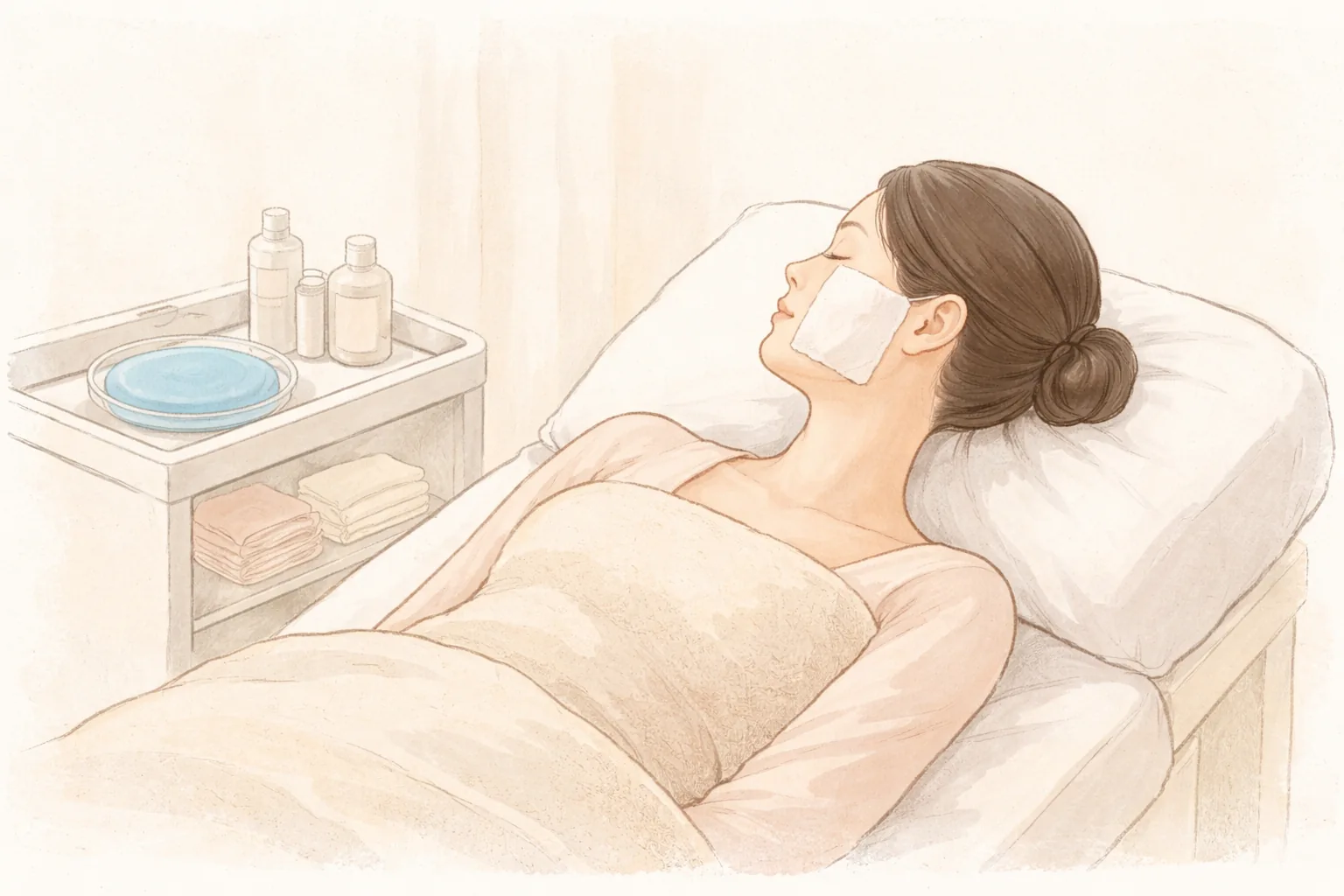
Soothing — Right after treatment, do not press or rub the injection site hard. Only follow massage instructions if you've separately received them.
Washing and daily life — Wash your face gently with lukewarm water after the instructed time (usually 4–6 hours), and start makeup the next day. It's better to avoid strenuous exercise, drinking, and saunas on the day.
Moisturizing and UV protection — During recovery, keep up moisturizing and reapply sunscreen carefully. Avoid strong exfoliation, peeling, and hot compresses for the instructed period.
Progress check — At the agreed time point, compare progress with photos and records, and re-decide the remaining sessions and next interval.
Common reactions are redness, swelling, tenderness, and bruising, and they usually settle within 7–14 days. More rarely, nodules, foreign body reaction, infection, or hypersensitivity can occur. If you have pain that's unusual or worsening, changes where the injection site turns white, mottled, grayish-blue, or black, or vision changes, contact us immediately without waiting. If swelling, pain, or heat persists for more than a few days, it's better to get checked rather than waiting for your next appointment.
Frequently asked questions
Between SKINVIVE and Re2O, which is better?
It's not a question of ranking but of matching purpose. Hyaluronic acid skin boosters hold moisture in the dermis to address internal dryness and skin texture, while regeneration-signal types are closer to inducing collagen production. Since the two products' ingredients and approved areas differ, checking the product descriptions together at the consultation comes first. The choice differs depending on whether your skin is thin and dry, whether redness is a concern, or whether you want volume as well.
From when do results appear and how long do they last?
Products that fill on the spot show results immediately, while products that go through the skin's own collagen-making process show gradually over several weeks. Skin boosters are usually planned for several sessions at 2–4 week intervals, with maintenance treatments considered afterward. Duration varies greatly by product, area, and skin condition. So deciding at the consultation what to check against at how many weeks later, and comparing under the same conditions, helps your judgment.
What should I do if I feel a nodule?
Don't rub or press to flatten it — informing the clinic where you were treated comes first. The bumpy feeling right after injection is a change that occurs while the product settles and often resolves over time, but if a lump you can feel persists or grows, evaluation is needed. Injection depth, volume, product properties, and area all play a role, so it's better not to book the next treatment without a check.
How much does it hurt, and how is anesthesia done?
Pain differs by product, area, and individual sensitivity. According to AAD materials, injection can cause a stinging or burning sensation, and depending on the product and area, methods like ice packs, topical anesthesia, or nerve blocks are used. Some products require allergy testing, so results may need to be waited for. If you feel something unbearable during the procedure, tell us right away rather than enduring it.
What should I look for when choosing a clinic?
Rather than a device list or advertising copy, we recommend looking at a few things. Whether they first check whether your concern is dehydration, redness, or volume; whether they confirm the product and volume to be used together before treatment; whether they don't forcibly set the required number of sessions and intervals; and whether they explain the contact route for adverse reactions. The AAD also advises that results depend greatly on the practitioner's experience. Problems like lumps or overcorrection tend to decrease with injectors who have proper training and experience.
At a glance
Table 2 At a glance
Item
Key point
Difference between the two products
Even with similar names, ingredients, approved area, and intended purpose must be checked separately for each product
What determines results
Injection depth, volume, intervals, and how the product works
What to ask at consultation
Product name and ingredients, approved area, number of sessions and intervals, cost, adverse reaction contact
Mild reactions
Redness, swelling, tenderness, bruising — usually settle within 7–14 days
Symptoms to contact immediately
Worsening pain, skin color changes, vision changes
ATTITUDE Clinic approach
AI skin analysis record → director consultation → treatment performed by director → recovery and aftercare check
This article offers general health information. It is not a substitute for diagnosis or treatment based on your own condition, so please talk through your situation with a doctor.