Thermage FLX and Ultherapy Together: How Doctors Decide Order and Spacing
Can Thermage FLX and Ultherapy be combined? How the two treatments target different skin layers, plus what shapes the order, spacing, discomfort, recovery and timing of results at ATTITUDE Clinic in Gangnam, Seoul.
Written by ATTITUDE Clinic Editorial Team
One of the questions that comes up most in lifting consultations is "can I get Thermage and Ultherapy together?" Finishing both in one day sounds like it would simplify your schedule, yet there's nowhere that clearly spells out how to set the order or how far apart to space them. This article walks through how the two treatments do different things inside the skin, what determines whether and in what order you combine them, and what to watch afterwards and when to plan the next round.
The short answer
Combining them is possible, and in practice the deep layer is often handled with Ultherapy while the shallow layer and broader areas are handled with Thermage (ATTITUDE Clinic column). Whether you do both in one day or split them across days to weeks depends on your skin condition and how much recovery room you have, so it's safer to set the overall plan at your consultation first. There's no fixed, correct interval — the total heat going into your skin that day and the time you can set aside for recovery are what determine the order. Neither order guarantees a result, and the same plan can get different responses in different people.
Why are Thermage FLX and Ultherapy mentioned together?
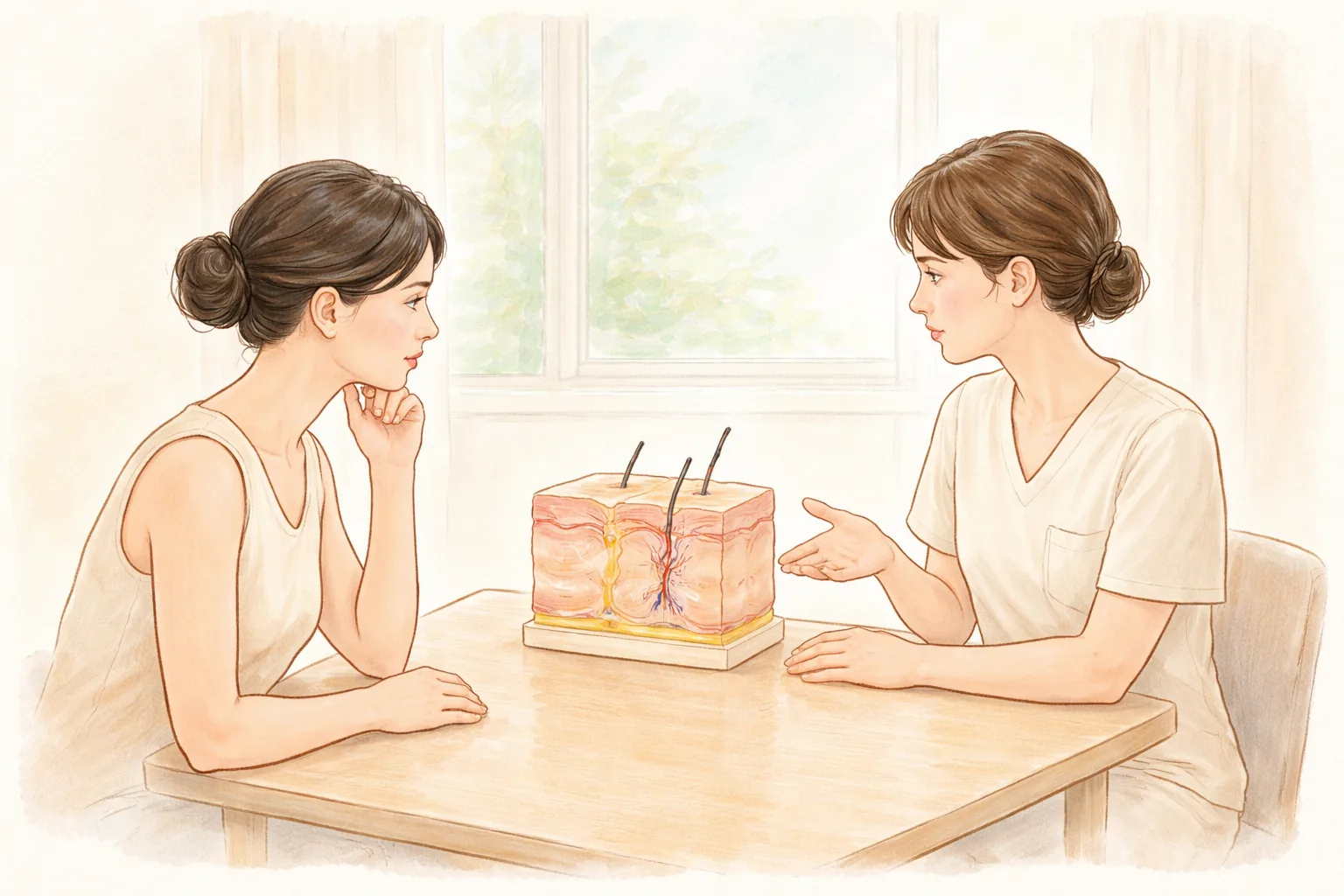
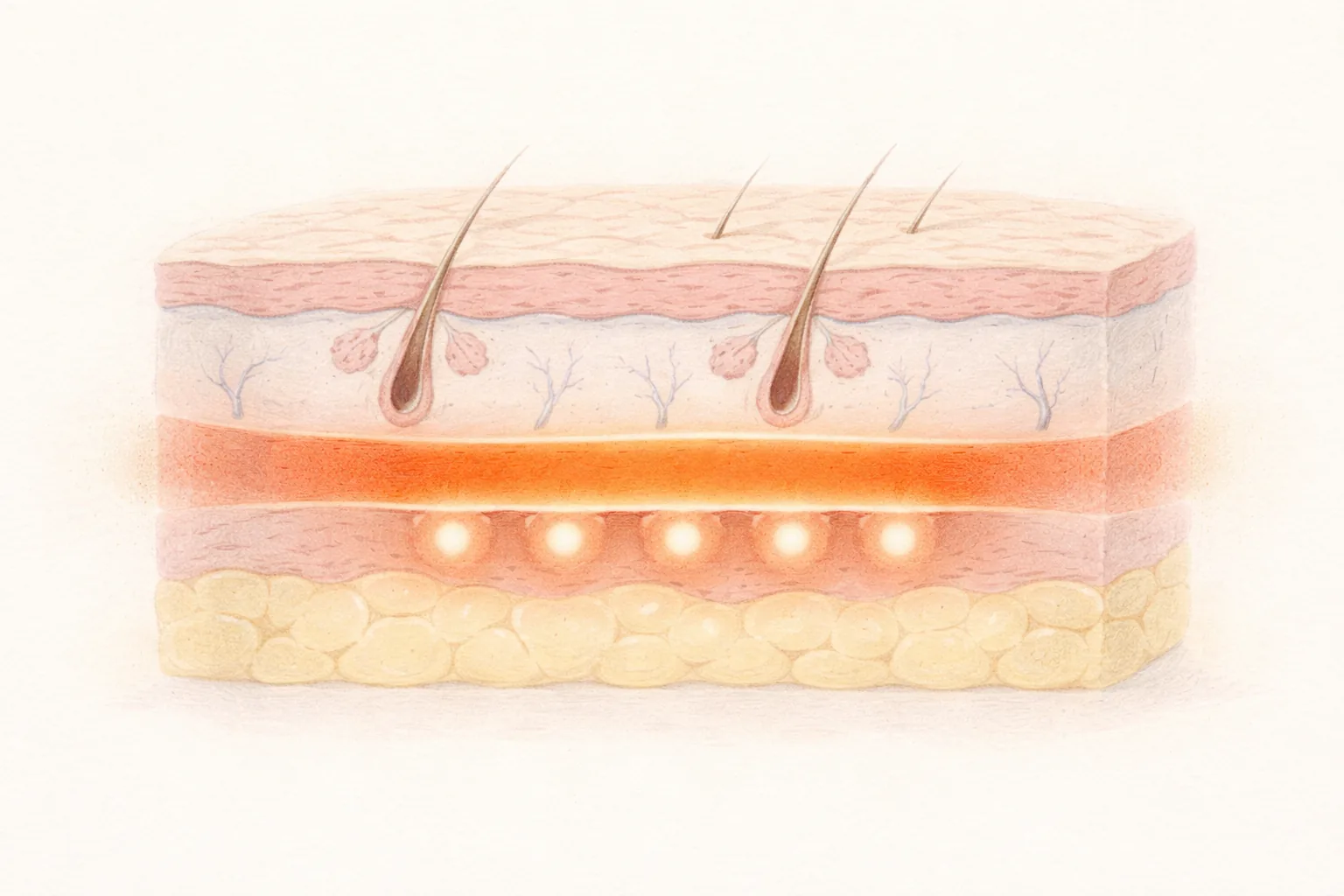
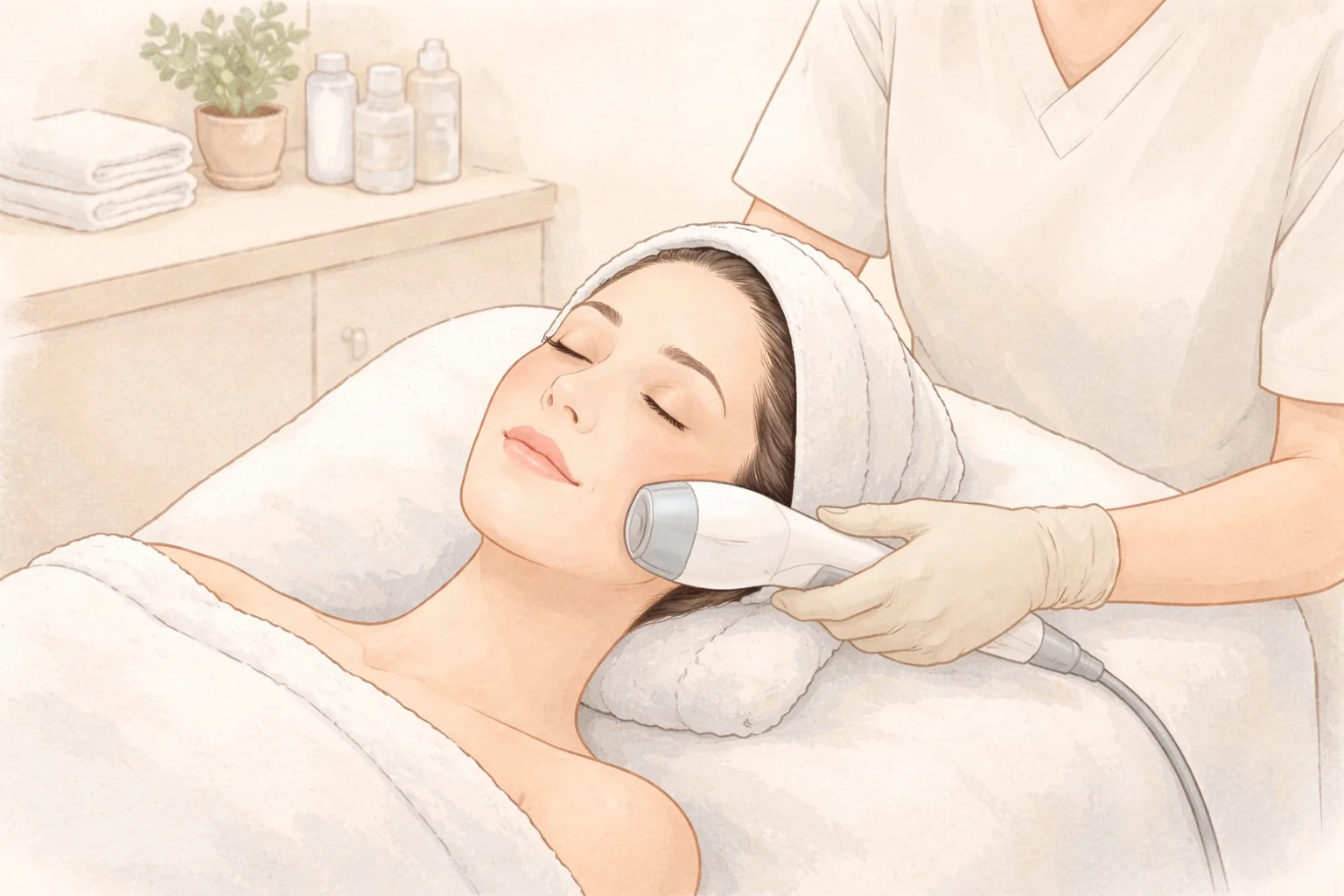
Lumping both under the word "lifting" hides the fact that what happens inside the skin is different. Thermage uses radiofrequency (RF — electrical energy that turns into heat as it passes through tissue) to warm a broad area from the dermis down through the subcutaneous fat layer in one pass. Ultherapy, by contrast, uses HIFU (high-intensity focused ultrasound, which concentrates energy at a single point the way a magnifying glass focuses light) to leave small thermal points at the depth set by the cartridge (ATTITUDE Clinic column).
Facial sagging doesn't progress in just one layer. That's why the two approaches get split between them when deep-layer laxity and broad loss of elasticity are concerns at the same time. People often think of it as "choosing one or the other," but because they work on different layers, it's closer to a division of roles than a competition.
Thermage-type treatments deliver a controlled amount of radiofrequency to the dermal collagen layer to generate heat, after which new collagen grows over roughly 6 months and the skin appears firmer (DermNet resource). The thermal points Ultherapy leaves behind set off collagen remodeling in the same direction, gradually.
What decides the order and spacing when you combine them?
The first thing looked at is the total heat load the skin can handle that day. Both treatments ultimately stimulate collagen with heat, so stacking them at once can increase the stimulation and prolong swelling and redness. That's why whether to do them the same day or split them with a gap is decided at your consultation based on your skin condition (ATTITUDE Clinic column).
The second is recovery room. We look together at the skin's own capacity to heal, the time you can give to downtime (the period after treatment until swelling and redness settle), and how the two treatments affect each other when done together. Even with the same combination, recovery and how it feels differ depending on whether you bunch them together or split them (ATTITUDE Clinic column).
The third is where the weight of your concern sits. If deep, localized sagging along the jawline or around the eyes is the focus, Ultherapy's share of the plan goes up because it works on the deep layer; if loss of elasticity across a broad area from cheek to neck is the focus, Thermage's share goes up. Which one comes first is decided by looking at this balance together with your skin's response.
Table 1 What decides the order and spacing when you combine them?
Category
Thermage (RF)
Ultherapy (HIFU)
Energy method
Broad heating with radiofrequency
Focused ultrasound concentrated at a point
Layer reached
Dermis to subcutaneous fat
Dermis to SMAS depth, depending on cartridge
Main concerns it suits
Broad-area elasticity, skin texture
Localized deep sagging, jawline
How it feels over time
An initial firm feeling, then gradual change
Quiet right after, then gradual
Swipe sideways to see the whole table.
In short The two treatments work on different layers, so combining them is a real option. There's no fixed interval chart — that day's total heat load, your recovery room, and where your main concern sits determine the order, so it's safer to decide together at your consultation whether to do them at once or split them.
How do discomfort and recovery differ between the two?
Discomfort is driven by energy level and by how densely nerves are packed in each area. The higher the energy and the more passes over one spot, the stronger the heat stimulus. Areas close to bone with dense nerves — jawline, cheekbones, forehead, around the eyes — feel more sensitive, while thicker areas like the cheeks feel less even at the same intensity (ATTITUDE Clinic column).
The character of the sensation differs too. Ultherapy reaches deep in an instant, so it's often described as a "deep, sharp" feeling, while Thermage warms broadly closer to the surface, so it's often described as "warm and continuous." Rather than declaring one more painful, it's more accurate to say it varies with the area and settings even in the same person.
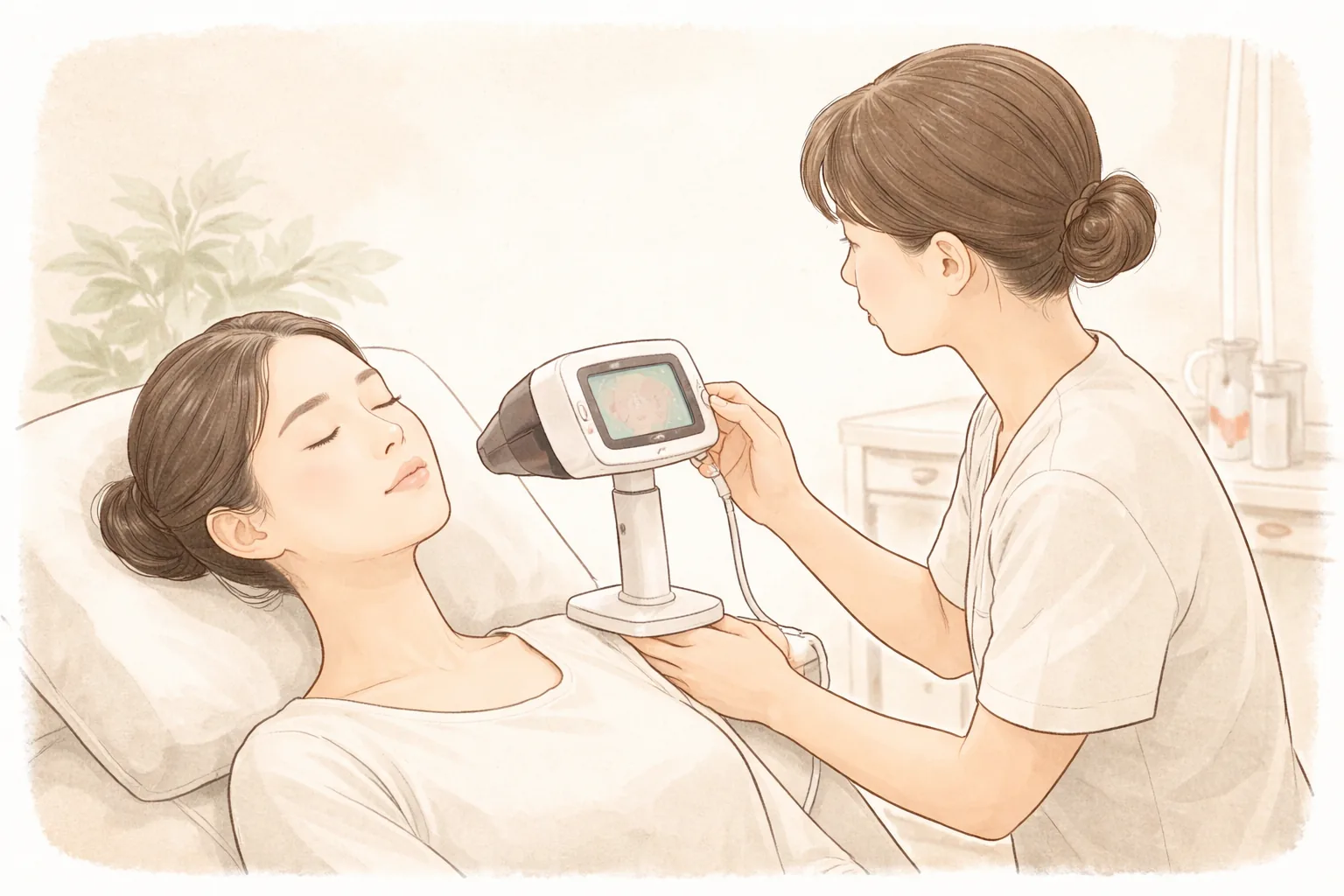
During a Thermage treatment, a cooling spray that continuously chills the outer layer is delivered along with the radiofrequency. So what you feel during treatment can range from nothing at all to strong heat or pain depending on the person, and the practitioner adjusts the energy level up or down while listening to your response to heat and discomfort (DermNet resource). The treatment itself takes about 1–2 hours depending on the area and number of passes. Redness and swelling after treatment usually last 1–2 hours and can linger for a few days at most, and can be covered with makeup.
When do results show, and when do you get it again?
With Ultherapy, it's hard to feel a big change right away, and any change appears gradually over about 2–3 months. With Thermage, there may be an initial firm feeling, some of which is swelling; once the swelling subsides, it settles somewhat and then further change continues over 2–6 months (ATTITUDE Clinic column). Both treatments need time for new collagen to grow, so judging the result too early can make the effect look smaller than it really is.
The repeat interval is set by the doctor after reviewing your progress, roughly around 1 year. Individual differences in how long results last are large because the rate at which skin builds and breaks down collagen varies with age, lifestyle habits and UV exposure, and how the treatment intensity was set also plays a part. An individualized plan suits this better than a single fixed treatment.
In situations like these
When a wedding or photo shoot is a few weeks away
If you're doing both treatments, calculate recovery time first. Redness and swelling can linger for days, so it's better to leave some buffer rather than booking right before the event. Keep in mind too that because results appear gradually, it's hard to time the effect to the shoot date.
When you want steady, ongoing management
Instead of stimulating several layers at once, you can split it — focusing on broad layers this year and supplementing the deep layer next year. Since the repeat timing is set after reviewing your progress, recording the device, shot count, date and your reaction from the previous session makes the next plan far more concrete.
When your skin is sensitive or flushes easily
If your skin reacts quickly or redness lingers, a plan that pours the whole heat load in at once can be a burden. In that case, splitting the sessions with a gap or lowering the share of one treatment is considered. Which fits is decided at the examination after looking at your skin thickness and response.
When you're an overseas visitor on a short stay
If your stay is short, whether to do both the same day directly affects your schedule. But keep in mind that swelling and redness can remain, and that you need time to check for any adverse reaction. If you tell us your departure date first, we'll build a plan that fits within it.
Tell us before your consultation Recent UV exposure and outdoor activity, medications you're taking and products you apply to your skin (especially irritating ingredients like retinol), the device, shot count, date and reaction from any previous lifting treatment, and any fixed dates such as a wedding, photo shoot or departure — all of this helps us build the plan. Please also mention whether you're pregnant or breastfeeding, or being treated for a skin condition.
How ATTITUDE Clinic runs this
AI skin analysis record — Your skin condition is recorded and organized so you and the doctor look at the same information together. The analysis tool only organizes and presents information; it does not make a medical diagnosis, and interpretation and judgment are made by the doctor (ATTITUDE Clinic column).
Doctor consultation — Your concerns, lifestyle habits and prior treatment experience are added to the analysis record to decide together what is needed and what isn't, and in what order and at what intensity. Whether to do both treatments the same day or split them is also decided at this stage.
Treatment performed by the doctor — The doctor carries out the agreed plan and adjusts the energy level during treatment based on your skin's response. This flow keeps the plan and the execution aligned.
Recovery and aftercare guidance — We go over redness and swelling after treatment, aftercare such as sun protection, and when to come back.
The devices ATTITUDE Clinic uses for this topic are Ultherapy, Thermage, and Shurink Universe (HIFU), which is in the same HIFU family. Pricing is published per shot count and VAT is separate (treatments and pricing).
Aftercare and side effects
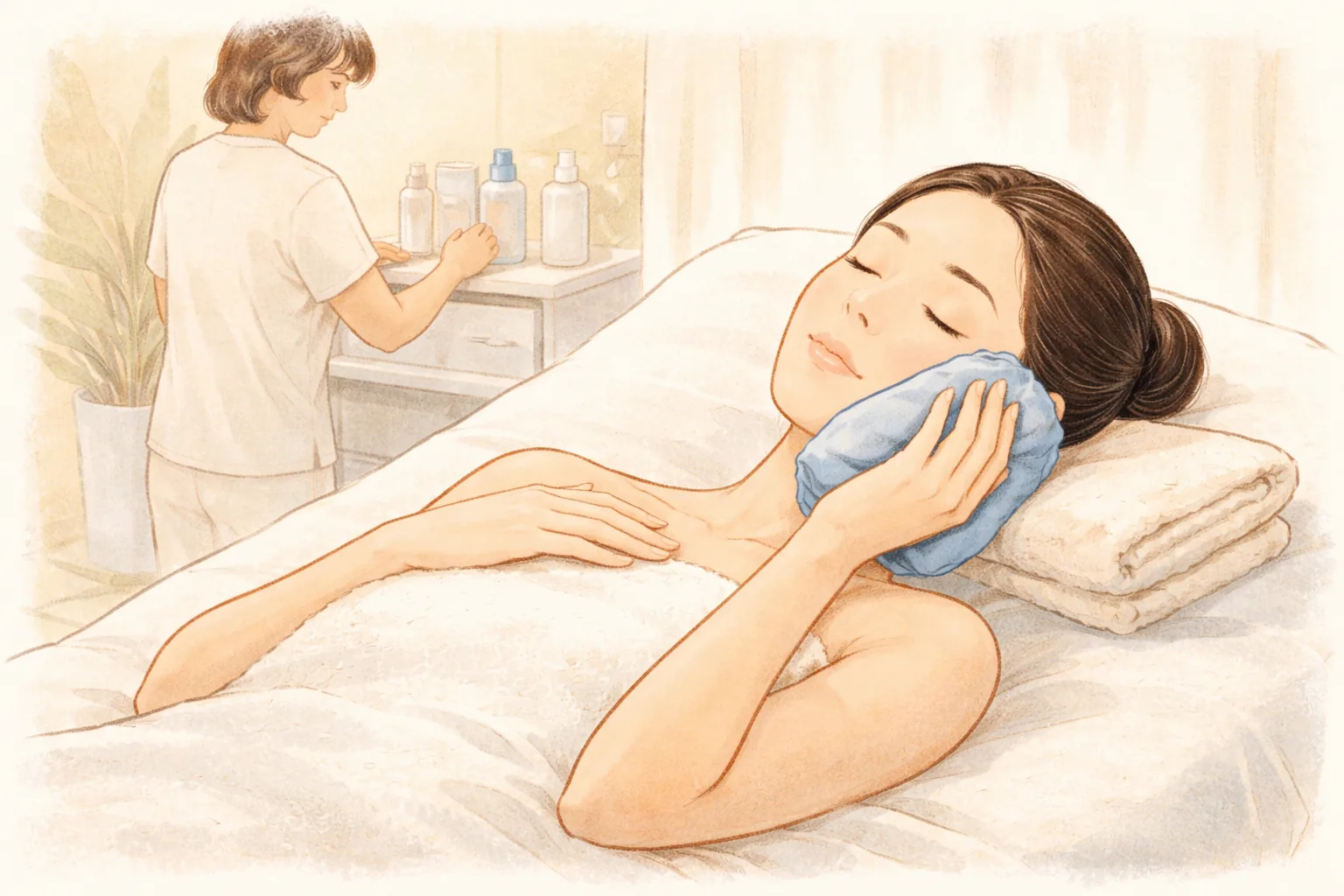
Soothing — Heat remains right after treatment, so cold compresses may help with swelling. Please check the method and timing with the medical staff.
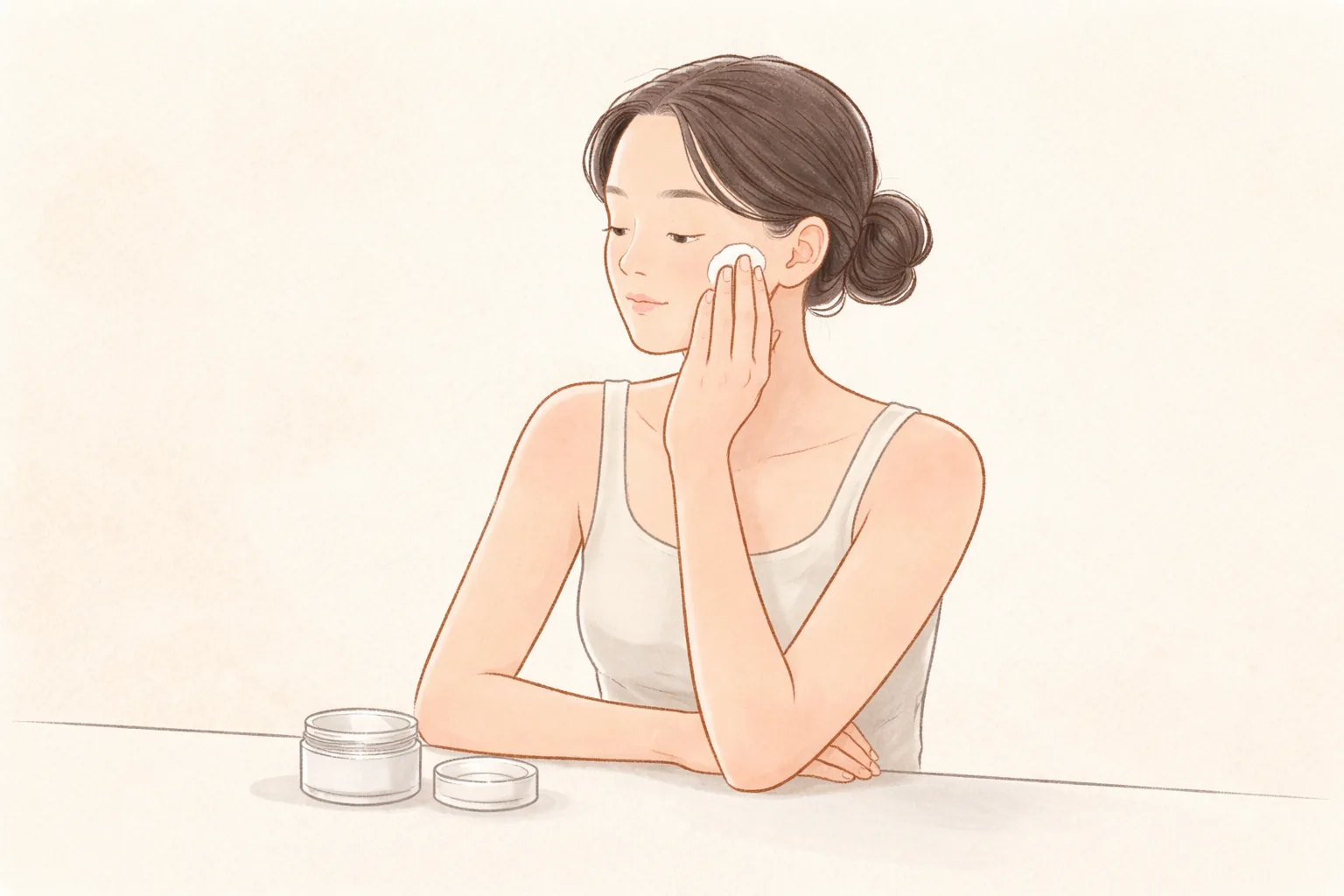
Moisturizing — The skin barrier is temporarily weakened, so replenish generously with the gentle moisturizer you normally use.
Sun protection — During this period, applying sunscreen more carefully than usual helps you recover without pigmentation.
Follow-up — We set the next visit by watching when redness and swelling subside and when discomfort eases.
Common reactions are redness and swelling, tenderness when pressed, small bruises, and temporary numbness. They usually settle within a few days but can last longer. Rarely, burns or blisters, small scars, temporary facial muscle weakness, or unwanted loss of fat-layer volume can occur (ATTITUDE Clinic column). Reported side-effect rates for Thermage-type treatments are under 1%, and that range includes swelling and redness along with burn, blister and scar risk (DermNet resource).
Treating the eye area needs an extra level of caution. The US FDA medical device adverse event database includes a case of eye burn after a Thermage treatment, and corneal abrasion is listed as a possible risk of the procedure. Only correctly sized plastic eye shields should be used — metal shields can pass radiofrequency heat straight to the eye and cause damage (FDA MAUDE).
In these cases, don't wait — get checked. If blisters form or pain keeps worsening, if redness hasn't eased after several days, if your eye stays swollen or feels gritty, or if one side of your face doesn't move well.
FAQ
What is the difference between Thermage and Thermage FLX, and Ultherapy?
The energy type and the layer the heat reaches are different. Ultherapy uses focused ultrasound to create small thermal points in the deep layer, while Thermage uses radiofrequency to broadly warm from the dermis to the subcutaneous fat. So localized, deeply sagging areas often suit Ultherapy better, while broad-area elasticity and skin texture often suit Thermage better. When concerns overlap, which comes first turns on whether localized deep sagging or broad loss of elasticity from cheek to neck is the focus. That balance is set at your consultation after checking skin thickness and degree of sagging.
Can I get them together? Is the same day possible?
Combining them is a real option. Whether to do both in one day or split them with a gap depends on the total heat load your skin can handle and your recovery room. There's no fixed interval, so it's safer to build the overall plan at your consultation first and decide based on your skin condition that day. The criteria are the total heat going into your skin that day and the time you can give to recovery. Whether to do them the same day or split them is decided by looking at both at your consultation.
How often should I get it?
The repeat interval is set by the doctor after reviewing your progress, roughly around 1 year. When you feel the effect and how long it lasts vary with how fast you build collagen, your age and lifestyle habits. Knowing the device, shot count and date of your previous treatment helps set the next timing. When reviewing progress, we check when redness and swelling subsided and how the firming sensation has continued. Recording your reaction to the previous session's stimulation makes the next plan far more concrete.
Is Thermage FLX painful, and which one hurts more?
It's hard to declare one more painful. There's wide variation by energy level and by how densely nerves are packed in each area, and they're described differently — Ultherapy as a deep, sharp feeling and Thermage as a warm, continuous one. If you're sensitive to discomfort, it's a good idea to discuss anesthesia method and energy adjustment at your consultation. Talking through the anesthesia method and energy adjustment in advance makes it easier to raise or lower intensity during treatment based on how you respond. Letting us know how it feels as you go helps with adjustment.
What should I check when choosing a clinic?
Look at who uses the device and by what criteria, more than the device name. At your consultation, listen to how they check skin thickness and degree of sagging, why they set the energy and shot count the way they do, and check whether there's a system for adjusting during treatment based on your response. Whether genuine devices and tips are used, and how far they explain risks and the recovery process beforehand, are also things to look at.
At a glance
Table 2 At a glance
Item
Key point
Mechanism
Thermage heats broadly; Ultherapy concentrates at points at a set depth
Combining
Possible; combinations that split the layers are used
Order and spacing
Set by total heat load, recovery room, and where the main concern sits
When you feel it
Ultherapy over 2–3 months; Thermage over 2–6 months, gradually
Repeat timing
Roughly around 1 year, decided by the doctor after review
Recovery
Redness and swelling from 1–2 hours up to a few days; varies by person
This article offers general health information. It is not a substitute for diagnosis or treatment based on your own condition, so please talk through your situation with a doctor.