Wart Removal Korea: Aftercare for Washing, Makeup, and Exercise
A practical aftercare guide to wart removal in Korea, covering when you can wash, wear makeup, and exercise again, how freezing and topical treatments heal, scab and blister care, pigment changes, and recurrence.
Written by ATTITUDE Clinic Editorial Team
Once a wart is removed, the days that follow tend to raise more questions than the procedure itself. When can I wash my face, how many days should I skip makeup, when can I work out again? There is no single date that answers all of this. This guide covers what changes each removal method causes in the skin, what determines the timing for washing, makeup, and exercise, which reactions to watch after treatment, and when to have the area checked again.
The short answer first
What sets the timing is not how many days have passed but the condition of the treated area. Whether a scab has formed, whether there is a blister, whether pain remains — these determine how far you can go with washing, applying products, and moving around. After cryotherapy, scabs or blisters are an expected reaction, the treated area usually heals within 4–7 days (American Academy of Dermatology), and guidance notes that around 10 days to 2 weeks after the procedure the scab falls off as healing completes (Seoul National University Hospital Medical Information). Until then, the basics are not rubbing the treated area and keeping it clean and dry, and washing, makeup, and exercise are best considered separately for healed and unhealed areas. Because healing varies with the removal method, the site, and the depth, it is more accurate to follow the order your clinic gives you.
Why does 'when can I start' differ by removal method?
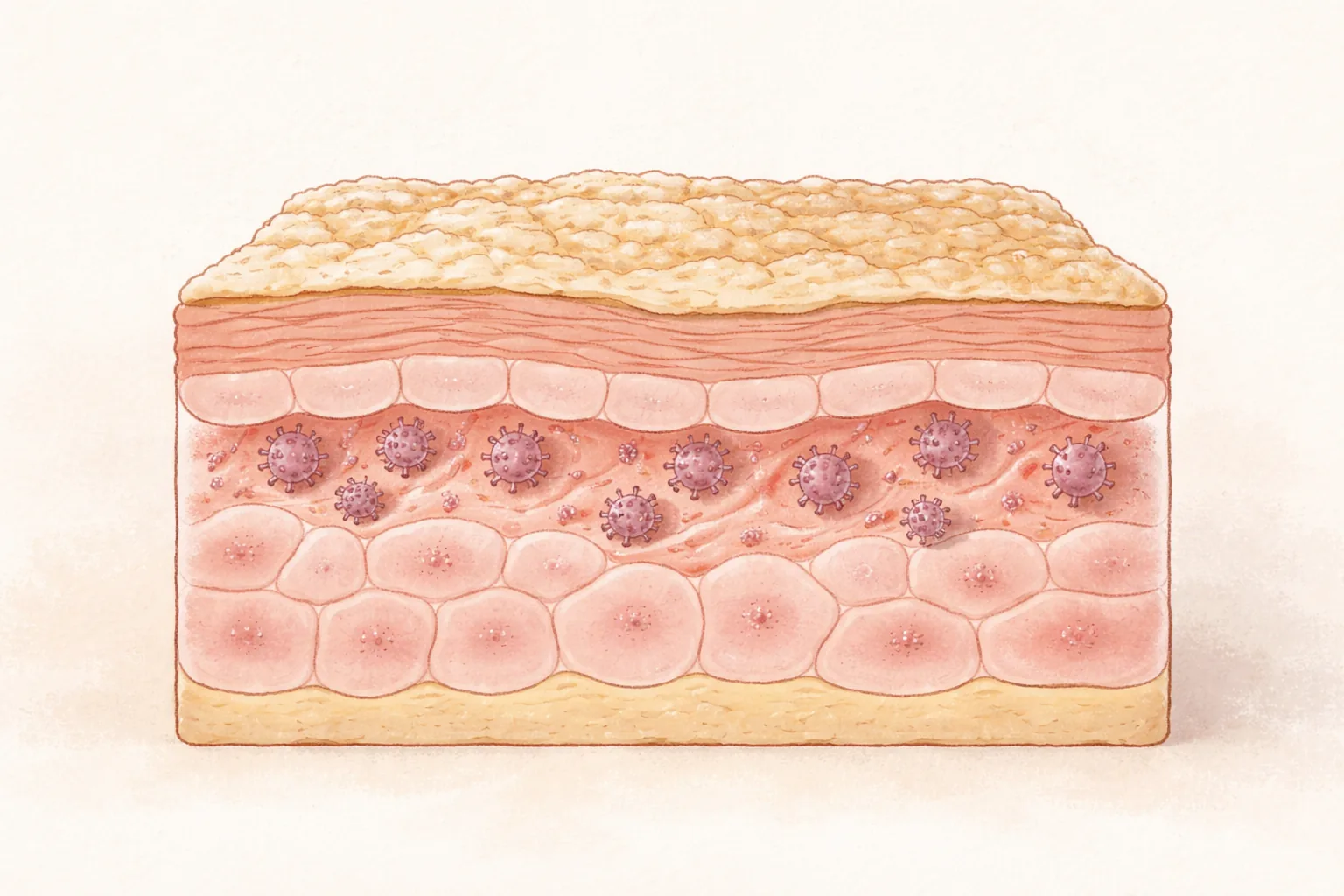
Warts are lesions caused by human papillomavirus infecting the skin, growing rough and raised on the surface. The virus enters epidermal cells, stimulates cell division, and the thickened keratin forms the visible lesion (Seoul National University Hospital Medical Information). So treatment has two goals: removing the visible lesion, and reducing the chance the virus spreads to other people or other parts of your body. The American Academy of Dermatology also explains that treatment helps remove lesions sooner and lowers the risk of the virus spreading (American Academy of Dermatology).
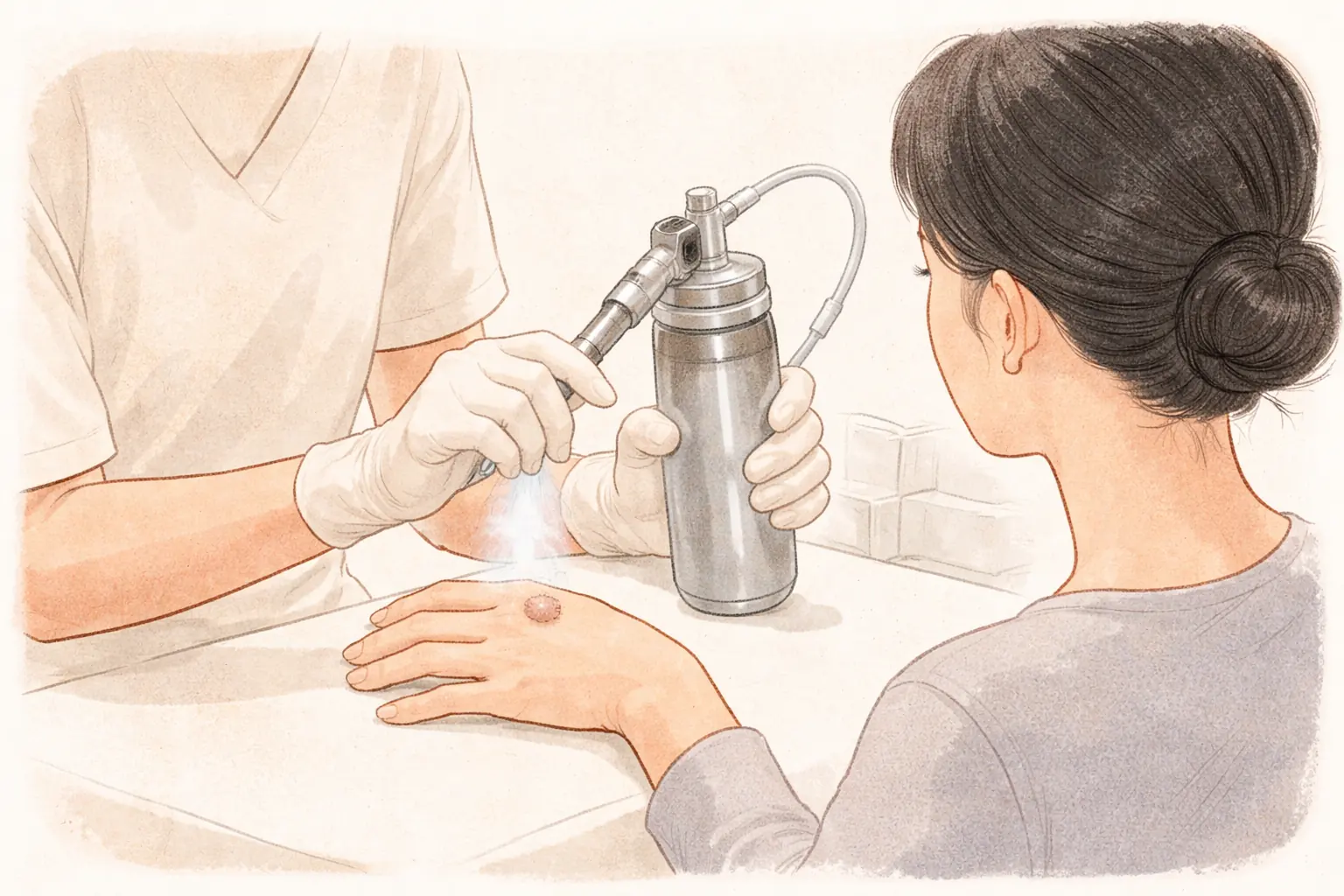
Each method does something different to the lesion. Cryotherapy freezes the skin with a cryogen such as liquid nitrogen to destroy cells; the cells are destroyed directly as they freeze, blood flow stagnates during thawing, and cell necrosis triggers an immune response as well. Salicylic acid application peels away the keratin layer little by little, while cantharidin application deliberately creates a blister between the lesion and the skin beneath it to lift the lesion off. Electrocautery and curettage burn and scrape the lesion away after local anesthesia and usually clear it in a single session (American Academy of Dermatology).
These differences carry straight over into differences in when you can wash, apply products, and move. Treatments that only peel keratin place a lighter burden on the epidermis, while treatments that create a blister make that blister the center of your aftercare. Laser treatment can remove a lesion quickly, but recurrence is common and scarring is more likely (Seoul National University Hospital Medical Information). That is why even the same 'wart removal' produces wounds of different shape and depth.
One common misunderstanding here: some people try to deal with a small bump on the face using ointment alone, but warts on the face or genitals, or warts that change shape, hurt, itch, or bleed, need evaluation by a dermatologist (American Academy of Dermatology). The face has thin epidermis, so it reacts differently to the same stimulus and shows pigment changes differently from other areas.
Washing and showering: from when, and how much is okay?
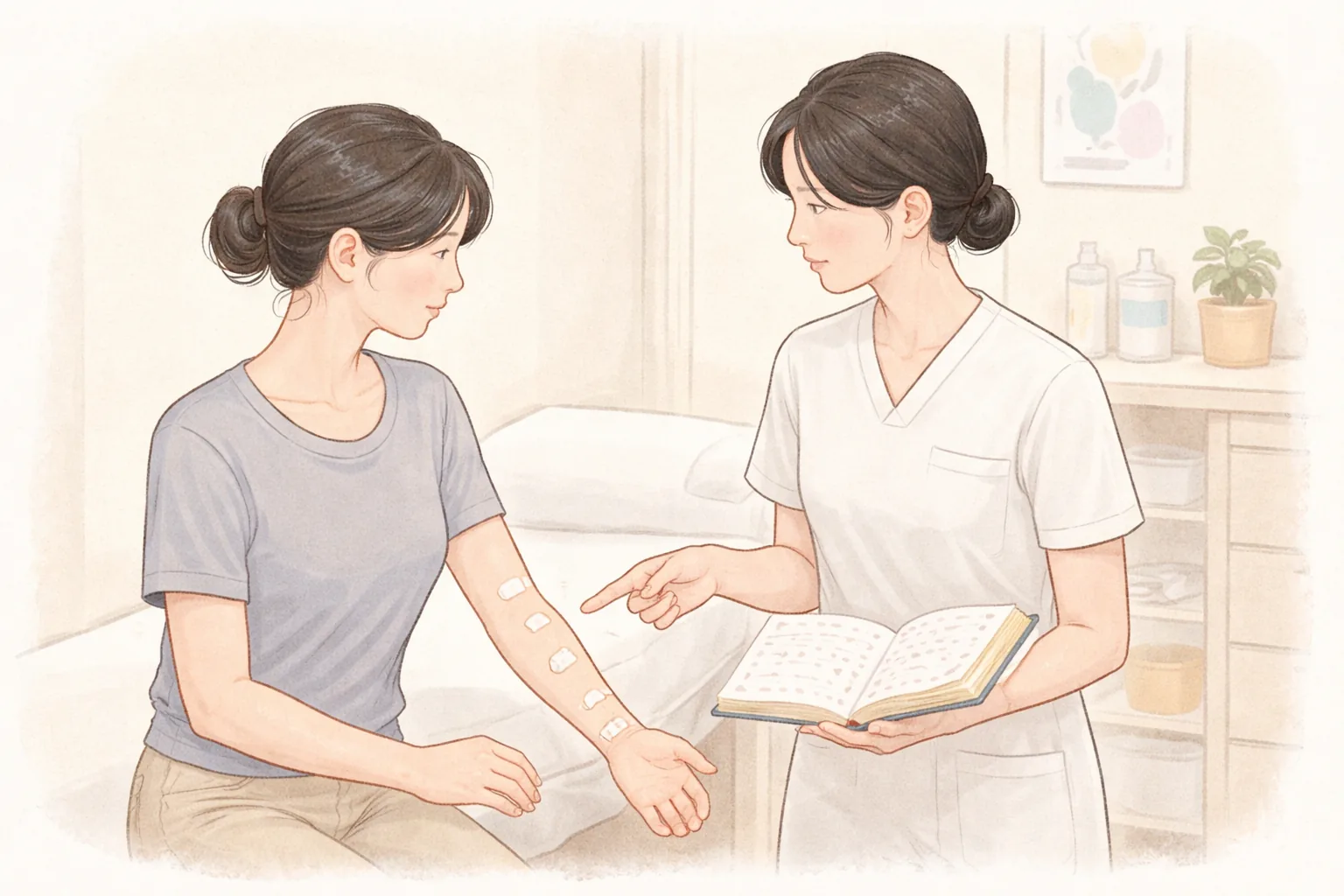
The benchmark is the scab and blister on the treated area. While a scab is present, the principle is not to rub that area, and what matters is not the act of washing itself but the state you leave the skin in afterward. After cantharidin treatment, patients are instructed to wash the medication off at home and then keep the treated area clean and dry (American Academy of Dermatology). In other words, the problem is leaving it wet for a long time.
A scab is not something to pick off but something to wait out. Around 10 days to 2 weeks after the procedure the scab falls off as healing completes, and areas with strong inflammation may develop blisters or blood blisters (Seoul National University Hospital Medical Information). AAD materials explain that after cryotherapy, scabs or blisters are an expected reaction and the treated area usually heals within 4–7 days (American Academy of Dermatology). Because this period varies with the site, depth, and number of repetitions, it is more accurate to look at the current condition than to count days.
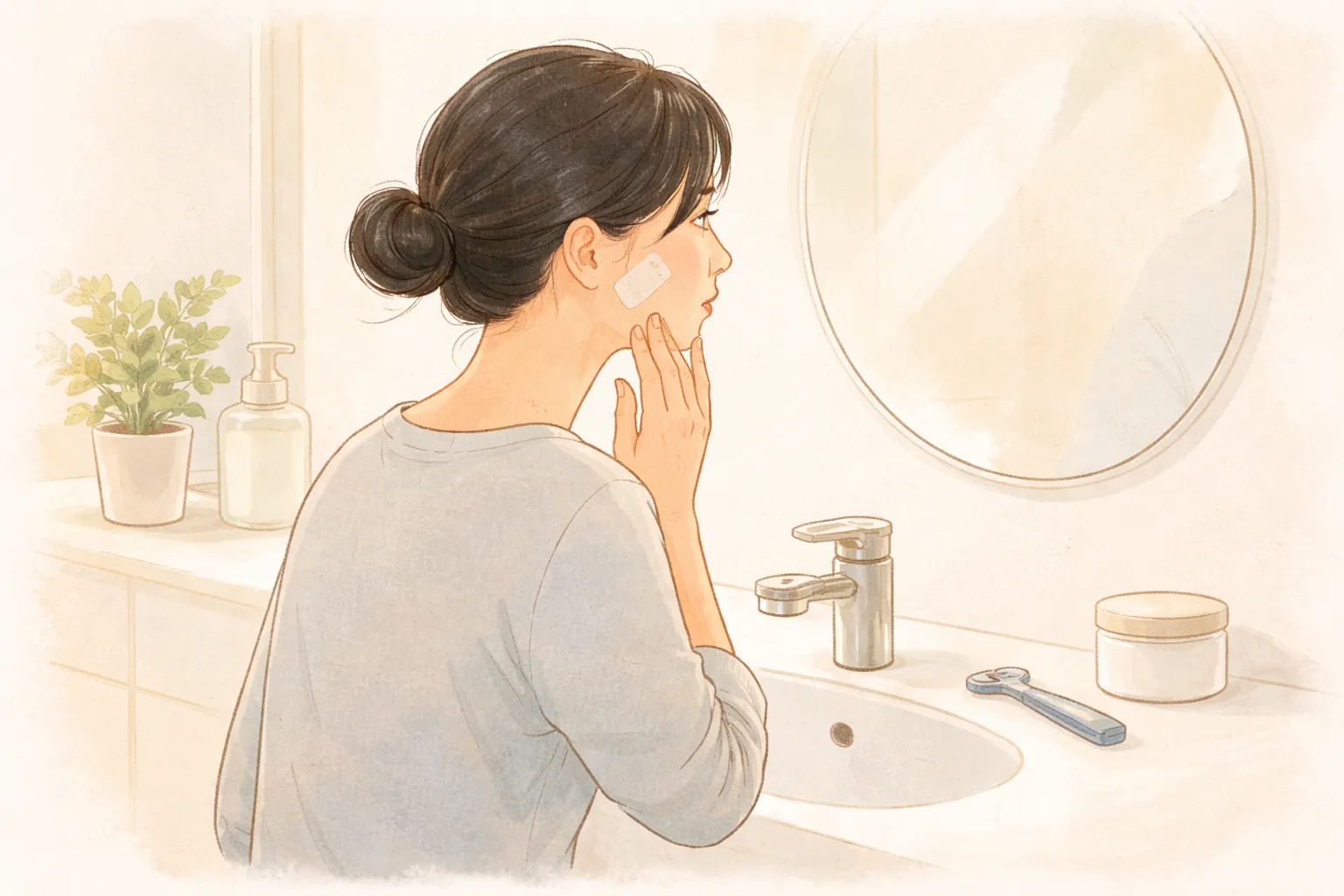
The treated area is kept open where possible and the prescribed antibiotic ointment is applied (Seoul National University Hospital Medical Information). Even when you shower, avoid aiming the water stream directly at the treated area or rubbing it with a towel, and after washing, pat the area dry lightly and keep it dry.
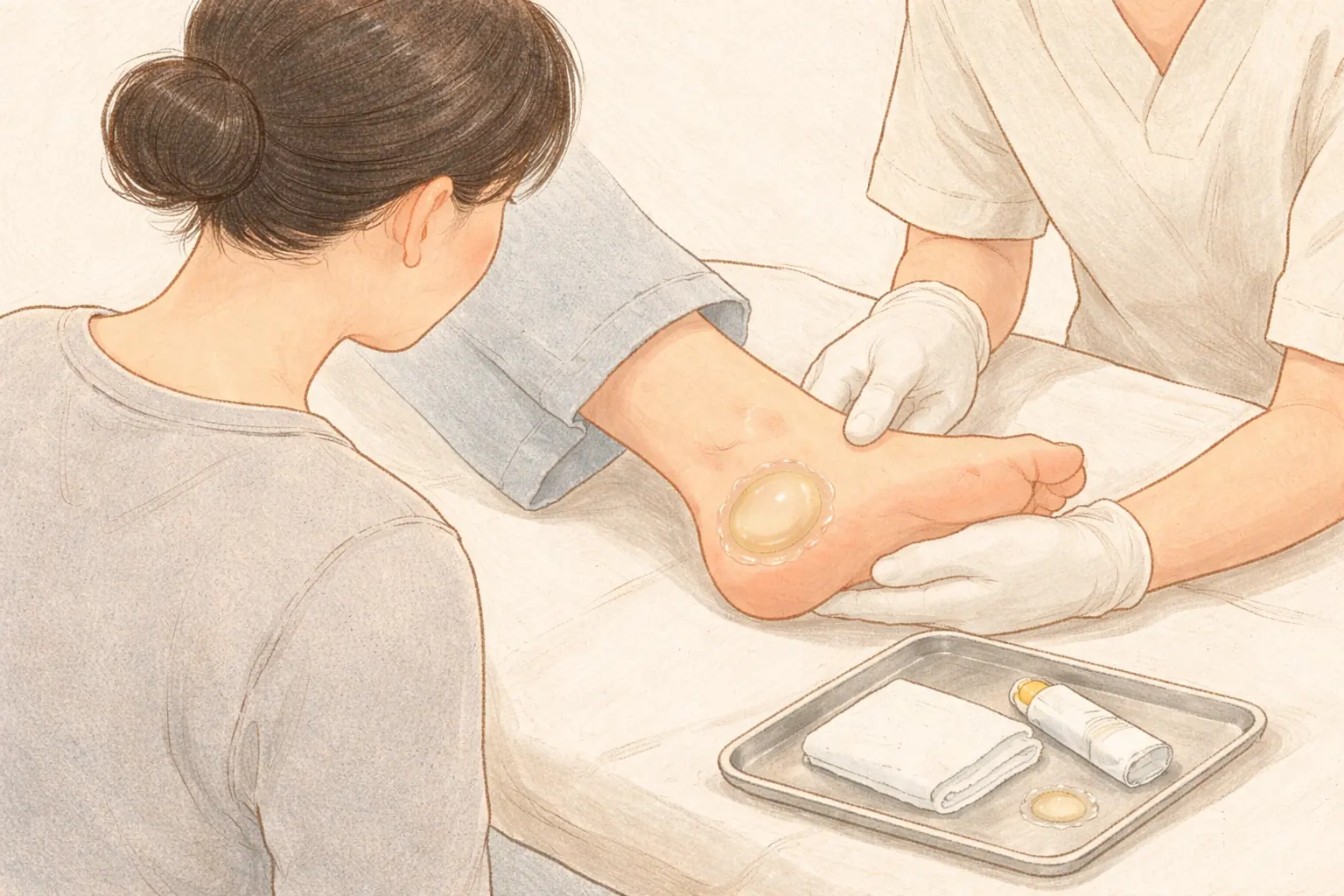
If a blister forms, the priority is not to burst it. A blister is an area that needs attention for secondary infection; guidance is to leave it alone, but if it is too large, prick it with a sterilized needle and apply antibiotic ointment (Seoul National University Hospital Medical Information). Bursting it yourself exposes the new skin beneath and raises the risk of infection.
Environments that keep the area submerged for a long time, like saunas and pools, or that make you sweat, keep scabs and blisters damp and increase friction. It is hard to pin this period to a specific number of days; it is judged by how much the wound has healed. If you have plans, it helps to mention them during your consultation.
So why do you keep wanting to pick at it? While a scab is present, there is a foreign-body sensation that makes your hands drift toward it. But warts are a viral infection, and scratching or picking can autoinoculate the virus into surrounding normal skin and spread it, so it is important not to touch the area (Seoul National University Hospital Medical Information). The habit of touching it is itself a cause of spread.
When can you start makeup and sunscreen again?
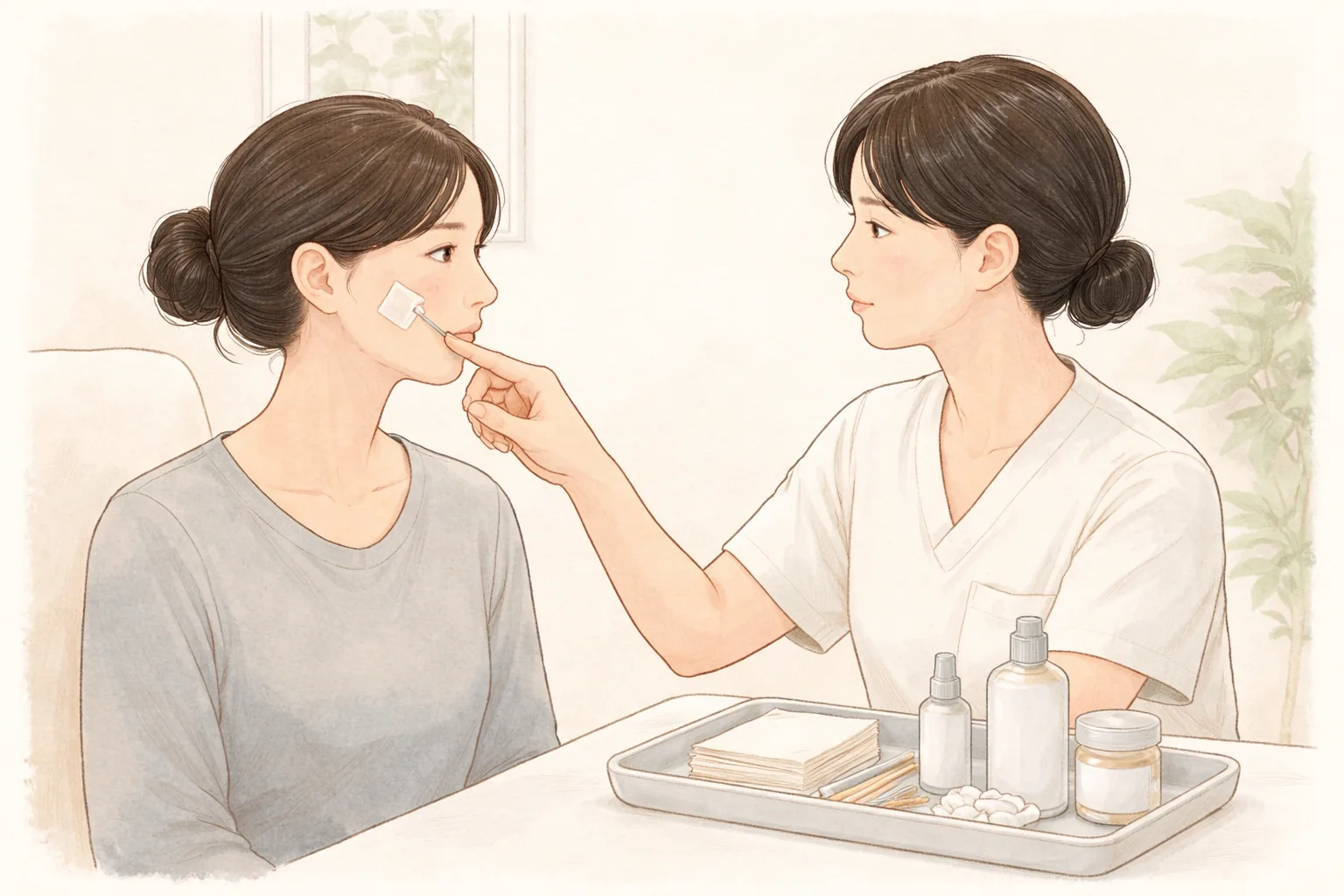
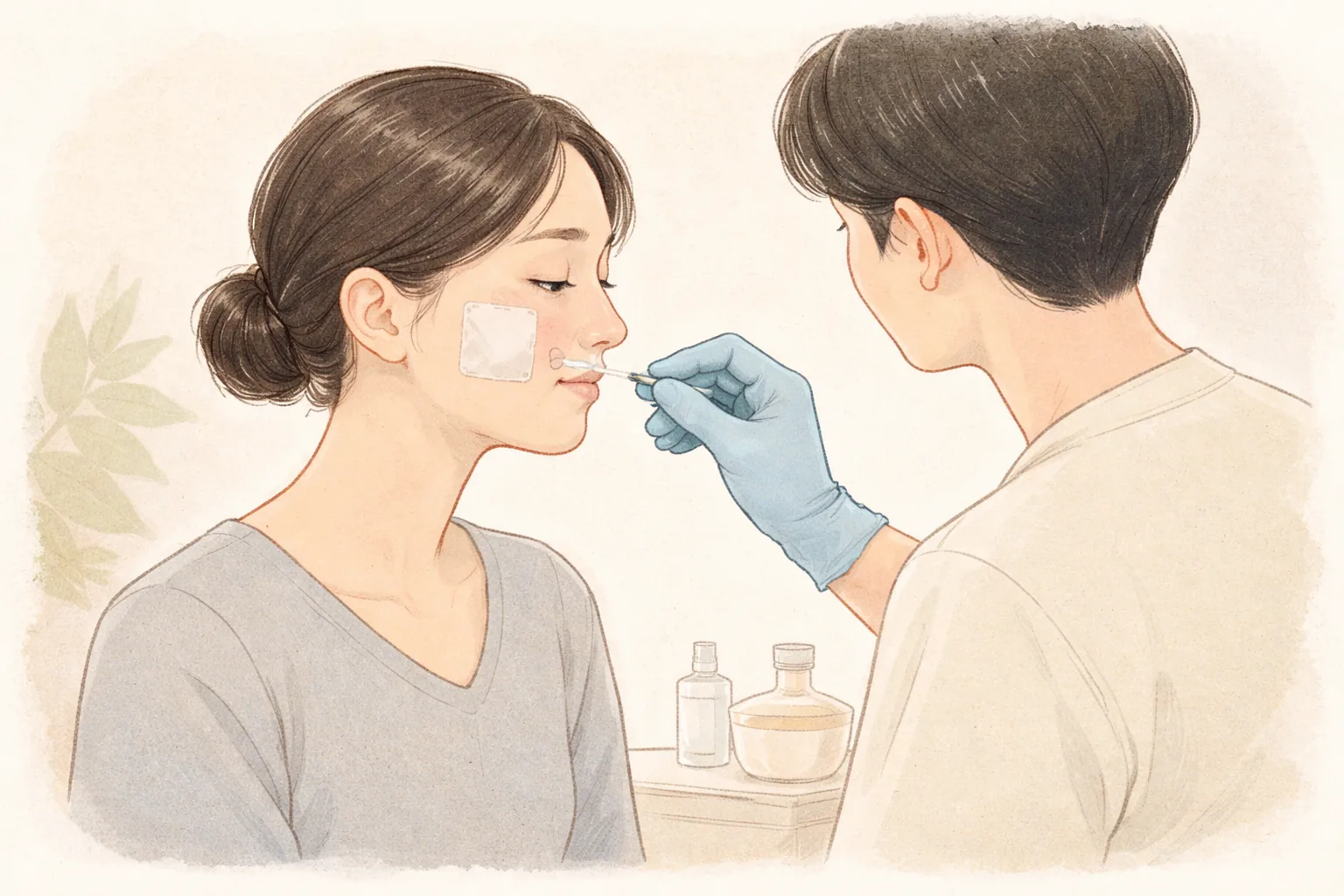
Before the treated area heals, what you apply on top becomes the issue. Avoid applying your usual toner, essence, or foundation directly on an area that still has a scab or blister, and prioritize the ointment and method your clinic recommends. The point at which you restart makeup is determined by how much the scab has fallen off and new skin has come up, and by redness and oozing.
How you choose products also depends on the condition. Even when using salicylic acid, guidance says to pause for a few days if surrounding skin becomes sore or strongly irritated, then resume once it improves (American Academy of Dermatology). The same goes for products applied to the treated area. If it stings or turns red, it is better to stop and observe rather than push through.
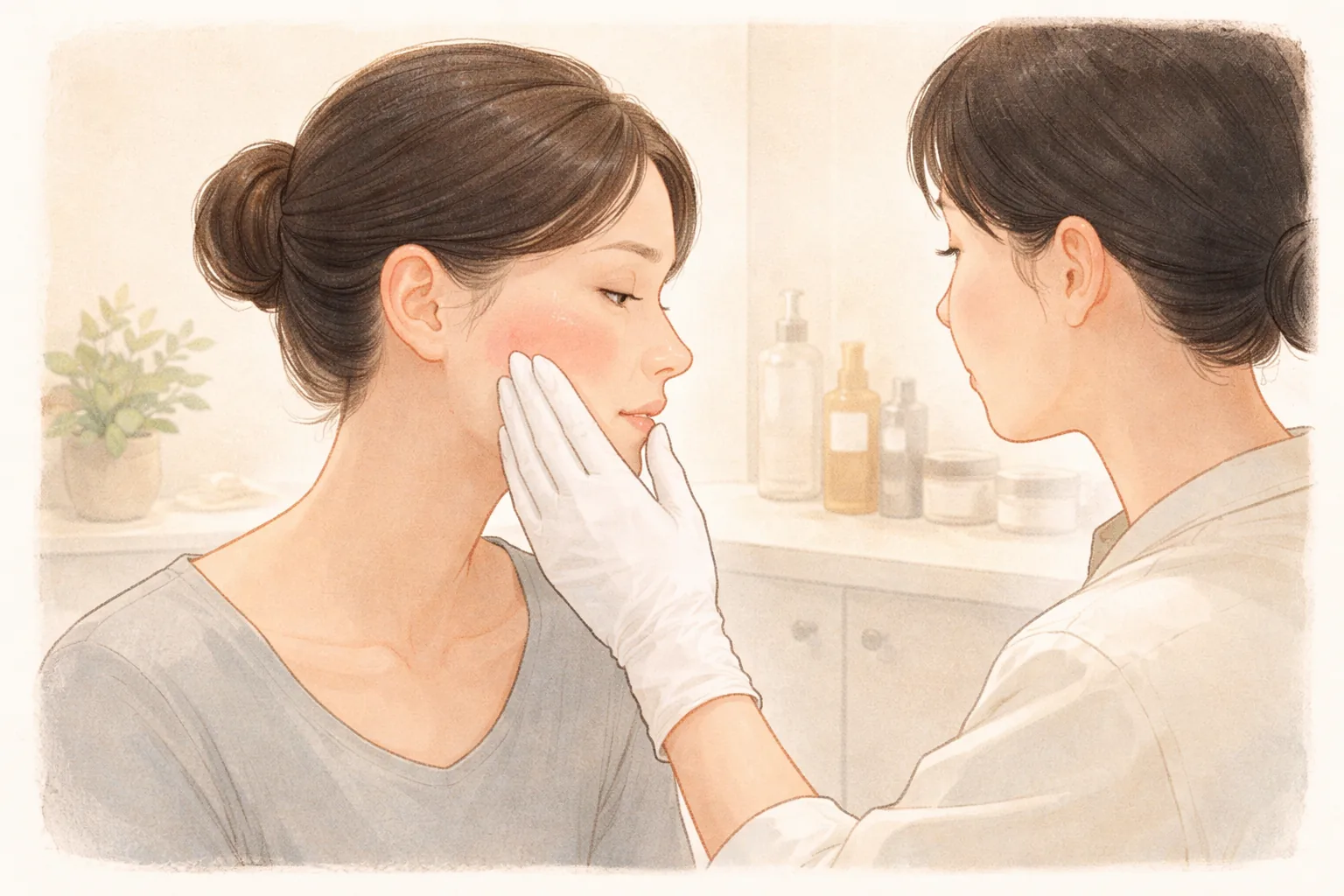
Pigment is what worries people most. After cryotherapy, melanocytes can be affected and transient hypopigmentation — lighter than your original skin color — can appear, and in some cases it lasts a long time (Seoul National University Hospital Medical Information). The AAD explains that the treated area may become lighter or darker or develop a scar, and that following your skin care instructions during and after treatment helps prevent scars, dark spots, and light patches (American Academy of Dermatology). Pigment change is a possible reaction, but the care that follows influences the outcome.
Sunscreen is something you return to as part of your usual skin care routine once the treated area has healed. When to apply it and which product to use depend on the wound condition, so the natural flow is to restart after the scab falls off and redness subsides. If redness and pigmentation remain after 4 weeks, it is better to have the progress checked rather than leave it alone. That said, whether a pigment change is part of healing or a long-lasting change can only be distinguished with time, so it is more accurate to have it assessed where you were treated than to judge for yourself.
Table 1 When can you start makeup and sunscreen again?
In short What determines when you start washing, wearing makeup, and exercising is not how many days have passed since the procedure but what condition the wound is in. While scabs and blisters remain, do not rub the area and keep it clean and dry, and return to your routine as each part heals.
Exercise: from when, and what to watch out for?
Exercise itself does not make the lesion worse, but sweat and friction, time spent in water, and weight-bearing areas are variables. While there is a blister on the treated area, hold off on strenuous exercise, and the usual flow is to increase intensity after the scab falls off and pain subsides. When exactly you can start depends on the wound condition, so it is most accurate to get guidance during your consultation.
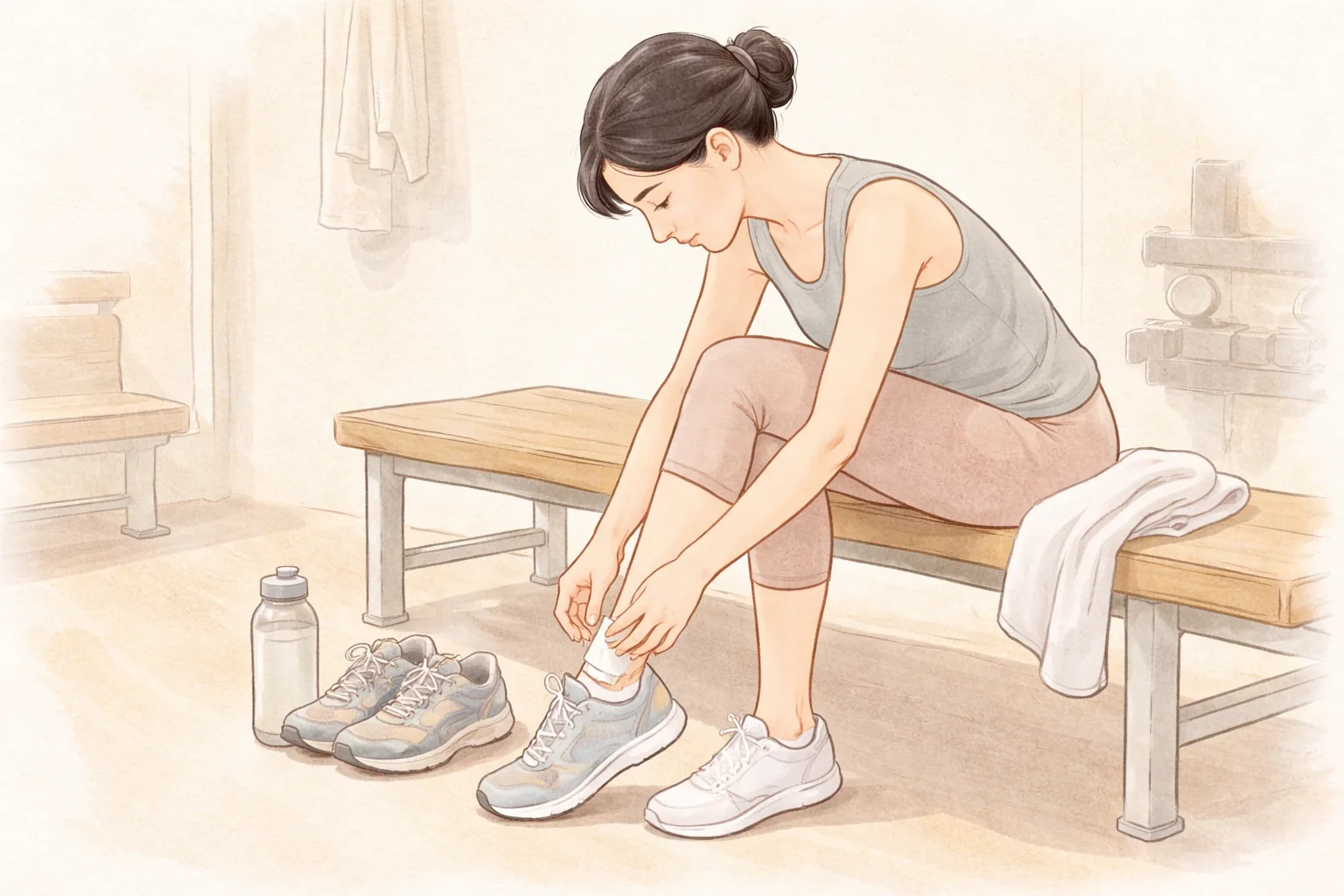
Plantar warts sit in a weight-bearing spot, so a blister makes walking and exercise uncomfortable. If a blister bursts, you need to watch for secondary infection (Seoul National University Hospital Medical Information), so when you restart foot exercises, check pain and friction first. For warts on the hands, temporarily adjust exercises that involve repeated friction from gripping equipment, and wash your hands after exercising so the virus does not move to other areas (American Academy of Dermatology).
Swimming and saunas keep the treated area submerged in water for a long time, so it is better to postpone them until healing is complete. In sweaty environments like the gym or Pilates, rest on the day of the procedure and while a blister is present, and afterward manage the area with clothing that does not rub the treated site and with your own towel.
What daily habits reduce recurrence and transmission?
After touching a wart or treating one, wash your hands right away, cover the lesion with clothing or a bandage, and do not shave over a wart. Shaving creates microscopic tears in the skin that become a pathway for the virus to spread, so if you have a lesion in the beard area, adjust your shaving habits first (American Academy of Dermatology). Avoid scratching or picking for the same reason.
Cryotherapy often does not end in one session. Guidance is usually to repeat at 2–4 week intervals (American Academy of Dermatology), with 1–3 weeks being a suitable time for the next treatment, and most warts improve after about 5 sessions on average, though stubborn warts may be treated more than 20 times (Seoul National University Hospital Medical Information). Repetition itself does not need to be seen as treatment failure. Fewer and smaller lesions are easier to treat, so it is advantageous to start before they spread to multiple spots (American Academy of Dermatology).
If your immune system is weakened or you have diabetes, treatment response and healing can differ, and specialist care is recommended (American Academy of Dermatology). There is also guidance that getting enough nutrition from a balanced diet helps (Seoul National University Hospital Medical Information). That is why sleep and daily rhythm matter too.
If this applies to you
When a ceremony or photo shoot is 2 weeks away
Removing a facial lesion now could mean the scab falls off right around your event. Adjust the timing of the procedure and your aftercare to your schedule, and discuss when to restart makeup as well.
When you do not want to stop exercising because of a plantar wart
A weight-bearing area becomes uncomfortable for walking and exercise once a blister forms. Lower the intensity for a few days right after the procedure, check that the blister has not burst, and ease back in.
When your skin is sensitive or easily flushed
Even at the same intensity, reactions and healing speed differ. Before treatment, we look at how your skin responds to redness and irritation to decide the method and scope.
When you want several removed at once, or are on a short stay
If the area is extensive, treating in stages rather than all at once is better for recovery management. If your stay is short, it helps to set follow-up check dates in advance.
Tell us before your consultation Recent sun exposure and outdoor plans, medications you take (including anticoagulants), skin care products and irritating ingredients you use, how past procedures or ointments worked for you, fixed dates such as ceremonies, photo shoots, or travel, and whether you have an immune-related condition or diabetes — sharing these makes it easier to decide the method and timing together.
How ATTITUDE Clinic proceeds
AI skin analysis record — We record and organize your skin condition so we look at the same information together. The analysis tool does not make a medical diagnosis; the doctor makes the judgment (ATTITUDE Clinic column).
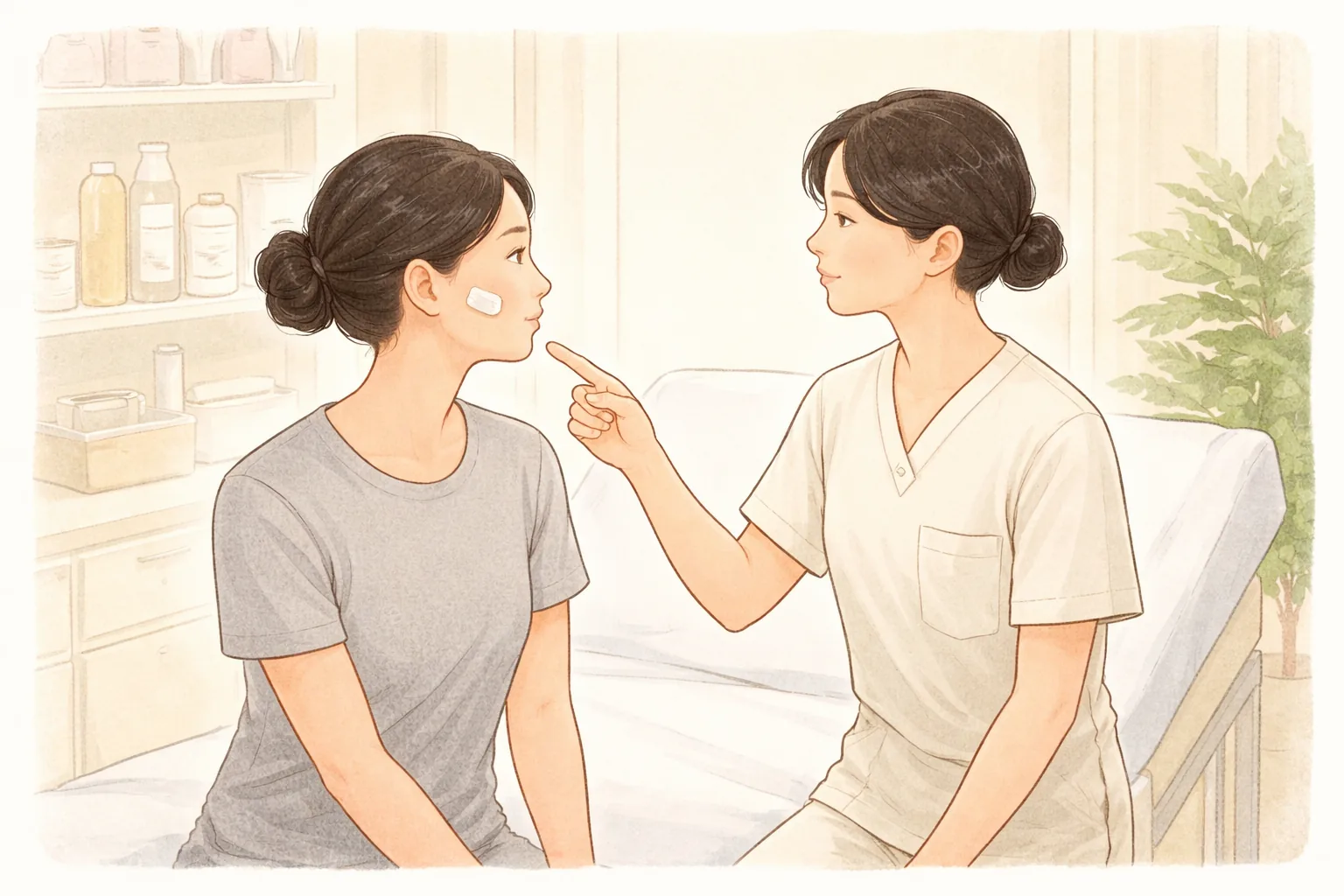
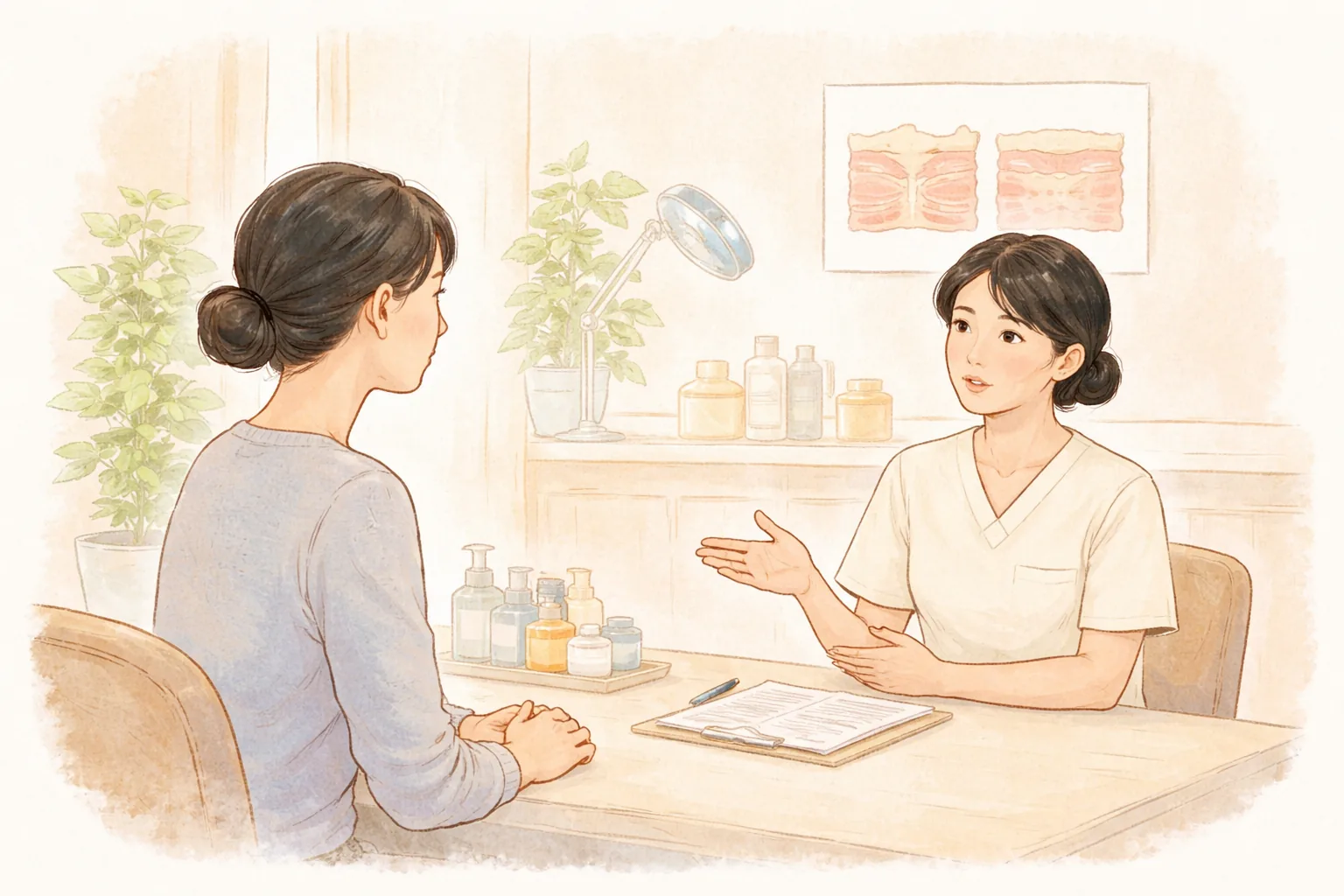
Doctor consultation — We look at the number and location of lesions, previous treatment experience, and the time and schedule available for recovery, then decide the removal method, scope, and timing. What to do now and what to postpone is also decided here (ATTITUDE Clinic column).
Treatment performed by the doctor — The doctor performs the agreed plan and adjusts while watching skin reactions during the procedure. Mole and wart removal is quoted per lesion (ATTITUDE Clinic treatments and pricing).
Recovery and aftercare guidance — After treatment we guide you on washing, moisturizing, and reducing irritation for your wound condition, and check progress together, including scabs, blisters, and pigment changes (ATTITUDE Clinic column).
Reducing irritation — Until the scab falls off, avoid exfoliation, shaving, and rubbing cleansers, and do not scratch or pick at the lesion (American Academy of Dermatology).
Checking progress — Use the flow of the scab falling off and healing at 10 days to 2 weeks as your benchmark, and have redness or pigment changes checked again if they persist (Seoul National University Hospital Medical Information).
Starting with the common reactions: redness and swelling at the treated site, tenderness when pressed, and bruising. After energy devices or injections, redness, swelling, tenderness, and bruising are also common and usually subside within a few days (ATTITUDE Clinic column). After cryotherapy, blisters or blood blisters can form, and pigment change is one of the common side effects after cryotherapy (Seoul National University Hospital Medical Information).
Less common reactions include secondary infection where a blister enlarges or bursts and oozes with surrounding redness, scarring in areas prone to keloids such as the nose, upper lip, and chest, and nail shape changes after treating lesions around the nails. Numbness in the fingers or toes is rarely reported and usually resolves on its own after 6–12 months (Seoul National University Hospital Medical Information). After energy device treatments, pigment changes, blisters, lumps, burns, or scars can rarely occur (ATTITUDE Clinic column).
There are signals that mean you should have the area checked again rather than wait. These are: oozing or pus after a blister bursts, or a widening area of redness; pain that does not improve and gradually worsens; a scab that has not fallen off after 2 weeks; and pigment changes becoming pronounced. If you take anticoagulants, bleeding risk is also considered (Seoul National University Hospital Medical Information).
Frequently asked questions
When can I wash my face after wart removal in Korea?
The benchmark is the scab and blister. While a scab is present, do not rub the treated area, and the key is to leave it clean and dry after washing. Rinse gently under running water, do not rub with a towel, and follow the order of applying the prescribed antibiotic ointment. If there is a blister, do not burst it; if it grows, do not handle it on your own and have it checked. Ultimately, what determines how you wash is not how many days have passed but what condition the wound is in now.
When can I start wearing makeup again?
Start with areas where the scab has fallen off and new skin has come up. On areas that have not yet healed, do not apply your usual cosmetics directly; follow the products and method your clinic recommends. If the treated area stings or turns red, stop applying rather than continuing, and check its condition. Sunscreen returns to your usual routine after redness subsides, and if pigmentation remains after 4 weeks, the direction is decided by checking progress (American Academy of Dermatology).
When can I exercise again?
While blisters and scabs remain, hold off on strenuous exercise and increase intensity starting from healed areas. Plantar lesions bear weight and blisters burst easily, so check pain and friction first; for hand lesions, make a habit of washing your hands after touching equipment (American Academy of Dermatology). Swimming and saunas keep the area submerged for a long time, so postpone them until healing is complete. The specific timing depends on the wound condition, so it is most accurate to get guidance during your consultation.
Will scarring or pigmentation remain after removal?
Pigment change is relatively common after cryotherapy, and hypopigmentation appears transiently but can last a long time. When treating warts on the nose, upper lip, and chest, keloid potential is also considered (Seoul National University Hospital Medical Information). If the lesion is extensive or treatment is repeated many times, there is also a chance a scar will remain. Following the aftercare guidance helps prevent scars and pigment changes (American Academy of Dermatology), so moisturizing and managing irritation matter throughout the recovery period.
How should I choose a clinic?
First, confirm the diagnosis is correct. Warts on the face or genitals, lesions that change shape, hurt, or bleed, cases where several have spread, and weakened immunity or diabetes all require specialist care (American Academy of Dermatology). Next, look at whether they explain which method is used and why, the recovery period and possibility of repeat treatment, and the risk of pigment change or scarring. It also helps to check how cost is determined by the number, size, and method, and whether you can receive written guidance on when to resume washing and activities after the procedure (ATTITUDE Clinic treatments and pricing).
At a glance
Table 2 At a glance
Item
Key point
What sets the timing
Not the date, but the wound condition such as scabs, blisters, and pain
Washing
Do not rub the treated area; keep it clean and dry after washing
Makeup
Start from healed areas; stop and check if you feel irritation
Exercise
Postpone while blisters and scabs are present, then increase intensity gradually
Common reactions
Redness, swelling, tenderness, bruising, blisters after cryotherapy
Managing recurrence
Repeat treatment is common; do not scratch or pick, wash hands, and adjust shaving
This article offers general health information. It is not a substitute for diagnosis or treatment based on your own condition, so please talk through your situation with a doctor.