Thermage Korea Before and After: When Lifting Results Appear and How Long They Last
When lifting results show up and what decides how long they last, how HIFU and RF differ, pain and recovery, and what to check before a consultation — based on the ATTITUDE Clinic column and general American Academy of Dermatology guidance.
Written by ATTITUDE Clinic Editorial Team
People weighing lifting treatments most often ask two questions before a consultation: "When will I notice a difference?" and "If I do it once, how long will it last?" Even if you know the treatment name, hearing that the timing and duration differ from person to person makes it more confusing. This article calmly lays out how lifting results unfold, what determines how long they last, pain and recovery, and what to check before and after treatment.
The short answer first
Lifting works by rebuilding collagen, the protein that gives skin its firm support, so results usually appear gradually over 2–6 months rather than right after treatment. With HIFU (high-intensity focused ultrasound) devices such as Ultherapy and Shurink Universe, a big change right away is uncommon, and any change tends to come on slowly over about 2–3 months. With RF (radiofrequency) devices such as Thermage FLX, an early firm feeling (sometimes with swelling) is followed by further change, mostly over 2–6 months. How long results last varies a lot between individuals, so the timing of a repeat session is usually decided around 1 year based on how things progress. American Academy of Dermatology guidance generally explains that non-invasive lifting results can last 2–3 years with proper skin care. That said, this is general guidance for the whole category of non-invasive lifting and is not a figure that guarantees how long a specific device will last.
Why don't lifting results show up right away?
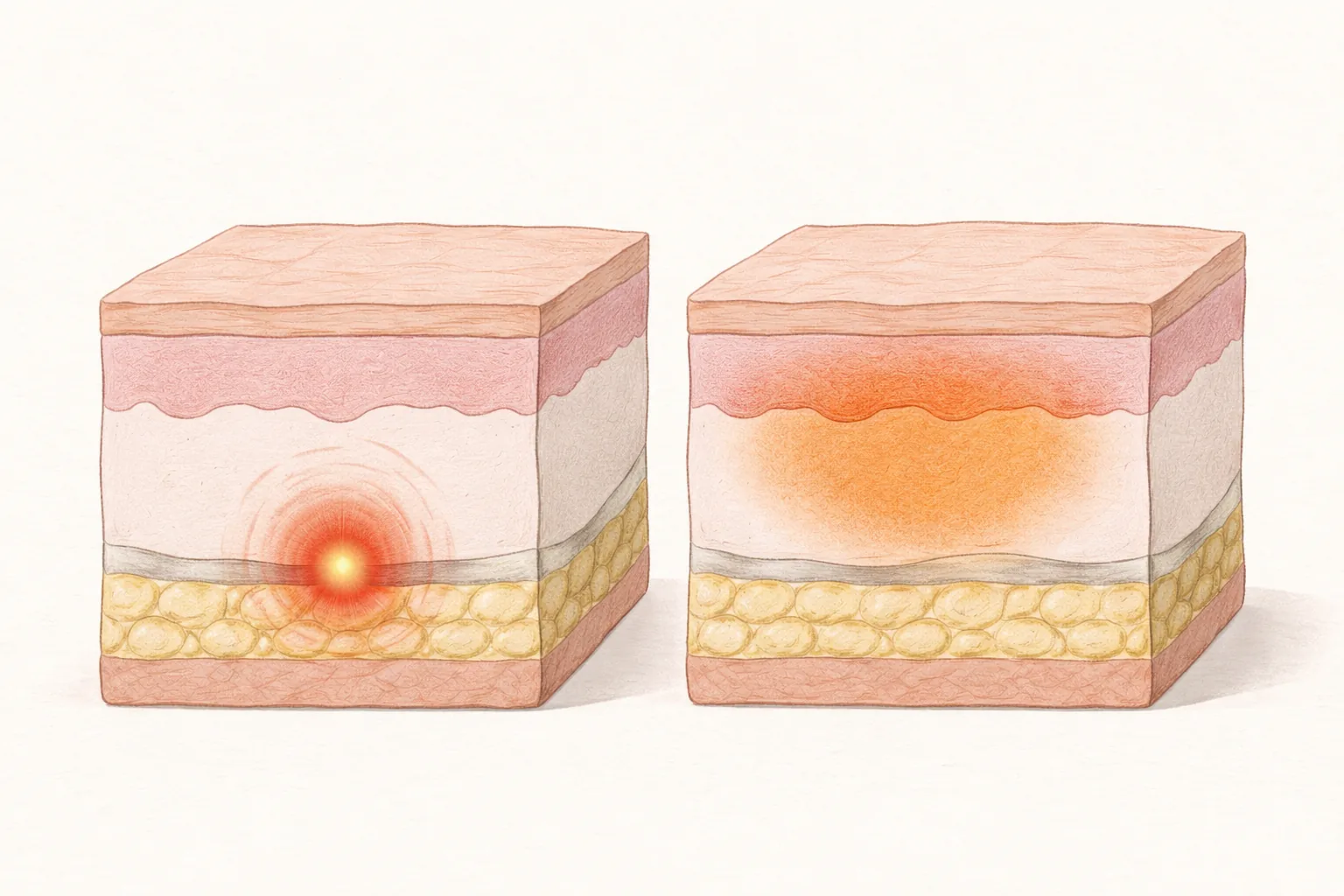
Heat energy does two things inside the skin. It slightly contracts collagen and, more importantly, it slowly starts collagen remodeling. HIFU focuses ultrasound energy at a single point deep in the skin, like a lens concentrating light, creating small thermal points at set depths from the dermis down to the SMAS layer depending on the cartridge. The SMAS layer is a thin sheet deeper than the dermis that supports the facial muscles and skin, and as it loosens with age it is considered one of the main causes of sagging. RF uses electrical energy that turns into heat as it passes through tissue, rather like friction heat, warming a relatively broad area from the dermis down through the subcutaneous fat layer at once. The ATTITUDE Clinic column also describes the two approaches as concentrating heat at one point versus warming a broad area.
So why doesn't the skin change the very next day? Because after collagen is heated, the body needs time to synthesize and replace it. American Academy of Dermatology guidance notes that non-invasive lifting results appear gradually and tend to feel natural. For non-invasive lifting using ultrasound, it explains that a single session usually produces gradual lifting and tightening within 2–6 months. For radiofrequency non-invasive lifting, it explains that many people feel some tightening right after a single session, but because of the time it takes collagen to form, the best results appear over about 6 months.
There is one common misunderstanding here: concluding that a treatment failed if you feel nothing right afterwards. The early firm feeling after Thermage FLX can partly come from swelling, and as that swelling settles the skin may look somewhat flatter before further change gradually appears. With Ultherapy and Shurink Universe, on the other hand, a big change right after treatment is hard to feel, and any change usually comes on slowly over about 2–3 months. That is why it makes more sense to judge results over several months rather than the next day.
If it's the same lifting, why 2 months for one person and 6 for another?
When results appear isn't decided by the treatment name alone. Whether your skin is dry or oily, thin or thick, and how dense the tissue inside the skin is all affect how the same energy level feels and what results it produces. Age, lifestyle habits and hormonal status also change how quickly and how much collagen the body rebuilds, which shifts when results appear. The ATTITUDE Clinic column lists these three as factors behind differences in results.
How long results last follows the same principle. How much the SMAS layer has lost elasticity, age, and everyday sun exposure and lifestyle habits all affect how quickly collagen is built up and broken down. Treatment intensity — how energy level and shot count were set — plays a part too. With the same device, deep sagging that calls for strong energy and preventive treatment at lower energy can feel different and last differently.
That is why lifting is better approached as an individual plan than as a single treatment. At ATTITUDE Clinic, we diagnose your skin condition and then advise on an appropriate energy level and when to come back, tailored to you. Even with the same analysis results, device choice, order and intensity are set differently based on your concerns, lifestyle habits and previous treatment history. The analysis record is a reference that organizes your current skin condition, and the final decision is made by the doctor through examination and consultation.
Table 1 If it's the same lifting, why 2 months for one person and 6 for another?
Type
What it does inside the skin
How change unfolds
Concerns it suits
Ultherapy · Shurink Universe (HIFU)
Creates small thermal points at set depths from the dermis to the SMAS layer depending on the cartridge
A big change right away is uncommon; any change comes on slowly over about 2–3 months
Areas that sag deeply and locally, such as the jawline and around the eyes
Thermage FLX (RF)
Warms a broad area from the dermis through the subcutaneous fat using electrical energy
An early firm feeling (sometimes swelling) is followed by further change, mostly over 2–6 months
Loss of elasticity over broad areas such as the cheeks and neck
Titanium · Titanium Hyper (3-wavelength laser)
Lifting using a 3-wavelength laser
For laser-based non-invasive lifting, the American Academy of Dermatology generally notes that 3–5 sessions may be needed and results appear gradually over 2–6 months after the last session
Elasticity care over broad areas
Swipe sideways to see the whole table.
In short — Lifting results often appear gradually over 2–6 months rather than right after treatment, and HIFU and RF follow different patterns. Because how long results last depends on how quickly collagen is built up and broken down, the timing of a repeat session is usually decided around 1 year based on how things progress.
What determines how long results last and how often to repeat?
Lifting is not a treatment that stops aging itself; it is closer to a process that turns back the pace of sagging and the level of elasticity for a set period. That makes it hard to say how long results last in exact years. The ATTITUDE Clinic column advises that the doctor decides the timing of a repeat session around 1 year based on how things progress. American Academy of Dermatology guidance generally explains that non-invasive lifting results can last 2–3 years with proper skin care. That range is guidance for the broad category of non-invasive lifting, so it is hard to read it as a figure that predicts exactly how long results will last for one person who had a specific device.
Four things are considered when setting the repeat interval. First, which areas have started to sag again and how much. Second, which device was used previously, at what intensity, and how the skin responded. Third, factors that affect how quickly collagen breaks down, such as sun exposure and lifestyle habits. Fourth, your upcoming schedule and how much recovery time you have. These four are looked at together to set the timing and device for the next session.
Whether maintenance can follow another lifting treatment is viewed in the same context. There are combinations that split the work — HIFU for deeper layers, RF for shallower layers and broad areas. Whether to do both on the same day or space them out depends on your skin condition, so it is better to set the overall plan first during a consultation. The ATTITUDE Clinic treatment guide lists lifting devices such as Ultherapy · Shurink Universe, Thermage FLX, XERF, Onda and Titanium, so your previous treatment history and skin condition can be considered together when setting combinations and order.
How much pain and recovery is there?
With lifting, pain varies more between people and between areas than with many other treatments. The biggest reasons are energy level and how densely nerves are packed in each area. The higher the energy level and the more shots delivered to one area, the stronger the heat stimulus reaching deeper layers and the greater the pain. Areas close to bone with dense nerves, such as the jawline, cheekbones, forehead and around the eyes, tend to feel more sensitive, while areas with thicker tissue, such as the cheeks, tend to hurt less at the same energy. HIFU is often described as a deep, hot sensation, and RF as a warmth that lingers.
Recovery is usually short. For a day or two after treatment, slight redness and a feeling of warmth from the heat stimulus may remain, and most of it fades on its own. The ATTITUDE Clinic column advises downtime of 1–2 days and explains that most people can return to daily life, including makeup, from the next day. American Academy of Dermatology guidance also notes that non-invasive lifting does not damage the skin surface, so temporary redness and swelling are the main reactions after treatment.
During this period, though, the skin's protective barrier is temporarily weaker, so you need to be more careful than usual with sun protection to recover without pigmentation. If you are sensitive to pain, tell us during the consultation so we can discuss anesthesia options and adjusting the energy level.
If this sounds like you
When an important shoot or ceremony is only weeks away
Lifting results are unlikely to appear dramatically within a few weeks. They usually appear gradually over 2–6 months, so if your event is close, it is safer to check recovery time and the possibility of swelling first rather than choosing unnecessarily strong energy to fit that date. You should also weigh whether a day or two of redness and warmth, or a small bruise, could affect your schedule.
When you want steady care and natural change
An individual plan and follow-up matter more than a single session. Even with the same device, energy level, shot count and repeat interval change how it feels, so the overall plan is set at the first consultation and the next visit is adjusted as things progress. How long results last is also affected by sun exposure and lifestyle habits, so daily sunscreen and moisturizing help.
When your skin is thin or sensitive and reddens easily
Skin thickness and sensitivity mean the same intensity of treatment can feel different. If you tell us your skin type and how you responded to previous treatments during the consultation, we can adjust the energy level and device choice. If redness lasts a long time after treatment or you feel more uncomfortable than expected, let the clinic know before planning the next step.
If you are an overseas visitor on a short stay
If your stay is short, you need to match the number of sessions and follow-up schedule in advance. Lifting sometimes needs only one session and sometimes several, so it is best to check what schedule is possible and how much recovery time is needed during the consultation. Bringing records of previous treatments (device, shot count, product, dosage, date, reaction) helps with planning.
Tell us before your consultation — Let us know about recent sun exposure (outdoor activities, travel, tanning), medications you are taking (such as anticoagulants), active skincare ingredients (retinol, acids, vitamin C and so on), how you responded after past treatments (swelling, bruising, pigment changes) and any important upcoming events. If you have records of previous lifting, bring the device, shot count, product, dosage, date and reaction so they can be reviewed during the consultation.
How ATTITUDE Clinic runs things
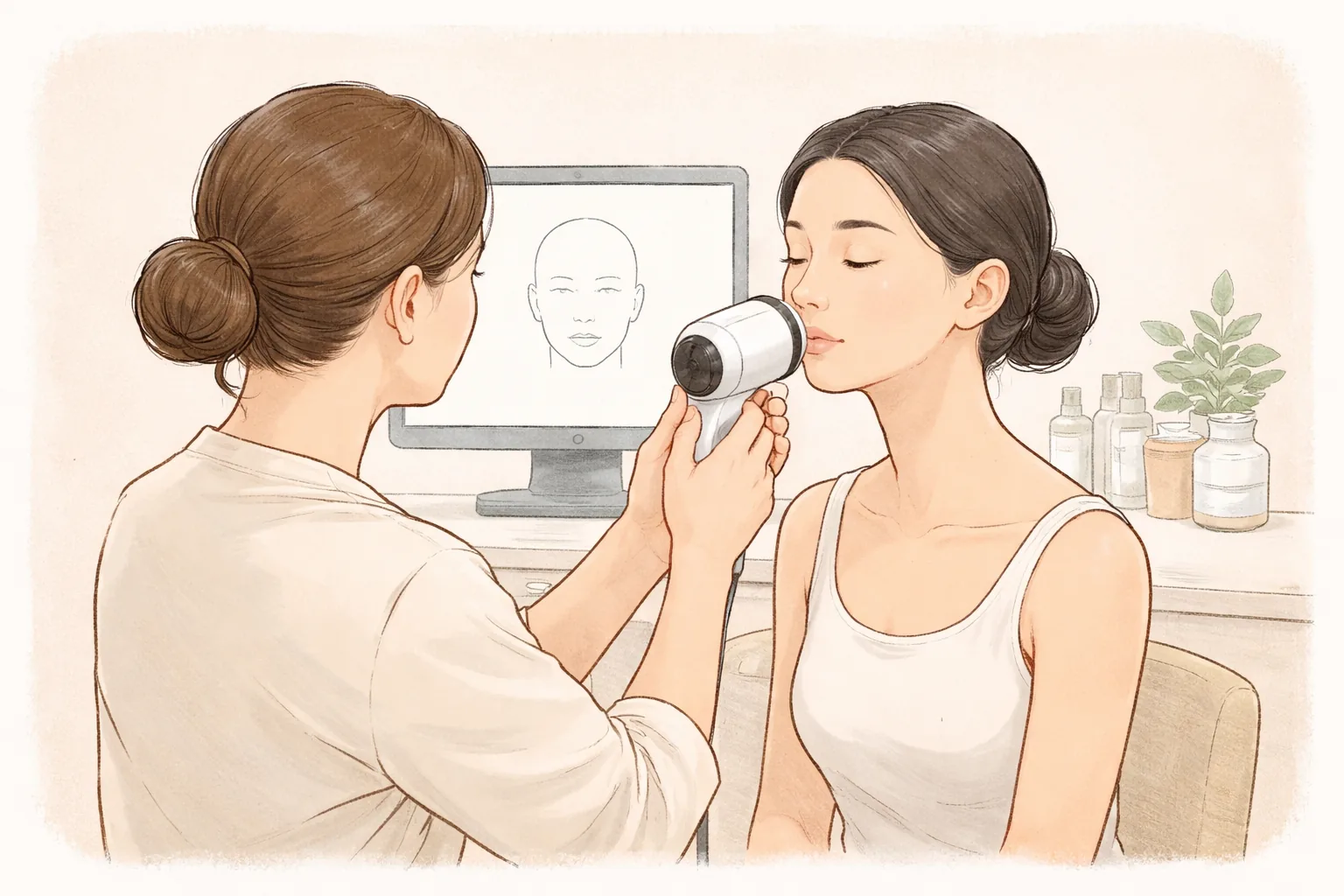
AI skin analysis record — Your skin condition is recorded and organized so you and the doctor look at the same information. The analysis tool is a reference to support the consultation and does not make a medical diagnosis.
Doctor consultation — Your concerns, lifestyle habits and previous treatment experience are added to the analysis record to decide together what is needed and what is not, and which device to use in what order and at what intensity.
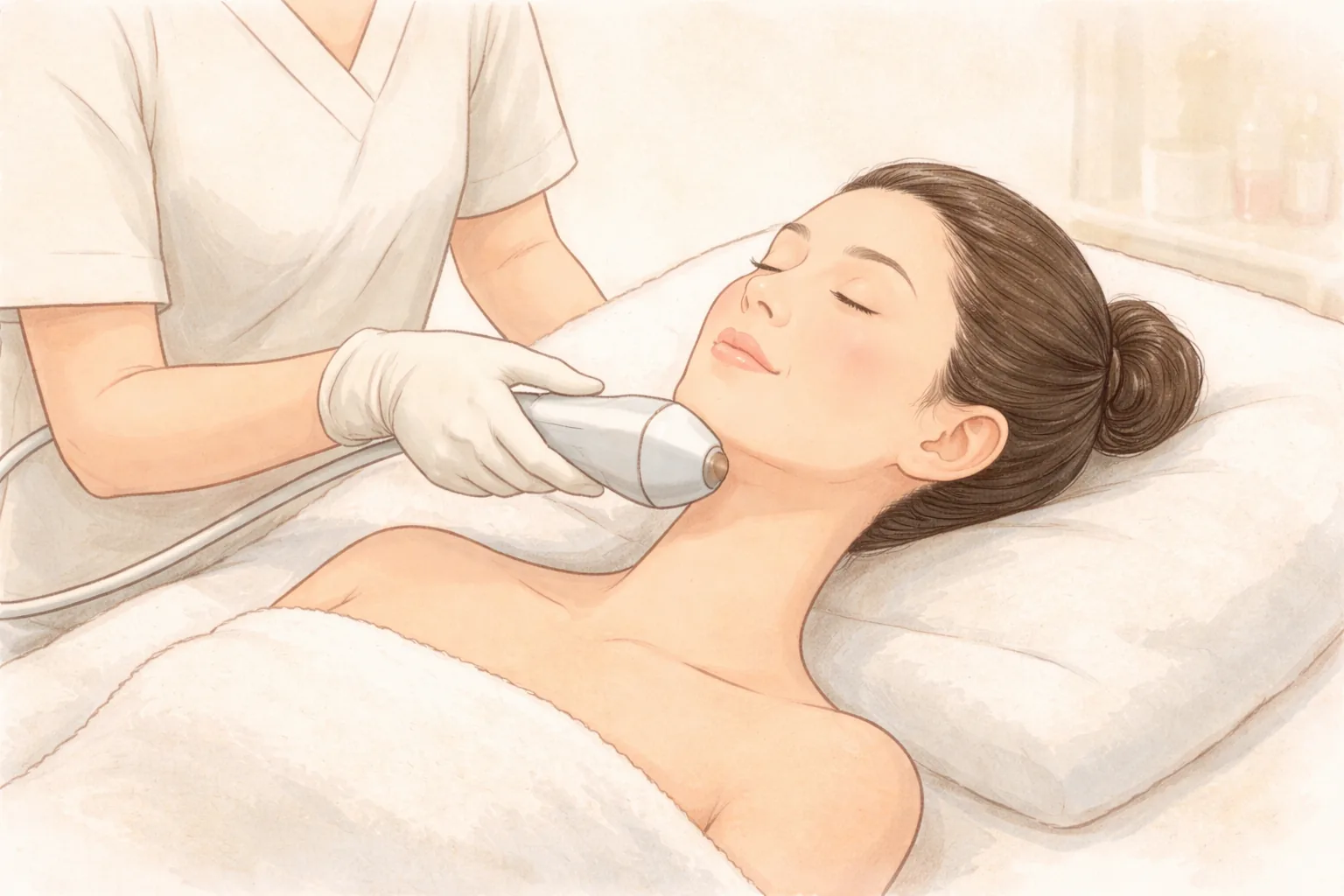
Treatment performed by the doctor — The doctor personally carries out the plan set in the consultation and adjusts it during treatment based on how your skin responds.
Recovery and follow-up — We look at how things progress after treatment and set the timing of your next visit. The repeat interval is usually based on around 1 year, but it varies with how much sagging there is and your lifestyle habits.
The ATTITUDE Clinic treatment guide lists lifting options such as Ultherapy · Shurink Universe (HIFU), Thermage FLX · XERF (RF), Onda (microwave) and Titanium (3-wavelength laser). Prices are disclosed by unit and the same standard applies on every language page. What you need and what you don't is decided together with the doctor based on the analysis record and examination.
Aftercare and side effects
Soothing — Right after treatment, warmth and redness may remain, and cold compresses may help. Check the method with your medical team.
Moisturizing — The skin barrier can be temporarily weaker, so keep up moisturizing.
Sun protection — For several days, apply sunscreen more carefully than usual.
Follow-up — Watch how swelling and redness settle, and let the clinic know if anything changes differently than expected.
Common reactions include temporary swelling, redness, a feeling of warmth, small bruises, tenderness when pressed, and temporary numbness or reduced sensation. They usually settle within a few days but can last longer. Rarely, burns, blisters, small scars, temporary facial muscle weakness, unwanted volume loss in the fat layer, pigment changes, or lumps after injection can occur. If you have symptoms that differ from what you expected, such as blisters, pain that keeps getting worse, or pigment changes that last a long time, it is better to seek care rather than wait.
Frequently asked questions
When do thermage before and after results usually start to show?
With HIFU devices such as Ultherapy and Shurink Universe, a big change right after treatment is hard to feel, and any change comes on slowly over about 2–3 months. With RF devices such as Thermage FLX, an early firm feeling (sometimes swelling) is followed by further change, mostly over 2–6 months. American Academy of Dermatology guidance notes that non-invasive lifting results appear gradually and tend to feel natural, and explains that ultrasound-based non-invasive lifting usually produces gradual change within 2–6 months from a single session. When results appear varies with skin type, thickness and how fast the skin renews. It makes sense to judge progress over months rather than the next day.
Should I do Ultherapy or Thermage FLX first?
There is no fixed order. If deep sagging and jawline concerns are central, HIFU is considered first; if loss of elasticity over broad areas from the cheeks to the neck is central, RF is considered first — it depends on your skin condition and concerns. Sometimes the two are combined, with HIFU for deeper layers and RF for shallower layers and broad areas. Whether to do them on the same day or space them out depends on your skin condition, so it is better to set the overall plan first during a consultation.
Can I go back to daily life the same day?
Non-invasive lifting does not damage the skin surface, so temporary redness and swelling are the main reactions after treatment. The ATTITUDE Clinic column advises downtime of 1–2 days and explains that most people can return to daily life, including makeup, from the next day. If the energy level is high or your skin is sensitive, redness and warmth may linger a little longer. It is best to avoid saunas, intense exercise and alcohol on the day.
Can maintenance follow another lifting treatment?
There are approaches that split deeper and shallower layers, so maintenance with a different device sometimes follows a previous lifting treatment. Which device to use and at what interval is decided by looking at your previous treatment records, how your skin responded, and how much recovery time you have. Bringing the device, shot count, product, dosage, date and reaction from previous treatments lets us review them during the consultation. Even with the same combination, doing it all at once or splitting it can change the recovery process and how it feels.
How do I choose a good place for lifting?
It is less about choosing a particular clinic and more about checking how the consultation and treatment are run. Look at who consults and who performs the treatment, whether the device and energy level, expected timing and duration, side effects and aftercare are explained in specific terms. It is also worth checking whether previous treatment records are reviewed and whether the analysis record is presented in a way that avoids mistaking it for a medical diagnosis. The ATTITUDE Clinic column also explains that the flow of an AI skin analysis record, a doctor consultation and treatment performed by the doctor is used to decide together what is needed and in what order.
At a glance
Table 2 At a glance
Item
Key points
When results appear
HIFU: any change over 2–3 months; RF: further change over 2–6 months; non-invasive lifting in general: gradual over 2–6 months
Duration · repeats
Varies a lot between individuals, so the doctor decides the repeat interval around 1 year; the American Academy of Dermatology notes non-invasive lifting in general may last 2–3 years
What shapes results
Skin type, thickness and renewal speed; energy level and shot count; sun exposure and lifestyle habits
Pain · recovery
Varies with energy level and nerve density in each area; downtime 1–2 days
Common reactions
Redness, swelling, warmth, small bruises, tenderness, temporary numbness or reduced sensation
Combinations · order
Device combinations and intervals are decided in consultation, with previous treatment records reviewed
This article offers general health information. It is not a substitute for diagnosis or treatment based on your own condition, so please talk through your situation with a doctor.