Botox by Area: How Do We Assess Facial Expressions and Muscle Movement?
A Botox consultation by area is about reading your facial expressions and muscle movement before deciding dosage, cost, prior treatments, and recovery plans.
Written by ATTITUDE Clinic Editorial Team
Once you book a Botox consultation, you usually start calculating how many units you need. But when you actually sit down, you are first asked to frown, and you hear that even the same forehead line takes a different amount and different placement for each person. This article covers how facial expressions and muscle movement are assessed at a consultation, and in what order the purpose by area, dosage and cost, prior treatment history, and recovery plan are decided.
The conclusion first
A Botox consultation is not a place to decide how many units go into which area — it is a process of making facial expressions, seeing which muscles move and how much, and checking left-right differences. According to American Academy of Dermatology guidance, before a cosmetic procedure you should confirm expected results and risks, alternatives, recovery time, the number of sessions and time required, cost, and preparation and aftercare. Areas are typically consulted as wrinkle areas such as the glabella, forehead, crow's feet + under-eye, and nasolabial folds; special areas such as brow peak, nasal alae, mouth corners, gummy smile, and dimpled chin; salivary glands, temporalis, temples, and cheekbones; and body. Cost varies with product, dosage unit, and what is included. Onset, duration, and left-right response vary with muscle mass, dosage, injection depth, and prior treatment history, so it is more accurate to confirm these at the consultation.
Why we make facial expressions — how is muscle movement assessed?
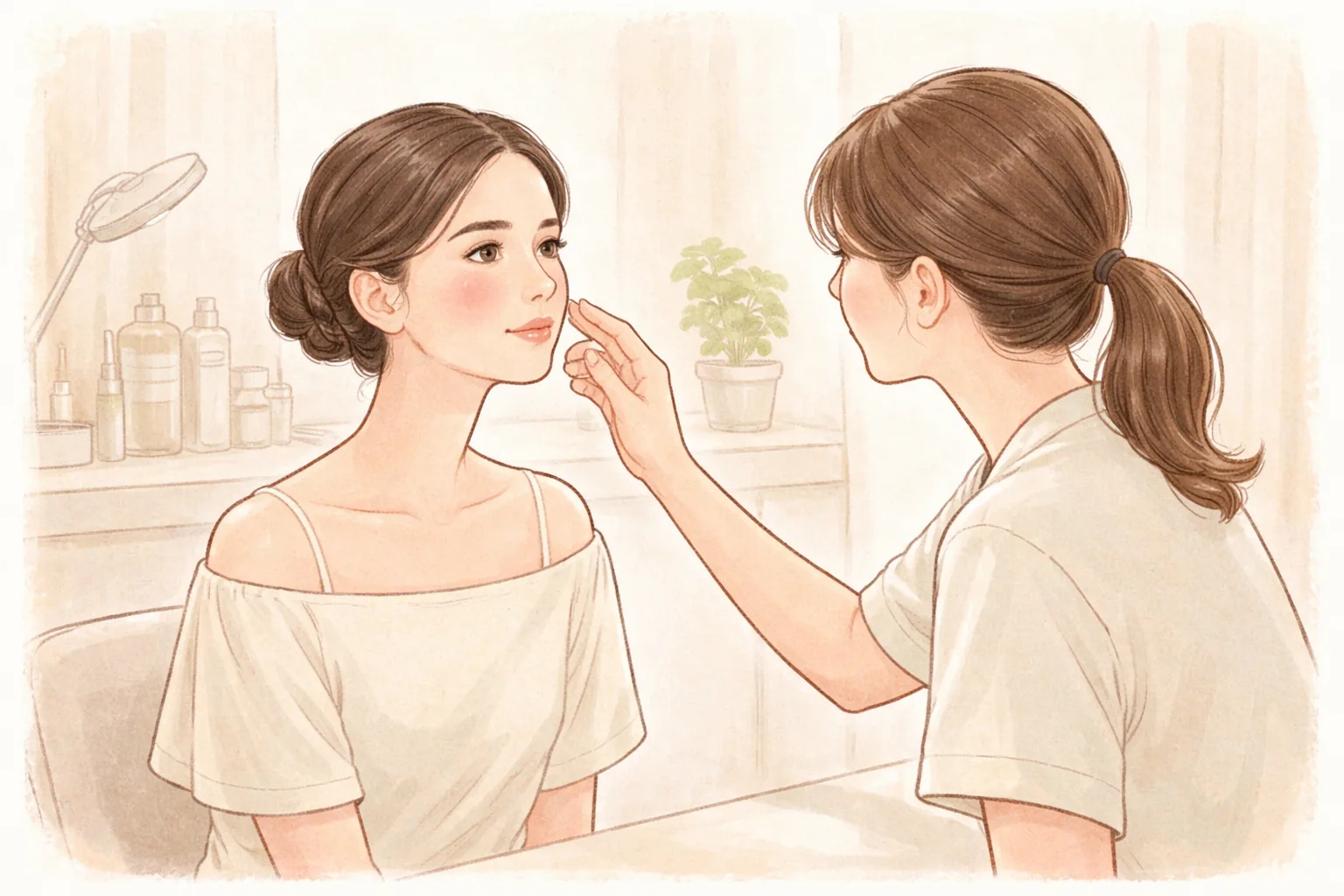
The first thing done at a consultation is moving the face. You make several expressions — a relaxed face, a maximally frowning face, a full smile — while the practitioner looks at where lines form and how muscles bulge. Toxin is a drug that reduces nerve signals to the muscle, lowering that muscle's movement, so which muscle moves and how much is the starting point for setting dosage and injection placement. Expression habits differ from person to person, so even in the same area, the thickness and range of the muscle actually being used differ.
Checking the left and right separately is part of this step too. If one side is particularly engaged or brow height differs, injecting the same dosage on both sides can make the difference more noticeable. That is why the left-right difference when engaging and the resting position are checked together.
"If the unit number is the same, the result is the same" falls apart here. Even with the same dosage, results differ between someone with thick muscles and someone with thin muscles, and between someone with a wide engagement range and someone with a narrow one. According to American Academy of Dermatology materials, practitioners recommend the most appropriate method considering medical history and skin condition, and patients are advised to ask how long the provider has been performing this procedure and how many patients with skin types and ages similar to their own they have treated.
What is the basis for dividing areas?
The basis for dividing areas is which muscle creates that expression. The forehead and glabella involve muscles engaged when opening the eyes wide or frowning, creating folding lines; the crow's feet and under-eye involve muscles that squint slightly when smiling; the nasolabial folds involve muscles that lift when moving the mouth. The ATTITUDE Clinic price list also lists wrinkle Botox separately as glabella, forehead, crow's feet + under-eye, and nasolabial folds.
Items whose names reveal the area — brow peak, nasal alae, mouth corners, gummy smile, dimpled chin — deal with muscles with small movement on the face. Because they carry a large share of expression, these areas are consulted with a finer split between movement to preserve and movement to reduce. Salivary glands, temporalis, temples, and cheekbones are structures inside the face, so the consultation has a different purpose from visible wrinkles, and they are grouped separately on the price list as well.
Body has a different character from the forehead or crow's feet. For large-volume muscles like the trapezius or calves, reducing movement shows up as the muscle volume itself gradually decreasing over time, so a broader area and larger dosage are dealt with than on the face. This is why the price list states body Botox as based on 100 units and varying with area and dosage.
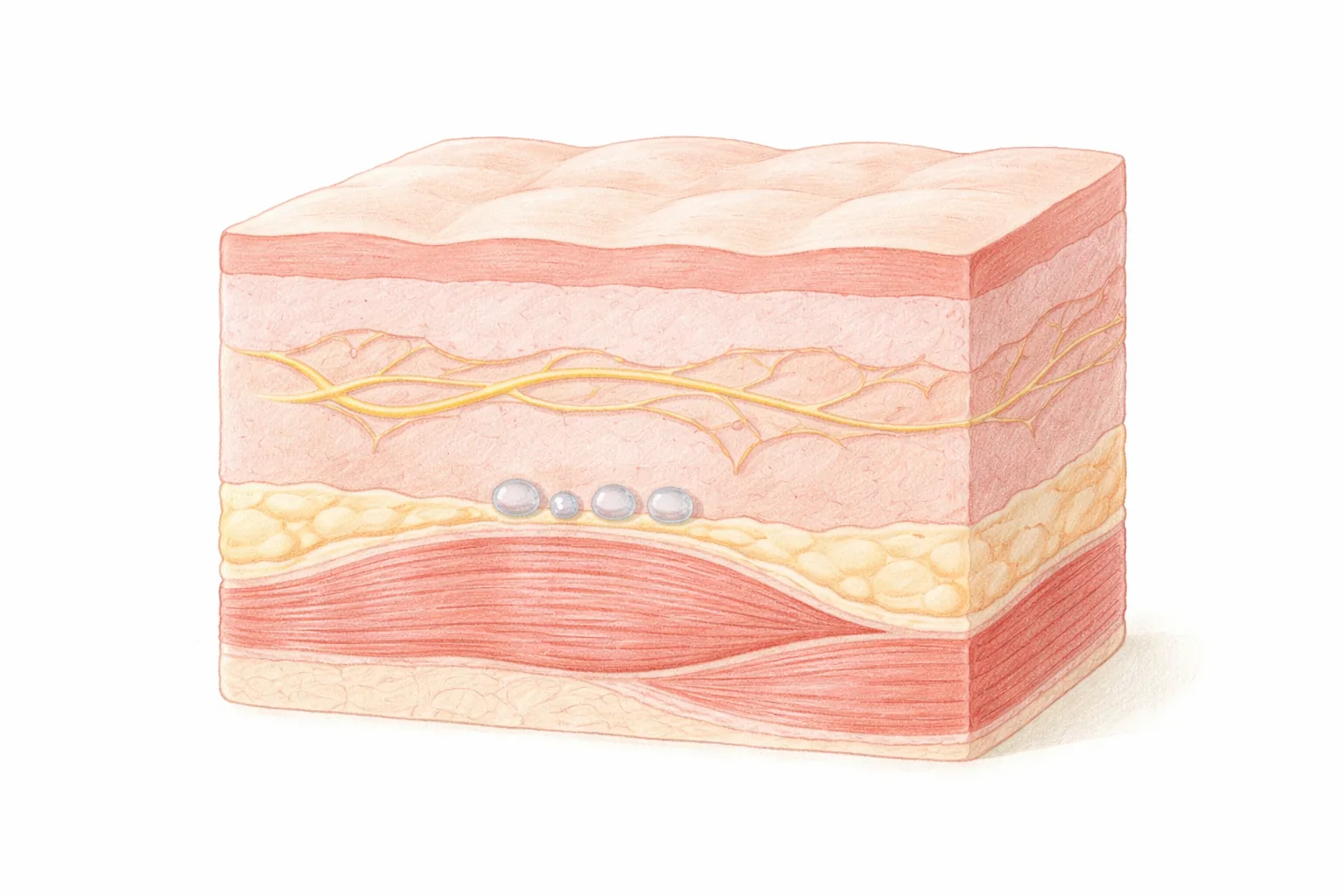
Skin Botox has yet another purpose. Instead of lowering facial muscle movement, it is a method applied shallowly and broadly on the skin surface, so it is listed separately on the price list in 3cc units. Wrinkle Botox, body Botox, and skin Botox use the same drug but differ in the layer treated and the purpose, so the consultation items are divided as well.
In what order are dosage and cost decided?
The order for deciding dosage is usually this. First, decide which movement to reduce and which to preserve from the expression, then distribute per area according to muscle thickness and left-right differences. Finally, decide which product to use. Even for the same purpose, the required dosage and cost differ by product — on the price list, Newlux, Coretox, Jeomin, Allergan Botox, and Dysport are each listed in different units.
This structure also explains why costs differ between clinics. The total varies with which product and how many units are used, how many areas are treated, and whether consultation, anesthesia, and aftercare are included in the amount. ATTITUDE Clinic's price list shows all amounts with VAT excluded and states that body Botox varies with area and dosage, so at the consultation it is better to confirm in words the product name, total units, left-right distribution, the final amount including VAT, and what is included. American Academy of Dermatology materials also advise confirming cost before the procedure and asking about insurance coverage as well.
What is checked about prior treatments and recovery plans?
If you have had toxin before, when, in which area, how much, and how you responded then are reviewed together. A history of repeated injections in the same area is helpful when setting dosage, and how long the intervals were is checked as well. Medications you currently take, products applied to the skin, and any experience of skin becoming sensitive after a recent procedure are also items shared at the consultation.
Recovery plans are set together with your schedule. American Academy of Dermatology materials advise checking with your practitioner when you can return to exercise, work, and social activities, and how to prepare and do aftercare. Telling them how many times a week you exercise and what kind, and whether you have an important date coming up, lets timing and intensity be adjusted accordingly.
Table 1 What is checked about prior treatments and recovery plans?
Movement to reduce vs. preserve, left-right differences
Special areas — brow peak, nasal alae, mouth corners, gummy smile, dimpled chin
Per 1 area
Small muscle movement noticeable when smiling or talking
The role that area plays in expression and preservation range
Salivary glands, temporalis, temples, cheekbones
Items based on 250 units
Concerns related to structures inside the face
Different purpose from visible wrinkles, risks to check
Skin Botox
3cc
Fine lines and texture on the skin surface
Layer and depth treated, number of sessions needed
Body Botox
Based on 100 units, varies with area and dosage
Muscle volume such as trapezius and calves
Left-right differences, strength to preserve for daily movement
Swipe sideways to see the whole table.
In summary, the basis for dividing areas is the muscle, and dosage starts from the movement that muscle actually makes. So the natural order at a consultation is to look at facial expressions first, confirm the product, units, number of areas, and what is included, then set the timing to fit your upcoming schedule.
If this sounds like you
When a ceremony or photo shoot is a few weeks away
If you tell us the date first, we can calculate where recovery and change will be by that day and set the timing. Cramming a first-time procedure right before a ceremony can overlap with your schedule before the change has settled. Starting with more lead time widens the options you can adjust.
When you want steady maintenance
Rather than a strong dose at once, a natural approach is to set the next timing while watching how much movement has returned. Recording when, where, and how much you received helps at the next consultation when setting dosage. The interval depends on how fast the muscle returns and your upcoming schedule.
When your skin is sensitive or prone to redness
The injection itself can cause redness or bruising, which can be a burden when your skin is in a sensitive phase. If you have had a lot of sun exposure recently or feel stinging from cosmetics, tell us that state first. Depending on the condition, it is better to postpone or start with a split area.
When you are an international visitor on a short stay
If your stay is fixed, tell us your return date and next schedule. If there is little time to check progress, it is good to decide in advance the expected course and how to contact us if you feel uncomfortable. According to the booking guide, a booking request and a confirmation are different, and it is confirmed when you receive the clinic's confirmation contact.
Tell us before your consultation — recent sun exposure, medications you take and cosmetics you apply, any experience of sensitive skin after a previous procedure, the areas and timing of past toxin treatments, upcoming ceremony, photo shoot, or travel dates, and how many times a week and what kind of exercise you do. Even for the same procedure, timing and settings differ based on this information.
How ATTITUDE Clinic proceeds
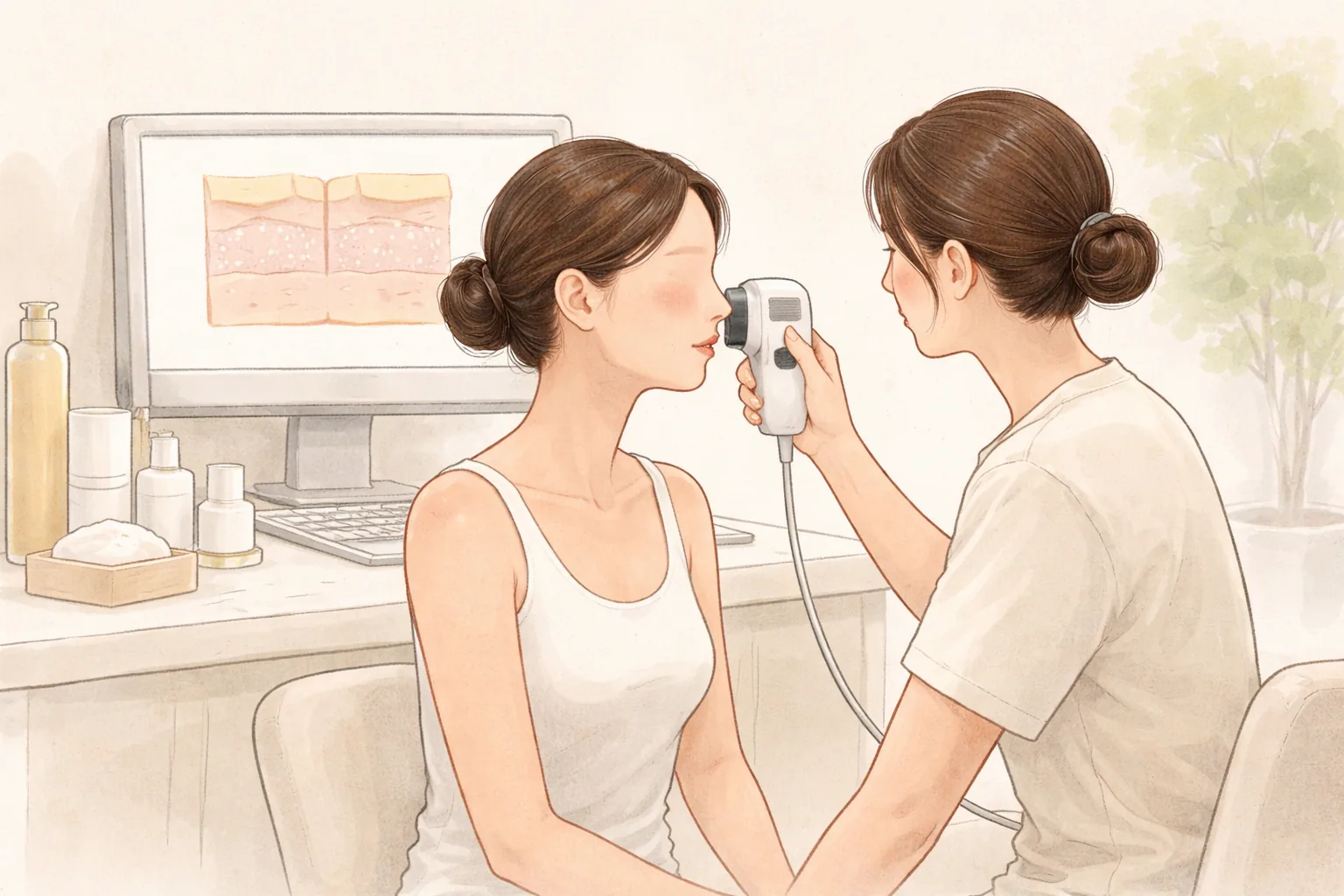
AI skin analysis record — Current state such as pigment, redness, and skin texture is recorded with an analysis tool. This record organizes information to help the consultation and is not a medical diagnosis; the director judges the cause of your concern based on the record.
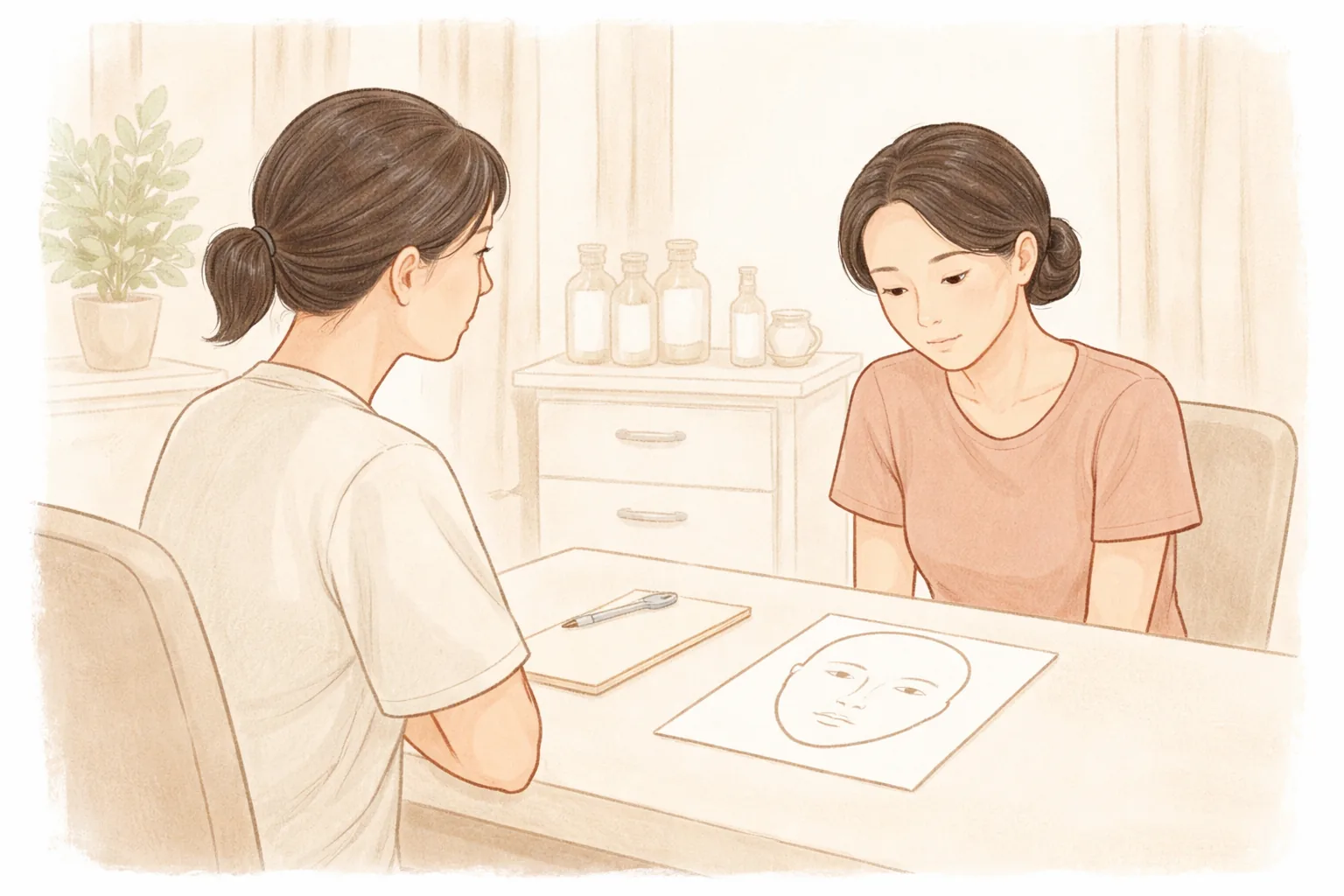
Direction set through director consultation — Facial expressions and muscle movement, left-right differences, prior treatment history and intervals, schedule, and pain sensitivity are reviewed together to set the area, product, dosage, and timing.
Procedure performed directly by the director — Discomfort is reduced with topical anesthesia as needed, and the director performs the procedure directly, without recommending more than necessary.
Recovery guidance and progress check — Aftercare methods are explained after the procedure, and if any discomfort arises, you can visit to have it checked.
The products covered under this topic are listed on the price list as Newlux, Coretox, Jeomin, Allergan Botox, and Dysport. Which product to use is decided at the consultation based on muscle condition, purpose, and prior response. ATTITUDE Clinic has stated in its column that it follows the principle of authentic products, accurate dosage, and fair pricing, and proceeds only as much as needed.
Aftercare and side effects
After the procedure, care proceeds in this order.
Soothing — Do not rub or press hard on the injection site. Not applying strong pressure to the injection site after an injectable procedure is a basic principle that ATTITUDE Clinic guides as aftercare for injectable procedures.
Cleansing and makeup — Start gently after the instructed time has passed.
Avoid alcohol, saunas, and strenuous exercise — Avoid these for the instructed period.
Progress check — Check changes when making expressions and left-right differences over time, and visit if you feel uncomfortable.
Injectable procedures may involve local reactions such as pain from needle insertion, bruising, and swelling, and rarely infection. American Academy of Dermatology materials advise confirming risks and alternatives at the consultation on the premise that all medical and cosmetic procedures carry risk. If toxin spreads beyond the target muscle, brow or eyelid position and left-right movement may feel different from expected, and these changes are items you can ask about in advance at the consultation. They usually diminish over time, but while watching the progress, if discomfort is significant or unusual symptoms appear far from the treated area, do not endure it — seek medical care.
Frequently asked questions
When do Botox effects start and how long do they last?
Toxin does not complete its result right at the injection site — nerve signals decrease, muscle movement gradually changes, and when nerve transmission recovers over time, it returns to the original state. Onset and duration vary with area, muscle mass, dosage, injection depth, and prior treatment history, so they are not fixed by a single number. That is why at the consultation, rather than "how long," the expected course and next timing are set based on your upcoming schedule. Changes in expression appear over time, not right after the procedure, so rather than concluding the result early, check the progress. It helps to keep in mind that even in the same area, the speed of response differs from person to person.
Could Botox make my expression look awkward or my eyes smaller?
Since it is a procedure that lowers movement, which movement to preserve and which to reduce determines how natural the expression looks. Areas connected to brow position, such as the forehead and glabella, are major risk items checked at the consultation regarding changes in eyelid or brow position. So at the consultation, brow position at rest and when engaging is reviewed together to decide which movement to preserve. If after the procedure the left and right feel different or a heavy eyelid sensation lasts, visit to have it checked rather than waiting it out. It is usually a change that diminishes over time, but there is no reason to endure discomfort in the meantime.
When can I exercise or drink alcohol after the procedure?
American Academy of Dermatology materials advise checking with your practitioner when you can return to exercise, work, and social activities after the procedure. The specific timing varies with area, dosage, and your usual exercise intensity, so telling us your exercise plan at the consultation is more accurate. On the day of the procedure, it is common to avoid strenuous exercise, alcohol, and saunas. If you have a schedule coming up that uses facial muscles for a long time, tell us in advance at the consultation.
Why do prices differ between clinics?
Because the product used, total units, number of areas treated, and what is included in the amount all differ. The ATTITUDE Clinic price list lists units such as 50 units, 100 units, per area, and 3cc separately by product, states that all amounts exclude VAT, and notes that body Botox varies with area and dosage. So rather than simply comparing with another clinic's amount, it is better to compare on the same basis: product name, dosage, number of areas, and what is included. At the consultation, check the final amount including VAT and whether consultation fees, anesthesia, and aftercare are included.
What should I look at when choosing a clinic for consultation?
American Academy of Dermatology materials advise checking the practitioner's training and experience, how long they have performed this procedure, and how many patients with your skin type and age they have treated, and requesting before-and-after photos of similar cases and an explanation of risks. In Korea, adding whether they explain what the product is, the total units, and areas, and whether it is a place you can return to for a check if discomfort arises, makes the decision easier. Rather than device names or event phrases, the standard becomes whether they explain which muscles and in what order they will look at your concern. If you do not understand after hearing the explanation, ask again.
At a glance
Table 2 At a glance
Item
Key point
Starting point of consultation
Check facial expressions, muscle movement, and left-right differences first
Area division
Divided into wrinkle areas, special areas, salivary glands/temporalis/temples/cheekbones, and body
Dosage
Distributed according to muscle thickness, left-right differences, and prior treatment history
Cost
Varies with product, units, number of areas, and what is included; shown with VAT excluded
Recovery
Do not press the injection site; avoid alcohol, saunas, and strenuous exercise for the instructed period
When to check
Onset, duration, and left-right response are checked over time; visit if uncomfortable
This article offers general health information. It is not a substitute for diagnosis or treatment based on your own condition, so please talk through your situation with a doctor.