How Much Does Botox Hurt? A Guide to Anesthesia Options for Jaw, Masseter, and Gummy Smile Botox
How much does Botox hurt, and do you need numbing cream? ATTITUDE Clinic in Gangnam, Seoul explains pain levels, anesthesia, and preparation from jaw botox for TMJ to masseter botox before and after care.
Written by ATTITUDE Clinic Editorial Team
At Botox consultations, one question comes up again and again: "Does it hurt because it's an injection?" and "Do I really need numbing?" This guide walks through what botulinum toxin does in the skin and muscle, what makes pain vary, and how anesthesia and pre-treatment preparation work.
The Short Answer
Botox uses a fine needle to deliver small amounts across multiple points, so discomfort is generally mild and the session is quick. According to Cleveland Clinic, the injection site may sting and feel uncomfortable, but the procedure is over quickly, and a topical anesthetic can be applied to the skin if needed. How much it hurts depends on skin thickness, muscle depth, the number of points treated at once, and your usual pain sensitivity. In the same treatment, bruising and swelling are far more common reactions, and these can be reduced by managing medications, alcohol, and post-treatment pressure. In the end, even for the same area, muscle size, movement, and skin thickness vary, so pain, bruising, and how soon results show up differ from person to person.
What Does Botox Do in the Muscle?
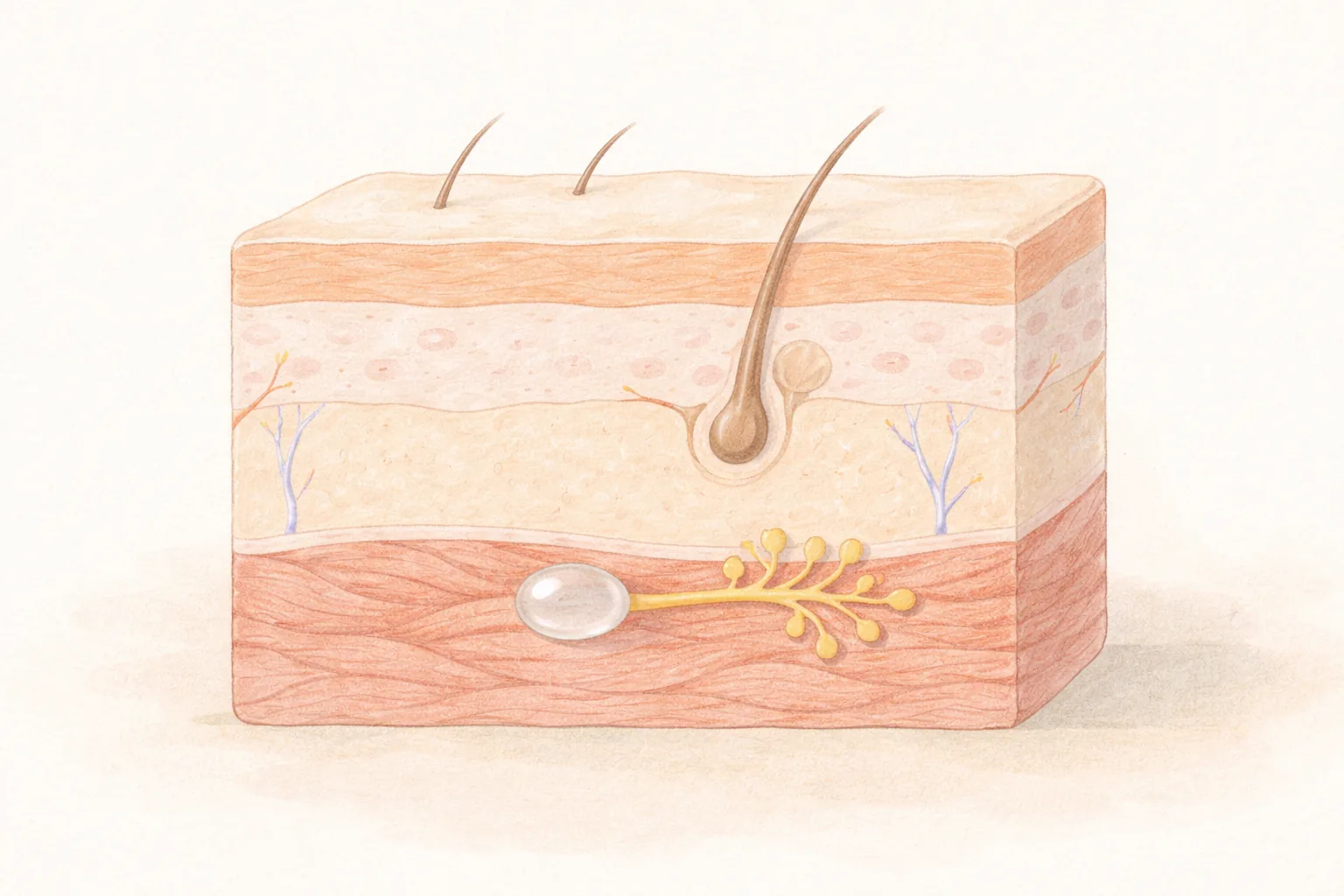
Botulinum toxin blocks the release of acetylcholine (the substance that carries the "move" signal to muscles) from nerve endings. Once the signal is cut off, the muscle can't contract, and expression lines caused by repeated facial movements soften as a result (DermNet). This effect isn't permanent. Nerves sprout new branches and reconnect with the muscle after about 3 months. The same source notes that with repeated treatments, the interval until the next session may gradually lengthen.
There's a separate reason injections can hurt. As the drug passes through skin and muscle, the needle pierces tissue and the liquid pushes surrounding tissue aside. Wrinkle Botox goes into expression muscles, while contouring Botox goes into the masseter, the chewing muscle. Even with the same needle, a thick muscle area and the thin skin around the eyes feel different.
Here's something interesting. Botulinum toxin doesn't just block acetylcholine; it also reduces the release of pain-signaling substances like glutamate and substance P, working to lower pain sensation itself (DermNet). In fact, the same ingredient is used to relieve muscle knots and pain (Cleveland Clinic). This is a different story from the sting right after the procedure, but it does mean the injection is far from the harsh treatment some people imagine.
What Makes Botox Hurt More or Less?
Cleveland Clinic notes that injections may be given at several points depending on the area, and because the needle is thin, discomfort is usually mild (Cleveland Clinic). The more points, the more stinging moments you'll feel, so the same intensity can be perceived differently.
The area matters too. The forehead and glabella receive small amounts into expression muscles, while thicker areas like the jaw are planned for depth and dose during consultation. Body Botox guidance varies by area and dose (ATTITUDE Clinic treatments). For hyperhidrosis, which requires multiple points into sweat glands (DermNet), the number of injections itself goes up.
When switching products, you can't compare units directly. Botulinum toxin has no internationally unified unit standard, so 1 unit of Botox and 1 unit of Dysport differ in strength. The approximate conversion ratio between the two is 1:2.5 to 1:5, and Botox to Xeomin is viewed as 1:1 (DermNet). If you move between clinics, it's worth remembering both the product name and the units.
How Is Anesthesia Handled?
According to Cleveland Clinic guidance, a topical anesthetic can be applied to the skin before the procedure (Cleveland Clinic). Topical numbing is less burdensome than injections, so if you're sensitive to pain or have many injection points, this is decided together during consultation. For other purposes, such as bladder overactivity, local or regional anesthesia may also be used for botulinum toxin injections.
ATTITUDE Clinic also reduces discomfort with topical anesthesia and other methods as needed, and the director performs the procedure personally (ATTITUDE Clinic column). Anesthesia is less a tool to bring pain to 0 and more a way to reduce unpleasant moments. Even with numbing cream, the deep sensation of the needle entering muscle doesn't fully disappear, so if a point feels hard to bear during the procedure, it's best to speak up right away. Intensity and speed can be adjusted on the spot.
Pre-Treatment Prep Drives Bruising and Swelling
Cleveland Clinic advises telling your provider about all medications and supplements you take before the procedure. Anticoagulants like warfarin and NSAIDs such as ibuprofen raise the risk of bruising at the injection site. Alcohol also increases redness and bruising, so it's best to avoid drinking 24 hours before treatment (Cleveland Clinic).
Bruising is a far more common reaction than pain, and whether it appears depends not only on medications and alcohol but also on skin thickness, capillary condition, and UV exposure. If you've had a lot of sun exposure recently, or if your usual cosmetics or past treatments have left your skin sensitive, it's good to mention this in consultation (ATTITUDE Clinic column).
Table 1 Pre-Treatment Prep Drives Bruising and Swelling
Small amounts are spread across several points. Temporary eyelid drooping occurs rarely, so position and dose are set conservatively
Jaw
Chewing muscle (masseter)
A thicker muscle area, so depth and dose are decided in consultation
Hyperhidrosis (underarms, palms)
Eccrine sweat glands
Multiple points must be injected into sweat glands, so the number of injections increases
Body (trapezius, calves, etc.)
Large muscles
Guidance varies by area and dose
Swipe sideways to see the whole table.
In short Botox pain is a brief stimulus created by the needle, the area, and the number of points, and what actually bothers people more is bruising and swelling. Anesthesia isn't a required step but an option to reduce unpleasant moments, and telling your provider about medications and alcohol beforehand often makes the difference in how satisfied you are with recovery.
If This Sounds Like You
If Your Wedding or Shoot Date Is Set
After botulinum toxin, muscles begin to relax from 2–4 days, with the biggest change around 10 days (DermNet). Since you need to account for both when results appear and how long bruising takes to settle, starting with more lead time before your event date gives you more options to adjust (ATTITUDE Clinic column). If the date is tight, you can also split areas and set a sequence.
If It's Your First Treatment and You're Nervous
Discomfort is usually mild, and the procedure is short (Cleveland Clinic). If there are many injection points or a sensitive area, discuss topical numbing together, and during the procedure, speak up about anything hard to bear as it happens.
If You Bruise Easily
If you're taking anticoagulants or NSAIDs, or if you've been drinking recently, tell your provider first during consultation (Cleveland Clinic). Avoid alcohol before treatment, and don't press or rub the area for 12 hours afterward.
If You're an International Visitor on a Short Stay
If you share your return date and upcoming schedule, we can plan areas and sequence around it (ATTITUDE Clinic column). Since results begin to show from 2–4 days later, whether you have days left to check progress is the starting point of the plan.
Please Tell Us Before Your Consultation
Please tell us before your consultation
Your recent UV exposure
Medications you take (including blood thinners), supplements, and cosmetics you use
Previous Botox history, product name, units, and how you responded
Any experience of bruising or swelling lasting long after a previous treatment
Fixed dates such as weddings, shoots, or business trips
Whether you are pregnant or breastfeeding
How ATTITUDE Clinic Approaches This
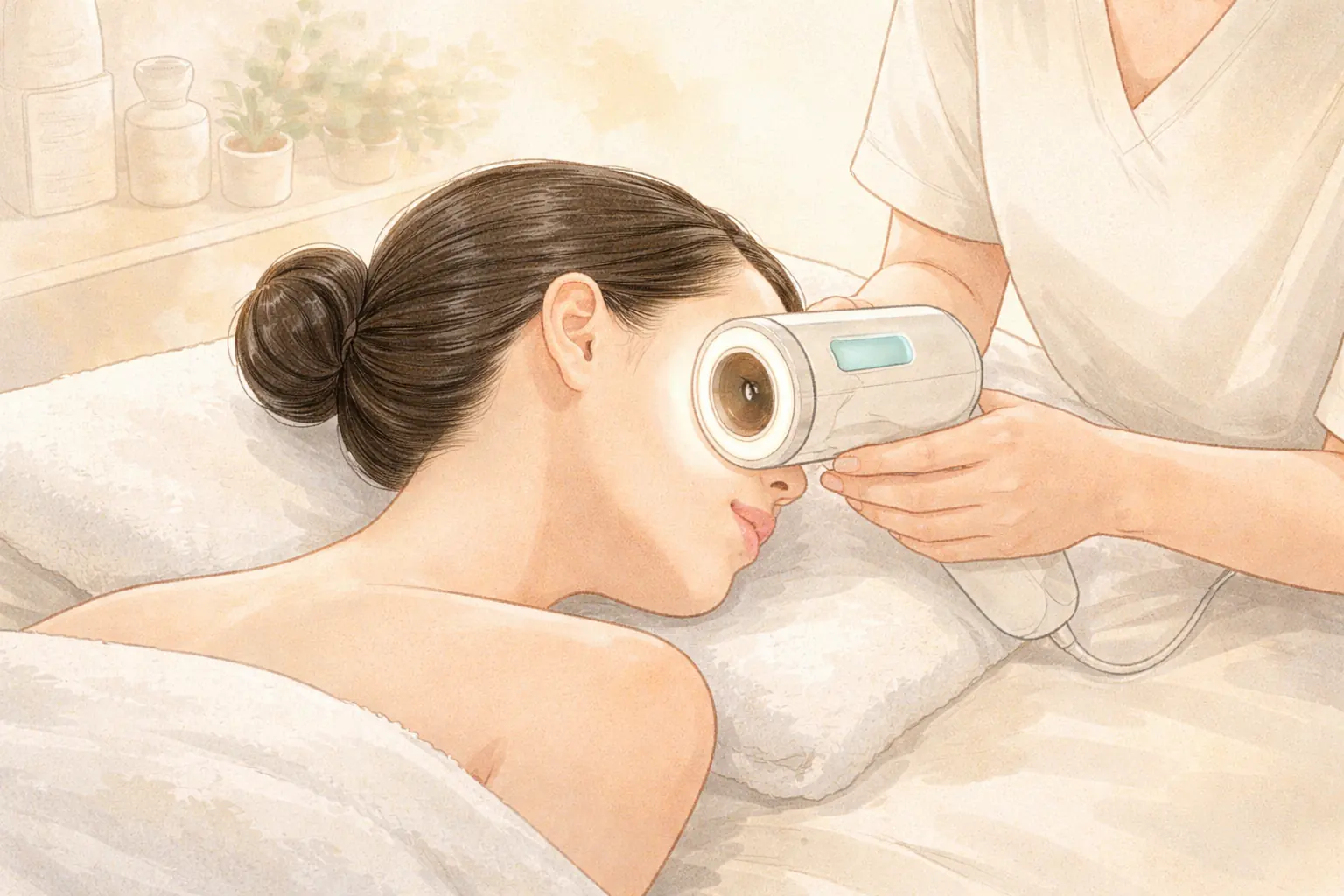
AI skin analysis record — We record current condition such as pigment, redness, skin texture, and pores with an analysis tool, and check expression lines and muscle movement together. The analysis tool records and organizes information to support consultation; it is not a medical diagnosis (ATTITUDE Clinic column).
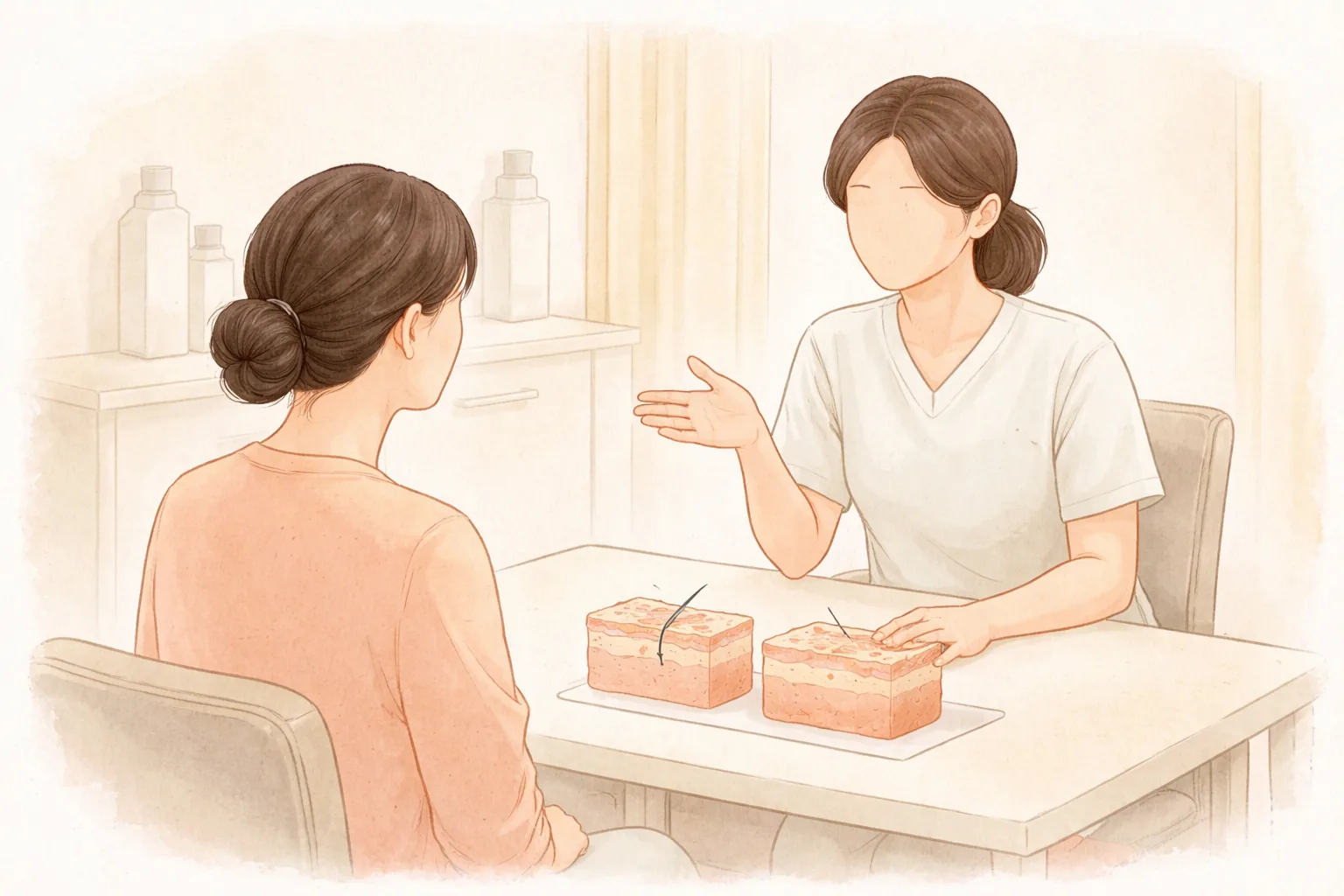
Director consultation to design the plan — We add your schedule, pain sensitivity, and prior treatment history to the analysis record to decide areas, dose, anesthesia method, and timing together (ATTITUDE Clinic column).
Director performs the procedure personally — We reduce discomfort with topical anesthesia and other methods as needed, and the director performs the procedure personally. We don't recommend treatment beyond what's needed (ATTITUDE Clinic column).
Recovery and aftercare guidance — We explain post-treatment precautions, when to check progress, and the interval until your next session (ATTITUDE Clinic column).
According to treatment guidance, ATTITUDE Clinic's botulinum toxin products include Neuronox, Coretox, Xeomin, Allergan Botox, and Dysport, divided into wrinkle, skin, and body Botox, with guidance varying by area and dose (ATTITUDE Clinic treatments). The principle of authentic products, accurate dosing, and fair pricing applies to Botox as well: we use only as much as fits your muscle and skin (ATTITUDE Clinic column).
Aftercare and Side Effects
Avoid pressure — Don't rub or press the treated area for 12 hours after the procedure (Cleveland Clinic).
Exercise and temperature — On the day of treatment, it's best to avoid intense exercise, saunas, and alcohol. Strenuous exercise is advised against for 24 hours (Cleveland Clinic).
Moisturize and sun protection — Skin is temporarily sensitive after treatment, so keep up hydration and sun protection, and postpone strong exfoliation and scrubs for the period you're advised (ATTITUDE Clinic column).
Progress check — Muscle relaxation begins from 2–4 days and is most evident around 10 days (DermNet). Check whether swelling and redness settle within a few days and whether movement is similar on both sides.
Looking at side effects from the most common: pain, swelling, redness, and bruising at the injection site. Headache, neck pain, flu-like symptoms, and indigestion may follow. Rarely, temporary eyelid drooping or eye stinging and redness can occur. Most are mild and improve within a day or two (Cleveland Clinic).
There are times when you should get checked rather than wait. If swelling, pain, or warmth persists or worsens, if the skin color at the injection site changes unusually, or if you feel eyelid drooping or a change in vision (Cleveland Clinic, ATTITUDE Clinic column).
FAQ
How much does Botox hurt?
Cleveland Clinic advises that discomfort from botulinum toxin injections is usually mild and the procedure finishes quickly (Cleveland Clinic). Because the needle is thin and only a small amount goes into each point, it's closer to a brief sting passing a few times than real pain. That said, thicker muscle areas like the jaw or many injection points for hyperhidrosis can feel stronger even at the same intensity. If you're sensitive to pain or found past treatments difficult, it's best to mention that first. Anesthesia method and intensity can be adjusted accordingly.
Do I have to use numbing cream?
No, it's not required. Guidance states a topical anesthetic can be applied to the skin before the procedure (Cleveland Clinic), and ATTITUDE Clinic also reduces discomfort with topical anesthesia as needed (ATTITUDE Clinic column). Numbing cream adds a little preparation time, and it doesn't eliminate the deep sensation of the needle entering muscle. For areas with few injection points that finish quickly, some patients proceed without it. Which is more comfortable is decided by looking at pain sensitivity, treatment area, and that day's schedule together.
What about medications or alcohol before treatment?
Tell your provider about all medications and supplements you take. Anticoagulants and NSAIDs raise the risk of bruising at the injection site, and alcohol also increases redness and bruising. It's best to avoid drinking 24 hours before treatment (Cleveland Clinic). The decision to stop a medication is made by the prescribing provider, not the patient. Just tell us accurately that you're taking it, and we can adjust timing and areas or plan bruise management together.
When do results appear, and how long do they last?
Muscle weakening usually shows from 2–4 days after injection and peaks around 10 days (DermNet). Results aren't permanent: nerves and muscles reconnect after about 3 months, the average duration is 3–4 months, and repeat treatment is recommended at 3–6 month intervals (Cleveland Clinic). Some sources note that with repeated treatments, muscles adapt to contract less, so intervals may gradually lengthen (DermNet). How long results last varies with muscle-use habits, area, and dose.
What should I look for when choosing a Botox clinic?
There are a few things worth checking beyond equipment lists and ad copy. Does the clinic confirm before treatment whether your concern comes from expression lines or muscle volume? Does it recommend only the areas needed and avoid locking you into a set number of sessions? Does the consultation explain pain, anesthesia, recovery schedule, and precautions? And can you get checked there if something feels off after treatment (ATTITUDE Clinic column). Whether they record which product was used at what units also matters. Unit standards differ by product (DermNet), so this record becomes the basis for planning your next treatment.
At a Glance
Table 2 At a Glance
Item
Key Point
Level of pain
Fine needle delivers small amounts across several points, so usually mild and brief
Factors that increase pain
Thicker muscle areas, number of injection points, pain sensitivity
Anesthesia
Topical anesthetic can be applied before treatment, chosen based on area and sensitivity
Prep to reduce bruising
Tell us about anticoagulants, NSAIDs, and alcohol in advance, and avoid drinking before treatment
Aftercare
Avoid pressure for 12 hours, skip intense exercise, saunas, and alcohol on the day, moisturize and use sun protection
Onset and duration
Begins from 2–4 days, most evident around 10 days, lasts an average of 3–4 months
This article offers general health information. It is not a substitute for diagnosis or treatment based on your own condition, so please talk through your situation with a doctor.