Botox Resistance and Side Effects: What to Tell Your Clinic Before a Repeat Treatment
Before a repeat Botox treatment, learn how to document and share your product, areas, dose, and interval, and what to confirm in consultation about risks, alternatives, recovery, and cost.
Written by ATTITUDE Clinic Editorial Team
People who have been getting Botox for years often open the consultation with the same question: "It doesn't feel like it used to—have I built up a resistance?" Others have put off their next treatment because of heavy-feeling eyelids, headaches, or hollow-looking cheeks. This article covers what to record before a repeat treatment, what changes to report and in what order, and what to confirm in consultation.
The bottom line first
The core of preparation is writing three things on one sheet and telling your provider first: the products and areas you've had treated, the approximate dose and interval, and the changes that appeared after treatment plus how long they lasted. Add what you want from the next session, the recovery time you can accept, and your budget, and the consultation becomes much more concrete. The American Academy of Dermatology patient guide also advises hearing about indications, risks, benefits, and alternatives in a cosmetic consultation, and confirming preparation, recovery, and cost. Whether you have resistance isn't something to judge on your own—it's something to assess together in consultation based on your history—and how long a response lasts depends on muscle condition and treatment history, so the same plan won't give everyone the same result.
When the effect seems weaker, should resistance be the first suspect?
The word "resistance" is commonly used to describe a situation where someone who previously responded well sees a reduced or absent response after repeated treatments. But the feeling that "the effect wears off fast" doesn't come from just one cause. You need to separate whether the injected dose was enough for that muscle, whether the injection point was at the strongest part of the muscle, whether the same habits are still at work after treatment, and whether you're remembering the maintenance period as longer than it actually was.
This is also where misunderstandings arise. If your satisfaction from the first treatment left a strong impression, it's easy to feel that the effect "got shorter than before" even when the actual interval is similar. Strong muscles like the masseter can redevelop if habits like clenching or posture continue, even after treatment reduces their volume. In that case, it's less that the effect disappeared and more that the cause is still active.
So what does the clinic look at first? Rather than a single test number, it looks at your actual responses and history together. The starting point is whether the maintenance period has become noticeably shorter even with the same dose in the same area, or whether there's almost no response even when the dose is increased. If the effect was weak from the first treatment, adjusting the dose and injection points may be considered before switching products; if there's a history of repeating high doses at short intervals, changing the product or taking a break may be discussed. Which category you fall into is sorted out in consultation based on your history.
How should I record my previous products, doses, and intervals?
Five fields are enough for the most helpful record: the clinic, the date, the area, the product name, and how long the effect lasted. If you don't remember the product name, it's better to write down at least the manufacturer or clinic name; if the numbers are fuzzy, mark it as "don't remember" rather than estimating units to fill the gap. It also helps to check whether you can obtain treatment records from your previous clinic.
Knowing that different areas use different units makes record-keeping easier. On the ATTITUDE Clinic treatments and pricing page, wrinkle Botox is listed by unit for areas like the glabella, forehead, crow's feet and under-eye, and nasolabial folds, while skin Botox is listed per 3cc and body Botox per 100U, with body treatment varying by area and dose. This means that even with the same botulinum toxin, facial wrinkles, wide-spread treatments, and body areas are counted differently.
Changes in expression and muscle movement are easier to explain if you photograph them under the same lighting, from the same angle, with the same expression. Photos, however, don't replace a diagnosis. Records are only supporting material to help judgment in consultation.
How are areas, doses, and intervals decided?
Even on the same face, muscle thickness and strength differ from person to person, and the amount needed differs by area. Thick, strong muscles need more than expression wrinkles in the same spot. That's why consultation first confirms "how many units were injected where," then reviews whether that dose was appropriate for that area.
The same goes for intervals. If the pattern repeats of getting retreatment the moment the effect fades, your history becomes scattered and the basis for planning the next step becomes unclear. The timing is set by looking at how long the previous response lasted and whether other area treatments happened in between.
Product choice is decided in consultation by weighing history, goals, and budget together. The ATTITUDE Clinic treatments and pricing page lists several products—Newlux, Coretox, Zeomin, Allergan, Dysport—each at a different price.
Here is a table of criteria worth reviewing alongside your history.
Table 1 How are areas, doses, and intervals decided?
Eyebrow peak, nasal alae, mouth corners, gummy smile, dimpled chin by area; salivary glands, temporalis, temples, cheekbones per 250U
Areas previously treated
Left-right balance and expression
Products
Newlux, Coretox, Zeomin, Allergan, Dysport—prices differ by product
Previous product name
Product matching history, goals, and budget
Swipe sideways to see the whole table.
In summary the guidelines are divided by area, dose, and product, and which combination fits is determined by looking at your history and actual responses. Even in the same area, muscle thickness and strength and post-treatment habits influence the result, so looking at the course over time is more accurate than a single number. That's why the first step in consultation is reviewing your records.
When eyelids feel heavy or headaches occur, how should I report it?
Reporting symptoms in five steps speeds up the assessment: when they started, how long they last, whether there's a left-right difference, whether they're worsening, and whether other symptoms accompany them. Naming them—heavy-feeling eyelids, changes in eyelid or eyebrow shape, headaches, hollow-looking cheeks—lets the clinic pinpoint things much more specifically.
Feeling these changes doesn't immediately identify a cause. Onset, course, and previous treatment history play a large role in the assessment. Aesthetic treatments carry risks, so the American Academy of Dermatology patient guide advises asking about risks and recovery time in consultation and confirming alternatives as well.
If unusual systemic symptoms appear together or symptoms suddenly worsen, don't wait for a call back—seek care right away. It's good to decide in advance, during consultation, which changes to report and through which channel.
If I combine Botox with other treatments, what should I check?
Many people also consider treatments like radiofrequency lifting (which delivers heat to deeper skin layers). The ATTITUDE Clinic treatments page lists radiofrequency lifting such as Thermage and XERF, and other lifting methods such as Onda and Titanium, as separate items. Whether to combine them, in what order, and at what interval is decided by weighing each treatment's effects on the skin, recovery time, and schedule.
The question "Does combining them make resistance more likely?" also comes up often. It's hard to conclude that combining itself causes resistance. However, when done together, it can be harder to tell which treatment caused which reaction, so consultation may consider splitting the order or spacing them out. The American Academy of Dermatology guide also advises approaching consultation with the premise that all cosmetic treatments carry risks.
In these situations
If a wedding or photo shoot is coming up
Work backward from the date to set the timing. For a first treatment, you should first check whether recovery time and reactions like redness will overlap with your schedule; for a repeat treatment, how you responded before becomes the baseline. Tell the clinic your dates during consultation and the timing and intensity can be adjusted accordingly.
If you want consistent maintenance
Rather than injecting a large amount at once, it's better to keep a record of how long the previous response lasted. Recording the area, dose, and maintenance period at each session lets you set the next interval based on records, not guesswork. If you move between clinics, your history gets scattered, so having your records continue at one place is an advantage for assessment.
If your skin is sensitive or prone to redness
Skin can be temporarily sensitive after treatment. If cosmetics sting more than usual or redness lingers, tell the clinic before treatment. The ATTITUDE Clinic column also notes that skin can be temporarily sensitive after treatment, advises sun protection and moisturizing, and says to avoid stimulation like saunas or strong exfoliation for the period you're advised.
If you're a short-stay visitor
If your stay is fixed, reactions right after treatment can affect your schedule. Tell the clinic your return date and upcoming plans in advance, and the timing and intensity can be discussed accordingly. Booking a request and confirming it are different (booking guide), so if your visit is tight, calling to confirm is faster.
Please tell us before your consultation
Recent sun exposure, travel, and outdoor activities
Medications and supplements you take, and skincare ingredients you use
Any experience of sensitive skin or long-lasting redness after a previous treatment
Pregnancy or breastfeeding status and underlying conditions
Unavoidable events such as weddings, photo shoots, or business trips
Your treatment history so far (clinic, dates, areas, products, how long the effect lasted)
How ATTITUDE Clinic proceeds
Booking request and confirmation — A booking request and a confirmed booking are different. According to the booking guide, a request is confirmed after the clinic contacts you, and a request alone doesn't guarantee confirmation or immediate care.
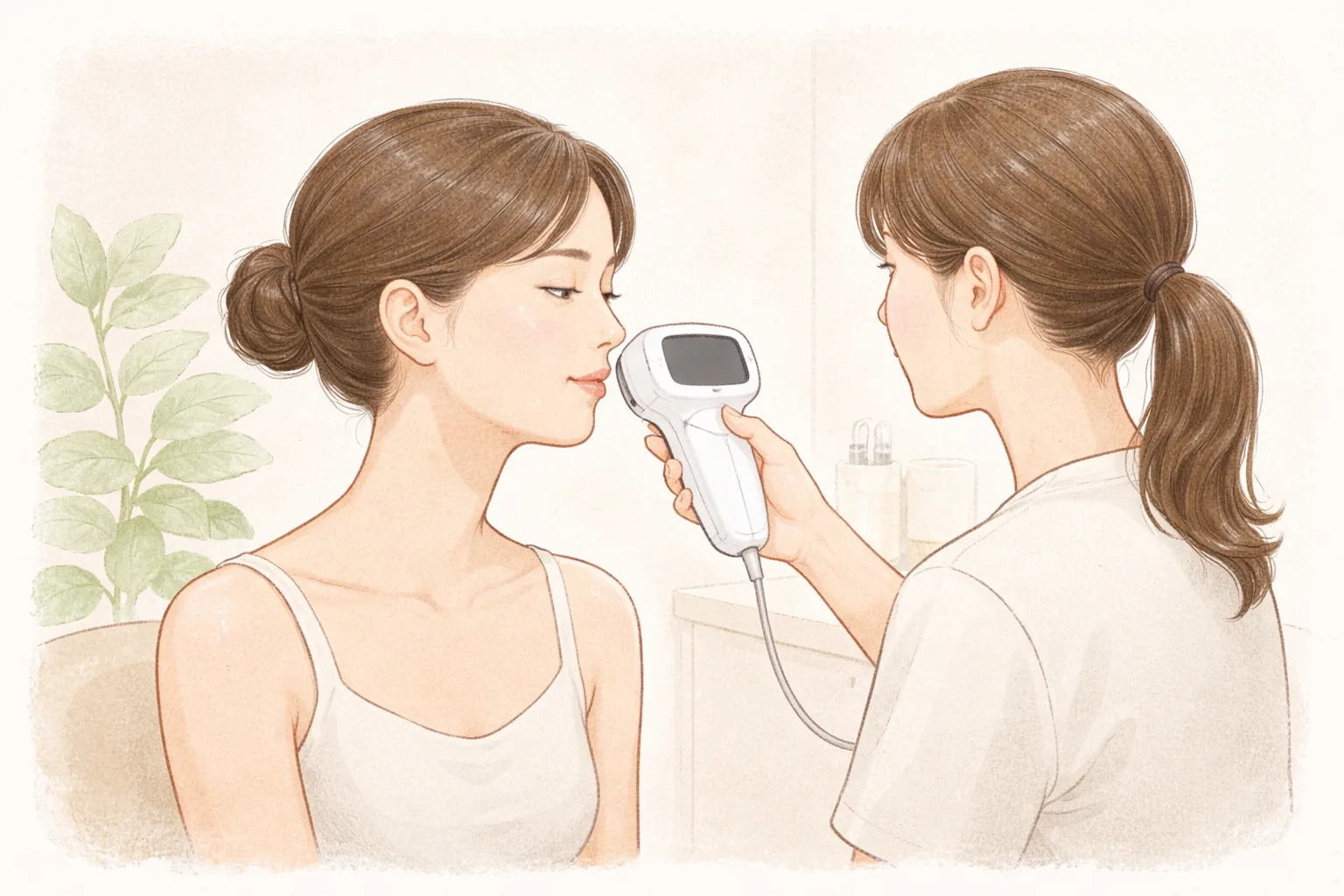
AI skin analysis record — Current skin conditions such as pigment, redness, texture, and pores are recorded with an analysis tool. This record is only material that organizes information to support consultation; it is not a medical diagnosis.
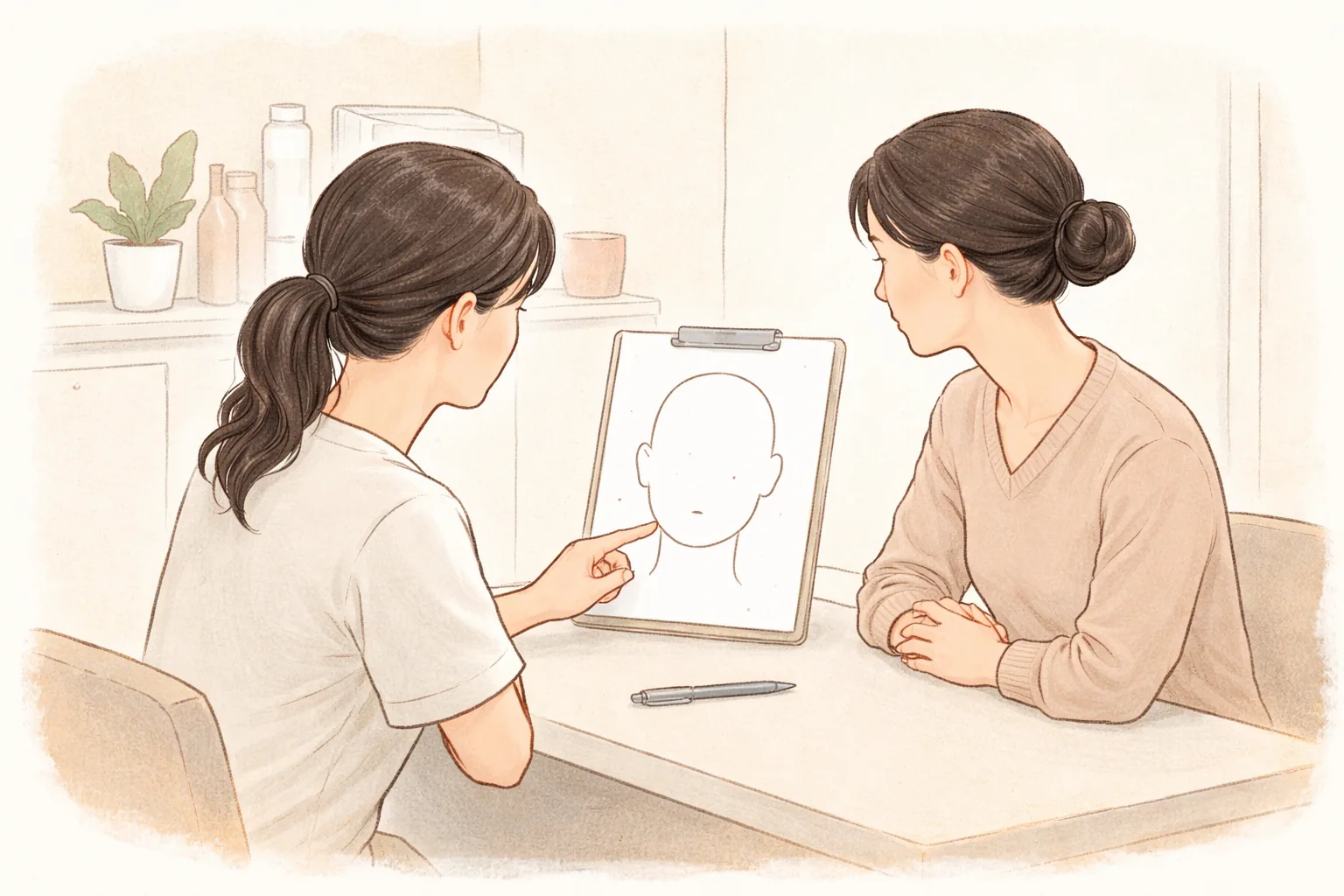
Direction setting in a doctor consultation — The record is combined with your previous treatment history, schedule, pain sensitivity, medications, and expected results to decide the treatment type, dose, and timing together.
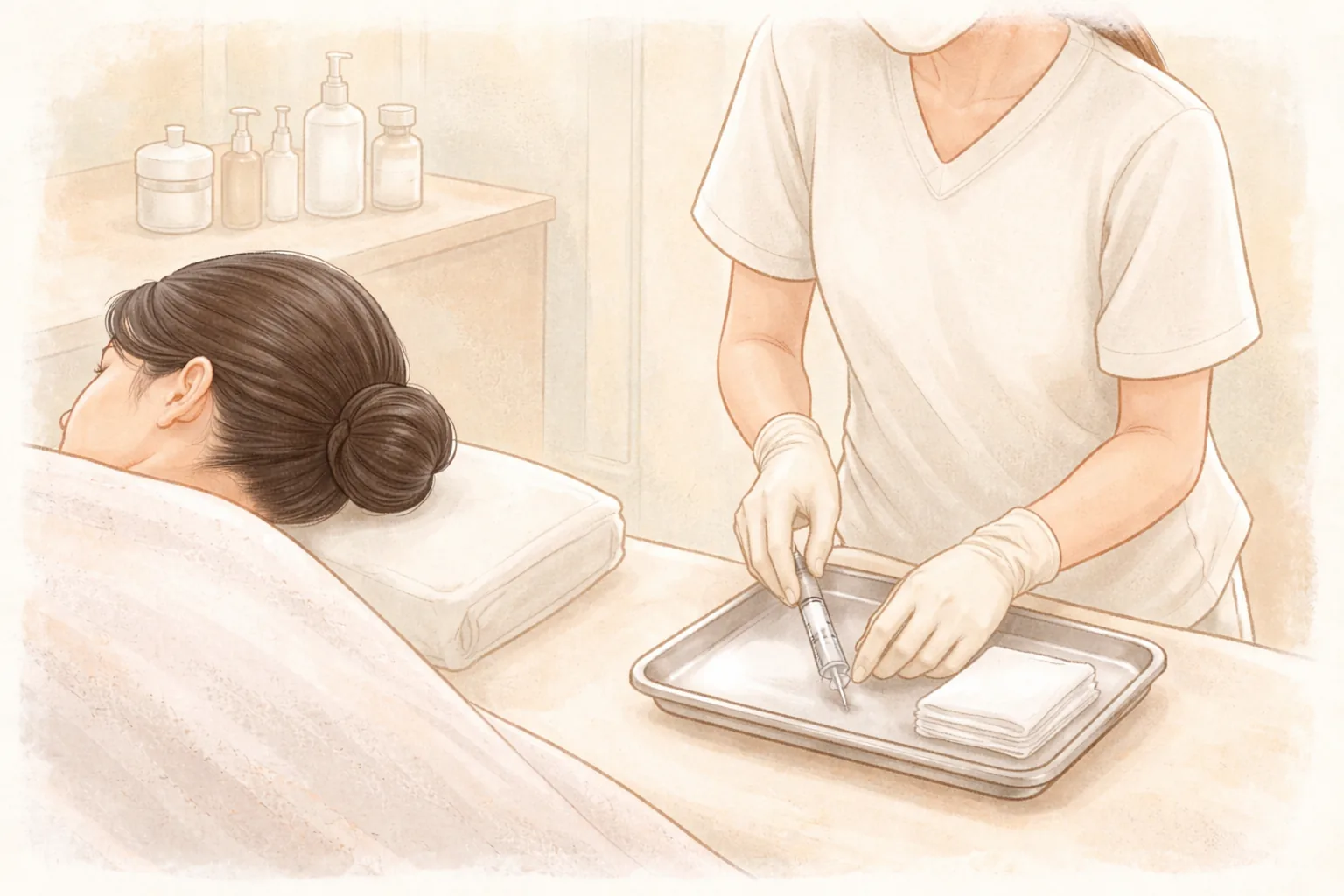
Treatment performed by the doctor and aftercare guidance — Methods to reduce discomfort are decided in consultation, and the doctor performs the treatment. Unnecessary treatments aren't recommended, and the clinic follows the principle of authentic products, accurate dosing, and fair pricing (column).
Aftercare and side effects
Check the instructions you were given — Before treatment, confirm when you can wash your face, apply makeup, and exercise, and whether there's a period during which you shouldn't touch or press the treated area.
Soothing and moisturizing — Skin can be temporarily sensitive after treatment, so moisturizing is essential. Avoid stimulation like strong exfoliation or scrubs for the period you're advised.
Sun protection — During recovery, it's good to apply sunscreen carefully. The ATTITUDE Clinic column also advises sun protection and moisturizing after treatment.
Checking your progress — If redness or pain lasts longer than expected or gradually worsens, don't endure it—come in to have it checked.
After injectable treatments, temporary reactions can appear at the treatment site. What range of reactions is expected and which changes mean you should come in right away are confirmed in the pre-treatment explanation (American Academy of Dermatology guide). The ATTITUDE Clinic treatments page also states that side effects may occur, so you must consult a doctor before treatment. If symptoms last longer than expected or gradually worsen, don't wait until your next appointment—have them checked.
Frequently asked questions
How can I tell if it's resistance?
If the maintenance period has become noticeably shorter with the same dose in the same area, or there's almost no response even with a higher dose, that's a signal to look at in consultation. However, similar feelings can occur if the dose was insufficient or the injection point was skewed to the muscle edge, so it's hard to conclude without a history. Writing down the five items—clinic, dates, areas, products, and how long the effect lasted—makes the distinction much faster. If you've had the same area treated multiple times, note the interval between each session as well.
If the effect decreases, should I switch products?
Product changes are decided by looking at your history and actual responses together. If the effect was weak from the first treatment, adjusting the dose and injection points may be considered before switching products; if there's a history of repeating high doses at short intervals, other products or a break may be discussed in consultation. Prices differ by product (treatments and pricing page), so check the latest official price list and consultation details. Switching itself isn't the answer, so if there's no need to switch, it's better to hear the reason first.
What if I notice heavy-feeling eyelids or hollow-looking cheeks?
Note the onset, duration, and any left-right difference, and have them checked at the clinic. Even the same change leads to a different scope of assessment depending on when it started. Aesthetic treatments carry risks, so asking about risks, recovery time, and other options in consultation is standard (American Academy of Dermatology guide). If systemic symptoms accompany them or they suddenly worsen, don't wait for a call back—seek care right away.
Can I get Botox and radiofrequency lifting together?
Whether to combine them and in what order is decided by weighing each treatment's effects on the skin, recovery time, and schedule. The ATTITUDE Clinic treatments page also lists radiofrequency lifting and other lifting methods as separate items, so which combination fits is decided in consultation. It's also discussed that when done together, it can be harder to tell which treatment caused which reaction. The degree of reaction and speed of recovery vary with skin condition and lifestyle, so the same combination won't give everyone the same result.
What should I look at when choosing a clinic?
The criteria are what the clinic confirms in consultation, rather than a list of devices or names. The American Academy of Dermatology guide advises checking the practitioner's qualifications, their experience with that treatment, how many patients with your skin tone and age range they've treated, and what results can realistically be expected. It's also good to see whether they explain preparation and aftercare, recovery time, and cost. If the answers in consultation are vague or the clinic guarantees results, it's worth thinking twice.
At a glance
Table 2 At a glance
Item
Key point
Before consultation
Put clinic, dates, areas, products, and how long the effect lasted on one sheet
Assessing resistance
Check history and actual responses, dose and injection points, and habits—not just test numbers
Reporting symptoms
In order: onset, duration, left-right difference, worsening, accompanying symptoms
Guidelines
Wrinkles per-unit by area, skin Botox per 3cc, body per 100U; prices differ by product
Process
Booking confirmation, AI skin analysis record, doctor consultation, treatment performed by the doctor
After treatment
Moisturizing and sun protection, avoiding advised stimulation, coming in if effects last longer than expected
에티튜드의원 칼럼: 레이저와 시술 전후 관리https://theattitudeclinic.com/column/doctor-column/does-laser-thin-skin/
This article offers general health information. It is not a substitute for diagnosis or treatment based on your own condition, so please talk through your situation with a doctor.