Botox With Other Treatments: How Order and Spacing Are Decided
How combining Botox with lifting, filler, or skin boosters is planned — what decides the order and spacing, when the same day works, and when treatments are split.
Written by ATTITUDE Clinic Editorial Team
I often hear questions from people who want to finish Botox along with lifting, filler, or skin boosters all in one visit. On the other hand, many worry that combining several treatments on the same day might clash and make results worse. This article covers what decides the order and spacing when planning Botox with other treatments, which combinations are done on the same day, and which are split.
The conclusion first
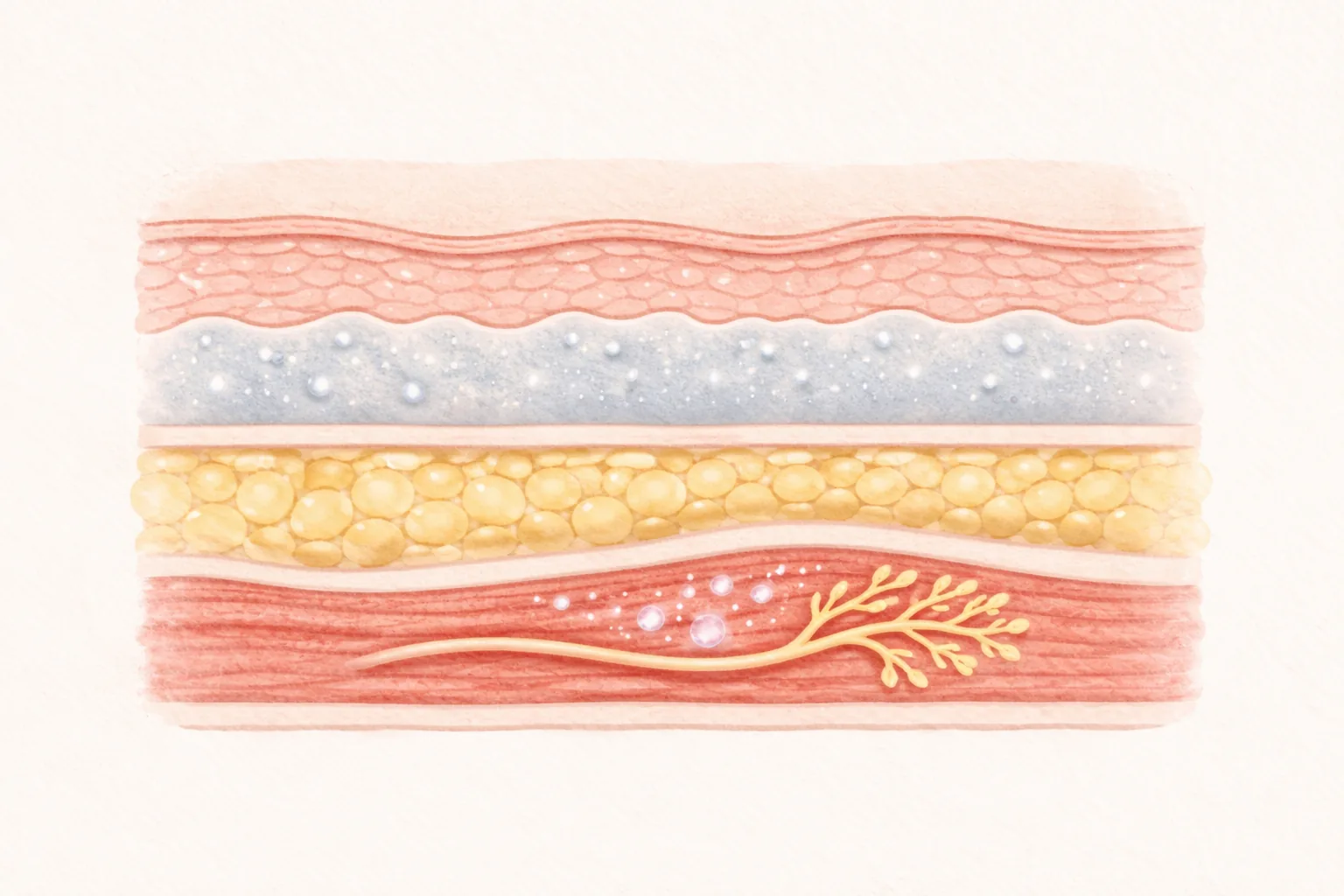
Whether treatments can be done at once or should be split comes down to two things: what is causing the concern, and whether the same area overlaps. Botox acts on muscle, filler on volume, and lifting and skin boosters act on different layers within the skin, so when the causes differ, they are sometimes planned together on the same day. But if stimulation overlaps in the same area or the skin is sensitive, spacing is used and the order is split so recovery reactions can be checked. The order and spacing are not a fixed table — they are decided by the muscle and skin condition confirmed on the day, and the criteria for that judgment are unpacked one by one below.
Botox acts on muscle, so where do other treatments act?
Botulinum toxin is an injection that blocks the signal from nerve to muscle. For a muscle to contract, acetylcholine (a transmitter that carries signals between nerve and muscle) must be released from the nerve ending, and botulinum toxin interferes with the process by which this substance is secreted. A muscle that does not receive the signal cannot use its strength for a while, and so wrinkles that used to fold when making expressions smooth out (DermNet NZ).
This effect fades over time. As the nerve extends new endings, nerve and muscle reconnect around three months, and from then on the muscle gradually regains its original movement (DermNet NZ). Cleveland Clinic guidance also explains that Botox blocks nerve signals so the injected muscle cannot contract, and that the effect is temporary, lasting several months (Cleveland Clinic).
So where do other treatments act? Filler fills volume in sunken areas, skin boosters deliver directly into the skin's foundation, and lifting delivers heat to tissue within the skin to stimulate collagen. In ATTITUDE Clinic's treatment guide, lifting alone is divided into devices using ultrasound, radiofrequency, and microwaves, and for pores and scars, a device that delivers radiofrequency to the dermis with fine needles is used (ATTITUDE Clinic treatment and price guide). The fact that target layers and methods differ this much is the starting point when designing a combination.
Can they be done on the same day, or should there be spacing?
The reason the saying "doing it all at once is bad for each other" circulates is recovery reactions. When several treatments overlap in the same area, it becomes difficult to tell where swelling and redness came from, and when an unexpected change occurs, it is hard to narrow down the cause. For those with sensitive skin, overlapping stimulation may also prolong recovery. So combinations with overlapping causes are done in sequence with spacing, and combinations with different layers and no overlapping areas are sometimes planned for the same day.
Table 1 Can they be done on the same day, or should there be spacing?
Category
Main layer treated
Concerns it suits
Points to check when planning together
Botulinum toxin
Muscle
Expression wrinkles, developed muscles
Overlap in the same area, not rubbing after treatment
Lifting (Ultherapy, Thermage, Onda, etc.)
Tissue within the skin
Sagging, loss of elasticity
Heat sensation and swelling, time available for recovery
In short The key to whether Botox is combined with other treatments is 'whether the same layer is touched twice.' If the layer and area do not overlap, the same day is possible; if they do, it is safer to split the order so recovery reactions can be observed. Either way, the decision is made after examination.
What decides the order and spacing?
First is the target layer. Even in the same area, a treatment for muscle and a treatment within the skin reach different places, so whether they overlap is decided here first. Second is the time available for recovery. Layering another treatment right after one that leaves swelling or bruising can lengthen recovery, so those with schedules either reverse the order or split it. Third is how sensitive the skin is. Skin that reddens easily, even at the same intensity, is more comfortable receiving stimulation in divided sessions rather than all at once.
ATTITUDE Clinic's column also cites differences in starting points such as skin type, thickness, and regeneration speed as reasons why results differ even with the same treatment (ATTITUDE Clinic column). Which combination to do at once and which to split is decided by weighing this starting point, the concern, and the room available for recovery together.
What about planning several areas at once, like the jaw and temples?
Botox can be injected into several areas of the face at once. Cleveland Clinic guidance also explains that multiple areas can be treated in a single session (Cleveland Clinic). The masseter, called the jaw muscle, and the temporalis are different muscles with different thickness and size, so the dose is calculated separately for each area.
ATTITUDE Clinic's treatment guide also lists special areas such as the salivary glands, temporalis, temples, and cheekbones as separate items alongside wrinkle areas like the glabella, forehead, and eye area, and skin Botox is distinguished as yet another item (ATTITUDE Clinic treatment and price guide). Whether to treat several areas at once or split after seeing the response is decided not by a fixed dose chart but by the muscle size and left-right balance confirmed on the day.
What if the effect seems to fade earlier than before?
The effect of botulinum toxin is not permanent. However, with repeated injections, some atrophy develops in the muscle, and the interval until the next treatment may gradually lengthen accordingly (DermNet NZ). Cleveland Clinic also notes that over time the muscle shifts toward contracting less, which can allow treatment intervals to be spaced further apart (Cleveland Clinic).
Conversely, when the effect feels different from before, the cause is broken down before increasing the dose. It is checked whether the treatment interval was too short, whether the product and area used were appropriate, and whether the cause was originally not muscle but volume or skin density. Even in the same area, muscle size and strength and expression habits differ from person to person, so depending on the cause, the product may be changed or another treatment considered alongside.
In these situations
When a wedding or shoot is coming up
Botox allows a return to daily life on the day of treatment, but the effect takes several days to settle (Cleveland Clinic). If the event is close, it is better to place Botox first rather than layering a treatment that leaves swelling or bruising on the same day, and postpone the rest until after the event. However, which to prioritize is decided by the skin condition confirmed on the day.
When the jaw and temples are both a concern
The two areas are different muscles, so doses are viewed separately. They can be planned at once, or the response on one side can be seen first before deciding the rest. Left-right size differences are not rare, so a process of checking muscle thickness and borders while the muscle is engaged is needed (ATTITUDE Clinic treatment and price guide).
When the skin is sensitive or reddens easily
Even at the same intensity, skin that reddens easily may take longer to recover when stimulation overlaps. In this case, it is more comfortable to split the order and observe reactions rather than crowding energy devices and injections on the same day. Which stimulation to give first is also decided together during examination.
Visitors staying in Korea briefly
Botox has a short recovery period, so it tends to be easy to plan even during a tight visit. However, if the product, dose, and date of previous injections are unknown, it is difficult to judge spacing, so it is good to bring records. If you tell us your stay schedule and next visit timing in advance, the order can be designed to match.
Please tell us before consultation Medications you are taking (especially anticoagulants or anti-inflammatory painkillers), recent alcohol use, the product, dose, and date of previous treatments, pregnancy or breastfeeding status, history of neuromuscular disease, history of inflammation or allergy at the treatment site, and dates you want to avoid such as weddings or shoots. Avoiding alcohol for 24 hours before treatment helps reduce bruising and redness (Cleveland Clinic).
How ATTITUDE Clinic proceeds
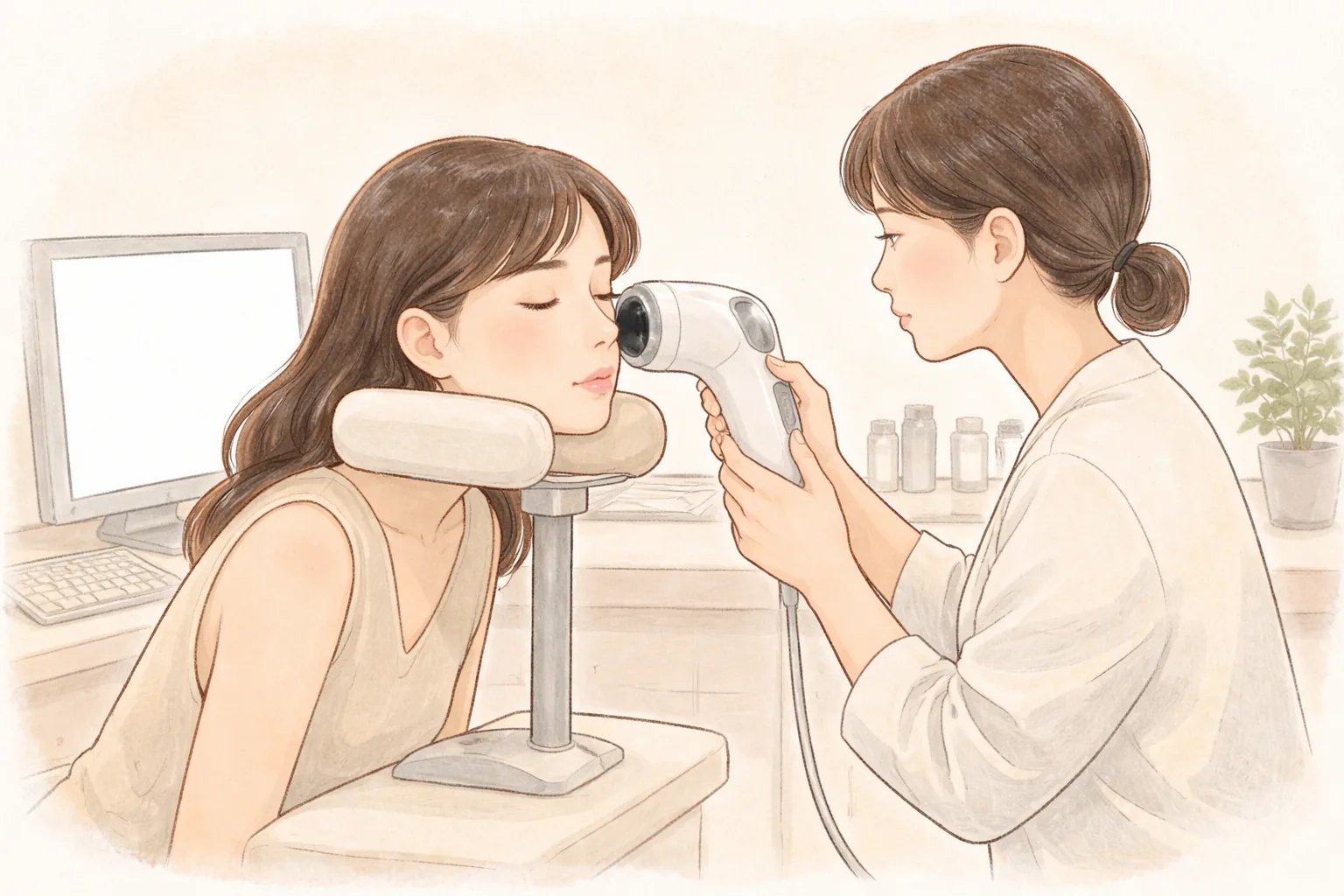
AI skin analysis record — Skin condition is recorded and organized so the doctor and patient look at the same information together. The analysis tool only records and organizes information and does not make a medical diagnosis; judgment is made by the director (ATTITUDE Clinic column).
Consultation with the director — The analysis record plus concerns, lifestyle habits, and previous treatment experience are used to decide together what is needed and what is not, and which combination and order to use. Whether Botox and other treatments will be done on the same day or split is also decided at this stage.
Treatment performed directly by the director — The director performs the treatment directly according to the plan set in consultation and adjusts intensity while observing skin reactions during treatment. This flow is meant to keep the plan and execution aligned.
Recovery and follow-up check — Reactions appearing after treatment and the next check timing are explained. For the devices covered in this topic, lifting lines such as Ultherapy, Thermage, Shurink Universe, and Onda; the pore and scar line such as Potenza; skin-foundation boosters such as Rejuran and Juvelook; and botulinum toxin products such as Neurax, Coretox, Jeomin, and Allergan BOTOX are listed (ATTITUDE Clinic treatment and price guide). Treatments are guided based on genuine products, exact doses, and fixed prices.
Aftercare and side effects
Do not rub — For 12 hours after treatment, do not rub or press the treated area. If the injected medication spreads to surrounding areas, unwanted muscles may also be affected (Cleveland Clinic).
Avoid strenuous activity — For about 24 hours, avoid strenuous exercise, saunas, and alcohol. This helps reduce redness and bruising (Cleveland Clinic).
Washing and makeup — From the next day, you may wash your face and apply makeup as usual. However, avoid rubbing the treated area hard.
Follow-up check — The gradual reduction in muscle movement is only an intermediate stage, not the result. The final judgment is made when the effect has settled.
Common side effects are pain, swelling, redness, and bruising at the injection site, and for treatments around the eyes, eye irritation or redness may occur. They usually subside in 1–2 days (Cleveland Clinic). Rarely, changes such as eyelid drooping may appear, and in such cases it is better to visit the clinic for a check rather than wait. If pain or swelling worsens progressively or systemic symptoms such as fever appear together, you should receive care right away.
Frequently asked questions
Can I get Botox and filler on the same day?
Filler fills volume and Botox reduces muscle strength, so the layers treated are different. When the causes differ, they are sometimes planned together on the same day. However, if they overlap in the same area, the order must be decided, and for those who bruise easily or take anticoagulants, they may be split with recovery in mind. The order is decided by the condition confirmed on the day, and telling us your medication list before treatment helps the judgment (Cleveland Clinic).
Can I have lifting or laser on an area where I had Botox?
Botox acts on muscle, while lifting and laser act on tissue within the skin or the epidermis, so if targets do not overlap, they can be planned together. However, heat-based devices can leave swelling and heat sensation, so when overlapping in the same area, spacing is more comfortable so recovery reactions can be told apart. The order and spacing vary depending on the treatment area and how sensitive the skin is.
Can I get jaw, temple, and skin Botox all at once?
If the areas differ, they can be planned at once. Multiple areas can be treated in a single session, and muscle areas and skin Botox on the skin foundation also treat different layers (Cleveland Clinic, ATTITUDE Clinic treatment and price guide). However, since doses must be calculated separately for each area and left-right balance must be checked, there are cases where splitting to observe the response is better.
The effect faded early — when is best for the next treatment?
The effect of Botox usually lasts about 3–6 months, and retreatment is recommended at that point (Cleveland Clinic). With repeated injections, atrophy develops in the muscle, which may actually lengthen the interval (DermNet NZ). If the effect feels like it faded early, before narrowing the interval, first check the product and dose used, the area, and whether there was a cause other than muscle.
What should I look for when choosing a clinic for Botox?
First look at which product is used and how the dose is decided. It is also worth checking whether the whole face is viewed together to set doses by area, whether previous treatment records are reviewed, and whether the person who consulted also performs the treatment. For non-covered treatments, it is good to check in advance whether prices are disclosed and whether VAT is included (ATTITUDE Clinic treatment and price guide). If you are pregnant or breastfeeding or have a neuromuscular disease, treatment is difficult, so please tell us first during consultation (Cleveland Clinic).
At a glance
Table 2 At a glance
Item
Key point
Layer of action
Botox acts on muscle, filler on volume, lifting and skin boosters on different layers within the skin
Conditions that make combining easier
When causes differ and target layers and areas do not overlap
Conditions better split
When stimulation overlaps in the same area or the skin is sensitive
Treating multiple areas
Possible at once, but dose per area and left-right balance are checked separately
Effect and interval
The effect is temporary, and with repetition the interval may lengthen
What decides the order
Target layer, time available for recovery, skin sensitivity
This article offers general health information. It is not a substitute for diagnosis or treatment based on your own condition, so please talk through your situation with a doctor.