Cryo Facial Price: What Shapes the Cost and How to Check Before Booking
Understand what determines the cryo facial price, how to tell the different cryotherapy treatments apart, and the order to check per-session units, number of sessions, combinations, and VAT.
Written by ATTITUDE Clinic Editorial Team
When you search for cryo, you'll find the same name attached to different prices on different pages, which makes it hard to know what to compare against. Some places introduce it like a single facial, while others describe it like a treatment that freezes lesions. Once you know what goes into the price, it becomes much clearer what to ask during a consultation.
The short answer first
Five things determine the cryo facial price: which type of cryo it is, what counts as one session, how many sessions at what interval, whether there are bundled treatments, and whether VAT is included in the amount. ATTITUDE Clinic's price list lists cryo under skin care items on a per-session basis, and every amount in the table excludes VAT (Treatments and Pricing). The actual price and combinations are set in the price list and during a consultation with the doctor.
Under the name "cryo" there are different treatments
The term cryotherapy is an umbrella name for treatments that use cold. That's why the same word can refer to three different things: a facial care that lowers skin temperature with cold air, cryosurgery that freezes and removes lesions, and whole-body cryotherapy that briefly exposes the whole body to extremely low temperatures.
According to the American Academy of Dermatology, cryosurgery for lesions such as warts commonly causes crusting or blistering right after the procedure, the treated area usually heals within 4–7 days, and most cases don't resolve in one session, so treatments are repeated every 2–4 weeks (AAD wart treatment guide). The price rises with the number of lesions and repetitions.
Whole-body cryotherapy is a different matter. It involves staying in a sub-zero cryo chamber for 2–4 minutes, and the AAD describes cases of skin damage such as frostbite and fat-layer injury while stating that health benefits have not been proven by research (AAD whole-body cryotherapy guide). Exposing the whole body to extreme cold carries a different level of risk, even if it's the same cold.
Table 1 Under the name "cryo" there are different treatments
Type
What the treatment does
Where the price diverges
What to check
Facial cryo (cooling care)
Care that lowers facial skin temperature with cold air; listed under skin care in the price list
Freezes lesions with a cryogen so they crust and fall off
Number of lesions, repetitions
Repeat every 2–4 weeks, possible pigment changes
Whole-body cryotherapy
Exposes the whole body to sub-zero cold for 2–4 minutes
Facility and number of sessions
Reports of skin damage such as frostbite, lack of proven benefit
Swipe sideways to see the whole table.
In short Before comparing quotes, first confirm whether that cryo is facial cooling care or a treatment that freezes lesions. Even with the same name, the unit and number of repetitions differ, so the total differs.
Even for the same one session, what you count changes the price
Open a price list and you'll see that each item uses a different counting unit. Lifting is listed in shots or kJ, injections in cc or vials, and skin care in sessions or time. Cryo falls under skin care, so the basis is one session. Even for the same one session, the scope changes depending on whether it's the whole face or a narrow area like the cheeks, and what's included also changes.
What to look for in a price list is the unit and the VAT notation. ATTITUDE Clinic discloses all prices by unit and states VAT separately, and uses the same prices on every language page. When comparing KRW amounts with other currencies, converting without VAT will not match the actual amount you pay, so you need to align on whether tax is included before comparing numbers.
This is also why you confirm the boundary of one session during consultation. Whether cleansing and calming care are included, how long the cooling lasts, and how the full face and partial areas are divided all change the weight of the same one session. Even for the same one session, different scope and inclusions mean a different product.
Number of sessions and intervals, and your travel schedule, change the total
What moves the total more than the per-session price is the number of sessions. The AAD notes that cryosurgery for lesions is commonly repeated every 2–4 weeks (AAD wart treatment guide). Even with the same cold, if repetition is assumed, the gap between the initial quote and the final payment grows.
For facial cooling care, the number of sessions depends on your goal. If the purpose is to calm heat after laser or lifting, it's slotted into that treatment's session count; if calming care is the focus, the number is adjusted based on skin response. Skin sensitivity and how quickly redness subsides also factor into the interval.
For short-stay visitors, the schedule comes first. How many days remain until departure determines how many sessions you can split, and cramming them in leaves no time to check recovery. It's easier to predict the total if you state your schedule first and build a plan within it.
More bundled treatments means more items
Skin care items include not only cryo but also LDM, Omega Light, and Aqua Peel (Treatments and Pricing). If you combine cryo with calming care, the price adds up by the number of items. That's an honest reason the total changes.
Combinations are decided during the doctor's consultation. Even with the same analysis results, what to do first and what to do later, and where to set the intensity, differ from person to person, and the ATTITUDE Clinic column explains that whether you do it all at once or split it changes the recovery process and how it feels. Once the plan is set, the doctor performs the treatment according to that plan.
Setting a budget first is also an option. If you state the range you can spend during consultation, it becomes clear what to include and what to leave out, and it reduces the chance of adding unnecessary items.
If this applies to you
When a ceremony or shoot is only days away
Cold care is known for short recovery, but how your skin reacts on the day varies from person to person. Considering how long redness lasts, it's better to schedule it at least one day apart from important events. If you overlap other energy treatments on the same day, reactions can be stronger, so discuss the order first.
If you're an international visitor on a short stay
Tell us your remaining schedule and departure date at the first consultation, and we'll decide whether to split sessions or do them together. Checking the VAT-exclusive notation and KRW payment basis in advance avoids confusion at payment. If you need interpretation, requesting it during consultation shortens the planning time.
Sensitive or redness-prone skin
Even cooling at the same intensity feels different depending on skin thickness and sensitivity. If you've recently had exfoliation or been using ingredients like retinol, tell us first. If redness lingers or stinging worsens, postpone the next session and seek medical care.
When planning alongside other treatments
If you slot cryo into a day when you're getting laser or lifting, you can design the order to help calm heat. However, each treatment affects the skin differently, so what comes first is decided during consultation. Bringing records of previous treatments shortens the time needed to build a combination.
Please tell us before your consultation Recent sun exposure and outdoor activities, medications you're taking and ingredients you apply to your skin, reactions from previous treatments and how long recovery took, important dates such as ceremonies or shoots, and your departure date and stay schedule.
How ATTITUDE Clinic proceeds
Precision diagnosis and skin analysis Skin condition is recorded with a device and organized so you and the doctor see the same information. Analysis tools are reference materials that help with recording and organizing and do not make a medical diagnosis.
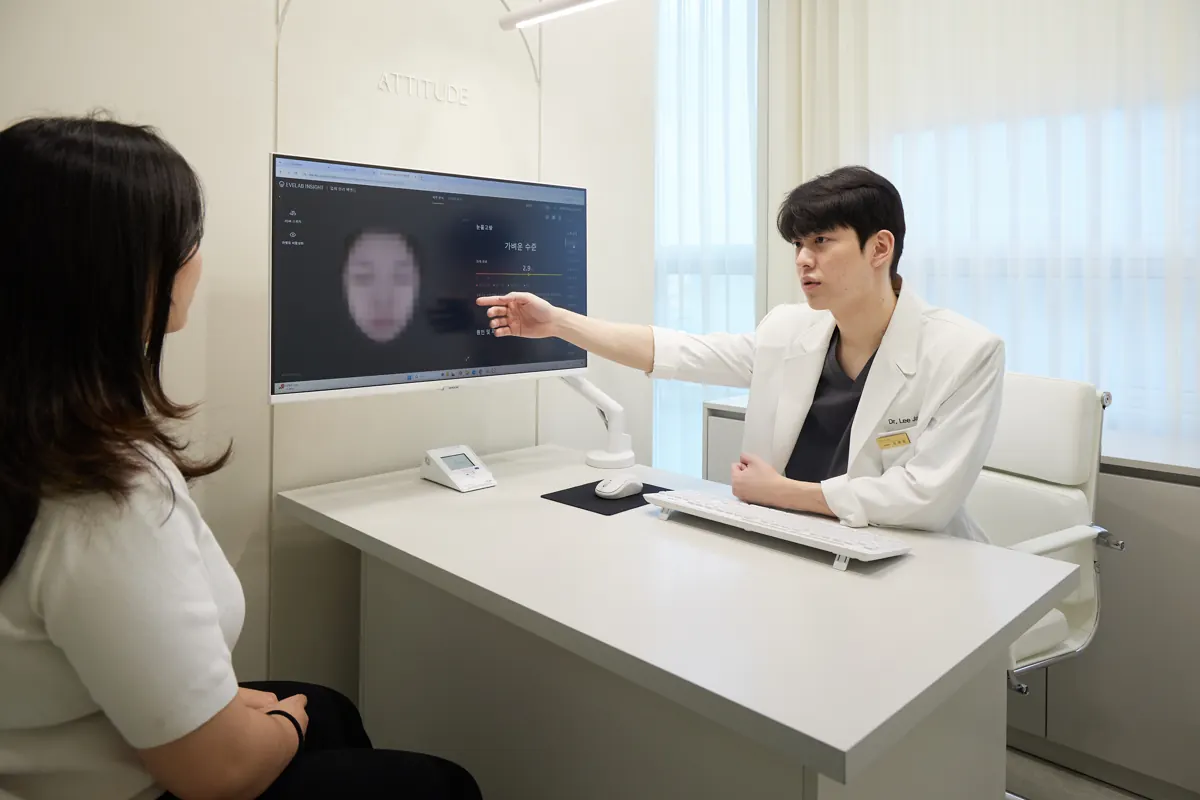
Doctor consultation Adding your concerns, lifestyle habits, and previous treatment experience to the records, we decide what is needed and what isn't, and what combination, order, and intensity to use. Cost items are also organized at this stage.
Treatment by the doctor The doctor performs the treatment according to the plan set in consultation and adjusts intensity based on skin response during the procedure.
Recovery and care We check your response after the treatment and guide you on the next session interval and care methods.
Four steps your doctor sees to in person
From the diagnostic device to the treatment bed, the doctor you first consult takes care of everything.
01
Precision diagnosis
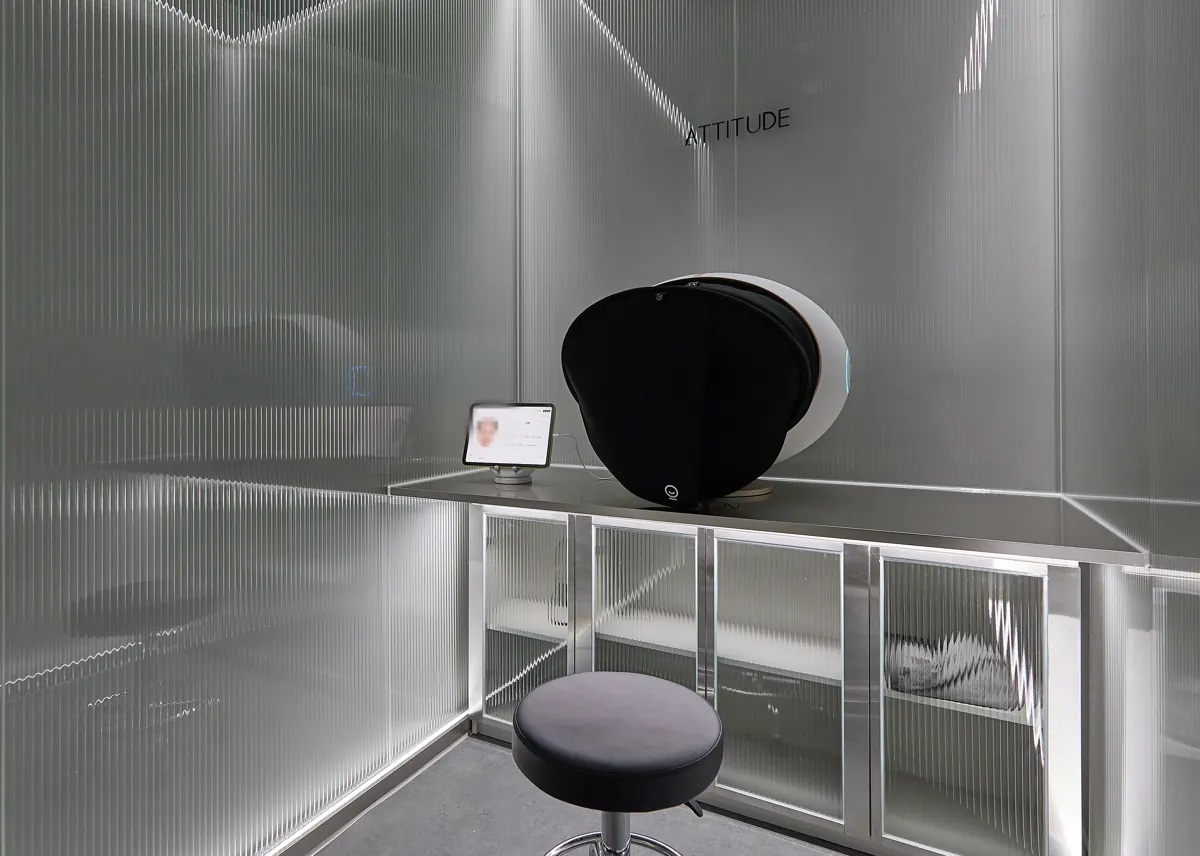
In a private diagnosis room the whole face is photographed, recording even skin conditions that are hard to see with the eye.
02
Skin analysis
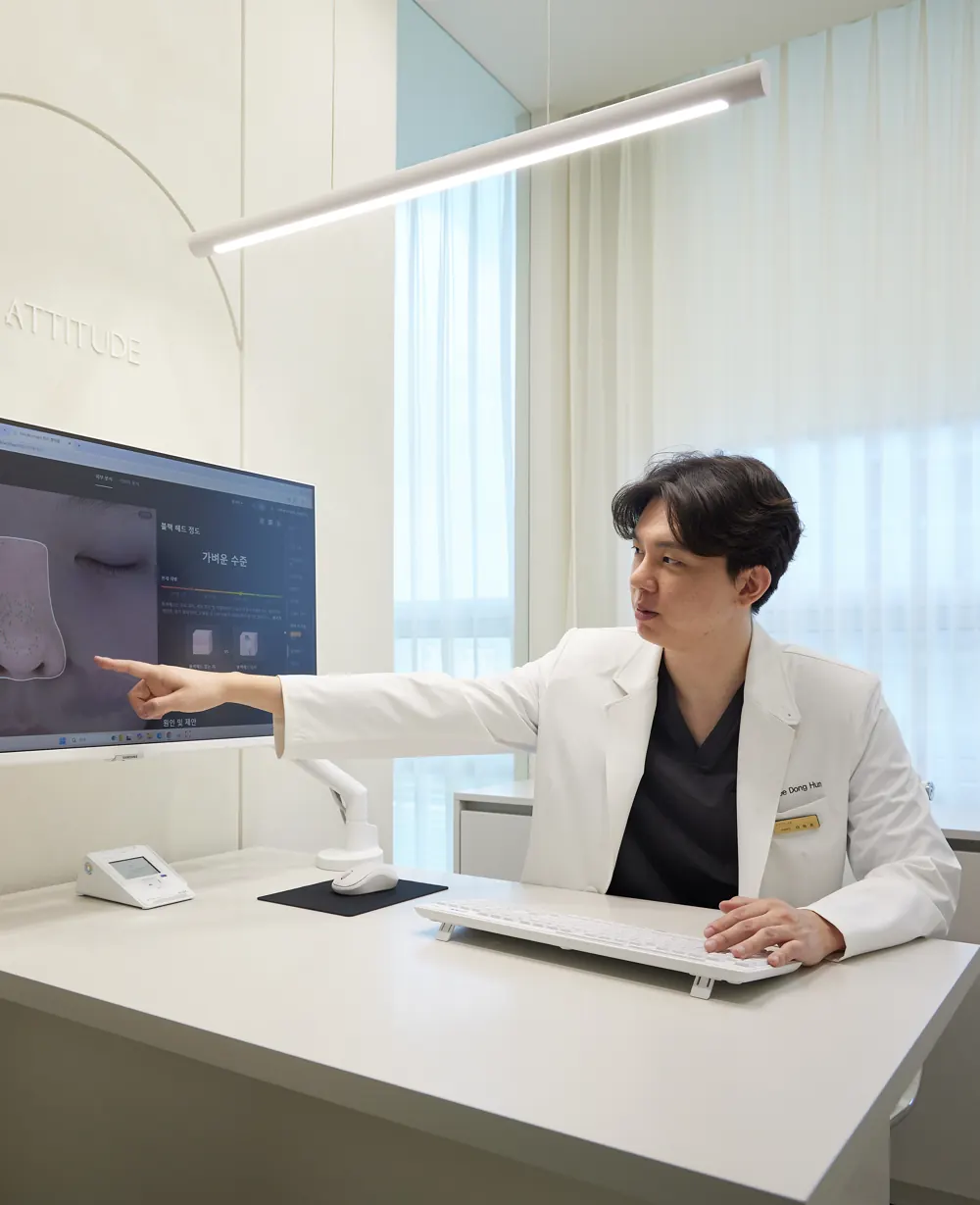
The doctor goes through your pore, pigmentation, wrinkle and firmness results with you on screen and explains what comes first.
03
One-to-one design
With your skin, the balance of your face, the change you want and your schedule in view, you decide the treatment and its extent together.
04
Treatment by your doctor
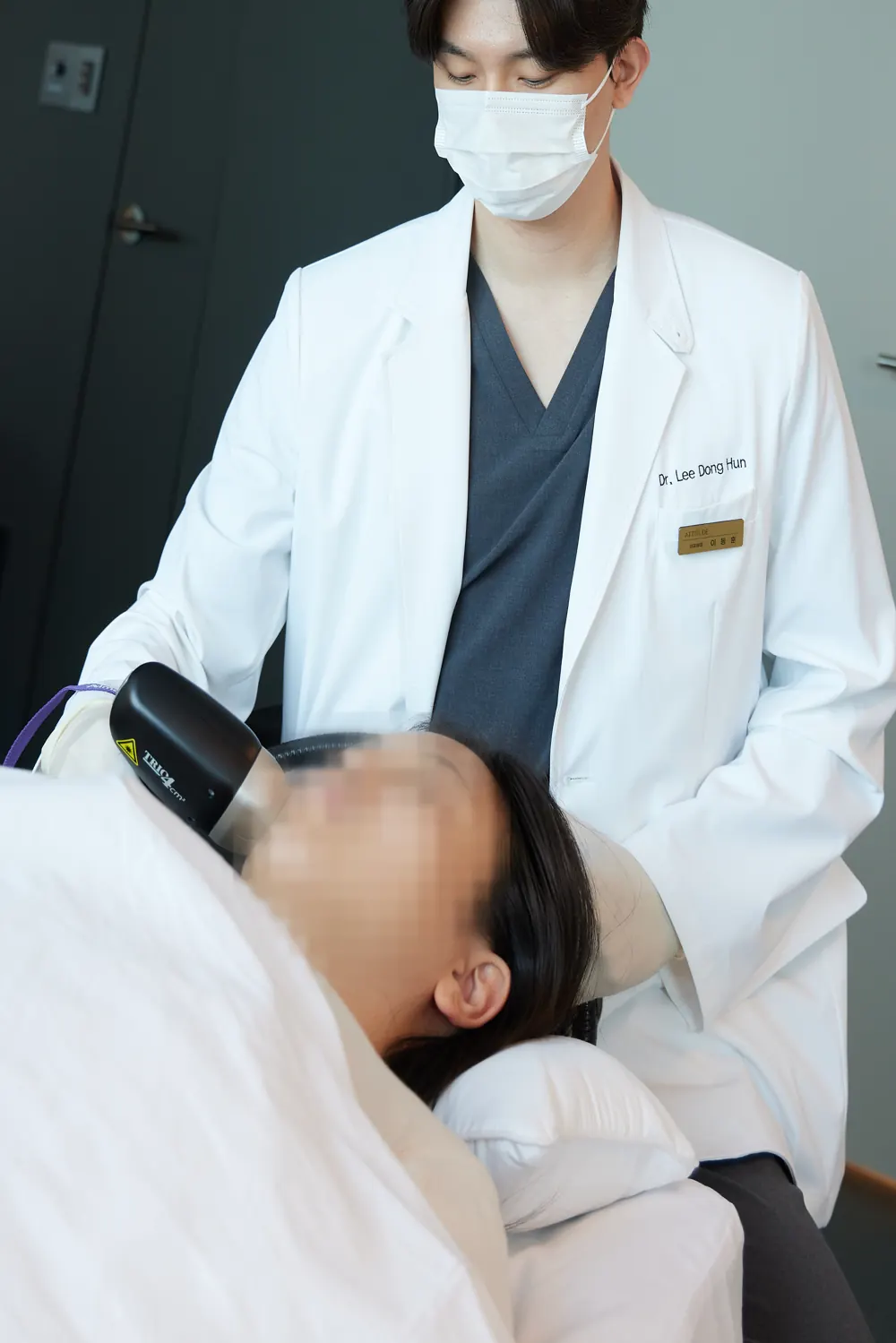
The doctor who consulted you performs the treatment from start to finish in a private treatment room. No one takes over halfway.
“I take injection pain seriously.”
Co-Director Dr. Lee Dong Hun
Many people hesitate over injection treatments because they hurt. So we went back over everything, from the anesthetic to the products used.
Careful numbing, unhurried timingWe allow plenty of time for a special numbing cream to take full effect, and add anesthetic injections for the treatments and areas that need them.
Fine needles, finished quicklyInjection treatments use fine needles, and the doctor finishes them personally in a short time, adjusting along the way by watching how you are doing.
Even the product formulation countsThe same treatment can feel more or less demanding depending on the product, so we take that into account too.
The anesthetic method and whether it is used are decided after an examination, according to the treatment, the area and your condition. How much it hurts varies from person to person.
The equipment and care used in this topic are cryo, LDM, Omega Light, and Aqua Peel under the skin care items in the price list. Each item has an amount listed in the price list, and all amounts exclude VAT (Treatments and Pricing).
Aftercare and side effects
Calming Right after the treatment, skin may still feel warm. Avoid strong cleansing and exfoliation, and wash gently with lukewarm water.
Moisturizing The skin barrier is temporarily unsettled, so apply a moisturizer that holds in water more often than usual. A product you already use is better than a new, strong functional product.
Sun protection While redness remains, pigment can darken, so use sun protection when going out. Postpone saunas and alcohol until redness subsides.
Checking progress Look at your skin condition the next day and on the third day to set the next session interval.
Common reactions include redness, swelling, tenderness when pressed, and bruising. They are common after laser, energy devices, and injectable treatments and usually subside within a few days. Rarely, temporary pigment changes (lighter or darker skin), blisters, burns, or scars can occur. In cryosurgery for lesions, crusting and blistering are expected reactions, and side effects can include lighter or darker pigment or scarring (AAD wart treatment guide).
There are specific points to contact us about rather than wait. If pain worsens, blisters grow, or an area clearly changes color, seek medical care immediately. Other reactions usually show a direction within a few days, so until then, reduce irritation and monitor progress.
Frequently asked questions
How much does one cryo facial session cost?
ATTITUDE Clinic's price list lists the per-session amount under skin care items, and all amounts in the table exclude VAT (Treatments and Pricing). The actual payment varies depending on what's included in one session and how the full face and partial areas are divided, so confirm the scope during consultation. Aligning on the payment currency and VAT notation in advance reduces the gap between the converted amount and the actual amount.
Can I get cryo alone?
It's possible, but that decision is made during consultation. Analysis records are reference materials, and you decide whether and what treatment to have; ATTITUDE Clinic's principle is to decide with the doctor what is needed and what isn't. Whether you have it alone or bundle it with other care also changes the cost items.
Is cryotherapy the same as cryosurgery?
The name alone doesn't distinguish them. Cryosurgery that freezes and removes lesions involves expected crusting and blistering, a healing process within 4–7 days, and sometimes repetition every 2–4 weeks (AAD wart treatment guide). Whole-body cryotherapy involves 2–4 minutes in a sub-zero cryo chamber, and there are reports of skin damage (AAD whole-body cryotherapy guide). Confirming which type it is before booking helps you gauge both price and safety.
I'm departing in a few days—can I still get it?
It depends on your skin's reaction that day. Redness and swelling usually subside within a few days, but blisters or pigment changes can lengthen recovery, so plan with a buffer before your departure. If your stay is short, splitting into one or two sessions rather than cramming them in, and leaving the last day before departure free, is safer. When booking close to departure, tell us your remaining schedule first, secure at least one day to check your progress after the treatment, and then set the date. Since the speed at which redness subsides varies from person to person, it's better not to fill every day up to the last day.
What should I look for when choosing a clinic?
Start by checking whether per-unit prices are disclosed and whether VAT inclusion is stated. Also check whether the same person handles consultation and treatment and whether previous treatment records are reviewed. Even for the same one session, if the scope differs, comparison isn't possible, so when getting a quote, asking them to write down the scope and inclusions together makes it easier to judge.
At a glance
Table 2 At a glance
Item
Key point
Five things that determine cost
Type, per-session unit and scope, number of sessions and interval, combinations, VAT
Distinguishing names
Facial cooling care, lesion cryosurgery, and whole-body cryotherapy are different treatments
Repetition structure
Lesion cryosurgery is commonly repeated every 2–4 weeks
Combinations
As skin care items increase, the price adds up by item
Notation check
Price list amounts exclude VAT; same prices on every language page
After treatment
Manage in the order of calming, moisturizing, sun protection, checking progress
This article offers general health information. It is not a substitute for diagnosis or treatment based on your own condition, so please talk through your situation with a doctor.