Filler vs Skin Booster Injections: What's the Difference?
Filler adds volume to areas that look hollow, while skin booster injections hydrate the shallow dermis. Here's why the same hyaluronic acid behaves so differently in depth, purpose, how long it lasts and recovery, plus what first-time visitors to Korea should prepare.
Written by ATTITUDE Clinic Editorial Team
Skin booster injections and filler are both placed into the face with a fine needle, so at first glance they can feel like the same thing. "Which one should I get?", "how long does it last?" are questions we hear often in consultations. In this article we'll go through where in the skin each treatment places what, which concerns each one suits, and how maintenance and recovery differ.
The Bottom Line First
Filler fills volume into areas that look hollow to shape facial contours, while skin booster injections place hyaluronic acid densely in the shallow dermis (the layer where collagen is produced inside the skin) to lift moisture and texture. Even when the ingredients overlap, the injection depth and purpose differ, so how long it lasts and how often you return also differ. Filler keeps the area it filled relatively long, while skin booster injections bring change gradually but last shorter, so they're managed over several rounds. So rather than "which is better," you should sort out whether your current concern is volume or skin texture. Even for the same treatment, the degree and timing of change appear differently depending on your skin condition.
Why Do Results Differ Even With the Same Hyaluronic Acid?
According to US FDA medical device guidance, filler (an injectable medical device placed beneath the skin) is approved for noticeable facial wrinkles and skin wrinkles, and for volume restoration of the lips, cheeks, chin and hands (FDA dermal fillers). The same guidance explains that how long the effect lasts depends on the filler material and which area it was placed in. Filler is, in other words, a treatment where "where and how much you fill" determines the result.
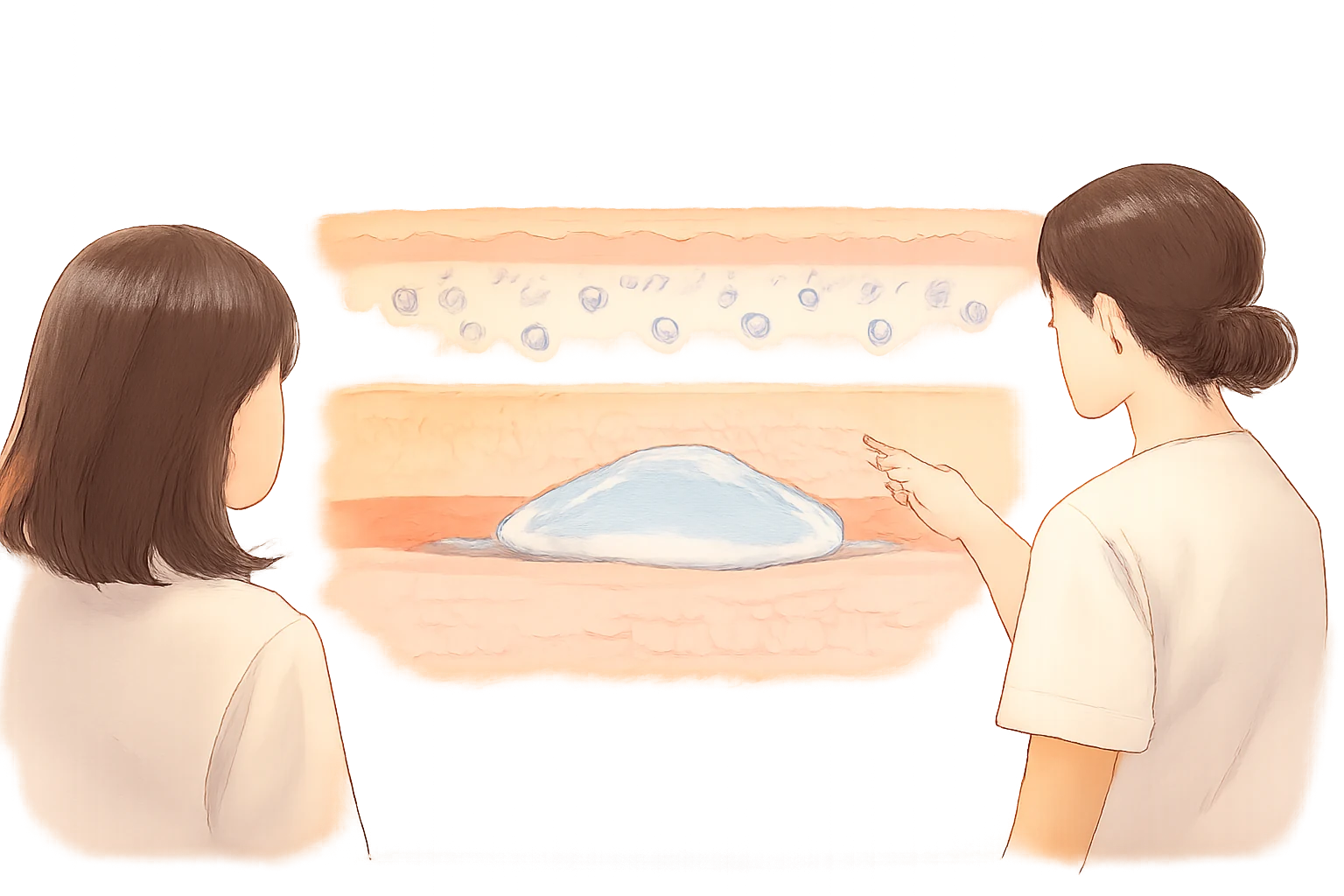
Skin booster injections, by contrast, are mainly moisture injections based on hyaluronic acid (HA, an ingredient with a strong ability to attract water), while PN (polynucleotide) preparations such as Rejuran are a separate treatment with a different ingredient altogether (ATTITUDE Clinic column). The hyaluronic acid used in skin booster injections goes in shallow and spread wide in the shallow dermis, so rather than changing facial contours it works toward changing the moisture the skin holds and its texture.
So why does one last long and the other short, when they're the same ingredient? American Society of Plastic Surgeons material explains that hyaluronic acid filler takes usually 8–18 months to be naturally degraded by enzymes in the body (ASPS dissolving filler). Formulations meant for filling hold their place and stay long, while injections meant for moisture last shorter than that and lead to repeat maintenance. The ATTITUDE Clinic column also guides that the maintenance period for skin boosters is "usually a few months," and notes that factors like age, UV exposure and smoking influence that period.
Which Concerns Do Filler and Skin Booster Injections Each Suit?
Filler is used to restore places where volume has disappeared. It's placed into areas that look hollow or thin, like the cheeks, chin or lips, to re-establish contours, and the FDA guidance also lists nasolabial folds, fine wrinkles around the mouth, and volume restoration of the lips, cheeks and chin as approved uses. Results are influenced by the tissue structure beneath the skin and the type and amount of filler used.
Skin booster injections leave facial shape as it is and address the texture of the skin surface. The column guides that chronic dryness and dullness that basic cosmetics can't solve, dull skin texture, and skin where fine wrinkles are starting to stand out are mainly considered for skin booster consultations. If your main concern is skin thinning and loss of elasticity, there are also options like Re2O (hADM, human-derived acellular allogeneic dermis) that directly supplement dermal structures (collagen injection column). However, such products vary greatly between individuals and long-term data is still limited, so tracking the course makes it easier to match expectations.
One thing to keep in mind is that skin booster injection is not a specific product name but a general term for moisture injections that use hyaluronic acid. In consultation, which ingredient is placed in what proportion is what decides the actual result.
How Much Does It Hurt, and How Many Days Will I Be Swollen?
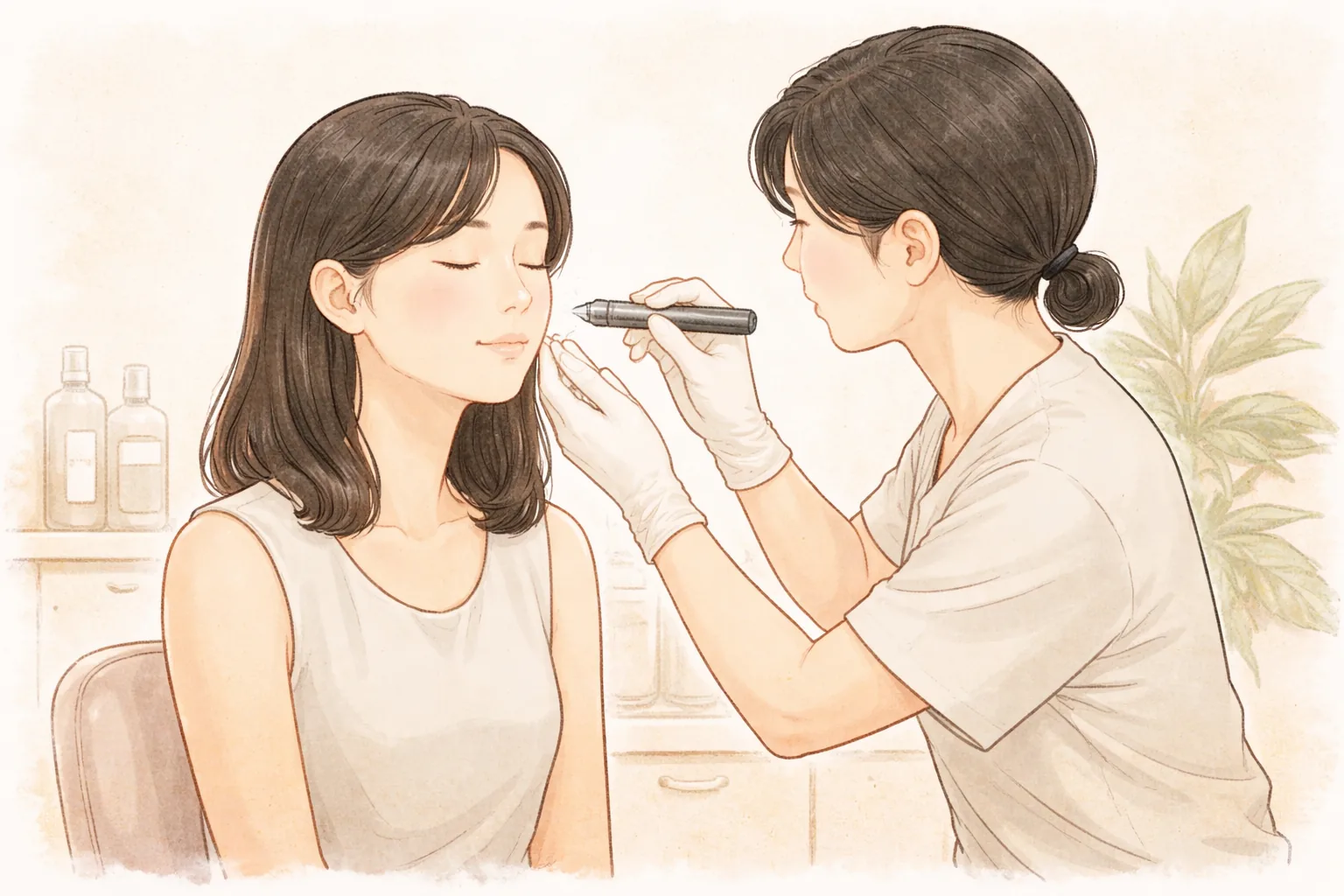
Pain varies greatly with the treatment area and your personal pain threshold. Because the needle enters many times, stinging can repeat, and areas close to bone and with thin tissue such as the forehead, eye area and around the lips tend to feel relatively more sensitive, while areas with thicker tissue like the cheeks or jawline tend to feel less. The instrument also matters. A method that densely injects many points with a fine needle repeats momentary stinging many times, while a method that inserts a thin tube with a rounded tip (cannula) and spreads from inside stings only on the first insertion and is relatively comfortable afterward.
Recovery differs in character depending on the type of treatment. According to FDA guidance, reactions such as swelling and bruising after filler treatment appear right after injection, and many subside within days to weeks. With skin booster injections, bumpy marks (papules) may remain along the injection points for about 1 day to several days right after the procedure, and these are reactions that appear as the ingredient is absorbed, mostly disappearing naturally. Swelling usually subsides between 1 day and several days, and bruising can take more than 1 week to fade.
Table 1 How Much Does It Hurt, and How Many Days Will I Be Swollen?
Treatment
Main action
Concerns it suits
Maintenance and repeats
Filler
Fills volume into hollow areas to shape contours
Nasolabial folds, lack of volume in lips, cheeks, chin
Depends on material and area; HA filler usually takes 8–18 months to degrade naturally
Skin booster injection
Fills moisture into the shallow dermis to lift resulting glow
Inner dryness, dullness, dull skin texture
Change appears gradually, usually maintained in rounds of a few months
Rejuran (PN)
Sends regeneration signals to help collagen production
Fine wrinkles, loss of elasticity, uneven texture
Appears gradually, planned together with maintenance sessions
Varies greatly between individuals; long-term data still limited
Swipe sideways to see the whole table.
In short filler and skin booster injections are not competitors; they handle different layers. If contour is your concern, the weight leans toward filler; if skin texture is your concern, toward skin booster injections, and when planning both together, the doctor decides the order and interval.
How Many Sessions, and at What Intervals?
Skin boosters like skin booster injections are usually planned as several rounds at 2–4 week intervals, then widening the interval to continue maintenance sessions. With 1 session alone the effect is limited and temporary, and collagen-related changes appear gradually if they occur. The number and interval vary with the degree of skin aging, the concern area and the product used, so the doctor decides after seeing your skin in the first consultation.
Filler keeps the area it filled once for a long time, but later you may need a judgment to supplement or reduce it. ASPS material explains that hyaluronic acid filler takes 8–18 months to degrade naturally, and this period varies with the type of filler. So for first-timers, it's better to agree first on "which area and how much goes in this time" rather than "how many months until I come back."
Whether it can be done on the same day as laser or lifting, and how to order them, depends on the type of treatment. If you're considering several treatments together, it's easier to set your recovery schedule by planning the whole picture first in consultation.
If This Applies to You
If you're an overseas visitor staying briefly
If your schedule is fixed, it's good to leave room between the treatment and recovery. Filler can have swelling and bruising lasting from days to weeks, so rather than right before your flight, receiving it within a few days of arrival and checking the course once more is a safer order. If you need interpretation or document guidance, telling the clinic at the booking stage makes the consultation smoother.
If you have a fixed date for a ceremony or shoot
Filler can leave swelling and bruising, so it's better to avoid right before an important day. With skin booster injections, papules and swelling usually subside between 1 day and several days, but if bruising occurs it can last more than 1 week. If you have a date, it's better to tell us the date first and plan by counting backward from it.
If your skin is sensitive or reddens easily
For skin where injection marks remain long or redness doesn't subside well, it's better to adjust injection depth and dosage. You must tell us in consultation about any allergy history or experiences of reactions to past treatments. The FDA guidance also recommends allergy testing before use for fillers made with certain materials.
If hollow cheeks and dull texture are both concerns
Volume and skin texture handle different layers, so approaching one at a time makes results easier to read. Whether they can be done on the same day and how much interval to leave depend on the treatment combination and recovery speed, so it's decided in consultation.
Please tell us before consultation If you tell us about recent UV exposure and outdoor activity, medications you're taking (especially those affecting blood clotting), skincare ingredients you eat or apply (retinol, acid ingredients, etc.), experiences of reactions to past treatments, pregnancy or breastfeeding status, and important dates like ceremonies or shoots, we can build the plan around them.
How ATTITUDE Clinic Proceeds
Skin analysis and records — Before consultation, we record your skin condition with analysis equipment. These records are material organizing information observed about the skin and are not a medical diagnosis. As records accumulate each visit, it becomes easier to compare the direction of change.
Director consultation and planning — The director personally checks whether your current concern is volume or skin texture, which ingredient and dosage suit you, and whether it can overlap with other treatments on the same day. The column also guides that the number and interval of skin boosters are decided by the doctor after seeing the skin (ATTITUDE Clinic column).
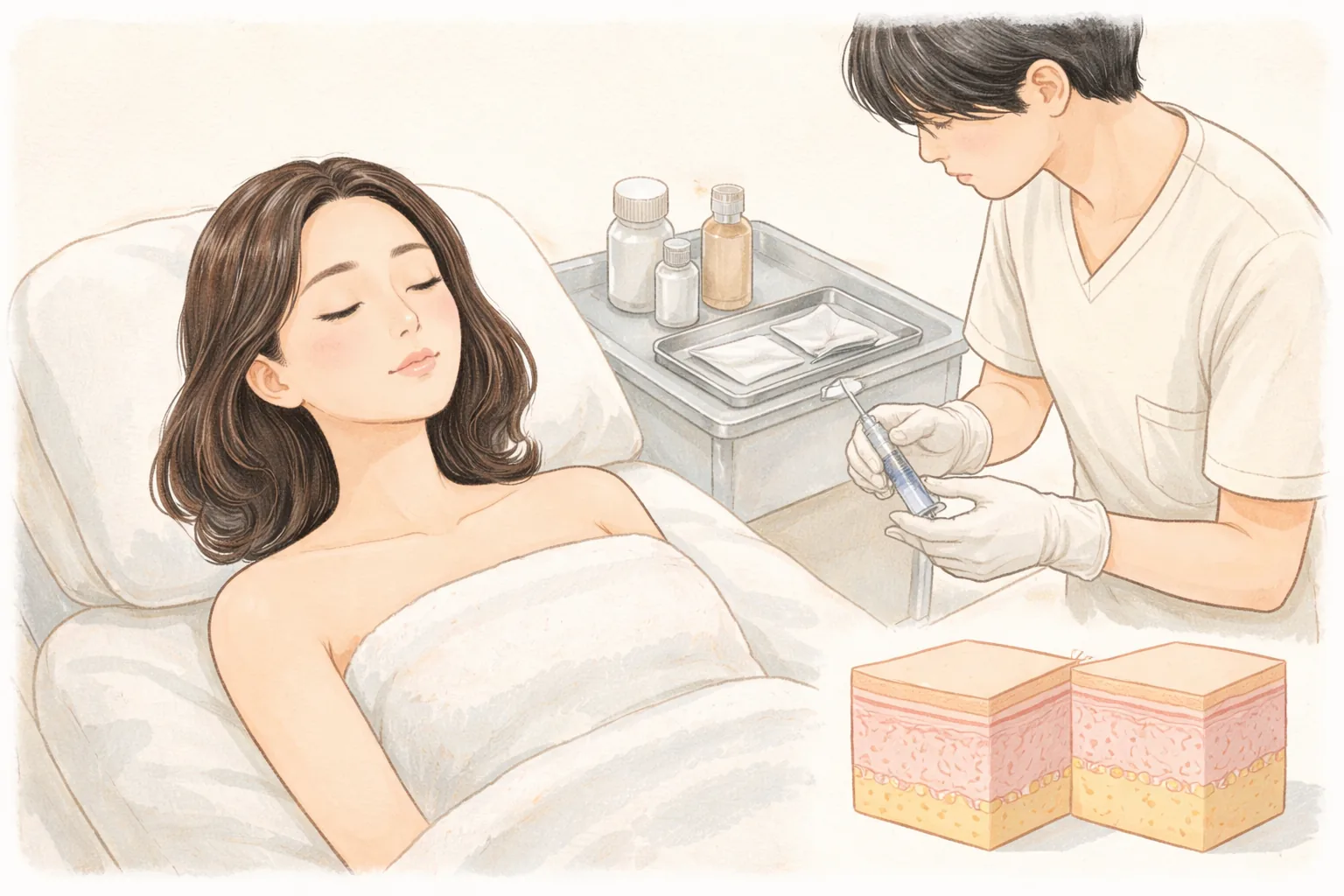
Treatment performed directly by the director — We explain the anesthesia method, injection depth, and the product and dosage used before the procedure, and the director performs the treatment personally. Skin booster injections require dense injection, so needle stimulation can repeat many times, and pain differs by area.
Recovery and next-cycle guidance — After the procedure, we guide the timing of your next visit according to the recommended cycle. ATTITUDE Clinic treatment guidance organizes filler, skin booster injections, and skin boosters like Rejuran and Re2O together (treatment guide).
Aftercare and Side Effects
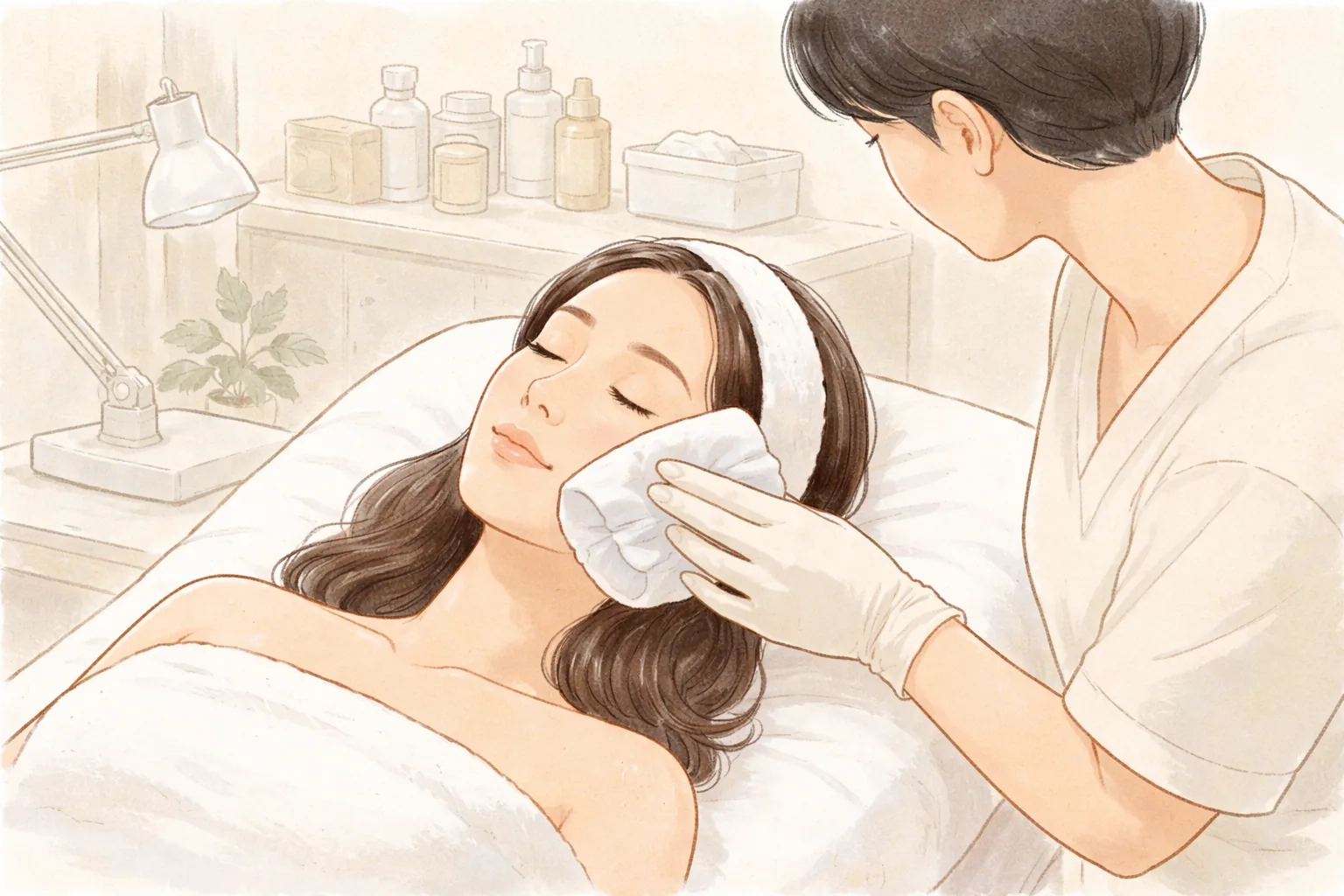
Soothing — Right after the procedure, don't rub or press and spread the injection marks; subdue swelling with a cold compress. It's better to avoid saunas, strenuous exercise and alcohol on the day, as they can increase swelling and bruising.
Moisturizing — Wash your face lightly with lukewarm water a few hours after the procedure, and makeup is often possible from the next day once the injection marks have closed. Postpone strong exfoliation or peeling until recovery is complete.
UV protection — During this period the skin's barrier is temporarily weakened, so you need to protect against UV more carefully than usual to recover without pigmentation.
Checking the course — Check whether swelling and papules subside at the expected time, and whether bruising remains long. The degree of bruising varies between individuals depending on blood vessel distribution.
Common side effects are small papules at the injection site, redness, swelling, tenderness when pressed, and bruising. More rarely, infection, allergic reactions and small lumps can occur, and the FDA guidance notes that injected material can block blood vessels and lead to serious problems such as tissue damage or vision abnormalities. The probability is low, but if it happens the consequences are large, so if you have pain different from usual or worsening, or if the skin at the injection site turns white, mottled, bluish-gray or black, or if there is any change in vision, don't wait and get medical care right away.
Frequently Asked Questions
What is the biggest difference between skin booster injections and filler?
The biggest difference is which layer you place what into. Filler is a treatment that fills volume into hollow areas beneath the skin to shape contours, while skin booster injections densely place a moisture-binding ingredient into the shallow dermis to lift skin texture. So getting skin booster injections doesn't change your facial line, and getting filler doesn't solve inner dryness. Even using the same hyaluronic acid, the processing method and injection depth differ, so how long it lasts and how often you return also differ.
How long does the effect last?
According to ASPS material, hyaluronic acid filler takes usually 8–18 months to be naturally degraded by enzymes in the body, and this period varies with the type of filler. Skin boosters like skin booster injections last shorter than that, usually maintained in rounds of a few months. Factors like age, UV exposure and smoking influence how long it lasts, so rather than promising a specific number of months, we decide the next cycle while watching the course.
If I don't like the filler after getting it, can it be reversed?
If it's hyaluronic acid filler, it can be dissolved by injecting hyaluronic acid-degrading enzymes. According to ASPS material, this enzyme is the same type as what's naturally in the body, and when injected, the filler is degraded and absorbed almost immediately. However, the dissolving process also carries risks such as pain, bruising, swelling and allergic reactions, and because the enzyme spreads to surrounding tissue, dissolving only part of it precisely is difficult. Filler made with non-hyaluronic acid materials isn't removed this way, and the FDA guidance also explains that removal may be difficult or impossible.
After the procedure, how long do bruising and swelling last?
According to FDA guidance, reactions such as bruising and swelling appear right after injection and many subside within days to weeks. With skin booster injections, papules and swelling usually decrease between 1 day and several days, but bruising can last more than 1 week. Thin-skinned areas like the eye area tend to bruise longer than other places, and the degree varies between individuals depending on blood vessel distribution.
If it's my first treatment, what should I check when choosing a clinic?
The FDA guidance recommends looking for a licensed medical institution with experience in the dermatology or plastic surgery field. Check whether the consultation explains the product and dosage used, the injection depth and the anesthesia method, and how they respond if side effects occur. If you're considering several treatments together, it's also worth asking whether they can be done on the same day and who decides the order. Be sure to tell them your allergy history and medications you're taking before the procedure, and if you're not sure, it's better not to rush.
At a Glance
Table 2 At a Glance
Item
Key point
Layer it handles
Filler is volume beneath the skin, skin booster injections are moisture in the shallow dermis
Concerns it suits
Contour and volume for filler, inner dryness, texture and glow for skin booster injections
How long it lasts
HA filler usually takes 8–18 months to degrade naturally, skin boosters usually in rounds of a few months
Repeat plan
Skin boosters in several rounds at 2–4 week intervals, then maintenance sessions
Pain and recovery
Needle stimulation can repeat, and papules and swelling usually between 1 day and several days
Reversal
Hyaluronic acid filler can be dissolved with enzymes, and that process also carries risks
This article offers general health information. It is not a substitute for diagnosis or treatment based on your own condition, so please talk through your situation with a doctor.