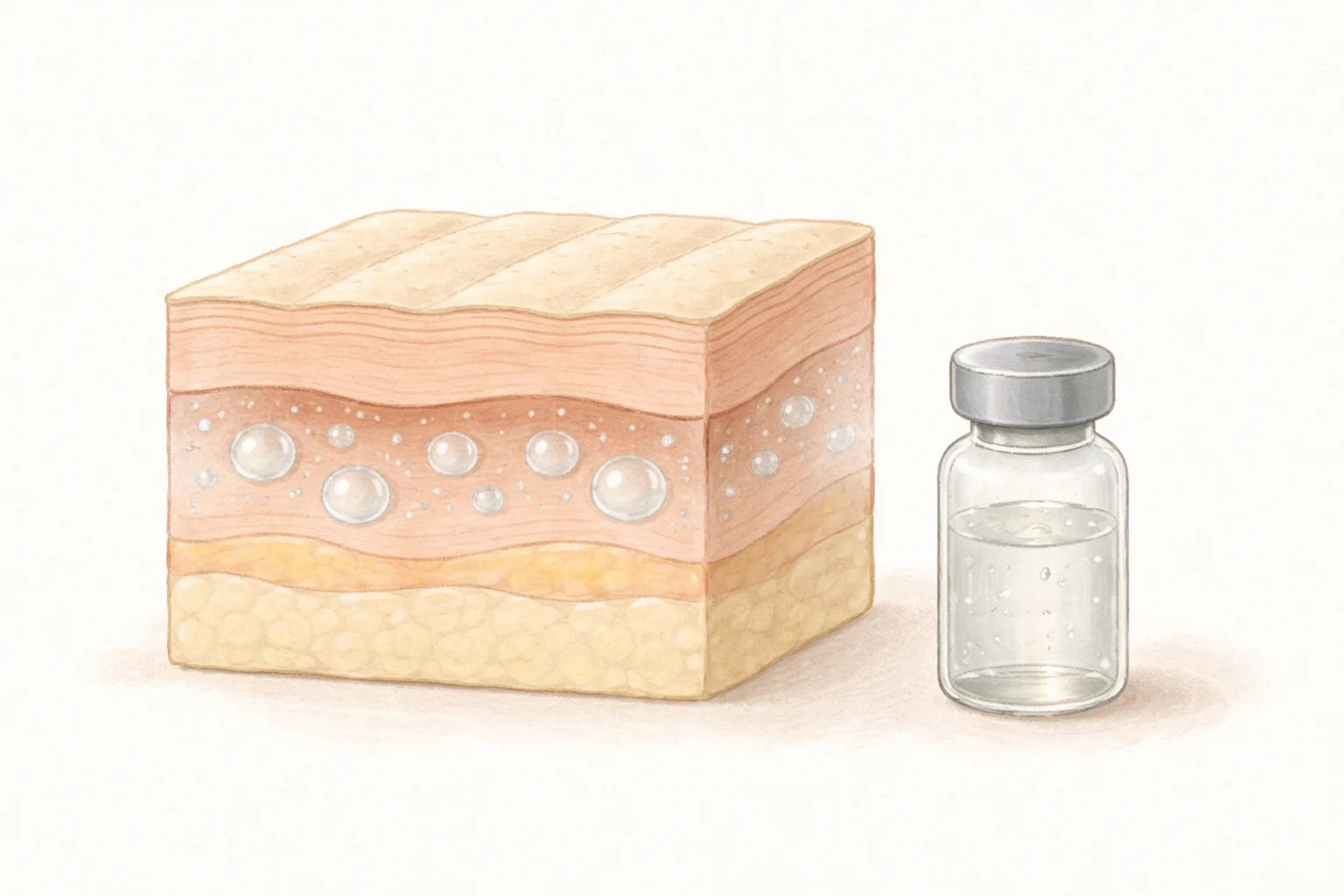
How Many Skin Booster Sessions Do You Need? GOURI Intervals & Timing at ATTITUDE Clinic in Gangnam
Skin booster injections like GOURI don't come with a fixed number of sessions. Learn how skin type, thickness, recovery speed, and your schedule shape the next appointment — and what to check in consultation.
Written by ATTITUDE Clinic Editorial Team
Search for skin boosters like GOURI and you tend to stop at two questions: "How many sessions do I need?" and "When do I come back?" Knowing the name of the treatment doesn't tell you how many sessions suit your skin, or how long to wait before the next one. This article covers what actually determines the number of skin booster sessions and intervals, and what information to bring into the consultation.
The short answer
GOURI isn't a treatment with a fixed number of sessions attached to it. At ATTITUDE Clinic, we check how your skin responds and recovers after the first session, then decide whether more are needed and how far apart. The American Academy of Dermatology also advises asking directly in a cosmetic consultation "how many treatments will I need to get the results I want" and "how much recovery time is involved"(AAD consultation questions). Results depend heavily on the skill and experience of the person performing the treatment, so simply counting sessions won't give you a plan. That said, how much your skin responds and how fast it recovers varies from person to person, so even the same plan won't produce identical results.
What is GOURI, and why isn't the number of sessions set by the product alone?
On the ATTITUDE Clinic treatments and pricing page, GOURI is listed under "skin booster" within the injection section, in units of 1 vial (treatments and pricing). In the same list, skin boosters are grouped as treatments that "deliver directly to the skin base," alongside Rejuran Healer, Juvelook (PDLLA), and Sculptra. This means GOURI belongs in the injection category acting on the skin base, not in the same slot as dermal fillers that restore facial contour.
How skin boosters are described depends on the product. The ATTITUDE Clinic column explains this family as supplying moisture or regenerative ingredients to the skin or stimulating fibroblasts (exosome column). What the injected ingredient does in the skin differs, and how quickly that response appears varies by person — so a single number like "how many vials, how many sessions" can't describe every skin.
The units tell the same story. Within the same skin booster row, GOURI is listed as 1 vial, Rejuran Healer as 2cc, and Juvelook Skin as 4cc and 8cc (treatments and pricing). So "one session" means a different amount for each product. When discussing the number of sessions, you need to look at both how many sessions and what volume of what product is being used.
Here's a common misunderstanding: "I had 1 vial, so I'll just get the same amount at the same time next round." The amount can serve as a reference point, but how much your skin responds to that amount is a separate question. The AAD advises that when considering injectable treatments like fillers, you should check information in consultation to judge whether the treatment is right for you (AAD filler guide).
What to decide before the number of sessions — what is this treatment for?
The AAD suggests asking yourself some questions before a procedure: what you want to achieve, how much recovery time and risk you can accept, and how far your budget can go (AAD consultation questions). If these three aren't settled, the number of sessions and intervals will waver too. Whether your goal is "the overall impression of my face" or "fine lines in a specific area" changes the units and number of sessions you need.
Recovery time carries the same weight. Redness and swelling are common after treatment, so if you have little time to recover, spacing sessions out is more comfortable than cramming them. Conversely, if you have time and your skin tolerates it well, a denser plan can be discussed in consultation. What matters is not pinning dates on the calendar first, but setting the point at which you'll check progress.
Why the next interval differs even with the same 1 vial
When deciding the next session, the biggest factor is whether your skin has recovered on its own and is ready to respond again. The ATTITUDE Clinic column cites skin type, skin thickness and structure, and the speed of new collagen production as reasons results differ even for the same treatment (why results differ). Whether your skin is dry or oily, thin or thick, fast or slow to regenerate — the degree of response and recovery speed to the same stimulus differ.
Analysis records help when judging "is my skin responding well." ATTITUDE Clinic records and organizes skin condition through AI skin analysis so the doctor and patient view the same information, then adds concerns, lifestyle habits, and previous treatment experience to that record to build a plan. The analysis tool records and organizes information only; it does not make a medical diagnosis — the doctor makes the judgment (why results differ). Records become the basis for setting the next interval, but records alone don't force a particular treatment.
So why is it hard to just copy someone else's schedule? Even with the same product and same dose, recovery speed and daily rhythm differ from person to person. Whether you're in a stretch of late nights or have an important event coming up changes how much time you have to recover — and that difference pushes the next session earlier or later.
So what does the consultation look at?
The first thing to bring is your previous treatment records. If you bring which devices and products you had, at what dose, when, and how your skin responded, the doctor can review them (why results differ). With this information, it's easier to judge whether to repeat the same response or go in a different direction. If it's your first treatment, it helps to share your recent skin condition, medications you're taking, and ingredients in your skincare.
Having your consultation questions ready also makes the conversation more concrete. The AAD's suggested list includes how many treatments you need, how much recovery time is involved, what the risks are, and how to care for your skin before and after (AAD consultation questions). Add the principle of deciding together what's needed and what isn't, and you reduce the chance of treatments you don't need ending up in the plan. ATTITUDE Clinic decides what's needed and what's not together with the doctor, based on analysis records and examination (why results differ).
The experience of the person performing the treatment also affects results. The AAD explains that results depend heavily on the skill and experience of the practitioner, and advises checking in consultation how much that doctor has treated patients with your skin tone, type, and age group (AAD consultation questions). The conversation about sessions and intervals ultimately starts with how well this person understands your skin.
Table 1 So what does the consultation look at?
Category
ATTITUDE Clinic listing
Listed unit
What's reviewed in consultation
GOURI
Skin booster
1 vial
Desired change at the skin base, timing of progress check
Hyaluronic acid filler
Filler
1cc
Whether volume and contour need support, and where
Skin booster (Rejuran Healer, etc.)
Skin booster
cc by product
What to prioritize at the skin base
Lifting (Ultherapy, Thermage, etc.)
Lifting
Shots or kJ
How to split elasticity concerns from injections
Swipe sideways to see the whole table.
In short GOURI's sessions and intervals are set not by the product name but by how your skin responds and recovers. Even with the same 1 vial, the next timing can differ — so it's realistic to set the progress-check point first, then plan the next step from that result.
If this sounds like you
When an important event is a few weeks away
Redness and swelling are common after treatment, so if you have a photo shoot or wedding where your face matters, it's better to tell the clinic the date upfront. How much recovery time you have determines the timing and intensity that can be planned. If your event is very close, you can also discuss postponing to the next opportunity rather than forcing the session count.
When you want steady management with adjusted intervals
Whether to do it once or build response over several sessions is decided in consultation. Writing down the product, dose, date, and reaction of previous treatments makes it much easier to discuss the next interval concretely. Rather than shortening intervals, checking progress and adding as needed makes for an easier plan.
If your skin is sensitive or prone to redness
If your skin is thin or sensitive, redness and irritation can linger longer even with the same treatment. In that case, it's better to split the dose and observe the response than to inject a large amount at once. If you tend to flush easily, telling the clinic first lets it be reflected in the plan.
If you're an international visitor on a short stay
If your stay is short, it's hard to have the clinic check your progress in person. So it's better to tell the clinic your travel schedule upfront and agree on what can be checked before you leave and how to follow up after you return home. Rather than forcing the session count into your stay, it's realistic to set one clear plan and then discuss further sessions after checking progress locally.
Please tell us before your consultation Recent sun exposure and travel plans, medications you're taking and skincare ingredients you use, reactions you've had to previous treatments, and upcoming important events (photo shoots, weddings, trips) all help us build a plan. Please also mention any history of allergic reactions and whether your skin is currently sensitive.
How ATTITUDE Clinic proceeds
AI skin analysis record — Skin condition is recorded and organized so the doctor and patient view the same information. The analysis tool records and organizes information to support consultation; it does not make a medical diagnosis. The record becomes reference material for the next step.
Doctor consultation — Concerns, lifestyle habits, and previous treatment experience are added to the analysis record to decide together what's needed and what isn't, and in what order and at what intervals. The number of sessions and next timing are also decided in this conversation.
Treatment performed by the doctor — The doctor performs the treatment to keep it aligned with the plan from consultation, adjusting based on skin response during the procedure.
Progress check and next plan — Response after treatment is reviewed and whether and when to do the next session is decided again. The timing set here becomes the basis for the next interval.
This flow rests on three principles ATTITUDE Clinic follows: disclosing unit pricing, deciding together what's needed and what isn't, and having the doctor personally handle everything from consultation to treatment (why results differ). On this topic, GOURI is an injectable item rather than a device, so it's listed as 1 vial in the treatments and pricing guide (treatments and pricing).
Aftercare and side effects
After treatment, follow these steps in order.
Observe the response — Redness, swelling, bruising, and tenderness to touch right after treatment are common and usually settle within a few days. Don't judge this response as the final result — view it as one point in the progress.
Follow the given aftercare — Your skin care method after treatment is explained by the medical staff according to your procedure. The AAD also recommends confirming in consultation how to care for your skin before and after (AAD consultation questions).
Use only approved products — Right after treatment, use only products your doctor approves. Some ingredients in your usual routine may burden the treated area (exosome column).
Check progress — If redness or swelling lasts long, or a lump appears, don't just count the days — contact the clinic.
Looking at side effects from the common ones: redness, swelling, tenderness, and bruising make up most cases, and rarely temporary darkening or lightening of pigment, blisters, lumps after injection, burns, or scarring can occur (why results differ). If something unexpected happens — like pain that worsens instead of improving — it's better to contact the clinic rather than wait. Whether to adjust the sessions and intervals again is decided after this progress check.
Frequently asked questions
How many skin booster sessions do I need?
There's no pre-set number. At ATTITUDE Clinic, we check skin response and recovery speed after the first session, then decide whether more are needed. The AAD also advises asking directly in consultation how many treatments you need and how much recovery time is involved (AAD consultation questions). If you have previous treatment records, the reactions from then can help build a more specific plan. In the end, your skin — not the product — sets the number.
How long do skin boosters last between sessions?
Intervals are also set in consultation. Skin type, thickness, and regeneration speed differ by person, and the degree of response and recovery speed to the same stimulus differ too (why results differ). Recovery time available and upcoming schedule are also considered. Whether to do two treatments on the same day or split them also changes the next interval, so rather than fixing dates in advance, set the progress-check point first.
Does having more sessions improve results?
Doing as many as needed, rather than adding more, is the standard. ATTITUDE Clinic follows the principle of deciding what's needed and what isn't together, based on analysis records and examination (why results differ). Even with the same combination, doing it all at once versus splitting it can change the recovery process and how it feels, so order and interval are viewed together. Deciding to add more is better done after checking progress.
Can I combine it with other treatments?
Plans differ by combination, order, and interval. Some combinations can be done on the same day, while others need a gap — so the starting point is telling the clinic all the treatments you're having (why results differ). If you're considering lifting or lasers too, review how much stimulus each leaves on the skin and its recovery period to set the order. This judgment is also made in doctor consultation.
What should I look for when choosing a clinic for GOURI?
Look at the style of consultation and records rather than the name. The AAD explains that results depend heavily on the skill and experience of the practitioner, and advises checking how much the doctor has treated patients with your skin tone, type, and age group, and how they explain risks and recovery time (AAD consultation questions). Requesting before-and-after material of similar skin is another approach. If the consultation explains specifically how sessions and intervals are set, that helps your decision.
At a glance
Table 2 At a glance
Item
Key point
GOURI category
Skin booster injection item on ATTITUDE Clinic's guide, listed per 1 vial
Number of sessions
Not a number set by the product, but decided after seeing your response to the first session
Interval
Varies with skin type, thickness, regeneration speed, and recovery time available
Plan flow
AI skin analysis record → doctor consultation → doctor-performed treatment → progress check
Common post-treatment reactions
Redness, swelling, tenderness, bruising (usually easing within a few days)
Signals to report immediately
Worsening pain, prolonged redness or swelling, lumps you can feel
This article offers general health information. It is not a substitute for diagnosis or treatment based on your own condition, so please talk through your situation with a doctor.