
Doctors’ Column
Do exosomes applied after a laser or microneedling treatment actually work?
They may help, but the evidence is still early. Exosome products contain signaling material, not living cells, and they are most likely to get past the skin's surface when applied to skin that microneedling or a fractional laser has just opened; on intact skin, most of the product stays on top. Small studies suggest they may help redness settle and support healing after some procedures, but this is a relatively new category, products differ widely, and research is still developing.
What are exosomes, and is this a stem cell treatment?
Exosomes are tiny sacs, roughly 30 to 150 nanometers across, that almost every cell in the body releases. They carry proteins, fats and genetic messages such as microRNAs from one cell to another, and they are one of the ways cells communicate. In laboratory studies, exosomes from certain cells carry growth factors and microRNAs linked to inflammation and to collagen production in nearby cells; how much of that happens when a product is applied to human skin is still being studied.
Exosome products used in aesthetic treatment are usually collected from cells grown in a laboratory, often stem cells from human tissue, and some are made from plants. Either way, the product contains no living cells: you are not receiving stem cells, but material that cells released. Products differ in their source, concentration and how they are purified, and there is no single standard yet, so the product name tells you more than the word “exosome” on its own.
Because some products come from human cells, ask what the product is derived from, especially if ingredient sources matter to you for personal, religious or ethical reasons, and mention any allergies.
Why apply them right after a laser or microneedling?
The outer layer of the skin is a barrier designed to keep things out, and exosomes are large by the skin's standards, so on intact skin most of a product stays on the surface. Some treatments open tiny channels through that barrier for a short time: microneedling, microneedle radiofrequency such as Potenza, and ablative fractional lasers such as erbium fractional. Applying a product during or straight after these treatments is thought to let more of it reach the deeper layers.
Some devices go a step further. A Potenza pumping tip is designed to push a solution into the skin through the needle channels during the treatment, rather than only applying it to the surface afterwards. On ATTITUDE's price list, one Potenza option pairs the pumping tip with exosomes; see our Potenza guide.
Not every treatment opens the skin. Low-energy laser toning and lifting devices such as focused ultrasound (HIFU) or radiofrequency (RF) work beneath an intact surface, so an exosome product applied afterwards mostly stays on top and should not be expected to work in the same way.
An open channel works both ways: whatever is applied reaches deeper skin as well. That is a reason to ask what the product is and whether it is intended for use on treated skin.
What does the research show so far?
Interest has grown faster than the evidence. A fair summary, as of October 2026:
| Question | What is known so far | What to keep in mind |
|---|---|---|
| Do exosomes carry signals between cells? | Yes, this is well established in cell biology | It shows how they might act, not that a given product works on your skin |
| Do they help skin settle after a procedure? | Some small clinical studies report less redness and a shorter recovery after fractional laser or microneedling | The studies are small and short, and results with one product may not apply to another |
| Do they improve texture or firmness? | Early reports are encouraging but limited | Larger and longer studies are needed |
| Do they work on intact skin? | Little evidence | The skin barrier keeps most of the product on the surface |
| How long do effects last, and how often should they be repeated? | Not established | There is no standard schedule yet |
| What about long-term safety? | Few serious problems have been reported with use on the skin so far | Long-term data are limited, and product quality and regulation vary |
So it is more realistic to see exosomes as a possible add-on to a treatment than as a treatment in their own right. The procedure does the main work. Whether an exosome product adds something worthwhile for your skin is a question for the doctor, and sometimes the honest answer is no.
Regulation also differs between countries: the same kind of product may be sold as a cosmetic in one place and classified differently in another, so ask what the product is called, what it is derived from and how it is classified.
What are the side effects and risks?
Most of what you notice afterwards comes from the procedure itself: redness, swelling, pinpoint marks, dryness or fine crusting, depending on the device and settings. Possible reactions to an exosome product include redness, itching, swelling and irritation, and allergic reactions can occur. There are rare reports of lumps (granulomas) or long-lasting inflammation when topical products were applied to skin opened by microneedling, which is another reason the choice of product matters. Because this is a relatively new category, long-term safety data are limited. Your doctor explains the risks before treatment.
Tell the doctor beforehand if you are pregnant or breastfeeding, have an autoimmune condition, have reacted to skincare or medical products before, or have an active skin infection, cold sores or inflamed acne in the area.
For travel, plan around the main treatment rather than the exosomes: a conservative plan is 3–5 days or more between Potenza and your flight, and about 7 days or more after erbium fractional. See flying after skin treatment. Ask your doctor before putting any product, including your own skincare, on freshly treated skin.
Who might consider them, and when can you skip them?
Exosomes are sometimes discussed as an add-on when a treatment opens the skin, for example:
- Microneedle RF or a fractional laser for pores, texture or acne scars: an exosome product can be applied in the same session, sometimes with a pumping tip.
- Skin that stayed red for a long time after an earlier laser: an add-on may be discussed, although recovery still depends mostly on the treatment and its settings.
You can skip them when the treatment heals well without them, when the treatment leaves the surface intact, or when you would rather keep the plan simple. A treatment is not incomplete without exosomes.
Exosome creams and serums sold for home use are cosmetics. On intact skin they are likely to act mainly on the surface, and they should not go on freshly treated skin unless your doctor agrees. For how exosomes compare with injectable skin boosters, see skin boosters compared.
Questions to ask before you book:
- Which exosome product would you use, what is it derived from, and how is it classified?
- Will it be applied after the treatment, or delivered during it with a pumping tip?
- What do you expect it to add for my skin, and what happens if I leave it out?
- What side effects are possible, and when can I wear makeup and fly?
How ATTITUDE approaches this
At ATTITUDE Clinic in Seoul, an AI skin analysis first records your skin. The analysis tools record and organise information to support the consultation; they do not provide a medical diagnosis. One of our two co-directors then goes through it with you and decides with you what you need, what you don't, and in what order, including whether an exosome product adds anything to the treatment you are having or can be left out. On our price list, Exosome therapy is listed per session and Potenza has an option with a pumping tip and exosomes; prices are per unit, the same on every language version of this site, VAT excluded. Ask us which product is used, and how it is delivered, when you send a booking request.
Prices at ATTITUDE
All prices exclude VAT. Prices are the same on every language version of this site.
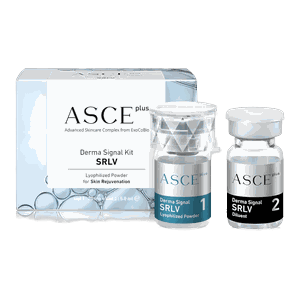 Exosome therapyExosome
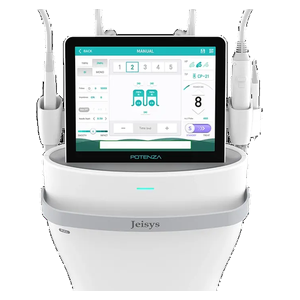 PotenzaJEISYS · microneedling RF
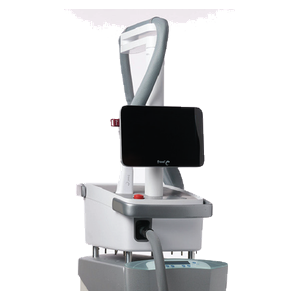 Erbium FractionalErbium Fractional
Frequently asked questions
Do exosomes really work after laser treatment?
They may help the skin settle after treatments that open it, such as microneedling or a fractional laser; small studies report less redness and a shorter recovery. The evidence is still limited, and results with one product may not apply to another.
Is exosome treatment the same as stem cell therapy?
No. Exosome products contain no living cells. They are made from material that cells, often stem cells grown in a laboratory, release, so ask what the product is derived from.
Do exosome creams work at home?
On intact skin, most of the product stays on the surface, so effects are likely to be limited. Do not apply them to freshly treated skin unless your doctor agrees.
What are the side effects of exosome treatment?
Redness, itching, swelling or irritation are possible, and allergic reactions can occur; rarely, lumps or lasting inflammation have been reported when topical products were applied to skin opened by microneedling. Long-term data are limited because the category is relatively new.
How often should exosomes be added to a treatment?
There is no established schedule. Whether to add them at all, and how often, is decided case by case by the doctor, and they are not needed with every treatment.
How soon can I fly after microneedling with exosomes?
Plan around the main treatment: a conservative plan is 3–5 days or more after Potenza and about 7 days or more after erbium fractional. Your doctor will advise for your skin.
Plan your visit
Send a booking request or message us. We reply during clinic hours (Korea time), in the order received.