
Doctors’ Column
Why does acne keep coming back in the same spot?
Usually because of the spot itself: the area has many oil glands, a pore there keeps clogging, or something keeps rubbing it, such as a mask, hair, a phone or your fingers. It is rarely a sign that you are not washing enough. Acne that keeps returning is a medical condition that usually needs steady treatment over weeks to months, and a bump that returns to exactly the same place is worth showing to a doctor, because it is not always acne.
How does a pimple form?
Acne starts inside a pore, the opening of a hair follicle. Each follicle has an oil gland attached, and the oil (sebum) normally flows out to the surface. A pimple develops when that route is blocked. Four things usually work together:
- More oil. Hormones, especially androgens, drive oil production. Genes play a part, and stress is linked with flares.
- A clogged pore. Dead skin cells and oil plug the opening. The plug is a comedone: a blackhead if open, a whitehead if closed.
- Bacteria. Cutibacterium acnes, a bacterium that normally lives on the skin, multiplies in the closed, oily space.
- Inflammation. The body reacts, and the plugged pore becomes a red, tender bump or, deeper down, a painful nodule.
This is why washing alone rarely settles acne: the process starts inside the pore, and scrubbing hard can irritate the skin and make breakouts worse.
Why does it return to the same place?
- Dense oil glands. The forehead, nose and chin have more and larger oil glands, so pores there clog more readily.
- A plug that never fully cleared. When the visible pimple settles, a small plug can remain below the surface and flare again later. A follicle whose wall was broken by deep inflammation may also clog again more easily; this is thought to be part of why some spots keep returning.
- Repeated friction or pressure. A mask, chin strap, helmet, phone, pillowcase, hair, or resting your chin on your hand can keep irritating the same patch of skin (acne mechanica), and breakouts tend to continue while the rubbing does.
- Something that is not acne. A lump that fills and empties in exactly the same place may be a small cyst. Itchy, uniform bumps may be folliculitis; bumps around the mouth, or with redness across the cheeks, may be perioral dermatitis or rosacea. These are treated differently, which is one reason a doctor should look.
Does where it appears tell you anything?
Location is a clue, not a rule. Charts linking each area of the face to an internal organ are popular online but not supported by evidence. Read location instead as a list of things to check:
| Where | What often contributes | Worth checking |
|---|---|---|
| Forehead and hairline | Many oil glands; bangs, hats, helmets; scalp oil and hair products | Whether styling products reach the skin; rinsing the hairline after washing your hair |
| Nose and T-zone | The highest oil output on the face | Whether blackheads build up before red pimples appear |
| Chin, jawline and around the mouth | Often hormonal changes, especially in adult women; mask friction | Whether flares follow the menstrual cycle; mask fit and fabric |
| Cheeks | Pillows, phones and hands; heat and moisture under a mask | Which side you sleep on; clean pillowcases and phone screen |
| Exactly the same spot | A pore that keeps clogging, or a lump that may not be acne | Whether it is a cyst or another condition; a doctor can examine it |
If breakouts along the jaw come with irregular periods or unwanted hair growth, mention it: a doctor may want to check your hormones.
Is squeezing really that bad?
Squeezing often pushes oil, bacteria and debris sideways into the surrounding skin. The inflammation can spread wider and deeper, bacteria from your fingertips can add an infection, and the damaged follicle wall may clog again and look larger (see can enlarged pores get smaller again?). The deeper the inflammation, the higher the chance of a red or brown mark that lasts for months, or a depressed scar.
Instead, leave inflamed spots alone, keep skincare simple and choose products labeled non-comedogenic. A hydrocolloid patch can stop you touching a spot that has already opened. If whiteheads and blackheads keep building up, a doctor or trained professional can remove them with sterile instruments. For a large, painful lump, see a doctor rather than draining it yourself; a doctor may consider injecting a diluted corticosteroid to calm it, which has its own possible side effects (see below).
How is acne that keeps coming back treated?
A doctor first looks at the type of acne (mainly blackheads and whiteheads, inflamed pimples, or deep nodules) and what may be driving it, then plans in an order:
- Control active acne. Depending on the type, your doctor may suggest a topical treatment such as a retinoid, benzoyl peroxide or azelaic acid. For persistent or deeper acne, prescription tablets may be considered, for example an antibiotic for a limited period, hormonal treatment for some women, or isotretinoin. These need a doctor's supervision and follow-up, and typically take several weeks or more to show a change.
- Add in-clinic procedures where they help. Comedone extraction, chemical peels, and laser or light treatments are sometimes used alongside medical treatment. The evidence for them varies, and they are generally not a replacement for it.
- Treat marks and scars once the acne is calmer. Red marks often fade over months and may respond to a vascular laser such as the V-Laser (see redness). Brown marks may be helped by sun protection and laser toning (see pigmentation). Depressed scars are commonly treated over several sessions with Potenza or erbium fractional laser (see Potenza).
Once acne settles, a maintenance routine is usually continued; stopping everything as soon as the skin clears is a common reason breakouts return.
What are the side effects, and how does a trip change the plan?
Every acne treatment has possible side effects. Topical treatments commonly cause dryness, peeling, redness or stinging, especially in the first weeks. Tablets each have their own side effects, which your doctor explains before you start; isotretinoin, for example, requires specific precautions, including avoiding pregnancy. Extraction can leave temporary redness and occasionally a mark. A corticosteroid injection into a lump can leave a small dent or a lighter patch of skin, which may take months to settle. Lasers and peels can cause redness, swelling and temporary darkening (more likely in darker skin types), and rarely burns, blisters or scarring. Your doctor will explain the risks of what is suggested for you.
For visitors, the main issue is follow-up: a single visit can start a plan but rarely completes it. Before you start a prescription in Korea, ask how follow-up will work once you are home, and keep a written note of what was prescribed for a doctor at home. Bring a list of the acne products and medicines you use, and mention any recent isotretinoin, which affects whether and when some procedures can be done.
After a laser or device treatment for marks or scars, conservative margins before flying are about 1 day or more after toning, 3–7 days after the V-Laser, 3–5 days or more after Potenza and about 7 days or more after erbium fractional. See flying after skin treatment.
How ATTITUDE approaches this
At ATTITUDE Clinic in Seoul, an AI skin analysis first records your skin. The analysis tools record and organise information to support the consultation; they do not provide a medical diagnosis. One of our two co-directors then looks at your skin with you and decides with you what you need, what you don't, and in what order, for example whether active acne should be calmed first and marks or scars left for a later visit. Treatments are priced per unit (lasers per session) on our price list, the same on every language version of this site, VAT excluded; 10% VAT is added at payment. For prescriptions, follow-up after you fly home or anything else not covered here, ask us when you send a booking request.
Prices at ATTITUDE
All prices exclude VAT. Prices are the same on every language version of this site.
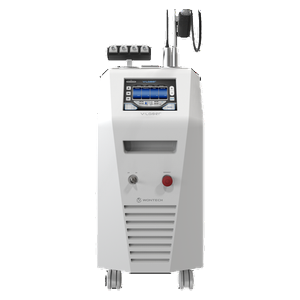 V-LaserV-Laser Vascular
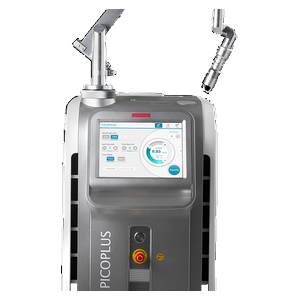 Pico ToningPicoPlus · LUTRONIC
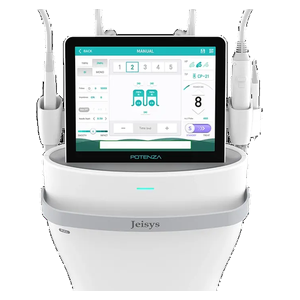 PotenzaJEISYS · microneedling RF
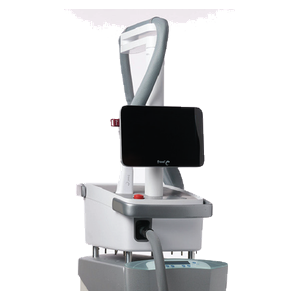 Erbium FractionalErbium Fractional
Frequently asked questions
Why do I keep getting pimples in the same spot?
Usually because that area has many oil glands, a pore there keeps clogging, or something keeps rubbing it, such as a mask, phone, hair or your hand. A small plug can also stay under the skin after a pimple settles and flare again. If a lump keeps returning to exactly the same place, have a doctor look at it, because it may be a cyst or another condition.
Does popping a pimple make it come back?
It can make things worse. Squeezing tends to push oil and bacteria deeper, can damage the follicle wall and raises the chance of a lasting mark or scar. Leave inflamed spots alone and ask a doctor about extraction or treatment instead.
Is chin and jawline acne hormonal?
Hormones often play a part, especially in adult women whose breakouts follow the menstrual cycle, but friction from masks, hands or phones can cause acne in the same area. If jawline acne comes with irregular periods or unwanted hair growth, tell a doctor, who may want to check your hormones.
Can wearing a face mask cause acne?
Yes. Heat, moisture and friction under a mask can trigger breakouts on the cheeks, chin and around the mouth, sometimes called maskne. A clean, well-fitting mask, simple non-irritating skincare and breaks from the mask when possible may help.
When should I see a doctor about acne?
See a doctor if acne keeps returning despite sensible skincare, if you have deep or painful lumps, if it is leaving marks or scars, or if it is affecting how you feel. Treating acne earlier may lower the chance of scarring.
Can I get acne treated during a short trip to Korea?
A doctor can examine your skin and start a plan, but acne usually needs treatment and follow-up over weeks to months. Before you start, ask how follow-up works after you fly home, and keep a written note of anything prescribed.
Plan your visit
Send a booking request or message us. We reply during clinic hours (Korea time), in the order received.