
Guide
Pigmentation and melasma treatment in Korea: how many sessions, and how much downtime?
It depends on the type of pigmentation. Distinct spots such as freckles and sun spots are often treated with a spot laser, and the small crusts typically come off in about 7 to 10 days; overall tone and melasma are usually treated with a course of low-energy pico toning, with sessions at least a week apart. Melasma is a chronic condition that is rarely resolved in a single trip, so treat a visit to Korea as the start of a plan rather than the whole plan.
Which kind of pigmentation is it?
Brown marks are not all the same, and the type decides the treatment. A doctor tells them apart by color, edges, pattern and location:
- Freckles — small light-brown dots, often since childhood, that darken in summer. They tend to return with sun, even after treatment.
- Sun spots (solar lentigines) — flat brown spots with clearer edges on the cheeks, temples and backs of the hands, building up over years of sun. They are a common reason for spot laser.
- Melasma — blurred, patchy brown areas, usually on both cheeks and sometimes on the forehead or upper lip. Hormones, UV and visible light, and heat all play a part. It is chronic and tends to flare.
- Post-inflammatory marks — brown marks left after acne, a burn, irritation or an overly strong treatment. Many fade on their own over months, and further irritation can keep them going.
Raised, rough brown spots are often not pigment in the usual sense and may need a different laser, such as erbium. Grey-blue patches deeper in the skin tend to need more sessions. Any spot that is new, growing, changing or bleeding should be checked medically before cosmetic treatment.
Pico toning, spot laser, erbium: what does each one do?
Most pigment plans combine a few tools. The names below are the ones used on ATTITUDE's price list.
| Treatment | Usually aimed at | Typical course (varies) | What you may notice afterwards |
|---|---|---|---|
| Pico Toning (PicoPlus, 1064nm) | Overall tone, scattered pigment, melasma-prone skin | A course of sessions, usually a week or more apart | Mild redness or warmth, often settling within hours |
| Pico Spot (532nm picosecond) | Individual spots such as freckles and sun spots | Often one session per spot; some spots need another | Spots darken, then small crusts that typically come off in about 7–10 days |
| Erbium YAG laser | Raised or rough spots; surface resurfacing | Depends on what is treated | Small scabs or redness for several days; pinkness can last longer |
| Genesis Toning (1064nm) | Redness and uneven tone alongside pigment | A course of sessions | Brief warmth or pinkness |
Toning passes a low-energy beam evenly over the face to break up pigment gradually, which is why it is planned as a course rather than one strong session. Spot laser delivers a stronger, targeted pulse to one spot at a time. The spot usually turns darker, a thin crust forms, and the crust lifts off as the skin underneath renews.
The two are often combined: spot laser for distinct spots, toning for the background tone. When redness is part of the picture, Genesis toning or a vascular laser may be added; see our guide to facial redness.
Melasma: can it be treated in one trip?
Honestly, rarely. Melasma is a long-term condition. Treatment may lighten it, but it tends to return with sun, heat and hormonal changes, so the realistic aim is control over time rather than one-off removal.
This shapes how lasers are used. Settings that are too strong, or sessions that are too close together, can irritate the skin and make melasma darker, and very frequent, repeated toning has been linked to uneven pale spots. A careful plan uses conservative settings and sensible intervals, and pauses when the skin needs a rest. Spot laser is generally used with caution on melasma areas, because it can trigger darkening.
A realistic plan for a visitor: start toning in Korea, protect the skin from the sun every day, follow the home care your doctor recommends (which may include prescription creams or tablets that need a doctor's supervision), and continue sessions on later visits. If you buy a 5- or 10-session course, ask how the remaining sessions work if you cannot come back soon.
Sessions, downtime and possible side effects
Toning sessions cannot be packed into one week: intervals are usually at least a week, often longer. On a short trip you may fit in one or two toning sessions; the rest of a course needs later visits. Spot laser is usually done once per spot, then checked after the skin has settled, often a month or more later.
A typical spot-laser timeline (it varies from person to person):
- Day of treatment: treated spots look darker and the area may be slightly red. A thin protective patch is often used.
- Days 2–10: small crusts form and typically lift off in about 7 to 10 days. Let them come off by themselves; picking can leave a mark.
- Weeks 2–8: the new skin may look pink, or temporarily a little darker. This is when sun protection matters most, because post-inflammatory darkening can appear.
Pico toning usually leaves only mild redness that settles within hours, and many people return to makeup the next day. Erbium leaves visible scabs for longer.
Common side effects of pigment lasers include redness, swelling, crusting and temporary darkening of treated areas; less commonly, lighter patches, blistering or scarring can occur, and pigment can return over time. Results and how long they last vary with skin type, sun exposure and lifestyle, and your doctor will explain what to expect for your skin.
Book spot laser early in your trip so the crusts have time to lift before you fly home or before important photos. Flying itself is usually not the issue; see flying after skin treatment.
Sun protection: what you do between sessions
Pigment treatment and sun exposure work against each other. Before treatment, avoid tanning, because tanned skin is more prone to darkening after laser. After treatment, daily protection matters even on cloudy days.
- Use a broad-spectrum sunscreen (SPF 30 or higher; many Korean products are SPF 50+ / PA++++) every morning.
- Reapply about every two hours outdoors, and after sweating or wiping your face.
- For melasma, a tinted sunscreen can help, because visible light also plays a part.
- Wear a hat and seek shade on sightseeing days; Seoul's summer sun is strong.
- Pause strong actives on treated skin (retinoids, peels, scrubs) until your doctor says you can restart.
Questions to ask before you book
Send these to any clinic before you decide:
- Which type of pigmentation do you think I have, and how will the doctor confirm it?
- Which device and wavelength will be used for each area? Can I see the device?
- How many sessions do you expect, at what interval, and how many fit into my trip?
- What will my skin look like over the following week, what side effects are possible, and when can I wear makeup?
- If a spot darkens afterwards, what should I do, and how do I contact you once I am home?
- Is the spot laser priced per spot, by size or per session, and what does the price include?
- Does the quote include VAT? See VAT on skin treatments in 2026.
- If I buy a course, how long do the sessions stay valid, and who performs the laser?
How ATTITUDE approaches this
At ATTITUDE Clinic in Seoul, AI skin analysis first records and organizes your skin data. That record supports the consultation; it does not provide a medical diagnosis or assessment. One of our two co-directors then looks at your skin with you and decides what you need, what you don't, and in what order — for example, whether spots should be treated now or tone should come first.
Every unit price is published on the price list, the same on every language version of this site and shown without VAT (10% is added at payment). In our opening event, until 31 Oct 2026, the Pigment Package (erbium YAG laser + toning + spot laser, up to 50 spots) has a regular price of KRW 600,000 and an opening-event price of KRW 490,000, VAT excluded.
Prices at ATTITUDE
All prices exclude VAT. Prices are the same on every language version of this site.
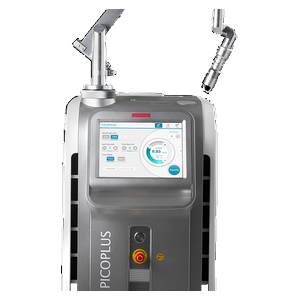 Pico ToningPicoPlus · LUTRONICPico SpotPico Spot
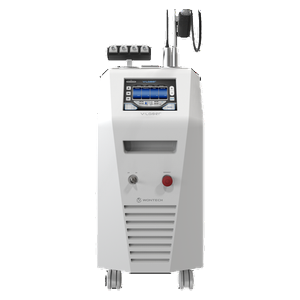 Genesis ToningV-Laser Genesis · WONTECH
Frequently asked questions
How many pico toning sessions do I need?
It varies with the type of pigment and your skin. Toning is usually planned as a course, with sessions a week or more apart; ATTITUDE's price list, for example, shows 1, 5 and 10 sessions. The doctor decides the number and interval after seeing your skin in person.
How long do scabs last after a pico spot laser?
Small crusts typically form within a day or two and come off by themselves in about 7 to 10 days. Don't pick them. The skin underneath may stay pink or slightly darker for some weeks, so daily sun protection matters.
Can melasma be removed in one trip to Korea?
Rarely. Melasma is a chronic condition that tends to return with sun, heat and hormonal changes. A trip can start a plan, usually low-energy toning plus daily sun protection and home care, that continues over months.
Can pico toning make melasma worse?
It can if settings are too strong or sessions too frequent: irritation may lead to darkening, and very frequent, repeated toning has been linked to uneven pale spots. That is why a doctor sets the energy and spacing for your skin and pauses treatment when needed.
How much is pico toning in Korea?
Prices vary between clinics and are often shown without VAT. At ATTITUDE Clinic in Seoul, Pico Toning is listed at KRW 99,000 for one session, KRW 450,000 for five and KRW 850,000 for ten, excluding 10% VAT, and the same prices appear on every language version of the site.
Plan your visit
Send a booking request or message us. We reply during clinic hours (Korea time), in the order received.