
Doctors’ Column
Does getting laser treatments often make your skin thinner?
Lasers used at settings and intervals that suit your skin are not generally considered to make it thinner; many are used precisely because they are thought to prompt the skin to build new collagen. A laser aims its energy at a target, such as pigment, small blood vessels or water in the surface layer, rather than heating the whole skin. Problems such as a sensitized skin barrier, lasting redness, darkening or uneven pale spots are linked to settings that are too strong for the skin, or to sessions repeated before it has recovered.
How does a laser work on the skin?
A laser is concentrated light of a single wavelength. In the skin, it is absorbed mainly by whatever absorbs that wavelength, and turns into heat or, with very short picosecond pulses, a mechanical shock wave. Choosing the wavelength, energy and pulse length to reach a target while sparing the skin around it is called selective photothermolysis, and it is the principle behind many cosmetic lasers. The three main targets are:
- Pigment (melanin): brown spots, freckles and uneven tone.
- Blood vessels (hemoglobin): redness and visible small vessels.
- Water in the surface layer: resurfacing lasers that renew rough texture and soften shallow scars.
That is why a laser for brown spots and a laser for redness are usually different devices, and why the word “laser” on its own says little about what a treatment does.
Why does it feel as if the skin is being burned?
The impression has a reason. Lasers use heat, and right after treatment the skin may be red, warm and stinging; some treatments leave thin crusts. These are expected signs of the skin reacting and repairing, and they usually settle within a known range of time.
The difference lies in how much heat is used, where and how often. Concentrated on a target at settings matched to the skin, heat is a treatment; spread too widely or used too strongly, it can become a burn. So whether a laser causes problems depends less on the type of laser than on whose skin it is used on, at what settings and how often.
When can lasers put a strain on the skin?
Concern is reasonable in a few situations:
- Settings too strong for the skin. Energy that is high for your skin type or condition raises the chance of burns, blisters and darkening.
- Sessions too close together. Repeating treatment before the skin has recovered can leave the barrier sensitized: stinging with skincare, dryness and redness that lingers. Very frequent, repeated toning has also been linked to uneven pale spots.
- Skin that is already tanned or irritated. A recent tan or sunburn, or skin irritated by strong actives, reacts more.
- Certain medicines and tendencies. Isotretinoin, medicines that increase sensitivity to light, and a tendency to cold sores or raised scars can change whether and when a laser is done.
A careful plan works around these: conservative settings, sensible intervals (for toning usually at least a week; for vascular and resurfacing lasers, several weeks), and a pause when the skin needs one. If your skin has become unusually sensitive, tell the doctor before the next session.
Which laser does what?
Within one face, brown spots come from pigment, redness from vessels and rough texture from the surface. The useful question is not which laser is stronger, but where your concern comes from. These are the lasers on ATTITUDE's price list:
| Laser | Main target | Commonly considered for | Typical signs afterwards (vary) |
|---|---|---|---|
| Pico Toning (PicoPlus, 1064nm) | Pigment | Uneven tone, scattered pigment, melasma-prone skin | Mild redness, often settling within hours |
| Pico Spot (532nm picosecond) | Pigment | Individual spots such as freckles and sun spots | Spots darken, then small crusts that typically come off in about 7–10 days |
| Genesis Toning (1064nm) | Even, low-energy warming of the skin | Diffuse redness, texture and tone | Brief warmth or pinkness |
| V-Laser (532nm, vascular) | Blood vessels | Redness and visible small vessels | Redness or swelling for a few days; a bruise can take 1–2 weeks to fade |
| Erbium Fractional | Water in the surface layer | Rough texture, enlarged-looking pores, shallow scars | Redness and fine crusting or roughness, often for several days to about a week |
If several concerns overlap, treating them in a planned order rather than all at once is one way to limit the load on the skin. For more detail, see our guides to pigmentation and redness, and the column on pigment, redness and scars.
What are the side effects, and how do you plan around them?
Even at appropriate settings, lasers have side effects. Common ones are redness, warmth, swelling, stinging and, with spot and resurfacing lasers, crusting; temporary darkening of treated skin (post-inflammatory pigmentation) can follow, especially in darker or tanned skin, and vascular lasers can cause bruising. Less commonly, blistering, lighter patches, infection or scarring can occur, and treated pigment can return over time. Your doctor will explain the risks of the laser and settings planned for you. If redness or heat lasts longer than expected, or pain gets worse, contact the clinic rather than waiting.
Aftercare is part of the result: sunscreen, reapplied about every two hours outdoors; a plain moisturizer; and, for as long as your doctor advises, no saunas, scrubs or strong actives.
If you have a wedding, photos or a flight coming up, tell the doctor the date. Working back from it, the doctor can choose the type, strength and timing, and avoid a first-ever treatment right before the day. Conservative margins before flying are about 1 day or more after toning, 3–7 days after the V-Laser, about 7 days or more after erbium fractional, and about 7–10 days after Pico Spot, while the crusts come off. See flying after skin treatment.
Tell the doctor about recent sun exposure, the medicines and skincare you use, and any time your skin reacted badly to a treatment before. The same laser may be timed or set differently because of them.
How ATTITUDE approaches this
At ATTITUDE Clinic in Seoul, an AI skin analysis first records your skin. The analysis tools record and organise information to support the consultation; they do not provide a medical diagnosis. One of our two co-directors looks at your skin with you and decides with you what you need, what you don't, and in what order, including the settings and spacing that suit your skin and your schedule. Lasers are listed per session (toning also as 5- and 10-session courses; Pico Spot per spot) on our price list, the same on every language version of this site, VAT excluded; 10% VAT is added at payment. For numbing and anything else not covered here, ask us when you send a booking request.
Prices at ATTITUDE
All prices exclude VAT. Prices are the same on every language version of this site.
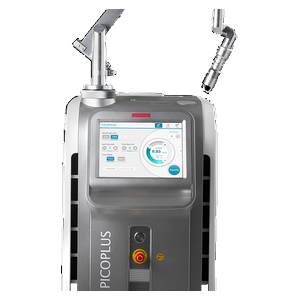 Pico ToningPicoPlus · LUTRONICPico SpotPico Spot
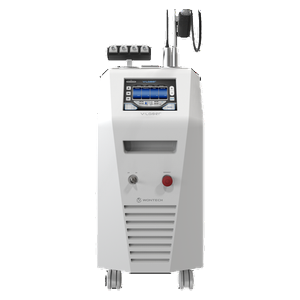 Genesis ToningV-Laser Genesis · WONTECHV-LaserV-Laser Vascular
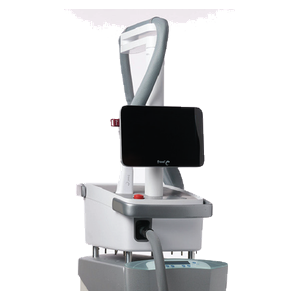 Erbium FractionalErbium Fractional
Frequently asked questions
Does laser toning thin your skin?
Toning at appropriate settings and intervals is not generally considered to thin the skin. Very frequent, repeated toning has been linked to uneven pale spots and sensitivity, which is why sessions are usually spaced at least a week apart and adjusted to how your skin responds.
Do lasers burn your skin?
Lasers use heat, but they are designed to focus it on a target such as pigment, blood vessels or surface water rather than on the whole skin. Redness, stinging or thin crusts afterwards are expected reactions; burns are a possible but uncommon side effect, more likely when settings are too strong for the skin.
How often can you get laser treatment on your face?
It depends on the laser and your skin. Toning is usually done at least a week apart, while vascular and resurfacing lasers are commonly spaced several weeks apart. Your doctor decides the interval and adjusts it to how your skin recovers.
Does laser treatment hurt?
It is usually felt, as snapping, prickling or heat, and how much depends on the laser, the settings, the area and your sensitivity. Ask the clinic whether numbing is used for the treatment you are considering, and tell the doctor if you are sensitive to pain.
How soon can I fly after laser treatment?
It depends on the laser. Conservative margins are about 1 day or more after toning, 3–7 days after a vascular laser such as the V-Laser, about 7 days or more after erbium fractional and about 7–10 days after spot laser, while the crusts come off. Ask your doctor what suits your plan.
Can I get laser treatment before my wedding?
Often yes, if it is planned early. Tell the doctor the date: starting well ahead leaves room to adjust settings and recover, and a first-ever treatment right before the day is generally avoided.
Plan your visit
Send a booking request or message us. We reply during clinic hours (Korea time), in the order received.