
Doctors’ Column
Can enlarged pores really get smaller again?
Not back to “no pores”: pores are a normal part of the skin, and their number and basic size are largely inherited. But pores often look less noticeable once the reason they stand out is addressed, whether that is excess oil, loss of firmness around them or scarring from past acne. Skincare helps with oil and buildup; firmness and scarring usually need in-clinic treatment over several sessions, and how much change you see varies.
Why do pores look bigger?
Every hair follicle opens at the surface as a pore, and the oil gland attached to it releases sebum through that opening. Everyone has pores; the concern is when they become noticeable. Three things usually cause that, alone or together:
- Excess oil. Where oil glands are large and active, mainly the nose, forehead and central cheeks, the opening is stretched, and oil mixed with dead skin cells can fill it and darken at the surface as blackheads.
- Loss of firmness. With age and sun exposure, the collagen and elastic fibers that support the skin around each pore decline. The opening sags and casts a small shadow, often looking oval or teardrop-shaped on the cheeks.
- Damage from inflammation. Repeated or deep acne, and squeezing, can leave the pore wall uneven, so the pore stays wider after the inflammation has gone. See why acne keeps coming back in the same spot.
Genetics set the starting point: some people have thicker, oilier skin and visible pores from their teens. Sun exposure adds to all three over time.
Can pores be shrunk back to how they were?
Honestly, not completely. No cream or treatment removes pores, and their number and inherited size stay much the same. What can change is the condition of the skin around them:
| What we are talking about | Can it change? | What is commonly used |
|---|---|---|
| Number and inherited size of pores | Largely no | Nothing removes pores; treatment works on the other three rows |
| Oil and buildup in the pore | Often, with steady care | Daily cleansing, salicylic acid, a retinoid; extraction of blackheads |
| Firmness around the pore | Partly, and gradually | Sun protection, a retinoid, in-clinic treatments that stimulate collagen |
| Uneven pore walls from scarring | Partly, over several sessions | Microneedle RF, fractional laser |
So the realistic goal is pores that look less noticeable, not pores that disappear. Agreeing on that goal at the start makes it easier to judge whether a plan is working.
What kind of enlarged pores do you have?
Enlarged pores are not all alike. Doctors often describe them by what drives them, which helps decide where to start. This is a practical description rather than a formal classification:
- Oil-related: round, open pores on the nose and T-zone, often with blackheads.
- Sagging-related: oval or elongated pores on the cheeks that become more visible with age.
- Scar-related: irregular, uneven pores in areas that had repeated acne or were squeezed.
- Inherited: pores visible from a young age, linked to skin thickness and oiliness rather than to aging.
- Mixed: two or more of the above, which is common.
What you see in the mirror is only a rough guide. The same T-zone can need a different approach depending on whether oil or inherited structure is the main factor, so the doctor looks at your skin before suggesting anything.
What can skincare do for pores?
Skincare matters, mainly for the oil-related part:
- Cleansing morning and evening with a mild cleanser removes surface oil and buildup. Scrubbing hard irritates the skin without shrinking pores.
- Salicylic acid can loosen oil and dead cells inside the pore.
- A retinoid (retinol, or a prescription retinoid) helps the skin renew and, used steadily, may make pores look less prominent over months. It can cause dryness and irritation at first, and retinoids are generally avoided in pregnancy.
- “Pore-tightening” toners and primers can make pores look smaller for a few hours, but they do not change the pore itself.
- Daily sunscreen slows the sun damage that weakens the skin around pores.
If pores are enlarged by loss of firmness or by scarring, skincare alone usually brings limited visible change, and in-clinic treatment is what is commonly considered next.
Which treatments are used, and what are the side effects?
The choice depends on the type, and treatments are often combined:
- Potenza (microneedle RF) carries radiofrequency heat through fine needles into the deeper skin, which is thought to prompt gradual collagen remodeling. It is commonly considered for scar-related, sagging-related and mixed pores, usually as a course of about three or more sessions, about four weeks or more apart. See our Potenza guide.
- Erbium fractional laser removes tiny columns of skin from the surface down, so the surface renews and texture can become smoother. It is used for rough texture and uneven pores, sometimes together with Potenza.
- Injectable skin boosters, such as Juvelook Skin or Rejuran, are sometimes added to support overall skin quality and firmness. See skin boosters compared.
- Skin toxin, a diluted botulinum toxin injected superficially, is sometimes used in Korea for oiliness and the look of pores; its effect wears off over time. See how it is priced.
Side effects are possible with all of these. After microneedle RF or fractional laser, redness, swelling, pinpoint marks, dryness and fine crusting are common and usually settle within a few days to about a week. Temporary darkening of the skin (more likely in darker skin types), breakouts and, rarely, burns, infection or scarring can occur. Injections can cause bumps, redness, swelling and bruising, and less commonly lumps, infection or allergic reactions; skin toxin can occasionally affect nearby muscles for a while, for example making a smile look uneven. Your doctor will explain the risks of what is suggested before treatment.
Plan your trip with recovery in mind. Conservative margins before a flight are 3–5 days or more after Potenza, about 7 days or more after erbium fractional, and at least 3 days after a skin booster. See flying after skin treatment. Before treatment, tell the doctor if you take or recently took isotretinoin, tend to form raised scars, or have active acne, which the doctor may want to treat first.
How ATTITUDE approaches this
At ATTITUDE Clinic in Seoul, an AI skin analysis first records your skin. The analysis tools record and organise information to support the consultation; they do not provide a medical diagnosis. One of our two co-directors looks at your skin with you and decides with you what you need, what you don't, and in what order, for example whether active acne or oiliness should be dealt with before texture. Potenza is listed by tip type, erbium fractional per session and skin boosters per cc or vial on our price list, the same on every language version of this site, VAT excluded; 10% VAT is added at payment. The Pore Package (Potenza + exosomes + erbium fractional) is an item in our opening event until 31 Oct 2026, shown with the regular price and the event price, VAT excluded.
Prices at ATTITUDE
All prices exclude VAT. Prices are the same on every language version of this site.
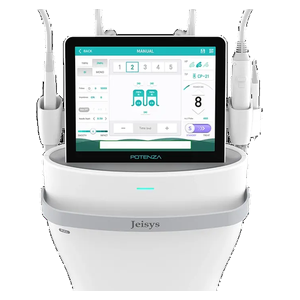 PotenzaJEISYS · microneedling RF
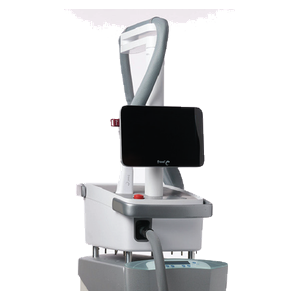 Erbium FractionalErbium Fractional
 Juvelook SkinJUVELOOK Skin
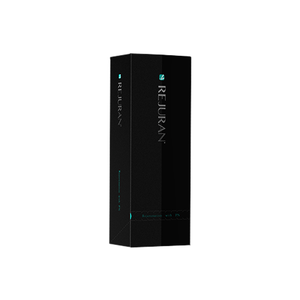 Rejuran HealerRejuran Healer
Frequently asked questions
Can pores be removed completely?
No. Pores are a normal part of the skin, and no cream or treatment removes them. Treatment aims to make them less noticeable by addressing oil, firmness or scarring, and how much change you see varies.
Do pore-minimizing products work?
They can make pores look smaller for a few hours and help keep oil and buildup down, but they do not change the pore itself. For pores enlarged by loss of firmness or by scarring, skincare alone usually brings limited change.
Do pores get bigger with age?
They tend to look bigger, because the collagen and elastic fibers around each pore decline with age and sun exposure, so the opening sags. Daily sunscreen and, if your skin tolerates it, a retinoid may help slow this.
Does squeezing blackheads make pores bigger?
It can. Squeezing can damage the pore wall and leave it wider and uneven after it heals, especially with inflamed spots. Leave inflamed spots alone and ask a doctor or trained professional about extraction.
What treatments are used for large pores in Korea?
Common options include Potenza (microneedle RF), erbium fractional laser, injectable skin boosters and skin toxin, often combined over several sessions. Which one, if any, suits you depends on why your pores stand out, and the doctor decides after examining your skin.
How many sessions do enlarged pores need?
Microneedle RF is usually planned as about three or more sessions, about four weeks or more apart, and change develops gradually over months. If you can visit Korea only once, ask what a single session can and cannot do.
Plan your visit
Send a booking request or message us. We reply during clinic hours (Korea time), in the order received.