Lifting Consultations: Check the Device Type, Energy, and Dosing First
A practical checklist for lifting consultations: confirm the energy type and handpiece, treatment area and dosage, session count and interval, what the cost includes, and pain and recovery guidance.
Written by ATTITUDE Clinic Editorial Team
Search for lifting treatments and you first see device names and reviews, but once you sit down in the consultation room it's hard to know what to ask first. You may wonder why the same treatment leaves one person satisfied after a single session while another notices no change. This article walks through, in order, what separates results in lifting and which units to confirm at a consultation.
The bottom line first
What to confirm at a consultation is not just a device name. You should also look at which energy type the device uses, which handpiece is applied to which area if there are several, the per-session dosage unit and range, the total number of sessions and interval, and what the cost includes. The American Academy of Dermatology advises that cosmetic consultation cover expected results and risks, alternatives, the number of sessions and time required, recovery and return to daily life, preparation and aftercare, and cost (AAD consultation guide). This list tells you what to ask; which approach fits your skin is decided during the consultation.
Why check the device first when it's all called "lifting"?
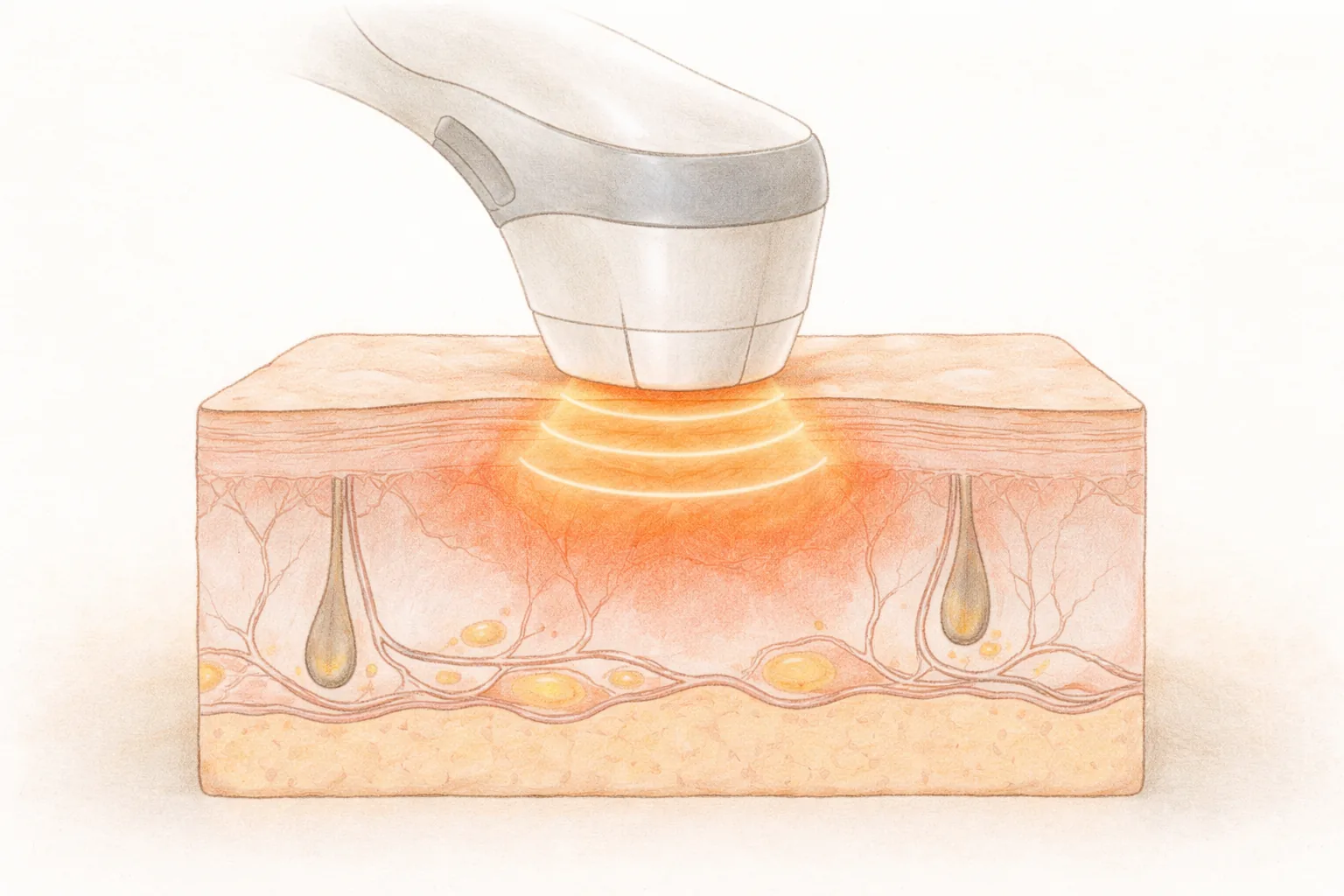
The word lifting describes a result, not which energy is used. Radiofrequency (RF, where electrical current creates heat as it passes through tissue) and ultrasound (HIFU, which focuses sound waves at a point and converts them to heat) both use heat but deliver it differently. According to the AAD firming and sagging skin guide, radiofrequency warms tissue beneath the skin when the device is placed on it, while ultrasound sends heat deeper; both aim to stimulate the body's own collagen production.
On the ATTITUDE Clinic price list, lifting treatments are also grouped by energy type (treatments and pricing). Ultherapy and Shurink Universe (HIFU) use HIFU ultrasound; Thermage FLX and XERF (monopolar RF) use monopolar radiofrequency; Onda (microwave lifting) uses microwaves; Titanium lifting (diode laser) uses a 3-wavelength laser; and Potenza (RF microneedling) delivers radiofrequency directly into the dermis via fine needles. So rather than comparing names when asked "Is lifting the same as Thermage?", it's more accurate to compare the energy type and delivery method.
Delivery method also shapes results. Non-invasive radiofrequency warms tissue below the skin by placing the device on the skin, while minimally invasive radiofrequency inserts a thin tube or needle to deliver heat where it's needed (AAD firming and sagging skin guide). Even with the same radiofrequency, whether the skin is held by vacuum suction or a needle is inserted directly changes the depth targeted and the recovery burden. So why is it hard to judge by device name alone? Because the device is a tool, and how much energy goes to which depth is set in the treatment plan.
"It tightens — but how much?"
Non-surgical lifting does not give the same result as surgical lifting. Non-invasive treatments appear gradually and look natural, but the degree of change is moderate, and even minimally invasive treatments don't lift as much as surgery, according to the academy's explanation (AAD firming and sagging skin guide). In exchange, the recovery burden is lower.
Four factors decide results: the depth the energy reaches, the intensity, the treatment interval, and your current skin condition. Even with the same device, how wavelength, energy, treatment area, and interval are set changes the experience — and this holds for lasers too (laser column). When sagging is significant, the range non-surgical treatment can help may narrow, and the same source notes that maintaining weight, not smoking, and avoiding UV exposure help preserve results.
Evaluation timing differs by method. The academy explains that ultrasound-based treatments usually show gradual change 2–6 months after a single session; radiofrequency-based treatments give some tightening right after and show results best at about 6 months; and lasers using deep heat may need 3–5 sessions, appearing gradually over 2–6 months after the last one. This is a general description of treatment methods, not a specific brand, so it's better to decide at the consultation when and under what conditions to take comparison photos for the device you receive.
How far should you ask about pain and recovery?
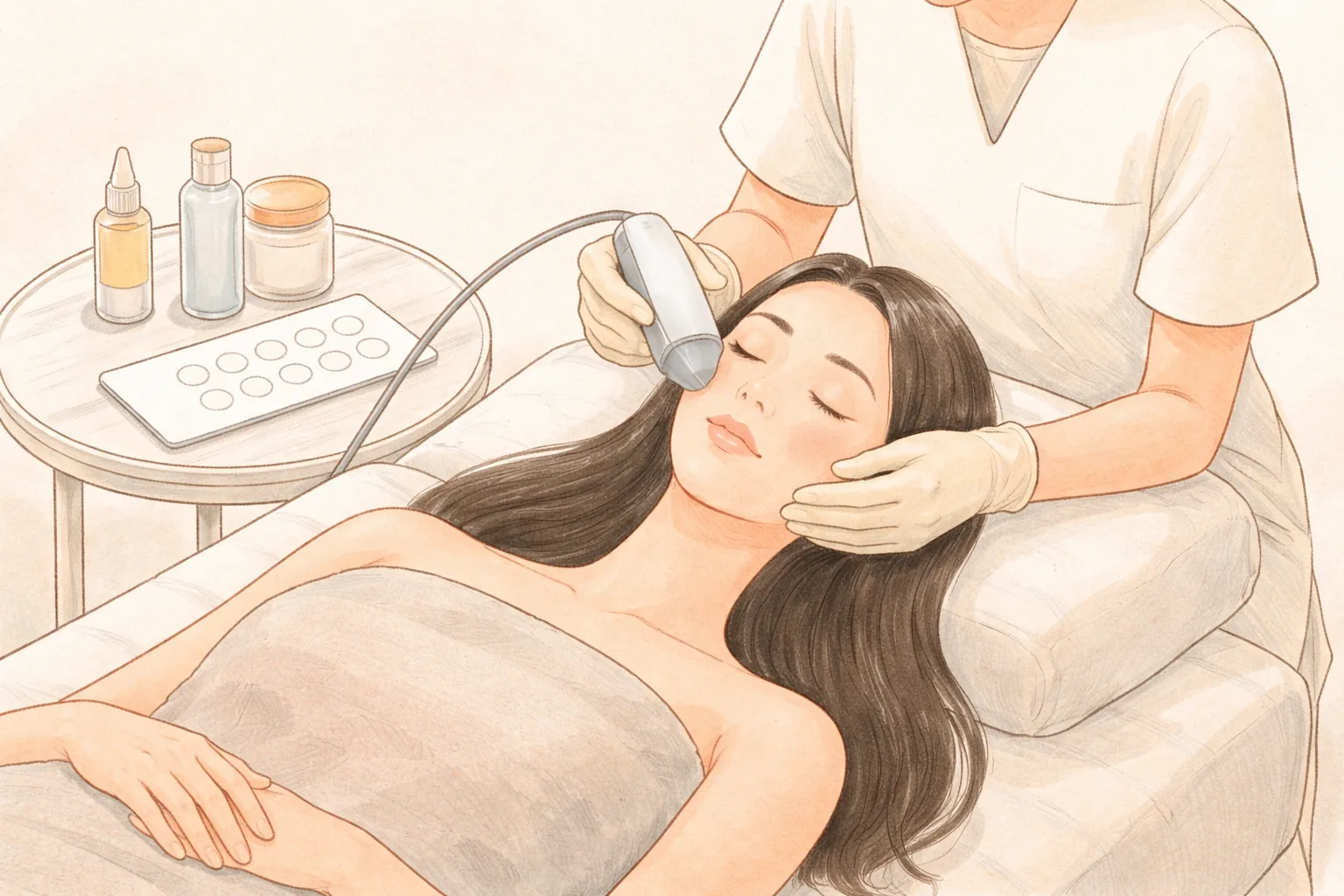
Non-invasive treatments may cause some discomfort during the procedure but usually stop there, and temporary redness and swelling are common afterward. Makeup is often possible right after, and most treatments finish within an hour, according to the same explanation (AAD firming and sagging skin guide). Minimally invasive methods may use sedation and require a few days of recovery.
The degree of pain depends on energy intensity, skin thickness at the treatment area, and individual sensitivity. Even at the same intensity, cheeks, jawline, and neck can feel different. At ATTITUDE Clinic, topical anesthesia is used as needed to reduce discomfort, and if the sensation becomes hard to bear during the procedure, telling the doctor right away allows the intensity to be adjusted (laser column). What to avoid during recovery, and when you can exercise or use a sauna, varies by method, so it's most accurate to be guided at the consultation.
Table 1 How far should you ask about pain and recovery?
Sound waves focused at a point and converted to heat
Deep skin layers and contour
Number of shots, treatment area, time per session
Monopolar RF lifting (Thermage FLX, XERF)
Radiofrequency current
Warming tissue below the skin to stimulate collagen
Number of shots, pain control method, recovery guidance
Microwave and laser lifting (Onda, Titanium)
Microwaves, 3-wavelength laser light
Facial and body lines, skin texture
Dosage in kJ units and treatment area
Microneedle radiofrequency (Potenza)
Radiofrequency directly into the dermis via fine needles
Pores and scar texture
Tip type, treatment area, recovery period
Injectable treatments (skin booster, etc.)
Delivered directly into the skin base
Hydration and texture, volume by area
How many cc or vials, whether combined
Swipe sideways to see the whole table.
In short Even with the same "lifting" label, the energy used and delivery method differ, as do the layers targeted and the recovery burden. At a consultation, confirming energy type, area, dosage unit, total sessions and interval, and what the cost includes helps more than the treatment name when building an actual plan.
If this applies to you
If you have a fixed date like a wedding or shoot
A first-time treatment right before an event risks redness or sensitized skin overlapping with your schedule (laser column). Starting earlier with the date in mind gives more options for adjusting intensity and interval. If you tell the clinic your wedding date and shoot schedule at the consultation, they can plan backward from those dates.
If you want steady maintenance
Rather than a strong single session, keeping to your skin's recovery interval and maintaining periodically puts less burden on your skin. It's better to set a goal and place only the necessary treatments at the right times. Even with the same device, how intensity and interval are set changes the burden on your skin.
If your skin is sensitive or prone to redness
If cosmetics sting or your skin has become unusually sensitive, be sure to mention it before treatment. In this state, adjusting intensity and timing comes first, and repeating before recovery ends can burden the skin barrier (laser column). If you are pregnant, have a skin infection, or take certain medications, the treatment may not be suitable, so please check at the consultation.
If you are a short-stay international visitor
If your stay is fixed, redness or dryness right after treatment can affect your next plans. Tell the clinic your return date and remaining schedule, and they can discuss intensity and type accordingly. Booking involves an application and a confirmation, finalized after the clinic contacts you, and same-day requests are possible from slots 1 hour later, so it's good to check the last reception time in advance (consultation and booking guide).
Let the clinic know before your consultation Tell them in advance how much UV exposure you've had recently, medications you take (including blood thinners), skincare ingredients you use, any past experience of sensitive skin after treatment, whether you are pregnant or breastfeeding, and important dates like a wedding or shoot. Even for the same treatment, timing and intensity change based on this information.
How ATTITUDE Clinic proceeds
AI skin analysis record — Records your current skin condition including pigment, redness, texture, and pores, and based on that record the doctor judges the cause of your concern. The analysis tool records and organizes information to support the consultation; it is not a medical diagnosis.
Planning the direction through a doctor consultation — Adds your schedule, pain sensitivity, and skin history to the analysis record to decide the treatment type, intensity, and timing together. At this stage, which energy device is used on which area, and how the total sessions and interval are set, are also decided.
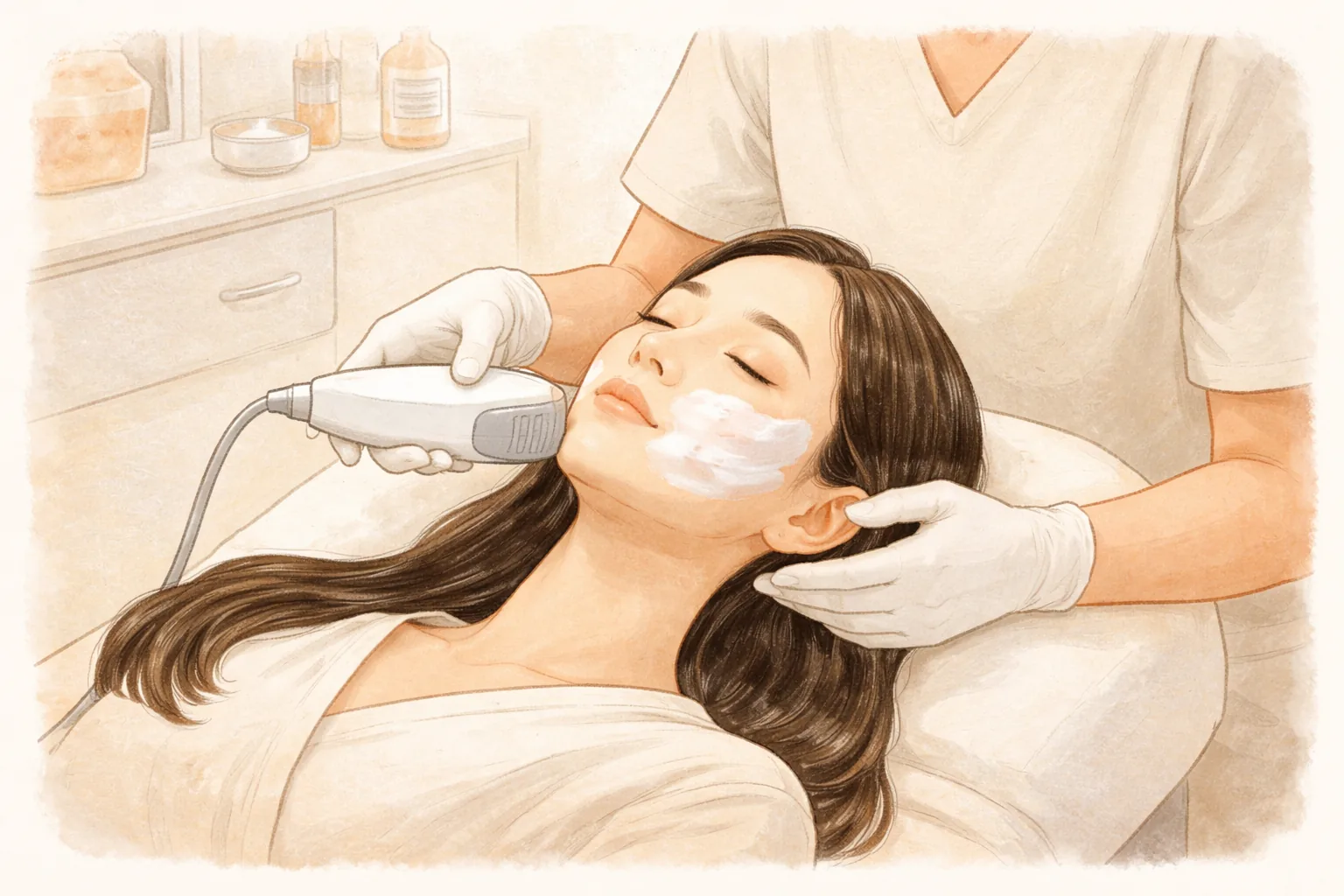
Treatment performed directly by the doctor — Topical anesthesia is used as needed to reduce discomfort, and the doctor performs the treatment directly. Under the principle that stronger and more frequent is not better, treatments beyond what is needed are not recommended.
Recovery and progress check — Guides sun protection and moisturizing, and adjusts the next treatment interval based on progress. The principle of genuine products, exact dosage, and fair pricing applies to lifting as well.
The devices used in this flow include Ultherapy, Shurink Universe, Thermage FLX, XERF, Onda, Titanium lifting, and Potenza, each using a different energy type (treatments and pricing). Whether your concern comes from pigment, sagging contour, or skin texture changes the choice and combination.
Aftercare and side effects
Soothing — On the day of treatment, do not rub or massage the treated area strongly, and if heat remains, calm it with the method you were guided on.
Moisturizing — Since skin is temporarily sensitive, use a low-irritation moisturizer. Avoid exfoliation or scrubs for the period you are guided on.
Sun protection — Apply sunscreen thoroughly before going out to prevent pigmentation (laser column).
Progress check — Check when redness and swelling subside and when results begin to show, at the planned timing.
Common reactions are redness, heat, swelling, and stinging. If a laser treating the skin surface was done the same day, thin crusts may form, and if skin is darkened or burned, temporary pigmentation can occur. Rarely, blisters, hypopigmentation, infection, scars, or re-pigmentation can occur, and minimally invasive methods may have a longer recovery period (AAD firming and sagging skin guide). If redness or heat lasts longer than expected or pain worsens, don't endure it — visit the clinic to have it checked.
Frequently asked questions
Are lifting, Thermage, and Shurink Universe the same treatment?
They can't be grouped under one name. Thermage FLX and XERF use radiofrequency current, while Ultherapy and Shurink Universe use ultrasound (treatments and pricing). Radiofrequency warms tissue below the skin by placing the device on it, while ultrasound sends heat deeper, so the layers targeted differ. Add delivery methods like vacuum suction or fine needles, and even radiofrequency treatments differ among themselves. Ultimately, checking which energy reaches which layer helps more than comparing names when building a plan.
How much does it hurt?
It varies with energy intensity, skin thickness at the area, and individual sensitivity. Non-invasive methods may cause discomfort during the procedure but usually stop there, and minimally invasive methods may use sedation (AAD firming and sagging skin guide). Thin areas like the jawline or neck can sting more even at the same intensity. Topical anesthesia is used as needed to reduce discomfort, and if it becomes hard to bear during the procedure, telling the doctor right away allows the intensity to be adjusted.
When do results show, and how are they evaluated?
It depends on the method. Ultrasound-based treatments usually show gradual change 2–6 months after a single session; radiofrequency-based treatments give some tightening right after and show results best at about 6 months; and lasers using deep heat may need 3–5 sessions, appearing gradually over 2–6 months after the last one (AAD firming and sagging skin guide). Since this is a general description of treatment methods, the evaluation timing for your device is best set at the consultation. When comparing, taking photos under the same lighting and angle helps.
How are the interval and number of sessions decided?
Rather than being fixed uniformly, they are adjusted based on laser type, purpose, and skin condition as progress is observed (laser column). Repeating before recovery ends can burden the skin barrier, so the next interval is set after checking how much the previous treatment's reaction has subsided. When combining methods, it's important to arrange them so the end points don't overlap, and the order is decided at the consultation.
What should I look at when choosing a clinic?
There are a few things to check beyond the list of devices owned. It's worth asking how much experience the person performing the treatment has with it, and whether they have treated patients with your skin tone and age group (AAD consultation guide). It also helps to see whether they first check where your concern comes from, recommend only necessary treatments without imposing a number or intensity, sufficiently explain risks, the recovery schedule, and aftercare, and have a channel to check with if you feel uncomfortable after treatment. The same source notes that results depend heavily on the skill and experience of the person performing the treatment.
At a glance
Table 2 At a glance
Item
Key point
Check first at consultation
Energy type, handpiece, area, dosage unit — more than the device name
Factors deciding results
Depth reached, intensity, treatment interval, current skin condition
Pain
Varies with intensity, skin thickness at the area, individual sensitivity
Cost check
Broken down by treatment, area, dosage, and session unit; confirm the total including whether VAT is separate
After treatment
Soothing, moisturizing, sun protection, progress check at the planned timing
When to return
If redness or heat lasts long or pain worsens, visit without waiting
Reactions and intervals vary with individual skin thickness, recovery speed, and lifestyle. So even with the same device, plans are built differently for each person, and that judgment is made by a doctor who has examined the skin at the consultation.
This article offers general health information. It is not a substitute for diagnosis or treatment based on your own condition, so please talk through your situation with a doctor.