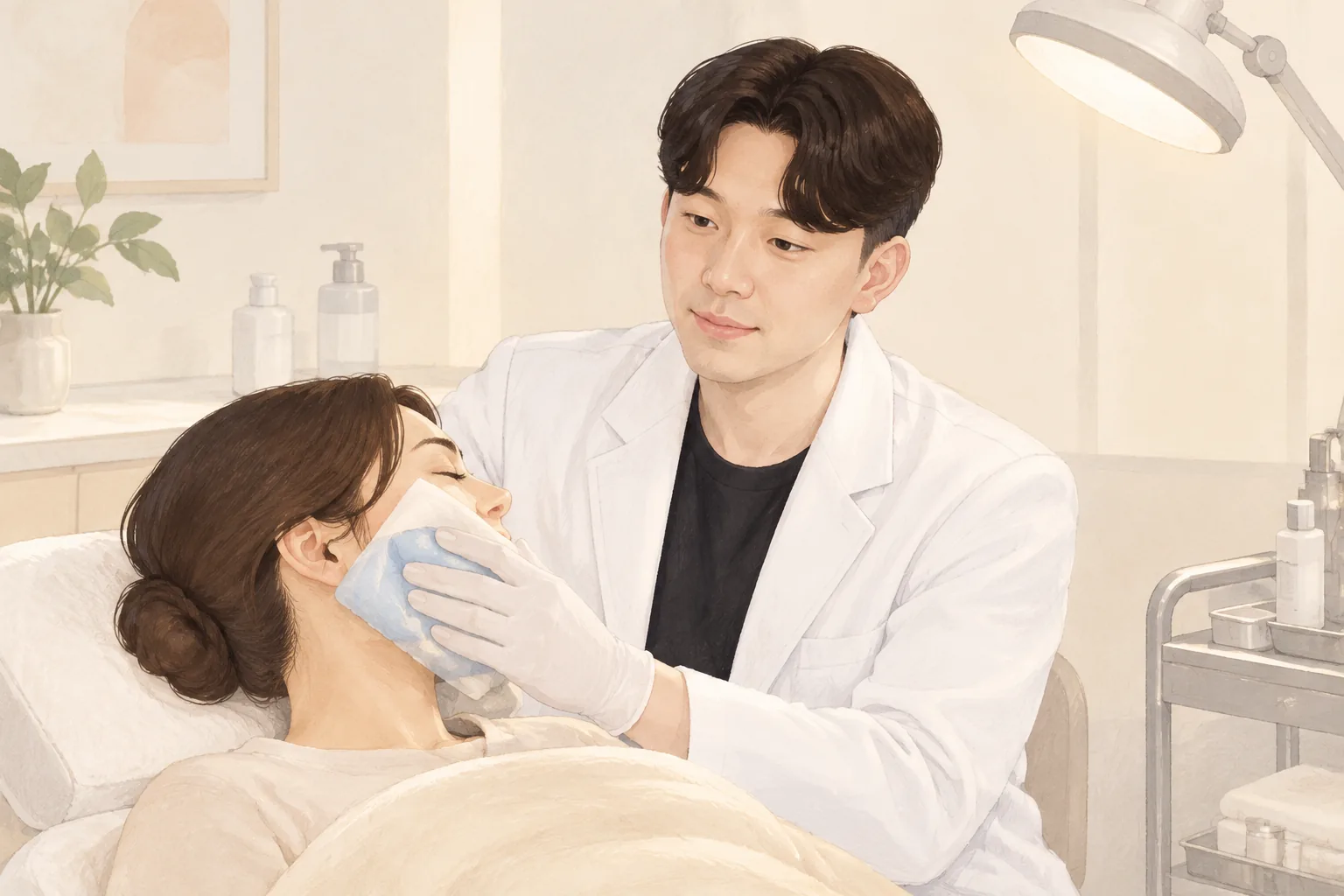
Onda and Shurink Together: What Sets the Order and Interval for HIFU Treatment
Planning Onda and Shurink together? Learn what overlaps, what to separate, and how to decide the order and interval for HIFU treatment, plus aftercare.
Written by ATTITUDE Clinic Editorial Team
If you're thinking about getting Onda and Shurink together, two questions come up first: can your skin handle two treatments in one day, and if it can, which one should come first? These two treatments deliver heat to the skin in different ways, so by looking at which layers overlap and which don't, the order and interval become a bit clearer.
The bottom line first
Combining Onda and Shurink is possible. Onda uses microwave energy and Shurink uses high-intensity focused ultrasound, so the way heat is delivered differs, and the points where stimulation concentrates in the skin are not the same. However, whether to do them on the same day or with an interval of a few days to a few weeks depends on your skin's healing capacity and schedule. It's hard to apply a fixed rule for order and interval; it's better to decide in consultation after examining your skin. Rather than comparing which is better, the first question is which layer of stimulation your skin needs right now.
How does Onda deliver heat?
Onda is a lifting device that uses microwaves (electromagnetic waves with short wavelengths). As the electromagnetic waves pass through tissue, they turn into heat, which stimulates collagen (the protein that supports the skin). ATTITUDE Clinic treatment guide also describes Onda as a lifting treatment using microwaves, with separate face and body sections.
Shurink works differently. It uses high-intensity focused ultrasound (HIFU), which focuses ultrasound at a set depth in the skin like a magnifying glass concentrating sunlight, creating small thermal points. These thermal points reach from the dermis to the SMAS layer. The SMAS layer is a thin membrane deeper than the dermis that supports facial muscles and skin; as we age, its loosening is considered one cause of sagging. Even within the same ultrasound family, the intensity of stimulation varies with the number of shots and the power.
When you place the two devices side by side, the difference becomes clear. Shurink deposits heat at set depths like dots, while Onda's different wavelength creates a spread and range of heat that doesn't overlap with Shurink in some layers. So rather than choosing one over the other, the real planning question is which layer to assign to which device.
What happens in the skin when you combine them?
Both treatments work by gradually initiating collagen remodeling through heat. When the layers reached by heat differ, the area stimulated at once broadens, but if stimulation overlaps in the same area, swelling and heat sensation last longer. How much you overlap areas determines the recovery period.
Saying that combining them doubles the effect is not accurate. The two devices are more like a division of labor for different layers, and what you feel depends on skin thickness and the ability to produce new collagen. According to the American Academy of Dermatology, there are several non-surgical ways to tighten skin, and which method suits you is decided by looking at your skin condition together. Each treatment has its own risks, so that's something to confirm in consultation.
There's another common misconception here: the idea that more heat is better. Increasing power increases pain and leaves redness longer. What matters more than power is how much stimulation your skin can currently tolerate and recover from.
What determines the order and interval?
Five factors determine it: whether sagging is deep or widespread, how sensitive your skin is, how much downtime (recovery time) you can afford, the device, shot count, power, date, and response of previous treatments, and how sensitive you are to pain. Even with the same combination, if these five factors differ, the plan changes.
If done on the same day, recovery overlaps. Swelling and heat sensation rise at once, which is burdensome if your schedule is tight the next day. If done separately, you can see the response to the first treatment and adjust the power of the second. It's hard to say which is better; the ATTITUDE Clinic column also explains that even with the same combination, the recovery process and experience differ depending on whether it's done at once or separately.
The interval is similar. The next step is set based on when common reactions subside, and the repeat interval for Shurink may be set around 1 year after observing progress. Onda sets the range by energy amount (kJ) for face and body separately, while Shurink uses shot count, so the total must be coordinated in consultation.
Table 1 What determines the order and interval?
Treatment
Energy method
What it does in the skin
What to check in consultation
Shurink
High-intensity focused ultrasound (HIFU)
Creates small thermal points at set depths to stimulate dermis to SMAS layer
Depth of sagging, shot count, pain sensitivity
Onda
Microwave
Delivers heat with a different wavelength from ultrasound and radiofrequency
Face or body, required energy amount (kJ)
Thermage
Radiofrequency (RF)
Broadly heats dermis to subcutaneous fat
Broad-area elasticity, skin texture
Ultherapy
High-intensity focused ultrasound (HIFU)
Creates thermal points at depths per cartridge to stimulate deeper layers
Deep sagging, areas to focus on
Swipe sideways to see the whole table.
In summary Onda and Shurink have different wavelengths, so they are a combination with little layer overlap. Whether to do them on the same day or separately is decided by recovery allowance and previous treatment response, and total energy is coordinated in consultation.
How much pain and recovery?
Lifting treatments vary widely in pain even with the same device. The reasons are energy power and nerve density by area. Higher power and more shots in one area mean stronger stimulation, and areas close to bone with dense nerves like the jawline, cheekbones, forehead, and eye area feel more sensitive than thicker areas like the cheeks. If you're worried about pain, it's good to mention anesthesia method and power adjustment in consultation beforehand.
For a day or two right after treatment, subtle redness and mild heat sensation remain from heat stimulation. During this time, the skin's barrier is temporarily weakened, so you need to be more careful about UV than usual to recover without pigmentation. It's safer to avoid saunas, intense exercise, and alcohol on the day. Most people can return to daily life like makeup from the next day.
In these situations
When a ceremony or photo shoot is a few weeks away
If you have both treatments on the same day, swelling and heat sensation overlap, and the period when your facial line looks different from usual lengthens. If you have a fixed schedule, it's reassuring to do one first, see the response, then schedule the other. Telling the consultation the shoot date and recovery period in numbers makes planning easier.
When concerns differ: deep jawline vs. broad cheeks
If concerns differ by area, there's a reason to divide devices. Deep layers can be handled by focused ultrasound, and broad area elasticity by another method. Which area to assign to which device is decided by looking at the skin, and the judgment to omit unnecessary treatments is made together.
Sensitive, easily reddened skin
For skin that reacts strongly to heat stimulation, lower the power and approach area by area. Rather than filling the total from the start, it's safer to see the response and decide the next power. If redness tends to last long, you should mention that history before treatment.
Short-stay international visitors
If your schedule is short, same-day treatment with overlapping recovery is burdensome. Set the order within the range where you can observe progress during your stay, and get guidance in advance on what to check after returning home. Treatment guides are published with unit prices regardless of language.
Please tell us before consultation Recent UV exposure and travel schedule, medications you're taking and topical products (including retinoids and acids), device, shot count, power, date, and response of previous lifting, history of sensitive skin, and fixed dates like ceremonies or photo shoots.
How ATTITUDE Clinic proceeds
Precision diagnosis and skin analysis AI skin analysis records and organizes your skin condition. This record is reference material to support consultation and does not make a medical diagnosis.
Consultation with the director Adding your concerns, lifestyle habits, and previous treatment experience to the record, we decide the combination, order, and power together. We separate what's needed from what's not, and decide here whether to do it on the same day or separately.
Treatment performed directly by the director The director performs according to the plan and adjusts power while observing skin reactions during treatment. This is to ensure the plan from consultation and the actual treatment don't diverge.
Recovery and progress check We guide you on when reactions subside and when to schedule the next visit. Repeat intervals are set after observing progress.
Four steps your doctor sees to in person
From the diagnostic device to the treatment bed, the doctor you first consult takes care of everything.
01
Precision diagnosis
In a private diagnosis room the whole face is photographed, recording even skin conditions that are hard to see with the eye.
02
Skin analysis
The doctor goes through your pore, pigmentation, wrinkle and firmness results with you on screen and explains what comes first.
03
One-to-one design
With your skin, the balance of your face, the change you want and your schedule in view, you decide the treatment and its extent together.
04
Treatment by your doctor
The doctor who consulted you performs the treatment from start to finish in a private treatment room. No one takes over halfway.
“I take injection pain seriously.”
Co-Director Dr. Lee Dong Hun
Many people hesitate over injection treatments because they hurt. So we went back over everything, from the anesthetic to the products used.
Careful numbing, unhurried timingWe allow plenty of time for a special numbing cream to take full effect, and add anesthetic injections for the treatments and areas that need them.
Fine needles, finished quicklyInjection treatments use fine needles, and the doctor finishes them personally in a short time, adjusting along the way by watching how you are doing.
Even the product formulation countsThe same treatment can feel more or less demanding depending on the product, so we take that into account too.
The anesthetic method and whether it is used are decided after an examination, according to the treatment, the area and your condition. How much it hurts varies from person to person.
The devices used for this topic are Shurink (Classys) and Onda (DEKA), and as needed, other devices with different heat delivery methods such as Ultherapy, Thermage, XERF, and Titanium are considered together. Prices are published by unit on the treatment guide page, and all amounts exclude VAT.
Aftercare and side effects
Soothing Right after treatment, lower heat sensation with cold compresses. Confirm the method and duration with medical staff.
Moisturizing Since the skin barrier is weakened, apply enough of the mild moisturizer you usually use. Avoid strong scrubs and peels.
UV protection Apply more thoroughly than usual for a few days. This is the most important step to prevent pigmentation during this period.
Progress check Watch the flow of redness and swelling decreasing, and if it differs from expectations, contact us without waiting for the next appointment.
Common reactions are redness, swelling, small bruises, and temporary numbness or reduced sensation. They usually subside within a few days but may last longer. Rarely, burns or blisters, small scars, temporary facial muscle weakness, and unwanted fat layer volume loss can occur. If blisters form or pain gradually worsens, you should seek medical care immediately.
Frequently asked questions
Can I get Onda and Shurink on the same day?
It's a possible combination, but same-day isn't always the answer. If recovery reactions overlap, swelling and heat sensation rise at once and return to daily life is delayed. If you have an important schedule the next day or sensitive skin, having them separately is more comfortable. When doing on the same day, adjustment to reduce total energy is needed. Ultimately, it's something to decide while observing skin reactions.
Do I have to decide which one to get first?
There's no single correct order. If deep sagging is your concern, put focused ultrasound first; if broad loss of elasticity is greater, put another method first—the weight of your concerns determines the order. However, it's safer to see the response to the first treatment and adjust the second power. Telling your concerns by area in consultation will naturally set the order.
When do effects appear and when should I think about the next treatment?
With Shurink, it's hard to feel a big change right after treatment, and if there is a change, it often appears gradually over 2–3 months. When you feel Onda varies with energy amount and area, so it's something to confirm in consultation. Shurink repeat intervals may be set around 1 year after observing progress. Judging results too early can make you feel the effect is less than it actually is.
Can I get face and body together?
Onda is guided separately for face and body, so the same device approaches different areas. Doing face and body at once broadens the area receiving heat stimulation, increasing recovery burden. Set the order by dividing areas, and calculate energy separately for the body's larger area. Rather than doing everything at once, prioritizing is more realistic.
What should I look for when choosing a lifting clinic?
The American Academy of Dermatology guide recommends that before cosmetic procedures, you receive guidance on indications, risks, benefits, and alternatives in consultation, and confirm the practitioner's experience, recovery period, and required number of sessions. It also notes that results depend greatly on the practitioner's skill. For pricing, look at whether the unit and VAT inclusion are disclosed rather than discount prices. The standard for judgment is how far the consultation checks your skin condition and builds a plan.
At a glance
Table 2 At a glance
Item
Key point
Combining
Onda uses microwaves, Shurink uses focused ultrasound—different methods, so combination is possible
This article offers general health information. It is not a substitute for diagnosis or treatment based on your own condition, so please talk through your situation with a doctor.