Pico Laser vs Laser Genesis: What's the Difference?
Pico laser treatment and Genesis toning share a 1064nm wavelength but target different concerns. Compare pico toning benefits, how each pico laser machine works, pain, session spacing, and aftercare at ATTITUDE Clinic in Sinsa, Gangnam, Seoul.
Written by ATTITUDE Clinic Editorial Team
I often hear people say they can't tell which one to get because Genesis toning and laser toning sound so similar. Questions like "Is Genesis really completely painless?" and "Why is it called a skin iron?" come up too. In this article we'll walk through what each treatment does in the skin, what decides the outcome, and pain, spacing, and whether they can be combined.
The Bottom Line First
Both treatments use the same 1064nm wavelength, but they aim at different targets. Pico toning uses an extremely short burst of energy to break pigment particles into tiny fragments for the body to clear gradually, while Genesis toning delivers warmth into the skin to address redness, skin texture, and an anti-aging direction. So rather than "which is better," what matters first is whether your concern comes from pigment or from redness and texture. Pain is generally mild, but warmth and slight stinging feel different depending on the area, intensity, and skin thickness. If pigment and redness are both concerns, spacing them out by priority rather than doing everything strongly at once puts less strain on the skin.
Why Does the Same 1064nm Wavelength Do Different Things?
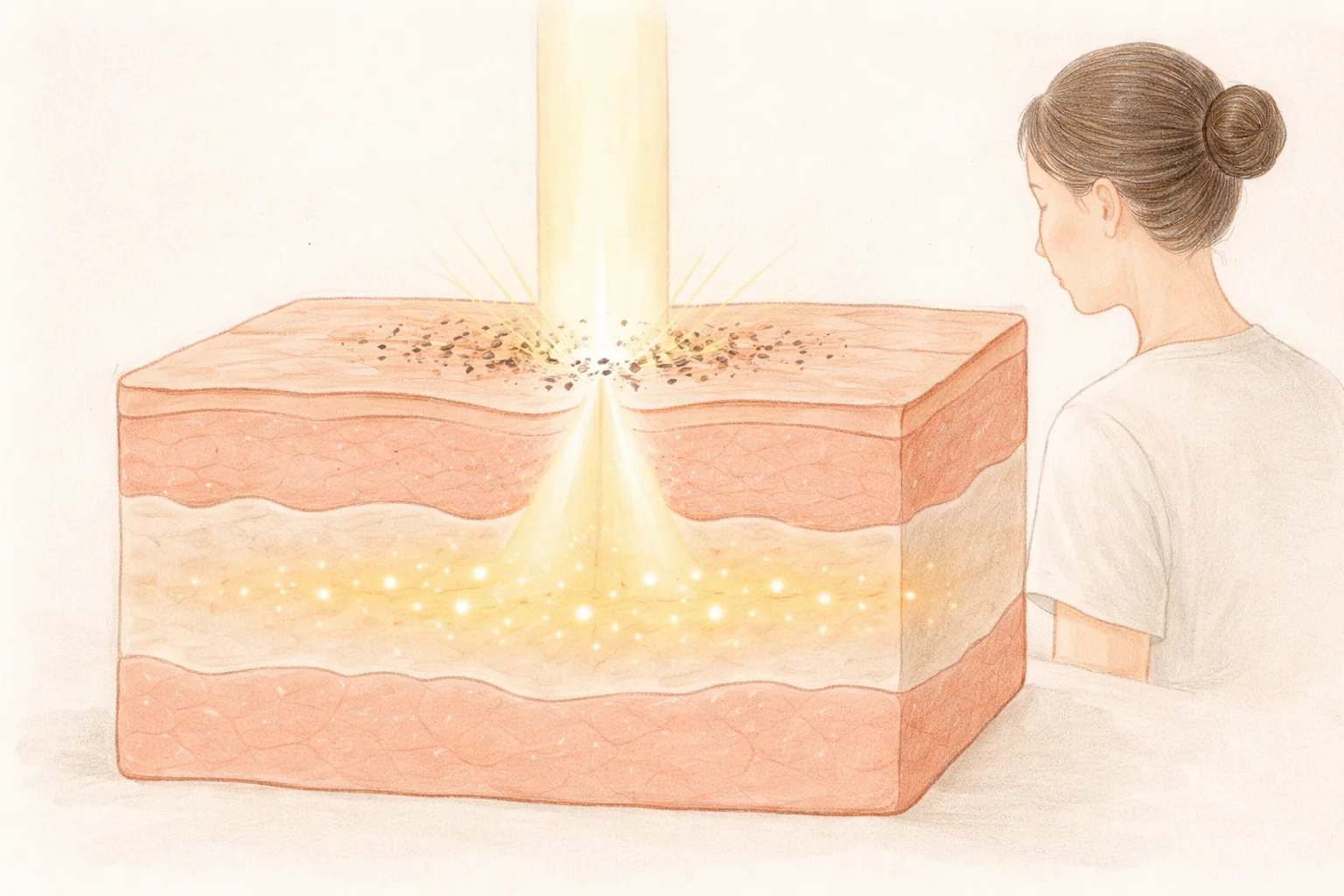
A laser is a treatment that collects light of a single wavelength and fires it into the skin. When light reaches the skin, it is absorbed only by targets that respond to that wavelength and converted into heat or impact. This principle of concentrating energy on the target while leaving surrounding normal skin less affected is called selective photothermolysis (the principle of leaving surrounding tissue less affected and concentrating energy only on the target). ATTITUDE Clinic column also explains lasers not as a treatment that "burns" but as one that targets specific goals.
Even with the same wavelength, different delivery times and intensities change what the treatment does. The picosecond family delivers energy in extremely short pulses on the order of 1 trillionth of a second to break pigment particles into fine fragments, which the body then clears gradually. Because it is designed to reduce the time heat has to spread to surrounding tissue, it has developed in the direction of lowering the burden on surrounding tissue.
Genesis toning is introduced in the ATTITUDE Clinic treatment guide as a treatment that uses a 1064nm laser to help with anti-aging (V-Laser Genesis, WonTech). In the same column, it is grouped with the 532nm Vbeam as part of the family used for redness and shallow vessel concerns. So even with the same 1064nm, what differs is whether it is used to break pigment particles or to deliver warmth into the skin.
One thing worth noting here: according to the pigment and redness column, it is difficult to expect improvement of redness coming from blood vessels with a picosecond laser alone. This is why wavelength and device change depending on where the cause of the concern lies.
Why Is It Called a "Skin Iron"?
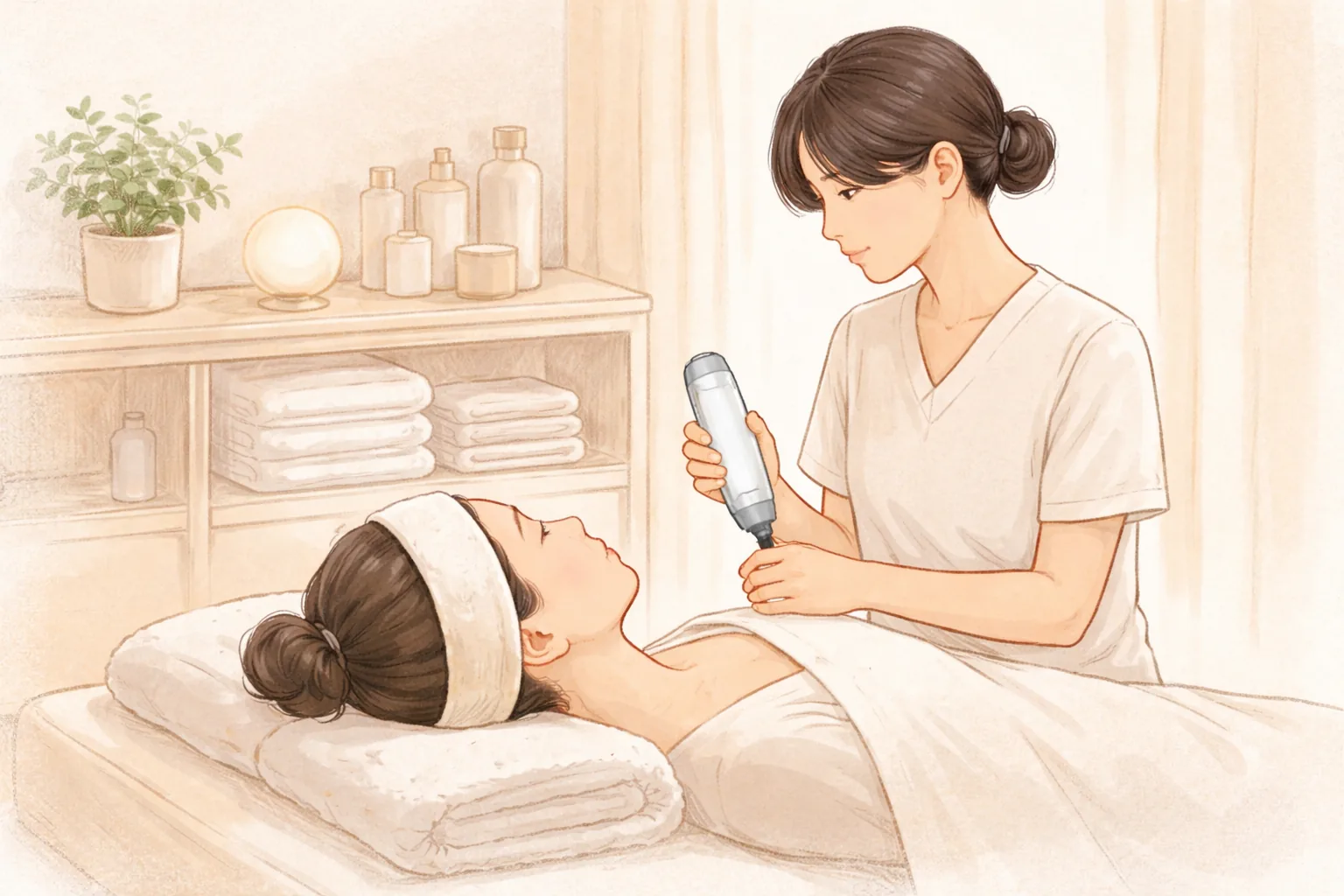
This nickname comes from the sensation rather than the intensity. Toning-type treatments don't scrape the skin surface; they deliver warmth into the skin, so a warm sensation comes first. Many people are reminded of pressing wrinkled clothes flat with an iron.
The actual treatment differs from an iron applying heat to clothes. A laser uses heat, but how much heat, where, and how it is delivered decides the outcome. The same heat becomes treatment when it concentrates on the target, and becomes a burn when it spreads too widely and excessively. Redness, stinging, and thin crusts right after treatment can also appear from this heat reaction and the healing process, giving the impression that the skin was "burned."
So "it doesn't hurt" doesn't mean "there's no burden at all." If intensity is higher than your skin condition warrants, or if sessions are repeated before healing is complete, the skin barrier can weaken and become sensitive, redness can linger, and the possibility of side effects such as burns or pigmentation increases. Very frequent toning has been reported in connection with mottled hypopigmented spots, so toning is usually spaced at least 1 week apart.
What Ultimately Decides the Outcome?
First is identifying the cause. Even for the same brown spot, melasma, freckles, sun spots, and age spots differ in the layer they sit in and how they form. According to the pigment disorders column, melasma is a state in which the pigment cells themselves are overactive, so using strong energy all at once can stimulate the pigment cells and cause a rebound in which the pigmentation actually deepens. That is why the basic approach for melasma is repeating low energy over multiple sessions.
Second is depth and intensity. Each wavelength reaches a different depth in the skin, and even with the same device, different intensities give different stimulation to the skin. This is why it's difficult to use the same settings for shallow spots sitting in the epidermis and for melasma spread into the dermis.
Third is spacing. Vessel or redness concerns are often approached with 3–5 sessions at 4–6 week intervals, and melasma and broad pigmentation are commonly presented with 8–12 or more low-power toning sessions at intervals of at least 1 week. The number of sessions and spacing aren't fixed values but are adjusted while watching progress.
Fourth is the skin's own healing capacity. According to American Academy of Dermatology material, the rate at which collagen decreases differs from person to person. This is the background for why responses differ even with the same treatment.
Last is the area and amount covered. Even with the same device and the same number of sessions, the stimulation the skin receives differs depending on whether the entire face was evenly and sufficiently covered. This is something to confirm in consultation.
Table 1 What Ultimately Decides the Outcome?
Device (based on ATTITUDE Clinic)
Target
Best suited concerns
What to expect and points to note
Pico toning (PicoPlus, Lutronic)
Pigment
Pigment such as spots and melasma, and brightening
Low-power toning: redness and stinging from several hours to the same day; high-power spot removal: crusts for about 7–10 days
Genesis toning (V-Laser Genesis, WonTech)
Warmth in the skin
Redness, skin texture, anti-aging direction
Pain burden is relatively low, and toning is usually spaced at least 1 week apart
Vbeam (V-Laser Vascular)
Shallow vessels
Rosacea, broken capillaries
Redness and swelling for a few days; bruising takes 1–2 weeks to fade
Erbium YAG laser
Skin surface
Texture refinement, skin surface around pores, shallow scar texture
Redness, dryness, and thin crusts for a few days
Swipe sideways to see the whole table.
In short, even within the same face, spots come from pigment, redness from blood vessels, and rough texture from the surface. Rather than "which laser is good," the order is to first confirm "which of these is my concern coming from." If multiple causes overlap, spacing them out by priority reduces the burden on the skin.
If This Applies to You
If you have a ceremony or photo shoot coming up
A first-time treatment right before a ceremony can overlap with redness or sensitized skin and your schedule. The earlier you start with the date as your reference, the wider your options for adjusting intensity and type. If you tell us your schedule first at consultation, we plan by counting backward from that date.
If you want steady management
Rather than going strong at once, a periodic approach that respects the intervals your skin needs to heal puts less strain on it. What matters is setting a goal and placing only the treatments you need at the right times. ATTITUDE Clinic makes it a principle not to recommend more sessions than necessary.
If your skin is sensitive and prone to redness
With sensitive skin or rosacea (酒皶), where redness comes from high skin reactivity, laser effects may be limited. For superficial vessel dilation, a vascular laser can be expected to reduce it, but if the cause is different, the approach differs too. If cosmetics sting or your skin feels unusually sensitive, please let us know before treatment.
If you are an international visitor with a short stay
If your stay is fixed, redness or dryness right after treatment can affect your schedule. If you tell us your return date and next commitments in advance, we will discuss intensity and type accordingly. You can also start with a lower-burden option such as toning.
Please tell us before your consultation
Recent UV exposure (outdoor activities, travel, golf), medications you are taking and hormonal changes, skincare you are using (retinol, exfoliants, etc.), reactions to previous treatments, and unavoidable schedules such as ceremonies or photo shoots all help us adjust intensity and timing.
How ATTITUDE Clinic Proceeds
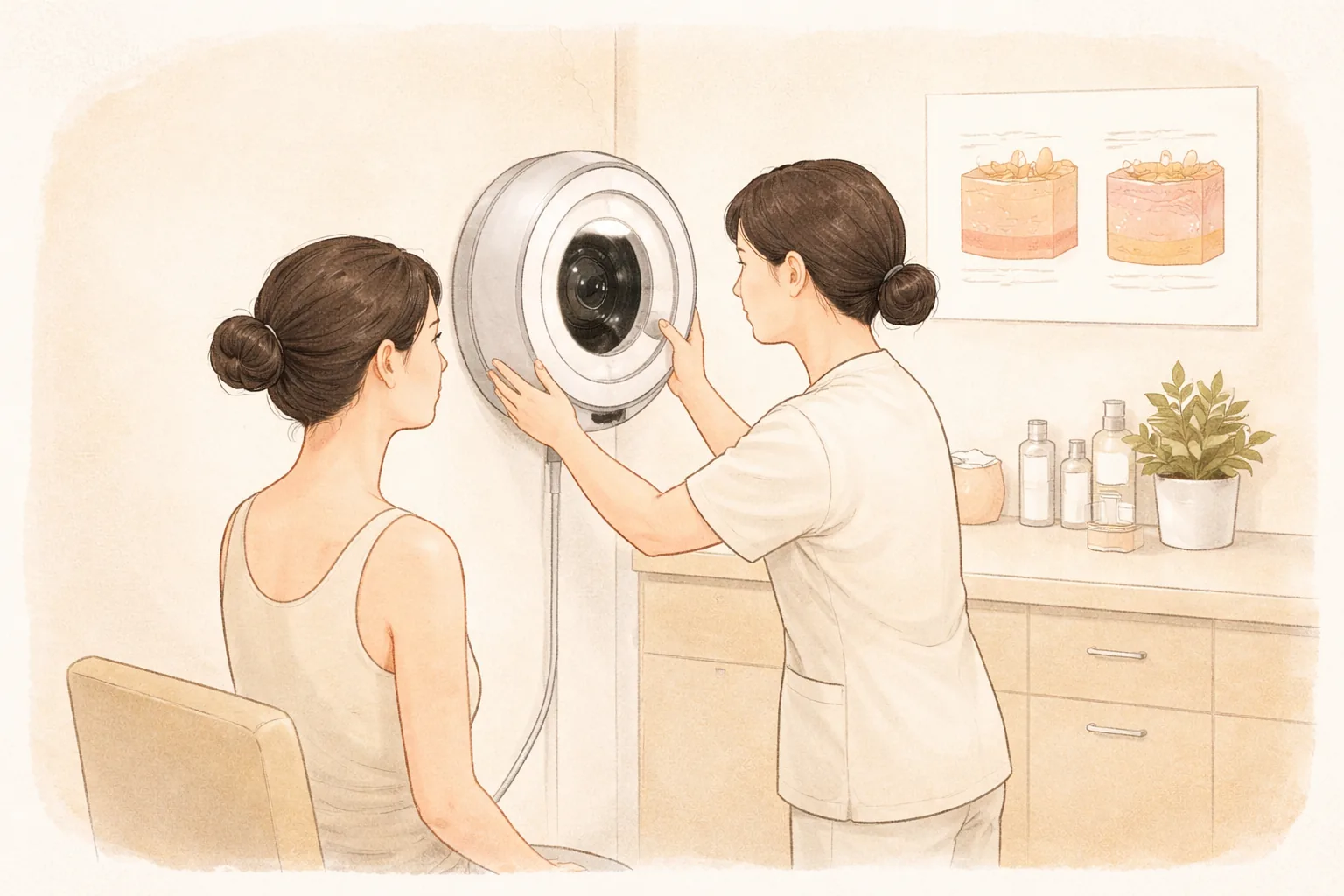
AI skin analysis record — Records and organizes skin condition to support consultation. It is not a tool for medical diagnosis, and judgment of pigment type and skin condition is made by the doctor through examination.
Doctor consultation and type assessment — Adding UV exposure, lifestyle habits, and concerns to the analysis record, the doctor personally examines the skin and judges whether the concern comes from pigment or from redness. Treatments needed, treatments not needed, and the order are decided together.
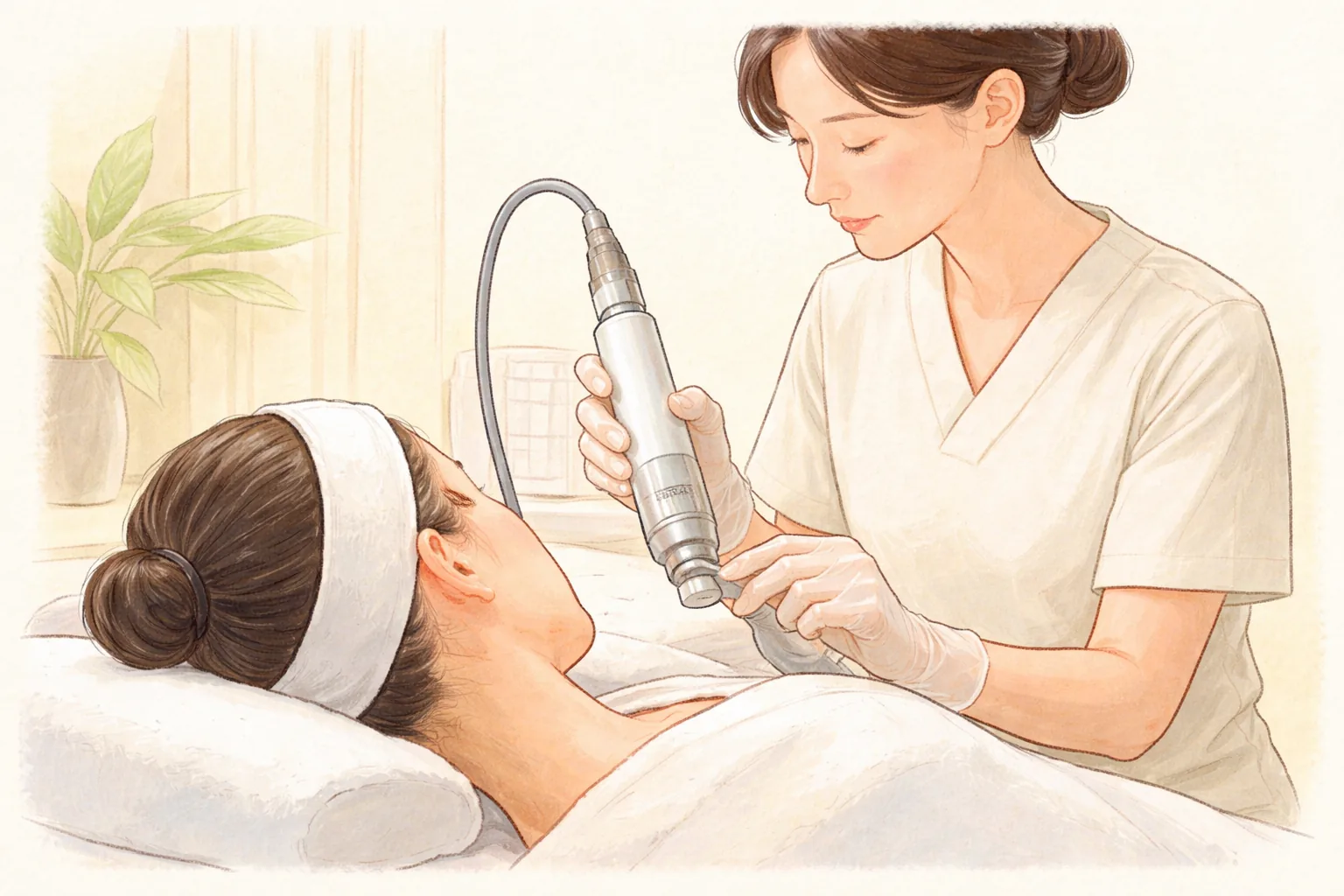
Doctor-performed treatment — Among devices on hand such as PicoPlus, Vbeam, Genesis toning, and erbium YAG laser, the device suited to your concern is chosen, and the doctor personally adjusts intensity and combination.
Recovery and aftercare check — Post-treatment response and healing speed are checked and the next interval is adjusted. ATTITUDE Clinic guides based on genuine products, accurate dosing, and set prices.
Aftercare and Side Effects
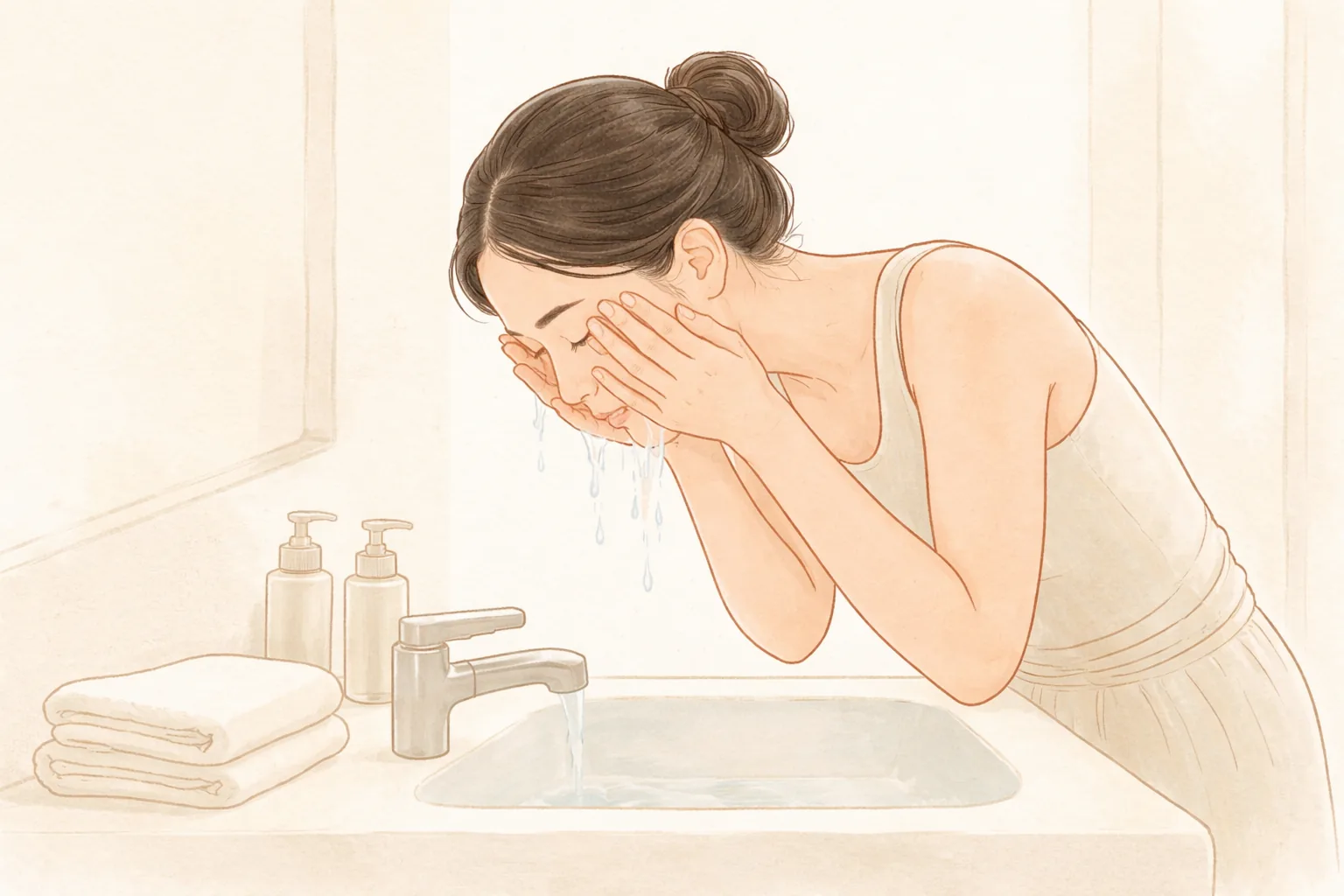
Soothing — On the day of treatment, wash with lukewarm rather than hot water, pressing lightly. While redness and heat remain, use low-irritation soothing products. Same-day washing and light makeup are often possible, but if you had a surface-refining treatment, follow the period you were advised.
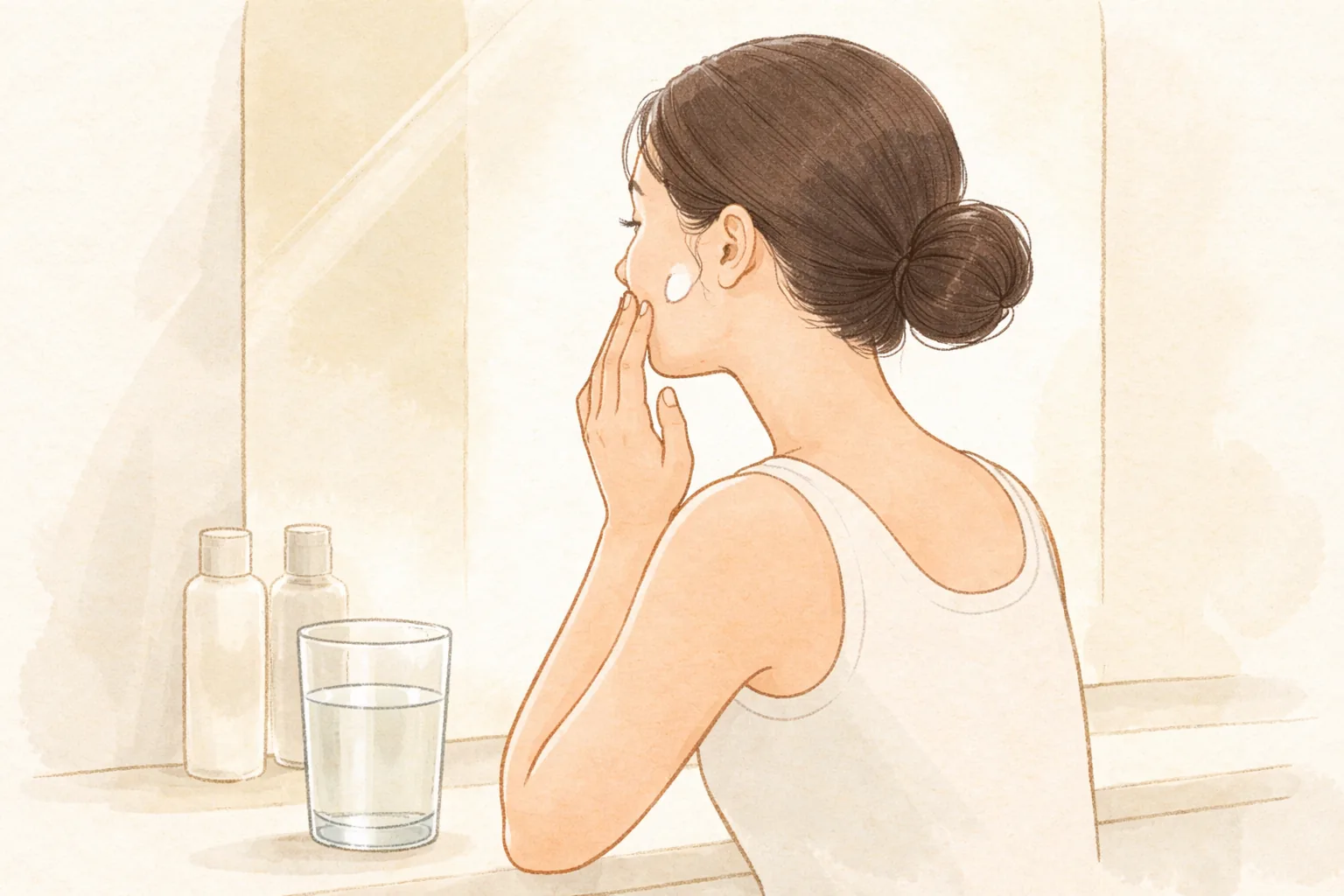
Moisturizing — Skin that has received heat loses moisture easily, so dryness is the most common reaction. Moisturize more than usual and drink water often.
Sun protection — Right after treatment the skin's defense barrier is weakened, so if you don't block UV properly, pigmentation can develop in the newly formed skin and undo the effect. Apply SPF 50+ sunscreen for at least 2 weeks and reapply about every 2 hours outdoors.
Avoid heat stimulation and exfoliation, and check progress — Avoid saunas, jjimjilbangs, and intense exercise for 1–2 weeks. Stop scrubs and peels for the period you were advised, and set the next interval while watching redness and healing speed.
Reactions, from common to rare, are as follows. Temporary redness and heat, dryness, and slight stinging are common. Surface-refining treatments or high-power spot removal can leave thin crusts, and the color of the treated area may temporarily darken. Rarely, hypopigmented spots where skin color lightens, blisters, or scars can occur, and pigment may reappear over time. It is better not to pick at crusts by hand and to let them fall off on their own.
If redness or stinging lasts more than 3 days or suddenly worsens, it is better to have it checked rather than wait. The same applies if blisters or oozing develop, or if pigmentation becomes darker than before treatment. These can be signals that the next interval and intensity need adjustment.
Frequently Asked Questions
What is the difference between Genesis toning and pico toning?
The targets differ. Pico toning delivers energy in an extremely short burst to break pigment particles into fine fragments for the body to clear, while Genesis toning uses a 1064nm laser to deliver warmth into the skin and address redness, skin texture, and an anti-aging direction. In practice, spots and redness often overlap, so we first check which pigment is at which depth and then decide the combination. It's also worth remembering that a picosecond laser alone makes it difficult to expect improvement of redness coming from blood vessels.
Is Genesis toning really completely painless?
People often say that to mean it isn't a highly painful treatment. Still, the sensation varies with the laser type and intensity, the skin thickness of the treated area, and individual sensitivity. Even with the same treatment, some areas can sting more, and if you are sensitive to warmth, we adjust spacing and intensity. Topical anesthesia can also reduce discomfort, and whether and how to use it is decided together at consultation. If a sensation is hard to tolerate, tell us right away during the treatment and we can lower the intensity.
Can I receive it together with pico toning?
When pigment and redness are both concerns, a plan that spaces the two out can be decided at consultation. That said, rather than doing everything strongly at once on the same day, spacing the order while watching skin response puts less strain on the skin. The intensity of the next session depends on how much redness appears right after treatment and how long healing takes. The doctor decides the order after examining the skin.
How many sessions and at what interval should I receive it?
The goal makes a difference. Vessel or redness concerns are often approached with 3–5 sessions at 4–6 week intervals, and melasma and broad pigmentation are commonly presented with 8–12 or more low-power toning sessions at intervals of at least 1 week. Very frequent toning has been reported in connection with mottled hypopigmented spots, so keeping the interval is safer. The number of sessions is decided after checking skin condition at the first consultation and adjusted while watching progress.
What should I look for when choosing a clinic?
Rather than device names or a list of equipment, we suggest checking a few things. Does the clinic first confirm whether your concern comes from pigment, blood vessels, or the skin surface? Does it recommend only necessary treatments without forcing a set number of sessions? Does it sufficiently explain pain, recovery schedule, and aftercare precautions at consultation? And can you have things checked if discomfort arises? Even with the same device, results vary with settings and coverage area, so a clinic that explains that process is good. Results and recovery vary with skin condition and lifestyle, so confirming the final decision at consultation is most accurate.
At a Glance
Table 2 At a Glance
Item
Key point
Principle
Selective photothermolysis: 1064nm light absorbed only by the target and converted into heat and impact
Pico toning
Breaks pigment particles into fine fragments in a short burst for the body to clear
Genesis toning
Uses warmth in the skin to address redness, skin texture, and an anti-aging direction
Pain
Not strong, but varies with area, intensity, and individual sensitivity
Spacing
Toning is usually at least 1 week apart; sessions and intervals are adjusted while watching progress
After treatment
Soothing, moisturizing, sun protection, leave crusts alone
This article offers general health information. It is not a substitute for diagnosis or treatment based on your own condition, so please talk through your situation with a doctor.