Pore Types Explained: Round vs. Elongated Pores and What They Mean for Treatment
How pores are classified as oily, sagging, scarred, genetic or combined, why round and elongated pores need different approaches, how Potenza N-tip and pumping-tip configurations differ, and what to expect from sessions, recovery and aftercare.
Written by ATTITUDE Clinic Editorial Team
Some people stand in front of the mirror bothered by the round pores on their nose and forehead that stand out, and others by the pores on their cheeks that look stretched vertically. Both end up asking the same question: "What type are my pores, and why do results feel different even after the same treatment?" This article walks through how pores are sorted into types and what changes depending on the type.
The short answer first
Enlarged-looking pores never come from a single cause. Sebum overload stretching the opening, weakened support for the pore as collagen and elasticity decline, and damage to the pore wall from acne and extractions each act alone or overlap. So rather than picking a treatment name first, the order is to sort out the type and main cause first. When the type differs, the target layer, intensity and interval differ too. Removing pores entirely is difficult, but approaching them according to the cause can make them less noticeable, and how much improvement you see varies from person to person with skin thickness, healing speed and daily care.
Why sort pores by type first?
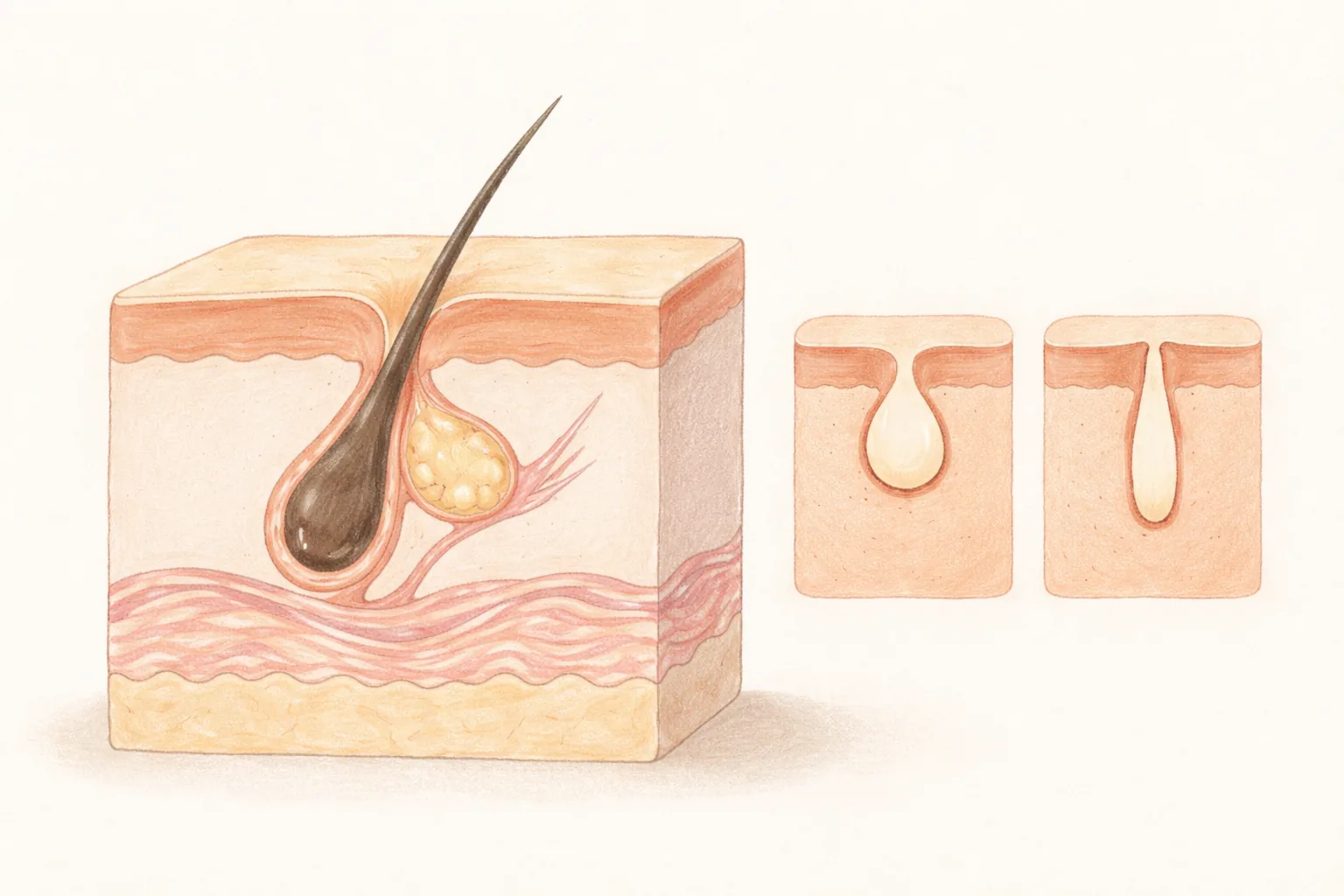
A pore is the channel through which hair and sebum exit the skin, connected to the sebaceous gland, and it is a normal structure that protects the skin. Everyone has them, and treating them as something to eliminate leads the approach astray. What becomes a problem is when these pores become visibly enlarged.
Three factors are at work here. When sebum is overproduced, the pore opening is physically stretched; when collagen and elasticity decline with age, the skin around the pore sags and creates shadow; and when the pore wall is damaged by repeated inflammation such as acne, an enlarged state remains even after healing. These three come one at a time, or two or three overlap.
The types outlined in the ATTITUDE Clinic column are five. The oily type, round and widely spread on the nose and T-zone with blackheads; the sagging type, stretching vertically down the cheeks; the scarred type, where the pore wall becomes irregular from extractions and inflammation; the genetic type, heavily influenced by innate skin thickness and pore density; and the combined type, where two or more overlap. These five are not an officially recognized medical classification but an explanatory framework used in consultation.
The Cleveland Clinic guide is also helpful for understanding the scarred type. Acne scars are divided into depressed forms from tissue loss and raised forms, and it is rare for one person to have only one form — multiple forms usually appear together. Diagnosis is made by a dermatologist's visual examination.
So why bother sorting them? Because even pores in the same T-zone are managed differently depending on whether they are oily or genetic. It is hard to pin down the cause from the shape alone in the mirror, so confirming whether sebum production or lost elasticity is the main factor is needed first.
How do round pores and elongated pores differ?
The easiest clue in the mirror is shape and location. Round, widely visible pores on sebaceous-rich areas like the nose and forehead are closer to an issue at the opening. Conversely, pores stretched vertically down the cheeks are closer to a signal that the support holding the pore round has weakened, not the opening. The vertically stretched shape on the cheeks has declining collagen and elasticity as the main cause, and tends to become more prominent with age.
This difference carries straight into management. For the oily type, care dealing with sebum and dead skin cells is central; for the sagging type, an approach dealing with elasticity around the pore is central. The scarred type is a state where the pore wall tissue itself has become irregular, requiring yet another approach.
A common misconception arises here. Pore packs, strips and aggressive extractions seem like they would shrink pores by clearing the surface, but these methods are closer to briefly lifting away sebum and dead skin cells piled on top. When the pore wall is damaged, repeated extractions can leave it wider than before even after healing.
The care you can do at home also has limits. According to the American Academy of Dermatology guide, salicylic acid is used to unclog blocked pores and tidy dead skin cells, and retinoids such as adapalene help clear blackheads and small pimples. They recommend choosing one product and using it as directed for 6–8 weeks before judging. That said, the territory cleansing and exfoliation can handle is sebum and surface dead skin cells, and pores already enlarged or enlarged from lost elasticity are hard to change this way.
Table 1 How do round pores and elongated pores differ?
Type
Where it shows
Main cause
Approach
Oily
Nose, forehead, T-zone
Opening stretched by excess sebum
Sebum and dead-skin care, check for blackheads
Sagging
Cheeks, under eyes
Surrounding tissue sags from lost collagen and elasticity
Care for elasticity and tissue condition around the pore
Scarred
Cheeks, around acne marks
Pore wall becomes irregular from extractions and inflammation
Tidy damaged tissue, reduce repeated irritation
Genetic
Overall face
Innate skin thickness and pore density
Manage to be less noticeable rather than erasing
Combined
Two or more areas
Two or more of the above overlap
Prioritize and approach in sequence
Swipe sideways to see the whole table.
In short shape and location are the first clue that narrows the cause. But shape alone cannot confirm the cause, so which approach comes first is decided only after checking sebum, elasticity and tissue condition together.
Why do results differ for the same pores?
When a treatment feels like it changed less than expected, it is usually because the cause and the approach were mismatched. It may be that elasticity treatments were repeated when sebum was the main cause, or that surface exfoliation care continued on sagging pores.
Several factors decide the result: pore depth and distribution, skin thickness, history of repeated inflammation, the skin's healing speed, and everyday UV exposure. Even at the same intensity, the settings needed by someone with thin skin and someone with thick skin cannot be the same. With lasers, wavelength and energy, treatment area and session interval decide results and side effects, and the same device acts differently depending on settings.
Interval is also part of the result. In the ATTITUDE Clinic column on laser treatments, a common example for pores and skin texture is 3–5 sessions at 4–6-week intervals, and for acne scars 4–6 sessions at 4–8-week intervals. These are only common examples, and the number and interval vary with pigment depth, skin type and lifestyle habits such as UV exposure, with the final decision made by the doctor who has seen your skin.
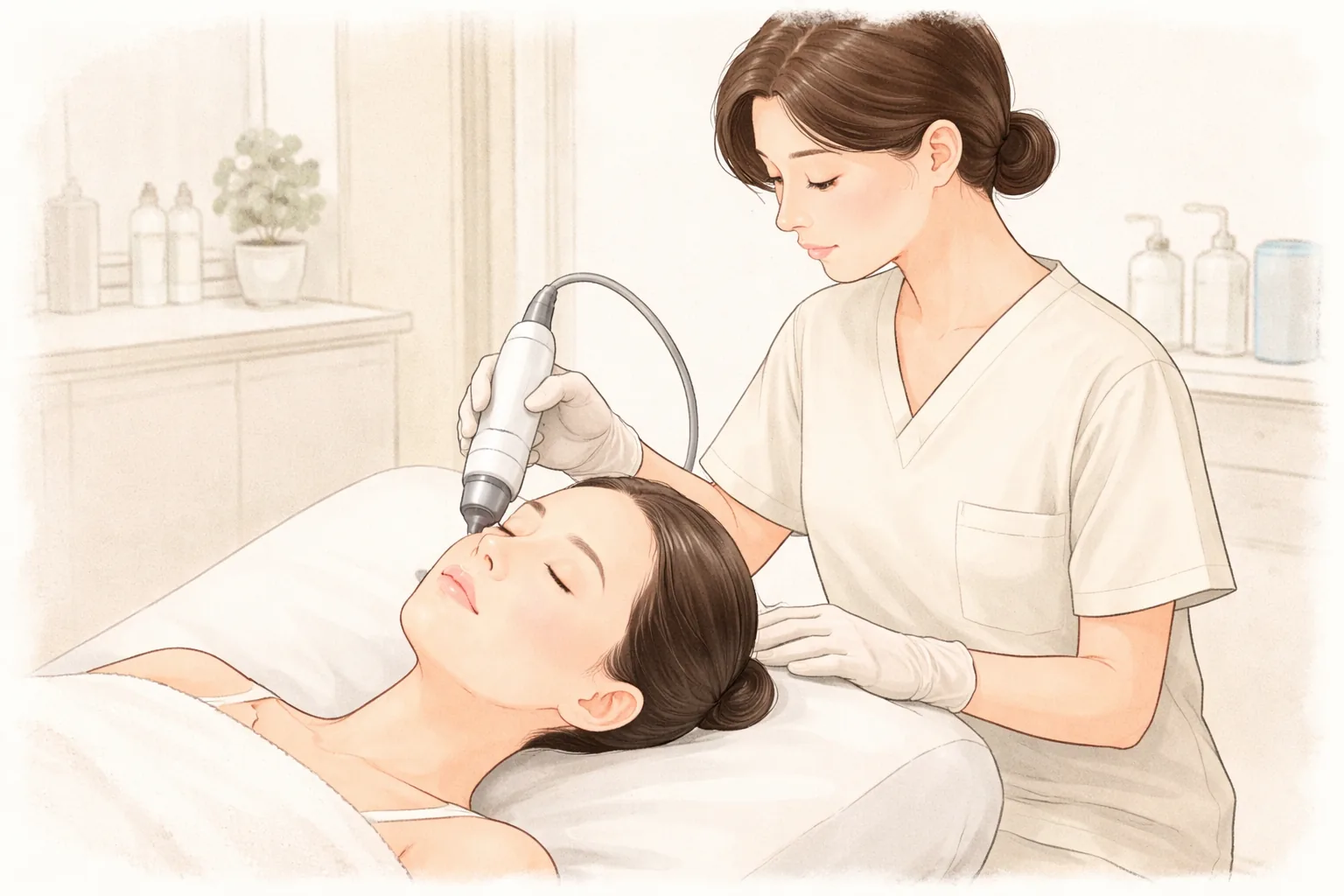
Microneedle radiofrequency treatments can be understood on a similar principle. According to the ATTITUDE Clinic treatment guide, Potenza is introduced as a treatment that delivers radiofrequency directly to the dermis with very fine microneedles to help improve pores and scars. Because heat is generated at the depth the needle reaches, the depth and strength of the stimulus and the interval to the next session decide the result.
What differs between Potenza N-tip and pumping-tip?
One question that comes up often in consultation is the difference between tips. The ATTITUDE Clinic treatment guide lists, for the same Potenza device, the N-tip, the pumping-tip including exosomes, and the pumping-tip standalone configuration. It means that even with the same device, the configuration differs depending on which tip is used and what is delivered along with it.
The N-tip is guided as the side that delivers radiofrequency heat to the dermis to stimulate pores and scars, and the pumping-tip as the configuration that delivers ingredients along with it. But the tip name alone cannot choose the right side for your skin. It has to be decided by looking together at skin thickness, pore depth and distribution, how old the scars are, and the skin's healing speed.
One point to keep in mind here: raising intensity and session count is not the answer. Proceeding as much as needed at an intensity and interval matched to your skin condition reduces the burden on the skin. The column on lasers and the skin barrier also explains that excessive intensity or repetition before recovery can burden the skin barrier.
If this sounds like your situation
If a ceremony or shoot is coming up
A first-time treatment right before a ceremony can overlap with redness or sensitized skin during your schedule. The more lead time you build from the date, the wider your options for adjusting intensity and type. If you tell us your schedule first during consultation, we can plan around it.
If you want consistent management
Rather than going strong all at once, keeping the interval at which the skin recovers and managing periodically is less of a burden. A plan that sets a goal and places only the needed treatments at the right times decides the result.
If your skin is sensitive or flushes easily
Even the same treatment brings different degrees of reaction, so if cosmetics usually sting or redness lingers, tell us first during consultation. Allowing generous recovery time and starting at a lower intensity is less of a burden.
If you are an overseas visitor on a short stay
If your stay is fixed, redness or dryness right after treatment can affect your schedule. If you tell us your return date and upcoming plans in advance, we can consult on intensity and type around them.
Tell us before consultation whether you have had a lot of recent UV exposure, what medications and cosmetics you are taking or applying, whether your skin has ever been sensitive after a previous treatment, and whether you have a date-fixed event such as a ceremony or shoot. Even for the same treatment, timing and settings differ with this information.
How ATTITUDE Clinic proceeds
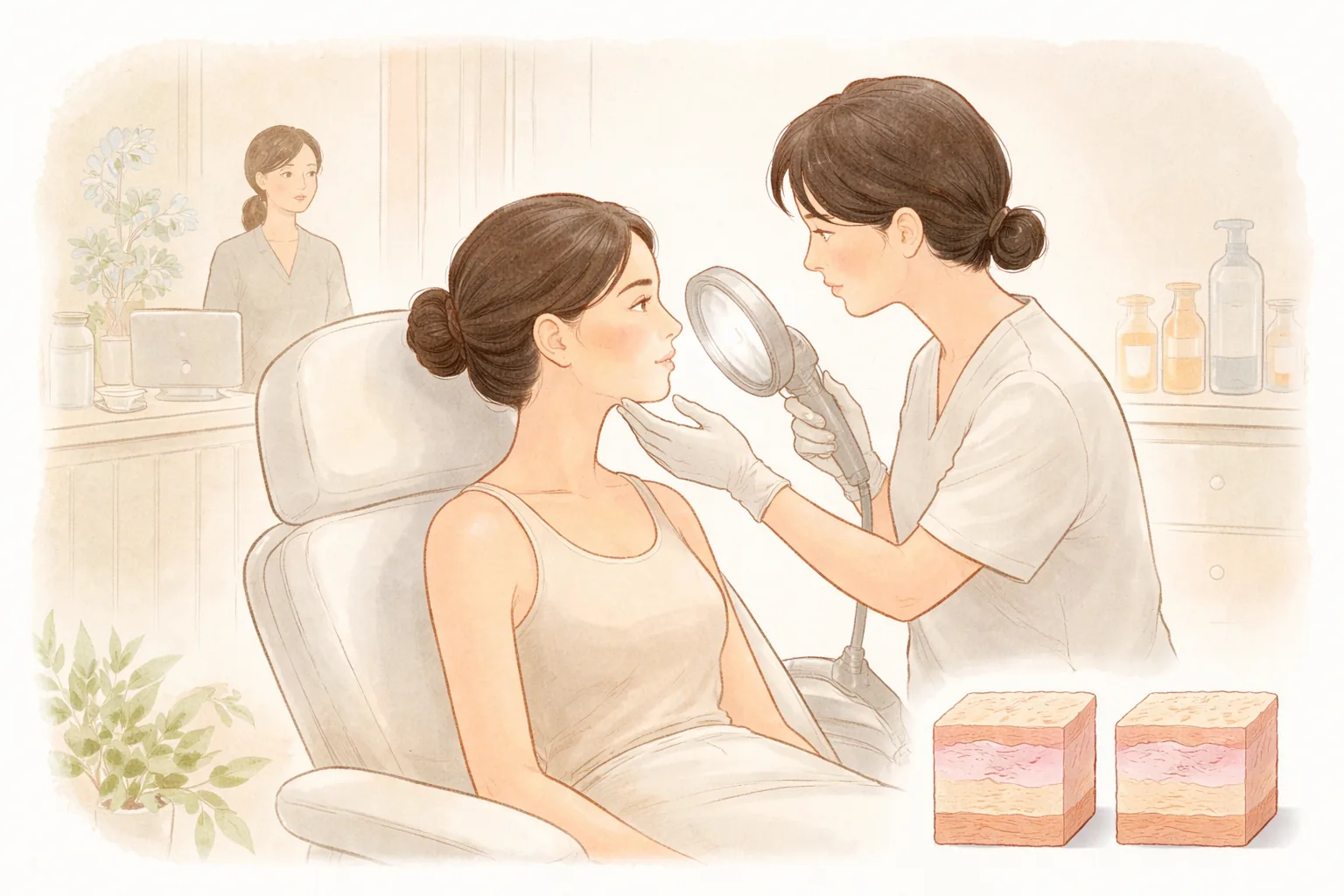
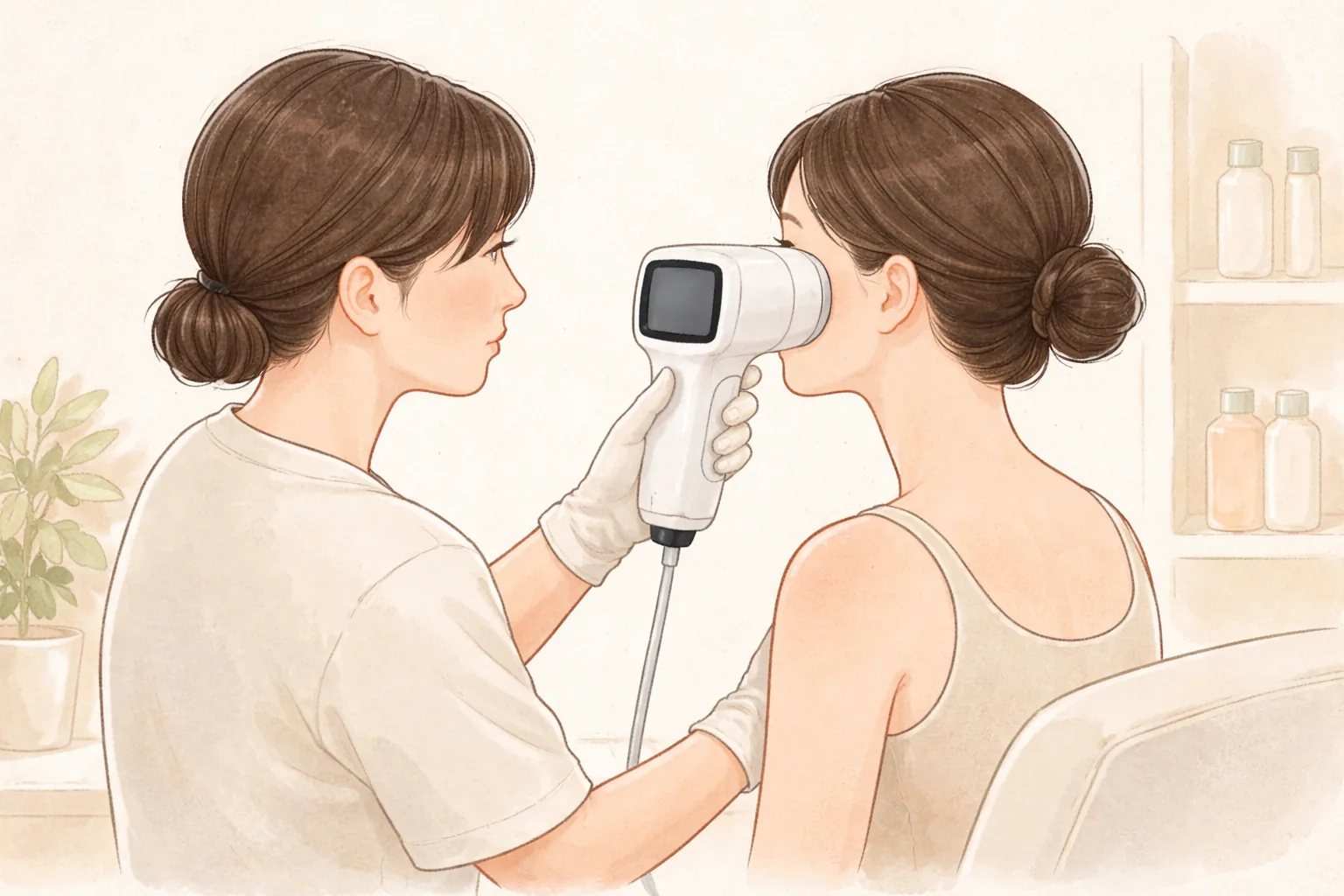
AI skin analysis record — current skin condition such as pigment, redness, texture and pores is recorded with an analysis tool. This tool records and organizes information to support consultation; it is not a medical diagnosis.
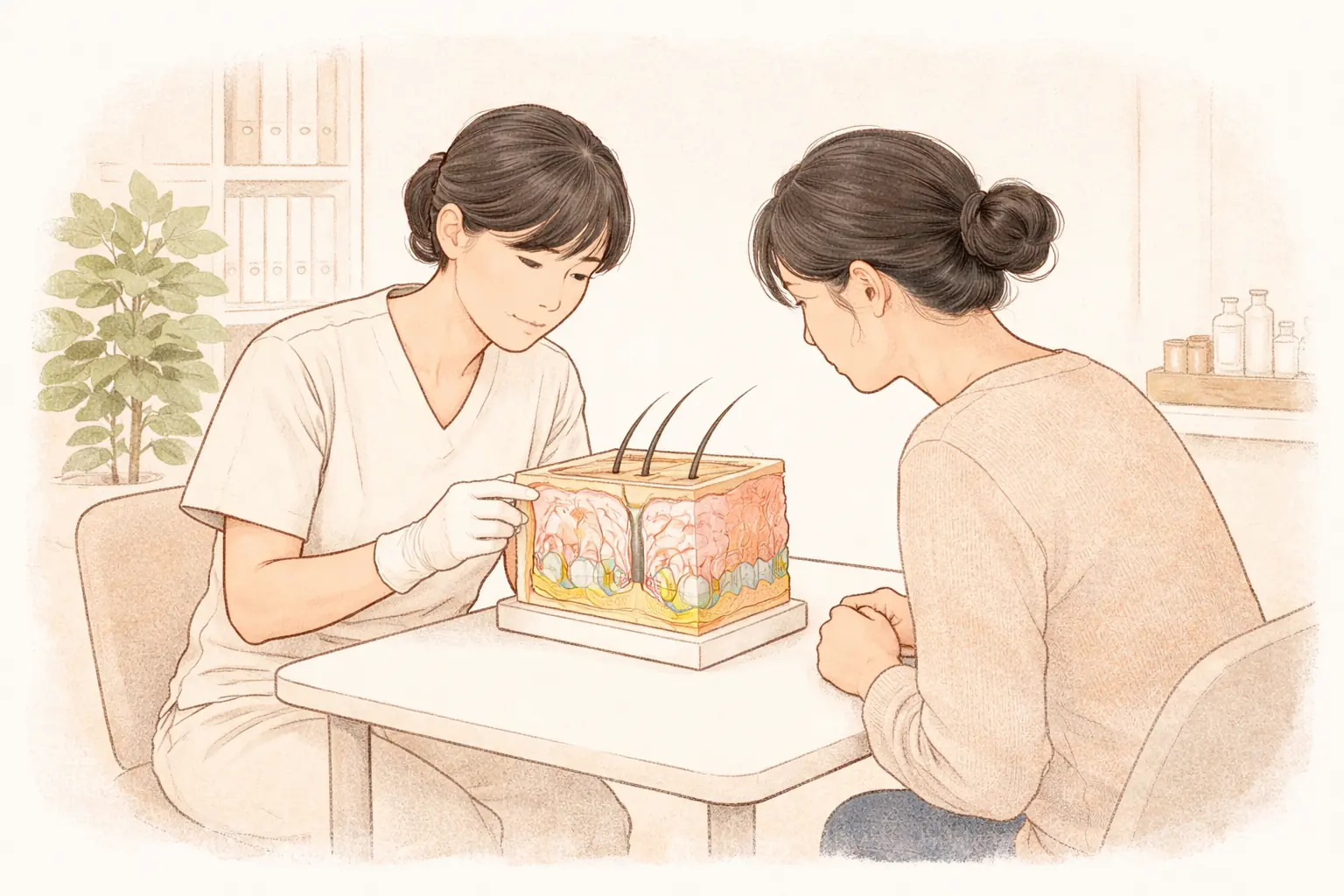
Cause interpretation in the doctor's consultation — analysis records are combined with skin condition, lifestyle habits and treatment history to interpret the main cause of why pores look enlarged and design a management direction.
Treatment performed by the doctor — treatment matched to type and cause is performed directly by the doctor, who does not recommend treatment beyond what is needed.
Recovery and management — after treatment, the timing and intensity of the next session are adjusted based on healing speed and reaction. Under the principle of genuine products, correct dosage and fair pricing, we do not take the approach of raising session count or intensity for fast results.
The treatments covered in this topic are Potenza (N-tip, pumping-tip including exosomes, pumping-tip standalone), which delivers radiofrequency to the dermis with microneedles, and the erbium fractional laser, which helps improve pores and scars through micro-abrasion. Which configuration to use in which order is decided in consultation after looking at type and cause.
Aftercare and side effects
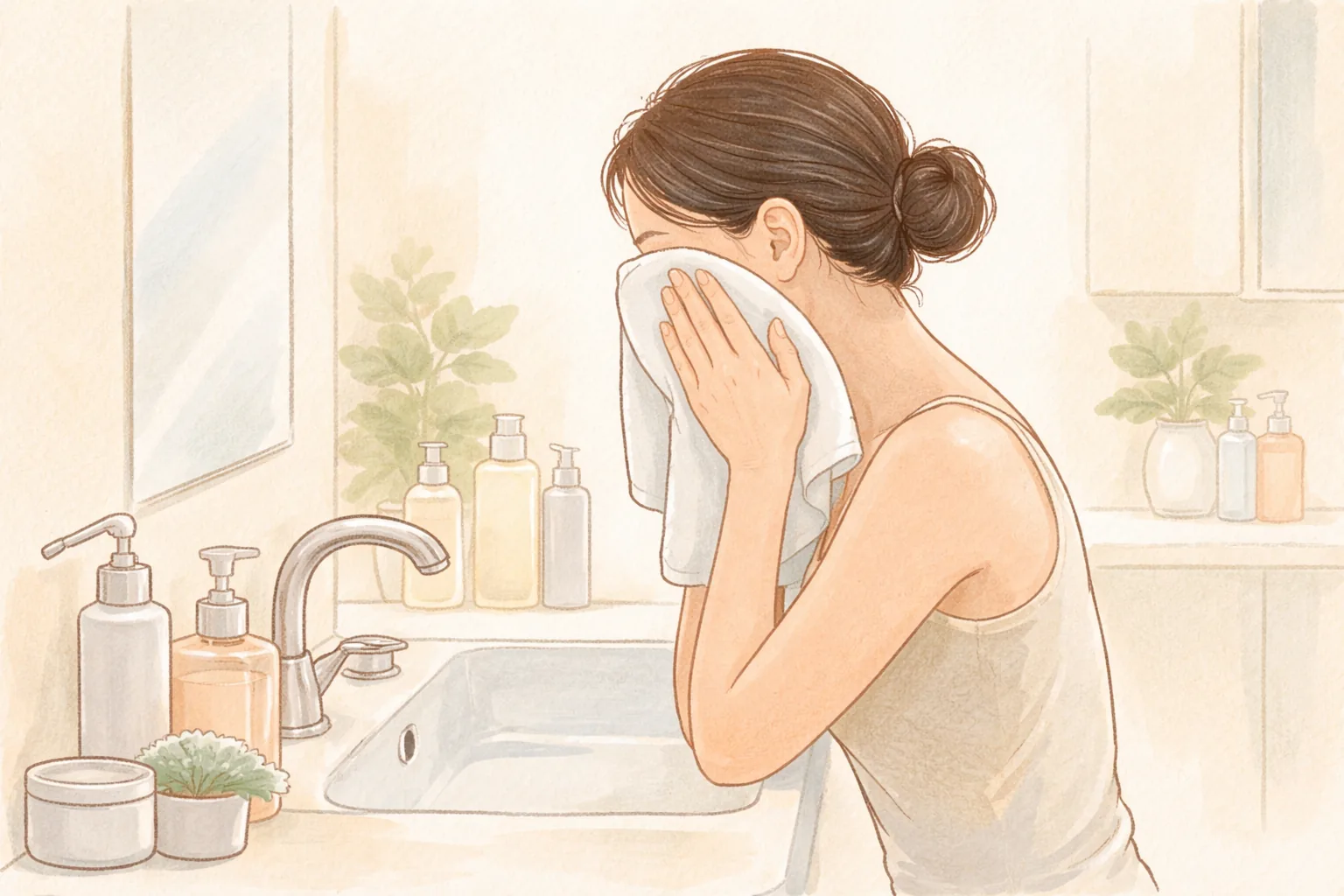
Soothing — heat and redness may remain on the day of treatment, so wash lightly with lukewarm water and wipe by pressing rather than rubbing. It is better to avoid saunas, jjimjilbangs and intense exercise for 1–2 weeks.
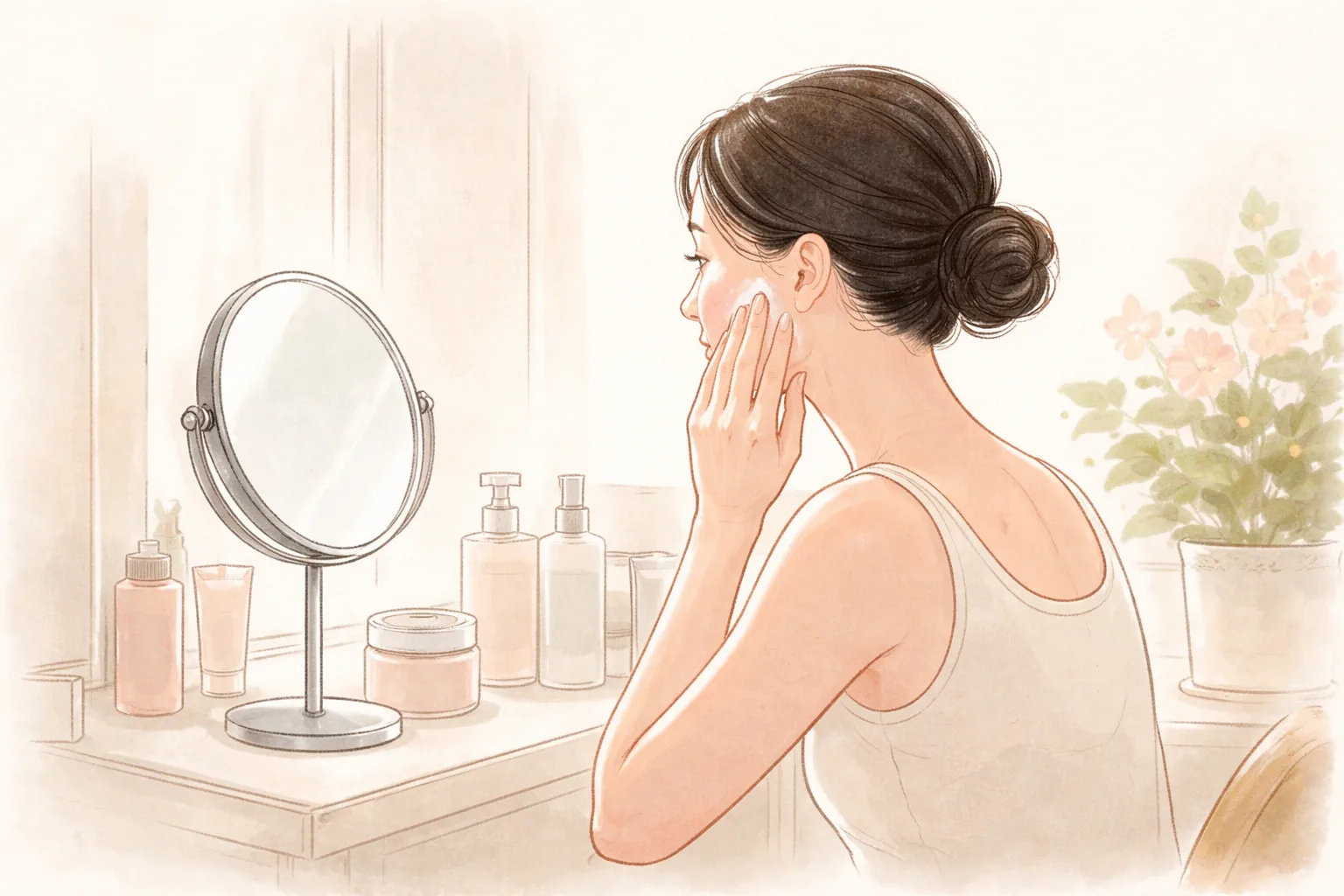
Moisturizing — skin is temporarily sensitive right after treatment, so moisturize thoroughly. Strong exfoliation or scrubs are postponed for the period you are advised.
Sun protection — with the barrier weakened, failing to block UV properly can cause hyperpigmentation and undo the change you worked for. Apply SPF 50+ sunscreen for at least 2 weeks, and reapply every two hours outdoors.
Checking progress — if a crust forms, do not pick at it and let it fall off on its own, and if redness or pain lasts longer than expected, come in to be checked rather than enduring it.
Common reactions are redness, swelling, stinging, dryness, thin crusts and dot-like marks, usually settling within a few days to 1 week. Pigment at the treatment site may temporarily darken or breakouts may occur. Rarely, pale spots, blisters, burns, infection or scars may occur, or pigment may rise again over time. Treatments that deliver ingredients together may cause bruising and swelling, and rarely nodules or allergic reactions. Before treatment, the doctor explains the side effects of the planned treatment.
If redness, heat or pain lasts more than 3 days or worsens, it is better to come in to be checked without waiting for the next session.
FAQ
What is the difference between Potenza microneedling and round vs. elongated pores?
Round pores are closer to a sebum and opening issue, showing well on sebaceous-rich areas like the nose and forehead. Elongated pores have a vertically stretched shape on the cheeks, closer to a signal that declining collagen and elasticity have weakened the support holding the pore round. So round pores center on sebum and dead-skin care, and elongated pores on an approach dealing with elasticity and tissue condition. The combined type, where both shapes appear together, is common, so confirming the cause comes before deciding a direction from shape alone.
How many sessions and what interval?
It depends on the main cause and the treatment chosen. When treating pores and skin texture with a laser, 3–5 sessions at 4–6-week intervals are given as a common example, and for acne scars 4–6 sessions at 4–8-week intervals are a common example. These are examples, and the number of sessions needed varies with pigment depth, skin type and lifestyle habits such as UV exposure. Because it takes time for new collagen to form and settle, keeping the interval and continuing is less of a burden than doing it all at once.
Can I return to daily life right after treatment?
It depends on the treatment and intensity. For light reactions such as low-power picosecond toning, redness and stinging tend to settle within a few hours to the same day, while for high-intensity treatment such as high-power fractional, swelling and crusts can last 7–14 days. For low-power fractional, redness and a sandpaper-like texture commonly last about 3–5 days. If you have an important schedule, it is safer to confirm the treatment type and recovery period in consultation first and then set the date.
What does the cost depend on?
It depends on the type and area of treatment, the configuration done together, and the number of sessions needed. Even with the same Potenza, the configuration differs depending on which tip is used and what ingredients are delivered along with it, and for treatments done by session count such as erbium fractional, the number of sessions needed affects the cost. Itemized amounts are listed in the clinic's guide, so decide the plan matched to your skin in consultation first, then check against that plan.
How do I choose where to get pore treatment?
Looking at the order of the consultation rather than the treatment name helps. Points to check are whether they explain the cause first, whether they tell you what treatment is not needed right now, and whether they explain side effects and recovery time concretely. If there is an analysis device, it is also good to confirm that its results are a record to support consultation, not a diagnosis. A place that proposes different settings based on skin thickness and pore distribution is more likely to proceed in a direction matched to your skin even for a treatment with the same name.
At a glance
Table 2 At a glance
Item
Key point
Why pores look enlarged
Excess sebum, lost elasticity and repeated inflammation act alone or overlap
Type classification
Oily, sagging, scarred, genetic, combined (an explanatory framework used in consultation)
Round vs. elongated pores
The difference between an opening and sebum issue and an elasticity issue supporting the pore
Factors deciding results
Main cause, skin thickness, pore depth and distribution, healing speed, session interval and UV exposure
This article offers general health information. It is not a substitute for diagnosis or treatment based on your own condition, so please talk through your situation with a doctor.