Potenza Microneedling: How Many Sessions and How Often?
What decides the number and spacing of pore treatments, including Potenza microneedling. How collagen regeneration time, pore type, and recovery speed change your schedule, plus between-session care and aftercare.
Written by ATTITUDE Clinic Editorial Team
Look into pore treatments and almost the same questions come up: "How many sessions do I need?" and "When should I book the next one?" Many people hesitate after hearing that enlarged pores do not disappear in a single session. This article walks through what determines the number and spacing of pore treatments, and what to manage between sessions.
The short answer first
Pore treatments rarely wrap up in one visit, and treatments that work on skin structure usually run around 3–5 sessions. Those numbers are common examples; the actual count and spacing depend on which type of pore you have and how quickly your skin recovers. What really sets the interval is the time it takes for newly built collagen to settle in, and how fast skin irritated by the treatment calms down. That is why two people can receive the same device for the same number of sessions and still see different results.
Why do pore treatments not finish in one go?
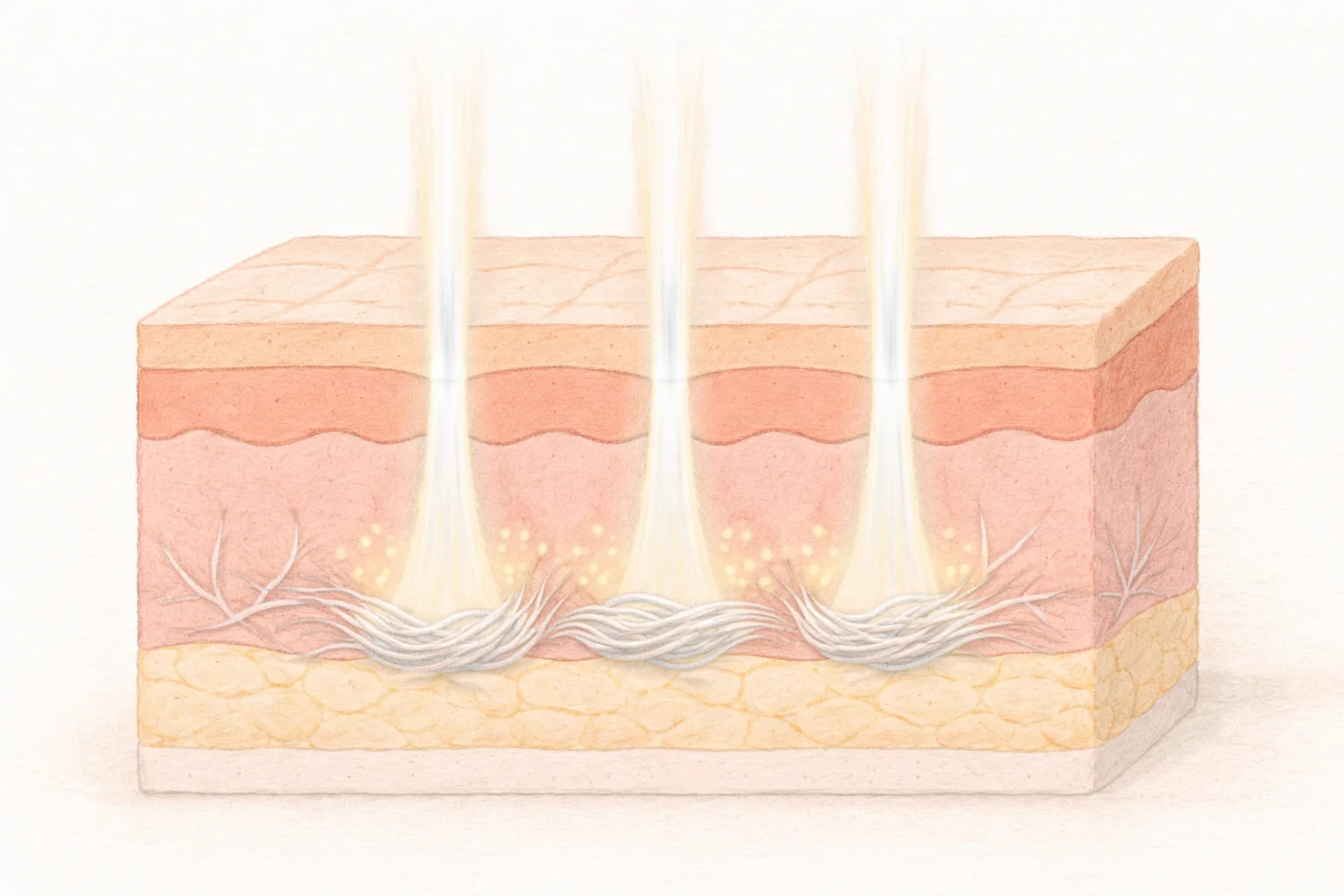
The goal of treatments that make pores less noticeable is collagen regeneration in the dermis. Fractional laser (a method that creates fine column-shaped zones of stimulation so the tissue regenerates on its own) does not burn the entire surface at once; it delivers energy only to select points, like a sieve. The untouched cells around those points receive a regeneration signal and build new collagen, gradually tidying the edges of the pores.
Microneedling RF works on a similar principle. Fine needles deliver RF heat into the dermis to trigger collagen regeneration. The ATTITUDE Clinic treatment guide introduces Potenza as a treatment that uses fine needles to deliver RF directly into the dermis, helping improve pores and scars (treatment guide).
The catch is that this process does not end right after the session. New collagen formation and tissue settling take weeks. The improvement you see immediately after treatment is often temporary swelling or hydration, while the real change appears over the following weeks (laser sessions and intervals).
How many sessions, at what interval?
The count and spacing differ depending on what you are treating. Pigment needs time for the broken-down particles to be cleared by the body, while skin structure needs time for collagen to fill in. The common examples compiled in the ATTITUDE Clinic column make this difference clear (laser sessions and intervals).
Table 1 How many sessions, at what interval?
Concern
Main approach
Common sessions
Interval
Pores & skin texture
Fractional laser
3–5
4–6 weeks
Acne scars
Fractional laser (high power)
4–6
4–8 weeks
Spots
Picosecond series
1–3
4–8 weeks
Melasma & widespread pigment
Low-power picosecond toning
8–12 or more
At least 1 week
Facial redness & vessels
Vascular laser series
3–5
4–6 weeks
Swipe sideways to see the whole table.
The numbers in the table are only common examples. They change with pigment depth, skin type, and habits like sun exposure. Toning in particular can burden the skin if the interval is too tight, so a minimum of 1 week is usually kept (lasers and skin burden).
In short pore and skin texture treatments usually start from 3–5 sessions at 4–6 week intervals. What matters more is whether your skin recovers fully between sessions, and adjusting interval and intensity based on progress is what shapes the result.
Same pores, different session counts — why?
First, the pore type. The ATTITUDE Clinic column divides enlarged pores into sebum type, sagging type, scar type, genetic type, and combined type (pore column). If sebum is the cause, sebum and dead-skin care take center stage; if lost elasticity is the cause, collagen-stimulating treatments carry more weight. Different types respond differently even to the same number of sessions.
Second, skin thickness and recovery speed. Pore density and skin thickness vary clearly between individuals, and even at the same intensity, redness fades at different rates. Stacking the next session before recovery is complete can pile burden on the skin barrier, so the interval is set by progress rather than a fixed schedule.
Third, the presence of inflammation. If active acne is severe, calming the inflammation comes before pore treatment. Seoul National University Hospital medical information explains that squeezing acne aggressively makes inflammation worse and tends to leave scars, and that scar treatment may be repeated several times at regular intervals depending on depth (SNUH acne).
Do pore strips make pores bigger if used often?
Strips and masks mostly lift surface sebum and dead skin. That is why pores look the same again a few days later when sebum refills. Pore-tightening toners and creams have a temporary tightening effect but cannot change the pore structure itself (pore column). Pulling them off hard and often can irritate the surrounding skin and make pores look more prominent instead.
What you can do at home is slow the rate at which sebum and dead skin accumulate. Cleanse gently twice a day to manage sebum, and use exfoliating ingredients like retinol consistently to support turnover. Effects appear slowly, and during pregnancy you should consult a doctor before use (pore column).
What should you manage between sessions?
Care between sessions can either shorten or lengthen the gap to the next treatment. The most important thing is sun protection. UV reduces collagen and elastic fibers, speeding up the process that lengthens pores. Right after treatment the skin barrier is weakened, so neglecting protection can lead to pigmentation.
Sebum also changes with the seasons. According to Korea Disease Control and Prevention Agency guidance, sebum secretion rises 10 percent for every 1 degree increase in body temperature, so sebum is more active in hot weather (KDCA acne guidance). If sebum is making pore openings look wider, it is better to review your sebum-care habits first rather than stretching the interval.
Moisture works the same way. When skin is dry, dead skin clumps and easily blocks pore openings. During the period advised after treatment, it is better to avoid saunas, jjimjilbangs, intense exercise, and strong exfoliation (lasers and skin burden).
If this applies to you
If you have a fixed date like a wedding or a shoot
For treatments that need recovery time, work backwards from the date to set your start. Redness and crusts can take anywhere from a few days to 1–2 weeks to settle, so avoid cramming high-power sessions right before an important day. Telling us the date in advance lets us adjust intensity and timing.
If you want ongoing maintenance
Rather than one strong session, respecting recovery intervals and treating periodically puts less burden on the skin. A common pattern is to group 3–5 sessions and adjust the intensity of the next one based on progress in between.
If your skin is oily and flushes easily
Skin with active sebum production tends to be sensitive to irritation after treatment. Focus on calming and hydration first, then schedule the next session once irritation has settled. If cosmetics usually sting or redness lingers, let us know before treatment and we will lower the intensity.
If you want a consultation during a short stay
Treatments that require multiple sessions over time may not fit a short visit. In that case, we discuss defining a scope that a single session can address, or keeping progress records so you can continue elsewhere.
Tell us before your consultation strong sun exposure and travel in the past 2 weeks, medications you take (especially acne treatments and photosensitizing drugs), cosmetics and exfoliating ingredients you use, pain or redness from previous treatments, and fixed dates such as weddings or shoots. This information lets us set intensity and intervals realistically.
How the ATTITUDE Clinic proceeds
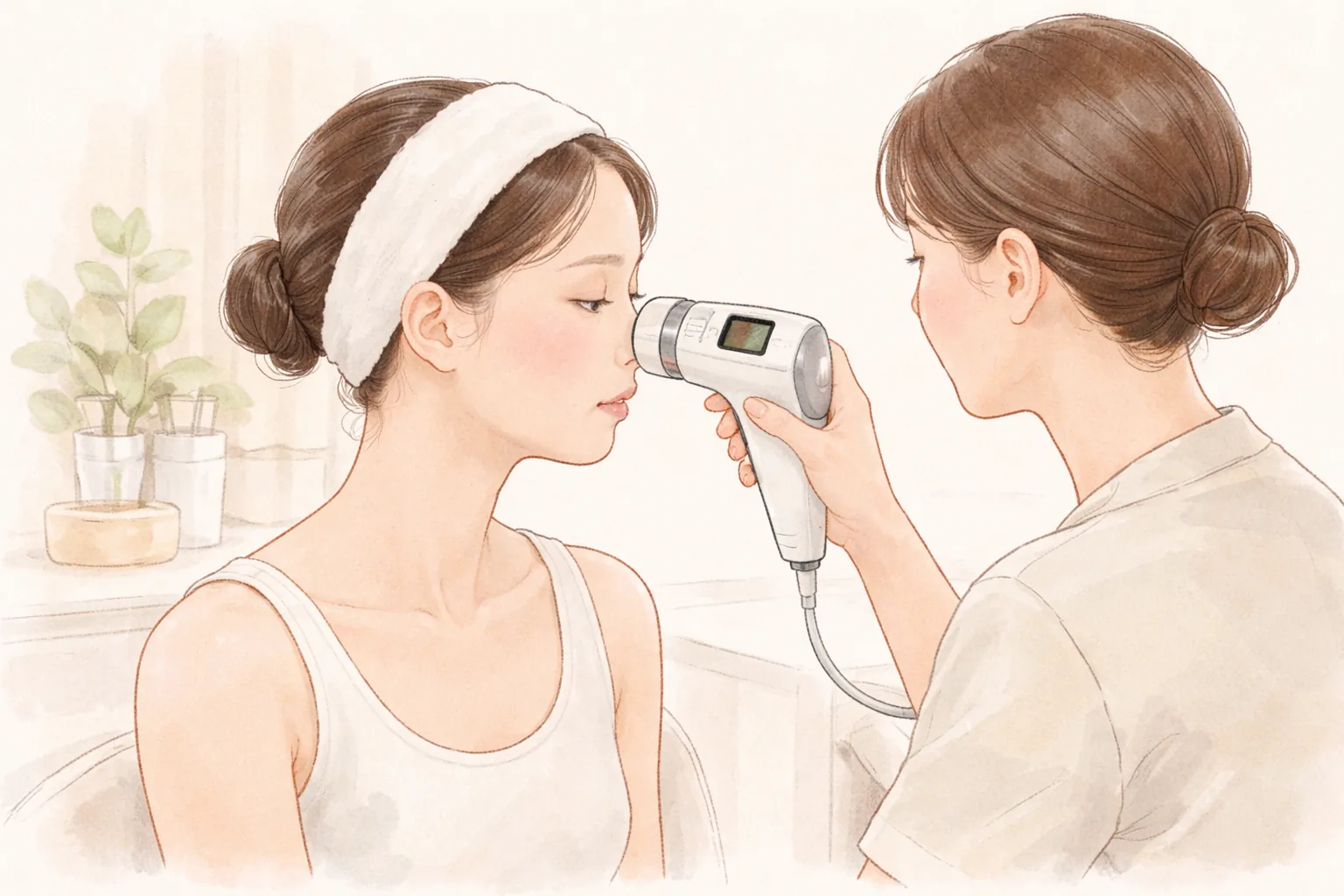
AI skin analysis record — pores and skin condition are recorded with an analysis tool. This record organizes information to support the consultation; it is not a medical diagnosis. Type assessment and treatment planning are done by the doctor.
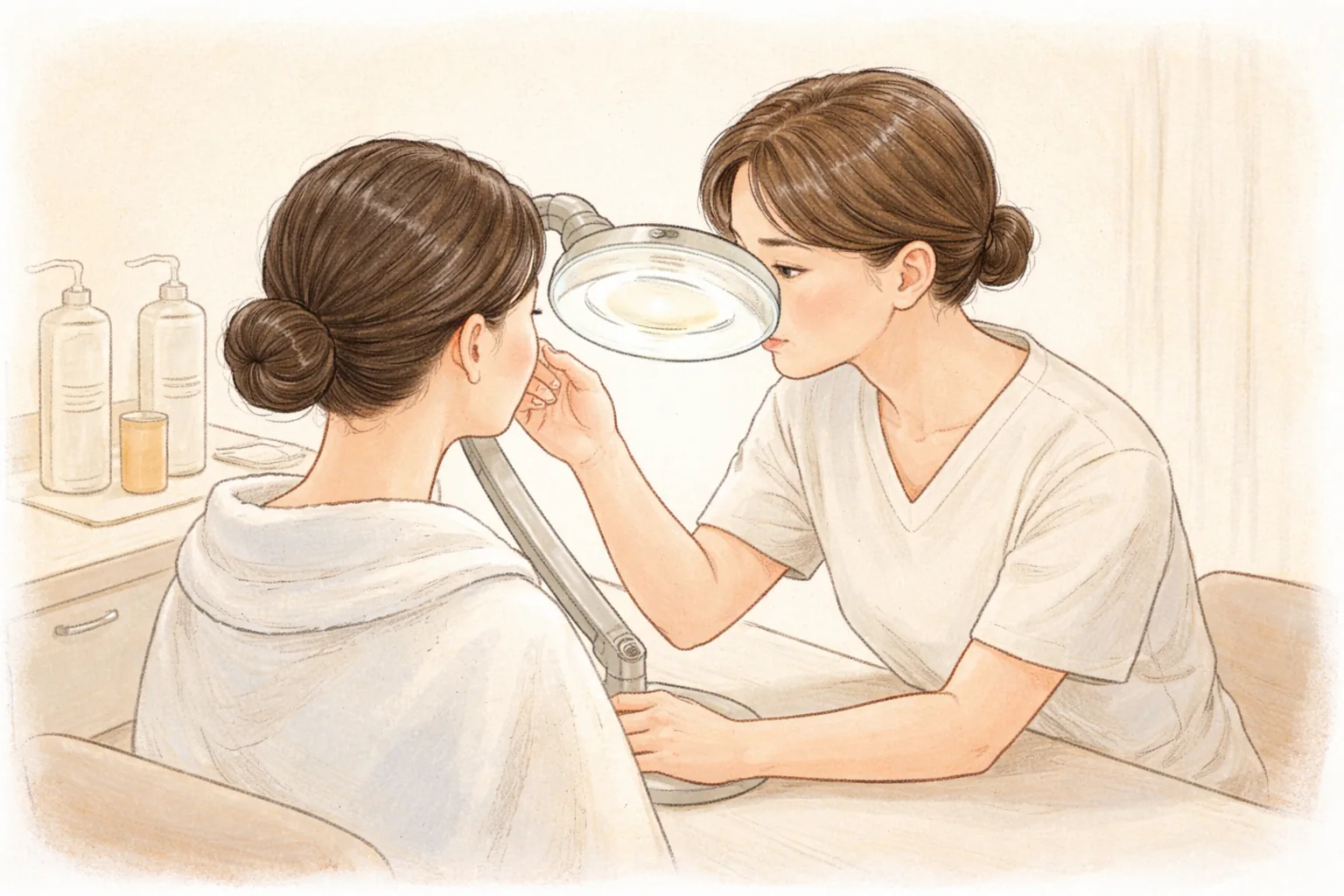
Doctor consultation to interpret the cause — the analysis record, plus skin condition, lifestyle, medications, and cosmetics, are combined to identify the main cause of enlarged pores. At this stage the skeleton of the needed sessions and intervals takes shape.
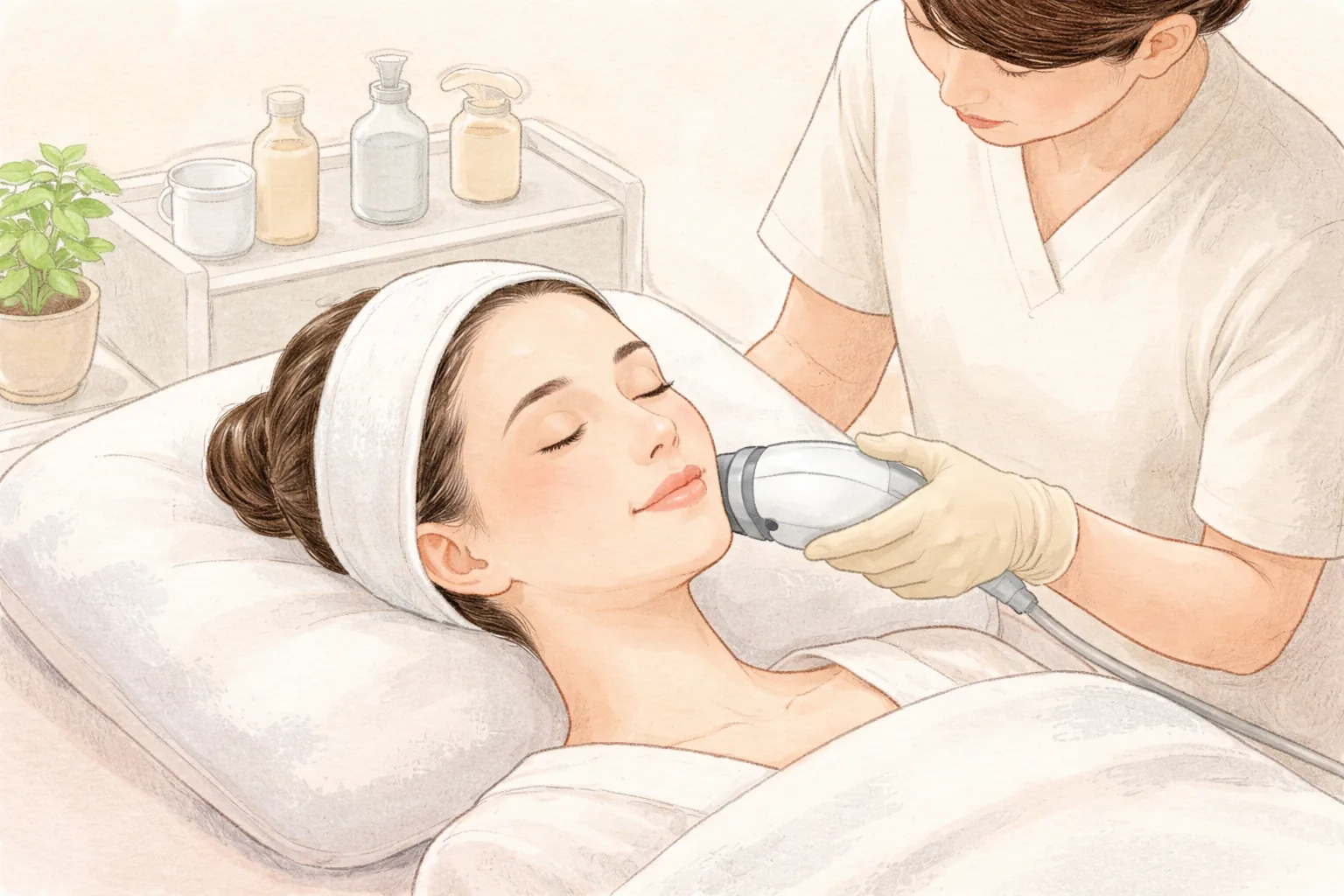
Treatment by the doctor — the doctor personally performs the treatment matched to your type and cause. For pores, devices such as Potenza (microneedling RF) and pico·erbium fractional are used, and we do not recommend more treatment than necessary (treatment guide).
Recovery and care — we guide you to reduce irritation and keep up moisture and sun protection. The next session is set by recovery progress, not by a preset date.
The ATTITUDE Clinic follows the principles of authentic products, correct dosage, and fair pricing, and does not push session counts or intensity excessively for faster results.
Aftercare and side effects
After treatment, you can follow these steps in order.
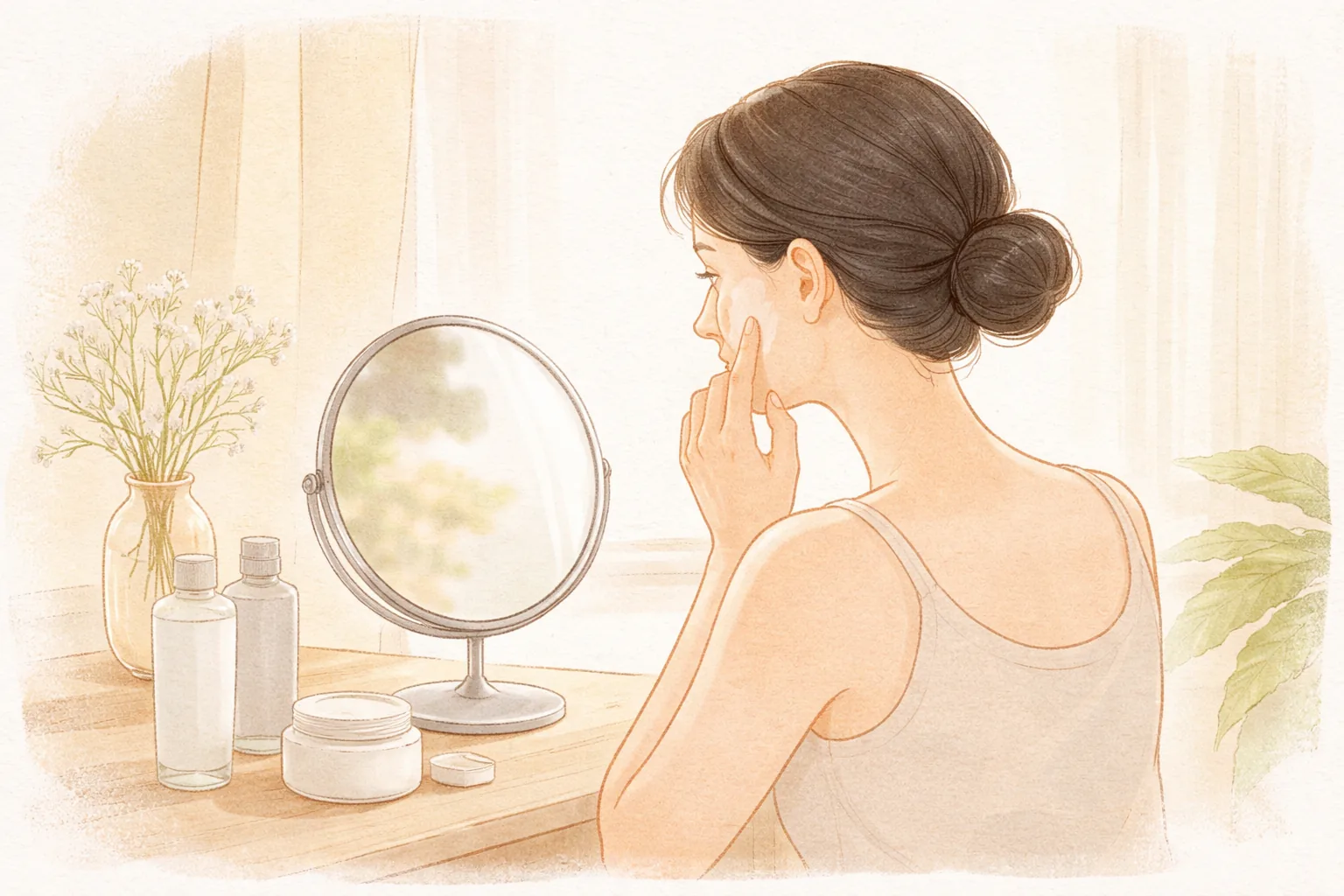
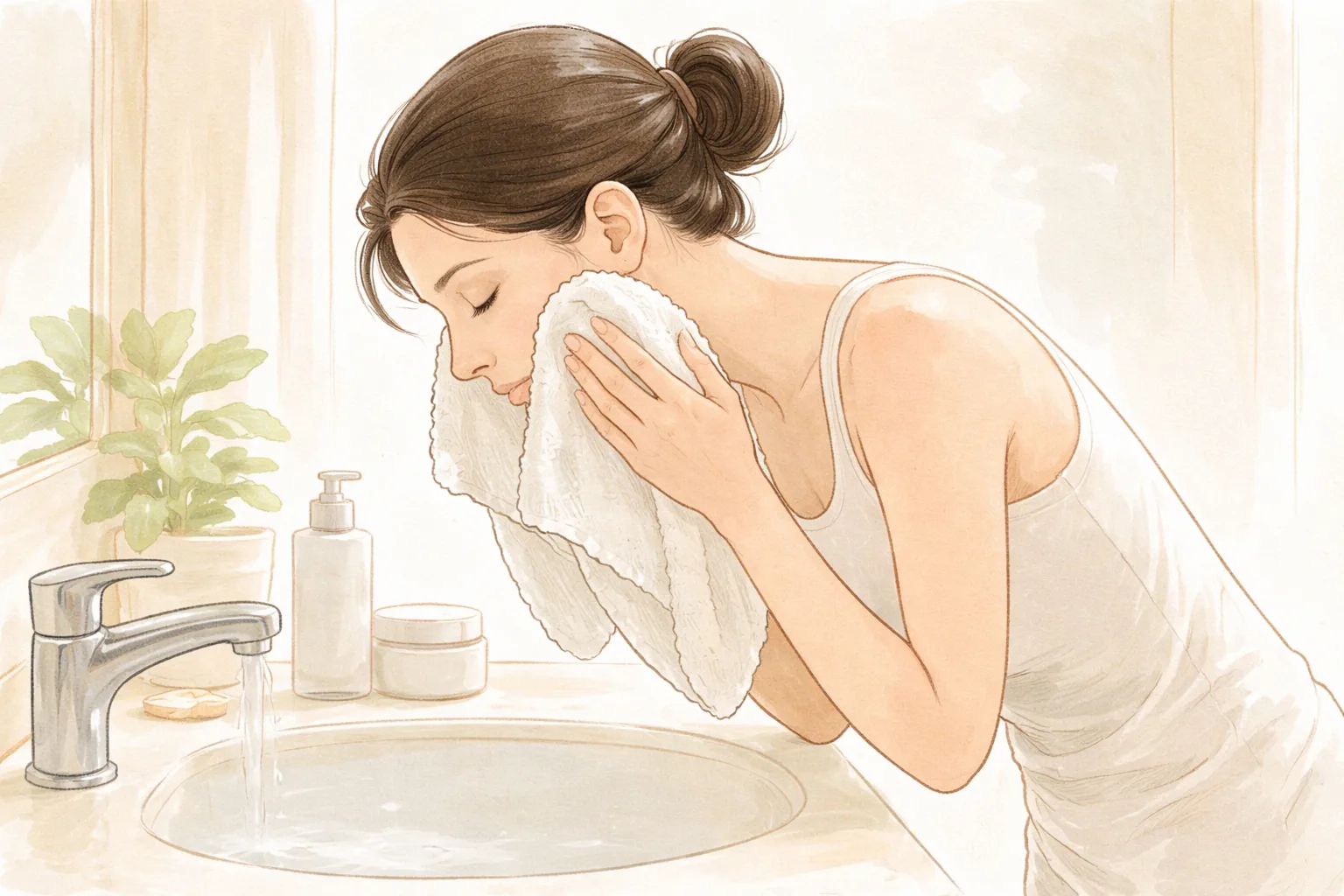
Calm — heat and redness may remain on the day of treatment, so rinse lightly with lukewarm water and minimize rubbing.
Moisturize — dry skin clumps dead skin and easily blocks pores, so apply a hydrating cream often.
Sun protection — for at least 2 weeks after treatment, apply sunscreen carefully and reapply when outdoors.
Check progress — set the next session based on how fast redness and crusts settle.
Common reactions are redness, swelling, dryness, thin crusts, and dot-like marks. After Potenza or erbium YAG laser treatment, these reactions often settle within a few days to 1 week, and temporary pigmentation or breakouts can occur. Rarely, burns, infection, or scarring can occur, and very frequent low-power toning has been reported in association with mottled hypopigmentation (pore column).
There are also times to contact us without waiting: when redness or stinging lasts more than 3 days or suddenly worsens, when blisters form, or when the spot where a crust was removed darkens. These changes delay recovery, so it is better to have them checked at a consultation.
Frequently asked questions
How many Potenza microneedling sessions do I need for pores?
Fractional treatments for pores and skin texture commonly run 3–5 sessions at 4–6 week intervals. If acne scars are also present, 4–6 sessions at 4–8 week intervals is another common plan. These numbers change with skin thickness, recovery speed, and sun exposure. Since the treatment combination differs between sebum type and sagging type, it is natural to confirm your type at the first consultation and then set the sessions.
Is Potenza microneedling effective with just one session?
A single session can produce a temporary change. That change, however, is often closer to swelling or hydration, and collagen takes weeks to settle. Rather than judging right after one session, it is more accurate to set the next one based on photos and condition at 2–4 weeks. It is realistic to see this as an area that does not finish in one session.
Can I return to daily life right after treatment?
Low-power treatments often allow makeup the same day, while high-power fractional or crusting treatments may take 7–14 days to recover. Redness and a sandpaper-like texture can remain for 3–5 days. If you have an important event, it is safer to tell us the date and work backwards. During recovery, avoid saunas, intense exercise, and strong sun exposure.
Do pore strips make pores bigger if used often?
It is hard to state that strips themselves enlarge pores. Pulling them off hard and often can irritate surrounding skin and make pores look more prominent. Surface sebum refills within days even after removal, so care that slows the buildup of sebum and dead skin lasts longer than strips. Squeezing with your hands can damage the pore wall and leave it enlarged, so it is better to avoid it.
How should I choose a clinic for pore treatment?
Look at the order of the consultation rather than the equipment list. Check whether they first distinguish whether your pores are sebum type or elasticity type, whether they tell you both what is needed and what is not, whether they avoid locking you into rigid session counts and intervals, and whether they explain side effects and recovery time. Whether you can get things checked if discomfort arises after treatment is another item to look at.
At a glance
Table 2 At a glance
Item
Key point
Session baseline
Pores & skin texture fractional 3–5 sessions, acne scars 4–6 sessions are common examples
Interval baseline
4–6 weeks, adjusted based on recovery progress
What sets the interval
Time for collagen to settle and skin recovery speed
Differences by type
Treatment combinations differ by sebum, sagging, scar, and combined type
Between-session care
Sun protection, moisture, avoid heat and exfoliation
Signals not to wait on
When redness or stinging lasts more than 3 days or worsens
This article offers general health information. It is not a substitute for diagnosis or treatment based on your own condition, so please talk through your situation with a doctor.