What Can You Do Before Pigmentation and Dark Spots Appear?
How to reduce darkening after laser treatment before it starts. This guide covers how pigment forms, what a consultation should check, UV protection and heat triggers during recovery, and how to judge a clinic.
Written by ATTITUDE Clinic Editorial Team
After a laser or lifting treatment, the skin may look fine right away, only for a darker brown patch to surface in the same spot over time. It's natural to worry that something went wrong, but in most cases this happens because skin that has been temporarily weakened right after the procedure is hit with UV or heat, causing melanin to concentrate in one place. This article walks through how pigment is made, what to check before treatment, and the order of recovery care afterward.
The short version
Pigmentation that appears after a procedure usually comes from UV or heat hitting a skin barrier that has been weakened right after treatment. That's why the two pillars of prevention are identifying your pigment type beforehand and protecting against UV afterward. UV is a major trigger for the cells that produce pigment, so even if a laser reduces pigment, skimping on sun protection can let it reform or deepen (ATTITUDE Clinic column). When melasma is involved, the same laser is used at lower intensity with longer intervals. The same principle applies even when you're not having treatment.
Why does pigment rise after treatment?
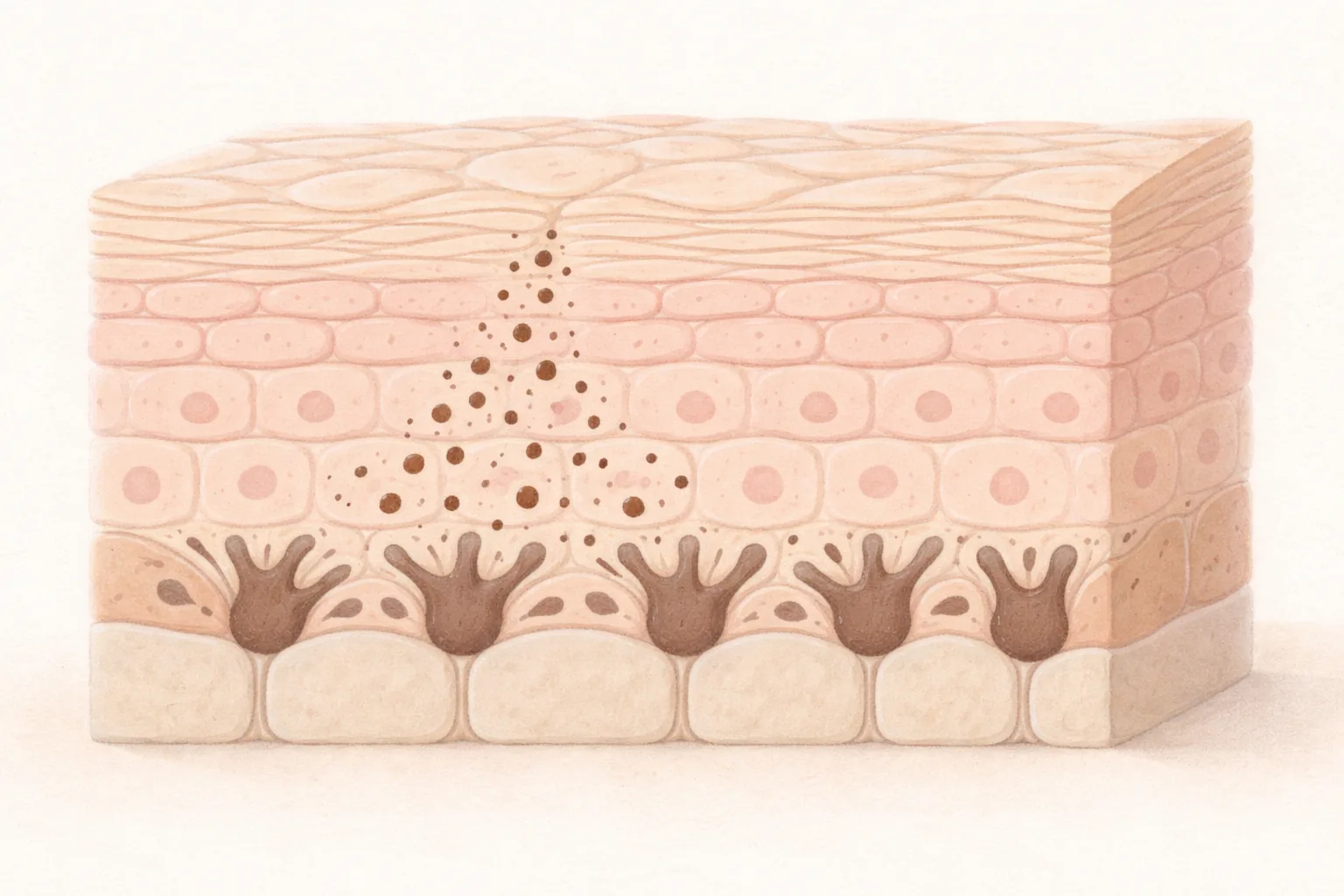
Melanin is the pigment that gives skin, hair, and eyes their color. According to the MSD Manual, melanocytes in the deepest layer of the epidermis, called the basal layer, produce melanin and spread it to surrounding cells, and skin color is determined by the amount of this melanin. When triggers like UV, heat, inflammation, or hormonal changes occur, more melanin is produced to protect the skin, and when it accumulates excessively in one area, it shows up as a brown spot.
The same manual lists causes of hyperpigmentation as inflammatory conditions, drugs or substances, skin that has had inflammation such as atopic dermatitis or psoriasis, and sun exposure. Post-treatment pigmentation follows the same pattern. Lasers are designed to target a specific spot while leaving surrounding tissue mostly alone, but right after treatment the skin's barrier is temporarily weakened. If UV hits during this window, melanin can't spread evenly and tends to stay concentrated in the stimulated area.
Pigment left behind after inflammation or irritation like this is called post-inflammatory hyperpigmentation, or PIH for short (ATTITUDE Clinic column). On skin with melasma, the same column explains that delivering a lot of strong laser at once can trigger a rebound effect that makes pigment darker. So why does color remain exactly where you were treated? Because pigment cells in the stimulated area become more active, and the melanin there doesn't disperse as evenly as elsewhere.
What should you check before treatment?
The first thing to look at is what that spot actually is. Melasma and dark spots may look similar on the surface, but the approach differs depending on whether pigment cells are overactive or the spot came from accumulated UV. The ATTITUDE Clinic column explains that melasma has blurred borders, spreads widely, and is divided into epidermal, dermal, and mixed types, while dark spots tend to have relatively clear borders and are often concentrated in the epidermal layer. It's hard to tell them apart at home by color or location alone, and in practice the two often overlap in the same area.
The second thing to check is whether melasma is mixed in. In melasma, the pigment-producing cells themselves are overactive, so trying to wipe it out at once with strong energy can actually darken the pigment. If spots spread symmetrically across both cheeks with blurry borders, melasma is worth suspecting. This isn't a judgment you make by eye but one made through examination, and the wavelength and intensity differ depending on which pigment is at which depth.
The third is recent UV exposure and lifestyle habits. According to American Academy of Dermatology guidance, safely managing brown spots and age spots starts with understanding why that pigment formed, and treatment is paired with removing the cause and preventing new pigment from forming. Whether you've had a lot of outdoor activity recently, whether you're tanned, and whether you're often exposed to heat all affect when to schedule treatment. Medications you're taking, whether you're pregnant, and how your skin reacted to previous treatments are also things to review in consultation.
Finally, a new mole or one that keeps growing, or a spot that changes shape or color, itches, or bleeds, needs medical evaluation before any cosmetic treatment. Some skin cancers can look like an ordinary brown spot.
Same face, so why different devices?
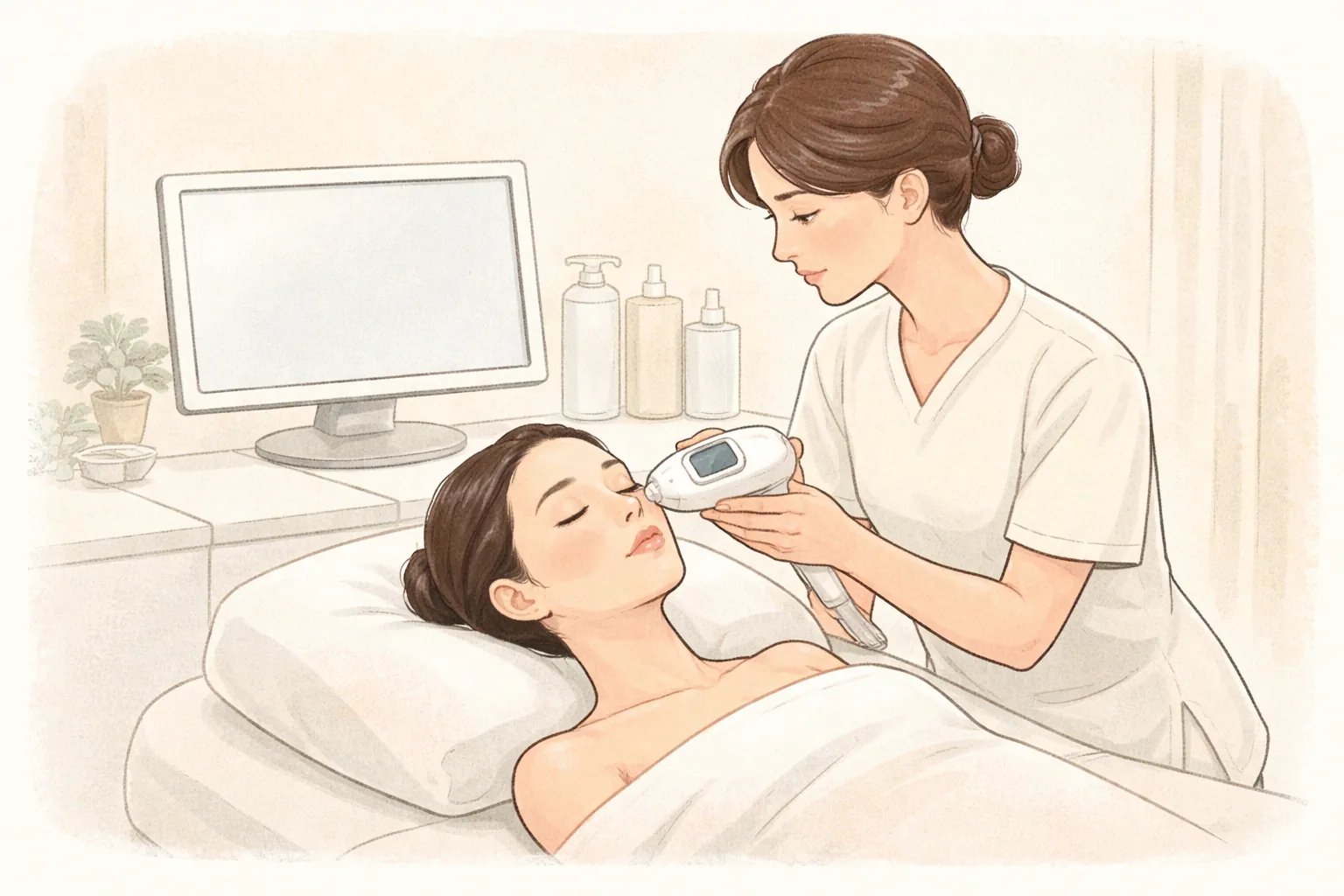
A laser is light energy of a single wavelength, absorbed only by a specific target that responds to that wavelength. This is why lasers targeting pigment, lasers targeting red blood vessels, and lasers smoothing the skin surface are all different (ATTITUDE Clinic column). This principle is called selective photothermolysis, the concept of concentrating energy on the target while touching surrounding normal skin as little as possible.
So even on the same face, dark spots come from pigment, redness from blood vessels, and rough texture from the surface. When several concerns overlap, dividing them by priority rather than doing everything at once reduces the burden on your skin.
Table 1 Same face, so why different devices?
Device
Target
Best suited for
Common reaction after treatment
PicoPlus (picosecond low-power toning)
Pigment
Melasma, widely spread pigment
Temporary redness and tingling, a few hours to same day
Picosecond high-power spot
Pigment
Individual spots like dark spots and freckles
Crusting that falls off after about 7–10 days
Vbeam
Blood vessels
Redness, facial flushing
Redness and swelling, 1–2 weeks if bruising occurs
Erbium YAG laser
Skin surface
Skin texture, dead skin around pores, shallow scar texture
Redness, a few days until the surface settles
Swipe sideways to see the whole table.
In short before asking which device is best, you first need to determine whether your concern comes from pigment, blood vessels, or the skin surface. Once the cause is identified, wavelength, intensity, and intervals follow, and then recovery time can be predicted. If you've had this order confirmed before treatment, you'll be far quicker to respond if pigment rises afterward.
Why be more careful when melasma is involved?
Melasma is a state in which UV, hormones, and heat work together to overactivate pigment cells. Even if a laser temporarily reduces the pigment, it tends to reform over time, so the default approach is repeated management at lower energy rather than one blast of strong energy. On top of that comes cause management such as UV protection and, when needed, medication.
Using strong energy on melasma can make it look temporarily lighter, then rebound pigmentation can occur as pigment cells are stimulated and the color deepens instead. This is where a plan to clear dark spots quickly can backfire on skin with melasma. That's why you first check whether melasma is mixed in before treatment, and if it is, the plan lowers intensity and adds intervals.
Melasma also has a higher chance of recurrence than other pigment conditions. Whether it's epidermal or dermal, cause management needs to happen alongside treatment, and sun protection must continue even after treatment ends (ATTITUDE Clinic column).
Even without treatment, pigment forms every day
Pigment isn't only created during treatment. Just as the MSD Manual lists sun exposure as a cause of hyperpigmentation, everyday UV exposure accumulates and creates and deepens pigment. Areas that have had inflammation, such as atopic dermatitis or psoriasis, can also retain pigment. That means if skin stays red, itchy, and flaky for a long time, color can remain in that spot.
So if your skin forms pigment easily, sun protection is fundamental not just around treatment but every day. Under the same amount of sunlight, one person develops melasma, another accumulates dark spots, and another sees no change at all. This is because the amount and distribution of melanin production differ from person to person.
Heat is in the same category. When skin temperature rises, blood vessels dilate and pigment cells can reactivate, so during recovery it's better to avoid saunas, jjimjilbangs, and intense exercise.
In these situations
When a ceremony or photo shoot is a few weeks away
For high-power treatments with long recovery, work backward from the date to adjust timing. While redness and crusting remain, makeup and shoot lighting can be a burden. If you tell us the date in advance, we can align the treatment type, intensity, and start timing together (ATTITUDE Clinic column).
Summer or seasons with lots of outdoor activity
In seasons with strong UV, the risk of post-treatment pigmentation is higher than at other times. As long as sun protection is thorough, treatment can proceed regardless of season, and low-power toning or maintenance treatments have relatively few seasonal restrictions. If your lifestyle involves a lot of outdoor activity, it's better to move long-downtime treatments to a period with less exposure.
Sensitive or easily reddened skin
When the skin barrier is weakened, the response to treatment intensity can differ. If cosmetics sting or your skin has become unusually sensitive, it's better to let us know before treatment. This is where decisions to lower intensity or postpone treatment come from.
International visitors on a short stay
Recovery time and revisit scheduling need to be calculated together. How long crusting takes to fall off or redness takes to settle differs by treatment type, so if you tell us your stay schedule, we can build a plan that fits within it. It's also good to decide in advance how you'll check on your progress after returning home.
Please tell us before your consultation
Recent outdoor activity and how tanned you are, medications you're taking and whether you're pregnant, skincare products you're using (especially exfoliants and retinoids), any experience of redness or pigment lingering after previous treatments, and fixed dates such as ceremonies or photo shoots. These items are used directly to set intensity and timing.
How ATTITUDE Clinic handles this
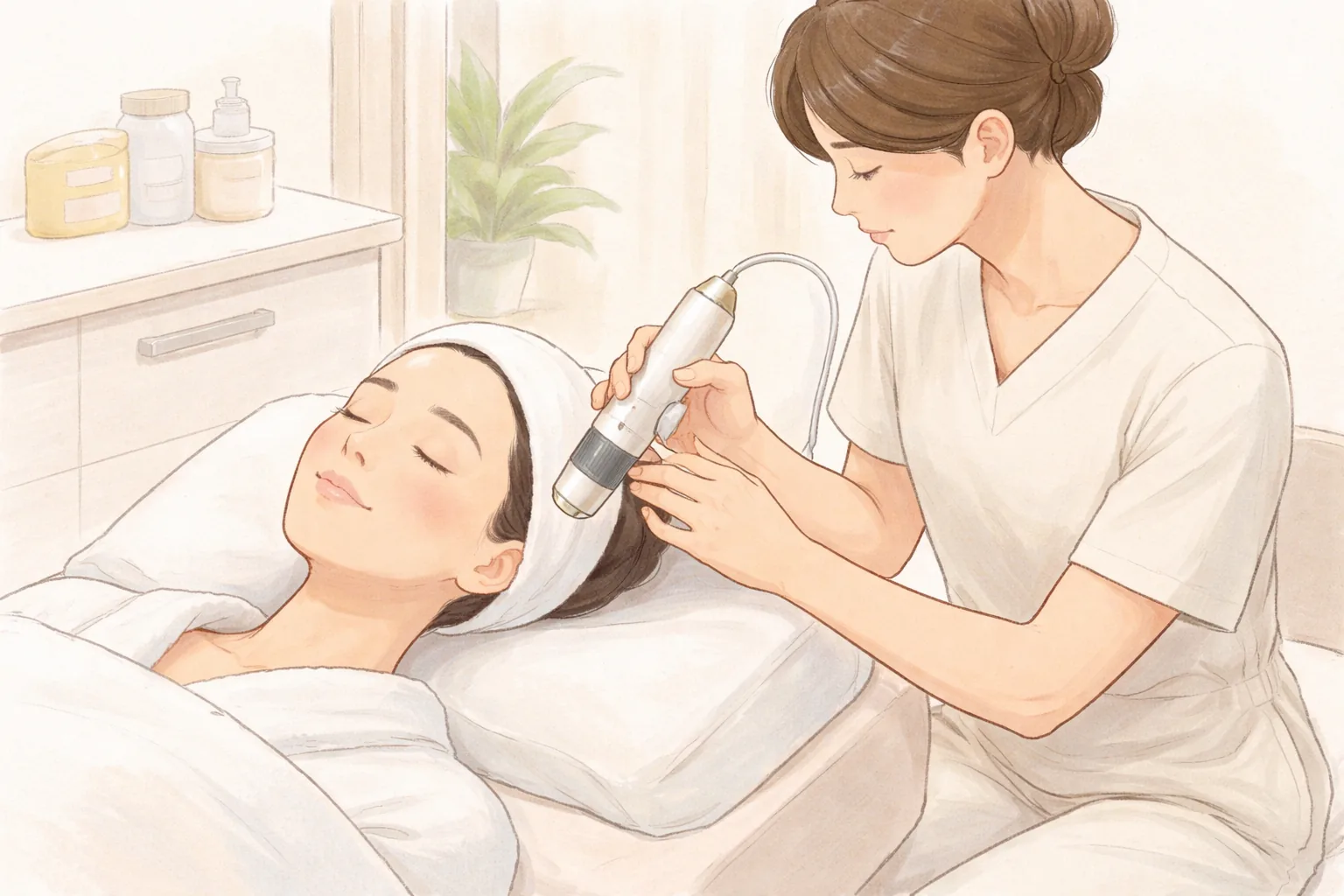
AI skin analysis record — Records and organizes your current skin condition, including pigment, redness, texture, and pores. The analysis tool is a recording aid that supports consultation and does not make a medical diagnosis. Judgment is made by the doctor through examination.
Doctor consultation to interpret type and cause — The doctor adds lifestyle habits such as UV exposure and hormonal changes and your concerns to the analysis record, determines your pigment type, and designs a treatment combination. What you need now, what you don't, and the order are decided together.
Treatment performed directly by the doctor — Among the devices we have, including PicoPlus, Vbeam, and Erbium YAG laser, the one matching your pigment type is selected, and the doctor personally adjusts intensity and combination. If melasma is mixed in, treatment proceeds at lower energy with intervals.
Recovery and care — After treatment, guidance focuses on sun protection and moisturizing, and the timing of the next session is set after reviewing your progress. Our principle is not to recommend more sessions than necessary.
The devices used for pigment treatment are PicoPlus, Vbeam, Erbium YAG laser, and laser toning, and which combination to use is decided in consultation based on pigment type and depth (ATTITUDE Clinic column).
Post-treatment care and side effects
The order after treatment can be set up like this.
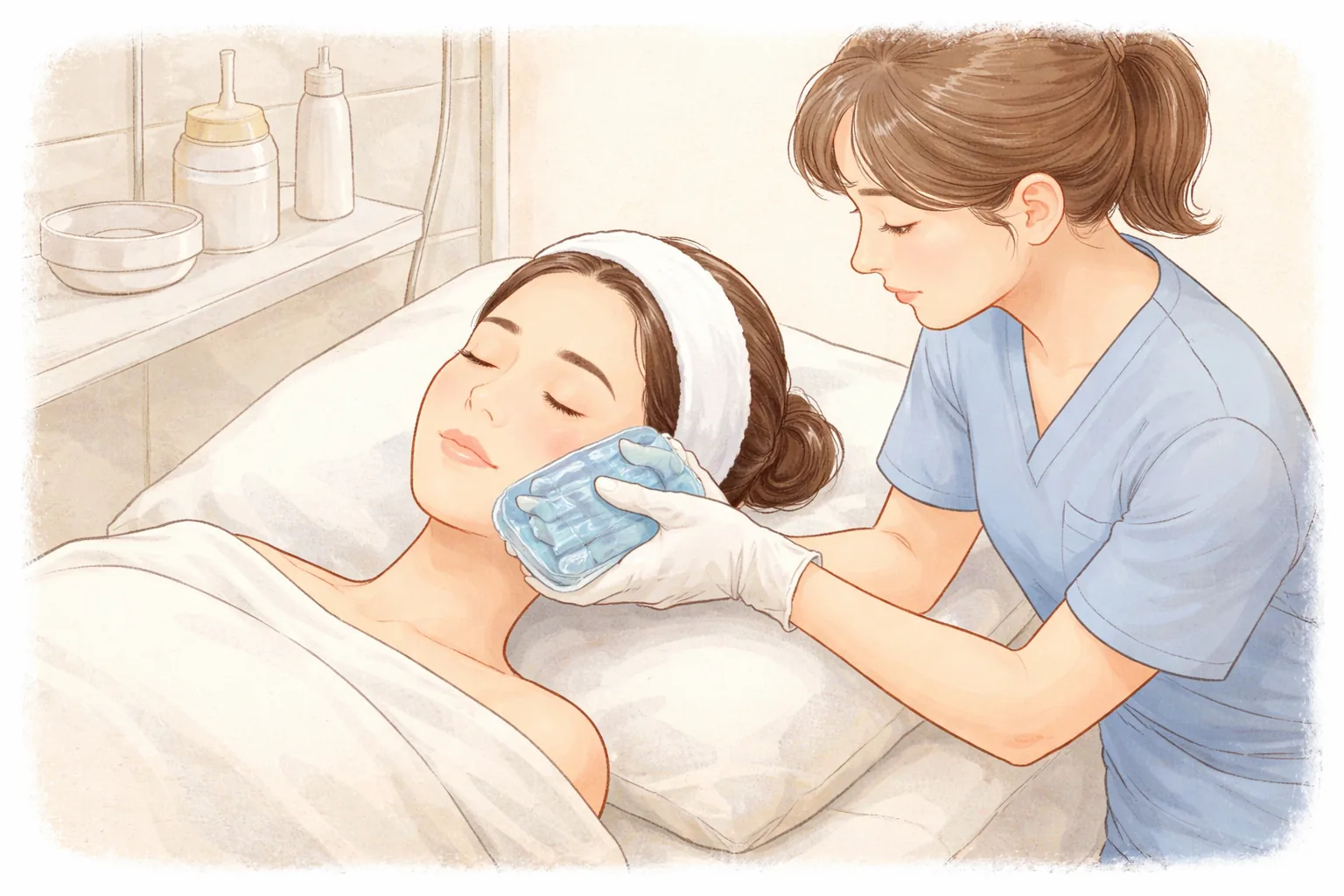
Calming — Right after treatment, avoid triggers that raise skin temperature. Saunas, jjimjilbangs, and intense exercise are best avoided during recovery.
Moisturizing — Skin tends to dry out during recovery, so apply the moisturizer you're advised to use consistently. Exfoliation or scrub-type rubbing care is postponed for the period you're advised.
Sun protection — Apply SPF 50+ sunscreen for at least 2 weeks, and reapply about every 2 hours outdoors. Skimping on protection during this window can cause pigmentation on newly formed skin and undo the results of your treatment.
Progress check — For treatments that cause crusting, leave it alone until it falls off on its own. Picking at it can damage new skin and leave pigmentation or scarring.
Common reactions are redness, heat sensation, swelling, and tingling, and surface-treating procedures such as pigment spot lasers or Erbium YAG laser can cause crusting. If skin is dark or tanned, temporary pigmentation can occur, and Vbeam can cause bruising. Rarely, blisters, hypopigmented patches where skin lightens, infection, scarring, or pigment returning over time can occur (ATTITUDE Clinic column).
There are also signals you shouldn't ignore. If redness or heat lasts more than 3 days or suddenly worsens, if indentation or color change appears after crusting falls off, or if pigment marks widen, darken, and harden, it's better to visit and get checked rather than wait.
Frequently asked questions
How are melasma and dark spots different?
Melasma is a state in which UV, hormones, and heat work together to overactivate the pigment cells themselves, and it spreads widely with blurry borders. Dark spots are spots caused by accumulated UV and aging, with relatively clear borders, often concentrated in the epidermal layer (ATTITUDE Clinic column). In practice, though, melasma and dark spots often overlap in the same area or take an intermediate form, making them hard to distinguish at home by color or location alone. If the borders look blurry to the eye and spread symmetrically across both cheeks, melasma is worth suspecting as well. This is why the type is confirmed by examination before treatment.
Can post-laser pigmentation be prevented before treatment?
The core of prevention is confirming your pigment type before treatment and sun protection afterward. Checking first whether melasma is mixed in and approaching with lower intensity can reduce the situation where strong stimulation darkens pigment. After treatment, apply SPF 50+ sunscreen for at least 2 weeks, reapply about every 2 hours outdoors, and leave crusting alone without picking at it (ATTITUDE Clinic column). If you've had a lot of outdoor activity recently or are tanned, adjusting the timing is also an option. Whether your skin forms pigment easily is checked together in consultation.
How many laser toning sessions do I need?
The number varies with pigment depth, skin condition, and lifestyle. Common examples in the ATTITUDE Clinic column show dark spots at 1–3 sessions with 4–8 week intervals, and melasma or widely spread pigment at 8–12 sessions or more of low-power toning with intervals of at least 1 week (ATTITUDE Clinic column). These figures are just common examples, and the actual number and intervals are set after examination. With toning, keeping to the intervals matters, and repeating too frequently can burden the skin barrier (ATTITUDE Clinic column).
If pigmentation has already formed, is it still worth protecting against UV now?
UV is a major trigger for the cells that produce pigment, so continuing sun protection helps reduce the trend of pigment being produced further or darkening. Right after treatment, the skin barrier is weakened, so protection needs to be more thorough than usual. How to fade pigment that has already formed is decided after checking its type and depth. Because the approach differs depending on whether it's melasma or dark spots, the order is to continue protection while deciding the next step in consultation (ATTITUDE Clinic column).
What should I check when choosing where to get pigment treatment?
It's better to look at the flow of care than at a device list. The first thing is whether they check before treatment whether your concern comes from pigment, blood vessels, or the skin surface. It also helps to see whether they recommend only the treatments you need and don't force a fixed number of sessions or intensity, and whether they sufficiently explain pain, recovery schedule, and post-treatment precautions during consultation. Whether they're a place you can get checked if discomfort arises after treatment is another criterion (ATTITUDE Clinic column).
At a glance
Table 2 At a glance
Item
Key point
How pigment forms
Melanocytes respond to UV, heat, inflammation, and hormonal triggers by producing more pigment
Post-treatment pigmentation
UV or heat hits weakened skin, and pigment concentrates in the stimulated area
Before treatment
Pigment type, whether melasma is involved, recent UV exposure and lifestyle habits
Two pillars of prevention
Confirm type before treatment, protect against UV and manage heat afterward
Protection during recovery
SPF 50+ for at least 2 weeks, reapply about every 2 hours outdoors
How to choose a clinic
Cause identification, avoiding excessive sessions, explaining recovery schedule, ability to follow up
This article offers general health information. It is not a substitute for diagnosis or treatment based on your own condition, so please talk through your situation with a doctor.