Radiesse Pain: How Anesthesia and Injection Site Shape the Difference
Where Radiesse discomfort comes from, what topical numbing and anesthetic-mixed filler each reduce, and how injection site and dilution change what you feel.
Written by ATTITUDE Clinic Editorial Team
The question that comes up most before any injectable is, in the end, pain. Radiesse is a familiar name, but it is hard to picture how much it actually hurts or how much anesthesia changes things. Pain is not decided by the needle alone. It is a sensation built together by where the product goes, how much goes in and at what concentration.
The short answer first
Radiesse is an injectable in which calcium hydroxylapatite (CaHA) microspheres are suspended in a gel; the gel fills the space first, and the remaining particles stimulate collagen production (PubMed review). The pressure of the gel spreading tends to linger longer than the pinch of the needle going in. The Mayo Clinic notes that an anesthetic is used before facial fillers are placed and that, in some cases, an anesthetic is mixed into the filler itself (Mayo Clinic). So how much it hurts depends on how anesthesia was prepared, how thin the skin at the injection site is, and how much is placed at once. That is why the same procedure feels different from person to person.
What goes into Radiesse that makes it hurt?
The body of Radiesse is carboxymethylcellulose (CMC) gel. CaHA microspheres are suspended in it, so when it is pushed through the syringe, the gel presses tissue aside to make room for itself (PubMed). The sensation of a filler going in is usually this pushing pressure. Even with a thin needle, the gel presses on surrounding tissue as it creates space to spread into.
The PubMed review describes Radiesse as used to fill wrinkles and lines, restore volume and shape contours. It also mentions use for collagen stimulation and skin elasticity. The same product is used differently depending on the goal. That difference carries straight through to pain. A thicker concentration puts more material in one spot, while a diluted version spreads the same vial over a wider area.
People often say "fillers hurt about the same no matter the type." The act of injecting is the same, but how much of which substance goes in varies by product. A product with immediate filling properties, like Radiesse, tends to make the injected volume itself feel like stimulation.
How is anesthesia prepared, step by step?
According to Mayo Clinic material, an anesthetic is used before facial filler treatment, and sometimes an anesthetic is mixed into the filler itself (Mayo Clinic). In practice, anesthesia is prepared in two branches. One is topical anesthesia, where numbing cream is applied to the skin surface to dull sensation. The other is mixing an anesthetic into the injected product.
Topical anesthesia focuses on reducing sensation where the needle enters. Mixing anesthetic into the product, by contrast, lowers the discomfort of the gel spreading as well. Which approach fits depends on the site, the volume and how sensitive your skin is, so it is decided in consultation. An ATTITUDE Clinic column also notes that fine adjustment of intensity at the treatment site and anesthesia management are areas that manuals alone cannot cover.
Anesthesia does not erase the pressure itself. Rather than expecting pain to reach 0, lowering it to a tolerable level is the realistic goal. Anesthesia reduces different amounts depending on the type of pain.
What makes pain worse?
The biggest variable is the site. The ATTITUDE Clinic column explains that thin versus thick skin, and how dense the tissue under the skin is, change how much stimulation is felt even at the same intensity. Thin-skinned areas like the back of the hand or the neck feel more even at the same stimulation, while thicker areas like the cheek or chin feel relatively duller.
The second is concentration and volume. The PubMed review also mentions use of Radiesse diluted several-fold. When diluted, the filling force drops and it spreads more evenly over a wider area, so the nature of the injected pressure changes (PubMed).
The third is how fast it goes in at once. Even the same amount gives tissue time to adapt when injected slowly in portions. Watching skin response during the procedure and adjusting speed and pressure falls here. The fourth is the day's tension. When the body is braced, the same stimulation feels stronger.
Table 1 What makes pain worse?
Factor
How it affects pain
What is reviewed in consultation
Injection site
Thinner skin feels more even at the same stimulation
Injection depth and volume by site
Dilution and dose
Thick means more in one spot; diluted means spread wider
Injection site and volume
Anesthesia method
Topical dulls surface sensation; mixed anesthetic lowers discomfort as it spreads
Skin response and sensitivity
Adjustment during procedure
Injecting in portions gives tissue time to adapt
Whether the doctor performs the procedure
Swipe sideways to see the whole table.
In short Radiesse discomfort often comes from the pressure of the gel making room rather than the needle. Because site, concentration and anesthesia preparation all play a part, how much it hurts is set alongside the pre-treatment plan.
What does it feel like right after?
Many people ask, "Will it be fine right after?" After an injectable, redness, swelling, tenderness when pressed and bruising are common and usually settle within a few days. Mayo Clinic also lists swelling and pain, bleeding and bruising, and itching as common filler reactions (Mayo Clinic).
Less commonly, skin may temporarily darken or lighten in color, blisters or post-injection lumps may appear. If the skin at the injection site turns white or gray-blue, or your vision changes, do not wait—seek care immediately. Mayo Clinic notes that if filler enters a blood vessel incorrectly, tissue death or vision loss can occur (Mayo Clinic). Pain that does not ease over time and instead gets worse should not be ignored either.
If this sounds like you
If you are considering a thin area like the back of the hand or neck
Thin-skinned areas feel more even at the same stimulation. Diluting and spreading the product reduces the pressure of filling volume. Because a wider area is treated at once, though, discuss anesthesia preparation and speed control together.
If a ceremony or shoot is a few weeks away
Swelling and bruising usually settle within a few days, but once bruising appears, it can take time to fade. Scheduling the procedure with margin in your calendar takes the rush out of it. Booking a follow-up date in advance is another option.
If your skin is sensitive or flushes easily
How much skin reacts to stimulation and how fast it recovers vary from person to person. Even with the same amount, the plan is adjusted toward injecting in portions and lowering intensity. If redness has lasted a long time after a previous treatment, bring that up first.
If you are an overseas visitor on a short stay
It is safer to schedule a follow-up visit within a few days after the procedure. Your departure date and a way to reach you are set together in consultation.
Tell us before your consultation Recent sun exposure and travel plans, medications you are taking (including blood thinners), skin products you use, how you reacted to previous injectables, whether the area has inflammation or infection, pregnancy or breastfeeding, and any dates you must avoid.
How ATTITUDE Clinic proceeds
Precise diagnosis and skin analysis Skin condition is recorded with a device and organized for review together. The analysis tool records and organizes information only; it does not make a medical diagnosis, and judgment rests with the doctor.
Doctor consultation Your concerns, previous treatment history and the recovery time you have available are added to the record, and the site, concentration and anesthesia method are decided together.
Procedure performed by the doctor The doctor carries out the agreed plan and adjusts speed and pressure while watching skin response during the procedure.
Recovery and aftercare Progress is checked after the procedure, and guidance is given on when to return to daily life and what to watch for.
Four steps your doctor sees to in person
From the diagnostic device to the treatment bed, the doctor you first consult takes care of everything.
01
Precision diagnosis
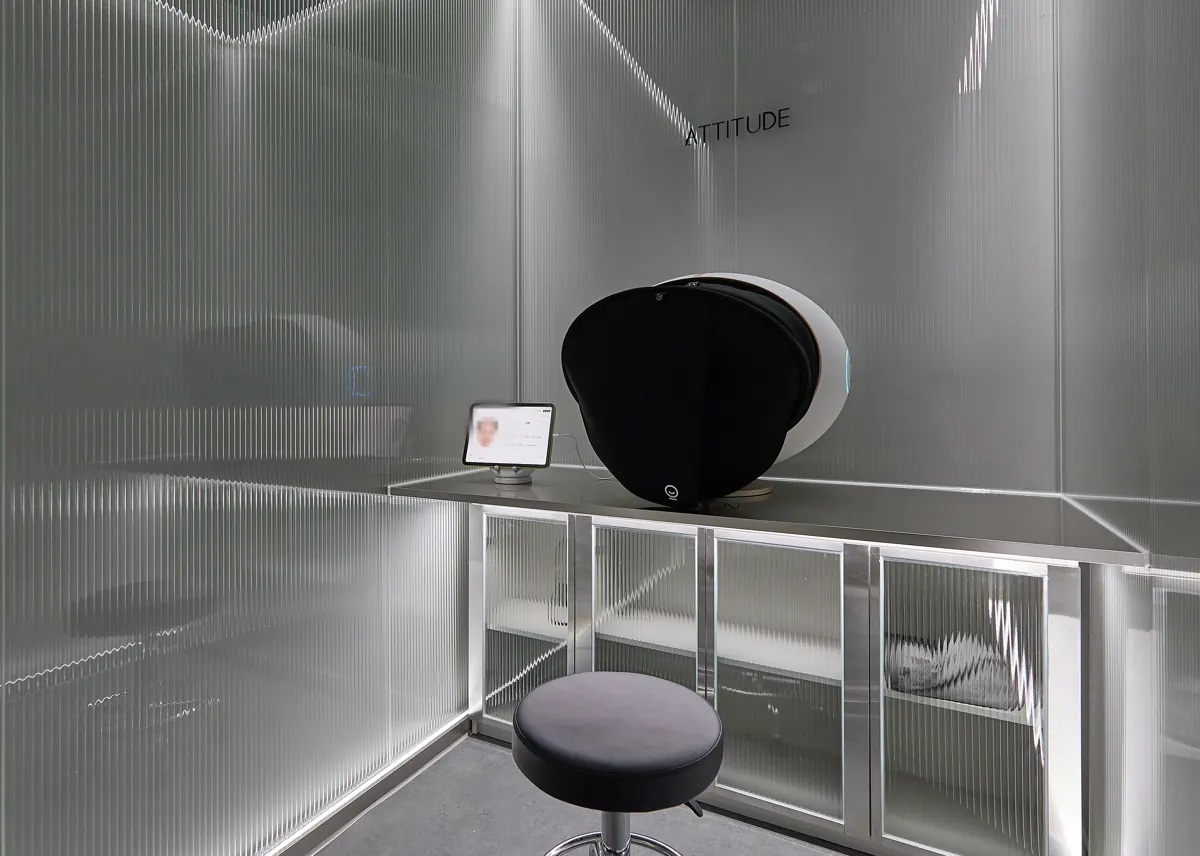
In a private diagnosis room the whole face is photographed, recording even skin conditions that are hard to see with the eye.
02
Skin analysis
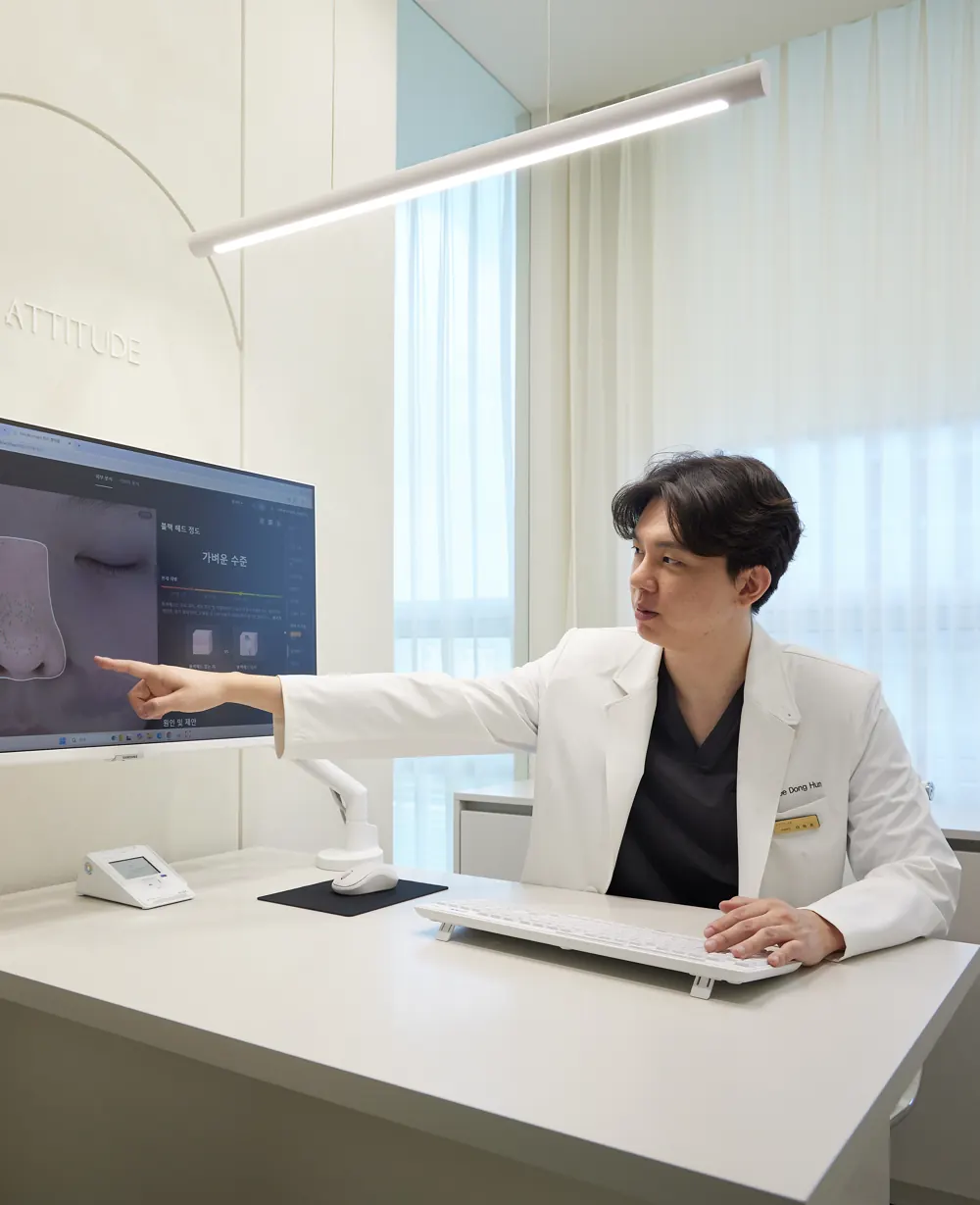
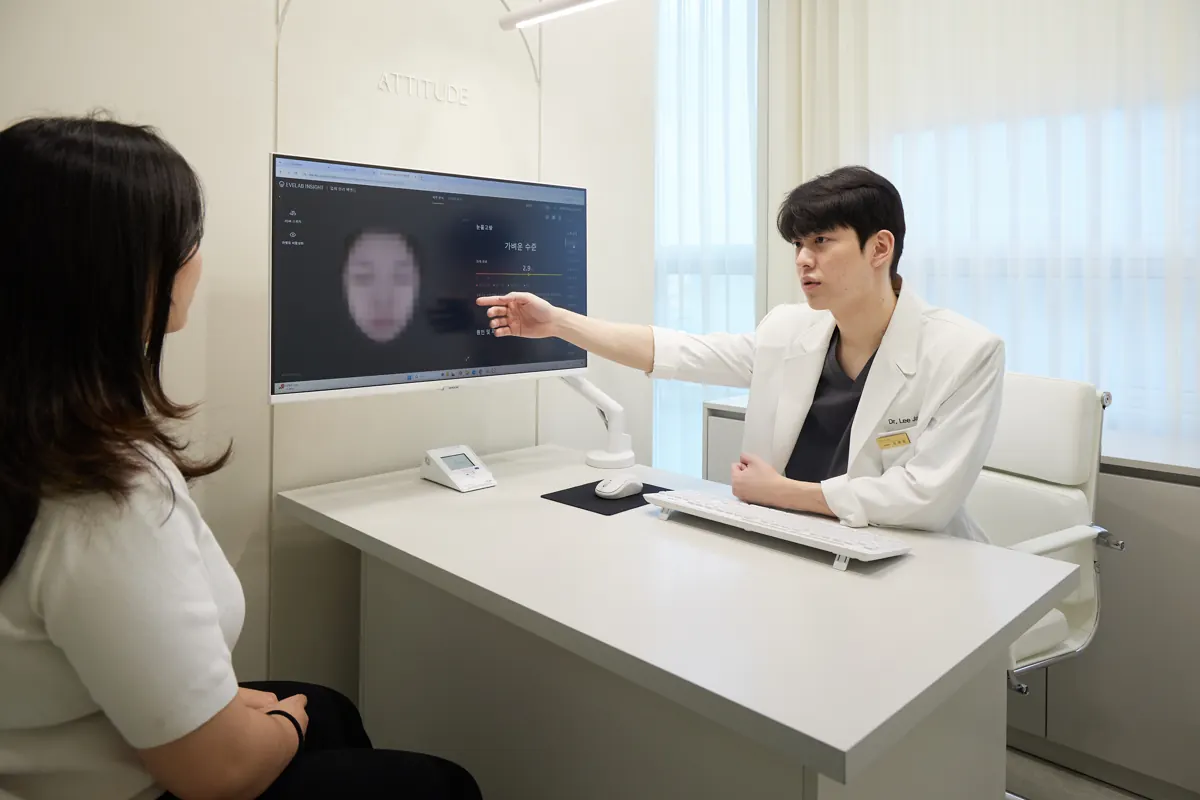
The doctor goes through your pore, pigmentation, wrinkle and firmness results with you on screen and explains what comes first.
03
One-to-one design
With your skin, the balance of your face, the change you want and your schedule in view, you decide the treatment and its extent together.
04
Treatment by your doctor
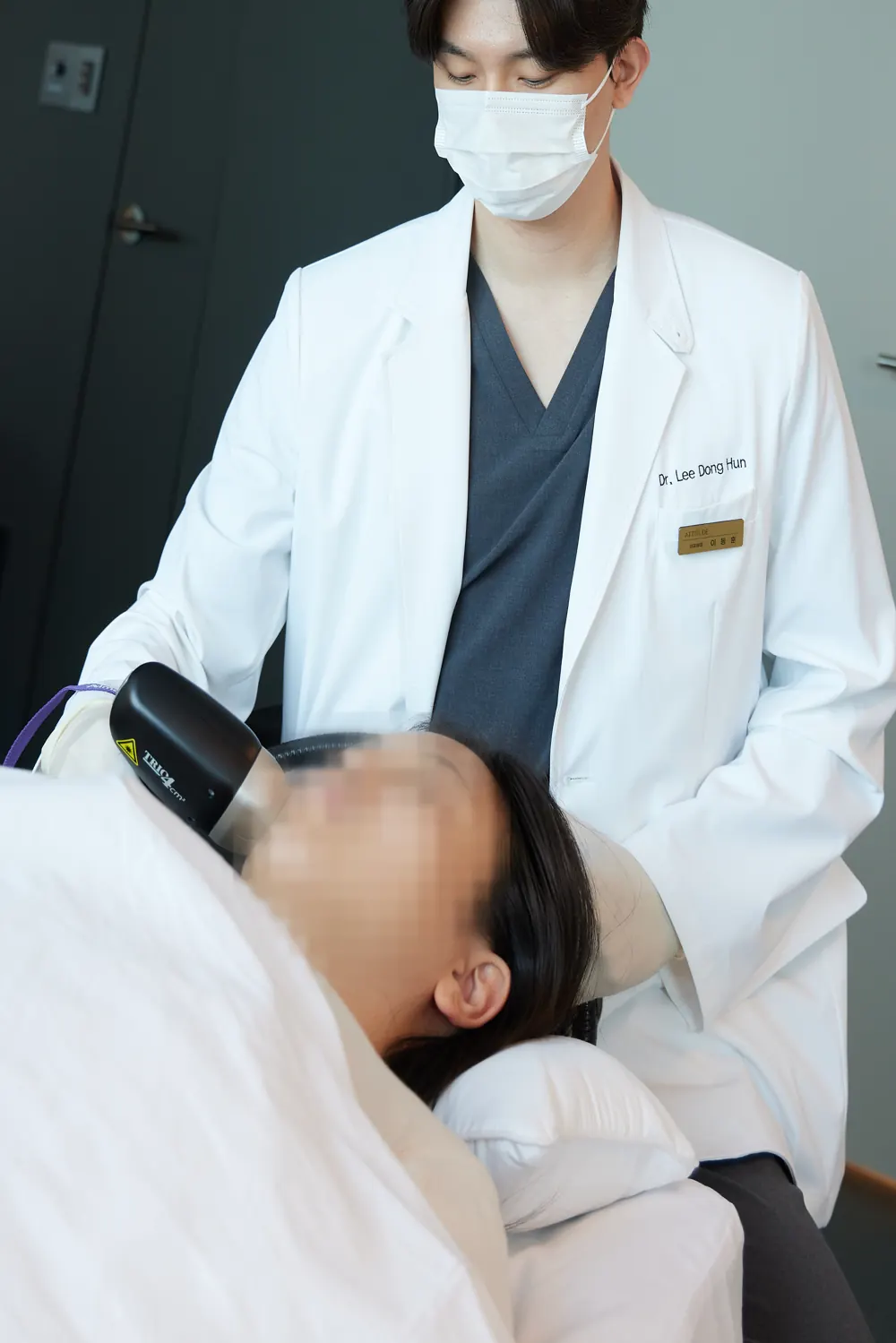
The doctor who consulted you performs the treatment from start to finish in a private treatment room. No one takes over halfway.
“I take injection pain seriously.”
Co-Director Dr. Lee Dong Hun
Many people hesitate over injection treatments because they hurt. So we went back over everything, from the anesthetic to the products used.
Careful numbing, unhurried timingWe allow plenty of time for a special numbing cream to take full effect, and add anesthetic injections for the treatments and areas that need them.
Fine needles, finished quicklyInjection treatments use fine needles, and the doctor finishes them personally in a short time, adjusting along the way by watching how you are doing.
Even the product formulation countsThe same treatment can feel more or less demanding depending on the product, so we take that into account too.
The anesthetic method and whether it is used are decided after an examination, according to the treatment, the area and your condition. How much it hurts varies from person to person.
The product used for this topic is Radiesse (Merz). The clinic's information lists a standard price of KRW 1,500,000 per 1 vial (VAT excluded); the actual amount charged is confirmed on the treatments and pricing page.
Aftercare and side effects
The aftercare sequence ATTITUDE Clinic gives after an injectable is as follows.
Soothing On the day of the procedure, do not press or rub the injection site hard. Skip strenuous exercise, alcohol and saunas that day.
Washing and makeup Washing is guided to start gently a few hours later, and makeup to start the next day.
Sun protection Reapply sunscreen carefully during the recovery period.
Progress check See whether swelling and bruising settle within a few days. If swelling, pain or fever continue, contact the clinic.
Common reactions are redness, swelling, tenderness and bruising. Itching or a rash may be added (Mayo Clinic), and less commonly color change, blisters, post-injection lumps, infection or allergic reaction can occur. If swelling, pain or fever continue, or the injection site becomes increasingly red and hot, you need to get in touch.
Some signals mean coming in rather than waiting. Pain that keeps worsening, skin color turning white, mottled or gray-blue, or a feeling that your vision has changed. In these cases, evaluation comes before watching and waiting.
Frequently asked questions
How painful is Radiesse?
There is no number that can be promised. Pain is set together by skin thickness at the site, injection volume, concentration and anesthesia method. The pressure of the gel spreading tends to linger longer than the needle, and thin areas like the back of the hand or neck feel more. It also feels different depending on your condition and tension that day. Raising the topic of pain when the site and volume are decided in consultation leaves room to adjust.
How is anesthesia done?
There is topical anesthesia, where numbing cream is applied to the skin, and a method of mixing an anesthetic into the injected product (Mayo Clinic). The former lowers sensation where the needle enters; the latter lowers discomfort while the gel spreads. If the area is broad or the volume large, mixing is considered first; if surface stimulation is the concern, topical is considered first. Even with anesthesia, the pressure does not disappear entirely.
Can lumps or foreign-body reactions occur?
They can. Post-injection lumps occur uncommonly, and rash, infection and allergic reaction have been reported (Mayo Clinic). That is why the step of planning injection depth and volume matters. If a lump remains noticeable for a while, do not rub it—tell the clinic. If you are planning another injection in the same area, it is best to review previous treatment records and how you reacted then during consultation. After the procedure, do not press or rub the injection site hard, and tell the clinic if swelling, pain or fever continue.
How long do results last?
Mayo Clinic notes that Radiesse results can last around 1 year when used for contouring and up to 3 years when used to fill wrinkles (Mayo Clinic). However, no randomized controlled trials yet exist for diluted or several-fold diluted use (PubMed). That means the strength of the evidence differs by purpose and concentration, so it is better to set expectations for your own plan in consultation.
What should I check when choosing a clinic?
Mayo Clinic advises treatment by someone who understands anatomy, has performed the same procedure many times, and can handle emergencies (Mayo Clinic). It also helps to look at how anesthesia is prepared, whether adjustments are made based on response during the procedure, and who performs it. Whether previous treatment records are reviewed is another point to check.
At a glance
Table 2 At a glance
Item
Key point
What the pain is
Pressure of the gel spreading and making room, more than the needle
Anesthesia preparation
Topical anesthesia or anesthetic mixed in, chosen by site and volume
What increases pain
Thin skin, thicker concentration and larger volume, fast injection
Common reactions
Redness, swelling, tenderness, bruising, usually settling within a few days
Signals to contact the clinic
Skin color change, vision change, worsening pain
Choosing a clinic
Understanding of anatomy and emergency handling, anesthesia preparation, who performs it
This article offers general health information. It is not a substitute for diagnosis or treatment based on your own condition, so please talk through your situation with a doctor.