
Doctors’ Column
Do collagen injections such as Re2O really add collagen to your skin?
Partly, by design. Elravie Re2O (also written Rituo) is, according to its maker, based on extracellular matrix (ECM) from donated human skin tissue that has been processed to remove cells, so it places collagen-containing material into the skin, whereas polynucleotide (PN) and hyaluronic-acid (HA) boosters aim to support or hydrate the skin's own tissue. How much of that material remains, how the skin responds and how long any change lasts vary from person to person and are still being studied, so whether it suits you is a decision to make with a doctor.
What does “collagen injection” mean in Korea?
“If I have a collagen injection, does collagen build up in my skin?” It is a reasonable question, and the answer depends on the product, because the term is used loosely. In Korea it can mean collagen stimulators such as Juvelook (PDLLA) and Sculptra (PLLA), which prompt the skin to make collagen over time; boosters such as Rejuran (PN), which are thought to support the skin's repair processes; or products such as Re2O, which contain collagen-matrix material themselves. When a clinic suggests a “collagen injection”, ask for the product name.
To understand Re2O, it helps to know what it is modeled on. The dermis, the layer beneath the surface, is held together by the extracellular matrix: a scaffold, a little like the steel frame of a building, made mainly of collagen, with elastin and hyaluronic acid. Collagen gives firmness and thickness, elastin lets the skin spring back, and hyaluronic acid holds water. All three decline gradually with age, which is part of why skin thins and loosens.
According to its maker, Re2O is made from donated human skin tissue that has been processed to remove the cells that could trigger an immune reaction, leaving the matrix. The idea is that the matrix acts as a scaffold in the dermis that the body's own cells can grow into, which may also support new collagen over time. How much of the material remains, and for how long, is still being studied.
Supplying or stimulating: how is it different from PN and HA boosters?
The key difference is what is injected and what it is meant to do in the skin.
| Type (examples on the price list) | What is injected | Intended approach | How change usually develops |
|---|---|---|---|
| ECM-based: Elravie Re2O | Processed matrix from donated human skin tissue, according to its maker | Supplies matrix material; may support new collagen | Some fullness early, partly swelling; any change in firmness develops over weeks |
| PN: Rejuran Healer; Salmon DNA injection (PDRN, a related ingredient) | Polynucleotide or PDRN derived from salmon DNA | Thought to support the skin's repair processes | Gradually, usually over a course of sessions |
| HA: SkinVive | Hyaluronic acid | Draws in and holds water | Hydration may be felt fairly early; temporary |
| Collagen stimulators: Juvelook, Sculptra | PDLLA or PLLA | Prompts the skin to make collagen | Slowly, over weeks to months |
These approaches do not compete. If hydration and regular upkeep are the goal, a PN or HA booster may be enough. If thinning skin and loss of firmness are the main concern, Re2O is one option the doctor may discuss, sometimes followed by a PN or HA booster for maintenance. If sagging is the main issue, a lifting device may come first (see lifting devices compared), and if one area needs volume, a filler is a different decision. See also skin boosters compared and our Rejuran guide.
When might you notice a change, and how long does it last?
Right after treatment, the treated area can look a little fuller; part of that is swelling, and it settles over the first days. Any change in firmness, texture or the feel of the skin, if it comes, develops gradually over the following weeks, and how much change someone notices varies.
Re2O is often planned as a short course of a few sessions spaced several weeks apart, with maintenance later. The number of sessions and how long any effect lasts depend on your skin, the area and the amount, and published long-term data are still limited. Sun protection and steady skincare habits matter for how long any improvement holds. Ask the doctor what is realistic for you, and say so if you can only visit Korea occasionally.
What are the side effects, and what is recovery like?
With an injection like this, “downtime” is mostly about visible signs. Common side effects include redness, stinging, swelling, tenderness and bruising: redness and stinging usually settle within hours, slight swelling within one to three days, and a bruise, if one appears, can take a week or longer to fade. The treated area can feel slightly uneven for a while as the product settles; tell the doctor if this persists.
Less common side effects include infection, allergic or foreign-body reactions, and lumps or nodules. Rarely, an injected product can block or damage a blood vessel; seek urgent medical care if you notice unusual or worsening pain, skin near an injection site turning pale, grey-blue or dark, or any change in your vision. Because Re2O is made from donated human tissue, tell the doctor about any autoimmune condition, previous reactions to tissue-derived products, other allergies, the medicines you take (including blood thinners), and whether you are pregnant or breastfeeding, and ask about the risks of this specific product before treatment.
- Don't massage or press on the treated area unless the doctor tells you to.
- Avoid hard exercise, saunas and alcohol on the day, or for as long as your doctor advises.
- Ask when you can wash your face; makeup is often possible from the next day if the doctor agrees.
- Use sunscreen throughout the recovery period.
For a trip, a conservative plan is to have it at least 3 days before a long-haul flight, or about a week if a possible bruise would matter to you. See flying after skin treatments.
Which areas, and should you switch from your current booster?
Doctors use Re2O on various areas of the face and neck, such as the cheeks, forehead, temples, under the eyes and the neck itself, particularly where the skin has thinned or lost firmness. Delicate areas such as under the eyes need careful control of amount and depth, which is one reason the areas, amount and depth are the doctor's decision.
If you already have PN or HA boosters regularly, you do not necessarily need to switch. For hydration and texture upkeep, those may be enough. If the skin feels noticeably thinner or less firm, the doctor may suggest Re2O for one or two sessions followed by maintenance with another booster, or something else entirely.
How ATTITUDE approaches this
At ATTITUDE Clinic in Seoul, an AI skin analysis first records your skin. The analysis tools record and organise information to support the consultation; they do not provide a medical diagnosis. One of our two co-directors looks at your skin with you and decides with you what you need, what you don't, and in what order, whether that is Re2O, a PN or HA booster, a combination, or no injection at all. Elravie Re2O is priced per vial and the other boosters per cc, vial or session on the price list, the same on every language version of this site, VAT excluded; 10% VAT is added at payment. Skin booster items in our opening event run until 31 Oct 2026, shown with the regular price and the event price, VAT excluded (see the skin booster opening event). For anything not covered here, ask us when you send a booking request.
Prices at ATTITUDE
All prices exclude VAT. Prices are the same on every language version of this site.
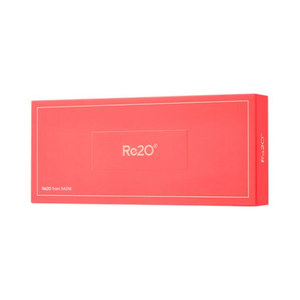 Elravie Re2OElravie Re2O
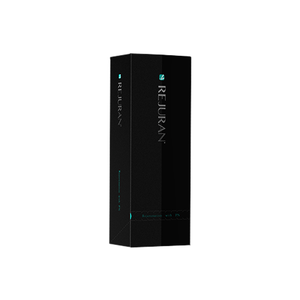 Rejuran HealerRejuran Healer
 Juvelook SkinJUVELOOK Skin
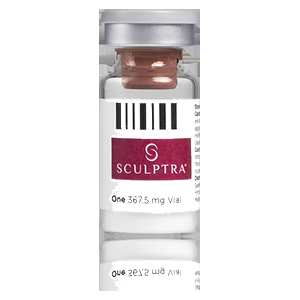 SculptraSculptra · Galderma
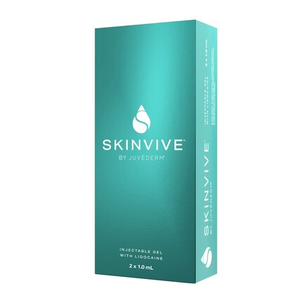 SkinViveSKINVIVE · Allergan
Frequently asked questions
What is Re2O (Rituo) made of?
According to its maker, Elravie Re2O is based on extracellular matrix from donated human skin tissue, processed to remove cells, leaving structural material such as collagen. Ask the doctor about the product's source and processing if that matters to you.
Is a collagen injection the same as a filler?
No. A hyaluronic-acid filler adds volume to a specific spot and is gradually broken down by the body, while Re2O is intended to work on the quality and firmness of the skin itself. Which suits you depends on whether the concern is volume or skin quality.
Can my body react to a human-derived collagen injection?
Cells are removed during processing to reduce the chance of an immune reaction, but reactions, including allergic or foreign-body reactions, can still occur. Tell the doctor about autoimmune conditions, past reactions to tissue-derived products and other allergies before treatment.
How many Re2O sessions do I need?
It is often planned as a short course of a few sessions spaced several weeks apart, followed by maintenance. The number depends on your skin, the area and the amount, and the doctor decides.
Should I switch from Rejuran to Re2O?
Not necessarily. Rejuran (PN) is commonly used for overall skin quality, and for that it may be enough; Re2O is one option the doctor may discuss when thinning or loss of firmness is the main concern, and the two can also be used in sequence.
Can I fly after a collagen injection?
Flying is not usually a problem, but a conservative plan is to have it at least 3 days before a long-haul flight, or about a week if a possible bruise would matter to you. Ask the doctor what suits your plan.
Plan your visit
Send a booking request or message us. We reply during clinic hours (Korea time), in the order received.