Rejuran Skin Booster vs. Belotero Revive: What's the Difference?
Rejuran skin booster and Belotero Revive are both grouped under hyaluronic acid, but their names mean different things. Here's what each name refers to, how the ingredients act in the skin, what shapes results, and recovery and precautions.
Written by ATTITUDE Clinic Editorial Team
Many people ask about a "water glow" injection and Belotero Revive side by side: "I hear they're both hyaluronic acid, so what's the difference?" The natural follow-up is, "Then should I just get the one that lasts longer?" Let's go through what each name refers to, how the ingredients act inside the skin, and what actually shapes results.
The bottom line first
A "water glow" injection is less a specific product name than a catch-all for treatments that place hyaluronic acid (HA, an ingredient that attracts water) inside the skin. Belotero Revive is a skin booster product with a defined manufacturer and product name, and it is listed as a separate item in the ATTITUDE Clinic treatment guide. So rather than asking which is better, the right order is to first decide whether your skin needs moisture or recovery and elasticity. Neither treatment is finished in one session, and changes appear gradually, so how many sessions you do and at what intervals shapes the outcome. Which product is actually used and in what amount is decided by looking at your skin during consultation.
What does a "water glow" injection do inside the skin?
It helps to sort out the names first. Under the umbrella of skin booster sit treatments with different purposes, such as Rejuran, "water glow" injections, and diluted botulinum toxin placed shallowly. The ATTITUDE Clinic column also notes this: a "water glow" injection is mainly an HA-based moisture injection, while Rejuran is a PN (polynucleotide) preparation, a different treatment. What ingredients actually go into a "water glow" injection is explained during consultation.
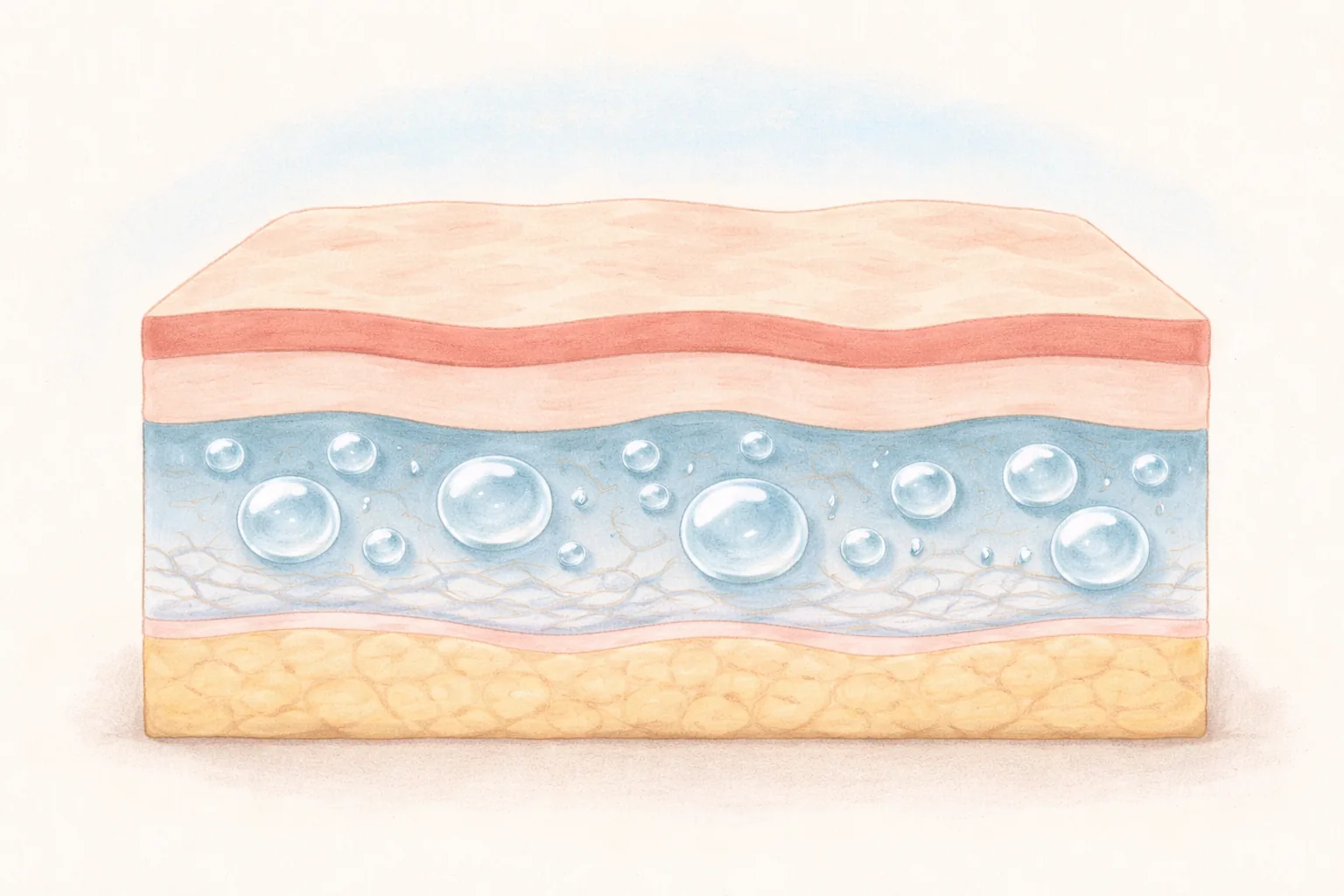
The site of action is the dermis. This is the layer inside the skin where collagen is made, and HA placed here has a strong pull on water, so the skin may feel hydrated and bouncy. Individual results vary. PN, by contrast, is a purified ingredient extracted from sources such as salmon, and is known to signal the skin in a way similar to its own healing response after injury, stimulating the cells that make collagen. It is mainly used for fine wrinkles, loss of elasticity, and uneven skin texture, while HA is used for dryness and dull skin tone.
Rather than using either ingredient alone, it is common to adjust the blend ratio according to the goal. If regeneration and elasticity come first, the PN share is raised; if a glow and hydration come first, the HA share is raised. So why do they all sound like similar treatments? Largely because the injection method and the look right after treatment are similar, so the catch-all name spread first.
Where does Belotero Revive sit as a product?
Belotero Revive is a product name, not a catch-all. In the treatment guide, the manufacturer (Merz) and the volume are listed together, and it is classified under skin boosters. It is also worth noting that products such as SKINVIVE by Juvéderm, Rejuran Healer, and Juvelook (PDLLA) each appear as separate items on the same list. That is because each product has different ingredients and goals.
Having a defined name also means fewer things to ask about. You can check directly during consultation which product is used and what concern it targets. Because a "water glow" injection is a catch-all, the actual ingredients can differ from session to session, so confirming the product used takes one extra step.
So understanding this as a ranking where Revive is stronger and a "water glow" injection is weaker is off the mark. They simply target different points.
They're both injections, so why do results feel different?
What shapes results is not the product name alone. Injection depth and area, the amount used, the interval between sessions, and your own skin condition all act together. Even the same product feels different depending on whether it is spread widely in a shallow layer or gathered narrowly into one area.
Individual differences in how long results last come from the same place. The speed at which collagen is made and broken down differs from person to person. With older age, and the more skin aging has progressed from UV exposure or smoking, the collagen that is made tends to be lost faster. So rather than finishing with a single session, the approach is a management one, planning maintenance sessions alongside.
Pain also varies by area. The forehead, eye area, and around the lips, which are close to bone and have thin tissue, tend to feel more sensitive, while the cheeks and jawline, where tissue is thicker, tend to feel less. The tool matters too. Injecting densely at multiple points with a fine needle repeats a momentary sting many times, while a method using a thin tube with a rounded tip (cannula) to spread from inside often stings only on the first insertion. The anesthesia method is explained during consultation.
How many sessions, and at what intervals?
A skin booster is not something that creates immediate volume like a filler. Right after treatment there is actually swelling, so big changes are hard to notice, and changes appear gradually. The timing, degree, and duration vary from person to person.
The plan is usually a few sessions at 2–4 week intervals, then widening the interval for maintenance sessions. A single session alone gives limited and temporary effects, and any collagen-related changes appear gradually. The number of sessions and the interval depend on your skin condition, the area of concern, and the product used, so the doctor decides after seeing your skin.
If there are other treatments to consider, the order must be decided too. Whether a laser or lifting treatment can be done on the same day, or whether a gap of several days is needed, can change recovery speed. If you are considering multiple treatments, it is better to set the overall plan first.
Table 1 How many sessions, and at what intervals?
Item
"Water glow" injection
Belotero Revive
Nature of the name
A catch-all for treatments
A product with a defined manufacturer and product name
What to confirm
Actual ingredients used are explained during consultation
Product name, manufacturer, and volume listed in the treatment guide
Goal setting
Mainly used for dryness, dullness, and dull tone
Planned according to skin concern and condition
Course
A few sessions at 2–4 week intervals, then maintenance
Same principle, interval adjusted by progress
Recovery
Papules and swelling for 1 day to several days, bruising longer
Same precautions apply
Swipe sideways to see the whole table.
In summary The two names are not competitors; they sit on different levels. A "water glow" injection is a term for a treatment, and Belotero Revive is a product name, so the basis for comparison itself is different. First decide whether your skin wants moisture or recovery and elasticity, then set the number of sessions and interval accordingly — that order shapes results.
If this sounds like you
When a wedding or photo shoot is a few weeks away
Injection marks and bruising can remain, so it is better to count backward from the date and set the treatment day. Papules usually settle within 1 day to several days, but bruising can last more than a week. If your schedule is within 2 weeks, a conversation about adjusting the timing is needed first.
When your skin feels tight again in the afternoon even after moisturizer
This may be a signal that moisture in the dermis, not the surface, has decreased. During consultation, you sort out whether an approach that fills moisture is the right one first, or whether an ingredient that also looks at recovery and elasticity fits.
When your skin is sensitive or prone to redness
Skin that reddens easily may show more pronounced flushing right after treatment. Which ingredients are less irritating, how to do anesthesia, and how long to leave between sessions are decided together.
When you are an overseas visitor on a short stay
Whether recovery time fits within your stay is the key. Several days of swelling and a UV protection plan need to go into the schedule, and how to check progress after returning home should be decided in advance.
Tell us before consultation
Recent UV exposure (vacation or outdoor activity), medications you are taking, especially those affecting blood clotting, history of allergies to cosmetics and medicines, pregnancy or breastfeeding status and plans, recent treatments and how you responded to them, and any dates you cannot avoid — tell us these, and we will set the timing and intervals accordingly.
How ATTITUDE Clinic does it
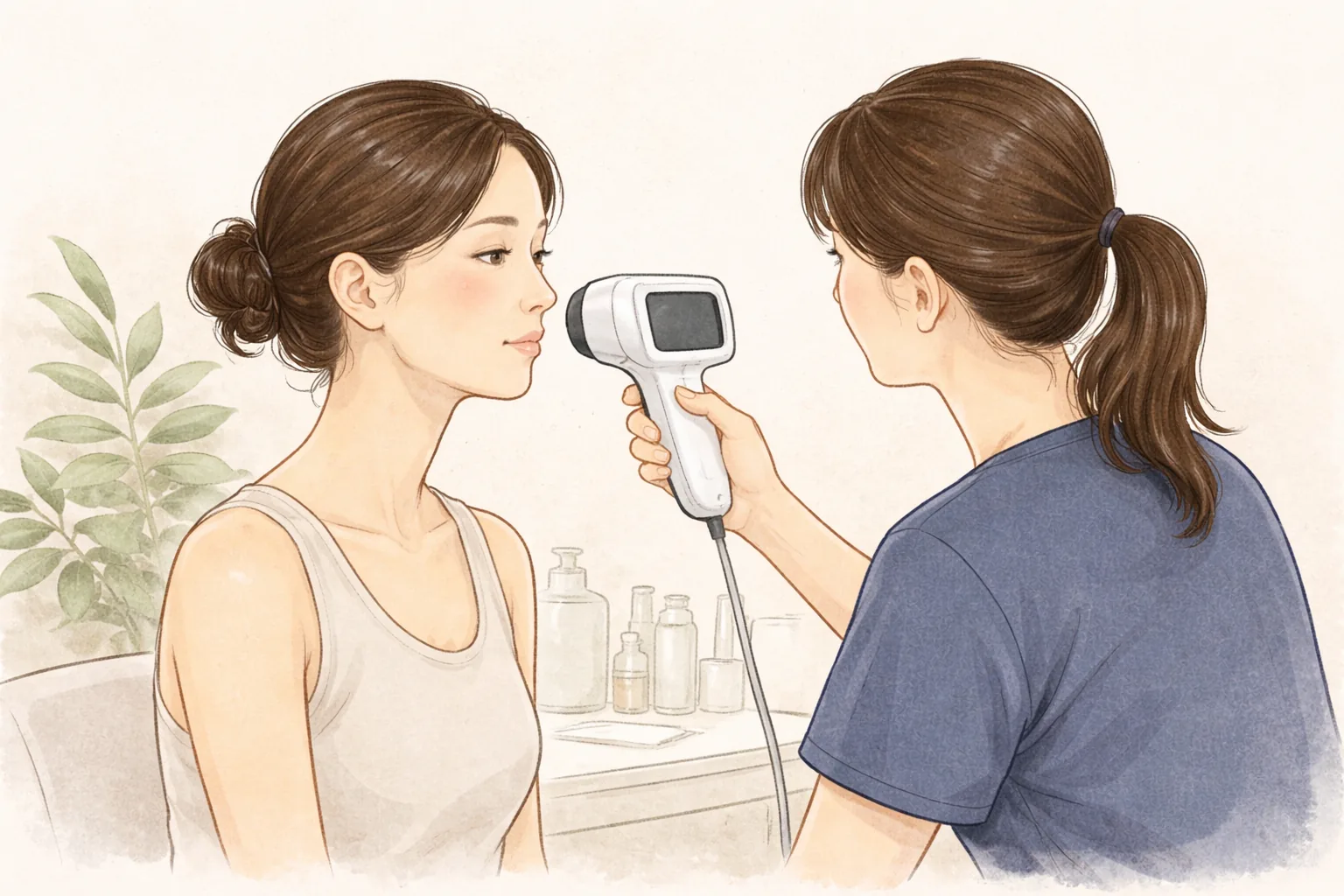
Recording and analyzing skin condition — Skin condition is recorded and organized with an AI skin analysis tool. This record is a tool that gathers and shows information, and is not itself a medical diagnosis. It is used as material so that nothing is missed during consultation.
Doctor consultation — For treatments called by catch-all names like "water glow" injection, it starts with confirming the product actually used. You decide which concern to prioritize, how many sessions at what intervals, and whether other treatments should be considered.
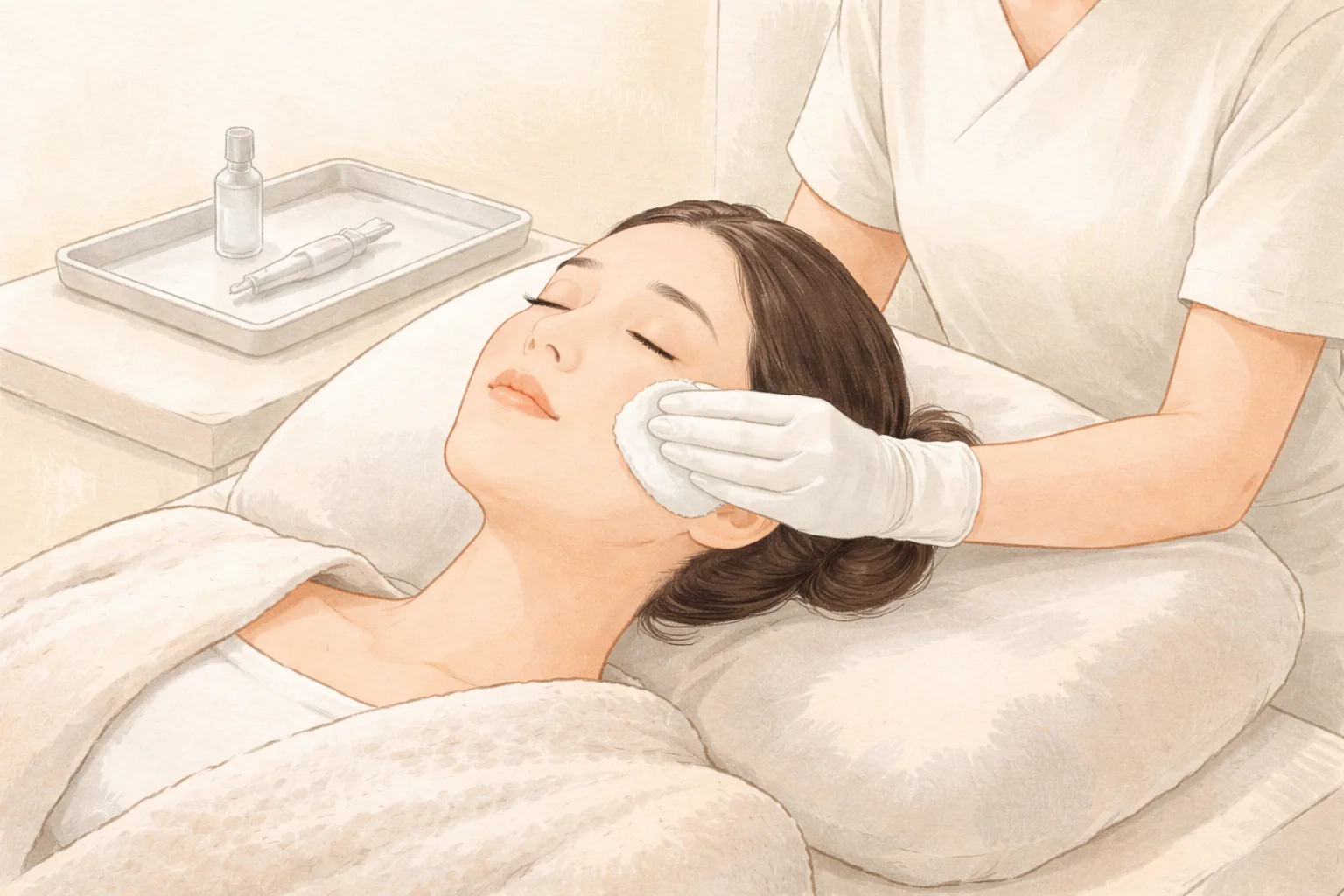
Treatment performed by the doctor — Treatment is performed with the decided product and volume. The anesthesia method and injection method are adjusted to your skin condition that day, and if you feel discomfort during the treatment, you can speak up right away.
Recovery and management — After treatment, the next visit is scheduled according to the recommended cycle. A UV protection and moisturizing plan is set together, and the interval is adjusted to your schedule.
Products you can consider alongside this topic include skin boosters such as Belotero Revive, "water glow" injection, Rejuran Healer and Rejuran HB, Juvelook (PDLLA), and SKINVIVE by Juvéderm. If you also want to address skin texture and pores, RF microneedling such as Potenza (RF microneedling) or a fractional laser (erbium) may be combined.
Aftercare and side effects
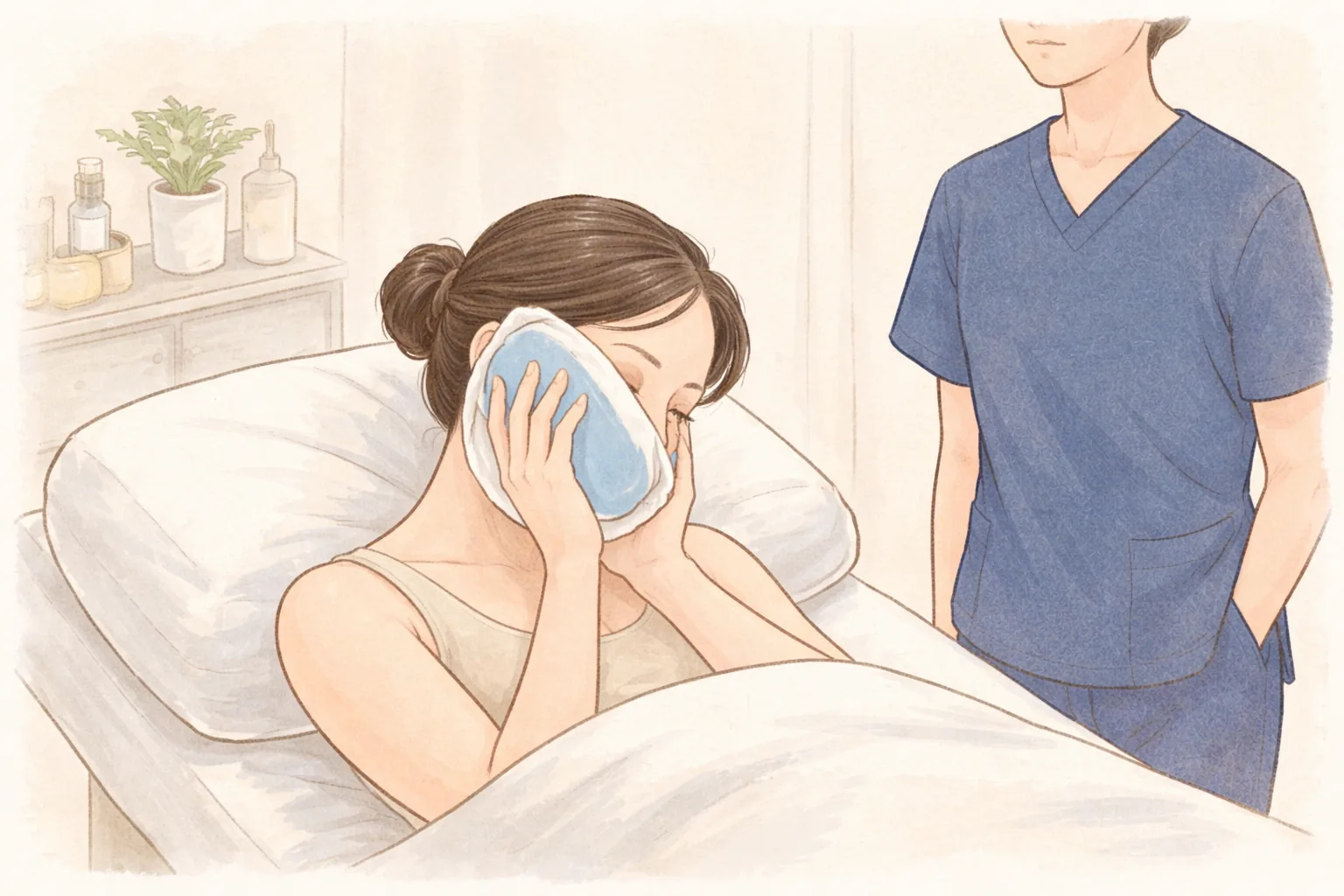
Soothing — On the day of treatment, do not rub the treated area, and if there is swelling, apply a cold compress. It is better to avoid saunas, strenuous exercise, and alcohol on the day.
Moisturizing — The skin barrier is temporarily weakened, so moisturizing makes recovery more comfortable. Right after treatment, use only products the doctor has approved.
UV protection — For 2–3 days after treatment, apply sunscreen more carefully than usual. It is good to be mindful so that pigmentation does not develop during this period. Makeup is often possible from the next day once the injection marks have closed, so check with the doctor.
Checking progress — Recording when swelling and papules settle and when you start to feel changes helps when setting the next interval.
Common side effects are small papules at the injection site (raised bumps), redness, swelling, tenderness when pressed, and bruising. Papules usually settle within 1 day to several days, and bruising can take more than a week to fade. Rarely, infection, allergic reaction, or small lumps can occur, and very rarely, the injected ingredient can block or damage a blood vessel.
There are also signals that mean you should seek care right away rather than wait. These are pain that is unusual or gradually worsening, skin at the injection site turning white or mottled, blue-gray, or black, or changes in vision. In these cases, please contact us rather than waiting for recovery. During pregnancy and breastfeeding, safety data on the effects of the ingredients on the fetus or infant is insufficient, so it is generally not recommended.
Frequently asked questions
Between a "water glow" injection and Belotero Revive, which lasts longer?
Duration is not determined by the product name alone. The speed at which collagen is made and broken down differs from person to person, and factors such as age, UV exposure, and smoking act together. So rather than stating a number of months in advance, we set the next interval while watching progress. Even with the same product, how it feels differs depending on whether you stop at 1 session or continue for several.
How much does it hurt?
It varies greatly by treatment area and individual pain threshold. The forehead, eye area, and around the lips, which are close to bone and have thin tissue, are more sensitive, while the cheeks and jawline tend to be less so. Dense injections with a fine needle repeat a momentary sting many times, and with a cannula, there is often a sting only on the first insertion. Even for the same treatment, the feel differs depending on which product is placed at what depth, so the anesthesia method is also decided during consultation.
Will swelling or bruising after treatment make daily life difficult?
Swelling and papules usually settle within 1 day to several days. Bruising can take more than a week to fade, and how noticeable it is depends on blood vessel distribution. Washing your face and makeup are often possible from the next day once the injection marks have closed. It is better to avoid saunas, strenuous exercise, and alcohol on the day of treatment, and for 2–3 days apply sunscreen more carefully than usual.
How is this different from filler or other skin boosters?
Filler is closer to filling volume, while a skin booster addresses moisture or recovery of the skin's foundation. The ATTITUDE Clinic column classifies skin boosters (PN·HA) as supplying moisture or regenerative ingredients or stimulating fibroblasts, Re2O (Elravie) as replenishing structures such as collagen and elastin themselves into the dermis, and exosomes as sending regenerative signals to cells. The three are not competitors; they are combined or sequenced according to the goal.
What should I look at when choosing a clinic?
The first criterion is whether they state the product name accurately. For treatments called by catch-all names like "water glow" injection, you should be able to confirm during consultation what the actual ingredients are and how much will be used. It is also worth checking whether they explain the recommended cycle after treatment and how to contact them and receive care if an adverse reaction occurs. The American Academy of Dermatology guide also assumes a consultation process to determine whether an injectable treatment suits you and to proceed safely.
At a glance
Table 2 At a glance
Item
Key point
Nature of the name
"Water glow" injection is a catch-all; Belotero Revive is a product name
Ingredient check
For "water glow" injection, actual ingredients used are explained during consultation
What shapes results
Injection depth and area, interval, skin condition, UV exposure and smoking
Treatment plan
A few sessions at 2–4 week intervals, then widening the interval for maintenance
Recovery
Papules and swelling for 1 day to several days, bruising can last more than a week
Signals to seek care right away
Worsening pain, skin color changes, vision changes
This article offers general health information. It is not a substitute for diagnosis or treatment based on your own condition, so please talk through your situation with a doctor.