Sculptra Korea Before and After: When Results Show and How Long They Last
Sculptra injections in Korea: a guide to when results appear, how long they last, treatment sessions, and the factors behind your before and after, based on FDA labeling and ATTITUDE Clinic guidance.
Written by ATTITUDE Clinic Editorial Team
Sculptra is not a treatment that fills volume on the day of injection; it is a treatment that lets your skin build its own collagen over time. That is why the first questions are usually "when will I see a difference" and "how long will it last." This article calmly organizes when results appear, what determines how long they last, treatment sessions and intervals, and what to check during recovery.
The conclusion first
According to U.S. FDA labeling, Sculptra is an injectable filler made of PLLA (poly-L-lactic acid), and in clinical studies up to 4 treatment sessions gave the best results, with results lasting up to 24 months. These numbers come from the study conditions at the time of approval, and your actual timeline and duration vary with skin thickness and collagen-building ability, the treated area, and the dose and interval. It is more accurate to judge results by looking at the course of weeks to months, not right after treatment. A long duration does not mean a single session finishes the job; the number of sessions and intervals you need are decided in consultation.
Why doesn't Sculptra fill volume right away?
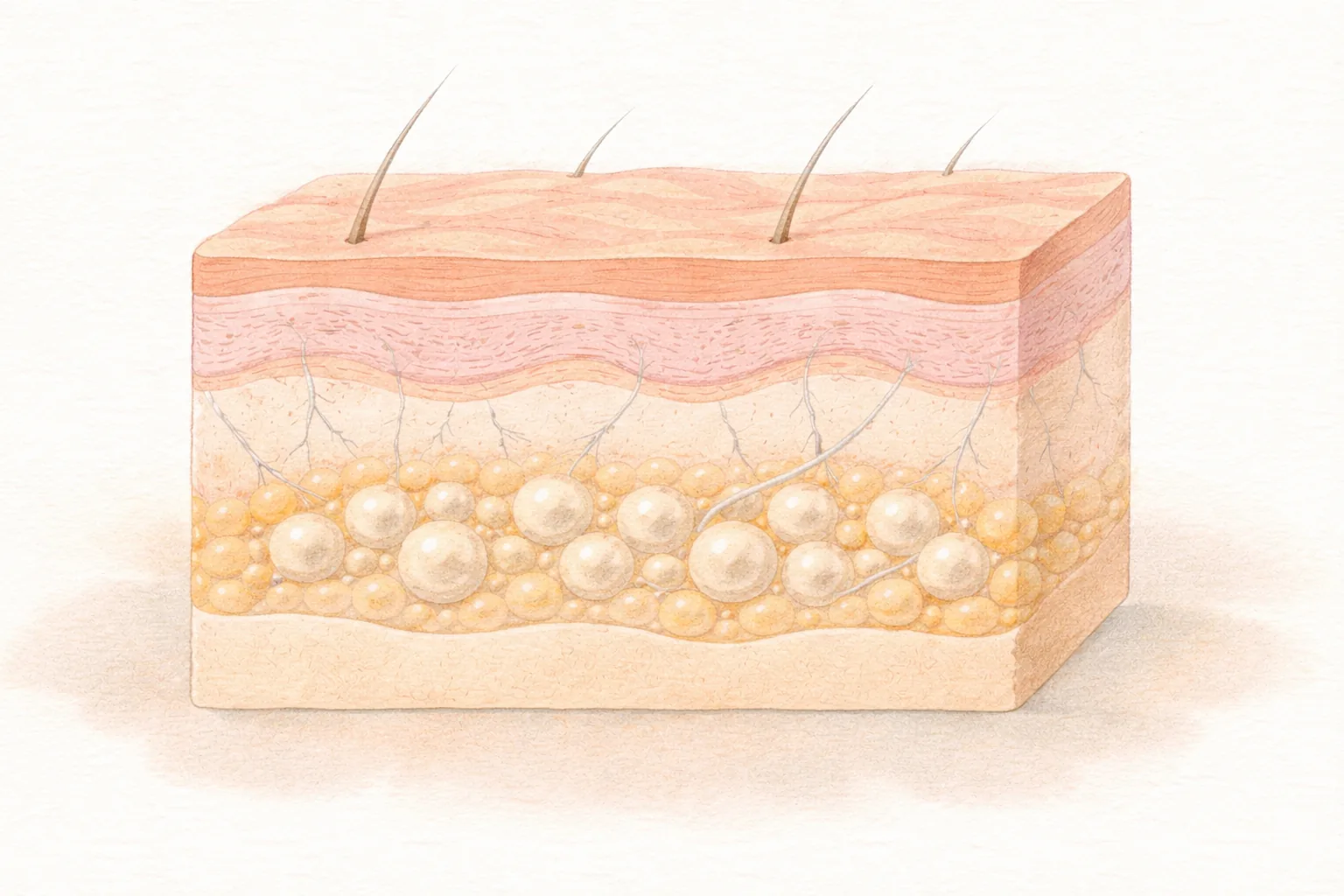
The key ingredient in Sculptra is PLLA. According to U.S. FDA labeling, Sculptra is a gel-like injectable filler made of PLLA, carboxymethylcellulose, and mannitol, and it is mixed with sterile water for injection to make a suspension before use. When a doctor injects it subcutaneously (below the skin's surface, into the fat and tissue layer), the PLLA microparticles settle in the skin. These particles do not create volume directly; instead, the surrounding tissue gradually responds and builds collagen to fill the area.
So the volume you feel right after treatment is often due to the water and swelling that come with the injection. When that water resolves, your face may look like it has returned to its original state. At this point it is easy to conclude that "it didn't work," but inside the skin, the process of collagen building has already begun. The visible change appears after that process has progressed to some degree.
When do results become visible?
FDA labeling states that in clinical studies, up to 4 treatment sessions gave the best results. This means it is not a treatment that is completed with a single injection, but one where collagen is built in stages through several sessions at set intervals. However, exactly how many sessions at what interval depends on the degree of facial hollowing, your skin's response, the change you want, and how much recovery time you have. As the ATTITUDE Clinic column also emphasizes, even with the same treatment, the timeline you feel varies with skin type, thickness, and regeneration speed.
Several factors can speed up or delay when you feel the change. Whether your ability to produce collagen remains, whether the skin in the treated area is thick or thin, whether the dose and injection depth were appropriate, and whether post-treatment massage and lifestyle care were followed all have an influence. So rather than setting a rule that it "must be visible by a certain week," it is more realistic to take photos under the same lighting and angle as before treatment and compare them at intervals of a few weeks.
How long do results last?
According to FDA labeling, Sculptra results can last up to 24 months. This is the range observed in clinical studies and is not a number guaranteed to be the same for everyone. Because collagen is also gradually metabolized over time, the duration differs with aging speed, lifestyle habits, and skin condition.
A long duration is an advantage, but it also means you should be careful when planning your first treatment. The approach differs depending on whether the change you want is natural volume restoration or immediate filling of a specific area. Sculptra is an injectable filler used to address hollowing and loss of elasticity over broader areas, and its purpose differs from immediately filling precise areas like the nose or lips. FDA labeling also approves Sculptra for correction of facial wrinkles and fine lines, including the cheeks.
What factors determine the results?
First, your skin's ability to produce collagen on its own. Even with the same dose, the timeline you feel differs between skin with an active regenerative response and skin without one. Second, injection depth, dose, and distribution. PLLA must spread evenly within the skin to settle into natural volume. Third, treatment intervals and total number of sessions. In FDA clinical studies, up to 4 treatment sessions were linked to the best results. Fourth, post-treatment care. Massaging the injected area as instructed, avoiding strong stimulation and UV exposure, and supporting recovery all influence the results.
The ATTITUDE Clinic column cites skin type, skin thickness and structure, and regeneration speed as reasons why results differ even with the same treatment. Added to this is the difference in how the treatment is designed and performed. Even with the same analysis, how much to inject into which area and at what interval must differ from person to person.
Table 1 What factors determine the results?
Category
Based on FDA labeling
To review in consultation
Ingredients
PLLA, carboxymethylcellulose, mannitol
Allergies and past reactions
Injection site
Below the skin, facial wrinkles and fine lines including cheeks
Treated area and skin thickness
Number of sessions in clinical studies
Up to 4
The actual number and interval you need
Duration of effect
Up to 24 months
Skin condition and lifestyle habits
Who it is for
People with normal immune function
Keloid tendency, history of severe allergy
Swipe sideways to see the whole table.
In summary Sculptra is a treatment that helps the skin build collagen rather than having the injected ingredient create volume directly. FDA clinical studies reported up to 4 treatment sessions and results lasting up to 24 months, but your actual timeline and duration vary with your skin condition and treatment design. It is more accurate to judge results by looking at the course of weeks to months rather than right after treatment.
If this sounds like your situation
When a ceremony or photo shoot is a few months away
Sculptra tends to reveal changes over time rather than right after treatment, so when an event is approaching, it is best to set expectations in advance. Rather than having it done the day before a shoot, it is more natural to plan with time for collagen to settle. How many sessions at what interval can fit your schedule is coordinated in consultation.
When you want consistent management
Rather than one session and done, building collagen in divided sessions at set intervals is the usual approach. After the duration passes, additional treatment may be needed, so setting a long-term plan from the first session makes decisions easier. Keeping photos under the same conditions helps you compare changes objectively.
When your skin is sensitive or prone to redness
Redness, swelling, and bruising can occur after injectable treatments. If your skin is sensitive, you should tell the clinic about your usual reactions and the products you use before treatment. If you have a severe allergy, a keloid tendency, or a hypersensitivity to certain ingredients, Sculptra may not be suitable for you.
International visitors on a short stay
Because this treatment requires checking progress over several months, if your stay is short, it is good to decide in advance how you will check your progress after returning home. Getting a written record of the treatment, the product used, and the dose helps when explaining it locally.
Tell us before your consultation Please tell us about recent UV exposure and outdoor activities, medications you are taking and active ingredients you apply to your skin (retinol, acids, etc.), reactions after previous injectables and laser treatments, any history of keloids or severe allergies, important dates, and how much time you have available for recovery.
How ATTITUDE Clinic proceeds
AI skin analysis record — Your skin condition is recorded and organized so you and the doctor look at the same information together. The analysis tool is a reference that records and organizes information and does not make a medical diagnosis. The judgment is made by the doctor.
Doctor consultation — Your concerns, lifestyle habits, and past treatment experience are added to the record to decide together what is needed and what is not, the treatment order and intervals, and the intensity. The area and dose for Sculptra and whether to combine it with other treatments are also decided at this stage.
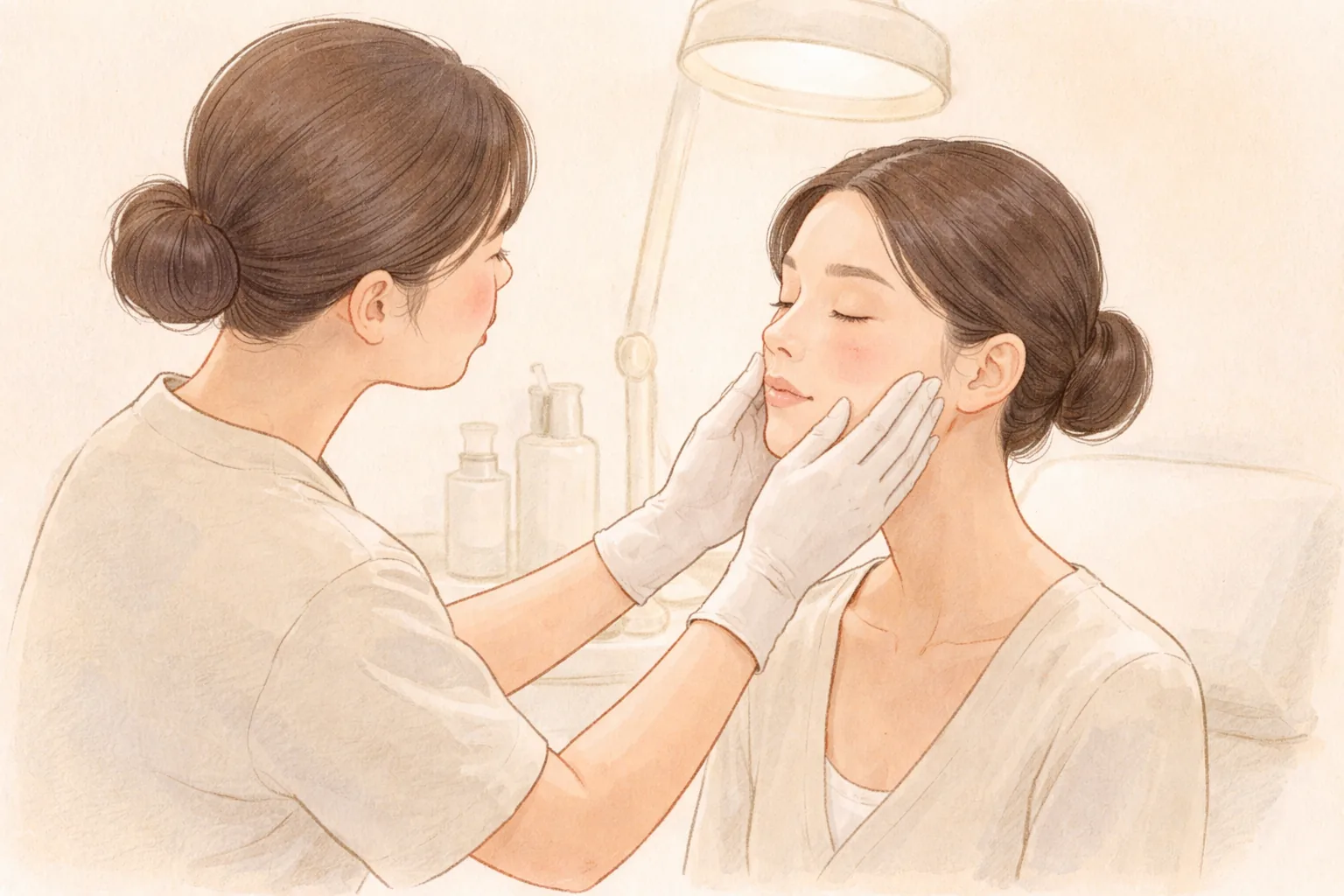
Treatment performed by the doctor — The doctor personally performs the treatment according to the plan set in consultation and adjusts while observing your skin's response during the procedure. The ATTITUDE Clinic column also explains the flow of the doctor performing the treatment directly so that design and execution do not diverge.
Recovery and care — After treatment, massage methods and precautions are explained, and progress is checked. The ATTITUDE Clinic treatment guide includes a Sculptra (Sculptra · Galderma) 1vial entry. ATTITUDE Clinic discloses unit-based pricing and explains the principle of deciding together what is needed and what is not.
Aftercare and side effects
After treatment, care proceeds in the following order.
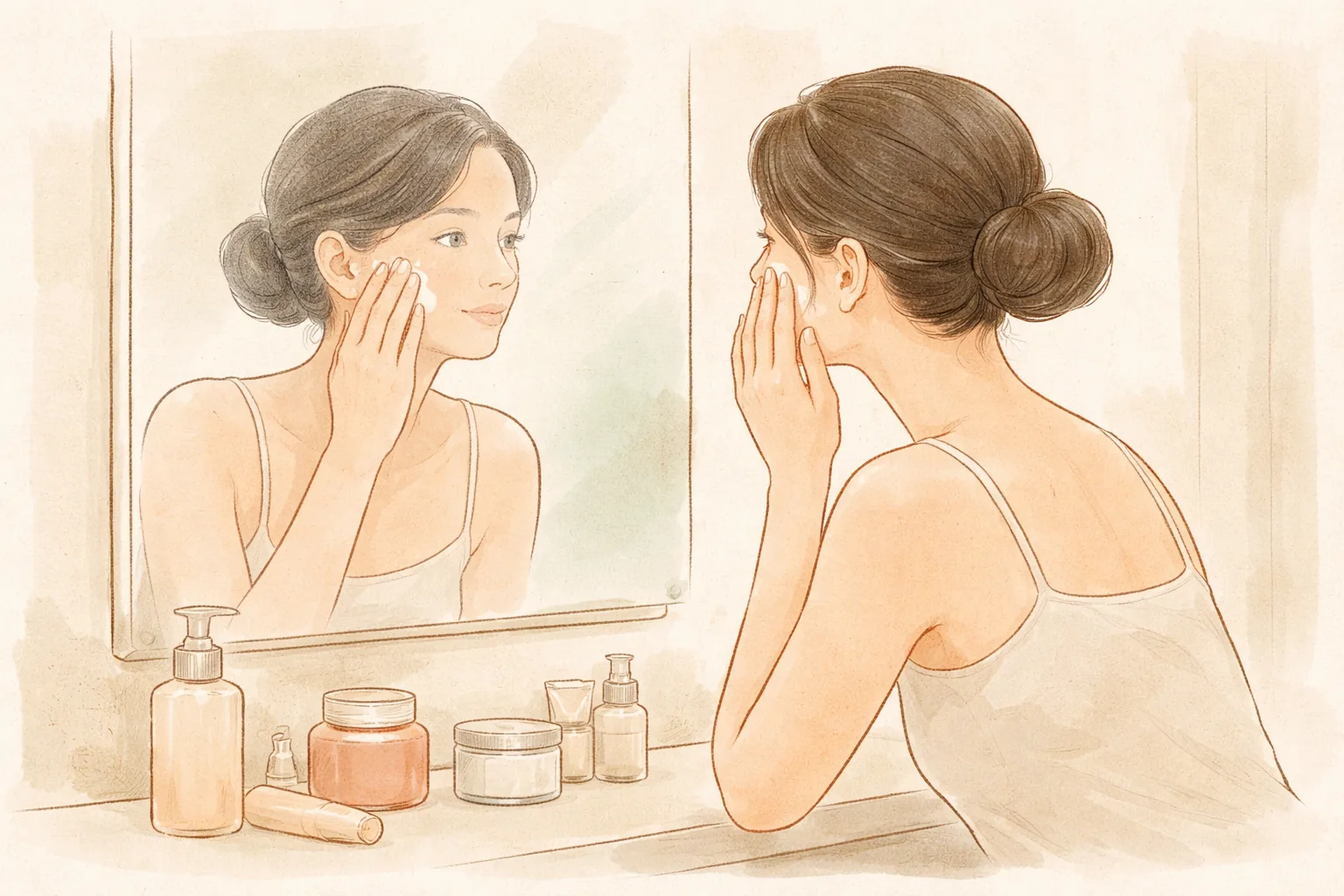
Soothing — On the day of treatment, avoid strenuous exercise, saunas, and alcohol, and do not rub or press the injected area.
Moisturizing — Maintain moisture as instructed and avoid strong exfoliation or scrubs.
UV protection — Apply sunscreen when going out and use a hat or parasol as well.
Checking progress — Follow the instructed massage and return schedule, and take photos to compare changes.
Common reactions include bruising and swelling at the injection site and tenderness when pressed. These usually subside within a few days. Rarely, lumps that can be felt after injection, pigment changes, blisters, infection, or scars may occur. The ATTITUDE Clinic column lists redness, swelling, tenderness, and bruising as reactions that can appear after laser and energy devices and injectable treatments, and notes that pigment changes, blisters, lumps after injection, burns, or scars can rarely occur. FDA labeling states that Sculptra should not be used if you have a hypersensitivity to certain ingredients or a history of severe allergy with anaphylaxis, a tendency to form keloids or hypertrophic scars, or an allergy to amide local anesthetics such as lidocaine. The FDA MAUDE database contains reports of adverse events related to Sculptra, so if unexpected changes persist after treatment, it is important to inform a medical facility.
If pain that does not improve and keeps worsening, swelling that keeps growing, heat sensation, or skin color changes persist for a long time, do not wait; contact the clinic where you were treated. If you can feel nodules or lumps, it is also good to have them checked regardless of timing.
Frequently asked questions
When do Sculptra results become visible?
The volume right after treatment is often due to the water and swelling that come with the injection, so it is difficult to judge by that point. In FDA clinical studies, up to 4 treatment sessions gave the best results and results could last up to 24 months. Your actual timeline depends on your skin's collagen-building ability, the treated area, and the dose and interval. Taking photos under the same lighting and angle and comparing them at intervals of a few weeks lets you see changes more objectively. Judging too early can lead to misunderstanding that the treatment did not work, so it is good to decide the progress check points together in consultation.
How long do Sculptra results last?
FDA labeling states that results can last up to 24 months. Because collagen is gradually metabolized over time, the duration differs with aging speed, lifestyle habits, and skin condition. After the duration passes, additional treatment may be needed. Because it is difficult to predict your personal duration precisely in advance, it is more realistic to plan the next step while checking progress after the first session.
How many Sculptra sessions do I need?
In FDA clinical studies, up to 4 treatment sessions were linked to the best results. However, not everyone needs the same number of sessions, and it varies with the degree of facial hollowing, the change you want, and your skin's response. Rather than finishing with one session, building collagen in divided sessions at set intervals is the usual approach. The number of sessions and intervals you need are decided after examining your skin condition in consultation.
I am worried about Sculptra nodules (lumps). How are they checked?
Rarely, lumps that can be felt may occur after injectable treatments. The causes and prevention of nodules vary with treatment conditions and skin response, so it is good to check injection depth and dose and the massage method in consultation. If you feel something after treatment, tell the clinic where you were treated regardless of timing. Most improve over time, but if they persist or grow, further evaluation is needed.
How should I choose a clinic for Sculptra treatment?
Because injection depth, dose, and distribution influence the results of Sculptra, it is important to check in consultation who will perform it and with what plan. Look at whether there is a flow where your skin condition is recorded and reviewed together, what is needed and what is not is decided, and the treatment is performed according to that plan. How the product used, the dose, and your previous treatment history are taken into account is also something to check. Rather than comparing on price alone, it is better to also look at how consultation and progress management are handled.
At a glance
Table 2 At a glance
Item
Key point
Ingredients
PLLA (poly-L-lactic acid) injectable filler
How it works
The injected ingredient induces collagen formation rather than creating volume directly
Number of sessions in clinical studies
Up to 4
Duration of effect
Results can last up to 24 months
When you feel it
Look at the course of weeks to months rather than right after treatment
This article offers general health information. It is not a substitute for diagnosis or treatment based on your own condition, so please talk through your situation with a doctor.