How Many Sculptra Sessions Do You Need — and What Sets the Spacing?
How the number and spacing of Sculptra sessions is decided, what the approved labeling says about up to 4 sessions and up to 24 months, how nodules and lumps are monitored, and what to prepare before your consultation.
Written by ATTITUDE Clinic Editorial Team
Looking into Sculptra, most people stall at the same point. It is hard to pin down all at once whether one session finishes the job, how many sessions spread over how many months you would need, and what decides when the next session happens. Below we go through, in order, the criteria for session count and spacing, when results settle in and how long they last, and how nodules and lumps are monitored.
The short answer first
Sculptra is not a treatment whose final result is set by a single injection. According to the Sculptra labeling published by the US FDA, patients in the clinical study had the best results with up to 4 injection sessions, and those results could last up to 24 months. The interval between sessions is not a matter of filling in a fixed number — it is decided by whether swelling and redness from the last session have settled and how the skin responded. So what you should confirm at a consultation is not the single figure of "how many sessions," but the schedule itself, adjusted as your skin responds.
How many Sculptra sessions are typically planned?
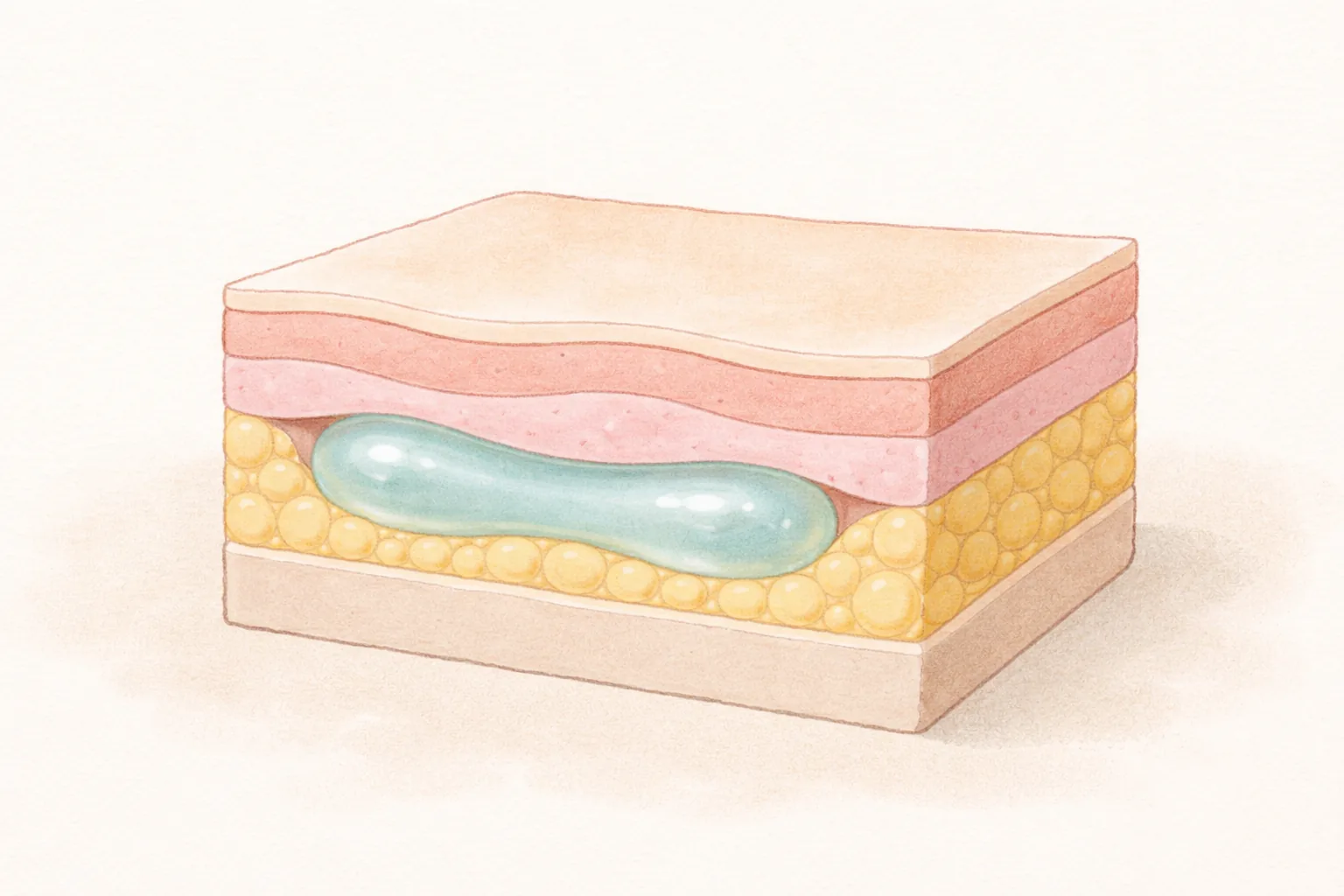
Sculptra is an injectable whose main ingredient is poly-L-lactic acid (PLLA). It also contains carboxymethylcellulose and non-pyrogenic mannitol, and is reconstituted with sterile water for injection into a suspension before use. The FDA describes Sculptra as a gel injectable placed under the skin to fill wrinkles in the cheek area, and its approved indication is correction of shallow-to-deep cheek wrinkles in immunocompetent people (labeling).
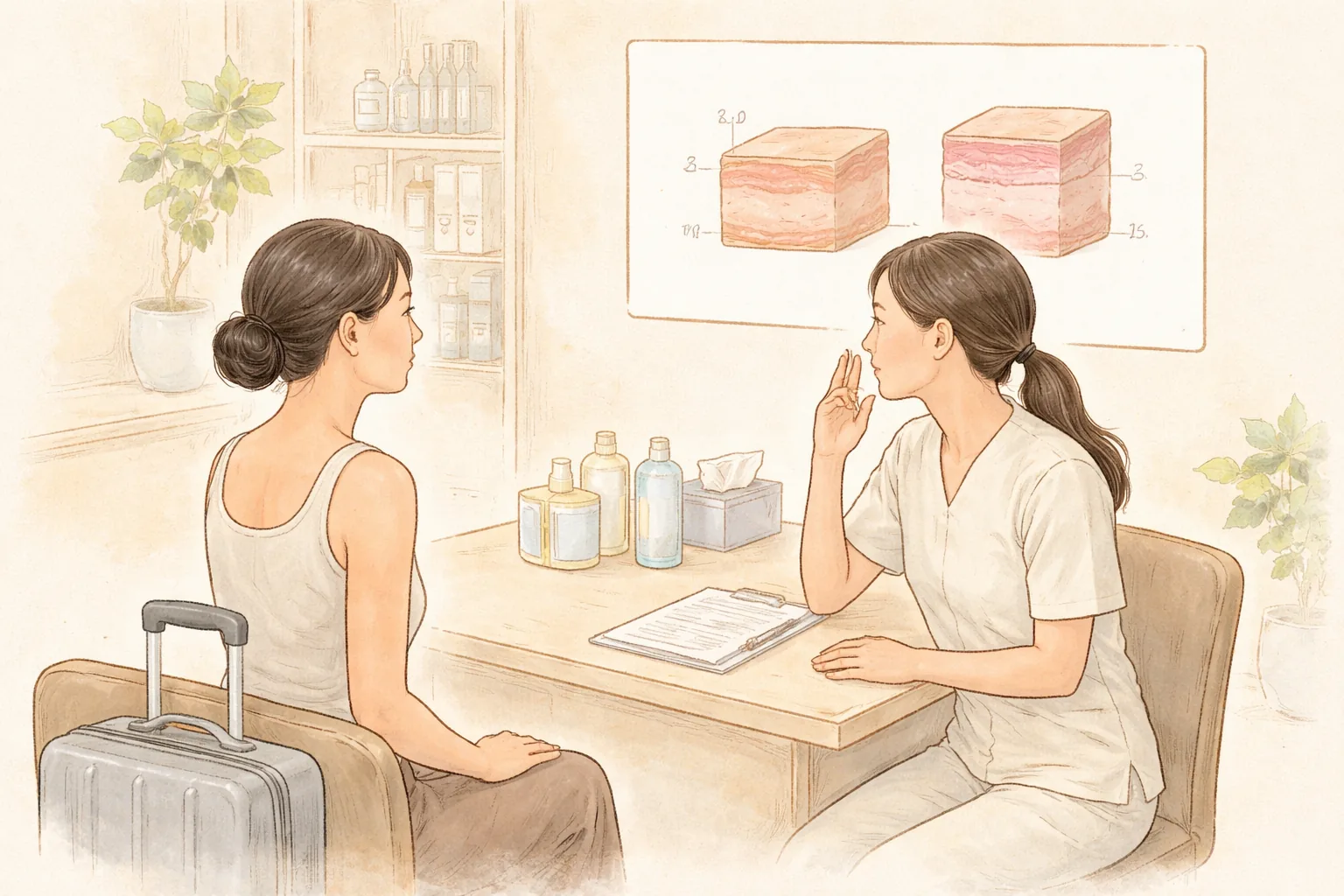
This is where the sense of session count comes from. In the clinical study the labeling is based on, the best results were recorded when up to 4 sessions were given. That means this is not a treatment where you judge the outcome after one session. How many sessions you need varies with how much volume has been lost and how the cheek skin responds, so the first consultation sets an expected range and the remaining count is adjusted as sessions proceed.
Even for the same treatment, results differ because skin type and thickness, the capacity to build new collagen, and recovery speed vary from person to person (ATTITUDE Clinic column). If the session count is fixed as a number alone, there is no room to reflect those differences. So "how many sessions" is closer to a starting point than a target.
What decides the interval between sessions?
The Sculptra labeling does not lock in intervals like "3 weeks" or "4 weeks." The actual schedule depends on how the skin responded after each session. The points checked in the clinic when setting an interval are usually these.
Whether swelling and redness from the last session have settled enough
Whether bruising or tenderness at the injection sites remains
How volume and skin texture changed after the previous session
Which area to add to, and how much, at the next session
When upcoming commitments fall (shoots, travel, important events)
Some people wonder whether bunching sessions together would be faster. But if the next injection overlaps while swelling from the previous session is still present, there is no time left to assess what that session did to the skin. The reason for spacing sessions is not to buy time, but to create the basis for the next decision.
Sculptra is dosed by vial. How many vials go into each session shapes both the plan and the cost, so it helps to confirm the amount per area at the consultation (treatments and pricing).
When do results settle in, and how long do they last?
The labeling states that results can last up to 24 months after the last treatment session (labeling). The word "up to" matters. How long results remain varies with the skin's own capacity to rebuild, the pace of aging and lifestyle, so even with the same number of sessions it differs from person to person. That is why, after the sessions are done, the skin is reviewed again at intervals and the next plan is set.
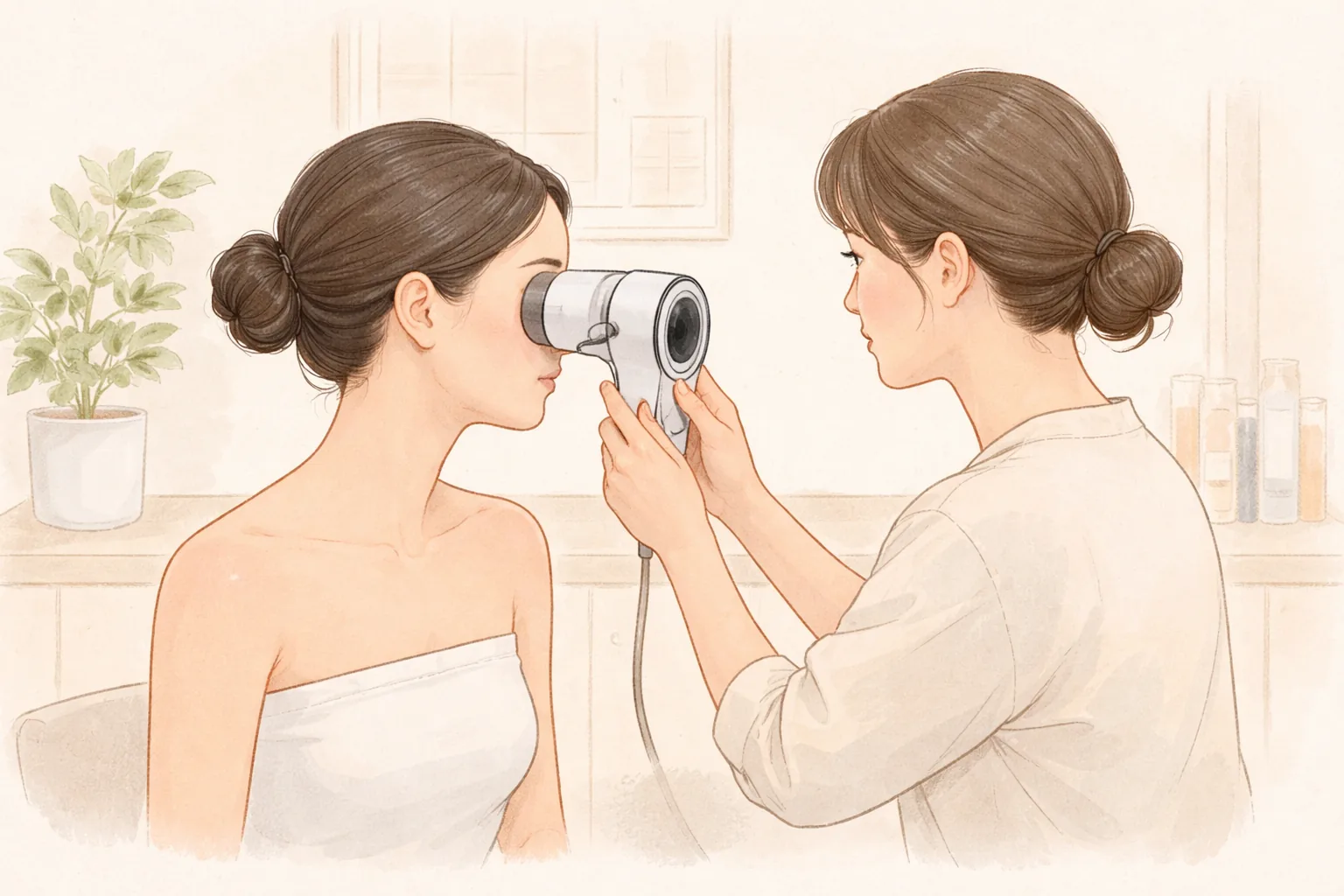
The timing of judging results also matters. While swelling remains between sessions, it is hard to tell a real change from a response that is still settling. ATTITUDE Clinic records skin condition with AI skin analysis and reviews the same information together at the consultation (column). This record is reference material that organizes and shows your condition, and judgment rests with the doctor. When records are kept at the same angle and lighting, changes between sessions can be gauged a little more objectively.
How are nodules and lumps viewed?
Search Sculptra and the word "nodule" tends to follow. In the labeling's contraindications, Sculptra is not used in people with a history of or predisposition to keloids or hypertrophic scars, people with severe allergies including a history of anaphylaxis, or people with hypersensitivity to any ingredient. When reconstituted with lidocaine, lidocaine allergy is also a contraindication (labeling). This is why these items are checked first at a consultation.
After injection treatments, lumps can appear rarely (column). A lump you can feel often fades over time, but if it grows, stays unchanged for a long time, or becomes more painful when pressed, it needs to be checked rather than simply watched. The US FDA runs the Manufacturer and User Facility Device Experience (MAUDE) reporting system, and Sculptra-related reports are also entered in this database (FDA MAUDE). It is a surveillance database of individual reports, so it is hard to read as a statistic showing how common a given reaction is.
Sculptra alone rarely completes a plan. Volume is left to Sculptra while elasticity and skin texture are handled by other treatments, in combination.
Table 1 How are nodules and lumps viewed?
Treatment
What it mainly does
Concern it targets
What to check when combining
Sculptra (PLLA)
Injectable placed under the skin to fill cheek wrinkles
Cheek hollowing and fine wrinkles
Response to the last session and remaining swelling
Lifting such as Ultherapy and Thermage
Stimulates deeper skin with ultrasound and radiofrequency
Sagging and elasticity
Whether to layer on the same day, and recovery margin
Potenza
Delivers radiofrequency into the dermis with fine needles
Pores and scars
Whether surface irritation is still present
Skin boosters such as Rejuran and Juvelook
Delivered directly into the skin base
Skin texture and dryness
Recovery state of injection sites
Swipe sideways to see the whole table.
Ultrasound and radiofrequency lifting work inside the skin without opening the surface (column), so whether to layer it on the same day as Sculptra is decided by how much stimulation the skin can handle that day and how much recovery margin there is.
In short Sculptra is a treatment where sessions are stacked to confirm the response, and the interval is set not by the label but by the recovery state after the last session. What to combine alongside depends on whether volume, elasticity or skin texture is the biggest concern, so setting the order is half of the consultation.
If this sounds like your situation
When a wedding or shoot is coming up
The schedule uses up to 4 sessions, so they cannot all be crammed into the days just before a procedure date. Bruising or swelling at the injection sites can last several days, so if a date is fixed, it is better to work backward and book the first consultation. If a shoot is imminent, decide together at the consultation whether to start the sessions now or push them after the shoot.
When hollow cheeks have been a long-standing concern
The approved indication is correction of cheek wrinkles, so hollow cheeks and fine wrinkles that bother you are a good starting point for a plan. The degree of hollowing, left-right difference and skin thickness are reviewed together to set session count and areas.
Sensitive or easily reddened skin
Skin sensitive to stimulation may keep redness longer even with the same treatment. The interval is set a little longer, and whether to layer another treatment on the same day or separate it is decided at the consultation.
International visitors on a short stay
Since sessions are spread out, how many can fit within your stay is calculated first. Where the remaining sessions will be continued and how records will be taken with you are also organized at the consultation.
Please tell us before your consultation
Recent sun exposure and travel plans, any history of keloids or hypertrophic scars, any allergy history including anaphylaxis, whether you have a lidocaine allergy, medications you are taking and active ingredients in your skincare, the devices, products, doses, dates and responses of previous treatments, and upcoming important dates. This information is the starting point for setting session count and interval.
How ATTITUDE Clinic proceeds
AI skin analysis record — Your skin condition is photographed and recorded so you and the doctor look at the same information. This record organizes and shows your condition as reference material and does not replace a medical diagnosis.
Doctor consultation — Your concerns, lifestyle and previous treatment experience are added to the record to decide together how many sessions, at what interval, in which areas and in what amount. What is needed and what is not is sorted out together.
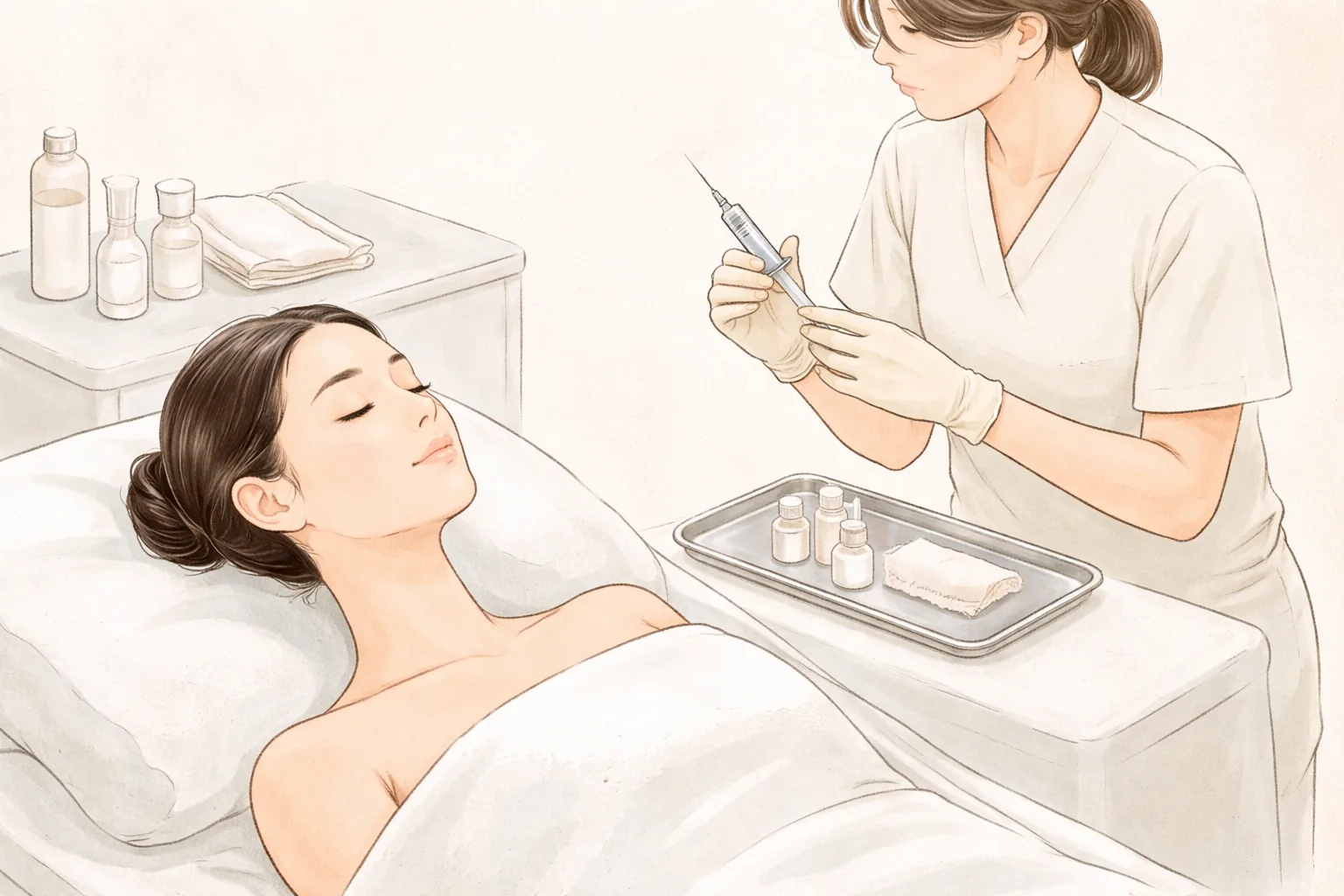
Treatment performed by the doctor — The doctor personally carries out the plan set at the consultation and adjusts while watching the skin's response during injection. Sculptra is Galderma product, quoted per 1 vial, and all amounts exclude VAT (treatments and pricing).
Recovery and follow-up — The timing of the next session is set after swelling and redness have settled and the response to the previous session has been assessed.
If elasticity or skin texture is a concern alongside volume, lifting such as Ultherapy and Thermage, Potenza, and skin boosters such as Rejuran and Juvelook are reviewed within the same plan. Which combination comes first depends on the skin's capacity to recover and your schedule margin (column).
Aftercare and side effects
Soothing — On the day of the procedure, do not rub the injection sites and wait for redness to settle.
Moisturizing — Keep moisturizing while the skin barrier recovers.
Sun protection — Apply sunscreen to reduce pigment changes.
Follow-up — Check whether bruising and swelling are fading and whether any palpable lump or pain remains.
Common reactions are redness, swelling, tenderness when pressed, and bruising at the injection sites. They usually settle within a few days. Rarely, temporary pigment change, blisters, post-injection lumps, burns or scars can occur (column). If there is pain that keeps worsening, a lump that persists, blisters or any change that differs from expectations, it is safer to have it checked rather than wait until the next session.
Frequently asked questions
How many Sculptra injections will I need?
In the clinical study behind the labeling, the best results were recorded with up to 4 injection sessions (labeling). That number is not the right answer for everyone, though. How many sessions you need varies with the degree of hollowing, the thickness of the cheek skin and the response to previous sessions, so the first consultation sets an expected range and adjusts as sessions proceed. If the response is good, the plan can wrap up earlier than expected.
How long should the interval between sessions be?
There is no interval fixed on the label; it is set after the response to the last session has been assessed. If swelling and redness remain, the next session is pushed back until they settle, and the interval is extended if bruising or tenderness persists. In the end, the interval is set by how fast the skin recovers and how much is needed at the next session. So after the first session, it is better to check when swelling and redness settle rather than locking in the next date in advance. Setting an approximate range together at the consultation, based on your recovery speed, makes scheduling much easier.
What if I don't see an immediate difference after the injection?
Keep in mind that the labeling records both the approach of up to 4 spaced sessions and a duration of up to 24 months (labeling). That means the result is not structured to be complete in one session, so it is too early to judge by the change after the first session alone. Between sessions, recording your condition at the same angle and lighting makes changes easier to gauge.
How much does it hurt?
The labeling states that adding lidocaine solution just before use can reduce pain during injection (labeling). The sensation varies with injection depth, area and the amount used in one session, and tenderness when pressing the injection sites can remain for several days. If you are sensitive to pain, it is good to discuss anesthesia methods, whether lidocaine is used, and your allergy history at the consultation.
What should I look at when choosing a clinic?
The criteria are whether genuine product is used, whether the product name and number of vials are confirmed before the procedure, and whether the clinic explains why a given number of sessions at a given interval. ATTITUDE Clinic discloses treatments and pricing by unit and the doctor handles everything from consultation to treatment personally (column, treatments and pricing). For this treatment, a clinic that can check the response each session and adjust the plan suits better than one that guarantees results.
At a glance
Table 2 At a glance
Item
Key point
Session count
In the approved clinical study, best results with up to 4 injection sessions
Interval
Not a fixed value; decided after swelling, redness and tenderness from the last session settle
Judging results
Not judged by one session but assessed as sessions accumulate, compared with records
Duration
Up to 24 months per the labeling, with individual variation
Who should take caution
Keloid or hypertrophic scar predisposition, history of anaphylaxis, ingredient or lidocaine allergy
Common reactions
Redness, swelling, tenderness and bruising at injection sites, usually settling within days
This article offers general health information. It is not a substitute for diagnosis or treatment based on your own condition, so please talk through your situation with a doctor.