How Many Shurink Sessions Do You Need, and at What Intervals?
A guide to how Shurink session counts and intervals are decided: why the 2–3 month mark matters more than the days right after treatment, what determines repeat timing, and what to check before and after.
Written by ATTITUDE Clinic Editorial Team
Search for Shurink and most people get stuck on two questions. "How many sessions do I need?" and "When do I go back?" One guide suggests several sessions a month apart, another says once a year is enough, and it is easy to end up unsure which is right. This article walks through what actually determines Shurink session counts and intervals, why short gaps are not always the answer, and what to check before and after treatment.
The short answer first
There is no fixed number of Shurink sessions. The HIFU (high-intensity focused ultrasound) family makes it hard to feel a big change right after treatment, and when change does come it usually appears gradually over 2–3 months. Set the next session at a shorter interval than that, and you are deciding before the point where results can be judged has even arrived. The baseline approach is to have 1 session, watch how the 2–3 months go, then plan the next step, and repeat timing is around 1 year, decided by the doctor after reviewing your progress.
What does Shurink actually do inside the skin?
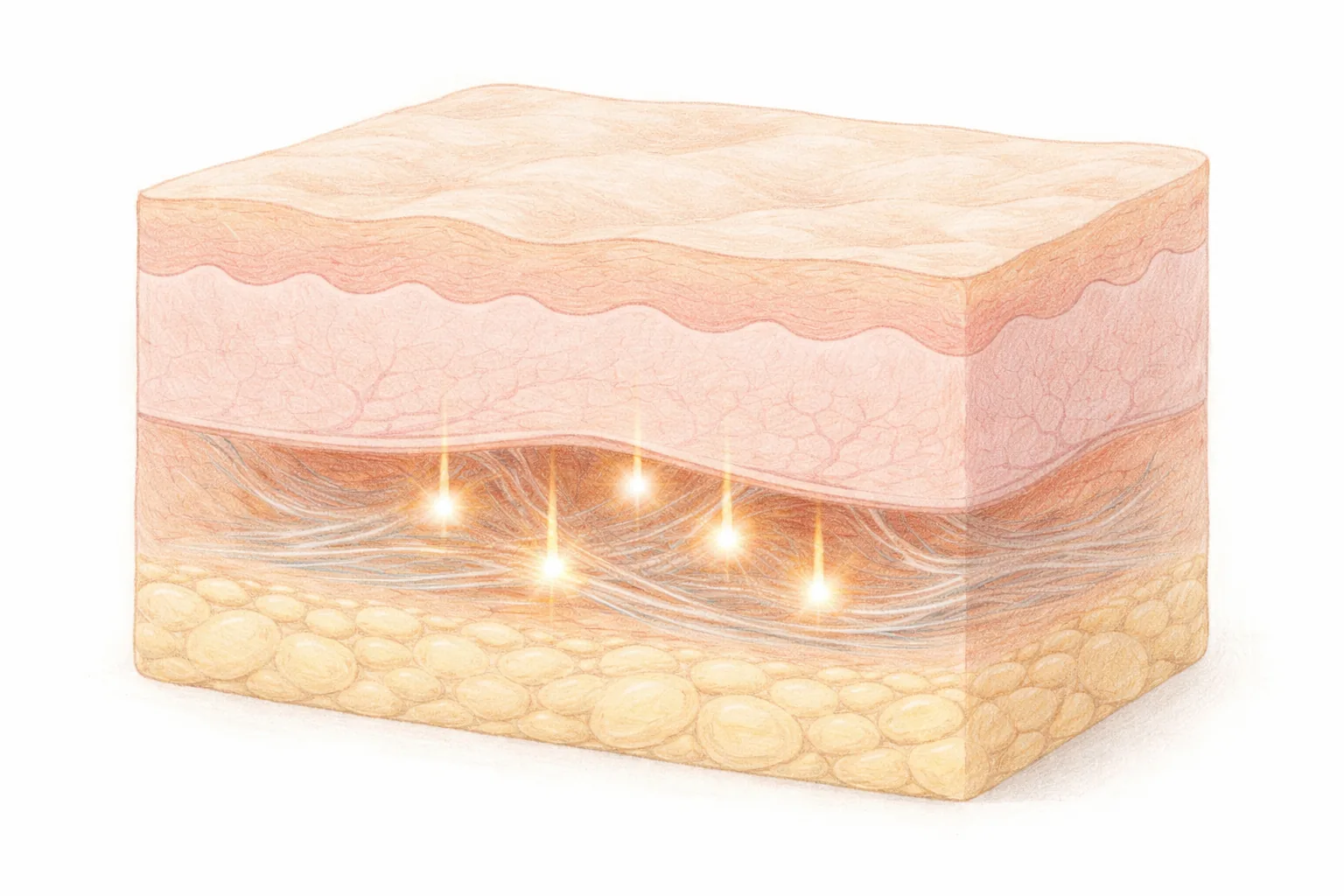
Shurink is a device that uses HIFU (high-intensity focused ultrasound, a method that concentrates ultrasound energy onto a single point inside the skin). Like a magnifying glass focusing sunlight on one spot, it gathers energy and creates small thermal points at depths set by each cartridge. This heat slightly contracts collagen (the protein that keeps skin firm and supported), and more importantly, it starts collagen slowly rebuilding itself. In the ATTITUDE Clinic column, it is explained that Ultherapy and Shurink focus heat into small points at a set depth.
This is where the question of intervals comes in naturally. New collagen takes time to form. That is why the way things look 2–3 months later, rather than the day after treatment, becomes the benchmark for judging results. Put another way, deciding "it did not work, so let us go stronger and more often" a week after treatment rests on weak grounds.
One of the main causes of sagging is the SMAS layer (a thin sheet deeper than the dermis that supports the facial muscles and skin) stretching. HIFU aims to reach this deep layer, and how much energy goes to which depth is set by the cartridge and energy level. Even with the same device, different settings mean it is not the same treatment, even under the same name.
Where does "several sessions a month apart" come from?
The session-count advice seen often online usually assumes a maintenance-style protocol of frequent sessions at short intervals. But from the perspective of collagen remodeling, if the interval is shorter than the time it takes for change to appear, you are simply stacking the same stimulus over and over, and it becomes hard to judge how much any single treatment contributed to the result.
Another common misconception is the idea that "1 session does nothing." In the HIFU family, 1 session itself is designed as 1 treatment, with the next plan set after watching how things go. This is not to say that package-style approaches with a set number of sessions are wrong. But if you are offered a package, it is better to ask why each item is needed and what could be left out. This point is also covered in the ATTITUDE Clinic column on why results differ even with the same treatment.
American Academy of Dermatology material notes that there are several approaches to firming skin without a facelift. This is a general guide that broadly introduces treatment types, and it does not set session counts or intervals for any specific device. Session counts and intervals are decided by looking at the individual's skin condition and progress, not by the device name.
What actually determines session counts and intervals?
First is the skin condition you start from. How thick the skin is, how much ability to produce collagen on its own remains, and how fast it recovers differ from person to person. This is why the same energy level can feel different and produce different results, and since this is hard to judge by looking in the mirror alone, an examination and a review of prior treatment history are needed together.
Second is the energy level and shot count. The more shots delivered to an area and the higher the energy level, the stronger the thermal stimulus reaching deep layers. 1 strong session and several gentle sessions are different plans even under the same treatment name. So the number of sessions alone does not tell you the intensity.
Third is the point at which results are judged. Shurink, when it produces change, usually shows it gradually over 2–3 months, so deciding on the next session before that blurs the judgment. Setting repeat timing at around 1 year ties into this same flow.
Fourth is lifestyle factors. Because the speed at which collagen is synthesized and broken down varies with everyday UV exposure and lifestyle habits, maintenance duration also differs. This is why the next visit date can differ even when you start with the same plan.
So why do some people see a difference after 1 session while others feel they need several? Because the four factors above combine differently for each person. It is often not that the treatment was wrong, but that the starting line was different.
Among HIFU devices, how do Shurink, Ultherapy and Thermage differ?
Table 1 Among HIFU devices, how do Shurink, Ultherapy and Thermage differ?
Category
Energy method
Concerns it mainly suits
How change is felt
Shurink (Shurink · Classys)
HIFU — small thermal points at a set depth
Jawline, locally deep sagging
A big change right after treatment is unlikely; when change comes, it appears gradually over 2–3 months
Ultherapy (Ultherapy · Merz)
HIFU — same family, with differences in reach depth and delivery method
Deep-layer sagging, jawline lifting
Same flow as above; repeats decided by the doctor at around 1 year
Thermage (Thermage FLX · Solta)
RF (radiofrequency) — broad heating from the dermis to the subcutaneous fat
Loss of elasticity and skin texture over broad areas like cheeks to neck
An initial firm feeling (swelling in some) followed by further change over 2–6 months
Swipe sideways to see the whole table.
In short For Shurink, the key is not "how many sessions" but "when to review progress and decide the next step." Have 1 session, check the change over 2–3 months, then set the next interval based on that result together with lifestyle factors. Even within the same HIFU family, different reach depths and energy settings mean different plans.
If this describes you
If a ceremony or shoot is a few months away
Shurink, when it produces change, tends to show it gradually over 2–3 months, so it is best to plan by placing your schedule and treatment timing side by side. Rather than right before the shoot, leave a few months of margin and set in advance when you will check progress along the way, which makes judgment easier.
If you want ongoing maintenance
Approach it as an individualized plan rather than something finished in a single session. Repeat timing is based on around 1 year, but because it varies with UV exposure and lifestyle habits, the next visit date is confirmed again in consultation.
If your skin is sensitive or tends to redden
For 1–2 days right after treatment, heat stimulation can leave faint redness and a mild warm sensation. During this time the skin barrier is temporarily weakened, so sun protection needs more care than usual. If you are sensitive to pain, anesthesia methods and energy level adjustment can be discussed in consultation.
If you are an international visitor on a short stay
It is better to be briefed in advance on the recovery state on the day of treatment and the next day, and to check in consultation whether progress can be reviewed within your stay. The criteria for setting the next visit date are the same, but the explanation can be given in more detail to fit your schedule.
Tell us before your consultation If you have recent UV exposure or travel plans, medications you are taking, skincare ingredients you are using (retinol, acids, etc.), the device, shot count, date and reaction of any prior lifting treatment, or dates you want to avoid such as a ceremony or shoot, please let us know. If you are pregnant or breastfeeding, or have inflammation in the skin, telling us in advance also lets us adjust the plan.
How ATTITUDE Clinic proceeds
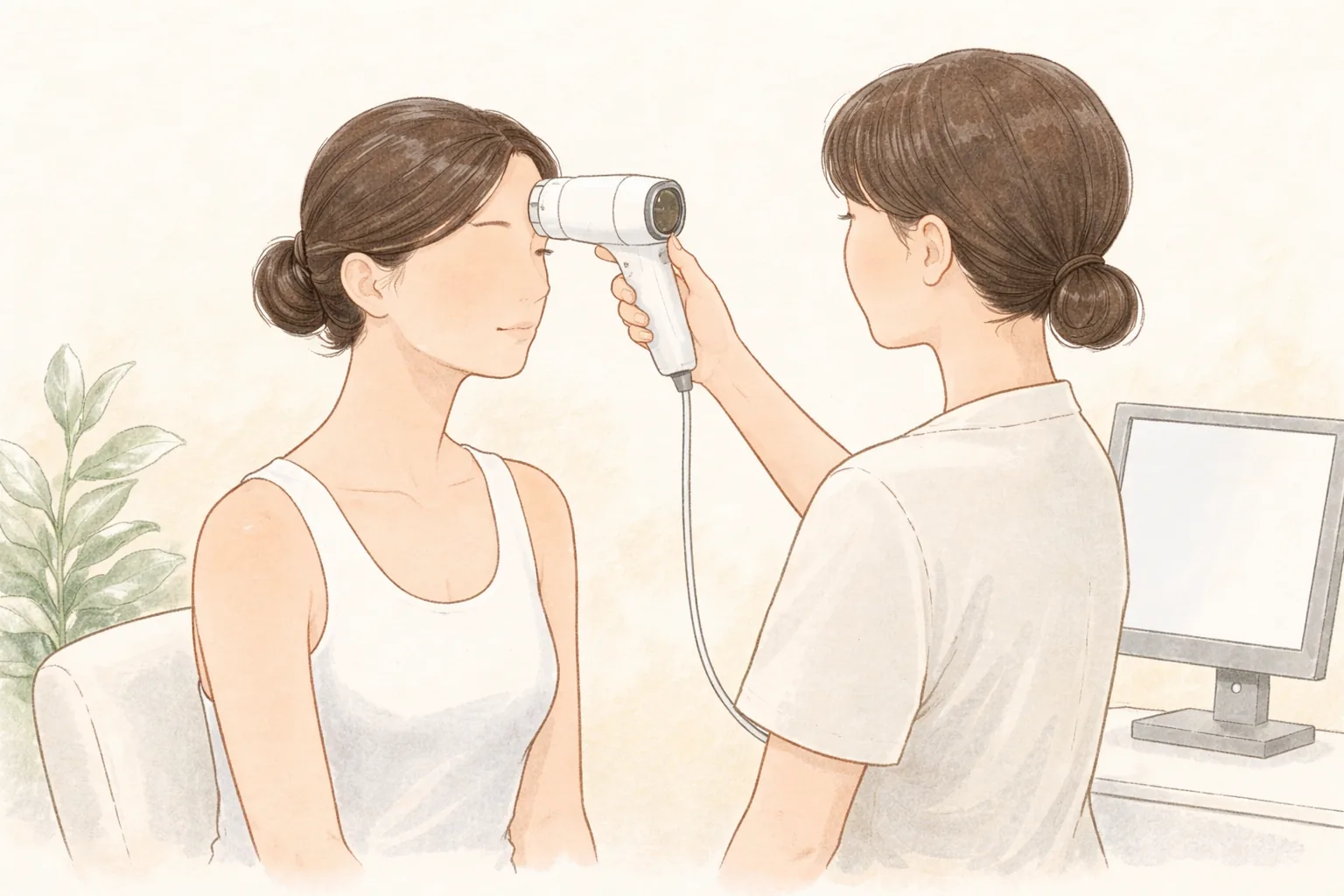
AI skin analysis record — Facial skin condition is recorded and organized with a device. This record is reference material to support consultation and does not provide a medical diagnosis. It is a step for viewing the same information together with the director.
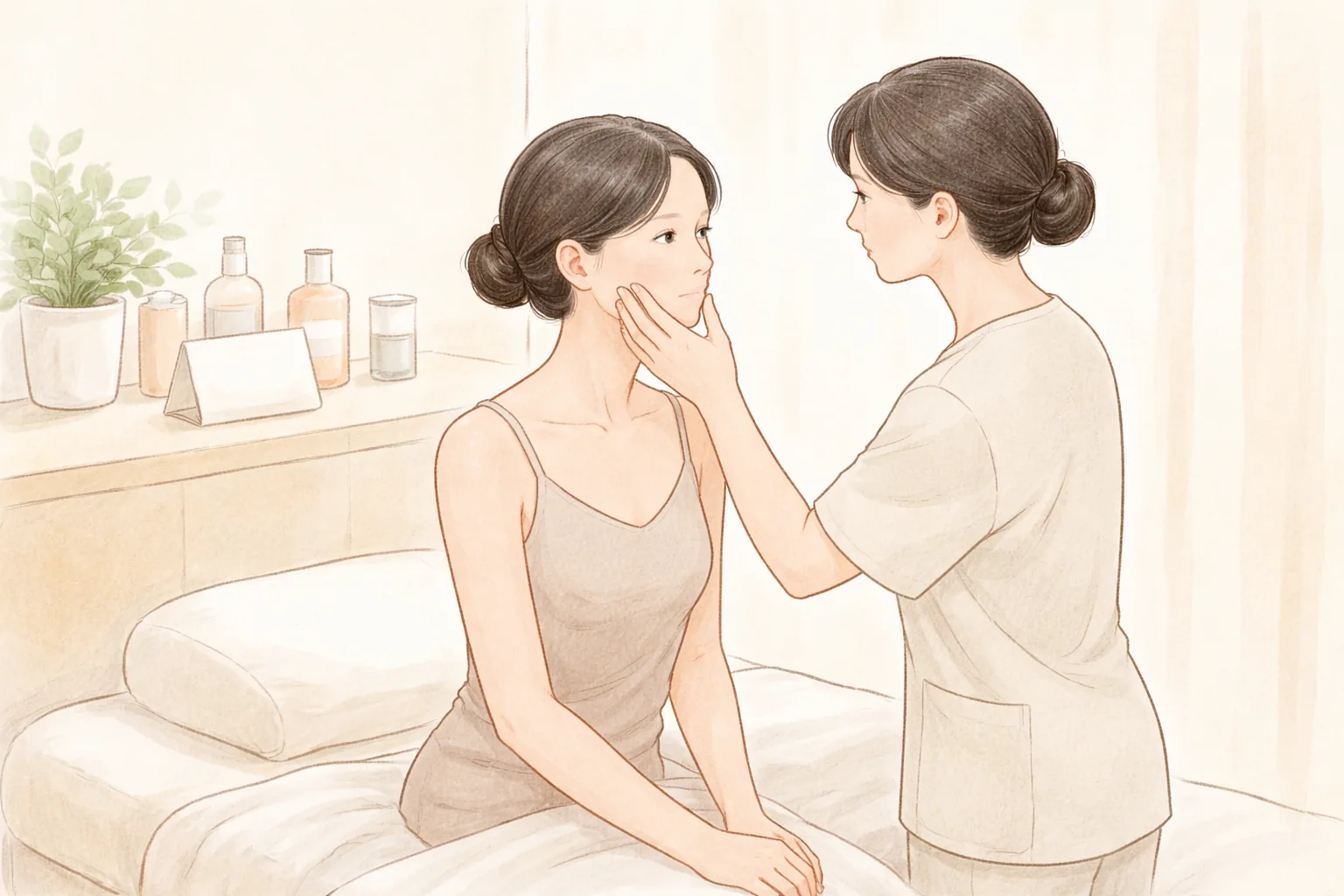
Consultation with the director — Your concerns, lifestyle habits and prior treatment experience (device, shot count, product, dose, date, reaction) are added to the record, and together you decide what is needed and what is not, and in what order and intensity. How many Shurink sessions and at what interval is also decided here.
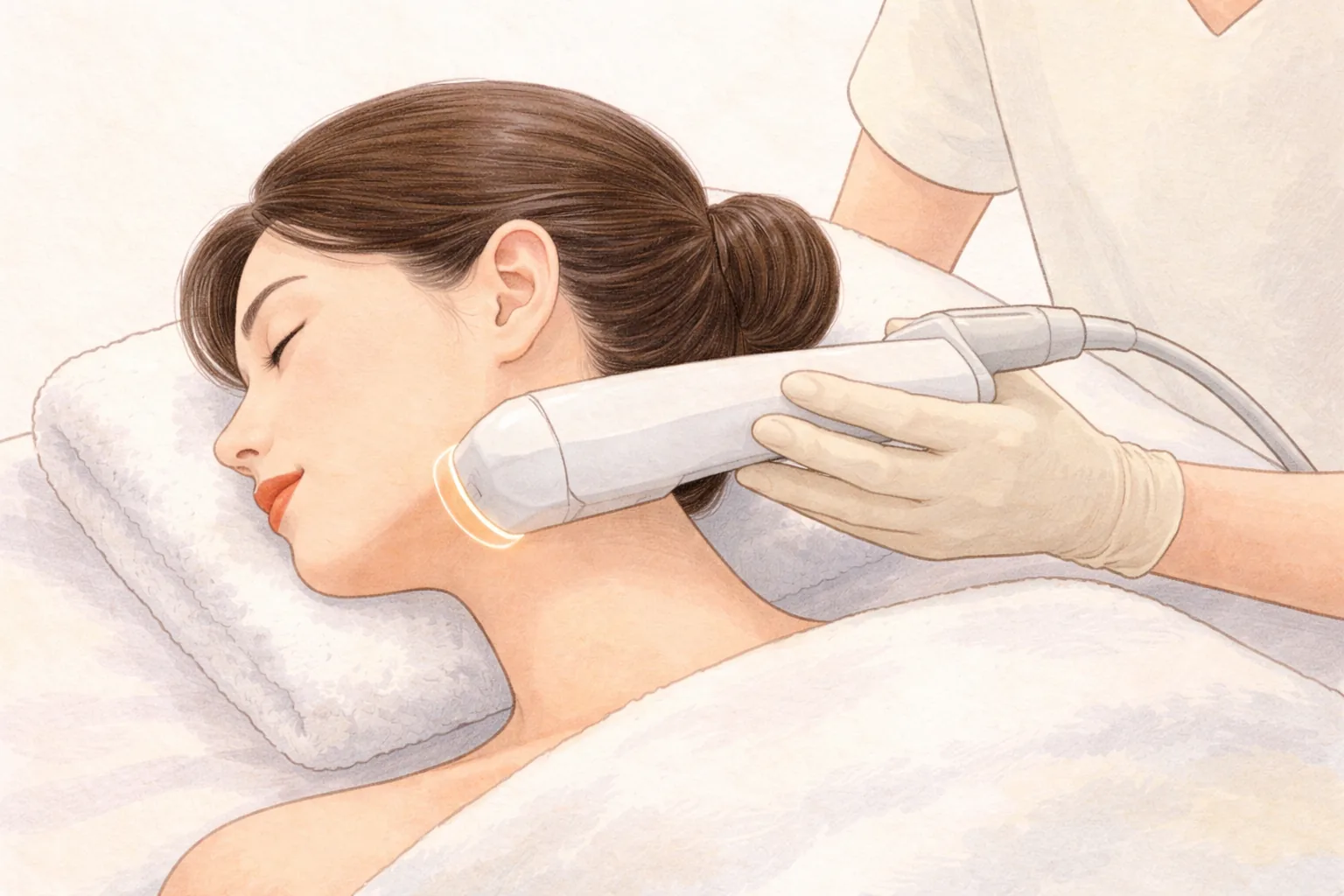
Treatment performed by the director — The director performs the treatment according to the plan set in consultation, adjusting energy level and shot count while watching skin response during the procedure. This flow keeps planning and execution aligned.
Progress review and next plan — Recovery state and the timing at which change appears are reviewed, and the next visit date is set again.
The devices ATTITUDE Clinic works with on this topic are Shurink (Shurink · Classys), Ultherapy (Ultherapy · Merz) and Thermage (Thermage FLX · Solta). On the treatment information, Shurink is listed in units of 300 shots, all amounts exclude VAT, and prices are the same regardless of language page. Which device to use is decided in consultation after looking at your skin.
Aftercare and side effects
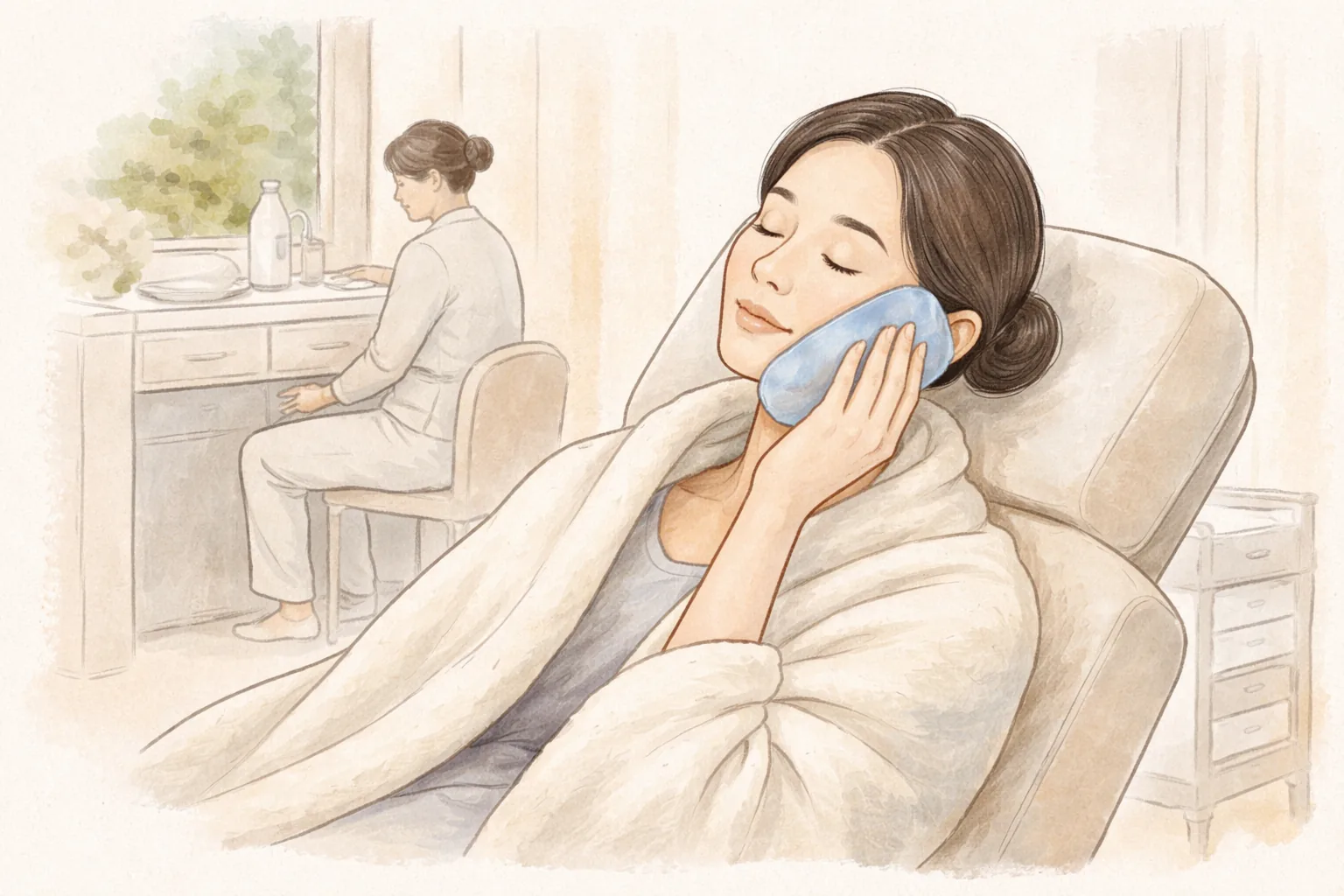
Soothing — On the day of treatment, warmth and redness may remain, so soothe with cold compresses. Avoid saunas, intense exercise and alcohol that day.
Moisturizing — Because the skin barrier is temporarily weakened, replenish moisture with the gentle moisturizer you normally use. Leave strong exfoliation or new active ingredients until recovery is complete.
Sun protection — For a few days, apply sunscreen more thoroughly than usual. UV exposure during this period can lead to pigmentation.
Progress review — Watch whether redness, swelling and tenderness to pressure are decreasing, and discuss the next plan at the 2–3 month mark when change appears.
Common reactions are temporary swelling, redness, a mild warm sensation, small bruises, and temporary numbness or reduced sensation, which usually settle within a few days. Rarely, burns, blisters, small scars, temporary facial muscle weakness, or unwanted loss of fat-layer volume can occur. If blisters form, pain keeps worsening, or redness lasts longer than expected, it is safer to seek care rather than wait.
Frequently asked questions
How many Shurink sessions do I need?
There is no fixed number. Because the point at which change appears is usually 2–3 months later, increasing the count before then rests on weak grounds. The baseline flow is to have 1 session, review progress, then decide the next count, and repeat timing is around 1 year, decided by the doctor. If you have records of prior treatments, bringing the device, shot count, date and reaction at the time helps in building the plan.
How long should I leave between Shurink sessions?
Differences in maintenance duration are large because the speed at which collagen is synthesized and broken down differs with the degree of SMAS-layer elasticity loss, age, and everyday UV exposure and lifestyle habits. How the energy level and shot count were set also has an influence. That is why we approach it as an individualized plan rather than something finished in a single session, and the next visit date is set after reviewing progress.
Is 1 Shurink session enough to see an effect?
1 session itself is designed as 1 treatment. That said, right after treatment it is hard to feel a big change, and when change comes it tends to appear gradually over 2–3 months. So "is 1 session enough" is closer to a question of how you evaluate the progress afterward than of session count. If, after reviewing progress, maintenance is judged necessary, the next timing is discussed.
Is Shurink very painful?
Pain varies widely with the energy level, the number of shots delivered to an area, and the nerve density of each area. Areas close to bone with dense nerves, such as the jawline, cheekbones, forehead and eye area, tend to feel relatively sensitive, while thicker areas like the cheeks feel less even at the same energy. The experience also differs between using low energy for prevention and needing strong energy for deeper sagging. If you are sensitive, the anesthesia method is decided together in consultation.
What should I look for when choosing a clinic for Shurink?
Rather than the device name, it is better to look at who sets the plan, how, and who carries it out. Points to check are how skin condition is recorded and explained before treatment, what criteria set the energy level and shot count, whether adjustments are possible based on response during treatment, and how side effects and recovery time are explained. Whether prior treatment records are reviewed and reflected in the next plan is also worth checking. No clinic can be declared better than another, and even with the same plan, results can diverge depending on the details of how it is carried out.
At a glance
Table 2 At a glance
Item
Key point
Mechanism
HIFU creates small thermal points at cartridge-set depths and slowly starts collagen remodeling
How the effect is felt
A big change right after treatment is unlikely; when change comes, it appears gradually over 2–3 months
Session count and interval
No fixed number; decide after 1 session and a progress review; repeats judged by the doctor at around 1 year
Factors that divide results
Skin type, thickness and regeneration speed; energy level and shot count; UV exposure and lifestyle habits
Pain and recovery
Varies with energy level and nerve density by area; redness and mild warmth usually ease within a few days
Aftercare
Soothing → moisturizing → sun protection → progress review at the 2–3 month mark
This article offers general health information. It is not a substitute for diagnosis or treatment based on your own condition, so please talk through your situation with a doctor.