Shurink Types Compared: What Should Guide Your Choice?
Why the same Shurink name is offered in different configurations, and what really decides the result among depth, focal-point placement, and energy level.
Written by ATTITUDE Clinic Editorial Team
When you start researching Shurink, the same name comes with different labels attached — 300 shots, 600 shots, Universe — and it gets confusing. If the names differ, is the treatment different too? Does more shots mean better? Those questions follow naturally. In this article, we will go through what Shurink actually does inside the skin, what really differs under the same name, and what to ask at consultation so the decision becomes easier.
The conclusion first
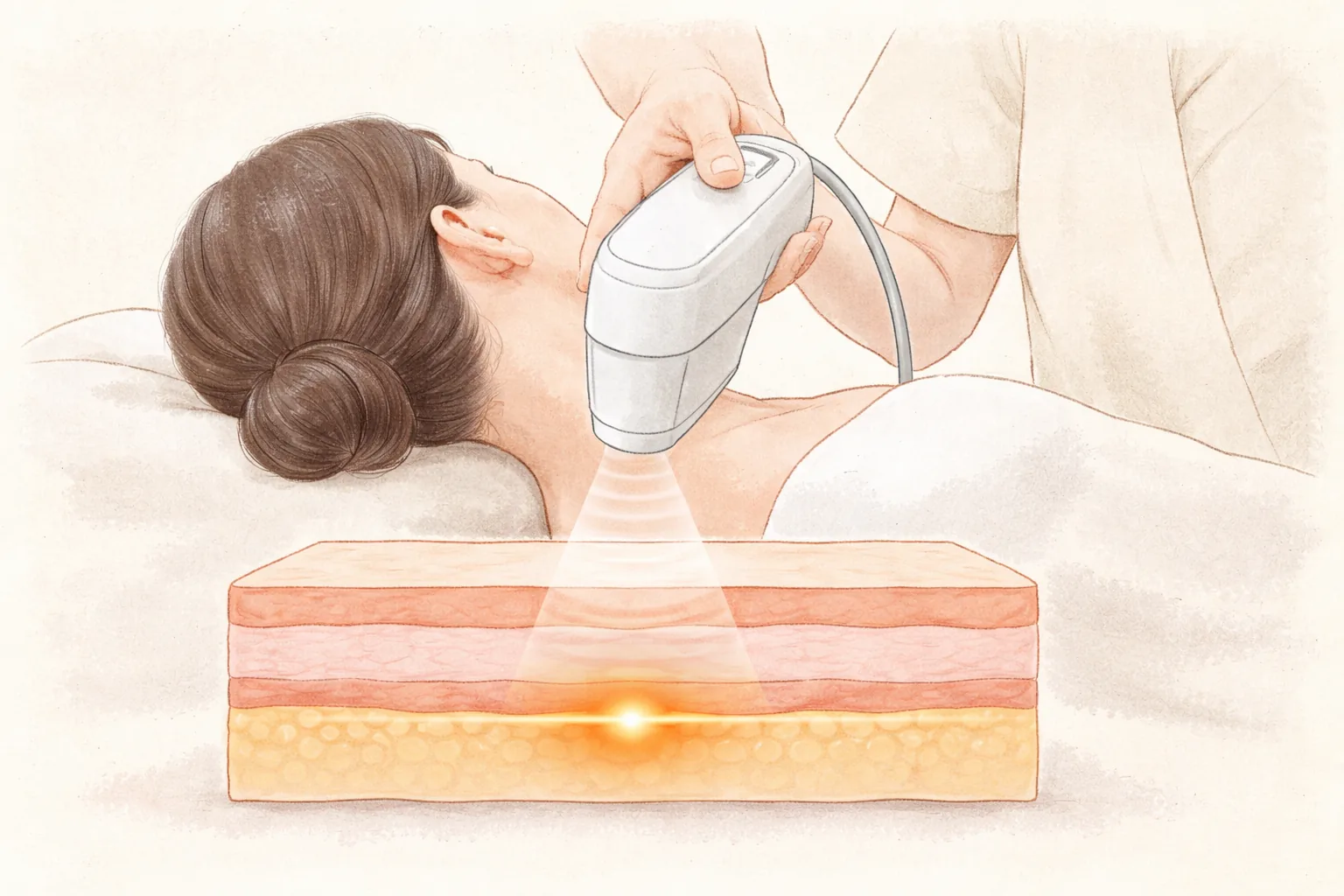
Shurink is a lifting treatment that uses high-intensity focused ultrasound (HIFU, a method that gathers ultrasound at one point and converts it into heat) to create tiny thermal points at a set depth in the skin (ATTITUDE Clinic column). The key to the type is not the name but three things: how deep the energy reaches, how densely the thermal points are placed at that depth, and how strong the energy level is. Shot count only tells you the number of stimulation points. Comparing shot counts alone without depth and energy level makes it easy to misjudge, and even with the same treatment, the starting skin condition and the execution process also affect how results differ (Why do results differ even with the same treatment?). When changes appear, how long they last, and how much pain you feel depend on skin thickness, regeneration capacity, and lifestyle habits.
Where in the skin does Shurink place heat, and how?
Lifting targets not the skin surface but the layer that holds up sagging. The SMAS layer is a thin membrane deeper than the dermis, like a lining inside clothing that supports the facial muscles and skin (ATTITUDE Clinic column). As we age, this membrane stretching out is cited as a main cause of sagging.
Shurink focuses ultrasound toward this layer. Because it gathers energy at a narrow point like a magnifying glass concentrating sunlight into one spot, the epidermis is passed through and heat remains only at the desired depth inside the skin (ATTITUDE Clinic column). The depth reached differs by cartridge, and deeper cartridges target the SMAS layer. Unlike radiofrequency (RF), which heats broadly from the dermis to the subcutaneous fat, this concentrates heat at a single point.
One point is one shot. So the shot count means both the number of stimulation points and the area that can be covered at once. Placing points densely in the same area intensifies the stimulation, and a wider range increases the number of shots needed.
This heat slightly contracts collagen (the protein that keeps skin firm) and, more significantly, stimulates collagen to be gradually rebuilt (ATTITUDE Clinic column). So right after the procedure it is hard to feel a big change, and if there is a change it usually appears over 2–3 months.
Pain occurs because heat momentarily gathers deep in the tissue. The higher the energy level and the more shots fired at one area, the stronger the stimulation, and areas close to bone with dense nerves — jawline, cheekbones, forehead, eye area — feel more sensitive than thicker areas like the cheeks (ATTITUDE Clinic column).
Why are there different types under the same name?
It is easy to think that if the name is the same, the treatment is the same. But even when guided as the same 'Shurink', the generation of equipment actually used and the cartridge configuration can differ from place to place. It is hard to determine from the name alone how two configurations differ, and what equipment and which cartridge are actually used becomes the starting point for comparison.
The structure where shot count is the unit also complicates the name. The ATTITUDE Clinic price list guides Shurink 300 shots as one unit, and all amounts are listed with VAT excluded (Treatments and Pricing). Even with the same 300 shots, the stimulation the skin receives differs depending on how much is allocated to which depth cartridge.
So at consultation, it is more practical to directly check a few things rather than the brand name. The actual equipment name, the depth configuration of the cartridges used, the shot count and treatment range, the energy level, and how anesthesia will be handled. Only when these five are the same can you say two treatments are truly the same treatment.
Knowing why multiple names are attached changes the selection criteria too. Rather than asking which name is better, it is more accurate to ask where my sagging is and which cartridge handles that depth.
Is it shot count or depth that decides the result?
The first thing to look at is depth. If sagging is pronounced and the jawline has collapsed, the proportion of deep cartridges reaching the SMAS layer becomes important. Conversely, if the concern is surface elasticity or skin texture, a configuration treating the dermis is suitable (ATTITUDE Clinic column).
The second is the energy level. The higher the intensity, the stronger the heat stimulation delivered, and the pain increases along with it; using a lower intensity for preventive purposes makes the sensation much lighter (ATTITUDE Clinic column). This is why even the same Shurink has different settings depending on the goal.
The third is placement. Increasing the shot count means more thermal points, but that alone does not drive heat deeper. Placing as many points as needed at the required depth is key, and the wider the treated area, the more shots are needed.
The fourth is skin condition. Whether skin is thick or thin, how much capacity remains to create new collagen, and usual UV exposure and lifestyle habits all affect when changes appear and how long they last (ATTITUDE Clinic column).
The last is the interval. The repeat timing is set at roughly around 1 year based on progress, and whether to combine other treatments in between is adjusted based on skin response (ATTITUDE Clinic column).
Why the same Shurink gives different results for different people
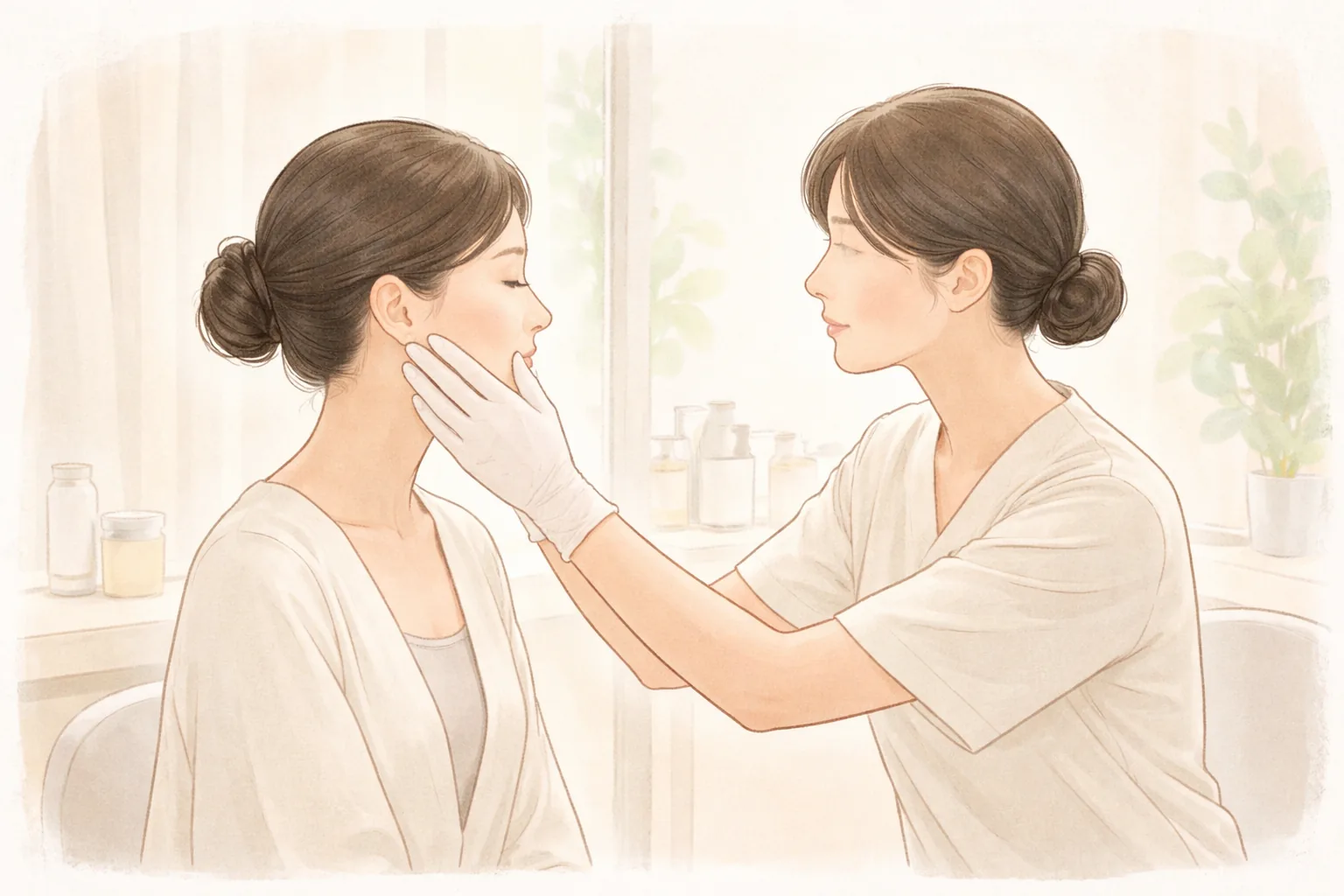
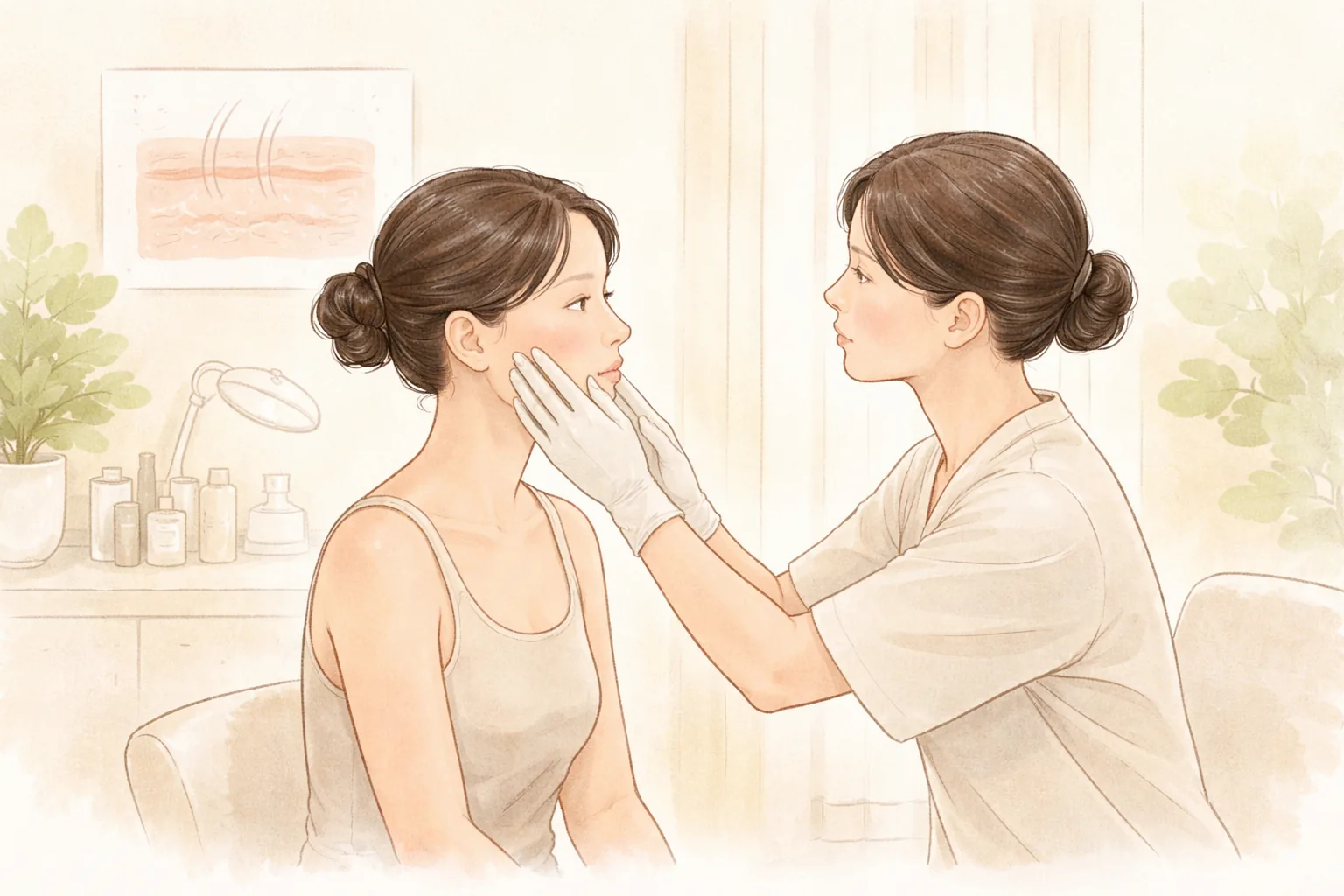
The starting line is different. Skin type and thickness, internal skin structure, and the speed of new collagen creation differ from person to person, so even the same intensity of treatment produces different sensations and results. Since this is hard to see in a mirror, the doctor examines directly and also reviews previous treatment history (Why do results differ even with the same treatment?).
The plan should differ too. Even with the same analysis results, which equipment to use first, what intensity to set, and when to add other treatments are decided by that person's concerns, how much downtime they can afford, and how sensitive their skin is (Why do results differ even with the same treatment?).
The execution process also divides results. Fine intensity adjustments at the treatment site and adjustments made while watching skin response during the procedure cannot be filled in by a manual alone (Why do results differ even with the same treatment?).
Table 1 Why the same Shurink gives different results for different people
Treatment
Energy used
What it does inside the skin
What to review at consultation
Shurink
HIFU (high-intensity focused ultrasound)
Creates tiny thermal points at set depths from dermis to SMAS by cartridge
Sagging area and range, cartridge depth configuration, shot count, energy level
Ultherapy
HIFU (high-intensity focused ultrasound)
Same HIFU family, creates thermal points at set depths
Depth and shot configuration, whether to combine with Shurink
Thermage FLX
RF (radiofrequency)
Heats broadly from dermis to subcutaneous fat
Broad-area elasticity and skin texture, whether to combine with Shurink
Onda
Microwaves
Lifting that delivers heat via microwaves
Face or body, what irradiation amount (kJ)
Swipe sideways to see the whole table.
In summary The name Shurink is closer to a term indicating the energy method (HIFU), and the actual result is decided by at what depth, with what intensity, and how many thermal points are placed and how. At consultation, reviewing cartridge depth configuration, shot count, treatment range, and energy level instead of the name helps your decision.
If this applies to you
When a ceremony or shoot is set a few months away
Shurink tends to show changes over 2–3 months rather than right after the procedure, so if your schedule is close, it is better to plan around that timing (ATTITUDE Clinic column). Avoid sauna, intense exercise, and alcohol on the day, and from the next day daily life including makeup is usually possible.
When you want to manage consistently and slow the pace of sagging
Rather than finishing with one session, a flow of setting the interval based on progress suits better. The repeat timing is set at roughly around 1 year, and in between, the next plan is adjusted based on skin response (ATTITUDE Clinic column).
When your skin is thin or tends to redden
How to set the energy level and anesthesia method is the key. If you are sensitive to pain, it is better to say so at consultation and decide the anesthesia options and intensity adjustment together (ATTITUDE Clinic column).
When you are an overseas visitor staying briefly
It is convenient to plan by placing the treatment day and the next day's schedule together. How much redness and mild heat remain differs by energy level, and most settles within 1–2 days (ATTITUDE Clinic column).
Please let us know before consultation Telling us about recent UV exposure and outdoor schedules, medications you are taking and products you apply to your skin, the equipment, shot count, date, and response of previous treatments, important schedules after the procedure, and whether you bruise easily and how sensitive you are to pain helps us build the plan.
How ATTITUDE Clinic proceeds
AI skin analysis record — Skin condition is recorded and organized so you and the doctor look at the same information together. This tool only records and organizes information to help consultation and does not make a medical diagnosis; judgment is made by the doctor (Why do results differ even with the same treatment?).
Doctor consultation — Adding your concerns, lifestyle habits, and previous treatment experience to the record, we decide together what is needed and what is not, combinations and order, and intensity (Why do results differ even with the same treatment?).
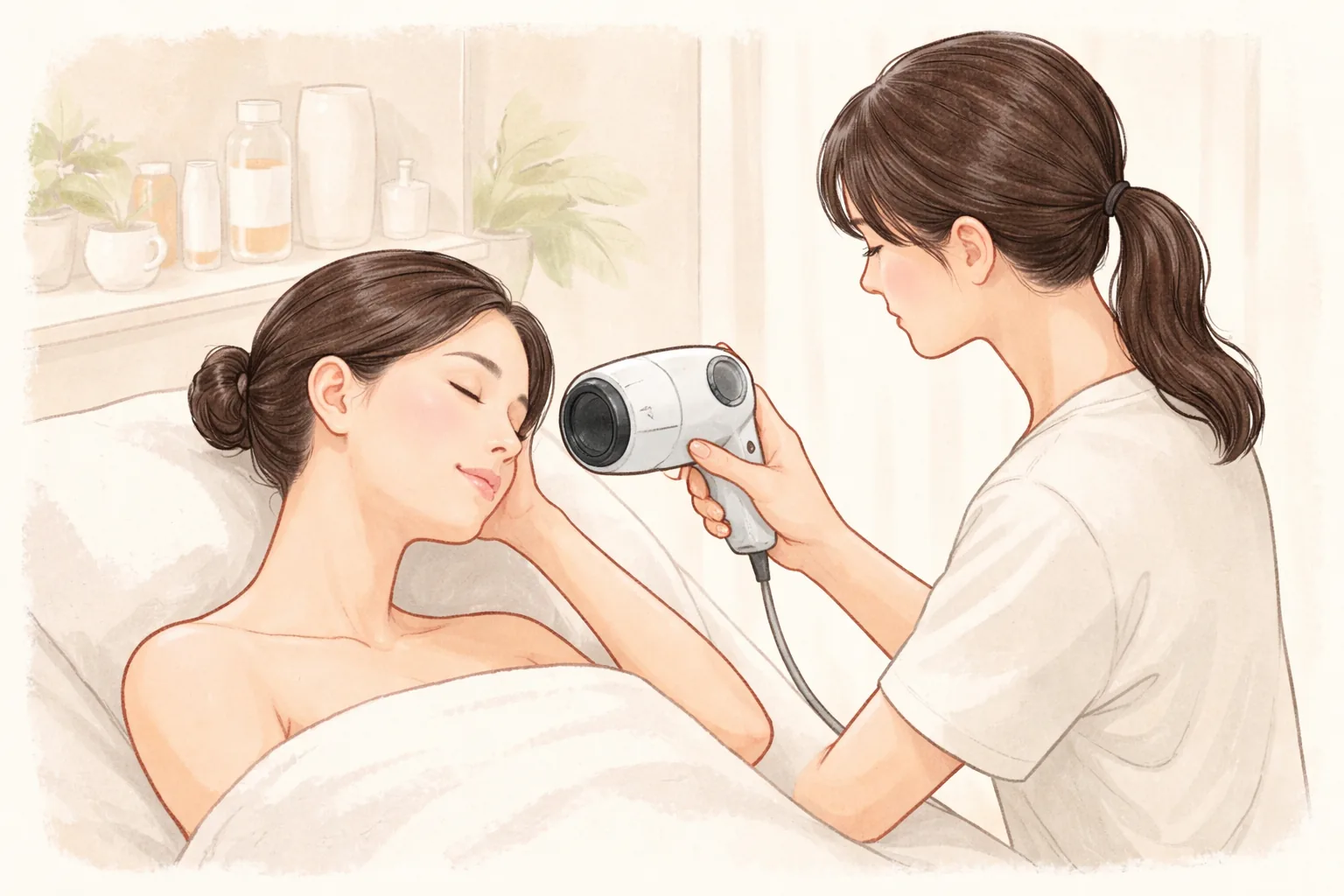
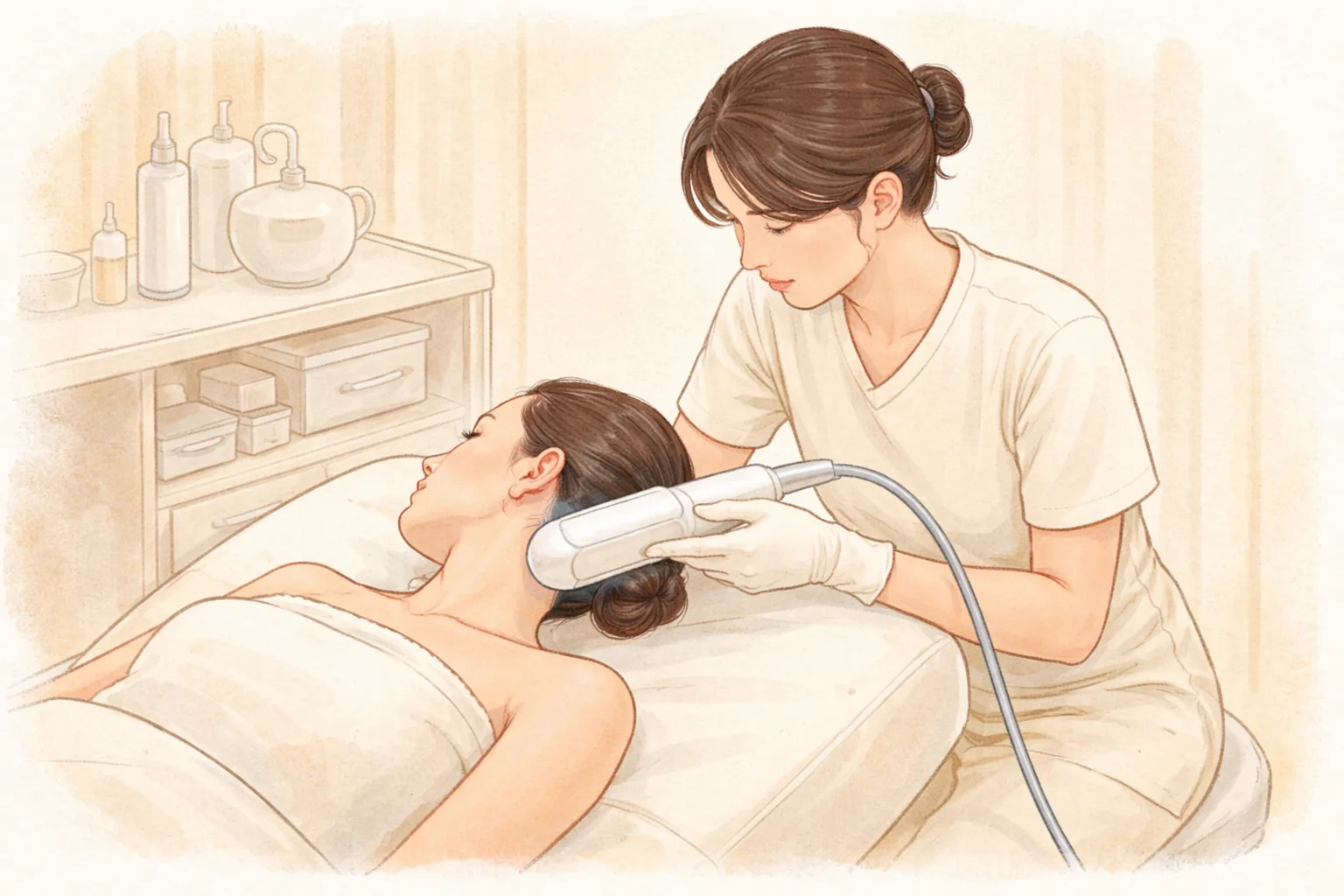
Treatment performed directly by the doctor — The doctor performs the treatment directly according to the plan set at consultation, adjusting intensity while watching skin response during the procedure (Why do results differ even with the same treatment?).
Progress check and next cycle planning — After the procedure, we review progress and set the repeat timing at roughly around 1 year, and guide management methods in between (ATTITUDE Clinic column).
The equipment reviewed together in this topic is the HIFU family of Shurink (Classys) and Ultherapy (Merz), the radiofrequency family of Thermage FLX (Solta) and XERF (Lutronic), and Onda (DEKA) using microwaves (Treatments and Pricing). Prices are disclosed by unit, and VAT is guided separately.
Aftercare and side effects
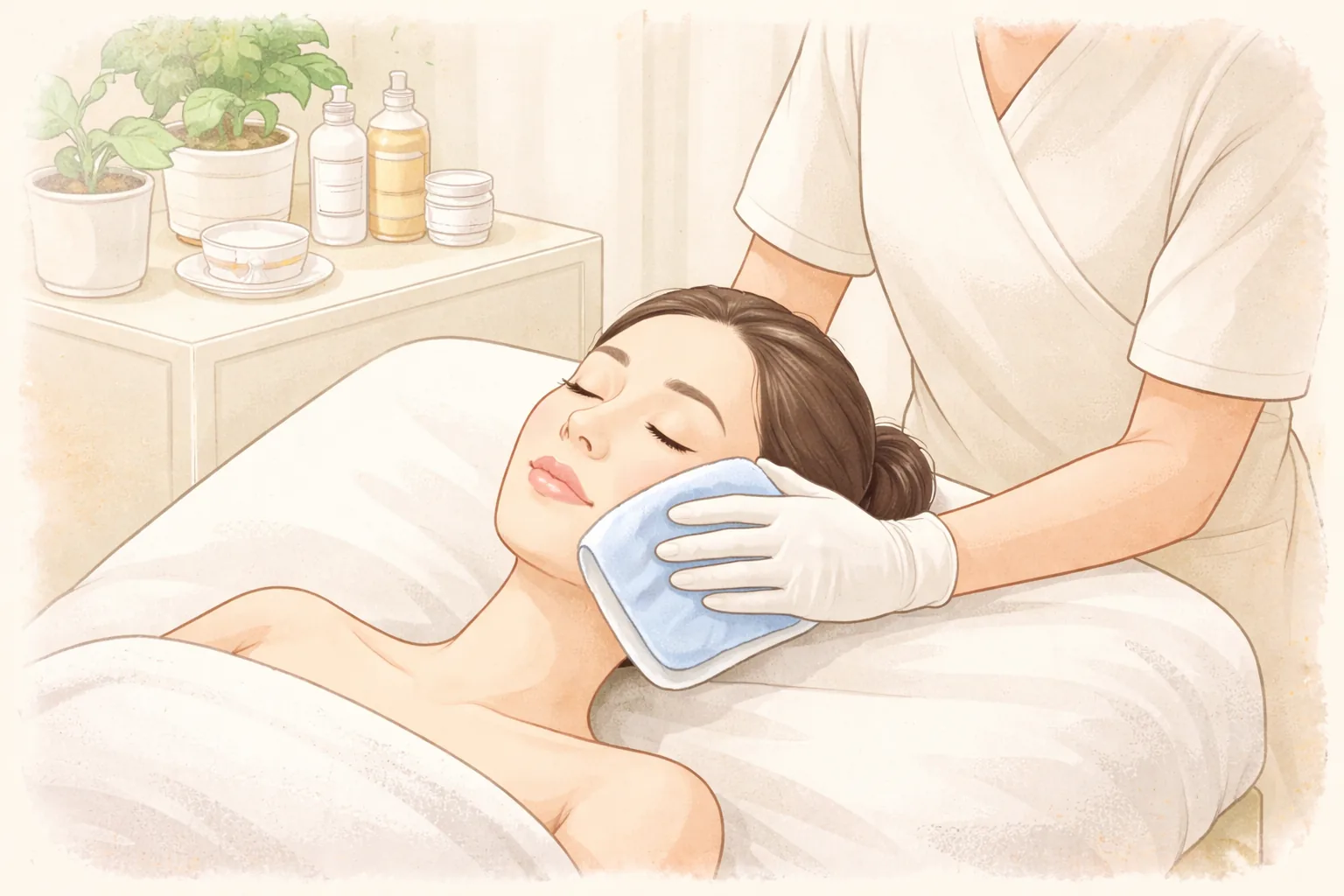
Soothing — On the day, fine redness and mild heat may remain at the treatment site. Cold compresses can help with swelling, and the method should be confirmed with the medical staff (ATTITUDE Clinic column).
Moisturizing — Skin that received heat stimulation has a temporarily weakened barrier. Continue your usual moisturizing, but it is better to postpone products with strong irritation for a while.
UV protection — During this period, UV protection should be more thorough than usual to recover without pigmentation (ATTITUDE Clinic column).
Progress check — Noting when redness settles and when the tight feeling starts to change helps when planning the next step. Avoid sauna, intense exercise, and alcohol on the day.
Common reactions are redness, swelling, small bruises, and temporary numbness or reduced sensation, and they usually settle within a few days. Rarely, burns and blisters, small scars, temporary facial muscle weakness, and unwanted fat-layer volume loss can occur (ATTITUDE Clinic column).
If there is a change different from expected, such as blisters forming or pain worsening, it is safer to receive medical attention rather than wait (ATTITUDE Clinic column).
Frequently asked questions
What is different between Shurink Universe and existing Shurink?
Both are the same in that they are HIFU family, gathering ultrasound to create thermal points (ATTITUDE Clinic column). However, the generation of equipment, cartridge configuration, and shot delivery method can be operated differently depending on the equipment and timing, so it is hard to determine the difference from the name alone. At consultation, it is more accurate to check the actual equipment name, cartridge depth configuration, shot count, and energy level. Because even when guided under the same name, what depth and how much stimulation is delivered decides the result.
Does more shots mean better? How do 300 shots and 600 shots differ?
Shot count means the number of stimulation points and the area that can be treated. A wider range increases the shots needed, but overlapping thermal points in the same area intensify stimulation, so it is hard to say more is better. When sagging is deep, how to set the proportion of deep cartridges is decided first rather than increasing shot count (ATTITUDE Clinic column). The ATTITUDE Clinic price list guides Shurink 300 shots as one unit (Treatments and Pricing).
Is Shurink very painful?
Because heat momentarily gathers in deep layers, you may feel a dull ache or stinging. Pain varies widely with energy level and nerve density by area, so even the same treatment feels different depending on the goal and area (ATTITUDE Clinic column). If you are sensitive to pain, it is better to say so at consultation and decide the anesthesia options and intensity adjustment together.
Is one session enough? When does the effect start and how long does it last?
Right after the procedure it is hard to feel a big change, and if there is a change it usually appears gradually over 2–3 months (ATTITUDE Clinic column). The duration differs by the degree of SMAS layer elasticity decline, age, UV exposure, lifestyle habits, and treatment intensity settings, so it is hard to expect the same result from one session. The repeat timing is set at roughly around 1 year based on progress, so it is better to plan the needed number of sessions and intervals at the first consultation.
What should I check when choosing a clinic?
According to American Academy of Dermatology guidance, there are several skin tightening treatments, so it is good to consult an expert experienced with multiple treatments and decide the method that fits your concerns (AAD). In addition, at consultation it is good to check the actual equipment name, cartridge depth configuration, shot count and range, energy level, and anesthesia method. Whether the person who made the plan also performs the treatment is another part that affects the result (Why do results differ even with the same treatment?).
At a glance
Table 2 At a glance
Item
Key point
Principle of Shurink
Lifting that creates tiny thermal points at set depths with HIFU
What divides the types
Not the name but depth, thermal point placement, energy level
Meaning of shot count
Number of stimulation points and coverage area; not that more is better
Feeling the effect
If there is a change it is usually gradual over 2–3 months; duration varies by individual
Pain
Varies with energy level and nerve density by area
Repeat timing
Roughly around 1 year, decided by the doctor based on progress
This article offers general health information. It is not a substitute for diagnosis or treatment based on your own condition, so please talk through your situation with a doctor.